- Product Description Description
- Table of Contents TOC
- List of Table & Figure LOT
- Get Free Sample PDF Sample PDF
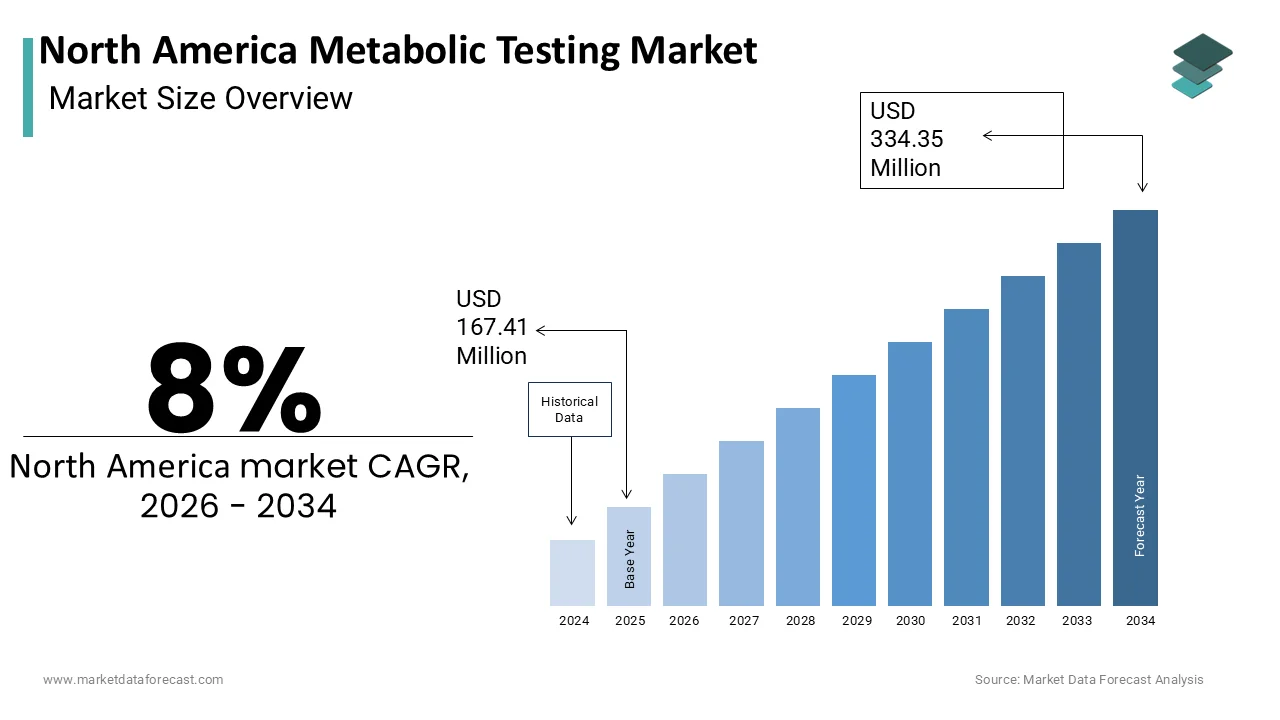
Market Size, 2025
$167.41 MnMarket Estimate, 2026
$180.8 MnMarket Forecast, 2034
$334.35 MnCAGR, 2026–2034
8.%North America Metabolic Testing Market Report Summary
The North America Metabolic Testing Market is projected to grow from USD 167.41 million in 2025 to USD 180.80 million in 2026 and reach USD 334.35 million by 2034, at a CAGR of 8% during the forecast period. Growth is driven by rising diabetes and obesity rates, the shift toward personalized and preventive medicine, and expanding telehealth and corporate wellness adoption.
Key Market Trends
- Shift from lab-based blood work to noninvasive technologies like indirect calorimetry and continuous glucose monitoring
- Growth of direct-to-consumer and home-based metabolic testing kits
- Expansion of telehealth and remote patient monitoring infrastructure
- Rising integration of metabolic panels into corporate wellness programs
- Increasing adoption of AI-driven data analytics in metabolic diagnostics
Segmental Insights
- Based on product, the Body Composition Analysis segment led the market in 2025, driven by rising obesity rates and adoption across clinical and fitness settings.
- Based on application, the Lifestyle Diseases segment held the largest share in 2025, driven by the high prevalence of type 2 diabetes, hypertension, and metabolic syndrome.
- Based on end user, the Hospitals segment led the market in 2025, supported by its central role in diagnosing and managing complex metabolic disorders.
Regional Insights
- United States led the market in 2025 by holding 85.4% of the regional share, supported by advanced healthcare infrastructure and robust reimbursement frameworks.
- Canada holds a considerable share, driven by a publicly funded healthcare system prioritizing preventive care and chronic disease management.
Competitive Landscape
The market is highly competitive, with established diagnostic manufacturers and technology-driven startups focusing on innovation, digital health integration, and strategic partnerships to differentiate.
Prominent players include Geratherm Medical AG, GE HealthCare Technologies Inc., OSI Systems Inc., CareFusion Corporation (BD), MGC Diagnostics Corporation, COSMED S.r.l., Abbott Laboratories, Quest Diagnostics, and Siemens Healthineers.
North America Metabolic Testing Market Size
The North America Metabolic Testing Market is projected to grow from USD 167.41 million in 2025 to USD 180.80 million in 2026 and reach USD 334.35 million by 2034, registering a CAGR of 8% during the forecast period from 2026 to 2034.
Metabolic testing is a scientific evaluation that measures how efficiently your body converts food and oxygen into energy. This market serves clinical diagnostics, wellness programs,s and personalized nutrition sectors across the United States, Canada, and Mexico. Metabolic testing has evolved from traditional laboratory blood work to include advanced noninvasive technologies like indirect calorimetry and continuous glucose monitoring systems. The rising prevalence of chronic metabolic disorders drives substantial demand for these diagnostic solutions. According to the Centers for Disease Control and Prevention (CDC), approximately 40.1 million Americans are living with diabetes, representing 12.0% of the U.S. population. Furthermore, the National Institute of Diabetes and Digestive and Kidney Diseases (NIDDK) shows that 70.2% of adults in the United States are classified as overweight or obese. The advocacy organization Obesity Canada indicates that over 10.6 million Canadians live with obesity, while official Statistics Canada tracking establishes that 6.3% of Canadian adults have prediabetes. These epidemiological realities underscore the necessity for comprehensive metabolic evaluation frameworks. Healthcare providers increasingly integrate metabolic testing into routine preventive care protocols to enable early intervention and personalized treatment strategies. The convergence of technological innovation and growing disease burden positions this market as a pivotal component of modern healthcare infrastructure in North America.
MARKET DRIVERS
Rising Prevalence of Chronic Metabolic Disorders Fuels Diagnostic Demand
The escalating incidence of diabetes, obesity, and cardiovascular diseases across the region is the main reason behind the growth of the North American metabolic testing market. Moreover, the American Heart Association (AHA) projects that more than 184 million people, exceeding 61% of the U.S. population, live with or are likely to develop some form of cardiovascular disease. This widespread health crisis necessitates regular metabolic monitoring to manage risk factors effectively. The International Diabetes Federation (IDF) establishes that the North America and Caribbean region is home to over 56 million adults living with diabetes. Metabolic testing enables clinicians to identify insulin resistance, dyslipidemia, and other precursors before they manifest as severe complications. Hospitals and outpatient clinics increasingly mandate baseline metabolic panels for patients presenting with weight management concerns or family histories of metabolic syndrome. The Endocrine Society documents that adults with diabetes or newly recognized hyperglycemia comprise over 30% of non-critically ill hospitalized patients, highlighting the need for structured glycemic management tools. Additionally,y workplace wellness programs now incorporate metabolic screening as a standard benefit. The Business Group on Health shows that its large employer members collectively provide health coverage to more than 60 million workers, retirees, and their families globally. This institutional adoption creates sustained demand for laboratory-based and point-of-care metabolic testing solutions. The demographic shift toward an aging population further amplifies this trend as individuals over 65 years exhibit higher susceptibility to metabolic disturbances requiring frequent assessment and monitoring.
Integration Of Personalized Medicine And Preventive Healthcare Models
The paradigm shift toward personalized medicine and preventive healthcare further propels the North American metabolic testing market forward. Modern healthcare systems increasingly prioritize individualized treatment plans based on precise metabolic data rather than generalized protocols. The Personalized Medicine Coalition (PMC) indicates that targeted personalized therapies represent more than a quarter of all new therapeutic molecular entities approved by the FDA since 2015. Metabolic testing provides the foundational data required for tailoring nutritional interventions, exercise regimens, ns and pharmacological treatments to individual patient profiles. Direct-to-consumer health platforms have democratized access to metabolic insights, with companies offering home-based testing kits that measure markers such as hemoglobin A1c, cholesterol panels,s anthyroid-stimulatingng hormone. The Consumer Technology Association (CTA) tracks a massive surge in consumer health tech adoption, with smart wearables pacing consumer health tracking past 100 million active users in the United States alone. These devices generate continuous data streams that complement periodic laboratory testing, enabling more dynamic health management. Insurance providers increasingly recognize the cost-effectiveness of preventive metabolic screening, with several major carriers covering annual metabolic panels for high-risk populations. This economic incentive accelerates adoption across both public and private healthcare sectors, establishing metabolic testing as an indispensable tool in contemporary medical practice.
MARKET RESTRAINTS
High Costs Associated With Advanced Metabolic Testing Technologies
The substantial financial burden associated with sophisticated metabolic testing equipment and procedures is a major limitation to the growth of the North American metabolic testing market. Research shows that professional metabolic diagnostic hardware, such as advanced indirect calorimeters, requires a high upfront capital expenditure that often exceeds $20,000 per unit. These costs limit accessibili, ty, particularly for smaller clinics and rural healthcare facilities operating under constrained budgets. Reimbursement challenges further exacerbate financial pressures as many insurance plans provide limited coverage for comprehensive metabolic panels beyond basic screening requirements. Research published by KFF indicates that approximately 25.6 million nonelderly Americans remain uninsured, with high deductibles acting as a financial barrier to preventive care for those with coverage. Sources indicate that complex, specialized metabolic panels not covered by baseline health insurance plans often impose high out-of-pocket costs, disproportionately burdening lower-income patient groups. Laboratory operational costs, including specialized reagents,s calibrated instrumentss, and trained personnel,l contribute to elevated pricing structures. The American Clinical Laboratory Association (ACLA) emphasizes that overlapping federal oversight frameworks significantly increase operational overhead and administrative burdens across clinical testing facilities. Further, the rapid obsolescence of testing technologies necessitates frequent equipment upgrades, straining financial resources. Healthcare systems must balance the clinical benefits of advanced metabolic diagnostics against budgetary constraints, often resulting in restricted access for patients who would benefit most from regular monitoring. This economic disparity undermines equitable healthcare delivery and limits the broader public health impact of metabolic testing initiatives across North America.
Regulatory Complexities And Compliance Burdens Impede Market Growth
Stringent regulatory requirements and evolving compliance standards create substantial operational constraints for testing providers within the North American metabolic testing market. The Food and Drug Administration maintains rigorous approval processes for new diagnostic devices and testing methodologies requiring extensive clinical validation before market entry. Moreover, the Food and Drug Administration (FDA) notes that while standard 510(k) reviews average under a year, clinical data mandates for novel metabolic breakthrough systems can substantially delay market entry. The Clinical Laboratory Improvement Amendments establish quality standards that laboratories must meet,t including proficiency testing, ng personnel qualifications,ons and equipment maintenance protocols. Noncompliance can result in severe penalties, including suspension of operations and loss of Medicare reimbursement eligibility. Under the Clinical Laboratory Improvement Amendments (CLIA) framework, federal authorities execute thousands of biennial on-site surveys, issuing formal deficiency citations to enforce diagnostic accuracy. Data privacy regulations under the Health Insurance Portability and Accountability Act impose additional administrative burdens requiring robust cybersecurity measures to protect patient metabolic data. The HHS Office for Civil Rights highlights that healthcare data privacy breaches can trigger statutory HIPAA penalties with annual caps reaching $1.5 million for instances of willful neglect. Furthermore, varying state-level regulations create fragmented compliance landscapes, forcing multi-state operators to navigate disparate legal frameworks. The Association for Diagnostics & Laboratory Medicine (ADLM) shows that ongoing compliance mandates, quality control audits, and mandatory proficiency updates create a significant, continuous operational expense for clinical labs. These complexities deter innovation, particularly among smaller enterprises lacking dedicated regulatory affairs teams, ms and slow the introduction of potentially beneficial testing innovations to the marketplace.
MARKET OPPORTUNITIES
Expansion Of Telehealth And Remote Patient Monitoring Infrastructure
The proliferation of telehealth platforms and remote patient monitoring systems creates substantial opportunities for metabolic testing integration and growth of the North American market. Virtual care consultations have become mainstream. The American Telemedicine Association (ATA) highlights that early pandemic-era telehealth utilization peaked at 38 times higher than baseline metrics, establishing a permanently elevated standard for remote care. This digital healthcare infrastructure enables seamless incorporation of at-home metabolic testing kits, allowing patients to collect samples independently and transmit results electronically to healthcare providers. Remote monitoring devices capable of tracking glucose levels, blood pressure, and other metabolic indicators generate real-time data that enhances clinical decision-making. The U.S. Department of Veterans Affairs (VA) indicates that its remote home telehealth programs support over 125,000 veterans annually, proactively managing chronic diseases like diabetes and heart failure. Commercial insurers are expanding coverage for remote metabolic monitoring, recognizing its potential to reduce emergency department visits and hospital readmissions. UnitedHealthcare indicates that remote patient monitoring initiatives for type 2 diabetes drive down acute complications and significantly improve long-term glycemic control. Technology companies are developing integrated platforms that combine wearable sensors,s mobile applications, andcloud-basedd analytics to provide comprehensive metabolic health dashboards. The Federal Communications Commission (FCC) confirms that $100 million was allocated through the Connected Care Pilot Program to subsidize broadband-connected remote patient monitoring in low-income and rural areas. This technological ecosystem facilitates continuous metabolic assessment outside traditional clinical settings,s improving patient engagement and enabling proactive health management. The convergence of digital health infrastructure with metabolic diagnostics positions the market for sustained expansion as healthcare delivery models continue evolving toward decentralized care approaches.
Growing Corporate Wellness Programs And Employer-Sponsored Health Initiatives
Employer-sponsored wellness programs provide a rapidly expanding avenue for the North American metabolic testing market expansion. This is driven by corporate recognition of employee health as a strategic business imperative. Surveys from the Society for Human Resource Management (SHRM) report that healthcare benefits remain a top priority, with roughly three-quarters of employers funding general wellness resources and preventive health awareness tools. Companies invest in comprehensive health assessments,s including metabolic panels, els to reduce healthcare costs, improve productivity, and enhance employee retention. Major employers like Johnson & Johnson highlight robust, long-standing health cultures that offer extensive preventive screenings, digital health tools, and chronic disease support to their global workforces. These programs typically include baseline metabolic assessments followed by personalized coaching, aching nutrition counseling,nseling and fitness planning based on individual results. In addition, the Milken Institute reveals that chronic health conditions and associated absenteeism inflict a massive toll, costing the U.S. economy hundreds of billions of dollars annually in lost productivity. By identifying at-risk employees through metabolic screening, organizations can implement targeted interventions that mitigate these losses. Occupational health clinics partnered with employers are expanding their metabolic testing capabilities to accommodate growing demand. The Occupational Safety and Health Administration (OSHA) notes that high-demand industrial sectors utilize comprehensive medical surveillance programs to assess baseline workforce fitness and mitigate on-the-job health risks. This corporate sector momentum creates a stable revenue stream for metabolic testing providers while contributing to broader public health improvements through early detection and prevention strategies.
MARKET CHALLENGES
Shortage Of Qualified Healthcare Professionals For Test Interpretation
The insufficient availability of trained healthcare professionals capable of accurately interpreting complex metabolic test results remains a serious challenge to North American market optimization. Metabolic testing generates multifaceted data requiring specialized expertise in endocrinology,y nutrition science,ce and clinical pathology for proper analysis and actionable recommendations. The Association of American Medical Colleges (AAMC) projects that the United States will face a comprehensive physician shortage of up to 86,000 doctors by 2036. This workforce gap limits the capacity of healthcare systems to process increasing volumes of metabolic tests efficiently. Many primary care providers report feeling inadequately prepared to interpret advanced metabolic markers beyond standard panels, els according to surveys. The complexity of emerging tests assessing mitochondrial function, gut microbiome influences on metabolism, and genetic predispositions requires continuing education that many practitioners lack time to pursue. Rural and underserved areas face acute shortages. The National Rural Health Association (NRHA) indicates that geographic misdistribution exacerbates medical specialist shortfalls, leaving rural communities disproportionately isolated from direct endocrine and metabolic specialty care. This geographic disparity means that even when metabolic testing is available, appropriatefollow-upp care may be inaccessible. Laboratory scientists specializing in metabolic diagnostics also face recruitment challenges. Without sufficient qualified personnel to translate test results into effective treatment plans, the clinical utility of metabolic testing diminishes. This shortfall can lead to patient confusion, inappropriate interventions, or missed diagnostic opportunities that undermine the value of these services.
Data Security Concerns And Patient Privacy Vulnerabilities
Escalating cybersecurity threats and patient privacy vulnerabilities are major hurdles for the North American metabolic testing market. This is because the volume of digital health records is expanding. Metabolic test results constitute sensitive protected health information that attracts malicious actors seeking to exploit personal data for identity theft, ft insurance fraud, or pharmaceutical marketing purposes. Year-end data from the U.S. Department of Health & Human Services (HHS) Breach Portal documents that large-scale healthcare data breaches compromised the protected health information of over 139 million individuals in a single calendar yearr.r Metabolic testing platforms that integrate with electronic health records, ds wearable devices,ces and mobile applications create multiple entry points for potential security compromises. Ransomware attacks targeting healthcare institutions increased, disrupting laboratory operations and delaying critical test results. Patients express growing apprehension about sharing metabolic data with third-party wellness applications and direct-to-consumer testing companies that may lack robust security infrastructures. Compliance with evolving data protection regulations, including state-level privacy laws in California, Virginia, and Colorado, requires continuous investment in encryption, access controls, and audit mechanisms. Small and medium-sized testing laboratories often lack the technical expertise and financial resources to implement enterprise-grade cybersecurity measures, leaving them vulnerable to attacks. High-profile data breaches erode public trust in metabolic testing services, potentially discouraging participation in screening programs and limiting market penetration, particularly among privacy-conscious demographics who might otherwise benefit from regular metabolic assessment.
REPORT COVERAGE
| REPORT METRIC | DETAILS |
| Market Size Available | 2025 to 2034 |
| Base Year | 2025 |
| Forecast Period | 2026 to 2034 |
| Segments Covered | By Product, Application, Technology, End User, and Region |
| Various Analyses Covered | Global, Regional and Country-Level Analysis, Segment-Level Analysis, Drivers, Restraints, Opportunities, Challenges; PESTLE Analysis; Porter’s Five Forces Analysis, Competitive Landscape, Analyst Overview of Investment Opportunities |
| Countries Covered | U.S Canada, Rest of North America |
| Market Leaders Profiled |
|
SEGMENTAL ANALYSIS
By Product Insights
The Body Composition Analysis segment led within the North America Metabolic Testing Market and captured a significant share in 2025. Its widespread applicability across clinical and wellness settings has contributed to the leading position of the segment. This segment encompasses technologies such as bioelectrical impedance analysis, dual energyX-rayy absorptiometry, and air displacement plethysmography, which provide detailed insights into fat mass, lean muscle mass, ass and bone density. The dominance is primarily driven by the urgent need to address the obesity epidemic, mic which serves as a root cause for numerous metabolic disorders. In addition, the Centers for Disease Control and Prevention (CDC) indicates that the age-adjusted prevalence of obesity among adults in the United States stands at 40.3%. Healthcare providers utilize these assessments to tailor weight management programs and track progress in patients undergoing bariatric surgery or nutritional interventions. The integration of body composition metrics into electronic health records has standarditheir its use in primary care, facilitating longitudinal tracking of patient health status. Furthermore, the rising awareness regarding sarcopenia among aging populations has expanded the utility of these tests beyond weight loss to include muscle preservation strategies. According to the National Institutes of Health (NIH), age-related muscle tissue loss begins as early as age 30, with severe muscle mass and function declines accelerating sharply after the age of 60. Commercial fitness centers and corporate wellness programs have also adopted advanced body composition scanners, enhancing accessibility and normalizing regular metabolic assessment. This broad adoption across medical andnon-medicall sectors solidifies the leading market position of body composition analysis technologies.
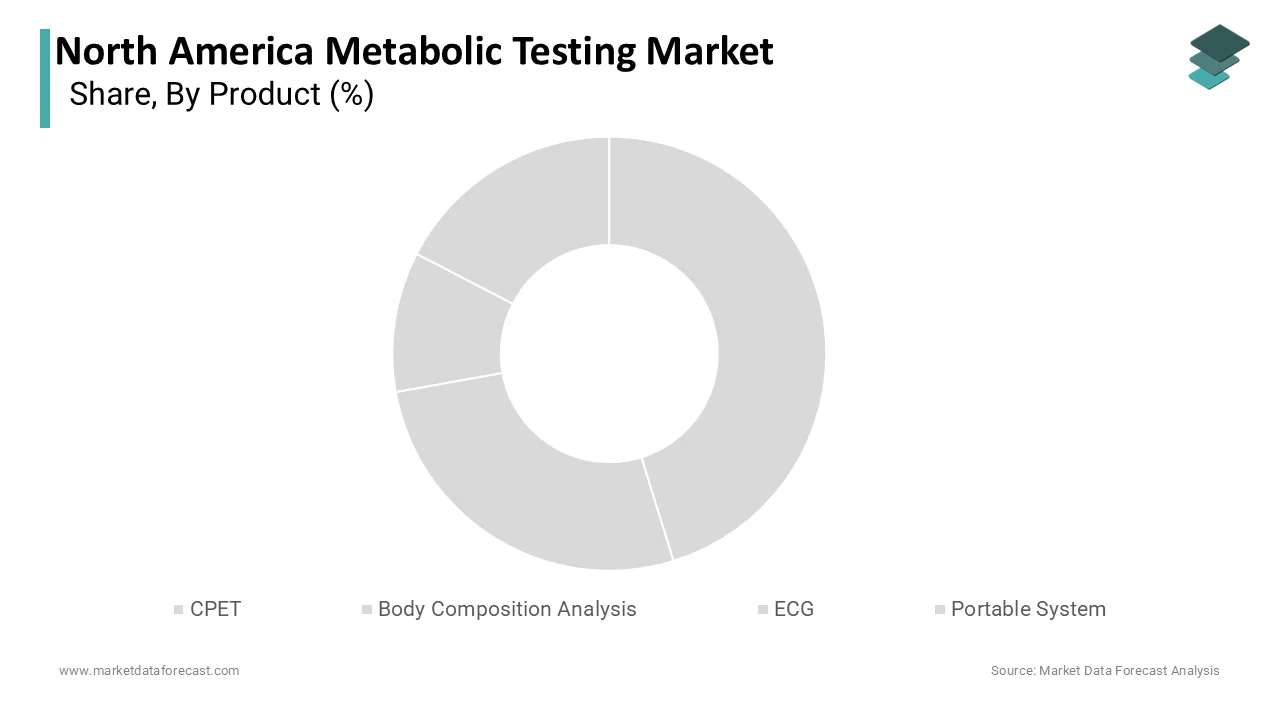
The portable systems segment is likely to experience the fastest CAGR of 8.5% during the forecast period due to the increasing demand for point-of-care testing solutions that offer convenience and immediate results outside traditional laboratory environments. In addition, the proliferation of handheld devices capable of measuring blood glucose, ketones,s and lactate levels empowers patients to manage their metabolic health autonomously. The American Diabetes Association (ADA) reports that an estimated 1.5 million Americans are newly diagnosed with diabetes each year. Moreover, the shift toward decentralized healthcare models encourages the use of portable systems in home care settings,s remote clinics, cs and emergency response scenarios. Technological advancements have significantly improved the accuracy and ease of use of these devices, making them viable alternatives to centralized lab testing for routine monitoring. The Consumer Technology Association (CTA) highlights that consumer adoption of digital health tools is expanding rapidly, driving smart wearables past the 100 million user threshold in the United States. Additionally,lifey insurance providers are increasingly reimbursing for portable monitoring equipment for chronic disease management, reducing financial barriers for patients. The integration of Bluetooth connectivity allows seamless data transfer to healthcare providers, enabling real-time remote monitoring and timely clinical interventions. These factors collectively drive the accelerated growth of portable metabolic testing systems across North America.
By Application Insights
The lifestyle diseases segment dominated the North America Metabolic Testing Market and accounted for a substantial share in 2025. This dominance of the segment was driven by the high prevalence of conditions such as type 2 diabetes, hypertension, and metabolic syndrome. These chronic conditions are directly linked to modifiable risk factors, including poor diet, et physical inactivity,ity and obesitty making metabolic testing essential for diagnosis and management. Statistics published by the International Diabetes Federation (IDF) document that the North America and Caribbean region is home to over 56 million adults living with diabetes. The economic impact of lifestyle diseases is profound. According to the Centers for Disease Control and Prevention (CDC), chronic health conditions account for 90% of the nation's $3.8 trillion in annual healthcare expenditures. Metabolic testing enables early identification of insulin resistance and dyslipidemia, allowing for preventive interventions that can halt disease progression. Clinical guidelines from the American Heart Association (AHA) advise initiating comprehensive cardiovascular risk factor screening starting at age 20, tracking body mass index, blood pressure, and fasting lipids. The increasing adoption of value-based care models incentivizes healthcare providers to focus on preventive measures rather than reactive treatments, further boosting demand for metabolic diagnostics in this segment. Workplace wellness initiatives targeting lifestyle disease prevention have also contributed to market growth, with millions of employees undergoing annual metabolic screenings. The convergence of public health priorities and clinical best practices ensures that lifestyle diseases remain the primary driver of metabolic testing utilization in North America.
The critical care segment is on the rise and is expected to be the fastest-growing segment in the market, with a CAGR of 7.8% from 2026 to 2034. This rapid growth of the segment is propelled by the increasing complexity of critical care management, where precise metabolic monitoring is vital for patient survival and recovery. Critically ill patients often experience severe metabolic disturbances, including hyperglycemia, electrolyte imbalances, and altered energy expenditure, requiring continuous assessment. Advances in bedside monitoring technologies allow for real-time measurement of metabolic parameters such as oxygen consumption, carbon dioxide production,n and resting energy expenditure. These data points guide nutritional support and ventilator settings, gs optimizing patient outcomes. The aging population contributes to higher admission rates in intensive care units. Statistical projections published by the U.S. Census Bureau project that the total population of Americans aged 65 and older will grow from roughly 56 million to nearly 95 million by 2060. Older patients are more susceptible to metabolic complications during critical illness, necessitating rigorous monitoring protocols. Furthermore, the integration of metabolic data into clinical decision support systems enhances the precision of critical care interventions. Hospitals are investing in advanced metabolic monitoring equipment to improve quality metrics and reduce length of stay, driving the rapid expansion of this segment.
By End User Insights
The hospitals segment was the largest in the North America Metabolic Testing Market and occupied a commanding share in 2025. This supremacy of the segment was supported by its central role in diagnosing and managing complex metabolic disorders. These facilities possess the infrastructure expertise and regulatory approvals necessary to perform comprehensive metabolic panels and advanced diagnostic procedures. The annual statistical survey managed by the American Hospital Association (AHA) registers a total infrastructure footprint of 6,093 hospitals operating in the United States. Hospitals serve as the primary point of contact for acute metabolic crises such as diabetic ketoacidosis and severe electrolyte imbalances necessitating immediate and accurate testing capabilities. The integration of metabolic testing into standard admission protocols ensures that baseline metabolic status is established for all patients, facilitating personalized treatment plans. Furthermore, hospitals act as referral centers for specialized metabolic clinics, attracting patients with rare genetic metabolic disorders who require sophisticated testing not available in smaller settings. The volume of tests performed in hospital laboratories far exceeds that of other end-user segments due to the high acuity of patients and the breadth of services offered. This institutional dominance establishes hospitals as the cornerstone of the metabolic testing ecosystem in North America.
The gyms segment is expected to exhibit a noteworthy CAGR of 9.2% over the forecast period owing to the evolving role of fitness centers from mere exercise facilities to holistic wellness hubs offering comprehensive health assessments. Modern gyms are increasingly incorporating metabolic testing services such as body composition analysis and resting metabolic rate measurements to provide members with personalized fitness and nutrition plans. Also, the Health & Fitness Association (HFA) highlights that the domestic health club market serves 70.2 million members across the United States. The availability of affordable and user-friendly metabolic testing devices has enabled gyms to offer these services without requiring extensive medical staff. Members value the immediate feedback provided by these tests, which enhances motivation and adherence to fitness programs. Corporate partnerships between gym chains and health insurance providers are also expanding access to metabolic testing as part of wellness incentives. The rise of boutique fitness studios focusing on specific goals such as weight loss or muscle gain further accelerates the adoption of metabolic assessments. These facilities use test results to customize training intensities and dietary recommendations, creating a competitive advantage in the crowded fitness market. The cultural shift toward quantified self and data-centric health management positions gyms as key drivers of metabolic testing growth outside traditional healthcare settings.
COUNTRY LEVEL ANALYSIS
United States Metabolic Testing Market Analysis
The United States was the top performer in the North America Metabolic Testing Market and held an 85.4% share in 2025. This dominance of the regional market was supported by the country's advanced healthcare infrastructure, high prevalence of chronic diseases,s and robust reimbursement frameworks. The Centers for Disease Control and Prevention (CDC) reports that 6 in 10 adults in the United States live with at least one chronic disease, with heart disease and cancer serving as the leading causes of death and disability. This epidemiological landscape creates an enduring demand for diagnostic tools that facilitate early detection and management. The presence of major diagnostic manufacturers and research institutions fosters innovation and rapid adoption of new testing technologies. Federal initiatives such as the Precision Medicine Initiative encourage the integration of metabolic data into personalized healthcare strategies, further stimulating market growth. The widespread availability of health insurance coverage for preventive screenings ensures that a large portion of the population has access to metabolic testing services. Additionally,y the strong culture of fitness and wellness in the United States drives consumer demand for direct-to-consumer metabolic testing kits and gym-based assessments. The regulatory environment, although stringent, provides clear pathways for product approval,l ensuring safety and efficacy. These factors collectively sustain the United States as the primary engine of growth and innovation in the North American metabolic testing sector.
Canada Metabolic Testing Market Analysis
Canada holds a considerable share of the North American metabolic testing market due to a publicly funded healthcare system that prioritizes cost-effective, preventive care, and chronic disease management. The Public Health Agency of Canada and Statistics Canada show that 3.9 million Canadians live with diagnosed diabetes, while the independent national association Diabetes Canada projects that 11.7 million Canadians live with diabetes or prediabetes combined. Also, the provincial healthcare systems are increasingly integrating metabolic screening into primary care protocols to reduce the long-term burden on hospital resources. The Canadian Agency for Drugs and Technologies in Health evaluates new diagnostic technologies for cost-effectiveness, influencing adoption rates across provinces. Recent investments in digital health infrastructure have facilitated the expansion of remote metabolic monitoring,g particularly in rural and remote communities where access to specialized care is limited. The growing awareness of indigenous health disparities has led to targeted metabolic health programs aiming to address higher rates of diabetes in these populations. Private wellness sectors,s including corporate wellness programs and fitness centers, rs are also contributing to market growth by offering complementary metabolic testing services. While the pace of adoption may be slower compared to the United States due to budgetary constraints, the focus on equitable access and preventive care ensures steady market expansion in Canada.
COMPETITIVE LANDSCAPE
The competition in the North American Metabolic Testing Market is characterized by intense rivalry among established diagnostic giants and emerging technology-driven startups. Major players leverage their extensive distribution networks and brand recognition to maintain dominance while innovators disrupt the landscape with novel point-of-care solutions. The market features a mix of laboratory-based services and portable devices, creating a diverse competitive environment. Companies differentiate themselves through product accuracy, speed of results, and user experience rather than price alone. Strategic alliances between diagnostic firms and digital health platforms are becoming increasingly common as stakeholders seek to offer holistic metabolic management solutions. The entry of consumer electronics manufacturers into the health monitoring space has further intensified competition by blurring the lines between medical devices and lifestyle products. Regulatory hurdles act as a barrier to entry for smaller firms but also ensure high standards of quality and safety. Intellectual property protection plays a crucial role in sustaining competitive advantages as companies patent unique testing methodologies and algorithms. Overall,l the market remains dynamic with continuous innovation driving shifts in competitive positioning and customer preferences across the region.
KEY MARKET PLAYERS
Some of the companies that are playing a dominant role in the North American Metabolic Testing Market include
- Geratherm Medical AG
- GE HealthCare Technologies Inc.
- OSI Systems, Inc.
- CareFusion Corporation (BD)
- MGC Diagnostics Corporation
- COSMED S.r.l.
- CORTEX Biophysik GmbH
- KORR Medical Technologies, Inc.
- AEI Technologies, Inc.
- Parvo Medics
- Microlife Medical Home Solutions, Inc.
TOP LEADING PLAYERS IN THE MARKET
- Abbott Laboratories maintains a prominent position in the North American metabolic testing market through its extensive portfolio of diagnostic solutions and continuous glucose monitoring systems. The company focuses on empowering individuals with diabetes to manage their metabolic health effectively using innovative wearable technologies. Abbott recently expanded its manufacturing capabilities in the United States to meet the surging demand for its FreeStyle Libre system,m which provides real-time glucose data without fingersticks. This strategic expansion enhances supply chain reliability and ensures broader patient access across the region. The company also invests heavily in clinical research to validate the efficacy of its metabolic monitoring tools in diverse patient populations. By integrating artificial intelligence into its data analytics platforms,s Abbott enables healthcare providers to derive actionable insights from complex metabolic data. These initiatives reinforce its commitment to improving patient outcomes and solidify its leadership in personalized metabolic care solutions throughout North America.
- Quest Diagnostics serves as a critical pillar in the North American Metabolic Testing Market by offering comprehensive laboratory services and advanced diagnostic testing capabilities. The company leverages its vast network of patient service centers to provide accessible metabolic screening, including lipid panels, glucose tests,s and thyroid function assessments. Quest recently launched enhanced digital health platforms that allow patients to view their metabolic results online and connect with healthcare professionals for personalized guidance. This digital transformation improves patient engagement and facilitates timely interventions for metabolic disorders. The company also collaborates with employers and health plans to integrate metabolic testing into preventive wellness programs targeting chronic disease management. By utilizing big data analytics,s Quest identifies population health trends and supports value-based care initiatives. These efforts demonstrate its dedication to advancing preventive healthcare and maintaining high standards of diagnostic accuracy and service delivery across the continent.
- Siemens Healthineers contributes significantly to the North American Metabolic Testing Market by providing state-of-the-art laboratory automation and diagnostic instruments. The company specializes in high-throughput analyzers that enable efficient processing of metabolic biomarkers such as enzymes, electrolytes,s and metabolites. Siemens recently introduced next-generation immunoassay systems that offer improved sensitivity and speed for detecting early signs of metabolic dysfunction. These advancements support hospitals and reference laboratories in delivering faster and more accurate results to clinicians. The company also focuses on sustainability by developingenergy-efficientt equipment and reducing waste in diagnostic processes. Siemens partners with academic institutions to drive innovation in metabolic research and develop novel testing methodologies. Through its integrated healthcare IT solutions, Siemens facilitates seamless data exchange between laboratories and electronic health records. These strategic actions enhance operational efficiency for healthcare providers and improve the overall quality of metabolic diagnostics in the region.
TOP STRATEGIES USED BY KEY MARKET PARTICIPANTS
Key players in the North American Metabolic Testing Market primarily employ strategies focused on technological innovation and strategic partnerships to maintain a competitive advantage. Companies invest heavily in research and development to create advanced diagnostic tools that offer greater accuracy and ease of use. Mergers and acquisitions are common tactics used to expand product portfolios and enter new geographic segments within the region. Collaborations with healthcare providers and insurance companies help integrate metabolic testing into standard care protocols and wellness programs. Digital health integration is another major strategy where firms develop mobile applications andcloud-basedd platforms to enhance patient engagement and data accessibility. Regulatory compliance and quality assurance remain central to operational strategies, ensuring trust and reliability among users. Additionally,y companies focus on expandingtheir direct-to-consumerr channels by offering home testing kits that empower individuals to monitor their metabolic health independently. These multifaceted approaches enable market participants to address evolving healthcare needs and capture growing demand for personalized metabolic insights.
MARKET SEGMENTATION
This research report on the North American Metabolic Testing Market has been segmented and sub-segmented into the following categories.
By Product
- CPET
- Body Composition Analysis
- ECG
- Portable System
By Application
- Critical Care
- Lifestyle Diseases
By Technology
- REE
- Body Composition Analysis
By End User
- Gym
- Sports
- Hospital
By Country
- U.S
- Canada
- Rest of North America