- Product Description Description
- Table of Contents TOC
- List of Table & Figure LOT
- Get Free Sample PDF Sample PDF
Market Size, 2025
$77 MnMarket Estimate, 2026
$82.24 MnMarket Forecast, 2034
$139 MnCAGR, 2026–2034
6.81%North America Micro Guide Catheters Market Size, Growth, Trends & Forecast (2026–2034)
The North America micro guide catheters market size was valued at USD 77 million in 2025, is estimated to reach USD 82.24 million in 2026, and is projected to scale up to USD 139 million by 2034, registering a compound annual growth rate (CAGR) of 6.81% during the forecast period from 2026 to 2034. Driven by advanced healthcare infrastructure, high prevalence of cardiovascular diseases, and the widespread shift toward minimally invasive transradial procedures, the medical device industry continues to expand steadily across the region.
Key Executive Metrics (At-a-Glance)
- 2025 Base Valuation: USD 77 Million
- 2026 Current Valuation: USD 82.24 Million
- 2034 Forecast Valuation: USD 139 Million
- Compound Annual Growth Rate (CAGR): 6.81% (2026–2034)
- Dominant Product Type: Over-the-Wire Micro Guide Catheters (holding the highest market share due to versatility and seamless instrument exchange)
- Fastest-Growing Product Type: Flow-Directed Micro Guide Catheters (projected to grow at a 9.2% CAGR, driven by neurovascular and peripheral utility)
- Dominant Application Segment: Cardiovascular (led by high volumes of percutaneous coronary interventions and coronary artery disease prevalence)
- Fastest-Growing Application Segment: Neurovascular (fueled by rising incidence of ischemic stroke and mechanical thrombectomy procedures)
- Dominant Country: United States (driven by high procedural volumes, advanced infrastructure, and major device manufacturers)
Core Market Drivers
- Rising Prevalence of Complex Coronary Artery Diseases: Escalating incidence of chronic total occlusions and calcified vessels requiring advanced tools for precise intervention.
- Adoption of Minimally Invasive Transradial Procedures: Widespread shift toward radial access in over 80% of percutaneous coronary interventions, reducing bleeding complications and recovery times.
Primary Market Restraints & Challenges
- High Cost of Advanced Micro Guide Catheters: Premium materials and complex manufacturing processes create financial burdens for cost-conscious hospital settings.
- Stringent Regulatory Approval Processes: Lengthy FDA premarket approval pathways and 510(k) clearance timelines delay market entry and increase compliance costs.
- Reimbursement Uncertainties: Payer hesitation and lag in coverage for innovative devices limit hospital procurement and commercial viability.
- Limited Availability of Skilled Interventionalists: Projected workforce shortages and steep learning curves restrict the adoption of complex catheter technologies.
North America Micro Guide Catheters Market Segmentation Breakdown
| Segment Category | Leading Sub-Segment (2025 Base) | Fastest-Growing Sub-Segment (2026–2034) |
|---|---|---|
| By Type | Over-the-Wire Micro Guide Catheters (dominant share due to seamless device exchanges) | Flow-Directed Micro Guide Catheters (projected at a 9.2% CAGR for fragile anatomy) |
| By Therapeutic Area | Cardiovascular (dominant market share backed by high PCI procedural volumes) | Neurovascular (fastest growth driven by mechanical thrombectomy for stroke) |
| By Country | United States (dominant revenue generator and innovation hub) | Canada (steady growth driven by publicly funded healthcare and rising cardiovascular prevalence) |
Major Industry Players Profiled
Key enterprises shaping the competitive North America micro guide catheters market include Lake Region Manufacturing Inc., Boston Scientific Corporation, Volcano Corporation, Micro Therapeutics Inc., LuMend Corporation, Terumo Medical Corporation, Covidien AG, ASAHI INTECC Company Limited, Medtronic plc, and Merit Medical Systems Inc..
North America Micro Guide Catheters Market Size
The North America micro guide catheters market was valued at USD 77 million in 2025, is estimated to reach USD 82.24 million in 2026, and is projected to reach USD 139 million by 2034, growing at a CAGR of 6.81% from 2026 to 2034.
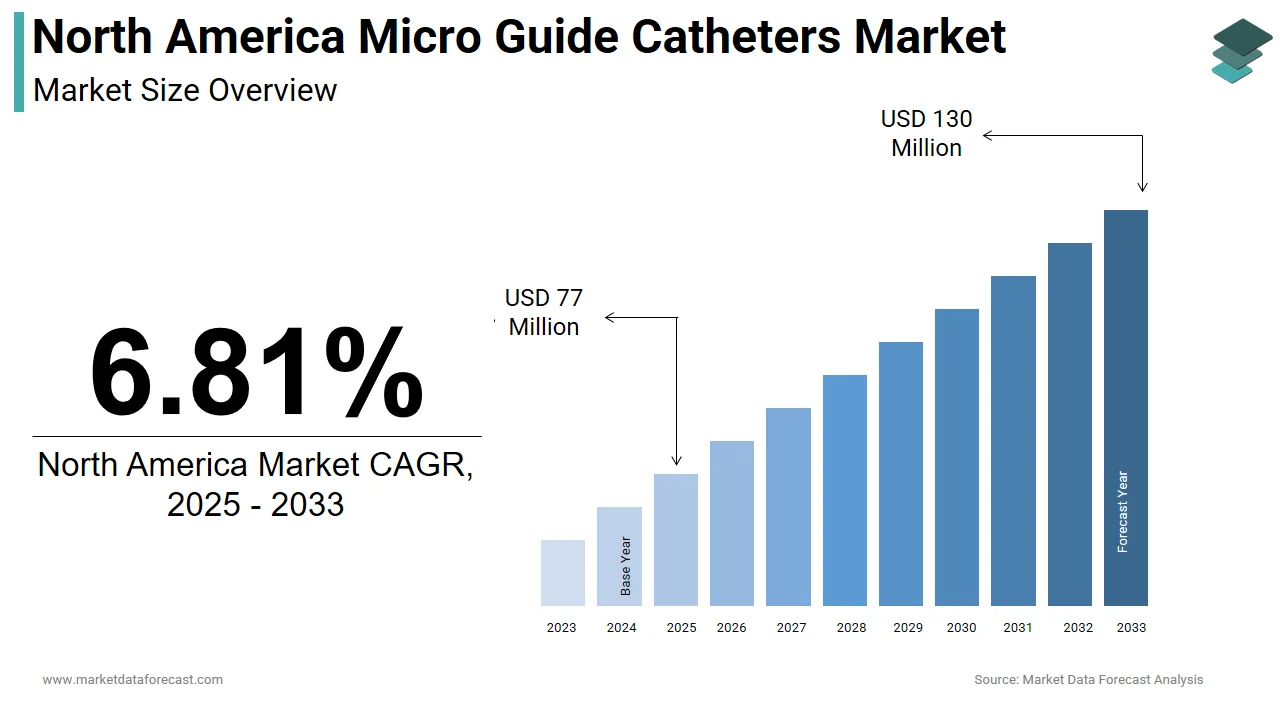
Micro guide catheters are essential for delivering therapeutic instruments such as stents and balloons to distal locations in the coronary and peripheral arteries. The region exhibits high adoption rates due to its advanced healthcare infrastructure and prevalence of cardiovascular diseases. According to the Centers for Disease Control and Prevention, heart disease remains the leading cause of death in the United States, accounting for approximately 695,000 deaths in 2021. This significant health burden necessitates frequent minimally invasive procedures where precision is paramount. As per the American Heart Association, nearly 121.5 million adults in the United States have some form of cardiovascular disease, driving the demand for sophisticated diagnostic and therapeutic tools. The shift towards transradial access approaches further propels the need for micro guide catheters that offer superior trackability and support. Regulatory approvals from the Food and Drug Administration for next-generation devices with enhanced coatings and flexibility also contribute to market dynamics. The presence of key manufacturers and research institutions in North America fosters innovation and rapid commercialization of new technologies. Consequently, the market is characterized by a strong emphasis on clinical outcomes and procedural efficiency.
MARKET DRIVERS
Rising Prevalence of Complex Coronary Artery Diseases
The escalating incidence of complex coronary artery diseases is a key factor propelling the growth of the North America micro guide catheters market, which is necessitating advanced tools for precise intervention. Patients with chronic total occlusions or heavily calcified vessels require specialized catheters that can deliver therapies effectively without causing vessel trauma. According to the American College of Cardiology, over 18 million adults in the United States suffer from coronary artery disease, with a significant portion presenting with complex anatomy. This high patient volume creates a consistent demand for micro guide catheters that offer enhanced navigability and support. As per clinical data published in the Journal of the American College of Cardiology, the use of micro catheters improves success rates in recanalizing chronic total occlusions by up to 20% compared to standard techniques. This statistical improvement underscores the clinical value of these devices in challenging cases. Interventional cardiologists increasingly prefer micro guide catheters for their ability to reduce procedure time and contrast usage. The aging population in North America further exacerbates the prevalence of complex vascular conditions, sustaining market growth. Hospitals and ambulatory surgical centers are investing in these devices to improve patient outcomes and reduce complications. The direct correlation between disease complexity and device utility drives procurement decisions across the region.
Adoption of Minimally Invasive Transradial Procedures
The widespread adoption of minimally invasive transradial access procedures is further contributing to the expansion of the North America micro guide catheters market. This approach offers reduced bleeding complications and faster patient recovery compared to traditional transfemoral access, making it the preferred choice for many interventionalists. According to the Society for Cardiovascular Angiography and Interventions, transradial access is now used in over 80% of percutaneous coronary interventions in the United States. This high adoption rate necessitates catheters that are compatible with smaller sheath sizes and offer superior maneuverability in the radial artery. As per studies cited by the National Institutes of Health, transradial procedures result in a 50% reduction in major bleeding events compared to femoral access. This safety benefit encourages hospitals to standardize their inventory with micro guide catheters suitable for this approach. The ergonomic design of modern micro catheters allows for easier handling during radial procedures, enhancing physician comfort and precision. Training programs and fellowships increasingly emphasize radial skills, further embedding these devices into routine practice. The shift towards outpatient cardiac care also supports this trend, as patients prefer less invasive options with shorter hospital stays. Consequently, the alignment of clinical preferences with device capabilities sustains robust market demand.
MARKET RESTRAINTS
High Cost of Advanced Micro Guide Catheters
The elevated cost of advanced micro guide catheters is a significant restraint on market penetration, particularly in cost-conscious healthcare settings. These specialized devices often incorporate premium materials and complex manufacturing processes, resulting in higher price points compared to standard guide catheters. According to data from the Healthcare Cost and Utilization Project, the average cost of a percutaneous coronary intervention in the United States exceeds 10,000 USD, with device costs comprising a substantial portion. This financial burden prompts hospital administrators to scrutinize procurement decisions and seek cost-effective alternatives. As per reimbursement guidelines from the Centers for Medicare and Medicaid Services, fixed payment models for certain cardiovascular procedures limit the ability of providers to pass on high device costs to payers. This constraint forces hospitals to balance clinical benefits with economic viability, sometimes opting for cheaper conventional catheters. Smaller community hospitals with limited budgets may struggle to maintain adequate stocks of premium micro guide catheters. The lack of differential reimbursement for using advanced devices further discourages their widespread adoption. Manufacturers face pressure to justify the premium pricing through demonstrable clinical advantages, which can be challenging in routine cases. Consequently, price sensitivity remains a critical barrier to market expansion in certain segments.
Stringent Regulatory Approval Processes
Stringent regulatory approval processes imposed by the Food and Drug Administration is further hindering the North America micro guide catheters market expansion. Manufacturers must undergo rigorous premarket approval or 510(k) clearance pathways, which involve extensive clinical trials and documentation. According to the Food and Drug Administration, the average review time for Class III medical devices can exceed 12 months, delaying market entry for innovative products. This prolonged timeline increases development costs and reduces the window for maximizing product lifecycle revenues. As per industry reports, the cost of bringing a new cardiovascular device to market can exceed 30 million USD, primarily due to regulatory compliance requirements. These high barriers to entry discourage smaller companies from entering the market, limiting competition and innovation. Any changes in device design or materials often require additional regulatory submissions, further slowing down product iterations. The complexity of demonstrating substantial equivalence or clinical benefit for micro guide catheters adds to the regulatory burden. Manufacturers must invest heavily in quality assurance and regulatory affairs teams to navigate these challenges. This environment favors established players with resources to manage compliance, potentially stifling disruptive technologies. Consequently, the pace of product availability is constrained by regulatory hurdles.
MARKET OPPORTUNITIES
Integration with Robotic-Assisted Interventional Systems
The integration of micro guide catheters with robotic-assisted interventional systems is a significant opportunity for market growth in North America. Robotic platforms enhance precision and stability during complex procedures, requiring compatible catheters that can respond to remote control inputs. According to the Intuitive Surgical annual report, the installed base of robotic surgical systems continues to grow, with increasing adoption in vascular interventions. This trend creates a demand for specialized micro guide catheters designed to work seamlessly with robotic arms. As per clinical studies published in the Journal of Endovascular Therapy, robotic-assisted procedures show improved accuracy in device placement and reduced radiation exposure for physicians. These benefits drive hospitals to invest in integrated solutions that combine robotics with advanced catheter technology. Manufacturers can capitalize on this opportunity by developing catheters with specific mechanical properties optimized for robotic manipulation. Partnerships with robotic system developers allow for co-innovation and tailored product offerings. The growing interest in telemedicine and remote interventions further supports this trend, as robotic systems enable experts to perform procedures from distant locations. This technological convergence opens new revenue streams and differentiates products in a competitive market. The focus on enhancing procedural precision and physician safety ensures sustained demand for compatible micro guide catheters.
Expansion into Neurovascular and Peripheral Applications
The expansion of micro guide catheter applications into neurovascular and peripheral vascular interventions offers a lucrative opportunity for market players. Traditionally used in coronary procedures, these devices are increasingly utilized for treating stroke and peripheral artery disease. According to the American Stroke Association, approximately 795,000 people in the United States suffer a stroke each year, creating a vast patient pool for neurointerventional procedures. This high incidence drives the need for precise delivery systems for thrombectomy and stenting in delicate cerebral vessels. As per data from the Society for Vascular Surgery, over 8 million Americans suffer from peripheral artery disease, with many requiring minimally invasive treatments. Micro guide catheters provide the necessary support and trackability for navigating tortuous peripheral arteries. Manufacturers can develop specialized variants with enhanced flexibility and tip shapes for these diverse anatomies. The growing awareness of early detection and treatment of stroke and PAD fuels demand for advanced interventional tools. Clinical guidelines increasingly recommend endovascular approaches for these conditions, further boosting market potential. By diversifying their product portfolios to address these indications, companies can tap into new customer segments. This strategic expansion reduces reliance on the saturated coronary market and drives overall growth.
MARKET CHALLENGES
Reimbursement Uncertainties for New Technologies
Reimbursement uncertainties for new and advanced micro guide catheter technologies are a major challenge to market adoption in North America. Payers often hesitate to cover the higher costs associated with innovative devices without robust evidence of long-term cost-effectiveness. According to the Kaiser Family Foundation, changes in healthcare policy and reimbursement rates create financial instability for hospitals adopting new technologies. This uncertainty makes healthcare providers cautious about investing in premium micro guide catheters that may not be fully reimbursed. As per analysis from the American Medical Association, the lag between regulatory approval and reimbursement coverage can span several years, hindering commercial viability. During this period, manufacturers struggle to gain traction as hospitals avoid out-of-pocket expenses. The complexity of coding and billing for specialized catheters adds to the administrative burden for providers. Variations in coverage policies across different insurance plans and regions further complicate market access. Manufacturers must invest in health economics and outcomes research to demonstrate value to payers, which is time-consuming and costly. This environment slows down the diffusion of innovative products and limits patient access to advanced care. Addressing these reimbursement gaps requires collaborative efforts between industry stakeholders and policymakers.
Limited Availability of Skilled Interventionalists
The limited availability of skilled interventionalists proficient in using advanced micro guide catheters is a significant challenge to market growth. These devices require specialized training and experience to maximize their benefits and minimize complications. According to the Association of American Medical Colleges, there is a projected shortage of up to 124,000 physicians by 2034, including specialists in cardiology and radiology. This workforce gap restricts the number of procedures performed and limits the adoption of complex technologies. As per survey data from the Society for Cardiovascular Angiography and Interventions, many fellows report insufficient hands-on training with newer microcatheter technologies during their residency. This skills deficit leads to hesitation among practitioners to adopt advanced devices, preferring familiar conventional tools. The learning curve associated with micro guide catheters can be steep, requiring dedicated proctoring and practice. Hospitals in rural or underserved areas often lack access to experienced interventionalists, further limiting market penetration. Manufacturers face the challenge of providing comprehensive education and support to bridge this skills gap. Without adequate training programs, the full potential of these devices remains unrealized. Addressing this human resource constraint is critical for sustaining market expansion and ensuring patient safety.
REPORT COVERAGE
| REPORT METRIC | DETAILS |
| Market Size Available | 2025 to 2034 |
| Base Year | 2025 |
| Forecast Period | 2026 to 2034 |
| Segments Covered | By Type, Therapeutic Area, and Country. |
| Various Analyses Covered | Global, Regional and Country-Level Analysis, Segment-Level Analysis, Drivers, Restraints, Opportunities, Challenges; PESTLE Analysis; Porter’s Five Forces Analysis, Competitive Landscape, Analyst Overview of Investment Opportunities |
| Countries Covered | United States, Canada, Mexico, Rest of North America |
| Market Leaders Profiled | Lake Region manufacturing Inc., Boston Scientific Corporation, Volcano Corporation, Micro Therapeutics Inc., LuMend Corporation, Terumo Medical Corporation, Covidien AG, ASAHI INTECC Company Limited, Medtronic plc, and Merit Medical Systems Inc. |
SEGMENTAL ANALYSIS
By Type Insights
The over-the-wire micro guide catheters segment led the market by holding the highest share of the North America micro guide catheters market in 2025 due to their versatility and widespread acceptance in standard interventional procedures. The primary driver for the dominance of over-the-wire micro guide catheters is their ability to facilitate seamless instrument exchange during complex interventions. This feature is critical in procedures requiring multiple device swaps, such as chronic total occlusion recanalization or complex stenting. According to the Society for Cardiovascular Angiography and Interventions, over 70% of complex percutaneous coronary interventions involve the use of exchangeable systems to ensure optimal device positioning. This high utilization rate underscores the necessity of over-the-wire designs in modern catheterization labs. As per clinical guidelines from the American College of Cardiology, the ability to swap guidewires for specialized wires enhances success rates in tortuous anatomy by allowing physicians to adapt to changing vascular conditions. This adaptability reduces procedure time and contrast usage, which are key performance metrics for hospitals. The familiarity of interventionalists with over-the-wire techniques further cements their market leadership. Training programs predominantly focus on these systems, ensuring a steady supply of skilled operators. Manufacturers continue to refine these catheters with improved lubricity and torque control, maintaining their relevance. The broad compatibility with various guidewires and therapeutic devices makes them the default choice for most cardiovascular laboratories. This universal applicability ensures sustained demand across diverse clinical settings.
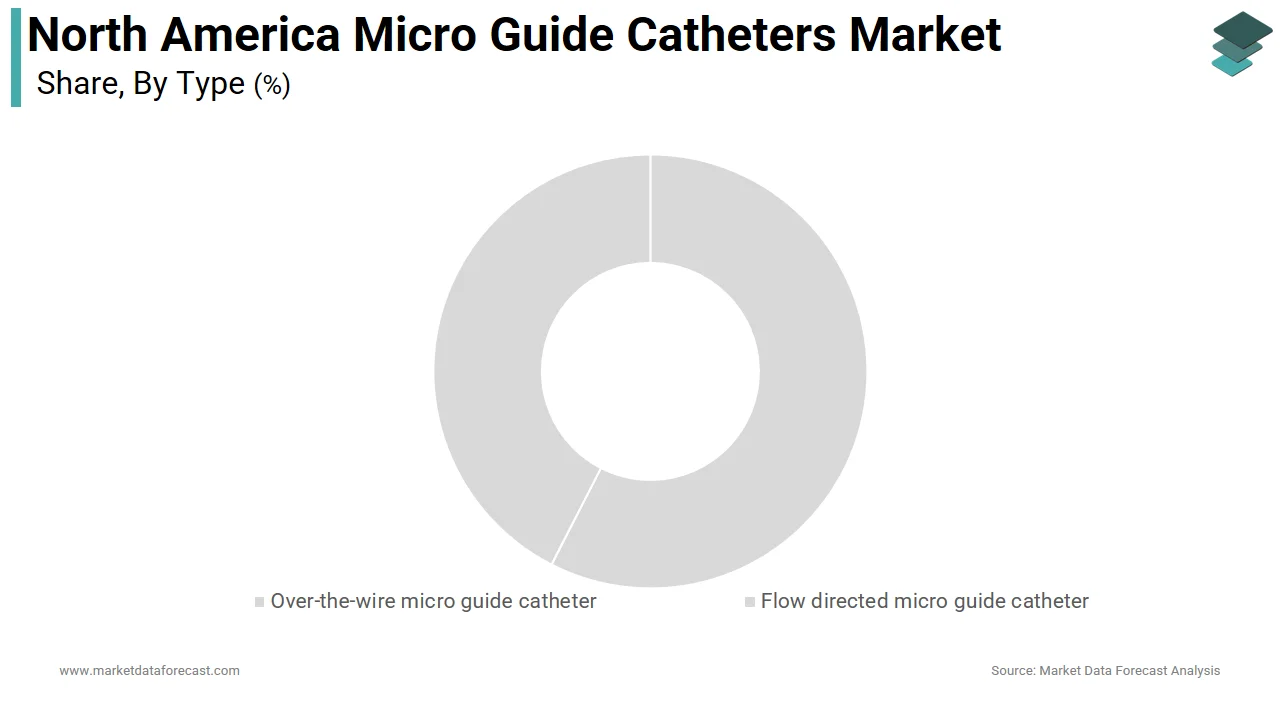
On the other hand, the flow-directed micro guide catheters segment is projected to grow at the fastest CAGR of 9.2% during the forecast period owing to their utility in navigating delicate and hard-to-reach vascular structures without the need for rigid guidewires. The rapid growth of flow-directed micro guide catheters is fueled by their superior ability to navigate tortuous and fragile vascular anatomy using blood flow dynamics rather than mechanical pushability. This feature is particularly valuable in neurovascular and peripheral interventions where vessel walls are thin and prone to injury. According to the American Stroke Association, the adoption of flow-directed techniques in acute ischemic stroke treatment has increased by 30% in recent years due to improved safety profiles. This trend drives demand for catheters that can gently traverse complex cerebral vasculature. As per clinical studies published in the Journal of Neurointerventional Surgery, flow-directed catheters reduce the risk of vessel dissection by 40% compared to traditional wire-based systems. This statistical advantage makes them the preferred choice for sensitive procedures. Interventionalists are increasingly recognizing the benefits of reduced mechanical trauma, leading to wider adoption in routine practice. The development of advanced materials that enhance flexibility while maintaining trackability supports this growth. Manufacturers are investing in proprietary tip designs that optimize flow directionality. The expansion of indications for endovascular therapy in peripheral artery disease further boosts demand. Hospitals are updating their inventory to include these specialized devices to handle complex cases more safely. The focus on minimizing complications aligns with value-based care initiatives, encouraging the shift towards flow-directed technologies.
By Therapeutic Area Insights
The cardiovascular segment led the market by holding the leading share of the North America micro guide catheters market in 2025. The growth of the cardiovascular segment in the North American market is attributed to the high prevalence of coronary artery disease and the volume of percutaneous coronary interventions performed annually. The dominance of the cardiovascular segment is further attributed to the immense volume of percutaneous coronary interventions performed across North America. These procedures require precise delivery systems for stents and balloons, making micro guide catheters indispensable. According to the American Heart Association, approximately 1 million percutaneous coronary interventions are performed annually in the United States alone. This substantial procedure volume creates a consistent and high demand for micro guide catheters. As per data from the National Inpatient Sample, coronary artery disease accounts for over 400,000 hospitalizations each year, many of which result in interventional procedures. The recurring nature of cardiovascular disease ensures steady consumption of disposable catheters. Hospitals maintain large inventories to support emergency and elective cases. The shift towards complex interventions, such as bifurcation stenting and chronic total occlusion repair, further increases the need for specialized micro guide catheters. These procedures often require multiple catheters and exchanges, boosting unit sales. The aging population contributes to the rising incidence of coronary events, sustaining market growth. Reimbursement policies generally cover these essential procedures, ensuring financial viability for providers. The established infrastructure of catheterization labs supports efficient delivery of care. This robust procedural landscape solidifies the cardiovascular segment as the market leader.
However, the neurovascular segment is experiencing the fastest growth and is predicted to register a promising CAGR in the global market owing to the increasing adoption of endovascular therapies for stroke and other cerebrovascular conditions. The rapid growth of the neurovascular segment is fueled by the rising incidence of ischemic stroke and the corresponding increase in mechanical thrombectomy procedures. Micro guide catheters are essential for delivering retrieval devices to the brain vessels. According to the Centers for Disease Control and Prevention, someone in the United States suffers a stroke every 40 seconds, highlighting the urgent need for effective treatment options. This high frequency drives the demand for rapid and reliable neurointerventional tools. As per data from the Get With The Guidelines Stroke Registry, the number of mechanical thrombectomies performed annually has doubled in the last five years. This surge in procedure volume directly translates to increased consumption of micro guide catheters. The expansion of comprehensive stroke centers across North America improves access to these life-saving treatments. Guidelines recommend endovascular therapy for eligible patients, standardizing the use of these devices. The time-sensitive nature of stroke care requires efficient and easy-to-use catheters. Manufacturers are innovating to create devices that reduce preparation time. The growing awareness of stroke symptoms among the public leads to earlier hospital arrivals, increasing the pool of treatable patients. This demographic and clinical trend ensures robust growth for the neurovascular segment.
COUNTRY LEVEL ANALYSIS
U.S. Micro Guide Catheters Market Analysis
The U.S. held the dominant share of the North America micro guide catheters market in 2025 and is likely to sustain robust demand for micro guide catheters over the coming years owing to the advanced healthcare infrastructure and high procedural volumes. The country is a global leader in medical innovation and adoption of interventional technologies. According to the Centers for Disease Control and Prevention, heart disease remains the leading cause of death, driving millions of interventions annually. This high burden creates a massive demand for micro guide catheters. As per data from the American Heart Association, the United States performs over 1 million percutaneous coronary interventions each year. This volume sustains a robust market for interventional devices. The presence of major medical device manufacturers in the country fosters continuous innovation and rapid product launches. Regulatory pathways through the Food and Drug Administration are well established, facilitating market entry for new technologies. The high level of health insurance coverage ensures patient access to advanced care. Academic medical centers drive research and development, setting clinical standards. The shift towards value-based care encourages the use of efficient and effective devices. The large population and aging demographics further support market growth. The United States serves as the primary revenue generator for most companies in this sector. Its influence shapes global trends in micro guide catheter design and usage.
Canada Micro Guide Catheters Market Analysis
Canada is anticipated to experience steady market growth over the next few years due to a publicly funded healthcare system and steady growth in interventional procedures. The country focuses on equitable access to care and cost-effectiveness. According to Statistics Canada, the prevalence of cardiovascular diseases is rising, with over 2.4 million adults living with heart disease. This increasing burden drives demand for micro guide catheters in public hospitals. As per data from the Canadian Institute for Health Information, the number of cardiac catheterizations has increased by 5% annually in recent years. This growth supports market expansion despite budget constraints. The provincial healthcare systems manage procurement through centralized tenders, influencing pricing and product selection. Regulatory approval by Health Canada ensures high safety standards for medical devices. The adoption of transradial access is widespread, favoring micro guide catheters. The aging population contributes to higher procedure volumes. Government initiatives to reduce wait times for cardiac care stimulate investment in capacity. Canadian hospitals prioritize devices that offer good clinical outcomes at reasonable costs. The market is stable with moderate growth potential. Collaboration with international manufacturers ensures access to the latest technologies. Canada serves as an important secondary market in the region.
COMPETITIVE LANDSCAPE
The competition in the North America Micro Guide Catheters Market is characterized by intense rivalry among established multinational corporations and specialized niche players. Large medical device companies leverage their extensive distribution networks and brand recognition to dominate the market. They focus on continuous innovation to differentiate their products through enhanced features such as superior lubricity and torque control. Smaller firms compete by offering specialized solutions for specific anatomical challenges or procedural needs. The market sees frequent product launches as companies strive to meet evolving clinical demands and regulatory standards. Strategic mergers and acquisitions are common as larger entities seek to expand their product portfolios and technological capabilities. Partnerships with academic institutions and research organizations drive clinical validation and adoption. Price competition remains significant, particularly in the hospital procurement sector where cost containment is a priority. However, differentiation through clinical performance and physician preference often outweighs price considerations. Regulatory compliance and quality assurance are critical barriers to entry that favor incumbent players. The focus on value-based care encourages manufacturers to demonstrate cost-effectiveness and improved patient outcomes. Overall, the competitive landscape drives continuous improvement in device technology and clinical practice.
KEY MARKET PLAYERS
The leading companies operating in the North America micro guide catheters market include:
- Lake Region Manufacturing Inc.
- Boston Scientific Corporation
- Volcano Corporation
- Micro Therapeutics Inc.
- LuMend Corporation
- Terumo Medical Corporation
- Covidien AG
- ASAHI INTECC Company Limited
- Medtronic plc
- Merit Medical Systems Inc.
TOP PLAYERS IN THE MARKET
- Medtronic plc remains a dominant force in the North America Micro Guide Catheters Market through its comprehensive portfolio of interventional cardiology and neurovascular devices. The company consistently invests in research and development to enhance catheter trackability and support for complex procedures. Recently Medtronic launched next generation micro guide catheters with improved hydrophilic coatings to reduce friction during navigation. This innovation addresses physician demands for smoother device handling in tortuous anatomy. The corporation also collaborates with leading medical centers to conduct clinical trials that validate the safety and efficacy of its products. These partnerships strengthen clinical evidence and drive adoption among interventionalists. Medtronic focuses on expanding its distribution network to ensure widespread availability across hospitals and ambulatory surgical centers. Its commitment to training programs helps physicians master advanced techniques using their devices. The company’s robust regulatory expertise facilitates rapid approval of new product iterations. By prioritizing patient outcomes and procedural efficiency, Medtronic maintains its leadership position in the competitive landscape.
- Boston Scientific Corporation contributes significantly to the North America Micro Guide Catheters Market by offering innovative solutions tailored for minimally invasive interventions. The company specializes in developing high-performance catheters that provide superior torque control and visibility. Recently, Boston Scientific introduced a new line of flow-directed microguide catheters designed for neurovascular applications. This expansion allows the company to tap into the growing stroke treatment market. The corporation actively engages in strategic partnerships with robotics firms to integrate its catheters with automated systems. These collaborations enhance precision and reduce physician fatigue during long procedures. Boston Scientific also invests in digital health platforms that provide real-time data analytics for procedural optimization. Its focus on sustainability includes developing eco friendly packaging and manufacturing processes. The company’s strong presence in academic institutions supports continuous education and skill development. By addressing diverse clinical needs Boston Scientific strengthens its reputation as a trusted partner for healthcare providers.
- Terumo Medical Corporation leverages its extensive experience in vascular access to maintain a strong position in the North America Micro Guide Catheters Market. The company is known for producing reliable and cost effective catheters that meet rigorous quality standards. Recently Terumo expanded its manufacturing capabilities in the United States to improve supply chain resilience and reduce lead times. This strategic move ensures consistent product availability for healthcare facilities. The corporation focuses on user-centric design principles to enhance ease of use for interventionalists. Terumo also participates in global health initiatives to promote safe injection practices and infection control. Its commitment to innovation includes developing catheters with enhanced radiopacity for better visualization under fluoroscopy. The company collaborates with distributors to expand its reach in underserved rural areas. Terumo’s emphasis on customer service and technical support builds long-term relationships with clients. By balancing quality and affordability, Terumo continues to grow its presence in the dynamic North American market.
TOP STRATEGIES USED BY KEY MARKET PARTICIPANTS
Key players in the North American Micro Guide Catheters Market primarily employ product innovation and strategic collaborations to sustain growth. Companies invest heavily in research and development to create advanced catheter designs with improved trackability and support. These innovations address the increasing complexity of cardiovascular and neurovascular procedures. Manufacturers also form alliances with robotic surgery firms to integrate their devices with automated platforms. Such partnerships enhance procedural precision and appeal to technologically advanced hospitals. Another major strategy involves expanding into emerging application areas such as peripheral and neurointerventions. This diversification reduces reliance on saturated coronary markets and opens new revenue streams. Firms also focus on comprehensive training programs to educate physicians on proper device usage. These initiatives build brand loyalty and ensure optimal clinical outcomes. Additionally, companies are adopting sustainable manufacturing practices to meet environmental regulations. Competitive pricing models and value-based contracts are utilized to secure long-term hospital agreements. These multifaceted strategies enable participants to maintain competitiveness in an evolving market landscape.
MARKET SEGMENTATION
This research report on the North America micro guide catheters market has been segmented and sub-segmented into the following categories
By Type
- Over-the-wire micro guide catheter
- Flow directed micro guide catheter
By Therapeutic Area
- Neurovascular
- Cardiovascular
By Country
- The United States
- Canada
- Rest of North America