North America Nanomedicine Market Size, Share, Trends, and Growth Analysis Report, Segmented by Product, Disease Type, Nanomolecule Type, and Country – Industry Forecast From 2026 to 2034
North America Nanomedicine Market Report Summary
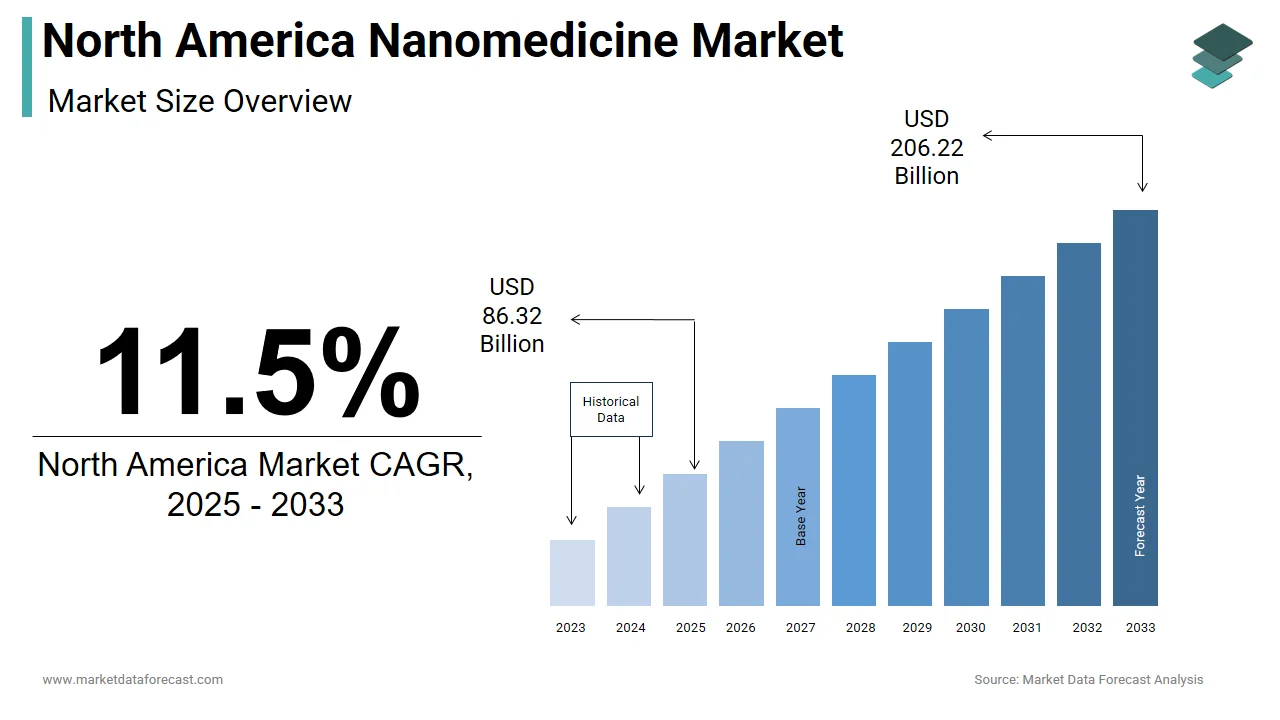
The North America nanomedicine market was valued at USD 86.32 billion in 2025 and is projected to grow from USD 96.25 billion in 2026 to USD 229.92 billion by 2034, registering a CAGR of 11.5% from 2026 to 2034. Market growth is driven by increasing adoption of nanotechnology in drug delivery, rising prevalence of chronic diseases, expanding investments in precision medicine, and continuous advancements in nanomaterial-based therapeutics. Nanomedicine is transforming disease diagnosis and treatment by improving drug targeting, enhancing therapeutic efficacy, and minimizing adverse effects. Growing research and development activities, favorable regulatory support, and increasing commercialization of nanotechnology-based healthcare products are further fueling market expansion across North America.
Key Market Trends
- Increasing adoption of nanotechnology-based targeted drug delivery systems.
- Rising investments in precision medicine and personalized therapeutics.
- Growing application of nanomedicine in cancer diagnosis and treatment.
- Expansion of nanoparticle-based vaccines and regenerative medicine technologies.
- Continuous advancements in nanodiagnostics and multifunctional nanomaterials.
Segmental Insights
- Based on product, the drug delivery segment dominated the North America nanomedicine market in 2025, driven by the increasing need to enhance the pharmacokinetics, bioavailability, and targeted delivery of therapeutic agents while minimizing systemic side effects.
- Based on disease type, the oncological diseases segment held the leading share of the market in 2025, supported by the rising incidence of cancer and growing adoption of nanoparticle-based therapies for targeted drug delivery, tumor imaging, and precision oncology.
Regional Insights
The North America nanomedicine market continues to experience robust growth, supported by advanced healthcare infrastructure, strong biotechnology ecosystems, and increasing investment in nanotechnology research.
- The United States dominated the North America nanomedicine market in 2025 by accounting for 85.5% share, driven by substantial research funding, a strong pharmaceutical and biotechnology industry, extensive clinical research activities, and early adoption of innovative nanomedicine technologies.
- Canada is witnessing steady market growth, supported by its strong public healthcare system, increasing government investment in biomedical research, expanding nanotechnology research initiatives, and growing collaborations between academic institutions and biotechnology companies.
Competitive Landscape
The North America nanomedicine market is characterized by the presence of leading pharmaceutical, biotechnology, and medical technology companies focusing on the development of advanced nanotechnology-based therapeutics and diagnostics. Market participants are investing heavily in research and development, strategic collaborations, clinical trials, and commercialization of innovative nanomedicine products. Advancements in targeted drug delivery, nanodiagnostics, and precision medicine continue to shape the competitive landscape.
Prominent companies operating in the North America nanomedicine market include Johnson & Johnson, Merck & Co., Pfizer, Abbott Laboratories, GE Healthcare, Celgene Corporation, Nanosphere, Inc., Moderna Inc., Gilead Sciences, Hoffmann-La Roche, Nanospectra Biosciences, and Arrowhead Pharmaceuticals.
North America Nanomedicine Market Size
The size of the North America nanomedicine market was worth USD 86.32 billion in 2025. The North america market is anticipated to grow at a CAGR of 11.5% from 2026 to 2034 and be worth USD 229.92 billion by 2034 from USD 96.25 billion in 2026.
Nanomedicine is the application of nanotechnology to healthcare. It involves using microscopic tools and materials, typically 1 to 100 nanometers in size, to diagnose, treat, and prevent diseases at the cellular or molecular level. This specialized sector leverages unique physicochemical properties such as enhanced permeability and retention effects to improve drug bioavailability, target specificity, and reduce systemic toxicity. The region serves as a global hub for innovation driven by robust research infrastructure, substantial venture capital funding, and supportive regulatory frameworks established by the United States Food and Drug Administration and Health Canada. According to the National Institutes of Health (NIH), the U.S. Food and Drug Administration (FDA) has approved over 50 nanopharmaceutical products for clinical use, primarily across oncology and infectious disease management. The American Cancer Society (ACS) projects that approximately 2.1 million new cancer cases will be diagnosed in the United States in 2026, driving the demand for targeted nanoscale therapies. Nanoparticle-based delivery systems enable precise accumulation of chemotherapeutic agents within tumor microenvironments, significantly improving patient outcomes. Furthermore, demographic projections from the U.S. Census Bureau indicate that the United States population aged 65 and older will reach nearly 95 million by 2060, expanding the patient base requiring advanced treatments for age-related degenerative conditions. Academic institutions such as Harvard University and Massachusetts Institute of Technology continue to pioneer novel lipid-based and polymeric nanoparticles, fostering a dynamic ecosystem of translational research. This convergence of scientific breakthrough, clinical necessity, and regulatory support defines the current landscape of the nanomedicine industry in North America.
MARKET DRIVERS
Rising Prevalence of Chronic Diseases Drives Demand for Targeted Therapies
The escalating burden of chronic diseases, particularly cancer and cardiovascular disorders, contributes to the growth of the North America nanomedicine market. Traditional therapeutic approaches often suffer from poor solubility, rapid clearance, and non-specific distribution, leading to suboptimal efficacy and severe adverse effects. Nanomedicine addresses these limitations by encapsulating active pharmaceutical ingredients within protective carriers that enhance stability and facilitate controlled release at disease sites. The Centers for Disease Control and Prevention (CDC) reports that 90% of the United States' $5.3 trillion in annual healthcare expenditures is driven by individuals with chronic and mental health conditions. Cancer remains the second leading cause of death in the region, with the American Cancer Society reporting over 600000 deaths attributed to malignancies each year. Nanoparticle formulations such as liposomal doxorubicin and albumin-bound paclitaxel have demonstrated superior safety profiles and improved survival rates in clinical trials, driving their integration into standard care protocols. The ability of nanocarriers to cross biological barriers, including the blood-brain barrier, opens new avenues for treating neurological conditions. Pharmaceutical companies are increasingly prioritizing nano-enabled drug development to differentiate their portfolios and address unmet medical needs. This shift toward precision medicine, fueled by the high incidence of complex chronic conditions, ensures sustained demand for innovative nanotherapeutics. Healthcare providers recognize the value of these advanced formulations in reducing hospitalization rates and improving the quality of life for patients with refractory diseases.
Significant Government and Private Investment in Research and Development
Substantial financial commitments from government agencies and private investors are also a critical driver for the growth of the North America nanomedicine market. This accelerates technological innovation and clinical translation. The United States government, through the National Nanotechnology Initiative, has allocated billions of dollars since its inception to support interdisciplinary research in nanoscience and engineering. Coordinated federal investments overseen by the National Nanotechnology Initiative (NNI) exceed $1 billion annually across multiple participating agencies to drive joint academic, industrial, and national laboratory developments. This financial backing enables the exploration of novel materials such as gold nanoparticles, dendrimers, and quantum dots for diverse medical applications. Private venture capital firms have also recognized the potential of nanomedicine, investing heavily in startups focused on drug delivery, diagnostics, and regenerative medicine. Data from PitchBook indicates that biotechnology startups in North America raised over 20 billion dollars in recent years, with a significant portion directed toward nano-based platforms. The presence of world-class research hubs in Boston, San Francisco, and Toronto fosters an environment conducive to rapid prototyping and testing. Regulatory incentives such as the Fast Track designation by the Food and Drug Administration further encourage investment by expediting the review process for promising therapies. These combined financial resources reduce the risk associated with early-stage development and attract top scientific talent to the field. The continuous influx of capital ensures that groundbreaking discoveries move efficiently from the laboratory bench to bedside applications, strengthening the competitive position of North American entities in the global nanomedicine landscape.
MARKET RESTRAINTS
Complex Regulatory Pathways and Safety Concerns Delay Commercialization
The intricate regulatory landscape surrounding nanomedicine products presents a significant barrier to the North America nanomedicine market entry. This is due to concerns regarding long-term safety, biodistribution, and toxicity. Unlike conventional small-molecule drugs, nanoparticles exhibit unique behaviors in biological systems that are not fully understood, requiring extensive preclinical and clinical evaluation. According to the United States Food and Drug Administration, manufacturers must provide comprehensive data on particle size, surface charge, composition, and degradation kinetics to demonstrate safety and efficacy. The meticulous characterization requirements for nanomedicines contribute to a prolonged developmental landscape, mirroring the traditional pharmaceutical lifecycle, which typically requires 10 to 12 years to navigate from initial discovery to commercial market launch. The European Medicines Agency and other global bodies have highlighted the lack of standardized characterization methods as a major challenge leading to inconsistencies in regulatory submissions. Potential risks such as immune system activation, accumulation in vital organs, and environmental impact raise additional hurdles that regulators carefully assess. The absence of specific guidelines for certain types of nanomaterials forces companies to navigate ambiguous requirements, increasing development costs and uncertainty. Clinical trials often face recruitment challenges due to patient hesitation regarding novel technologies with unknown long-term effects. Furthermore, post-marketing surveillance requirements are stringent, necessitating ongoing monitoring of adverse events, which adds to the operational burden. These regulatory complexities discourage smaller companies with limited resources from entering the market and slow down the pace of innovation. Until harmonized international standards are established, the regulatory burden will remain a persistent restraint. Consequently, this will hinder the rapid expansion of the nanomedicine market.
High Manufacturing Costs and Scalability Issues Limit Accessibility
The prohibitive cost of manufacturing nanomedicine products, coupled with technical problems in scaling up production processes, restricts widespread accessibility and penetration of the North American nanomedicine market. Producing nanoparticles with consistent size distribution, purity, and stability requires sophisticated equipment and controlled environments that are expensive to establish and maintain. A study shows that the complex multi-step synthesis, purification, and sterile processing requirements of complex nanotherapeutics can elevate the cost of goods significantly above conventional small-molecule formulations. While expanding manufacturing capabilities poses logistical engineering challenges, advanced processing tools like continuous-flow microfluidics and scale-tailored high-pressure homogenization are designed to preserve critical structural parameters and minimize batch-to-batch variations during volume scale-up. This inconsistency poses significant risks for regulatory approval and clinical reliability, forcing manufacturers to invest heavily in process optimization. The need for specialized raw materials and sterile packaging further escalates production expenses, limiting the ability of companies to offer competitive pricing. Reimbursement policies in North America often lag behind the introduction of new technologies, leaving patients to bear high out-of-pocket costs. Delays in local market commercialization often arise from the extensive institutional formulary review processes and local healthcare coverage evaluations required to offset the steep upfront costs of advanced nanotech treatments. Additionally, the short shelf life of certain lipid-based nanoparticles necessitates cold chain logistics, adding to distribution costs. These economic factors hinder the adoption of nanomedicine in resource-constrained settings and limit its potential to replace cheaper generic alternatives. Without advancements in cost-effective manufacturing technologies, the market will remain confined to niche applications. Thus, it will fail to achieve broad mainstream usage.
MARKET OPPORTUNITIES
Integration of Artificial Intelligence in Drug Design and Delivery
The convergence of artificial intelligence with nanomedicine offers transformative opportunities to accelerate drug discovery, optimize nanoparticle design, and personalize treatment strategies, which drives the growth of the North America nanomedicine market. Machine learning algorithms can analyze vast datasets of molecular interactions to predict the behavior of nanoparticles in biological environments, reducing the time and cost associated with experimental trial and error. According to Nature Biotechnology, AI-driven models have successfully identified optimal lipid compositions for mRNA vaccines, enhancing their stability and immunogenicity. This computational approach enables researchers to simulate how different surface modifications affect cellular uptake and biodistribution, allowing for rational design of targeted delivery systems. The National Institutes of Health supports initiatives that integrate big data analytics with nanotechnology, fostering innovation in precision medicine. AI tools can also assist in identifying patient subgroups most likely to respond to specific nanotherapies based on genetic and proteomic profiles, improving clinical trial success rates. Pharmaceutical companies are increasingly partnering with tech firms to leverage these capabilities, creating a competitive advantage in developing next-generation medicines. The ability to rapidly iterate designs virtually before physical synthesis minimizes waste and accelerates the path to clinical validation. Furthermore, AI enhances manufacturing quality control by detecting anomalies in real time, ensuring consistent product quality. As computational power increases and algorithms become more sophisticated, the synergy between AI and nanomedicine will unlock new therapeutic possibilities. This technological integration positions North America at the forefront of intelligent drug development, driving efficiency and efficacy in healthcare delivery.
Expansion into Neurological and Infectious Disease Applications
The application of nanomedicine in treating neurological disorders and infectious diseases unlocks potential for the North America nanomedicine market. This is driven by the urgent need for effective interventions in these challenging areas. The blood-brain barrier poses a formidable obstacle for conventional drugs, limiting their ability to reach central nervous system targets. Nanoparticles engineered with specific ligands can facilitate transport across this barrier, enabling treatment of conditions such as Alzheimer’s, Parkinson’s, and brain tumors. Recent studies published in Science Translational Medicine demonstrate that gold nanoparticles can deliver neuroprotective agents directly to affected brain regions, showing promise in slowing disease progression. In the realm of infectious diseases, nanomedicine offers solutions for combating antibiotic-resistant bacteria and viral pathogens. The Centers for Disease Control and Prevention identifies antimicrobial resistance as one of the biggest public health challenges facing the world, necessitating novel approaches. Nanoparticles can encapsulate antibiotics, protecting them from degradation and enhancing penetration into bacterial biofilms. Additionally, mRNA vaccine technology pioneered during the pandemic relies on lipid nanoparticles for effective delivery, paving the way for a rapid response to emerging infectious threats. The versatility of nanocarriers allows for multifunctional platforms that combine diagnosis and therapy in theranostics. As research advances in these fields, the potential for commercial success grows, attracting investment and strategic partnerships. Expanding beyond oncology diversifies the market and addresses critical global health priorities.
MARKET CHALLENGES
Lack of Standardized Characterization Methods Hinders Reproducibility
The absence of universally accepted standards for characterizing nanomedicine products is a significant challenge to reproducibility, regulatory approval, and clinical consistency, which impedes the growth of the North America nanomedicine market. Nanoparticles are complex structures defined by multiple parameters, including size, shape, surface charge, porosity, and chemical composition, which can vary significantly between batches. Different laboratories often use varying methods for size determination, such as dynamic light scattering or electron microscopy, leading to discrepant results that complicate data comparison. This lack of harmonization creates uncertainty for regulators who require precise and reproducible data to assess safety and efficacy. Manufacturers struggle to validate their processes without clear benchmarks, increasing the risk of batch failures and product recalls. The American Association of Pharmaceutical Scientists emphasizes the need for robust analytical tools capable of characterizing nanoparticles in biological fluids where they may aggregate or degrade. Without standardized protocols, it is difficult to correlate preclinical findings with clinical outcomes, hindering the translation of research into practice. Academic researchers and industry professionals face difficulties in collaborating effectively due to incompatible data formats and methodologies. This fragmentation slows down innovation and increases the cost of development as companies must perform redundant tests to satisfy different regulatory bodies. Addressing this challenge requires coordinated efforts among stakeholders to develop and adopt unified characterization frameworks.
Potential Long-Term Toxicity and Environmental Impact Concerns
Concerns regarding the long-term toxicity of nanomaterials and their environmental impact remain a persistent challenge for the North America nanomedicine market. Consequently, these issues significantly affect public perception, regulatory scrutiny, and market acceptance. The small size of nanoparticles allows them to penetrate cells and tissues, potentially causing oxidative stress, inflammation, or genetic damage that may not manifest immediately. According to the Environmental Protection Agency, there is limited data on the ecological fate of nanomaterials, raising questions about their accumulation in water systems and soil. Studies published in Environmental Science and Technology indicate that certain metal oxide nanoparticles can be toxic to aquatic organisms, disrupting ecosystems. In humans, the persistence of some nanomaterials in organs such as the liver and spleen raises concerns about chronic exposure effects. The National Toxicology Program conducts ongoing research to evaluate these risks, but definitive long-term safety data remains scarce. Public skepticism fueled by media reports on potential hazards can hinder patient willingness to participate in clinical trials or adopt approved therapies. Regulatory agencies require extensive toxicological profiling, which is time-consuming and expensive, delaying product launches. Manufacturers must invest in green chemistry approaches to minimize environmental footprint, adding to production costs. The uncertainty surrounding long-term safety profiles makes insurers hesitant to provide coverage, limiting market access. Until comprehensive longitudinal studies confirm the safety of nanomedicines, these concerns will remain a significant hurdle. Balancing innovation with precautionary principles is essential to ensure sustainable growth of the industry while protecting public health and the environment.
REPORT COVERAGE
| REPORT METRIC | DETAILS |
| Market Size Available | 2025 to 2034 |
| Base Year | 2025 |
| Forecast Period | 2026 to 2034 |
| Segments Covered | By Product, Disease Type, Nanomolecule Type, and Region. |
| Various Analyses Covered | Global, Regional, and Country-Level Analysis, Segment-Level Analysis, Drivers, Restraints, Opportunities, Challenges; PESTLE Analysis; Porter’s Five Forces Analysis, Competitive Landscape, Analyst Overview of Investment Opportunities |
| Regions Covered | United States, Canada, Mexico, Rest of North America |
| Market Leaders Profiled | Johnson & Johnson, Merck & Co, Pfizer, Abbott Laboratories, GE Healthcare, Celgene Corporation, Nanosphere, Inc, Moderna Inc, Gilead Sciences, Hoffmann-La Roche, Nanospectra Biosciences, and Arrowhead Pharmaceuticals. |
SEGMENTAL ANALYSIS
By Product Insights
In 2025, the drug delivery segment held the majority share of the North America nanomedicine market because of the critical need to improve the pharmacokinetics and biodistribution of potent therapeutic agents. Nanocarriers such as liposomes, polymeric nanoparticles, and micelles protect drugs from premature degradation, enhance solubility, and facilitate targeted release at disease sites, thereby minimizing systemic toxicity. Research published via the National Institutes of Health (NIH) tracks more than 50 clinically approved nanotechnology-based products in the U.S. market, with the largest clinical share comprising oncology drug delivery systems. Traditional chemotherapy often causes severe side effects due to non-specific distribution, whereas nano-enabled formulations allow for higher drug concentrations within tumors through the enhanced permeability and retention effect. This capability significantly improves patient compliance and clinical outcomes, driving widespread adoption in hospitals and clinics. Pharmaceutical companies are increasingly investing in lipid-based and polymer-based delivery platforms to extend the patent life of existing drugs and develop novel combinations. The success of mRNA vaccines, which rely on lipid nanoparticles for effective intracellular delivery, has further validated the technology, accelerating investment in this segment. Additionally, the ability of nanocarriers to cross biological barriers such as the blood-brain barrier opens new therapeutic avenues for neurological disorders. These functional advantages, combined with a robust pipeline of clinical candidates, ensure that drug delivery remains the cornerstone of the nanomedicine industry in North America.
But the vaccines segment is projected to register the highest CAGR of 14.2% during the forecast period due to the revolutionary success of lipid nanoparticle-based mRNA technologies and increased focus on pandemic preparedness. The rapid development and deployment of COVID-19 vaccines demonstrated the unparalleled speed and efficacy of nano-enabled vaccine platforms, prompting significant government and private sector investment in similar technologies for other infectious diseases. Historical campaign data from the Centers for Disease Control and Prevention (CDC) documents that the U.S. vaccination effort successfully scaled and administered over 670 million doses of lipid-nanoparticle-formulated therapeutics. Nanoparticles serve as both adjuvants and delivery vehicles, enhancing immune response by protecting antigenic material and facilitating uptake by antigen-presenting cells. The National Institutes of Health has allocated substantial funding for research into nano vaccines for influenza, HIV, and cancer, indicating strong future growth potential. Biotechnology firms are leveraging this momentum to develop personalized cancer vaccines that use patient-specific tumor antigens encapsulated in nanocarriers to stimulate robust T cell responses. The flexibility of nanoparticle platforms allows for rapid adaptation to emerging viral variants, making them indispensable tools for global health security. Regulatory agencies have streamlined approval pathways for these technologies, recognizing their public health importance. As manufacturing capacities expand and cold chain logistics improve, the accessibility of nano vaccines increases. This convergence of technological validation, urgent public health needs, and supportive regulatory environments positions the vaccines segment for explosive growth in the coming years.
By Disease Type Insights
The oncological diseases segment led the North America nanomedicine market and captured a significant share in 2025. This leading position of the segment was mainly attributed to the high incidence of cancer and the urgent need for more effective, less-toxic treatment options. Nanomedicine offers unique advantages in oncology by enabling passive and active targeting of tumor cells, reducing damage to healthy tissues, and overcoming multidrug resistance mechanisms. Current epidemiologic models published by the American Cancer Society (ACS) project that more than 618,000 Americans will succumb to malignancies annually, amplifying the clinical need for advanced delivery architectures. Nanoparticle formulations such as albumin-bound paclitaxel and liposomal doxorubicin have become the standard of care for various malignancies, including breast, ovarian, and pancreatic cancers, due to their improved safety profiles and efficacy. The enhanced permeability and retention effect allows nanoparticles to accumulate preferentially in tumor tissues, where the vasculature is leaky, increasing local drug concentration. Furthermore, nanotechnology facilitates the delivery of combination therapies and gene silencing agents such as small interfering RNA, which are difficult to administer using conventional methods. Major pharmaceutical companies have dedicated significant portions of their research and development budgets to nano oncology, resulting in a robust clinical pipeline. The aging population in North America further exacerbates cancer risk, with individuals over 65 accounting for the majority of new diagnoses. Government initiatives such as the Cancer Moonshot aim to accelerate progress in cancer prevention, detection, and treatment, fostering an environment conducive to nanomedicine adoption. These factors collectively ensure that oncology remains the primary driver of market revenue and innovation.
However, the neurological diseases segment is on the rise and is expected to be the fastest-growing segment in the market by witnessing a CAGR of 13.8% from 2026 to 2034, owing to the unique ability of nanomedicine to overcome the blood-brain barrier, which has historically hindered the treatment of central nervous system disorders. Conditions such as Alzheimer’s disease, Parkinson’s disease, and brain tumors require therapeutics that can reach specific regions of the brain without causing systemic side effects. The Alzheimer's Association reports that over 7 million Americans live with Alzheimer's dementia, a figure estimated to reach nearly 13 million by 2050 without effective clinical interventions. Nanoparticles engineered with specific surface ligands can bind to receptors on the blood-brain barrier, facilitating transcytosis and delivering drugs directly to neural tissues. Recent clinical trials have shown promising results using gold nanoparticles and polymeric carriers to deliver neuroprotective agents and gene therapies for neurodegenerative conditions. The National Institute of Neurological Disorders and Stroke supports extensive research into nano-based interventions, highlighting their potential to modify disease progression rather than just manage symptoms. Additionally, the rising prevalence of stroke and traumatic brain injuries in North America drives demand for acute diagnostic and therapeutic nano solutions. Advances in imaging technologies allow for real-time monitoring of nanoparticle distribution in the brain, enhancing treatment precision. As understanding of neural pathways improves and nanocarrier designs become more sophisticated, the therapeutic potential for neurological disorders expands rapidly. This technological breakthrough addresses a major bottleneck in neuroscience, offering hope for millions of patients and driving significant market expansion.
COUNTRY LEVEL ANALYSIS
United States Nanomedicine Market Analysis
The United States dominated the North America nanomedicine market and accounted for an 85.5% share in 2025. This dominance of the US market was driven by its world-class research infrastructure, substantial venture capital funding, and supportive regulatory framework. The country is home to leading academic institutions such as Harvard University and Massachusetts Institute of Technology, which pioneer groundbreaking discoveries in nanoscience and translate them into clinical applications. The presence of major pharmaceutical and biotechnology companies in hubs like Boston, San Francisco, and San Diego accelerates the development and commercialization of nano-enabled products. The U.S. Food and Drug Administration (FDA) applies its traditional drug and device frameworks to nanomedicines using specialized, case-by-case risk assessments to navigate the unique chemical and biological behaviors of nanoscale materials. The high prevalence of chronic diseases such as cancer and cardiovascular disorders creates a large patient population demanding advanced therapies. Private equity and venture capital firms actively invest in early-stage nanomedicine startups with billions of dollars flowing into the sector each year, as reported by PitchBook. Additionally, the comprehensive insurance coverage for innovative treatments in the private sector facilitates patient access to expensive nano therapies. The country’s emphasis on precision medicine and personalized healthcare aligns perfectly with the capabilities of nanotechnology. These structural advantages ensure that the United States remains the global leader in nanomedicine innovation and market consumption.
Canada Nanomedicine Market Analysis
Canada saw steady growth in the North American nanomedicine market due to its strong public healthcare system and growing emphasis on biomedical research. The Canadian government, through organizations such as the Natural Sciences and Engineering Research Council, provides consistent funding for nanotechnology projects focusing on drug delivery and diagnostic applications. Projections from the Canadian Institute for Health Information (CIHI) indicate that total healthcare expenditure has reached approximately 12.7% of Canada's gross domestic product (GDP), driven by evolving service utilization, population growth, and medical infrastructure demands. Universities like the University of Toronto and McGill University are renowned for their contributions to nanomedicine, particularly in the fields of oncology and regenerative medicine. The universal healthcare coverage ensures equitable access to approved treatments, although reimbursement for novel high-cost nanotherapies can be slower compared to the United States. Health Canada has been working to streamline regulatory processes for advanced therapies, aiming to reduce approval times and encourage market entry. The rising incidence of chronic diseases among the aging Canadian population drives demand for effective long-term management solutions. Collaborative partnerships between Canadian research institutes and international pharmaceutical companies facilitate technology transfer and clinical trials. The country’s stable economic environment and skilled workforce attract foreign investment in biotechnology. While the market size is smaller than that of the United States, Canada’s focus on quality research and public health outcomes creates a sustainable foundation for steady growth in the nanomedicine sector.
COMPETITIVE LANDSCAPE
The competition in the North America nanomedicine market is characterized by intense rivalry among established pharmaceutical giants and agile biotechnology startups who strive to differentiate through technological innovation and specialized expertise. Major competitors leverage their extensive research and development resources to introduce advanced lipid nanoparticles and polymeric carriers that enhance drug stability and targeting precision. The market sees frequent product launches aimed at addressing unmet needs in oncology and rare diseases, which forces companies to continuously upgrade their delivery platforms. Strategic alliances between drug developers and material science firms are common as entities seek to create integrated ecosystems that simplify the regulatory pathway for complex nanoformulations. Price competition remains significant, particularly for generic nano drugs, prompting manufacturers to optimize production costs while maintaining high quality standards. Regulatory hurdles and the need for extensive safety data create barriers to entry, yet also encourage higher quality standards across the industry. Customer loyalty is often determined by clinical efficacy, safety profiles, and after-sales support for healthcare providers. As demand for personalized medicine grows, companies must balance innovation with affordability to capture market share in both established and emerging therapeutic areas, ensuring sustained competitive positioning in the North American landscape.
MARKET KEY PLAYERS
Companies playing a dominant role in the North America nanomedicine market profiled in this report are
- Johnson & Johnson
- Merck & Co.
- Pfizer
- Abbott Laboratories
- GE Healthcare
- Celgene Corporation
- Nanosphere, Inc.
- Moderna Inc.
- Gilead Sciences
- Hoffmann-La Roche
- Nanospectra Biosciences
- Arrowhead Pharmaceuticals
TOP PLAYERS IN THE MARKET
- Moderna Inc has emerged as a pivotal leader in the North America nanomedicine market by pioneering the use of lipid nanoparticle technology for mRNA delivery. The company’s groundbreaking success with COVID-19 vaccines validated its platform and accelerated investment in therapeutic applications for cancer and rare diseases. Recent strategic initiatives include expanding manufacturing facilities in Massachusetts to increase production capacity for clinical and commercial supplies. Moderna actively collaborates with academic institutions to discover new targets for personalized cancer vaccines utilizing its nano-enabled delivery system. The company invests heavily in optimizing lipid compositions to enhance stability and reduce immunogenicity for non-vaccine therapies. By leveraging its proprietary messenger RNA technology, Moderna continues to diversify its pipeline beyond infectious diseases into oncology and cardiovascular conditions. These efforts reinforce its position as an innovator capable of rapidly translating scientific discoveries into life-saving treatments while maintaining high-quality standards and regulatory compliance across its operations.
- Gilead Sciences Inc contributes significantly to the market through its robust portfolio of antiviral and oncology therapies that utilize advanced drug delivery mechanisms. The company focuses on developing small-molecule drugs and biologics that benefit from nano formulation techniques to improve bioavailability and target specificity. Recent actions include acquiring specialized biotechnology firms to integrate novel delivery platforms into its existing product lines for treating liver diseases and cancers. Gilead actively engages in clinical trials to evaluate the efficacy of nanoencapsulated compounds in overcoming drug resistance mechanisms. The company prioritizes patient access programs, ensuring that innovative treatments reach underserved populations across North America. By investing in research and development, Gilead enhances its capability to create next-generation therapeutics with improved safety profiles. Their commitment to scientific excellence and strategic partnerships strengthens their competitive edge in delivering effective solutions for complex chronic conditions requiring precise molecular targeting and sustained release properties.
- Pfizer Inc maintains a strong presence in the North America nanomedicine sector by leveraging its extensive experience in lipid-based drug delivery systems and vaccine development. The company utilizes nanoparticle technology to enhance the efficacy of its oncology and rare disease portfolios, ensuring targeted delivery and reduced systemic toxicity. Recent strategies involve expanding collaborations with biotech startups to access cutting-edge nano platforms for gene therapy and mRNA applications. Pfizer has invested in upgrading its manufacturing infrastructure to support the production of complex nanoformulations at scale. The company actively participates in regulatory discussions to shape guidelines for nanomedicine evaluation, ensuring faster approval pathways for innovative products. By focusing on precision medicine, Pfizer tailors treatments to individual patient needs using advanced diagnostic tools coupled with nano therapeutics. Their global reach and local expertise enable efficient distribution and education for healthcare providers. These initiatives solidify Pfizer’s role as a key driver of innovation and accessibility in the evolving landscape of nanomedicine across the region.
TOP STRATEGIES USED BY KEY MARKET PARTICIPANTS
Key players in the North America nanomedicine market primarily focus on strategic partnerships and collaborations to expand their technological capabilities and geographic reach. Companies frequently engage in mergers and acquisitions to integrate complementary technologies such as artificial intelligence and cloud computing into their existing product portfolios. This approach allows them to offer more comprehensive solutions that address evolving clinical needs. Investment in research and development remains a critical strategy, enabling firms to innovate faster and introduce advanced features like automated flow quantification and enhanced image resolution. Manufacturers also prioritize regulatory compliance and quality assurance to maintain trust and meet stringent international standards. Expanding into emerging markets through localized manufacturing and distribution networks helps companies capture growth opportunities in regions with increasing healthcare spending. Additionally, providing extensive training and support services ensures proper device utilization and strengthens customer loyalty. These multifaceted strategies collectively drive competitive advantage and sustain long-term growth in the dynamic medical device landscape.
MARKET SEGMENTATION
This research report on the North America nanomedicine market is segmented and sub-segmented into the following categories.
By Product
- Diagnostic Imaging
- Regenerative Medicine
- Drug Deliver
- Implants
- Vaccines
- Others
By Disease Type
- Cardiovascular Diseases
- Neurological Diseases
- Ophthalmological Diseases
- Infectious Diseases
- Immunological Diseases
- Orthopedic Disorders
- Oncological Diseases
- Others
By Nanomolecule Type
- Nanotubes
- Nanoparticles
- Nanodevices
- Nanoshells
- Others
By Country
- United States
- Canada
- Mexico
- Rest of North America
Frequently Asked Questions
What is the North America nanomedicine market?
The North America nanomedicine market accounted for significant revenue accounting for 50.6% of the global nanomedicine market in 2023 with North America is projected to lead the regional market in terms of revenue in 2030 globally.
Why is the North America nanomedicine market growing?
The North America nanomedicine market is driven by confluence of factors such as increase in R&D investment developed infrastructure and growing popularity of nanoparticles-based drugs in the region plus rising cases of disease related morbidity and mortality.
What are the key applications of the North America nanomedicine market?
The North America nanomedicine market segmented into drug delivery therapeutics in-vitro diagnostics implants and in-vivo imaging with drug delivery largest revenue generating application and therapeutics most lucrative segment registering fastest growth.
What is the role of drug delivery in the North America nanomedicine market?
The North America nanomedicine market drug delivery was the largest segment with a revenue share of 34.08% in 2023 and is the largest revenue generating application in nanomedicine for various therapeutic fields.
What is the significance of therapeutics in the North America nanomedicine market?
The North America nanomedicine market therapeutics is the most lucrative application segment registering the fastest growth during the forecast period and is a key segment for nanomedicine development in the region.
How does cancer treatment impact the North America nanomedicine market?
The North America nanomedicine market oncological indications are a key segment with nanomedicine addressing rising cases of disease related morbidity and mortality accentuating the need for developing more robust therapies including cancer.
What is the role of cardiovascular diseases in the North America nanomedicine market?
The North America nanomedicine market cardiovascular diseases are a key indication type with nanomedicine providing robust therapies for treating cardiovascular conditions and addressing disease related morbidity and mortality in North America.
How do neurological diseases affect the North America nanomedicine market?
The North America nanomedicine market neurological diseases are a key indication type with nanomedicine addressing rising cases of disease related morbidity and mortality and developing more robust therapies for neurological conditions.
What is the role of infectious diseases in the North America nanomedicine market?
The North America nanomedicine market infectious diseases are a key indication type with nanomedicine providing robust therapies for treating infectious conditions and addressing disease related morbidity and mortality in North America.
How does immunology impact the North America nanomedicine market?
The North America nanomedicine market immunology is a key application segment with nanomedicine providing robust therapies for treating immunological conditions and addressing disease related morbidity and mortality in North America region.
Related Reports
Access the study in MULTIPLE FORMATS
Purchase options starting from
$ 2000
Didn’t find what you’re looking for?
TALK TO OUR ANALYST TEAM
Need something within your budget?
NO WORRIES! WE GOT YOU COVERED!
Call us on: +1 888 702 9696 (U.S Toll Free)
Write to us: sales@marketdataforecast.com