- Product Description Description
- Table of Contents TOC
- List of Table & Figure LOT
- Get Free Sample PDF Sample PDF
Market Size, 2025
$273.1 MnMarket Estimate, 2026
$284.3 MnMarket Forecast, 2034
$391.5 MnCAGR, 2026–2034
4.08%Executive Summary: North America Pectin Market
- Market Scope: Comprehensive market assessment of the North American pectin sector covering sources, application segments, functional uses, product categories, regional performance, and key industry players.
- Market Valuation: Valued at USD 273.16 million in 2025, estimated at USD 284.31 million in 2026, and projected to reach USD 391.50 million by 2034, expanding at a compound annual growth rate (CAGR) of 4.08% during the forecast period from 2026 to 2034.
- Primary Growth Drivers: Growing consumer awareness regarding health benefits from functional foods, the multi-functionality of pectin, and its extensive utilization in jams, jellies, dairy food products, and dietary supplements.
Key Market Segment Metrics (2026–2034)
| Category | Leading Segment Focus | Fastest-Growing / High-Impact Focus |
|---|---|---|
| By Source | Plants (holds major market share due to easy extraction and abundance) | Plant-derived citrus and fruit extracts |
| By Application | Dairy Products, Frozen Desserts, Jams, and Jellies | Functional Foods (expected to grow the fastest) |
| By Function & Product | Gelling Agents, Stabilizers, and High/Low Methoxyl Pectin variants | Fat Replacers and Texturants |
| Regional Analysis | United States (market leader due to key market players and a well-developed food industry) | United States (fastest-growing due to rising demand for dairy/functional foods and product innovation) |
Major Market Players & Market Structure
Market Structure: Competitive regional landscape characterized by prominent specialty ingredient suppliers navigating raw material costs and regulatory standards through continuous product innovation.
Key Companies: Ashland Specialty Ingredients, CP Kelco, ADM Corn Processing, Dantsco A/S, Fiberstar Inc., Polygal AG, Ingredion Incorporated, Royal DSM Polymer Intermediates, Tate & Lyle Specialty Food Ingredients, Cargill Incorporated, DuPont Nutrition and Biosciences, and Herbstreith & Fox Corporate Group.
 Download Free Sample Report
North America Pectin Market Size
The North America pectin market size was valued at USD 273.16 million in 2025 and is expected to reach USD 391.50 million by 2034 from USD 284.31 million in 2026. The market's promising CAGR for the predicted period is 4.08%.
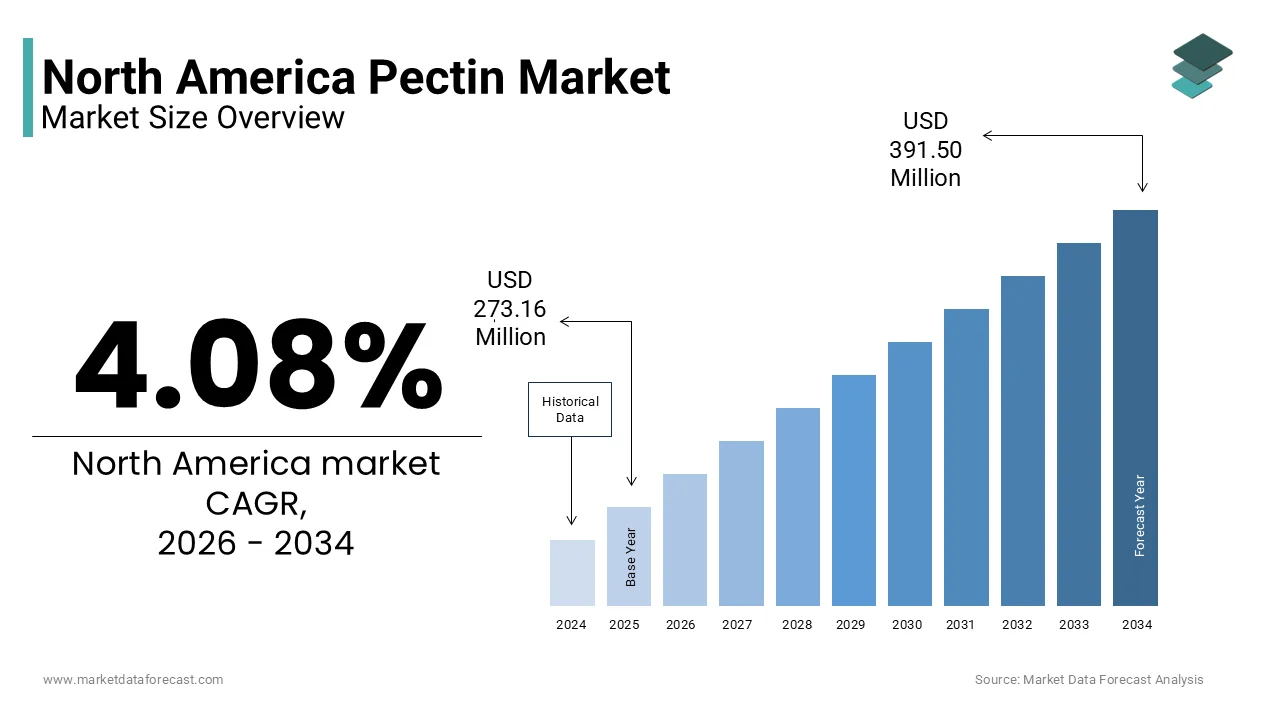
The pectin is primarily driven by the region's robust demand for clean label and natural gelling agents. Pectin functions as a vital hydrocolloid extracted from citrus peels and apple pomace, providing essential texture and stability to jams, jellies, and dairy products. As per the United States Department of Agriculture, citrus production in Florida alone reached 45 million boxes in the recent season, ensuring a steady supply of raw materials for pectin extraction. This agricultural output directly supports the manufacturing capacity required to meet consumer preferences for natural additives. As per the Institute of Food Technologists, over 60% of North American consumers actively seek products with recognizable ingredients, which significantly boosts the adoption of pectin over synthetic alternatives. The market dynamics are further influenced by the growing prevalence of plant based diets, where pectin acts as a key structuring agent.
MARKET DRIVERS
Rising Preference For Clean Label Ingredients Drives Demand
The increasing consumer inclination towards clean label products, which is primarily propelling the growth of the North America Pectin Market. Modern shoppers prioritize transparency and simplicity in ingredient lists, driving manufacturers to replace synthetic gelling agents with natural alternatives like pectin. This behavioral shift compels food producers to reformulate their products, thereby increasing the utilization of pectin in various applications such as yogurts, fruit preparations, and baked goods. Pectin fits this requirement perfectly as it is derived from fruit sources and perceived as wholesome. Additionally, the rise in private label brands focusing on natural formulations has amplified this trend. Retailers are increasingly sourcing pectin to differentiate their offerings in a competitive marketplace. The demand is not limited to traditional jams but extends to functional beverages and meat analogs where texture modification is crucial. This widespread adoption across multiple food categories ensures sustained growth for pectin suppliers.
Expansion Of Plant Based And Vegan Product Lines Boosts Usage
The rapid proliferation of plant based and vegan product lines is also bolstering the growth opf the North America Pectin Market. As consumers shift away from animal derived ingredients, food manufacturers require effective plant based alternatives to replicate texture and mouthfeel in dairy free and meat free products. Pectin serves as an ideal solution for stabilizing plant based yogurts and cheeses, providing the necessary viscosity without using gelatin or other animal products. The Good Food Institute highlights that investment in alternative protein companies reached 5 billion dollars recently, fueling innovation in product development that relies heavily on hydrocolloids like pectin. This financial influx supports the creation of new formulations where pectin plays a structural role. Furthermore, the versatility of pectin allows it to function effectively in low pH environments common in fruit based vegan desserts. The demand extends to beverage applications where pectin prevents sedimentation in plant milk drinks. Manufacturers are increasingly recognizing pectin as a key enabler for achieving desirable sensory attributes in vegan products.
MARKET RESTRAINTS
Volatility In Raw Material Prices Restrains Market Growth
The fluctuations in the prices of raw materials such as citrus peels and apple pomace, that is bolstering the growth of the North America Pectin Market. Pectin extraction relies heavily on agricultural byproducts, making the industry susceptible to seasonal variations and climate related disruptions. Such variability leads to inconsistent supply levels and unpredictable pricing structures for pectin manufacturers. When raw material costs surge, producers face margin pressures that may force them to increase prices for end users. These cost increases can deter small and medium sized food manufacturers from adopting pectin, limiting market penetration. Additionally, the dependency on specific geographic regions for raw materials creates supply chain vulnerabilities. Any disruption in major citrus producing areas directly affects the availability of pectin precursors. Manufacturers must maintain significant inventory buffers to mitigate these risks, which ties up capital and increases operational costs. The lack of price stability makes long term planning difficult for both suppliers and buyers.
High Production Costs And Complex Extraction Processes Limit Accessibility
The intricate and resource intensive nature of pectin extraction is also hindering the growth of the North America Pectin Market. Producing high quality pectin requires sophisticated technology and substantial energy inputs, resulting in elevated production costs compared to synthetic alternatives. The extraction process involves multiple steps including acid treatment and alcohol precipitation, which are energy demanding and generate considerable waste. These operational complexities translate into higher final product prices, making pectin less attractive for cost sensitive applications. Small scale food producers often find it challenging to absorb these additional costs, limiting the market reach of pectin. The Environmental Protection Agency highlights that waste management regulations for industrial processing have become stricter, requiring manufacturers to invest in advanced treatment systems. Compliance with these environmental standards adds another layer of expense to the production process. Furthermore, the need for specialized equipment and skilled labor increases the barrier to entry for new players in the market. Established companies benefit from economies of scale, but smaller entities struggle to compete on price. The high capital expenditure required for setting up extraction facilities discourages new investments in the sector. This financial burden restricts the ability of manufacturers to expand capacity or innovate rapidly.
MARKET OPPORTUNITIES
Innovation In Functional Food Applications Presents Significant Opportunities
The evolving landscape of functional foods is solely to promote new opportunities for the growth of the North America Pectin Market. Consumers are increasingly seeking products that provide health benefits beyond basic nutrition, driving demand for ingredients that support gut health and metabolic wellness. Pectin acts as a prebiotic fiber, promoting beneficial gut bacteria and contributing to digestive health. This trend encourages food manufacturers to incorporate pectin into functional beverages, snacks, and supplements. The ability of pectin to modulate blood sugar levels also makes it attractive for diabetic friendly product formulations. Pectin’s gelling properties allow for the creation of satisfying textures in reduced sugar products, enhancing palatability without compromising health goals. Additionally, the rising interest in weight management solutions drives the inclusion of pectin in satiety enhancing foods. Its fiber content helps individuals feel fuller for longer, supporting weight control efforts. These functional benefits position pectin as a valuable ingredient in the health and wellness sector. Manufacturers can leverage these attributes to develop innovative products that cater to specific health needs.
Growth In Organic And Sustainable Food Segments Creates New Avenues
The expanding organic and sustainable food sectors is also to expand the growth of the North America Pectin Market. Consumers are increasingly prioritizing environmentally friendly and ethically sourced ingredients, driving demand for organic certified pectin. Pectin derived from organic citrus and apple sources aligns perfectly with these values, offering a natural and eco-friendly gelling solution. The sustainability aspect of pectin production, which utilizes agricultural byproducts, resonates with brands aiming to reduce waste and promote circular economy principles. The upcycling food waste into valuable ingredients like pectin reduces environmental impact and supports farmer incomes. This narrative appeals to conscious consumers who prefer brands with transparent and responsible supply chains. Moreover, the demand for no-genetically modified organisms ingredients continues to rise, further boosting the appeal of natural pectin. This differentiation strategy allows manufacturers to capture value in a competitive landscape. The alignment of pectin with sustainability goals enhances its brand image and marketability.
MARKET CHALLENGES
Supply Chain Disruptions Pose Persistent Challenges To Stability
The ongoing supply chain disruptions is to act as a major challenge for the growth of the North America Pectin Market. Global logistical issues, port congestion, and transportation delays affect the timely delivery of raw materials and finished products. These delays can lead to stockouts and production halts for food manufacturers relying on just in time inventory systems. The unpredictability of supply chains makes it difficult for pectin suppliers to guarantee consistent availability to their clients. Additionally, geopolitical tensions and trade policies can introduce tariffs and barriers that complicate international sourcing of raw materials. The World Trade Organization reports that trade restrictions have increased globally, affecting the flow of agricultural commodities. Such barriers can limit access to high quality citrus peels from key producing regions, forcing manufacturers to seek alternative sources that may not meet quality standards. The reliance on imported raw materials exposes the market to currency fluctuations and international regulatory changes. These external factors create an environment of uncertainty that challenges strategic planning and operational efficiency. Companies must invest in diversified supply networks and risk mitigation strategies to navigate these complexities.
Regulatory Compliance And Labeling Requirements Increase Operational Burden
The stringent regulatory compliance and evolving labeling requirements is another factor to impede the growth of the North America Pectin Market. Food safety authorities continuously update guidelines regarding ingredient specifications, purity standards, and allergen declarations. The Food and Drug Administration mandates rigorous testing and documentation for food additives, including pectin, to ensure consumer safety. Compliance with these regulations requires substantial investment in quality control laboratories and personnel training. The Grocery Manufacturers Association states that regulatory compliance costs account for approximately 10% of operational expenses for food ingredient manufacturers. These costs can be particularly burdensome for smaller producers who lack the resources to maintain extensive compliance infrastructure. Additionally, changing labeling laws require manufacturers to constantly update packaging and marketing materials to reflect accurate ingredient information. Failure to comply can result in costly recalls and reputational damage. The complexity of navigating different regulatory frameworks across states and countries adds another layer of difficulty for exporters. Harmonizing standards remains a challenge, leading to inconsistencies in product approval processes. Manufacturers must stay abreast of legislative changes and adapt quickly to avoid penalties. This constant need for vigilance diverts resources from innovation and market expansion.
REPORT COVERAGE
| REPORT METRIC | DETAILS |
| Market Size Available | 2025 to 2034 |
| Base Year | 2025 |
| Forecast Period | 2026 to 2034 |
| CAGR | 4.08% |
| Segments Covered | By Source, Application, Function, Product, and Region |
| Various Analyses Covered | Regional & Country Level Analysis, Segment-Level Analysis, DROC, PESTLE Analysis, Porter’s Five Forces Analysis, Competitive Landscape, Analyst Overview on Investment Opportunities |
| Regions Covered | The United States, Canada, Mexico, and Rest of North America |
| Market Leaders Profiled | Ashland Specialty Ingredients, CP Kelco, ADM Corn Processing, Dantsco A/S, Fiberstar Inc., Polygal AG, Ingredion Incorporated, Royal DSM Polymer Intermediates, Tate & Lyle Specialty Food Ingredients, Cargill Incorporated, DuPont Nutrition and Biosciences, and Herbstreith & Fox Corporate Group. |
SEGMENTAL ANALYSIS
By Sources Insights
The plant segment was accounted in holding 58.3% of the North America Pectin Market share in 2025 due to the extensive availability of citrus peels and apple pomace as primary raw materials. This agricultural output ensures a consistent and cost-effective supply chain for manufacturers. Additionally, Florida remains a key citrus producer, contributing significantly to the raw material base required for extraction. The National Association of State Departments of Agriculture indicates that citrus processing facilities generate thousands of tons of peel waste each season. Utilizing this byproduct aligns with circular economy principles while reducing disposal costs for processors. The established infrastructure for collecting and processing plant based waste further solidifies the leadership of this segment. Manufacturers have optimized extraction techniques specifically for plant sources, resulting in high yields and superior quality. The familiarity of food producers with plant derived ingredients also drives preference over novel sources. Consumer perception favors plant based additives as natural and safe, reinforcing market demand. The scalability of plant based production allows suppliers to meet large volume requirements efficiently.
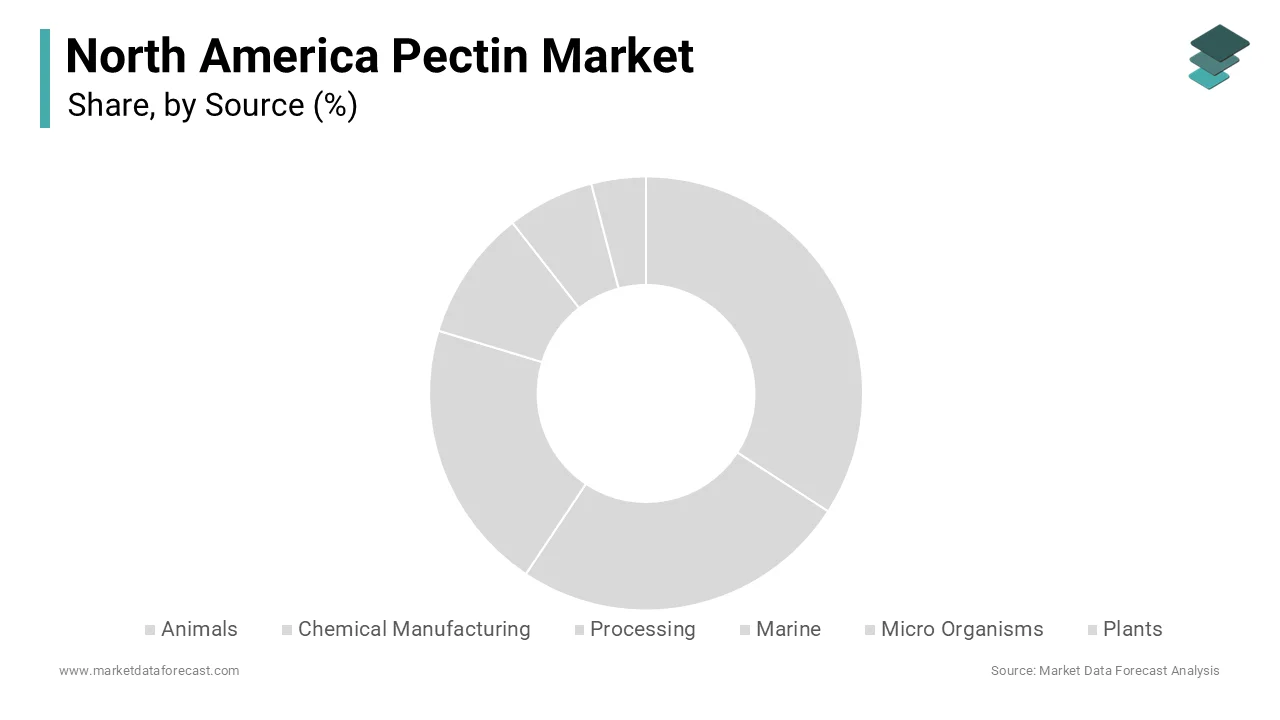
The micro-organisms segment is projected to grow at a CAGR of 9.2% due to advancements in fermentation technology that enhance production efficiency. The Journal of Industrial Microbiology notes that recent innovations in microbial strain engineering have increased pectin yield by 30% compared to traditional methods. These technological breakthroughs reduce production time and lower energy consumption, making microbial pectin more economically viable. Biotechnology firms are investing heavily in optimizing fermentation processes to achieve consistent quality and purity. This reliability appeals to manufacturers seeking stable supply chains. The ability to produce pectin without relying on agricultural land reduces environmental footprint and resource competition. Consumers interested in sustainable innovation are increasingly open to bio fermented ingredients. The precision of microbial synthesis allows for customized pectin structures tailored to specific applications. This versatility opens new opportunities in pharmaceutical and specialty food sectors. The scalability of fermentation facilities enables rapid expansion to meet growing demand. These factors position microbial pectin as a high growth segment driven by scientific progress and sustainability goals.
By Application Insights
The jams and jellies segment was the largest by accounting for a prominent share of the North America Pectin Market in 2025 due to the essential role of pectin as a gelling agent in these products. This widespread usage establishes a stable baseline demand for pectin across the region. Consumer habits in North America favor fruit preserves as breakfast staples and snack items by ensuring consistent sales volumes. This enduring popularity supports continuous procurement of pectin by major manufacturers. The simplicity of jam production makes it an accessible application for both large scale industries and small artisanal producers. Pectin’s ability to create desirable textures in high sugar environments makes it irreplaceable in traditional recipes. The cultural significance of homemade preserves during holiday seasons further boosts seasonal demand. Retailers stock extensive varieties of jams and jellies, reflecting strong consumer interest. The segment benefits from established distribution channels and brand loyalty.
The dietary supplements segment is likely to grow at a fastest CAGR of 11.5% from 2026 to 2034 due to increasing health consciousness among North American consumers. Pectin is gaining recognition as a beneficial fiber supplement for digestive health and cholesterol management. This health benefit drives consumers to seek pectin enriched supplements for cardiovascular support. The aging population in North America further accelerates demand for preventive health solutions. As per the Census Bureau, individuals over 65 years old will comprise 22% of the population by 2030. This demographic actively seeks supplements to maintain wellness and manage chronic conditions. Pectin’s prebiotic properties support gut health, aligning with the growing interest in microbiome wellness. The International Probiotics Association highlights that gut health products are among the fastest growing categories in the supplement market. Manufacturers are launching innovative pectin based capsules and powders to capture this demand. The ease of incorporating pectin into supplement formulations enhances its appeal.
By Product Insights
The high methoxyl pectin segment was the largest by capturing 45.3% of the North America Pectin Market share on due to its extensive use in high sugar applications like jams and confectionery. This segment benefits from the traditional preference for sweet preserves and candies in North American diets. High methoxyl pectin requires high sugar content and low pH to form gels, making it ideal for these products. The sugar consumption remains significant despite health trends, sustaining demand for this pectin type. Manufacturers rely on high methoxyl pectin for its ability to create firm and clear gels. The texture provided by this pectin type is preferred in premium confectionery products. The established production lines for jams and candies are optimized for high methoxyl pectin usage. Switching to other types would require costly reformulation and equipment adjustments. The consistency and reliability of high methoxyl pectin in standard recipes ensure its continued dominance. Consumer familiarity with the texture of traditional jams reinforces the demand.
The low methoxyl pectin segment is likely to grow at a fastest CAGR of 8.7% due to its unique ability to gel in low sugar and calcium rich environments. The American Diabetes Association reports that 37 million Americans have diabetes, driving demand for low sugar food options. Low methoxyl pectin allows manufacturers to reduce sugar content by up to 50% while maintaining texture. This capability is crucial for developing diabetic friendly and weight management products. The rise of plant based dairy alternatives also boosts demand for low methoxyl pectin. The Plant Based Foods Association states that plant based milk sales grew by 12% recently. Low methoxyl pectin stabilizes these beverages by interacting with calcium ions present in plant milks. It prevents sedimentation and improves mouthfeel in almond, soy, and oat drinks. Manufacturers value this functionality for creating premium dairy free products. The versatility of low methoxyl pectin in diverse applications expands its market reach. Its use in savory sauces and dressings adds another growth dimension. The ability to create gels without high sugar content aligns with clean label trends.
REGIONAL ANALYSIS
United States Market Analysis
The United States was the top performer in the North America Pectin Market by accounting for 75.5% of the share in 2025. The robust food and beverage industry in the country drives substantial demand for pectin across various applications. This economic magnitude supports extensive procurement of ingredients like pectin. The presence of major global food manufacturers in the United States ensures consistent high-volume demand. Companies invest in innovation and product development, utilizing advanced pectin grades for new formulations. This trend encourages manufacturers to replace synthetic additives with plant based pectin. The well-established agricultural infrastructure provides a steady supply of raw materials such as citrus and apples. Florida and California remain key production hubs for citrus fruits, supporting local pectin extraction. The regulatory framework in the United States is clear and supportive of food additive approvals.
Canada Market Analysis
Canada pectin market was ranked second by capturing 15.6% of the share in 2025 with the growing health-conscious consumer base and strong agricultural sector. The Canadian government promotes sustainable agriculture, which supports the production of high quality fruit crops. Statistics Canada reports that apple production in Canada exceeds 500 million kilograms annually. This output provides ample raw material for pectin extraction and supports local manufacturing. The rising prevalence of lifestyle diseases has increased demand for functional foods containing pectin. This statistic drives consumers to seek heart healthy ingredients like soluble fiber. Canadian manufacturers are innovating with low sugar and plant based products, utilizing low methoxyl pectin. The strict regulatory standards enforced by Health Canada ensure high quality and safety of food ingredients. This regulatory environment builds consumer trust in pectin containing products. The proximity to the United States allows for easy trade and technology exchange. Canadian companies benefit from integrated supply chains across North America.
COMPETITIVE LANDSCAPE
The competition in the North America Pectin Market is characterized by the presence of established global players and specialized regional manufacturers. Major companies compete on the basis of product quality, innovation, and technical support rather than price alone. The market exhibits a moderate level of consolidation with key players holding significant influence through their extensive distribution networks and brand reputation. New entrants face high barriers to entry due to the capital intensive nature of pectin extraction and stringent regulatory requirements. However, niche players focusing on organic or specialty pectin segments find opportunities to differentiate themselves. Competitive dynamics are driven by the need to continuously innovate and adapt to changing consumer preferences for clean label and functional ingredients. Companies invest in research and development to create unique value propositions and secure long-term contracts with major food manufacturers. Strategic acquisitions and partnerships are common tactics used to expand product portfolios and geographic reach. The emphasis on sustainability and ethical sourcing has become a key differentiator in the competitive landscape. Manufacturers who can demonstrate transparent supply chains and environmental responsibility gain a competitive advantage. Customer service and application expertise also play crucial roles in retaining clients and fostering loyalty. The market remains dynamic as players strive to balance cost efficiency with high quality standards.
KEY MARKET PLAYERS
Key market players of North America pectin market are
- Ashland Speciality Ingredients
- CP Kelco
- ADM Corn Processing
- Dantsco A/S
- Fiberstar Inc.
- Polygal AG
- Ingredion Incorporated
- Royal DSM Polymer Intermediates
- Tate & Lyle Speciality Food Ingredients
- Cargill Incorporated
- DuPont Nutrition and Biosciences
- Herbstreith & Fox Corporate group.
Top Players in the Market
- CP Kelco stands as a prominent entity in the North America Pectin Market with a strong focus on innovation and sustainability. The company leverages its extensive expertise in hydrocolloids to deliver high quality pectin solutions for various food applications. CP Kelco recently expanded its production capabilities to meet the growing demand for clean label ingredients. The firm invests heavily in research and development to create specialized pectin grades for plant based and low sugar products. Their commitment to sustainable sourcing ensures a reliable supply of raw materials from citrus and apple byproducts. CP Kelco collaborates with food manufacturers to develop customized formulations that enhance texture and stability. This customer centric approach strengthens their position in the competitive landscape. The company also emphasizes regulatory compliance and quality assurance to maintain consumer trust. Their strategic initiatives aim to address evolving consumer preferences for natural and functional ingredients.
- Ingredion Incorporated plays a vital role in the North America Pectin Market through its comprehensive portfolio of texturizing solutions. The company integrates pectin into its broader ingredient systems to provide holistic solutions for food manufacturers. Ingredion focuses on enhancing the sensory attributes of products while maintaining clean label standards. They recently launched new pectin blends designed specifically for dairy alternatives and fruit preparations. These innovations help manufacturers achieve desired textures without using synthetic additives. Ingredion leverages its global network to ensure consistent supply and quality across the region. The company actively engages with customers to understand their specific needs and challenges. This collaborative approach enables them to develop tailored solutions that drive product success. Ingredion also prioritizes sustainability by optimizing its manufacturing processes and reducing environmental impact. Their investment in digital tools enhances supply chain transparency and efficiency.
- DuPont Nutrition and Biosciences contributes significantly to the North America Pectin Market with its advanced biotechnology capabilities. The company offers a range of pectin products that cater to diverse food and beverage applications. DuPont focuses on creating value through innovation and scientific rigor. These advancements benefit manufacturers producing fruit juices and sports drinks. DuPont emphasizes the functional benefits of pectin such as gut health support and satiety enhancement. The company collaborates with research institutions to validate the efficacy of their ingredients. This scientific backing builds credibility and trust among industry stakeholders. DuPont also invests in sustainable practices to minimize the ecological footprint of pectin production. Their commitment to responsible sourcing aligns with consumer expectations for ethical ingredients.
Top Strategies Used By Key Market Participants
Key players in the North America Pectin Market employ several strategic initiatives to maintain their competitive edge and drive growth. Product innovation remains a primary strategy as companies develop specialized pectin grades for emerging applications such as plant-based foods and low sugar products. Manufacturers invest heavily in research and development to create formulations that meet specific textural and functional requirements. Strategic partnerships and collaborations with food manufacturers enable suppliers to co create solutions that address unique customer needs. These alliances foster long term relationships and enhance market penetration. Expansion of production capacities is another critical strategy to ensure supply reliability and meet rising demand. Companies upgrade their facilities with advanced technology to improve efficiency and product quality. Sustainability initiatives are increasingly central to corporate strategies as firms focus on responsible sourcing and waste reduction. Marketing efforts emphasize the natural and health beneficial aspects of pectin to appeal to conscious consumers.
MARKET SEGMENTATION
This Research Report on the North America pectin market is segmenetd and sub segmenetd into following categories:
By Sources
- Animals
- Chemical Manufacturing
- Processing
- Marine
- Micro Organisms
- Plants
By Application
- Bakery Fillings And Toppings
- Beverages
- Confectionary
- Dairy Products
- Frozen Desserts
- Dietary Supplements
- Functional Food
- Jams And Jellies
- Meat And Poultry Products
- Pharmaceutical
- Personal Care
- Cosmetics
By Function
- Thickener
- Gelling Agent
- Fat Replacer
- Stabilizer
- Food And Beverage Texturants
- Coating
- Others
By Product
- High Methoxyl Pectin
- Low Methoxyl Pectin
By Region
- US
- Canada
- Mexico
- Rest of North America