- Product Description Description
- Table of Contents TOC
- List of Table & Figure LOT
- Get Free Sample PDF Sample PDF
Market Size, 2025
$42.97 BnMarket Estimate, 2026
$45.19 BnMarket Forecast, 2034
$67.58 BnCAGR, 2026–2034
5.16%North American Physical Security Market Size, Growth, Trends & Forecast (2026–2034)
The size of the North American physical security market was valued at USD 42.97 billion in 2025, is estimated at USD 45.19 billion in 2026, and is projected to reach USD 67.58 billion by 2034, registering a compound annual growth rate (CAGR) of 5.16% from 2026 to 2034. Driven by the rising incidence of security breaches, property crimes, regulatory compliance demands, and technological integration of artificial intelligence and IoT across commercial, residential, and government sectors, the market continues to expand steadily.
Key Executive Metrics (At-a-Glance)
- 2025 Base Valuation: USD 42.97 Billion
- 2026 Current Valuation: USD 45.19 Billion
- 2034 Forecast Valuation: USD 67.58 Billion
- Compound Annual Growth Rate (CAGR): 5.16% (2026–2034)
- Dominant Component Segment: Systems (holding the largest share via access control, video surveillance, and intrusion detection deployments)
- Fastest-Growing Component Segment: Services (projected at a 12.4% CAGR driven by consulting, risk assessment, and managed offerings)
- Dominant System Segment: Physical Access Control Systems (PACS) (capturing 40.6% of the North American market share in 2025)
- Fastest-Growing System Segment: Perimeter Intrusion Detection and Prevention Systems (PIDPS) (projected at a 15.4% CAGR)
- Dominant Service Segment: Managed Security Services (accounting for 55.4% of the market share in 2025)
- Fastest-Growing Service Segment: Professional Security Services (projected at a dominant 14.5% CAGR)
- Dominant Country: The United States (holding 70.5% of the North American market share in 2025)
- Fastest-Growing Country: Canada (emerging swiftly with a high projected regional CAGR)
Core Market Drivers
- Rising Security Breaches & Property Crimes: Increasing threats from property crimes, crime incidents, and security risks across businesses and public institutions demanding robust safety measures.
- Technological Integration: Rapid advancements in AI, machine learning, and IoT enabling real-time automated threat detection and smart security ecosystems.
Primary Market Restraints & Challenges
- High Implementation Costs: Significant initial financial outlay for advanced security hardware, installation, and ongoing maintenance which can deter small and medium-sized enterprises.
- Regulatory Compliance Complexity: Complex, multi-jurisdictional safety and security regulations that increase operational costs and deployment timeframes.
North American Physical Security Market Segmentation Breakdown
| Segment Category | Leading Sub-Segment (Base Year) | Fastest-Growing Sub-Segment |
|---|---|---|
| By Component | Systems (largest share via access control & surveillance hardware) | Services (12.4% CAGR for consulting and managed security) |
| By System | Physical Access Control Systems (PACS) (40.6% share in 2025) | Perimeter Intrusion Detection & Prevention Systems (15.4% CAGR) |
| By Service | Managed Security Services (55.4% share in 2025) | Professional Security Services (14.5% CAGR for expert audits & risk assessment) |
| By Country | The United States (70.5% market share in 2025) | Canada (swiftly emerging with high expansion metrics) |
Major Industry Players Profiled
Key enterprises shaping the competitive North American physical security market include Honeywell International Inc., Bosch Security Systems GmbH, Genetec Inc., Dahua Technology Co., Ltd., and Axis Communications AB.
 Download Free Sample Report
North American Physical Security Market Size
The Physical Security market size in North America was valued at USD 42.97 billion in 2025 and is predicted to be worth USD 67.58 billion by 2034 from USD 45.19 billion in 2026 and grow at a CAGR of 5.16% from 2026 to 2034.

The physical security includes security systems such as access control, video surveillance, intrusion detection, and perimeter security, as well as professional services like security consulting and risk assessment. The increasing focus on safety and security across various sectors, including commercial, residential, and government, has driven significant growth in this market. This growth is fueled by several factors, including the rising incidence of security breaches, advancements in security technology, and the increasing regulatory requirements for safety and security measures. The market is expected to witness continuous innovation and integration of advanced technologies, such as artificial intelligence and IoT, which will enhance the effectiveness and efficiency of physical security solutions. The ongoing emphasis on safeguarding assets and ensuring the safety of individuals positions the North American physical security market for substantial growth in the coming years.
MARKET DRIVERS
Rising Incidence of Security Breaches
The North American physical security market is significantly driven by the rising incidence of security breaches across various sectors. The cyberattacks, and terrorism, the need for robust physical security measures has become paramount. According to a report by the Federal Bureau of Investigation, property crimes in the U.S. accounted for over 7 million incidents in 2020. The growing awareness of these threats has prompted businesses and institutions to invest heavily in physical security systems to protect their assets and personnel. This includes the implementation of advanced surveillance systems, access control measures, and intrusion detection technologies. Additionally, the increasing focus on regulatory compliance and risk management has further fueled the demand for physical security solutions.
Technological Advancements in Security Solutions
Another major driver of the North American physical security market is the rapid technological advancements in security solutions. Innovations such as artificial intelligence, machine learning, and the Internet of Things (IoT) are transforming the way physical security systems operate, making them more efficient and effective. These advancements enable security systems to provide real-time monitoring, automated threat detection, and enhanced data analytics capabilities. For instance, AI-powered video surveillance systems can analyze footage to identify suspicious behavior and alert security personnel, significantly improving response times. Additionally, IoT-enabled devices allow for seamless integration of various security components by creating a more comprehensive security ecosystem. The demand for advanced physical security solutions is expected to propel the growth of North American physical security market.
MARKET RESTRAINTS
High Implementation Costs
One of the primary restraints affecting the North American physical security market is the high implementation costs associated with deploying comprehensive security solutions. While the benefits of physical security systems are well-documented, the initial financial outlay for technology, installation, and ongoing maintenance can be a significant barrier for many organizations. The cost of implementing a robust physical security system can range from tens of thousands to millions of dollars is depending on the complexity and scale of the operation.
This financial burden can deter small and medium-sized enterprises from investing in advanced security measures, limiting market growth. Additionally, ongoing costs associated with system maintenance, software updates, and personnel training can further strain budgets. Organizations may also face challenges in justifying the return on investment (ROI) for security initiatives, particularly if the benefits are not immediately apparent. The companies in the physical security market must consider strategies to offer more affordable solutions and demonstrate the long-term value of investing in security, thereby expanding their customer base and driving market growth.
Regulatory Compliance Challenges
Another significant challenge facing the North American physical security market is the complexity of regulatory compliance requirements that vary across different jurisdictions. Organizations must navigate a myriad of regulations concerning safety, security, and data protection, which can complicate the implementation of physical security measures. According to a report by the National Institute of Standards and Technology, compliance with these regulations can be both time-consuming and costly for organizations operating in multiple states or regions.
These regulatory challenges can lead to increased operational costs and legal risks for businesses, potentially hindering market growth. Additionally, the lack of uniformity in regulations can create uncertainty for security providers and end-users by making it difficult to ensure compliance across different jurisdictions. The companies may face delays in project timelines and increased scrutiny from regulatory bodies. Key players in the physical security market must invest in compliance management systems and engage with regulatory authorities to ensure that their solutions meet safety and security standards by fostering consumer trust and market growth.
MARKET OPPORTUNITIES
Integration of Smart Technologies
The North American physical security market presents significant opportunities for growth through the integration of smart technologies into security solutions. The adoption of smart technologies such as artificial intelligence, machine learning, and IoT devices is becoming more prevalent. The integration of smart technologies allows for real-time monitoring, automated threat detection, and enhanced data analytics capabilities is significantly improving the effectiveness of physical security systems. For instance, AI-powered surveillance cameras can analyze video feeds to identify unusual behavior and alert security personnel by enabling faster response times. Additionally, IoT-enabled devices can facilitate seamless communication between various security components by creating a more comprehensive security ecosystem. The demand for advanced physical security solutions is expected to grow by creating lucrative opportunities for market participants.
Expansion of Security Services
Another promising opportunity within the North American physical security market lies in the expansion of security services, including consulting, risk assessment, and managed security services. As organizations face increasingly complex security challenges, the demand for professional services that can provide expertise and support is on the rise. Security service providers offer valuable expertise in assessing vulnerabilities, developing security strategies, and implementing effective measures to mitigate risks. The growing emphasis on regulatory compliance and risk management is further driving demand for security consulting services. Additionally, the rise of managed security services allows organizations to outsource their security operations is enabling them to focus on their core business functions while ensuring robust protection.
REPORT COVERAGE
| REPORT METRIC | DETAILS |
| Market Size Available | 2025 to 2034 |
| Base Year | 2025 |
| Forecast Period | 2026 to 2034 |
| CAGR | 5.16% |
| Segments Covered | By Component, System, Service, and Region |
|
Various Analyses Covered | Regional & Country Level Analysis, Segment-Level Analysis, DROC, PESTLE Analysis, Porter’s Five Forces Analysis, Competitive Landscape, Analyst Overview on Investment Opportunities |
| Regions Covered | The United States, Canada, Mexico, and Rest of North America |
|
Market Leaders Profiled | Honeywell International Inc., Bosch Security Systems GmbH, Genetec Inc., Dahua Technology Co., Ltd., and Axis Communications AB, and others |
SEGMENTAL INSIGHTS
By Component Insights
The systems segment was the largest by capturing a significant share of the North American physical security market in 2025. This dominance can be attributed to the widespread adoption of various security systems, including access control, video surveillance, and intrusion detection systems, which are essential for protecting physical assets and personnel. The growing incidence of security breaches and the need for enhanced safety measures are propelling the demand for sophisticated security systems. Organizations are increasingly investing in integrated security solutions that provide real-time monitoring and automated threat detection capabilities. Additionally, advancements in technology, such as AI and IoT, are enhancing the functionality and effectiveness of security systems, making them more appealing to end-users.
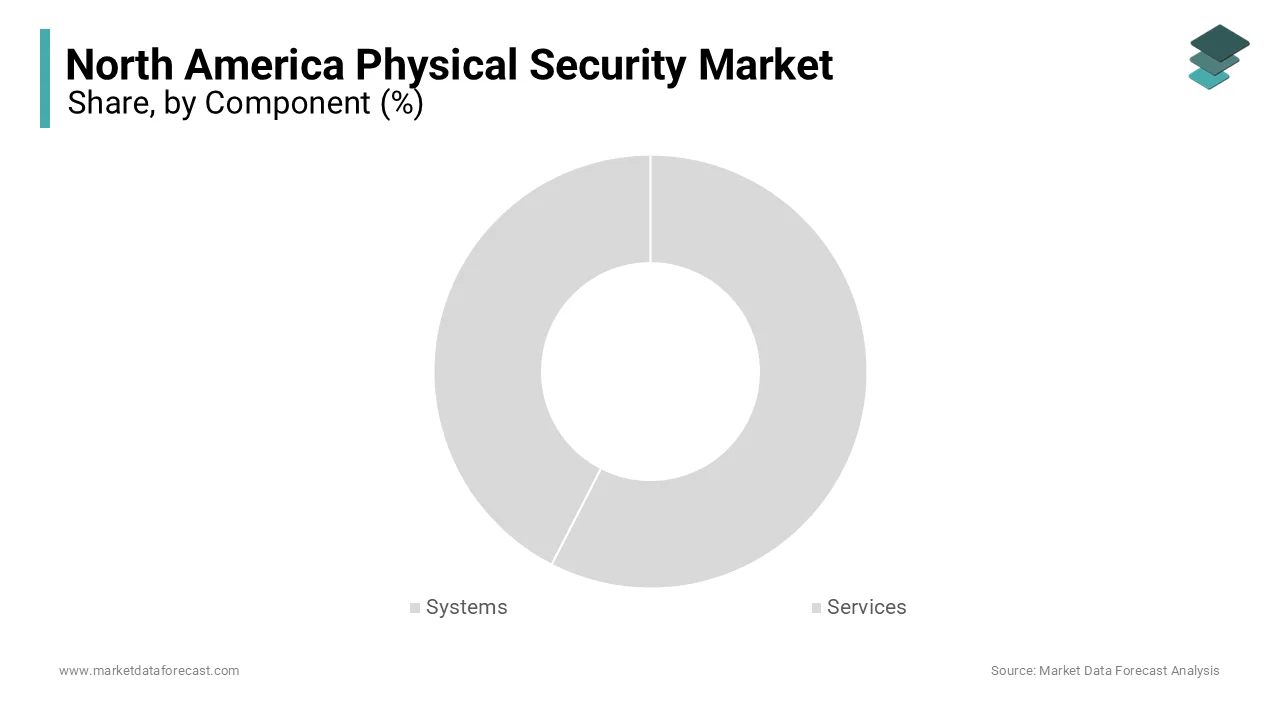
The services segment is projected to experience a CAGR of 12.4% from 2025 to 2033. This growth is driven by the increasing demand for professional security services, including consulting, risk assessment, and managed security services. They are increasingly seeking expert guidance and support to develop effective security strategies as organizations face complex security challenges. Security consulting services provide valuable insights into vulnerabilities and help organizations implement tailored solutions to mitigate risks. Additionally, managed security services allow businesses to outsource their security functions, enabling them to focus on core operations while ensuring robust protection. The demand for this segment is expected to increase significantly by positioning it for rapid expansion in the North American physical security market.
By System Insights
The Physical Access Control Systems (PACS) segment dominated the market by capturing 40.6% of the North American physical security market share in 2025. This dominance can be attributed to the critical role that access control plays in safeguarding facilities and managing entry points. PACS solutions encompass a range of technologies, including keycard systems, biometric scanners, and mobile access solutions, which enable organizations to control who can enter specific areas. The growing emphasis on security and the need to protect assets from unauthorized access are propelling the demand for PACS. Additionally, advancements in technology, such as cloud-based access control systems, are enhancing the functionality and scalability of PACS solutions. The demand for Physical Access Control Systems is expected to remain strong as organizations increasingly prioritize security and compliance.
The Perimeter Intrusion Detection and Prevention Systems (PIDPS) segment is more likely to witness a CAGR of 15.4% from 2025 to 2033. This growth is driven by the increasing need for comprehensive security measures to protect facilities from external threats. PIDPS solutions utilize a combination of technologies, including motion sensors, video surveillance, and alarm systems, to detect and prevent unauthorized access to a facility's perimeter. The growing incidence of security breaches and the need for proactive security measures are propelling the demand for PIDPS. Additionally, advancements in technology, such as smart sensors and integrated systems, are enhancing the effectiveness of perimeter security solutions. The demand for Perimeter Intrusion Detection and Prevention Systems is expected to grow significantly.
By Service Insights
The Managed Security Services segment dominated the North American physical security market share of 55.4% in 2025. This dominance can be attributed to the increasing demand for outsourced security solutions that provide comprehensive protection and expertise. Managed security services offer a range of solutions, including 24/7 monitoring, threat detection, incident response, and compliance management. They are turning to managed service providers for expert guidance and support as organizations face increasingly complex security challenges. The ability to leverage advanced technologies and skilled personnel allows businesses to improve their security measures while focusing on core operations. Additionally, the growing emphasis on regulatory compliance and risk management is further driving demand for managed security services.
The Professional Security Services segment is expected to witness a dominant CAGR of 14.5% from 2025 to 2033. This growth is driven by the increasing demand for expert consulting and risk assessment services that help organizations develop effective security strategies. Professional security services encompass a range of offerings, including security audits, vulnerability assessments, and training programs for staff. They are increasingly seeking expert guidance to identify vulnerabilities and implement effective measures as organizations recognize the importance of a comprehensive security strategy. The growing emphasis on regulatory compliance and the need for tailored security solutions are further propelling the demand for professional security services.
REGIONAL ANALYSIS
The United States dominated the North American physical security market share of 70.5% in 2025. The U.S. market is characterized by a robust demand for physical security solutions driven by advancements in technology and the increasing focus on safety and security across various sectors. According to the U.S. Bureau of Justice Statistics, property crimes in the U.S. accounted for over 7 million incidents in 2020, underscoring the urgent need for enhanced security measures. The presence of major physical security providers and a well-established regulatory framework further contribute to the country's dominant position in the market. Additionally, the growing emphasis on data security, regulatory compliance, and risk management is driving investments in innovative physical security solutions across organizations.
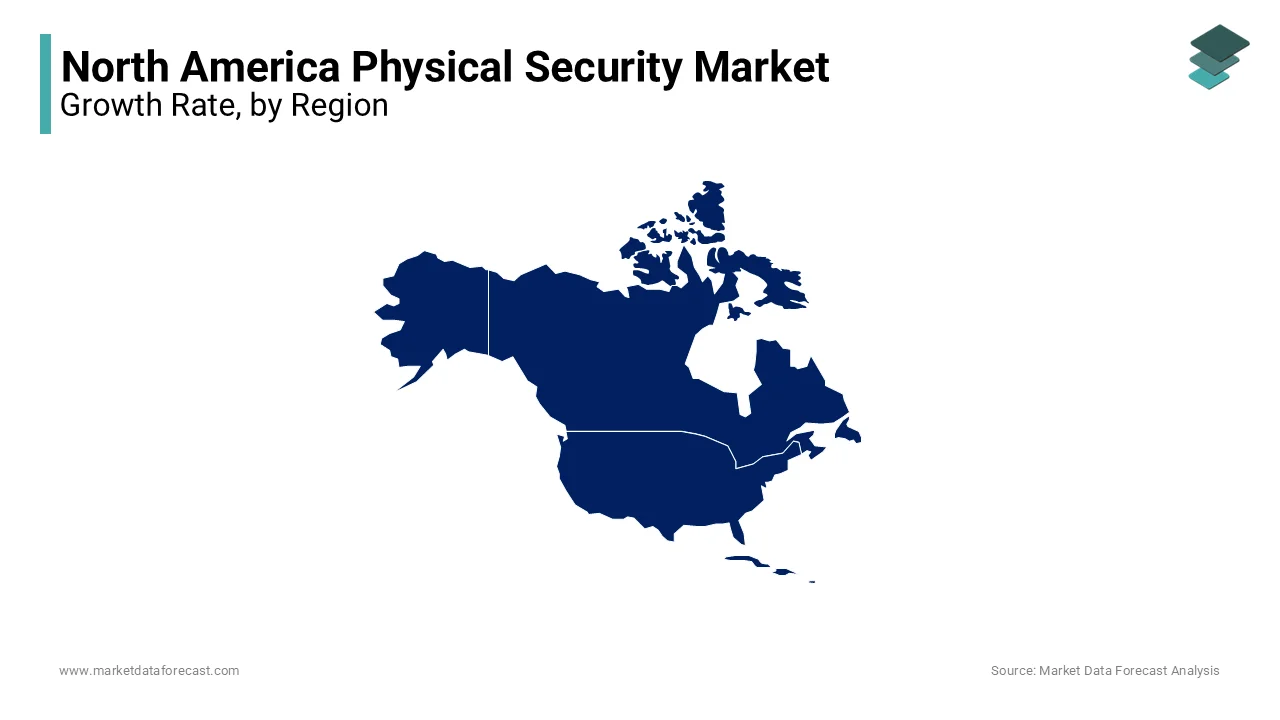
Canada physical security market is swiftly emerging with a CAGR of 35.6% in the foreseen years. The Canadian physical security market is influenced by the country's diverse security landscape, which includes commercial, residential, and government sectors. According to Statistics Canada, the adoption of physical security solutions is increasing, driven by the need for enhanced safety measures and the growing incidence of security breaches. The Canadian government has implemented various initiatives aimed at promoting public safety and enhancing security infrastructure. Additionally, the increasing focus on regulatory compliance and risk management is leading to increased investments in physical security solutions within the Canadian market.
KEY MARKET PLAYERS
Honeywell International Inc., Bosch Security Systems GmbH, Genetec Inc., Dahua Technology Co., Ltd., and Axis Communications AB are playing dominating role in the North America physical security market
MARKET SEGMENTATION
This research report on the North American physical security market has been segmented and sub-segmented based on the following categories.
By Component
- Systems
- Services
By Systems
- PACS
- Video Surveillance System
- Perimeter Intrusion Detection and Prevention
- PSIM
- PIAM
- Security Scanning, Imaging, and Metal Detection
- Fire and Life Safety
By Services
- Managed Service
- Professional Service
By Country
- The United States
- Canada
- Rest of North America