- Product Description Description
- Table of Contents TOC
- List of Table & Figure LOT
- Get Free Sample PDF Sample PDF
Market Size, 2025
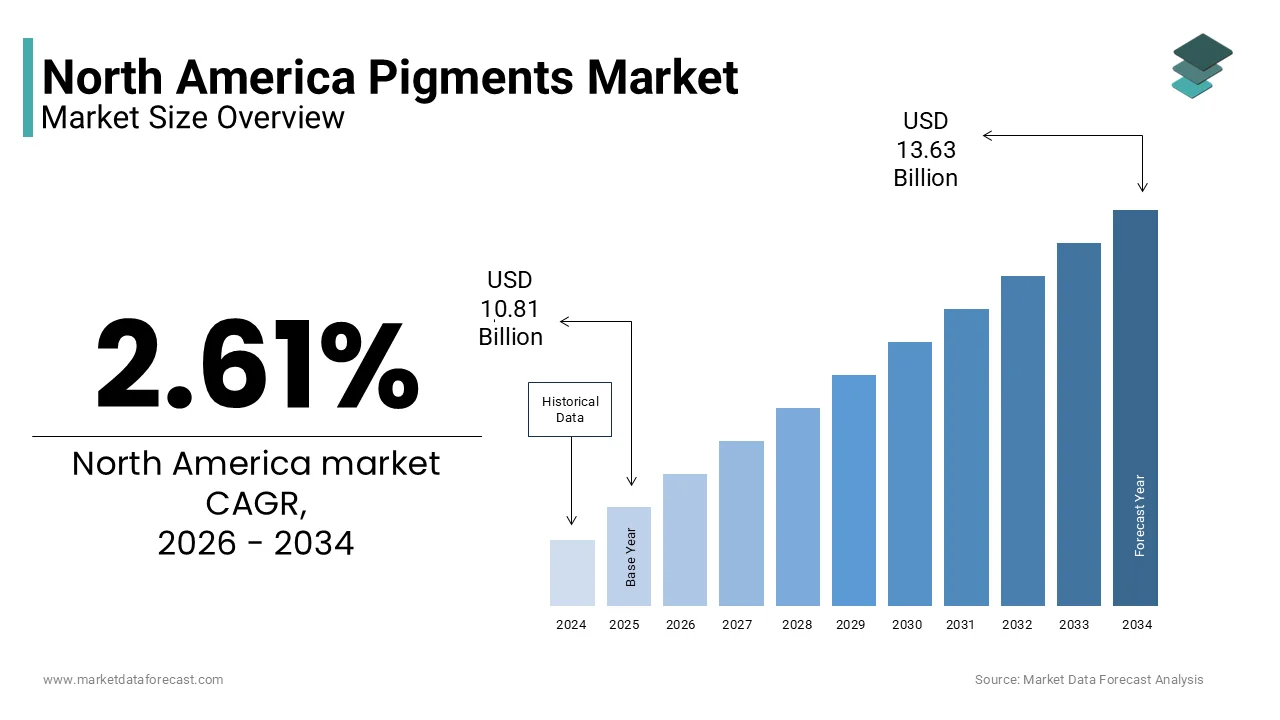
$10.81 BnMarket Estimate, 2026
$11.09 BnMarket Forecast, 2034
$13.63 BnCAGR, 2026–2034
2.61%North America Pigments Market Size
The Pigments market size in North America was valued at USD 10.81 billion in 2025 and is predicted to be worth USD 13.63 billion by 2034 from USD 11.09 billion in 2026 and grow at a CAGR of 2.61% from 2026 to 2034.
Pigments are inorganic and organic compounds used to impart color, opacity, and durability in various industrial applications such as coatings, plastics, construction materials, textiles, and printing inks. Pigments are essential not only for aesthetic purposes but also for enhancing product performance through UV resistance, thermal stability, and corrosion protection. The market is broadly segmented into titanium dioxide (TiO₂), carbon black, iron oxides, and specialty pigments, each catering to distinct end-use industries.
North America remains a mature and highly regulated market for pigments, with the United States being the largest consumer due to its robust manufacturing base. Additionally, the rise in architectural coatings and automotive refinishes has contributed to sustained pigment consumption.
Canada, while smaller in scale, plays a strategic role in pigment formulation and export logistics. Meanwhile, Mexico's growing industrialization, particularly in packaging and construction, is driving incremental demand for both imported and locally produced pigments.
Environmental regulations have increasingly shaped the industry landscape, prompting companies to develop low-VOC and bio-based alternatives. This evolving regulatory environment, combined with fluctuating raw material costs, continues to influence the direction of the North America pigments market.
 MARKET DRIVERS
Growth in Construction and Infrastructure Development
The steady expansion of the construction and infrastructure sectors is one of the most significant drivers influencing the North America pigments market. Pigments, particularly titanium dioxide and iron oxides, play a critical role in architectural coatings, concrete coloring, and roofing materials, contributing to both aesthetics and durability.
Residential construction, including single-family homes and multi-family units, accounted for nearly half of this expenditure. With increased homebuilding comes greater demand for interior and exterior paints, which rely heavily on high-performance pigments.
Additionally, government initiatives such as the Bipartisan Infrastructure Law, which allocates $1.2 trillion for infrastructure upgrades, have spurred investments in roadways, bridges, and public buildings. These projects often involve protective coatings and colored cement mixtures that require durable pigmentation solutions. In Canada, as per the Infrastructure Canada, over $30 billion was committed to infrastructure development in 2023, further reinforcing the link between public investment and pigment demand.
Moreover, the trend toward energy-efficient and visually appealing building exteriors has led to increased use of colored metal coatings and insulated panels, both of which depend on specialized pigment formulations.
Expansion of the Automotive and Transportation Industry
The ongoing expansion of the automotive and transportation sector is another key growth driver for the North America pigments market. Pigments are extensively used in automotive coatings, plastic components, and under-the-hood applications where color consistency, heat resistance, and longevity are crucial.
As per data from the Alliance for Automotive Innovation, the U.S. auto industry produced over 10 million vehicles in 2023, representing a rebound following supply chain disruptions in earlier years. This resurgence has led to heightened demand for OEM coatings and polymer-based interiors, both of which incorporate pigments for functional and decorative purposes.
In addition, the shift toward electric vehicles (EVs) is influencing pigment usage patterns. Manufacturers are adopting lightweight thermoplastics and composite materials that require specific colorants for branding and design differentiation. For example, Tesla and Rivian have introduced signature color schemes that necessitate customized pigment blends to ensure long-term vibrancy and weather resistance.
Furthermore, the aftermarket segment is gaining traction. Refinishing processes frequently involve repainting damaged body parts, reinforcing the need for high-quality pigments. With continued advancements in mobility and manufacturing, the automotive industry remains a pivotal pillar supporting the sustained growth of the North America pigments market.
MARKET RESTRAINTS
Regulatory Restrictions on Hazardous Pigment Compounds
The increasing stringency of environmental and health regulations concerning certain pigment types is a major restraint impacting the North America pigments market. Many traditional inorganic pigments, such as those containing heavy metals like cadmium, lead, and hexavalent chromium, have been restricted or phased out due to their toxicological and ecological risks.
The Environmental Protection Agency (EPA) has classified several metallic pigments as hazardous air pollutants under the Clean Air Act, requiring manufacturers to adopt safer alternatives.
Additionally, California’s Department of Toxic Substances Control (DTSC) listed multiple pigment formulations containing heavy metals under its Safer Consumer Products program, mandating manufacturers to assess safer substitutes. This has prompted leading pigment producers to reformulate products, albeit at higher R&D and production costs.
In Canada, Health Canada has enforced tighter controls under the Canadian Environmental Protection Act (CEPA), limiting the use of lead chromate pigments in children’s products and outdoor playground equipment. These regulatory shifts, while promoting sustainability, pose financial and operational challenges for pigment suppliers reliant on conventional chemistries.
Consequently, compliance burdens and substitution pressures are restraining the growth of certain pigment categories, compelling companies to invest in alternative technologies to remain competitive.
Volatility in Raw Material Prices and Supply Chain Constraints
The persistent volatility in raw material prices and global supply chain disruptions is another critical challenge affecting the North America pigments market. Pigments are largely derived from mineral ores, petrochemical feedstocks, and synthetic intermediates, all of which are subject to price fluctuations influenced by geopolitical instability, trade policies, and energy costs.
For instance, titanium dioxide (TiO₂), one of the most widely used white pigments, has seen significant cost swings due to supply constraints from China and South Africa—major exporters of ilmenite and rutile. Similarly, carbon black production, which depends on petroleum refining, has been affected by fluctuating crude oil prices.
Moreover, logistical bottlenecks persist despite easing pandemic-related restrictions. These factors collectively contribute to pricing instability and procurement uncertainty, challenging pigment producers to maintain consistent supply and profitability in a competitive market environment.
MARKET OPPORTUNITIES
Rising Demand for Sustainable and Bio-Based Pigments
The growing adoption of sustainable and bio-based pigments driven by environmental consciousness and regulatory mandates is a promising opportunity emerging in the North America pigments market. Consumers and industries alike are shifting toward eco-friendly alternatives that minimize reliance on non-renewable resources and reduce carbon footprints.
Companies are responding by developing plant-derived pigments using sources such as algae, beetroot, and carotenoids, which offer vibrant colors without harmful emissions or waste.
In the coatings industry, water-based formulations incorporating natural pigments are gaining traction. Additionally, automakers and packaging firms are embracing bio-pigmentation to align with corporate sustainability goals. For example, Ford Motor Company announced in 2023 that it would integrate plant-based colorants into interior trim components to enhance recyclability and reduce dependency on fossil-fuel-derived dyes.
Technological Advancements in Specialty and Functional Pigments
Technological innovation in specialty and functional pigments is opening new avenues for growth in the North America pigments market. Unlike conventional colorants, these advanced pigments offer enhanced properties such as UV resistance, thermal stability, conductivity, and optical effects, making them indispensable in high-performance applications.
The aerospace, electronics, and medical device industries are increasingly utilizing specialty pigments to meet stringent performance requirements. One notable advancement is the development of effect pigments that create iridescent, metallic, or pearlescent finishes. These are widely used in automotive coatings, cosmetics, and security inks.
Additionally, conductive pigments are gaining traction in electronic inks and smart packaging applications. As industries push for higher performance and customization, the demand for technologically advanced pigments is expected to accelerate, offering manufacturers a lucrative segment for future investment.
MARKET CHALLENGES
Intensifying Competition from Substitute Materials
The increasing availability and adoption of substitute materials that offer comparable or superior performance characteristics is one of the most pressing challenges facing the North America pigments market. Advances in dye chemistry, nanotechnology, and polymer science have enabled alternatives such as dyes, toners, and transparent colorants to encroach upon traditional pigment applications.
Dyes, for instance, are becoming more prevalent in textile and inkjet printing due to their solubility and ability to produce vibrant shades with lower material costs.
Similarly, in the coatings industry, the emergence of fluorescent and photoluminescent additives is reducing reliance on opaque pigments for visibility-enhancing applications. LED and luminescent coatings are increasingly replacing pigment-based safety markers in industrial and transportation settings.
Moreover, the rise of digital printing technology in packaging and graphic arts is diminishing the need for pigment-intensive offset inks. This growing competition from alternative coloration technologies is compelling pigment manufacturers to innovate rapidly and justify their value proposition through enhanced functionality and sustainability features.
Complexity in Meeting Diverse End-Use Requirements
The complexity of meeting diverse and often conflicting requirements across different end-use industries is a significant challenge confronting the North America pigments market. Each application, from automotive coatings to food packaging, demands specific performance attributes such as lightfastness, chemical resistance, heat tolerance, and regulatory compliance, necessitating tailored pigment formulations.
In the food and beverage packaging sector, for example, pigments must adhere to strict FDA and EU migration limits to ensure they do not leach into consumables.
Meanwhile, the electronics industry requires pigments with high thermal stability and electrical insulation properties, particularly for circuit board coatings and display screens.
Additionally, the architectural coatings sector seeks pigments that provide both aesthetic appeal and energy efficiency, such as infrared-reflective colorants that reduce cooling loads. However, achieving this balance often involves costly R&D efforts and compromises in color intensity. Navigating these varied and demanding specifications across industries presents a formidable challenge for pigment producers, requiring continuous innovation, extensive testing, and close collaboration with downstream partners.
REPORT COVERAGE
| REPORT METRIC | DETAILS |
| Market Size Available | 2025 to 2034 |
| Base Year | 2025 |
| Forecast Period | 2026 to 2034 |
| CAGR | 2.61% |
| Segments Covered | By Product Type, Application, and Region |
|
Various Analyses Covered | Regional & Country Level Analysis, Segment-Level Analysis, DROC, PESTLE Analysis, Porter’s Five Forces Analysis, Competitive Landscape, Analyst Overview on Investment Opportunities |
| Regions Covered | The United States, Canada, Mexico, and Rest of North America |
| Market Leaders Profiled | Huntsman International LLC, Lanxess AG, BASF SE, Merck Group, Carl Schlenk AG, Pidilite Industries Limited, Clariant AG, DIC Corporation, Cathay Industries Group and Tronox, Inc., and others |
SEGMENTAL ANALYSIS
By Product Type Insights
The inorganic pigments segment held the largest market share of 55.3% of total revenue in 2025. The dominance of this segment is primarily attributed to the widespread use of titanium dioxide (TiO₂), iron oxides, and carbon black across key industrial applications such as paints, coatings, plastics, and construction materials. The high demand for titanium dioxide, which remains the most widely used white pigment due to its superior opacity, UV resistance, and chemical stability is among the key drivers of this segment’s growth. The U.S. alone hosts several TiO₂ manufacturing facilities operated by companies such as Tronox and Chemours, ensuring a stable supply chain. Additionally, the construction boom in North America has significantly boosted the consumption of inorganic pigments. These applications rely heavily on iron oxides for color consistency and durability. Moreover, inorganic pigments are preferred in high-performance industrial coatings and automotive finishes due to their thermal stability and resistance to environmental degradation.
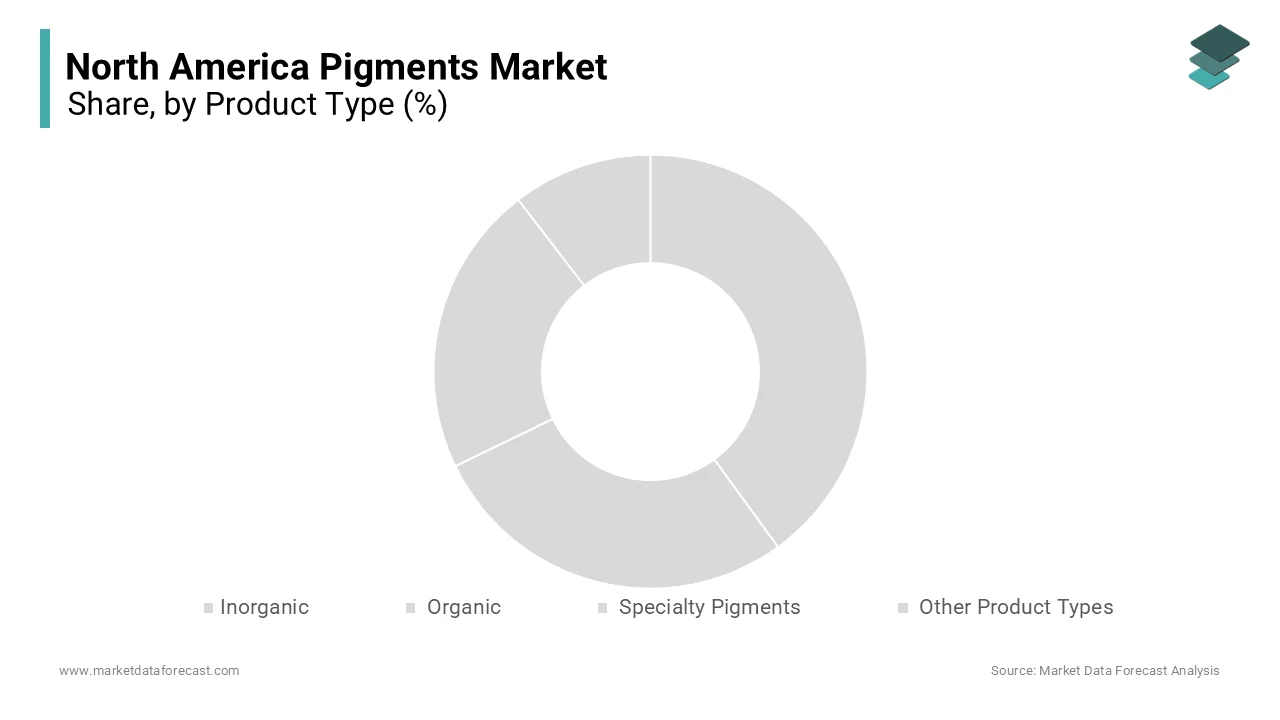
The specialty pigments segment is projected to grow at the fastest CAGR of 6.8% from 2026 to 2034 in the North America pigments market. The rapid expansion of this segment is driven by increasing demand for high-performance pigments that offer unique optical, thermal, and electronic properties across advanced applications. The rising adoption of effect pigments in the automotive and aerospace industries is one of the key growth drivers. These pigments, including mica-based and interference types, create dynamic color shifts and metallic finishes that enhance visual appeal and brand differentiation. A further major factor is the expansion of the electronics and smart packaging sectors , which utilize specialty pigments for conductive, luminescent, and anti-counterfeit applications. Moreover, the healthcare and pharmaceutical industries are increasingly using infrared-reflective and UV-absorbing pigments in medical device coatings and drug delivery systems. With continuous advancements in pigment technology and rising demand from high-tech industries, the specialty pigments segment is well-positioned for sustained growth in North America.
By Application Insights
The paints and coatings segment led the North America pigments market by capturing 44.3% of total consumption in 2025. The dominance of this segment is primarily driven by the extensive use of pigments in both architectural and industrial coating formulations to enhance color, durability, and performance. Moreover, a different contributing factor is the resilient growth of the construction industry, particularly in residential and commercial building activities. Additionally, the industrial coatings sector, which includes automotive, aerospace, and machinery applications, has seen a surge in pigment demand due to the need for corrosion-resistant and thermally stable formulations. Moreover, the automotive refinish market has contributed significantly to pigment consumption. As a result, the paints and coatings application segment remains the cornerstone of the North America pigments market.
The plastics application segment is anticipated to grow at the fastest CAGR of 6.4% in the North America pigments market between 2026 and 2034. The growth of this segment is primarily fueled by the expanding use of colored polymers across packaging, consumer goods, automotive components, and electronics. A key growth driver is the increasing demand for lightweight and aesthetically appealing plastic products in the automotive and consumer electronics industries. Additionally, the packaging sector is witnessing a surge in demand for colored and branded plastic containers , particularly in food and beverage, personal care, and pharmaceutical applications. Moreover, the adoption of bio-based and recyclable plastics is influencing pigment selection, with manufacturers seeking colorants that maintain performance without compromising recyclability.
REGIONAL ANALYSIS
United States
The United States is reflecting its dominant position as a major consumer and producer of pigments across a wide range of industrial applications. As the world’s largest economy and a hub for manufacturing, construction, and automotive industries, the U.S. drives substantial demand for both commodity and specialty pigments. A key growth driver is the robust construction sector , which remains a major consumer of titanium dioxide and iron oxide pigments used in architectural coatings and cement-based products. Additionally, the automotive industry’s resurgence has boosted pigment consumption in OEM coatings and plastic components. Moreover, the chemical manufacturing sector, particularly in states like Texas and Louisiana, supports a strong domestic pigment supply chain. Companies such as Tronox, Chemours, and BASF operate major pigment production facilities, ensuring a steady supply for both domestic and export markets.
Canada
Canada is positioning it as a significant contributor to the regional industry. While smaller in scale compared to the U.S., Canada’s pigment market benefits from a well-established manufacturing base, strong regulatory oversight, and growing demand from construction, packaging, and industrial sectors. A key driver of pigment demand in Canada is the expansion of the construction and infrastructure development sector. Also, the initiatives have increased the usage of architectural coatings, cement colorants, and protective paints, all of which incorporate inorganic and specialty pigments. Additionally, the plastics and packaging industry in Canada has seen steady growth, particularly in food and beverage packaging where pigmented polymers enhance product appeal and branding. Moreover, Canada is home to several pigment blending and formulation facilities that serve both domestic and export markets. Companies such as LANXESS and Pidilite operate in the region, supporting local demand while ensuring compliance with Health Canada’s stringent environmental and health regulations.
Mexico
Mexico is reflecting its growing industrial presence and increasing integration into North American supply chains. While traditionally a smaller market compared to the U.S. and Canada, Mexico’s pigment industry is expanding due to rising manufacturing activity, urbanization, and foreign investment. One of the key drivers is the booming automotive industry, which has positioned Mexico as a leading exporter of vehicles and auto parts. This growth has spurred demand for both inorganic and specialty pigments used in OEM and refinish applications. Additionally, the packaging and consumer goods sectors are contributing to pigment consumption. Moreover, foreign investment in manufacturing hubs such as Guanajuato, Nuevo León, and Jalisco has led to the establishment of pigment blending and distribution centers. These facilities support both domestic demand and regional exports, strengthening Mexico’s position in the North American pigment supply chain. With ongoing industrial expansion and increasing regulatory alignment with U.S. and Canadian standards, Mexico’s pigment market is poised for continued growth.
COMPETITIVE LANDSCAPE
The North America pigments market is characterized by a highly consolidated structure dominated by a few multinational corporations and several regional players. Competition is intense due to the maturity of the market and the need for continuous innovation to meet evolving consumer preferences and regulatory requirements. Companies compete not only on price but also on product differentiation, performance characteristics, and environmental compliance. The demand for sustainable and functional pigments has intensified R&D efforts, leading to frequent product launches and technological upgrades. Strategic acquisitions and partnerships have become common as firms seek to expand their capabilities and secure supply chain stability. Additionally, customer relationships play a crucial role, with many manufacturers offering tailored pigment solutions to meet specific industry needs. As regulatory scrutiny increases and environmental concerns grow, companies must continuously adapt their offerings to remain relevant and competitive in this dynamic market.
KEY MARKET PLAYERS
Huntsman International LLC, Lanxess AG, BASF SE, Merck Group, Carl Schlenk AG, Pidilite Industries Limited, Clariant AG, DIC Corporation, Cathay Industries Group and Tronox, Inc. are the key players in the North America pigments market.
TOP PLAYERS IN THE MARKET
- BASF is a global leader in the pigments industry, offering a comprehensive portfolio that includes titanium dioxide, iron oxides, and specialty colorants. In North America, the company plays a pivotal role in supplying high-performance pigments to coatings, plastics, and automotive sectors. Known for its innovation and sustainability initiatives, BASF consistently develops eco-friendly pigment solutions that align with evolving regulatory standards and customer needs.
- Tronox is one of the largest producers of titanium dioxide in North America, serving diverse industrial applications including paints, coatings, and paper. The company's strong manufacturing footprint and vertical integration strategy enhance its reliability as a supplier. Tronox has also been actively expanding its product range to include sustainable alternatives, reinforcing its leadership position in the regional pigment landscape.
- PPG is a major player in the North American pigments market, particularly in the coatings segment. The company integrates pigment formulation with its vast array of paint and protective coating products, catering to automotive, aerospace, and architectural markets. PPG’s commitment to innovation and customer-specific solutions makes it a key contributor to both regional and global pigment advancements.
TOP STRATEGIES USED BY KEY PLAYERS
Product Innovation and Sustainable Development
Leading companies are prioritizing research and development to introduce advanced pigment formulations that offer enhanced performance and environmental benefits. This includes low-VOC options, bio-based colorants, and recyclable pigment technologies that align with global sustainability goals and regulatory trends.
Vertical Integration and Supply Chain Optimization
To ensure raw material availability and cost efficiency, major players are investing in upstream operations such as mining and chemical synthesis. By controlling key inputs like titanium ores and synthetic intermediates, companies can stabilize production and maintain competitive pricing in a volatile market.
Strategic Collaborations and Geographic Expansion
To strengthen their regional presence, pigment manufacturers are forming strategic partnerships with downstream industries and expanding into emerging markets. These collaborations help in customizing product offerings, improving distribution networks, and enhancing technical support for end-users across various industrial sectors.
RECENT HAPPENINGS IN THE MARKET
- In February 2023, BASF launched a new line of sustainable effect pigments designed specifically for automotive coatings, aiming to enhance visual appeal while reducing environmental impact through lower VOC emissions.
- In September 2023, Tronox announced an expansion of its titanium dioxide production facility in Louisiana, focusing on increasing capacity to meet growing demand from the coatings and plastics industries.
- In January 2025, PPG Industries introduced a bio-based pigment series for use in waterborne architectural coatings, targeting consumers seeking greener alternatives without compromising on color performance or durability.
- In June 2025, LANXESS partnered with a U.S.-based nanotechnology firm to develop next-generation antimicrobial pigments, intended for use in healthcare, food packaging, and public infrastructure applications.
- In November 2025, Cristal Global (now part of Citic Pacific Mining) acquired a specialty pigment blending facility in Texas, aimed at strengthening its regional supply chain and supporting custom pigment formulations for industrial customers.
MARKET SEGMENTATION
This research report on the North America pigments market has been segmented and sub-segmented based on the following categories.
By Product Type
- Inorganic
- Organic
- Specialty Pigments
- Other Product Types
By Application
- Paints and Coatings
- Textiles
- Printing Inks
- Plastics
- Leather
- Other Applications
By Country
- The United States
- Canada
- Rest of North America