- Product Description Description
- Table of Contents TOC
- List of Table & Figure LOT
- Get Free Sample PDF Sample PDF
Market Size, 2025
$0.60 BnMarket Estimate, 2026
$0.69 BnMarket Forecast, 2034
$1.96 BnCAGR, 2026–2034
13.97%Executive Summary: North America Prebiotics Market
- Market Scope: Comprehensive North America prebiotics market analysis covering product ingredients, animal types, regional leadership frameworks, and functional food and beverage trends.
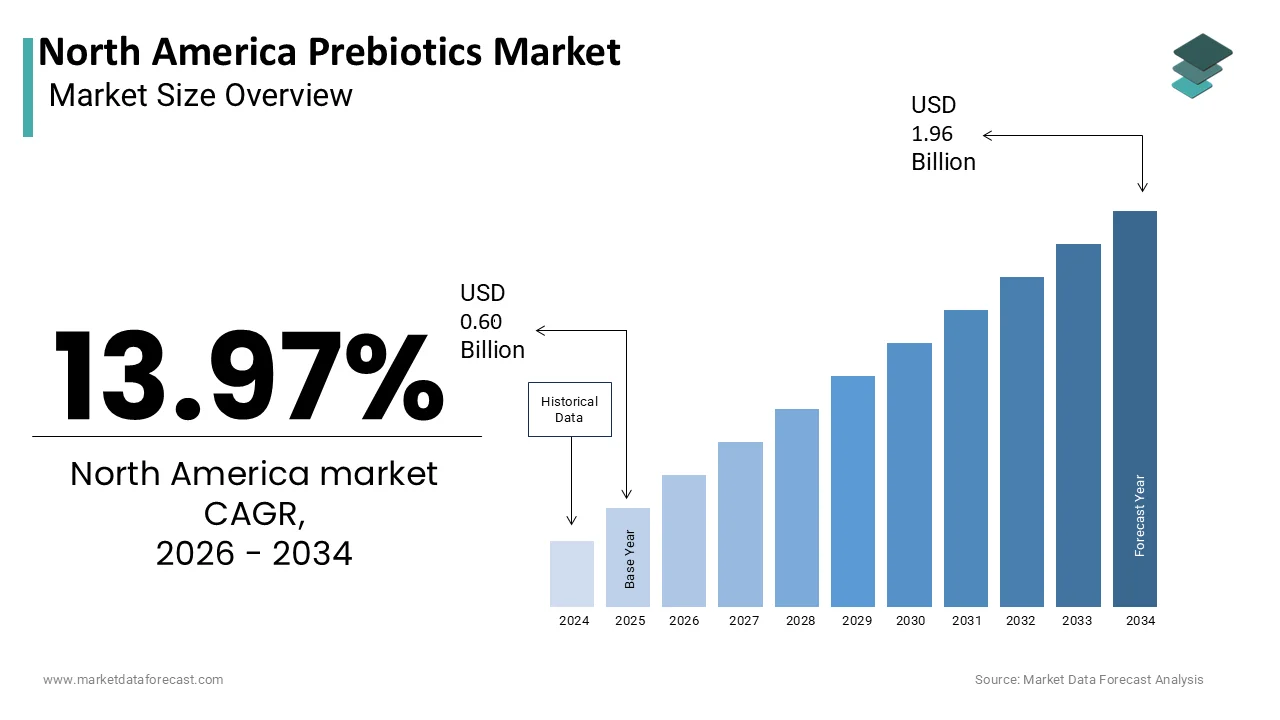
- Market Valuation: Valued at USD 0.60 billion (2025), estimated at USD 0.69 billion (2026), and projected to reach USD 1.96 billion by 2034, registering a robust CAGR of 13.97% (2026–2034).
- Primary Growth Drivers: Increasing consumer awareness regarding gut health, rising incidence of digestive disorders (IBS), expanding functional foods and beverages sector, and clean-label product innovation. Key challenges include regulatory complexities and competition from probiotics.
Key Market Segment Metrics (2026–2034)
| Category | Leading Segment (2025 Position) | Fastest-Growing Segment |
|---|---|---|
| By Ingredient / Product Type | Inulin segment (dominated the market with a 35.4% share in 2025) | Fructo-oligosaccharides (FOS) (anticipated to witness the fastest CAGR of 8.3%) |
| By Application / Animal Type | Ruminants (captured 40.3% of the share in 2025) | Poultry segment (estimated to register a CAGR of 6.5%) |
| By Region / Country | United States (led the regional market with a 75.8% share in 2025) | Canada (likely to exhibit a CAGR of 7.4% during forecast years) |
Major Market Players & Market Structure
Market Structure: Highly competitive nutritional ingredient landscape featuring key food science enterprises focusing on production capacity expansions, strategic acquisitions, and organic product lines.
Key Companies: Beneo GmbH, FrieslandCampina, DuPont de Nemours, Inc., Ingredion Incorporated, Tate & Lyle, and Ginkgo BioWorks.
North America Prebiotics Market Size
The North America Prebiotics Market is projected to grow from USD 0.60 billion in 2025 to USD 0.69 billion in 2026 and reach USD 1.96 billion by 2034, registering a CAGR of 13.97% from 2026 to 2034.
The North America prebiotics market is a rapidly evolving sector that focuses on dietary fibers and non-digestible food ingredients that promote the growth of beneficial gut bacteria. Prebiotics are essential for enhancing gut health, improving digestion, and boosting the immune system, thereby gaining significant traction among health-conscious consumers. The growing awareness of the importance of gut microbiota in overall health is leading to increased demand for functional foods and supplements that contain prebiotic ingredients. This growth is driven by the rising prevalence of digestive disorders, an aging population, and a shift towards preventive healthcare. Furthermore, the increasing incorporation of prebiotics in various food products, including dairy, bakery, and beverages, is expanding their market presence. The demand for these ingredients is expected to continue its upward trajectory by positioning the North America prebiotics market as a key player in the functional food industry.
MARKET DRIVERS
Growing Awareness of Gut Health
The increasing awareness of gut health among consumers is a primary driver of the North America prebiotics market. Consumers are becoming more proactive in seeking dietary solutions that support digestive wellness. According to a survey conducted by a leading health organization, approximately 60% of consumers are now aware of the connection between gut health and overall well-being. This heightened awareness has led to a surge in demand for prebiotic-rich foods and supplements, as individuals seek to enhance their digestive health and boost their immune systems. The increasing consumer preference for products that promote gut health is ascribed to boost the growth of the market. Additionally, the rise of social media and health influencers has further amplified the conversation around gut health by encouraging consumers to explore prebiotic options. The manufacturers are responding by innovating and expanding their product lines to include prebiotic ingredients, thereby capitalizing on this growing trend.
Rising Incidence of Digestive Disorders
The rising incidence of digestive disorders is another significant driver propelling the North America prebiotics market. Conditions such as irritable bowel syndrome (IBS), constipation, and inflammatory bowel disease (IBD) are becoming increasingly prevalent by prompting consumers to seek dietary interventions that can alleviate symptoms and improve gut health. According to the American Gastroenterological Association, approximately 15% of the U.S. population suffers from IBS owing to the urgent need for effective dietary solutions. Prebiotics have been shown to enhance gut health by promoting the growth of beneficial bacteria, improving bowel regularity, and reducing inflammation. As a result, healthcare professionals are increasingly recommending prebiotic-rich foods and supplements as part of a comprehensive approach to managing digestive disorders. This trend is further supported by the growing emphasis on preventive healthcare, as consumers seek to address health concerns before they escalate.
MARKET RESTRAINTS
Limited Consumer Awareness
Despite the growing interest in prebiotics, limited consumer awareness remains a significant restraint on the North America prebiotics market. While health-conscious individuals are increasingly seeking out functional foods, many consumers still lack a comprehensive understanding of what prebiotics are and their associated health benefits. According to a recent study, only 30% of consumers are familiar with the term "prebiotics," indicating a substantial knowledge gap that manufacturers must address. This lack of awareness can hinder market growth, as consumers may be hesitant to invest in products they do not fully understand. To overcome this challenge, companies must prioritize education and marketing efforts that effectively communicate the benefits of prebiotics and how they can contribute to overall health. Additionally, the presence of competing health trends, such as probiotics and dietary supplements, may further complicate consumer decision-making. As a result, the North America prebiotics market must focus on increasing consumer education and awareness to unlock its full growth potential.
Regulatory Challenges
Regulatory challenges also pose a significant restraint on the North America prebiotics market. The food and dietary supplement industries are subject to stringent regulations regarding ingredient safety, labeling, and health claims. Compliance with the Food and Drug Administration (FDA) and other regulatory bodies can be complex and time-consuming for smaller manufacturers who may lack the resources to navigate these requirements. This financial burden can deter new entrants from entering the market and limit the ability of existing companies to innovate and expand their product offerings. Furthermore, the evolving nature of regulations surrounding health claims and ingredient safety can create uncertainty for manufacturers by making it challenging to develop effective marketing strategies. As a result, regulatory challenges can hinder the growth of the North America prebiotics market with a proactive approach from companies to ensure compliance and adapt to changing regulations.
MARKET OPPORTUNITIES
Expansion of Functional Foods and Beverages
The expansion of functional foods and beverages presents a significant opportunity for the North America prebiotics market. The demand for functional foods containing prebiotics is on the rise as consumers increasingly seek products that offer health benefits beyond basic nutrition. This growth is driven by the increasing consumer preference for products that support digestive health, boost immunity, and enhance overall well-being. Manufacturers are responding to this trend by incorporating prebiotic ingredients into a wide range of food and beverage products, including dairy, snacks, and plant-based alternatives. The versatility of prebiotics allows for their integration into various formulations, catering to diverse consumer preferences. The North America prebiotics market is well-positioned to capitalize on this opportunity by driving innovation and expanding product offerings to meet consumer demand.
Growing Interest in Personalized Nutrition
The growing interest in personalized nutrition represents another significant opportunity for the North America prebiotics market. There is an increasing demand for tailored nutritional solutions that address individual health concerns as consumers become more aware of their unique dietary needs and health goals. According to a survey conducted by a leading nutrition organization, approximately 70% of consumers express interest in personalized nutrition products that cater to their specific health needs. Prebiotics, with their ability to support gut health and overall wellness, can play a crucial role in personalized nutrition strategies. Manufacturers can leverage this trend by developing targeted prebiotic formulations that address specific health concerns, such as digestive health, weight management, and immune support. A significant opportunity for prebiotic manufacturers is to innovate and create products that resonate with health-conscious consumers. By aligning their offerings with the growing demand for personalized nutrition, companies can enhance their market presence and drive growth in the North America prebiotics market.
MARKET CHALLENGES
Competition from Probiotics
The competition from probiotics poses a significant challenge to the North America prebiotics market. While both prebiotics and probiotics are recognized for their health benefits, probiotics have gained considerable popularity among consumers, often overshadowing the benefits of prebiotics. This rapid growth can be attributed to the increasing consumer awareness of gut health and the effectiveness of probiotics in promoting digestive wellness. As a result, consumers may prioritize probiotic products over prebiotic options, limiting the growth potential of the prebiotics market. To address this challenge, manufacturers must focus on educating consumers about the complementary roles of prebiotics and probiotics in supporting gut health. By highlighting the unique benefits of prebiotics and their ability to enhance the effectiveness of probiotics, companies can position themselves more effectively in the competitive landscape and drive demand for prebiotic products.
Supply Chain Disruptions
Supply chain disruptions represent another significant challenge for the North America prebiotics market. Approximately 40% of food manufacturers have experienced disruptions in their supply chains due to the pandemic, which is impacting their ability to source essential ingredients for prebiotic products. These disruptions can lead to delays in product launches, increased prices, and reduced availability of prebiotic ingredients in the market. Additionally, fluctuations in raw material prices can further complicate production planning and pricing strategies for manufacturers. To mitigate these challenges, companies must adopt proactive supply chain management strategies that enhance resilience and flexibility. Manufacturers can better navigate supply chain disruptions and ensure a consistent supply of prebiotic ingredients by diversifying their supplier base and investing in local sourcing options.
REPORT COVERAGE
| REPORT METRIC | DETAILS |
| Market Size Available | 2025 to 2034 |
| Base Year | 2025 |
| Forecast Period | 2026 to 2034 |
| Segments Covered | By Type , Animal Type and Country. |
| Various Analyses Covered | Global, Regional & Country Level Analysis, Segment-Level Analysis; DROC, PESTLE Analysis, Porter's Five Forces Analysis, Competitive Landscape, Analyst Overview of Investment Opportunities |
| Country Covered | The U.S., Canada and Rest of North America |
| Market Leader Profiled | Beneo GmbH, FrieslandCampina, and DuPont de Nemours, Inc. |
SEGMENTAL ANALYSIS
By Type Insights
The inulin segment was the largest in the North America prebiotics market by accounting for 35.4% of share in 2025. This dominance can be attributed to the widespread use of inulin as a functional ingredient in various food products, including dairy, bakery, and snacks. Inulin is known for its ability to enhance gut health by promoting the growth of beneficial bacteria and improving digestive function. The versatility of inulin allows it to be easily incorporated into a wide range of formulations by making it a preferred choice for manufacturers looking to enhance the health benefits of their products. Additionally, the rising consumer preference for clean-label products further supports the growth of the inulin segment, as it is derived from natural sources such as chicory root. The inulin segment is well-positioned to maintain its leading position in the North America prebiotics market.
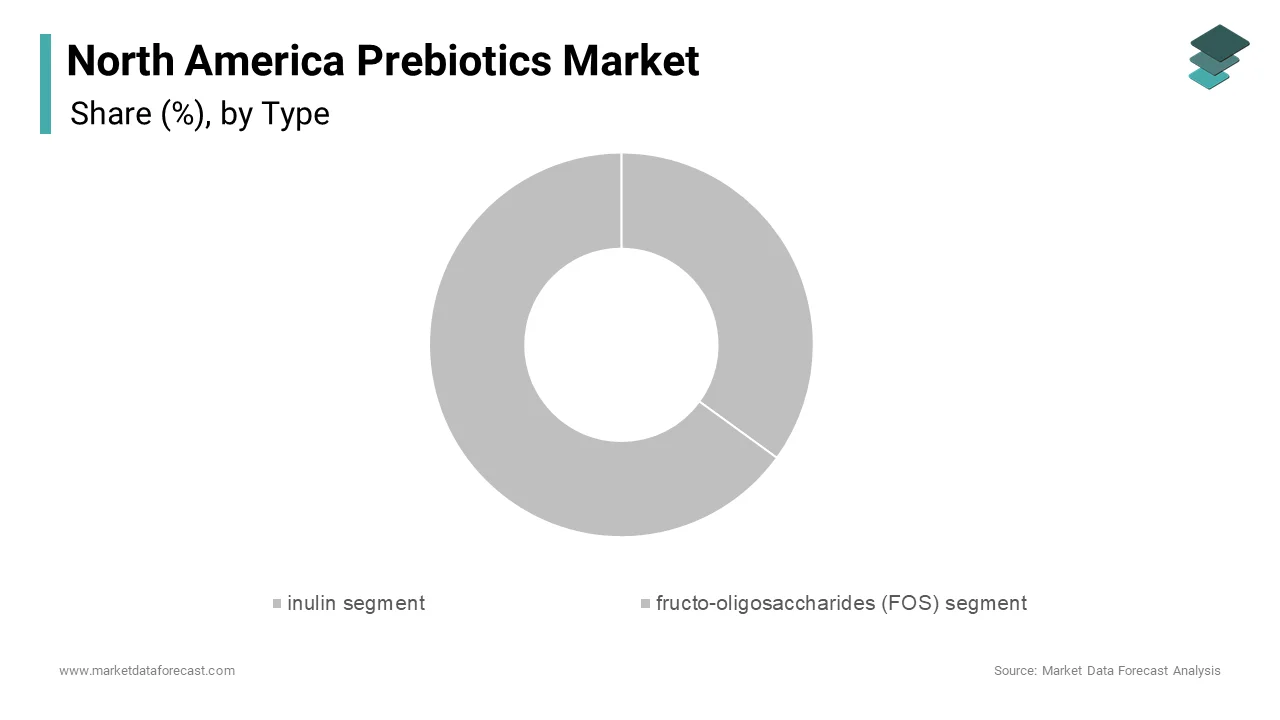
The fructo-oligosaccharides (FOS) segment is anticipated to witness a fastest CAGR of 8.3% during the forecast period. This growth can be attributed to the increasing recognition of FOS as a beneficial ingredient for digestive health and its ability to enhance the absorption of essential minerals. FOS is commonly used in various food applications, including dairy products, beverages, and dietary supplements, due to its mild sweetness and prebiotic properties. The demand for FOS is expected to rise significantly as consumers seek out products that support gut health and overall wellness. The versatility of FOS allows it to be easily incorporated into a wide range of formulations by catering to diverse consumer preferences. Furthermore, the growing trend towards plant-based diets and natural ingredients is driving the adoption of FOS in food products. The FOS segment is poised for substantial growth with the evolving preferences of consumers in the North America prebiotics market.
By Animal Type Insights
The ruminants segment dominated the market by capturing 40.3% of the share in 2025 owing to the increasing demand for high-quality animal feed that promotes gut health and enhances overall animal performance. Prebiotics play a crucial role in improving digestion and nutrient absorption in ruminants, leading to better growth rates and feed efficiency. The use of prebiotics in ruminant diets is becoming increasingly popular among livestock producers, as they seek to improve animal health and productivity while reducing reliance on antibiotics. Additionally, the growing emphasis on sustainable farming practices is driving the adoption of prebiotics in animal nutrition.
The poultry segment is estimated to register a prominent CAGR of 6.5% in the next coming years. This growth can be attributed to the increasing focus on improving poultry health and productivity through the use of prebiotics in feed formulations. Prebiotics have been shown to enhance gut health in poultry that is leading to improved feed conversion rates and reduced mortality. The demand for prebiotics in poultry feed is expected to rise significantly as producers seek to optimize production efficiency and meet the growing consumer demand for poultry products. The poultry industry is also experiencing a shift towards more sustainable and antibiotic-free production practices that further drives the adoption of prebiotics as a natural solution for promoting gut health. The poultry segment is poised for substantial growth by reflecting the evolving preferences of consumers and producers in the North America prebiotics market.
Country Level Analysis
The United States was the top performer in the North America prebiotics market by accounting for 75.8% of the share in 2025. This dominance is attributed to the robust food and beverage industry, which is increasingly incorporating prebiotic ingredients into various products. The U.S. market is driven by a diverse consumer base that is increasingly seeking products that support digestive health and overall well-being. Additionally, the growing trend of preventive healthcare is prompting consumers to explore dietary solutions that can enhance gut health that further promote the United States' position as a key player in the North America prebiotics market.
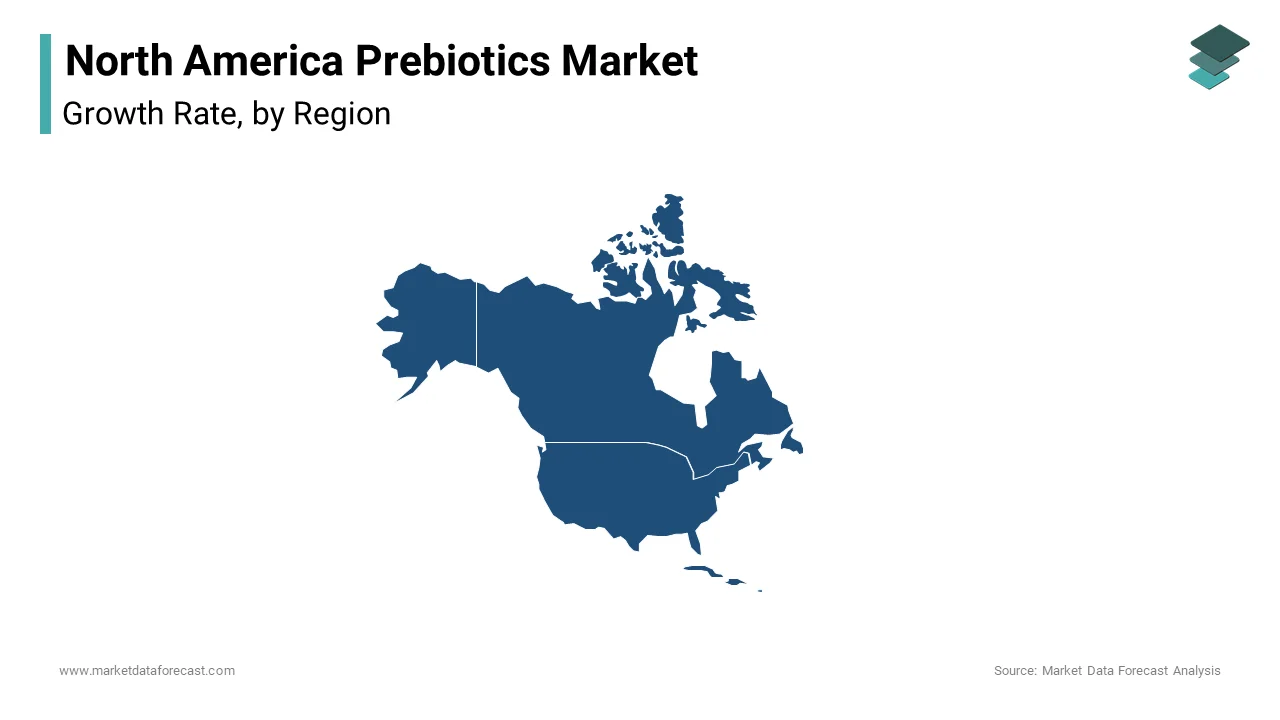
Canada prebiotics market is likely to exhibit a CAGR of 7.4% during the foreseen years. This growth can be attributed to the increasing consumer interest in health and wellness, as well as the rising demand for functional foods that contain prebiotic ingredients. According to Statistics Canada, the functional food market is expected to grow significantly which is driven by the popularity of products that promote digestive health and boost immunity. The Canadian market is also witnessing a shift towards clean-label products, with consumers seeking transparency in ingredient sourcing and formulation. Canada is well-positioned to capitalize on this trend by contributing to the overall growth of the North America prebiotics market.
Top strategies used by the key market participants
Key players in the North America prebiotics market are employing various strategies to enhance their competitive edge and strengthen their market positions. One prominent strategy is the focus on product innovation, where companies are investing in research and development to create advanced formulations that meet the changing preferences of consumers. For instance, many manufacturers are developing prebiotic ingredients that are derived from natural sources and cater to the growing demand for clean-label products. Additionally, strategic partnerships and collaborations with food manufacturers and distributors are being leveraged to expand market reach and enhance product offerings.
Another significant strategy is the emphasis on sustainability and environmental responsibility. Many companies are adopting sustainable sourcing practices and reducing their carbon footprint in production processes. This commitment to sustainability resonates with consumers who are increasingly concerned about the environmental impact of their food choices. Furthermore, companies are focusing on enhancing their supply chain efficiency to mitigate the risks associated with raw material price volatility and ensure consistent product availability.
KEY MARKET PLAYERS AND COMPETITIVE LANDSCAPE
The North America prebiotics market is characterized by the presence of several key players that significantly contribute to its growth and development. Companies such as Beneo GmbH, FrieslandCampina, and DuPont de Nemours, Inc. are among the leading players in this sector. Beneo GmbH is known for its extensive portfolio of prebiotic ingredients, including inulin and oligofructose, which are widely used in various food applications. Their focus on innovation and sustainability has positioned them as a trusted supplier in the market. FrieslandCampina, a major dairy cooperative, offers a range of prebiotic products that enhance the nutritional profile of dairy products and infant formulas. Their commitment to quality and research enables them to stay ahead of emerging trends and consumer demands. DuPont de Nemours, Inc. specializes in food ingredients and has developed a range of prebiotic solutions that cater to the growing demand for functional foods. These companies, along with others in the market, are continuously investing in product innovation and strategic partnerships to strengthen their positions and meet the evolving needs of consumers and food manufacturers.
The competition in the North America prebiotics market is intense, characterized by a mix of established players and emerging companies striving to capture market share. The presence of major corporations with extensive resources and established distribution networks creates a challenging environment for smaller manufacturers. These larger companies often leverage their economies of scale to offer competitive pricing, which can pressure smaller players to differentiate themselves through innovation and niche product offerings. Additionally, the rapid pace of technological advancements in food processing and ingredient formulation necessitates continuous investment in research and development, further intensifying competition.
Moreover, the increasing consumer demand for clean-label and health-oriented products is driving companies to innovate and reformulate their offerings. Manufacturers are focusing on developing prebiotic ingredients that align with current trends, such as plant-based ingredients and natural additives. This shift not only enhances product appeal but also fosters brand loyalty among health-conscious consumers. The competitive landscape is further complicated by the need for effective marketing strategies that communicate product benefits and build brand recognition. Overall, the North America prebiotics market is marked by dynamic competition, with companies continually adapting to meet the evolving needs of consumers and the food industry.
RECENT HAPPENINGS IN THE MARKET
- In March 2023, Beneo GmbH launched a new line of organic inulin products aimed at meeting the growing consumer demand for natural ingredients. This initiative is expected to enhance their product portfolio and cater to health-conscious consumers.
- In January 2023, FrieslandCampina announced a strategic partnership with a leading food manufacturer to develop innovative prebiotic solutions tailored to their specific needs. This collaboration aims to improve product quality and consistency across the manufacturer’s offerings.
- In February 2023, DuPont de Nemours, Inc. expanded its production capacity for prebiotic ingredients in North America to meet the rising demand for functional foods. This expansion is anticipated to strengthen their market presence and enhance supply chain efficiency.
- In April 2023, Ingredion Incorporated introduced a new range of prebiotic fibers designed to improve the texture and nutritional profile of plant-based products, addressing the growing demand for healthier food options.
- In May 2023, Tate & Lyle announced the acquisition of a prebiotic ingredient manufacturer to broaden its product range and enhance its distribution capabilities in the North American market.
- In June 2023, ProbioFerm launched a new line of prebiotic supplements aimed at promoting digestive health, catering to the increasing consumer interest in gut health products.
- In July 2023, Synlogic announced a partnership with a major food company to develop innovative prebiotic formulations that enhance the health benefits of their products.
- In August 2023, Ginkgo BioWorks expanded its capabilities in producing prebiotic ingredients through a new biomanufacturing facility, positioning itself as a leader in sustainable ingredient production.
- In September 2023, Cargill launched a new research initiative focused on developing innovative prebiotic solutions that utilize plant-based ingredients, reflecting the growing trend towards plant-based diets.
- In October 2023, DSM Nutritional Products announced a strategic investment in a technology startup focused on developing sustainable prebiotic ingredients, positioning itself as a leader in innovation within the market.
MARKET SEGMENTATION
This research report on the North America Prebiotics Market has been segmented and sub-segmented into the following categories.
By Type
- inulin segment
- fructo-oligosaccharides (FOS) segment
By Animal Type
- ruminants segment
- poultry segment
By Country
- The U.S.
- Canada
- Rest of North America.