- Product Description Description
- Table of Contents TOC
- List of Table & Figure LOT
- Get Free Sample PDF Sample PDF
Market Size, 2025
$1.94 BnMarket Estimate, 2026
$2.01 BnMarket Forecast, 2034
$2.71 BnCAGR, 2026–2034
3.82%North America Protein Hydrolysate Ingredient Market Size
The North America protein hydrolysate ingredient market size was valued at USD 1.94 billion in 2025 and is predicted to reach USD 2.71 billion by 2034 from USD 2.01 billion in 2026, growing at a CAGR of 3.82% from 2026 to 2034.
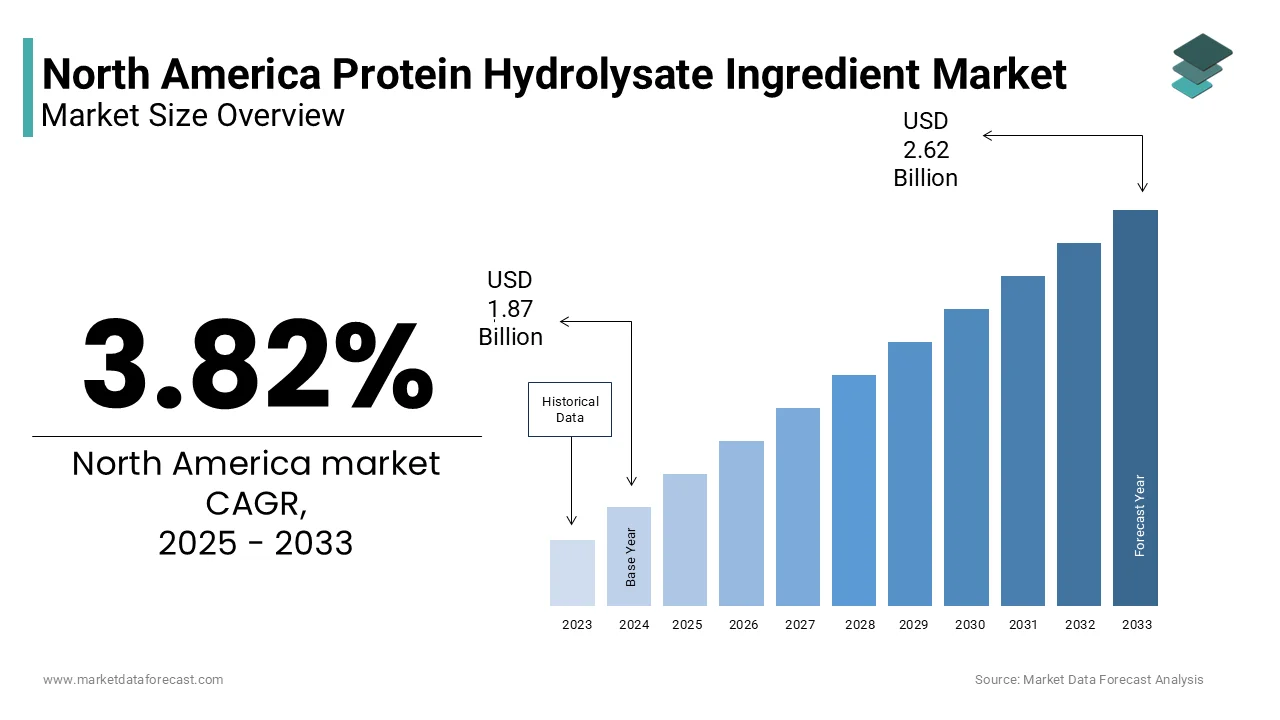
The North America protein hydrolysate ingredient market encompasses a range of bioactive peptides derived from the enzymatic or chemical breakdown of proteins sourced from animal, plant, or microbial origins. These hydrolysates are widely used across food & beverage, dietary supplements, infant nutrition, and pharmaceutical applications due to their high digestibility, enhanced functional properties, and nutritional benefits. The demand for clean-label, easily absorbable protein sources has significantly driven the growth of this market in recent years.
MARKET DRIVERS
Rising Consumer Preference for Functional and Nutritional Foods
The increasing consumer preference for functional and nutrient-dense foods is one of the primary drivers of the North America protein hydrolysate ingredient market. Consumers are becoming more health-conscious and are prioritizing foods that offer added benefits beyond basic nutrition, such as improved digestion, immune support, and muscle recovery. This trend is especially prominent among fitness enthusiasts, aging populations, and individuals managing dietary restrictions. Apart from these, manufacturers are leveraging these insights by incorporating hydrolysates into ready-to-drink shakes, sports nutrition bars, and clinical nutrition products, thereby expanding the application scope and driving sustained demand.
Expansion of Sports Nutrition and Dietary Supplement Categories
The rapid expansion of the sports nutrition and dietary supplement industry is another key driver influencing the North America protein hydrolysate ingredient market. With rising participation in fitness activities and increasing awareness about post-exercise recovery, consumers are turning to high-quality protein sources that offer faster absorption and enhanced amino acid delivery. According to the Council for Responsible Nutrition (CRN), approximately 77% of U.S. adults take dietary supplements regularly, with protein-based formulations being among the most popular. In particular, hydrolyzed whey and collagen peptides have gained traction due to their ability to support muscle synthesis and joint health. This expansion is supported by major brands launching innovative product formats such as protein powders, gummies, and ready-to-mix beverages that utilize hydrolysates for superior performance benefits, further fueling ingredient demand.
MARKET RESTRAINTS
High Production Costs Associated with Hydrolysis Processes
The relatively high production costs associated with hydrolysis processes is a significant restraint affecting the North America protein hydrolysate ingredient market. Whether through enzymatic, acid, or thermal methods, the hydrolysis of proteins requires specialized equipment, precise process control, and high-quality raw materials, which can increase manufacturing expenses. Additionally, as per a report by the USDA Agricultural Research Service, sourcing premium protein inputs, such as grass-fed whey or organic soy, further elevates the final product price, potentially deterring price-sensitive consumers. These cost constraints are particularly challenging in highly competitive markets where brand differentiation often hinges on affordability rather than functional superiority, thus slowing the widespread adoption of hydrolysates in mainstream food categories.
Regulatory Complexity and Labeling Requirements
The regulatory complexity surrounding food labeling and health claims is another key challenge in the North America protein hydrolysate ingredient market. Both the U.S. Food and Drug Administration (FDA) and Health Canada impose stringent regulations on how protein hydrolysates can be marketed, particularly regarding structure-function claims and allergen disclosures. These regulatory hurdles not only delay market entry but also limit the ability of companies to effectively communicate the unique benefits of hydrolysates to end consumers, thereby impacting overall growth potential.
MARKET OPPORTUNITIES
Growing Demand for Plant-Based Protein Alternatives
The growing demand for plant-based protein alternatives is an emerging opportunity within the North America protein hydrolysate ingredient market. As vegetarianism, veganism, and flexitarian diets gain popularity, consumers are increasingly seeking non-animal-derived protein sources that offer similar functionality and nutritional value. Ingredients such as pea, rice, hemp, and oat protein hydrolysates are being integrated into meat analogs, dairy-free beverages, and clean-label snacks to meet evolving consumer preferences. Besides, manufacturers are investing in R&D to improve taste, texture, and solubility of plant-derived hydrolysates, positioning them as viable substitutes for traditional animal-based options.
Increasing Application in Medical and Clinical Nutrition Products
The expanding use of hydrolysates in medical and clinical nutrition products is another promising avenue for growth in the North America protein hydrolysate ingredient market. These include enteral formulas, oral nutritional supplements (ONS), and specialized infant formulas designed for individuals with digestive sensitivities or chronic conditions. According to the Academy of Nutrition and Dietetics, hydrolyzed proteins are preferred in therapeutic nutrition due to their reduced allergenicity and enhanced bioavailability, making them ideal for patients recovering from surgery, illness, or malnutrition. Moreover, Companies are responding by developing customized hydrolysates tailored for specific medical applications, including those targeting gut health, immune function, and metabolic support, opening new revenue streams and strengthening market foothold.
MARKET CHALLENGES
Supply Chain Disruptions Affecting Raw Material Availability
Supply chain disruptions that impact the availability and pricing of raw materials is one of the foremost challenges facing the North America protein hydrolysate ingredient market. Many hydrolysates are derived from agricultural commodities such as dairy, soy, and fish, which are subject to seasonal fluctuations, trade policies, and geopolitical tensions. These disruptions not only affect production timelines but also make it difficult for companies to maintain consistent pricing and quality, ultimately hindering market expansion and investment in new product development.
Consumer Misconceptions About Hydrolyzed Proteins
Consumer misconceptions about hydrolyzed proteins present another notable challenge in the North America protein hydrolysate ingredient market. Despite their functional and nutritional advantages, some consumers associate hydrolyzed ingredients with artificial additives, preservatives, or poor sensory attributes such as bitterness. Overcoming these perceptions requires targeted education campaigns, transparent labeling, and scientifically backed communication from industry stakeholders to build trust and encourage broader acceptance of hydrolysates across diverse consumer segments.
REPORT COVERAGE
| REPORT METRIC | DETAILS |
| Market Size Available | 2025 to 2034 |
| Base Year | 2025 |
| Forecast Period | 2026 to 2034 |
| CAGR | 3.82% |
| Segments Covered | By Source, Application, and Region |
|
Various Analyses Covered | Regional & Country Level Analysis, Segment-Level Analysis, DROC, PESTLE Analysis, Porter’s Five Forces Analysis, Competitive Landscape, Analyst Overview on Investment Opportunities |
| Regions Covered | The United States, Canada, Mexico, and Rest of North America |
| Market Leaders Profiled | Frieslandcampina, Fonterra Co-Operative Group, Milk Specialties Group, Abbott Laboratories, Arla Foods Ingredients Group P/S, Agropur Inc, Danone S.A., Davisco Foods International, Inc., Kerry Group plc, Carbery Group, Glanbia PLC, Nestlé S.A., Tate & Lyle PLC, and others |
SEGMENTAL ANALYSIS
By Source Insights
The milk-based protein hydrolysates segment dominated the North America market by accounting for 42% of total demand in 2025. Its well-established presence in the food and dietary supplement industries, particularly in the United States, is propelling the dominance of milk-based protein hydrolysates segment. This segment includes hydrolyzed whey and casein, both of which are widely used in infant formula, sports nutrition, and clinical nutrition products due to their high digestibility and amino acid profile. Additionally, the strong regulatory framework supporting the use of dairy proteins in medical and infant nutrition further reinforces this segment’s leading position.
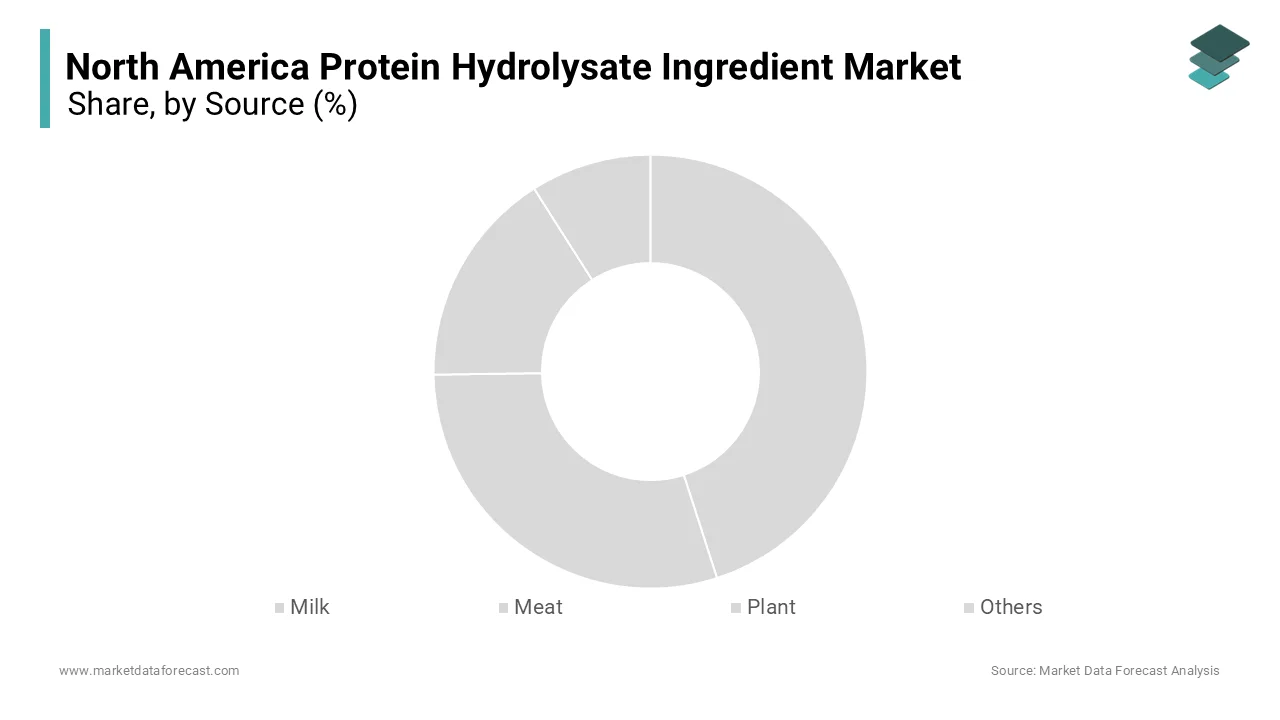
The plant-based protein hydrolysates segment is experiencing the fastest growth in the North America market and is projected to expand at a CAGR of 8.6% from 2026 to 2034. Rising consumer interest in vegetarian and vegan diets, coupled with growing concerns about sustainability and animal welfare is driving the rise of this segment. Ingredients such as pea, soy, rice, and hemp protein hydrolysates are gaining traction across multiple applications, including meat substitutes, dairy-free beverages, and clean-label snacks. Companies like Roquette, Kerry Group, and ADM are investing heavily in R&D to enhance the sensory and functional properties of plant-derived hydrolysates, further accelerating their integration into mainstream food and supplement formulations.
By Application Insights
The Infant formula segment remained the largest application in the North America protein hydrolysate ingredient market and is capturing a 37.4% of total demand in 2025. Widespread use of hydrolyzed whey and casein in hypoallergenic formulas designed for infants with cow’s milk protein intolerance is fuelling the growth of this segment. Apart from these, hydrolyzed formulas are recommended for infants at high risk of developing allergies, further driving adoption. Health Canada also supports the inclusion of hydrolyzed proteins in infant nutrition products, ensuring compliance with strict safety and quality standards.
The sports nutrition segment is emerging as the fastest-growing application in the North America protein hydrolysate ingredient market and is projected to expand at a CAGR of 9.2% from 2026 to 2034. Rising popularity of fitness culture, increasing participation in endurance sports, and growing consumer preference for fast-absorbing proteins that support muscle recovery and performance is fuelling the growth of this segment. Manufacturers are increasingly incorporating these hydrolysates into protein bars, gummies, and functional beverages to meet evolving consumer demands for convenience and efficacy, making this segment a key growth driver in the broader market landscape.
REGIONAL ANALYSIS
United States
The United States led the North America protein hydrolysate ingredient market by estimated at a 75.3%, owing to its well-developed food and nutrition industry, high consumer awareness, and robust healthcare infrastructure. The country is home to major players in the dietary supplement, sports nutrition, and infant formula sectors, all of which drive significant demand for hydrolyzed protein ingredients. Additionally, the expanding plant-based food sector, supported by organizations like the Plant Based Foods Association (PBFA), has further diversified the application base for protein hydrolysates, reinforcing the U.S. as the dominant force in the regional market.
Canada
Canada had a notable share of the North America protein hydrolysate ingredient market, with steady growth observed across infant nutrition, clinical nutrition, and functional food segments. The Canadian market benefits from a strong regulatory framework that encourages the use of hydrolyzed proteins in medical and specialized dietary products. Domestic companies such as Davisco Foods International and CanPrev Natural Health Products are expanding their offerings, while multinational firms like DSM and Glanbia are strengthening distribution networks across the country.
KEY MARKET PLAYERS AND COMPETITIVE LANDSCAPE
Some of the major companies dominating the market are Frieslandcampina, Fonterra Co-Operative Group, Milk Specialties Group, Abbott Laboratories, Arla Foods Ingredients Group P/S, Agropur Inc, Danone S.A., Davisco Foods International, Inc., Kerry Group plc, Carbery Group, Glanbia PLC, Nestlé S.A., Tate & Lyle PLC and Archer Daniels Midland Company.
The competition in the North America protein hydrolysate ingredient market is shaped by a dynamic mix of global ingredient giants, regional specialists, and emerging biotech-driven startups aiming to capture market share through differentiation and innovation. While established players dominate with their broad product portfolios, extensive distribution networks, and deep-rooted relationships with food and nutrition manufacturers, smaller firms are leveraging niche expertise in plant-based and functional hydrolysates to carve out specialized positions. The market is witnessing increased collaboration between ingredient suppliers and downstream manufacturers to co-develop proprietary formulations that align with evolving consumer expectations around health, sustainability, and clean labeling. Additionally, rising demand for personalized nutrition and bioactive peptides is pushing companies to invest in clinical research and intellectual property to validate the efficacy of their hydrolysates. Regulatory scrutiny remains a key challenge, particularly concerning allergen management and health claims, but industry leaders are proactively engaging with policymakers to ensure compliance and facilitate product approvals. As consumer awareness grows, so does the need for education and transparent communication regarding the benefits of protein hydrolysates, further shaping the competitive dynamics in this fast-evolving market.
TOP PLAYERS IN THE MARKET
Kerry Group
Kerry Group is a global leader in taste and nutrition, with a strong presence in the North American protein hydrolysate market. The company offers a wide range of hydrolyzed proteins derived from dairy, plant, and animal sources, catering to infant nutrition, sports nutrition, and clinical applications. Kerry’s focus on innovation, sustainability, and clean-label formulations has positioned it as a preferred supplier for food and supplement manufacturers across the region. Its extensive R&D capabilities and strategic partnerships with major food brands enable it to consistently deliver high-quality, functional ingredients that meet evolving consumer demands.
Arla Foods Ingredients
Arla Foods Ingredients specializes in dairy-based protein hydrolysates, particularly whey and casein, which are widely used in infant formula, medical nutrition, and sports supplements. As a cooperative owned by dairy farmers, the company benefits from a secure and sustainable supply chain, ensuring consistent quality and traceability. Arla's commitment to scientific research and product development has led to the creation of highly digestible and hypoallergenic protein solutions tailored for sensitive populations. Its presence in North America continues to grow through collaborations with key players in the infant and clinical nutrition sectors.
Roquette Frères (Roquette North America)
Roquette is a leading provider of plant-based protein hydrolysates, especially those derived from pea protein, making it a key player in the growing plant-based nutrition space. The company supplies hydrolysates to a variety of industries, including sports nutrition, meat alternatives, and functional foods. Roquette invests heavily in sustainable sourcing and green processing technologies, aligning with consumer preferences for natural and environmentally responsible ingredients. With its expanding production capacity in North America, Roquette is well-positioned to support the region’s shift toward plant-based dietary trends.
TOP STRATEGIES USED BY KEY PLAYERS
One of the primary strategies employed by key players in the North America protein hydrolysate ingredient market is product innovation and formulation diversification , where companies develop customized hydrolysates tailored to specific applications such as infant nutrition, sports recovery, and clinical use. This allows them to cater to niche consumer needs while differentiating their offerings in a competitive landscape. Another key approach is strategic partnerships and co-development agreements with food and pharmaceutical companies , enabling ingredient suppliers to integrate their products directly into end-use formulations and ensure regulatory compliance. Lastly, expanding production capabilities and investing in sustainable processing technologies has become crucial, as consumers increasingly prioritize eco-friendly sourcing and clean-label transparency. These combined efforts help reinforce brand positioning and long-term market resilience.
RECENT HAPPENINGS IN THE MARKET
- In February 2025, Kerry Group launched a new line of clean-label hydrolyzed whey proteins specifically designed for sports nutrition applications. The product series was developed to enhance muscle recovery and absorption rates, targeting fitness-conscious consumers seeking premium functional ingredients without artificial additives.
- In May 2025, Arla Foods Ingredients expanded its U.S. facility in Wisconsin to increase production capacity for its lactoferrin-enriched whey hydrolysates, which are commonly used in infant formulas and immune-supporting nutritional products. This expansion reflects the company’s commitment to meeting growing demand from North American formula manufacturers.
- In July 2025, Roquette announced a partnership with a U.S.-based biotech startup specializing in fermentation-based protein modification. The collaboration aimed to enhance the sensory profile and solubility of plant-derived hydrolysates, addressing common challenges in texture and taste within plant-based food formulations.
- In September 2025, DSM Nutritional Products introduced a new enzymatic hydrolysis process at its Quebec facility, designed to improve the digestibility and bioavailability of collagen peptides used in joint and skin health supplements. This advancement supports the company’s strategy to strengthen its foothold in the premium wellness segment.
- In November 2025, Glanbia Nutritionals unveiled a dedicated innovation center in California focused on developing customized hydrolysate blends for clinical nutrition and medical food applications. The center aims to accelerate product development timelines and offer tailored solutions for healthcare providers and dietary supplement brands.
MARKET SEGMENTATION
This research report on the North America protein hydrolysate ingredient market has been segmented and sub-segmented based on the following categories.
By Source
- Milk
- Meat
- Plant
- Others
By Application
- Infant Formula
- Sports Nutrition
- Clinical Nutrition
- Others
By Country
- The United States
- Canada
- Rest of North America