- Product Description Description
- Table of Contents TOC
- List of Table & Figure LOT
- Get Free Sample PDF Sample PDF
Market Size, 2025
$17.93 BnMarket Estimate, 2026
$18.65 BnMarket Forecast, 2034
$25.59 BnCAGR, 2026–2034
4.03%North America Recreational Vehicle Market Size, Share & Growth Analysis (2026–2034)
The North American recreational vehicle (RV) market was valued at USD 17.93 billion in 2025, reaching USD 18.65 billion in 2026, and is projected to expand to USD 25.59 billion by 2034, registering a compound annual growth rate (CAGR) of 4.03% during the forecast period from 2026 to 2034.
- Market Scope: Comprehensive regional evaluation spanning types, propulsion types, applications, and country breakdowns across the United States, Canada, and Mexico.
- Primary Growth Drivers: Proliferation of remote work and digital nomadism, growing participation in outdoor tourism, and rising preferences for flexible, self-contained travel configurations.
Key Market Segment Metrics
| Category | Leading Segment | Fastest-Growing / Promising Segment |
|---|---|---|
| By Type / Propulsion | Towable RVs (Captured 62.3% of total market revenue in 2024, valued for cost-effectiveness and versatility) | Class B Motorhomes (Projected at a 9.8% CAGR, fueled by minimalist lifestyles and digital nomads) |
| By Application | Personal Use (Commanded the top portion of the market in 2024 through family vacations and road-trip trends) | Commercial Use (Fastest-growing at a 10.3% CAGR, driven by peer-to-peer rentals, film production, and mobile clinics) |
| By Country | United States (Held an estimated 84.2% regional market share in 2024, anchored by an established manufacturing base) | Canada (Experiencing steady expansion due to outdoor tourism in national parks and hybrid work models) |
Major Market Players & Industry Landscape
Competitive Structure: A dynamic landscape featuring established manufacturing leaders, specialized boutique builders, and digital-first RV-sharing platforms focusing on product diversification, smart tech integrations, and sustainable design elements.
Leading Companies: Thor Industries, Inc. (U.S.), Forest River, Inc. (U.S.), Winnebago Industries, Inc. (U.S.), REV Group (U.S.), Triple E Recreational Vehicles (Canada), and Pleasure-Way Industries Ltd. (Canada).
North America Recreational Vehicle Market Size
The North American recreational vehicle (RV) market was valued at USD 17.93 billion in 2025 and is anticipated to reach USD 18.65 billion in 2026 to reach USD 25.59 billion by 2034, growing at a CAGR of 4.03% during the forecast period from 2026 to 2034.

The North American recreational vehicle (RV) market encompasses a wide range of motorized and towable vehicles designed for leisure travel, camping, and temporary living. These include Class A, B, and C motorhomes, as well as travel trailers, fifth wheels, and pop-up campers. RVs serve both personal and rental purposes, catering to an expanding demographic that values flexible, self-contained travel experiences. The market has witnessed consistent growth over the past decade, driven by shifting consumer preferences toward outdoor recreation and mobile lifestyles. This trend is further supported by increased participation in national park visits, outdoor festivals, and remote work scenarios that favor mobility and independence. As per the U.S. National Park Service, visitation numbers exceeded 325 million in 2023, reinforcing the link between RV usage and outdoor tourism. Moreover, the rise of RV-sharing platforms and vacation rental services has broadened access to RV experiences for younger and budget-conscious travelers. Canada has also seen rising adoption, particularly in provinces like British Columbia and Ontario, where natural landscapes attract adventure seekers.
MARKET DRIVERS
Rise in Remote Work and Digital Nomadism
One of the most influential drivers fueling the North American recreational vehicle (RV) market is the growing prevalence of remote work and digital nomadism. This shift has prompted many professionals to seek flexible living arrangements that combine work with travel, making RVs an attractive option for mobile living. As per FlexJobs, the number of job postings offering remote work increased by over 160% between 2019 and 2023, encouraging individuals to explore long-term travel while maintaining employment. RV ownership or rentals allow these workers to explore different regions without being tied to a fixed location, leading to a surge in demand for RVs equipped with Wi-Fi connectivity, power stations, and ergonomic interiors. Also, online communities and social media have amplified awareness of the "van life" and RV-based lifestyles, inspiring younger demographics to consider mobile living solutions. The U.S. Bureau of Labor Statistics reported a notable increase in freelance and contract-based employment, further supporting this trend.
Increased Popularity of Outdoor Tourism and Staycations
Another significant driver contributing to the expansion of the North American recreational vehicle (RV) market is the growing popularity of outdoor tourism and staycation trends. According to the U.S. Travel Association, domestic leisure travel saw an increase in 2023 compared to the previous year, with a majority of travelers opting for road trips and nature-based destinations over international flights. This shift is largely attributed to rising air travel costs, fluctuating economic conditions, and heightened health consciousness following recent global events. RVs offer a cost-effective, flexible alternative to hotels and resorts, allowing families to maintain privacy while exploring scenic locations. Moreover, state tourism boards and private campground operators have expanded infrastructure to accommodate RV users. Moreover, travel influencers and content creators have played a role in promoting RV-based adventures, particularly among millennials and Gen Z consumers.
MARKET RESTRAINTS
High Cost of Ownership and Maintenance
A primary restraint affecting the North American recreational vehicle (RV) market is the high cost of ownership and ongoing maintenance associated with RVs. In addition to the initial purchase, owners must account for insurance, registration, storage, and periodic upgrades, which collectively contribute to long-term affordability concerns. Maintenance expenses further compound the challenge. Unlike standard vehicles, RVs require specialized servicing for plumbing, electrical systems, slide-outs, and HVAC units—components that are not typically covered under standard automotive warranties. Furthermore, depreciation rates for RVs remain steep, with many models losing a major share of their value within the first five years, as noted by Edmunds. This financial burden limits potential buyers, especially those who view RV ownership as a discretionary rather than essential expenditure.
Regulatory and Parking Restrictions Across Urban and Suburban Areas
Another critical restraint impacting the North American recreational vehicle (RV) market is the increasing regulatory scrutiny and restrictions on overnight parking and long-term RV dwellings in urban and suburban areas. According to the National League of Cities, over 120 municipalities across the U.S. enacted or reinforced ordinances limiting RV parking on residential streets in 2023, citing concerns related to zoning, sanitation, and neighborhood aesthetics. These regulations often restrict where RVs can be parked overnight, prohibiting extended stays in public spaces such as rest stops, shopping mall lots, and city parks. Moreover, some states and local governments have imposed restrictions on full-time RV living due to concerns about tax revenue loss and housing code compliance. For example, Oregon and Colorado have tightened rules around permanent residency in RVs, discouraging individuals from using them as primary residences. These limitations create logistical challenges for both recreational users and those considering RVs as affordable housing alternatives.
MARKET OPPORTUNITY
Expansion of RV Sharing Platforms and Rental Services
A promising opportunity emerging in the North American recreational vehicle (RV) market is the rapid expansion of RV sharing platforms and rental services. This model allows individuals to rent out their RVs when not in use, generating additional income while providing renters with more diverse and cost-effective choices. Platforms like Outdoorsy, CamperMate, and Cruise America have facilitated greater access to RV experiences by offering streamlined booking processes, insurance coverage, and roadside assistance programs. Moreover, the rise of millennial and Gen Z travelers, who prioritize experiences over asset ownership, has further fueled demand for flexible RV travel.
Integration of Smart Technology and Sustainable Design Features
Another transformative opportunity shaping the North American recreational vehicle (RV) market is the integration of smart technology and sustainable design features. As consumer demand for eco-conscious and digitally connected travel experiences rises, manufacturers are incorporating advanced automation, energy efficiency, and green materials into new RV models. These technologies enhance convenience and safety, appealing to tech-savvy buyers accustomed to smart home ecosystems. In parallel, sustainability initiatives are gaining traction, with companies adopting lightweight composites, solar-ready roofs, and lithium-ion battery systems to reduce environmental impact. Additionally, modular and collapsible designs are enabling greater fuel efficiency and ease of towing, attracting environmentally conscious consumers.
MARKET CHALLENGES
Supply Chain Disruptions and Manufacturing Delays
A pressing challenge confronting the North American recreational vehicle (RV) market is the persistent impact of supply chain disruptions and manufacturing delays. The automotive sector, which supplies critical elements such as engines and drivetrains, faced bottlenecks stemming from global logistics constraints and labor shortages. Moreover, rising transportation costs have added pressure on pricing structures. These challenges have led to longer wait times for consumers and reduced dealer stock levels, potentially deterring prospective buyers who expect timely availability.
Changing Insurance and Financing Landscape for RV Buyers
An emerging challenge in the North American recreational vehicle (RV) market is the evolving landscape of insurance and financing options available to buyers. Insurers have responded by tightening policy terms and raising deductibles, making ownership less financially appealing for budget-conscious consumers. Financing conditions have also become more restrictive. Lenders have implemented stricter credit requirements, particularly for used RV financing, which accounts for a significant portion of the market. Additionally, banks and credit unions have been cautious in approving long-term loan structures due to concerns over residual value depreciation and repossession risks. This has disproportionately affected younger and first-time buyers who rely on favorable financing terms to enter the market.
REPORT COVERAGE
| REPORT METRIC | DETAILS |
| Market Size Available | 2025 to 2034 |
| Base Year | 2025 |
| Forecast Period | 2026 to 2034 |
| CAGR | 9.12% |
| Segments Covered | By Type, Applica,tion and By Country |
| Various Analyses Covered | Global, Regional & Country Level Analysis, Segment-Level Analysis, DROC, PESTLE Analysis, Porter’s Five Forces Analysis, Competitive Landscape, Analyst Overview on Investment Opportunities |
| Regions Covered | United States, Canada, Mexico, and the country |
| Market Leaders Profiled | Thor Industries, Inc. (U.S.), Forest River, Inc. (U.S.), Trigano (France), Winnebago Industries, Inc. (U.S.), REV Group (U.S.), Triple E Recreational Vehicles (Canada), The Swift Group (U.K.), Gulf Stream Coach Inc. (U.S.), Pleasure-Way Industries Ltd. (Canada), Groupe Pilote (France). |
SEGMENTAL ANALYSIS
By Type and Propulsion Type
Towable recreational vehicles dominated the North American recreational vehicle market by capturing 62.3% of total market revenue in 2024. This segment includes travel trailers, fifth wheels, and pop-up campers that are pulled behind cars, SUVs, or trucks, offering flexibility and affordability compared to motorized options. One of the primary drivers of this segment’s dominance is cost-effectiveness. This pricing advantage makes towables more accessible to a broader consumer base, particularly first-time buyers and budget-conscious travelers. Also, the versatility of towable RVs allows owners to separate the vehicle from the towing unit at destinations, enabling greater mobility and parking convenience. Moreover, advancements in lightweight materials and modular designs have expanded the appeal of towables to younger demographics and urban dwellers seeking weekend getaways without long-term commitments.
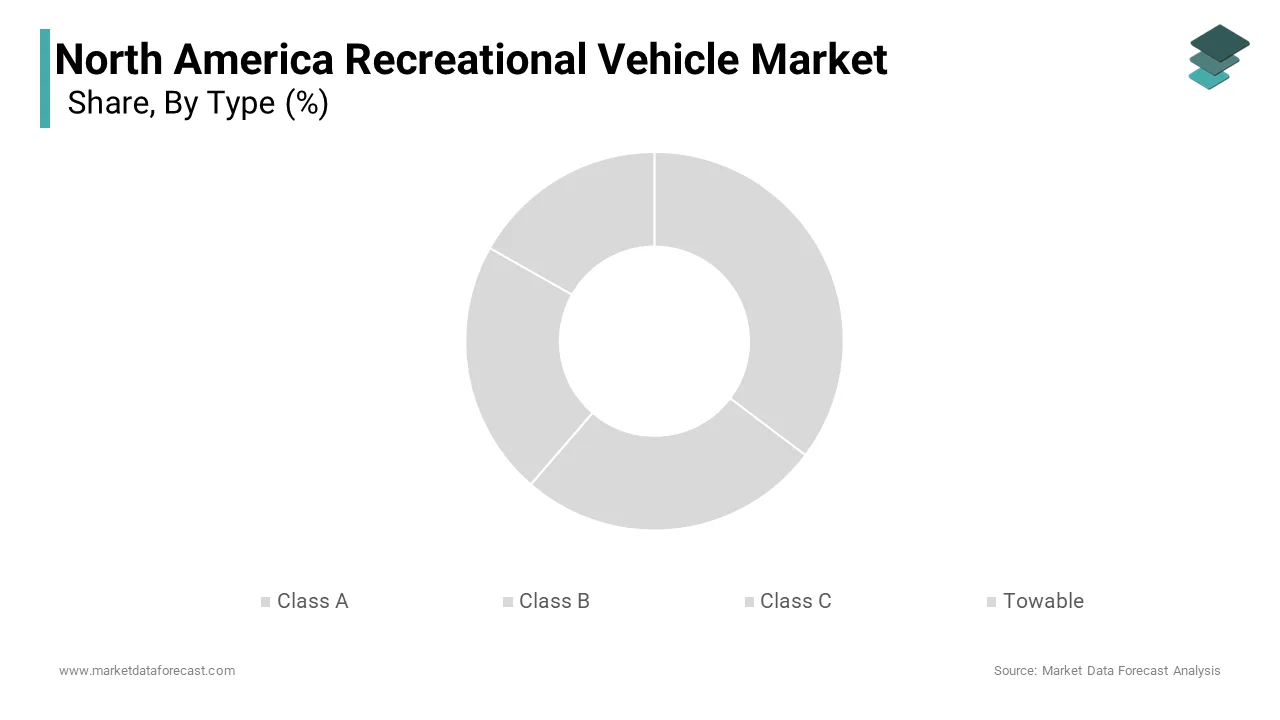
Class B motorhomes are emerging as the fastest-growing category in the North American recreational vehicle market, projected to expand at a CAGR of 9.8% through 2033. These compact, van-based motorhomes offer a balance between mobility, comfort, and affordability, making them increasingly popular among millennials, digital nomads, and solo travelers. These units are typically built on modified cargo van chassis, allowing for easier maneuverability in urban settings and reduced maintenance costs compared to larger motorhomes. A key factor driving growth is the rise of minimalist living and mobile work culture. Class B motorhomes provide an ideal solution with integrated sleeping quarters, kitchenettes, and Wi-Fi-ready interiors. Furthermore, major manufacturers such as Winnebago, Coachmen, and Thor Industries have introduced technologically advanced models featuring smart controls, solar power systems, and eco-friendly materials.
By Application Insights
Personal use accounted for the top portion of the North American recreational vehicle market in 2024. This is because of the growing popularity of leisure travel, family vacations, and outdoor exploration, all of which align with the flexible and independent nature of RV ownership. Families, retirees, and adventure enthusiasts are particularly drawn to the self-contained convenience of RVs, which eliminate the need for hotels and reduce reliance on public transportation. Additionally, the shift toward staycations and road-based holidays has been fueled by economic uncertainties and fluctuating air travel costs.
Commercial use of recreational vehicles is currently the fastest-growing application segment in the North American RV market, expanding at a CAGR of 10.3%. This growth is driven by the increasing deployment of RVs in business sectors such as hospitality, film production, mobile healthcare services, and corporate retreats. Companies like Outdoorsy and RVshare have facilitated peer-to-peer commercialization, allowing individuals to monetize their RVs while contributing to a broader sharing economy model. Beyond rentals, businesses are leveraging RVs for mobile operations. For instance, media production teams use customized motorcoaches for on-location filming, while tech firms utilize RV-based setups for off-site team-building experiences. In addition, mobile medical clinics and wellness centers have adopted RV conversions to reach rural and underserved communities, enhancing accessibility to healthcare services.
COUNTRY ANALYSIS
United States Recreational Vehicle Market Analysis
The United States held the dominant position in the North American recreational vehicle market, commanding an estimated 84.2% of regional market share in 2024. As the birthplace of the modern RV industry, the U.S. boasts a well-established manufacturing base, extensive dealership networks, and a vast network of campgrounds and national parks that support widespread RV adoption. One of the key factors driving this leadership is the country's deep-rooted culture of road travel and outdoor recreation. Moreover, the rise of remote work and flexible employment has encouraged professionals to adopt mobile lifestyles, further boosting demand for RVs equipped with productivity features. Another contributing element is the presence of major RV manufacturers such as Winnebago, Thor Industries, and Forest River, which collectively produce hundreds of thousands of units annually.
Canada Recreational Vehicle Market Analysis
Canada’s RV sector is experiencing steady expansion due to increasing participation in outdoor tourism, changing work habits, and a growing preference for flexible travel options. One of the primary drivers of growth is the country’s abundant natural landscapes, including national parks such as Banff, Jasper, and Algonquin, which attract millions of visitors annually. Additionally, the rise of remote work and hybrid employment models has influenced Canadian consumers to invest in RVs for both leisure and temporary living purposes. Manufacturers and dealers have responded by expanding distribution networks and introducing models suited to colder climates.
The Rest of North America, comprising Mexico and select Caribbean territories, held a modest yet strategically important share of the regional recreational vehicle market in 2024. While not as large as the U.S. or Canada, this sub-region presents unique opportunities for RV market expansion, particularly in cross-border tourism, adventure travel, and alternative housing solutions. Mexico, in particular, has seen growing interest in RV travel due to its diverse geography, cultural heritage, and proximity to U.S. markets. Some local entrepreneurs have begun importing used RVs from the U.S. to cater to niche rental markets in regions like Baja California and Yucatán. Additionally, there is increasing experimentation with RV-based lodging solutions in rural and ecotourism areas.
COMPETITIVE LANDSCAPE
- The competition in the North American recreational vehicle market is marked by a mix of long-established manufacturers, emerging niche brands, and evolving consumer expectations. Dominated by industry leaders like Winnebago, Thor Industries, and Forest River, the market sees continuous innovation in design, technology, and sustainability aimed at capturing diverse customer segments. These major players leverage brand reputation, economies of scale, and extensive dealer networks to maintain dominance, often acquiring smaller brands to expand their reach.
- At the same time, boutique RV builders and startups are entering the space with specialized offerings tailored to specific lifestyles, such as minimalist van conversions or rugged overland-ready trailers, creating new avenues of competition. The rise of RV-sharing platforms and rental services has also introduced non-traditional players into the ecosystem, shifting how consumers access recreational vehicles.
- Furthermore, changing economic conditions, supply chain disruptions, and evolving consumer behavior toward mobile living are forcing companies to adapt rapidly. As demand remains strong but purchasing patterns shift, competition is intensifying not only in product development but also in digital engagement, financing models, and after-sales service enhancements.
KEY MARKET PLAYERS
A few of the market players in the North America recreational vehicle market include
- Thor Industries, Inc. (U.S.)
- Forest River, Inc. (U.S.)
- Trigano (France)
- Winnebago Industries, Inc. (U.S.)
- REV Group (U.S.)
- Triple E Recreational Vehicles (Canada)
- The Swift Group (U.K.)
- Gulf Stream Coach Inc. (U.S.)
- Pleasure-Way Industries Ltd. (Canada)
- Groupe Pilote (France)
Top Players in the Market
- Winnebago is a leading name in the North American recreational vehicle market, known for its innovative motorhome and towable RV offerings. With decades of experience, the company has established itself as a trusted brand that blends comfort, durability, and modern design. Winnebago's influence extends beyond North America, with its products gaining recognition globally for setting high standards in quality and performance.
- Thor Industries is the largest manufacturer of recreational vehicles in North America and holds a significant share of the global RV market. The company operates multiple brands catering to different segments of the RV market, from entry-level trailers to luxury motorhomes. Thor’s diversified portfolio and strategic acquisitions have enabled it to maintain leadership while influencing industry trends through product innovation and manufacturing efficiency.
- Forest River is a key player in the North American RV landscape, offering a broad range of motorized and towable recreational vehicles. As a subsidiary of Berkshire Hathaway, the company benefits from strong financial backing and operational scale, allowing it to compete effectively across all RV categories. Forest River plays a pivotal role in shaping market accessibility by delivering reliable, feature-rich models that appeal to a wide customer base.
Top Strategies Used by Key Market Participants
- One of the primary strategies employed by major players in the North American recreational vehicle (RV) market is product diversification, where manufacturers develop a wide array of RV types—including compact Class B vans, luxury motorcoaches, and lightweight travel trailers—to cater to varying consumer preferences and budget ranges.
- Another key approach is technological integration, wherein companies are embedding smart features such as touch-screen dashboards, solar-ready systems, and app-based controls into their RVs to enhance user experience and attract tech-savvy buyers who expect modern conveniences even while traveling off-grid.
- Lastly, firms are increasingly focusing on sustainability initiatives, incorporating eco-friendly materials, energy-efficient appliances, and hybrid power solutions into RV designs to align with growing consumer demand for environmentally responsible travel options and regulatory compliance.
RECENT MARKET NEWS
- In February 2024, Winnebago announced the launch of a new line of Class B motorhomes equipped with smart home integrations and modular interiors designed to appeal to digital nomads and remote professionals seeking flexible living solutions.
- In May 2024, Thor Industries acquired a specialty RV conversion firm specializing in off-grid adventure vehicles, aiming to expand its presence in the outdoor-focused segment and attract younger, adventure-oriented buyers.
- In August 2023, Forest River unveiled a state-of-the-art manufacturing facility in Indiana focused on increasing production capacity for lightweight travel trailers, responding to rising demand for fuel-efficient and easily towable units.
- In November 2023, Coachmen RV introduced an eco-conscious model series featuring solar-ready roofs, low-emission insulation, and water-saving fixtures, positioning itself as a leader in sustainable RV manufacturing.
- In March 2024, Airstream launched a direct-to-consumer online configurator platform, allowing customers to customize and order trailers remotely, enhancing digital engagement and streamlining the purchasing process.
MARKET SEGMENTATION
This research report on the North American recreational vehicle market is segmented and sub-segmented into the following categories.
By Type
- Class A
- Class B
- Class C
- Towable
By Propulsion Type
- Motorized
- Non-motorized
By Application
- Commercial Use
- Personal Use
By Country
- USA
- Canada
- Mexico