North America Steel Rebar Market Size, Share, Trends & Growth Forecast Report - Segmentation By Process (Basic Oxygen Steelmaking, Electric Arc Furnace), Coating Type, Bar Size, End-Use Sector, and Country (The United States, Canada and Rest of North America), Industry Analysis From 2026 to 2034
Market Size, 2025
$27.39 BnMarket Estimate, 2026
$28.96 BnMarket Forecast, 2034
$45.19 BnCAGR, 2026–2034
5.72%North America Steel Rebar Market Report Summary
The North America steel rebar market was valued at USD 27.39 billion in 2025, is estimated to reach USD 28.96 billion in 2026, and is projected to reach USD 45.19 billion by 2034, growing at a CAGR of 5.72% during the forecast period. Market growth is driven by increasing infrastructure development, rising construction activities, and growing investments in public and private projects. Steel rebar is a critical component in reinforced concrete structures, providing strength and durability. The expansion of urban infrastructure, transportation networks, and residential construction is further supporting steady market growth across North America.
Key Market Trends
- Rising infrastructure development and construction activities are driving market growth.
- Increasing investments in transportation and urban development projects are boosting demand.
- Growing use of reinforced concrete structures is supporting market expansion.
- Expansion of residential and commercial construction is enhancing market growth.
- Technological advancements in steel production are improving product quality and performance.
Segmental Insights
- Based on process, the electric arc segment was the largest and dominated the North America steel rebar market in 2025. This dominance is attributed to its cost efficiency, energy savings, and increasing use of recycled steel.
- Based on coating type, the plain carbon steel rebar segment led the North America steel rebar market in 2025, driven by its widespread use in standard construction applications.
- Based on end use, the infrastructure segment held the majority share of the North America steel rebar market in 2025, supported by large scale investments in roads, bridges, and public infrastructure.
Regional Insights
- The North America steel rebar market is experiencing steady growth across key countries, supported by construction demand and infrastructure investments.
- The United States was the largest contributor, accounting for 85.4% of the North America steel rebar market share in 2025, driven by strong construction sector, government spending on infrastructure, and urban development projects.
Competitive Landscape
The North America steel rebar market is moderately competitive, with key players focusing on production capacity expansion, technological innovation, and supply chain optimization to strengthen their market position. Companies are investing in sustainable steel production, recycling technologies, and strategic partnerships. Prominent players in the North America steel rebar market include Nucor Corporation, Gerdau, Acerinox S A, Acerinox’s Group and General Foundation CSIC, and Posco Ss Vina.
North America Steel Rebar Market Size
The North America steel rebar market size was valued at USD 27.39 billion in 2025, and the market size is expected to reach USD 45.19 billion by 2034 from USD 28.96 billion in 2026. The market is growing at a CAGR of 5.72%
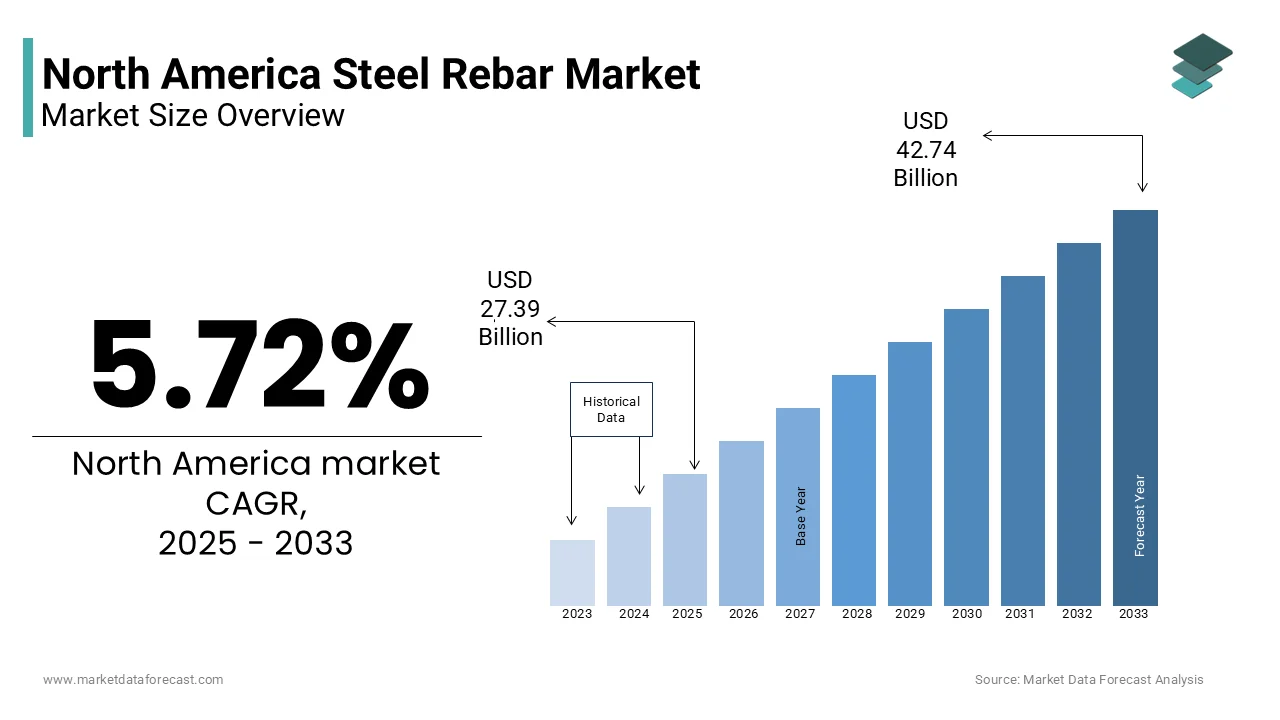
Steel rebar (short for reinforcing bar) refers to the steel rods or mesh used to strengthen concrete and masonry structures. These deformed steel bars provide tensile strength to concrete enabling the construction of resilient infrastructure such as bridges highways high rise buildings and industrial facilities. The market is intrinsically linked to the health of the construction sector and broader economic indicators including government spending on public works. According to the United States Census Bureau the total value of construction put in place in the United States reached approximately 2 trillion USD in recent years reflecting robust activity in both residential and non residential segments. As per Statistics Canada the country’s infrastructure capital stock has grown steadily with significant allocations toward transit and energy projects. The implementation of legislative frameworks such as the Infrastructure Investment and Jobs Act in the United States has further catalyzed demand by earmaking billions for transportation and utility improvements. Consequently the steel rebar market serves as a foundational pillar for regional development driven by the imperative to modernize aging assets and accommodate population growth through sustainable and durable construction practices.
MARKET DRIVERS
Implementation Of Major Infrastructure Legislation And Public Works Projects
The enactment of comprehensive infrastructure is one of the key drivers of the North America Steel Rebar Market. This enactment injects substantial capital into public works and transportation projects. In the United States the Infrastructure Investment and Jobs Act allocates approximately 110 billion USD for roads bridges and other major infrastructure initiatives creating sustained demand for construction materials. According to the Federal Highway Administration (FHWA), the Bridge Formula Program is expected to support repairs and replacements for over 15,000 bridges across the country, while approximately 45,000 bridges nationwide are currently classified as being in "poor" condition. Data from the American Road and Transportation Builders Association indicates that these projects will span multiple years ensuring a consistent baseline of demand for rebar manufacturers and suppliers. In Canada the Investing in Canada Plan commits over 180 billion CAD to public infrastructure with a focus on green and community projects. As per Infrastructure Canada this funding supports the construction of transit systems water treatment facilities and resilient community infrastructure all of which rely heavily on reinforced concrete. The long term nature of these contracts provides stability for steel producers allowing them to plan capacity expansions and optimize supply chains. Furthermore state and provincial governments are leveraging these federal funds to accelerate local projects reducing bureaucratic delays. This coordinated financial support not only stimulates immediate construction activity but also fosters a conducive environment for long term industry growth and technological adoption in steel manufacturing.
Resurgence In Residential Construction And Urban Development Initiatives
The resurgence in residential construction and ongoing urban development initiatives significantly propel the growth of the North America steel rebar market. Despite fluctuations in interest rates the long term trend toward urbanization and housing shortages continues to drive new building permits and starts. According to the United States Census Bureau, there were approximately 1.47 million housing units authorized for construction in 2024, reflecting a relatively steady pipeline despite minor annual fluctuations. Data from the National Association of Home Builders and U.S. Census Bureau indicates that multifamily housing starts fell by approximately 20% in 2024 as developers faced tight credit and high interest rates, despite steady long-term rental demand. These structures typically require extensive foundation work and structural reinforcement using steel rebar to meet safety codes and load bearing requirements. In urban centers across the continent high rise condominiums and mixed use developments are becoming prevalent necessitating high strength reinforcement solutions. As per the Canada Mortgage and Housing Corporation (CMHC), housing starts in major metropolitan areas rose 6% in 2025, driven by record rental construction in cities like Calgary and Montreal, though starts in Toronto fell sharply to 30-year lows. Additionally, the renovation and retrofitting of existing residential buildings to improve energy efficiency and seismic resilience further contribute to rebar consumption. Municipal zoning reforms in cities like Toronto and New York encourage densification leading to vertical construction that relies on reinforced concrete frameworks. This dynamic interplay between demographic pressures and regulatory changes ensures a steady demand for steel rebar in the residential sector.
MARKET RESTRAINTS
Volatility In Raw Material Prices And Energy Costs Impacts Profitability
The volatility in raw material prices and energy costs directly impacts production profitability and pricing stability, which hinders the expansion of the North America Steel Rebar Market. Steel manufacturing is energy intensive relying heavily on electricity and natural gas for electric arc furnace operations. According to the United States Energy Information Administration, industrial electricity prices have fluctuated significantly, with wholesale prices dropping by approximately 20 percent in 2024 before rising in 2025 due to natural gas price volatility and shifting generation patterns. Data from the World Steel Association indicates that the price of scrap steel the primary raw material for rebar production can vary within a single year depending on global supply chain dynamics and demand from other sectors. These fluctuations make it challenging for manufacturers to maintain consistent profit margins and offer stable pricing to contractors. As per the Producer Price Index from the Bureau of Labor Statistics iron and steel prices have experienced double digit percentage swings creating uncertainty in project budgeting. Contractors often hesitate to commit to long term contracts when material costs are unpredictable leading to delayed projects and reduced order volumes. Furthermore geopolitical tensions and trade policies can disrupt the supply of alloying elements such as nickel and chromium further exacerbating cost pressures. Smaller producers with limited hedging capabilities are particularly vulnerable to these market shocks. Thus, the inability to predict and control input costs acts as a major restraint on market expansion and investment in new capacities.
Stringent Environmental Regulations And Carbon Emission Standards
Stringent environmental regulations and evolving carbon emission standards impose significant operational burdens on steel rebar manufacturers in the region and are negatively impacting the growth of the North America steel rebar market. Governments are increasingly enforcing stricter limits on greenhouse gas emissions and industrial pollutants requiring costly upgrades to production facilities. According to the Environmental Protection Agency the steel industry is one of the largest industrial emitters of carbon dioxide prompting the implementation of rigorous monitoring and reporting requirements. Data from Environment and Climate Change Canada indicates that carbon pricing mechanisms increase costs for heavy industries, but the use of output-based pricing systems limits the impact on total operational costs to a fraction of the headline carbon tax rate to maintain global competitiveness. Compliance with these regulations often necessitates investments in carbon capture technologies and energy efficient processes which require substantial capital expenditure. As per the American Iron and Steel Institute transitioning to low carbon production methods involves complex technological shifts that can temporarily reduce output and increase unit costs. Manufacturers must also navigate a patchwork of state and provincial regulations which vary in stringency and enforcement creating administrative complexities. Failure to comply can result in hefty fines and operational shutdowns posing a risk to business continuity. Additionally consumers and investors are increasingly prioritizing sustainability pressuring companies to adopt greener practices even beyond regulatory mandates. These environmental compliance costs reduce competitiveness against imports from regions with laxer standards. Consequently the regulatory landscape acts as a significant restraint on market growth and profitability.
MARKET OPPORTUNITIES
Adoption Of Green Steel and Sustainable Manufacturing Practices
The transition toward green steel and sustainable manufacturing practices opens potential for the North America Steel Rebar Market. This shift is driven by customers and regulators who increasingly prioritize low-carbon construction materials. Green steel produced using hydrogen or renewable energy sources offers a substantially lower carbon footprint compared to traditional methods. According to the International Energy Agency the global demand for low emission steel is expected to grow rapidly as industries strive to meet net zero targets. Data from the World Green Building Council indicates that embodied carbon in construction materials accounts for nearly 11 percent of global emissions driving architects and developers to seek sustainable alternatives. Manufacturers investing in electric arc furnaces powered by renewable energy can differentiate their products and command premium prices. As per the United States Department of Energy federal incentives and tax credits are available for companies that adopt clean energy technologies reducing the financial burden of transition. Collaborations with technology providers to develop carbon capture and utilization systems further enhance sustainability credentials. Retailers and large construction firms are increasingly incorporating environmental criteria into procurement decisions favoring suppliers with verified sustainability certifications. This shift aligns with corporate social responsibility goals and regulatory expectations creating a competitive advantage for early adopters. Companies can access new market segments by positioning themselves as leaders in sustainable steel production. This strategic move also strengthens relationships with environmentally conscious stakeholders.
Expansion Into Advanced High Strength Rebar For Infrastructure Resilience
The development and adoption of advanced, high-strength steel rebar create a pathway for growth by addressing the need for resilient and durable infrastructure, which is expected to accelerate the expansion of the North American steel rebar market. High strength rebar allows for reduced material usage while maintaining structural integrity leading to cost savings and improved construction efficiency. According to the American Concrete Institute the use of Grade 80 and Grade 100 rebar can reduce steel tonnage by up to 40 percent in certain applications without compromising safety. Data from the Federal Highway Administration highlights that high performance materials are essential for extending the service life of bridges and highways in harsh weather conditions. As extreme weather events become more frequent due to climate change the demand for corrosion resistant and high strength reinforcement is increasing. Manufacturers can innovate by producing epoxy coated or stainless steel clad rebar which offers superior protection against degradation. As per the National Association of Corrosion Engineers (now AMPP), the annual cost of corrosion in the United States is estimated to be approximately $451 billion, representing a significant portion of the national GDP and making durable materials economically attractive. Government specifications for critical infrastructure projects are increasingly mandating the use of high performance materials to ensure longevity. By focusing on research and development of specialized rebar products companies can tap into niche markets and establish long term contracts with government agencies. This technological advancement enhances value proposition and drives market differentiation.
MARKET CHALLENGES
Supply Chain Disruptions And Logistics Bottlenecks
Supply chain disruptions and logistics barriers hinder timely delivery, increase operational costs, and constrain the growth of the North American steel rebar market. The reliance on complex supply networks for raw materials and finished goods makes the industry vulnerable to external shocks. According to the Supply Chain Management Review, port congestion and truck driver shortages contributed to historic ship unloading delays of up to three weeks in 2021–2022, though current hub dwell times average closer to one week. Data from the American Trucking Associations indicates that freight rates have remained elevated due to capacity constraints affecting the cost effectiveness of distributing heavy steel products. These logistical issues are exacerbated by seasonal weather conditions such as winter storms in the Midwest and hurricanes in the Gulf Coast which frequently disrupt transportation routes. As per the Journal of Commerce inventory levels at distribution centers have fluctuated wildly making it difficult for manufacturers to maintain optimal stock levels. Just in time delivery models which are common in construction are particularly susceptible to these disruptions leading to project delays and penalty clauses. Furthermore the concentration of production facilities in specific regions creates geographic vulnerabilities where local disruptions can have nationwide impacts. Manufacturers must invest in diversified logistics strategies and warehousing solutions to mitigate these risks. However these adaptations require significant capital and operational adjustments. Thus, supply chain instability remains a critical challenge affecting reliability and customer satisfaction.
Labor Shortages And Skilled Workforce Deficits
Labor shortages and a lack of skilled workers are creating a major hurdle for the North American steel rebar market. This issue is currently impacting both the production and installation stages of the industry. The steel manufacturing and construction industries are experiencing an aging workforce with insufficient numbers of younger workers entering the field. : According to a study by Deloitte and The Manufacturing Institute, the manufacturing sector in the United States faces a potential shortfall of 2.1 million workers by 2030 if current trends continue. Data from the Associated General Contractors of America indicates that 91 percent of construction firms report difficulty in filling craft worker positions, including steel fixers and welders. This labor scarcity leads to increased wage pressures and project delays as companies compete for limited talent. As per the National Center for Construction Education and Research the training pipeline for skilled trades has not kept pace with industry demand resulting in a skills gap. The complexity of modern steel fabrication and installation requires specialized knowledge which is lacking in the available labor pool. Additionally high turnover rates in the construction sector further exacerbate staffing challenges. Manufacturers and contractors are investing in automation and training programs to address these issues but these solutions take time to yield results. The inability to secure adequate labor limits production capacity and project execution efficiency. So, the workforce deficit acts as a structural barrier to market growth and operational excellence.
REPORT COVERAGE
| REPORT METRIC | DETAILS |
| Market Size Available | 2025 to 2034 |
| Base Year | 2025 |
| Forecast Period | 2026 to 2034 |
| CAGR | 5.72% |
| Segments Covered | By Process, Coating Type, Bar Size, End-Use Sector, and Region |
| Various Analyses Covered | Global, Regional and Country Level Analysis; Segment-Level Analysis; DROC; PESTLE Analysis; Porter’s Five Forces Analysis; Competitive Landscape; Analyst Overview of Investment Opportunities |
| Regions Covered | North America, Europe, APAC, Latin America, Middle East & Africa |
| Market Leaders Profiled | Nucor Corporation, Gerdau, Acerinox S.A, Acerinox’s Group, and General Foundation CSIC, Posco Ss Vina, and Others |
SEGMENTAL ANALYSIS
By Process Insights
The Electric Arc segment dominated the North America Steel Rebar Market in 2025. This dominance of the segment is driven by its superior cost efficiency and the abundant availability of scrap metal which serves as the primary raw material. Unlike Basic Oxygen Steelmaking which relies on iron ore and coke the Electric Arc Furnace utilizes recycled steel significantly reducing input costs and energy consumption. According to the American Iron and Steel Institute approximately 70 percent of steel produced in the United States is made using Electric Arc Furnace technology reflecting its dominance in the regional market. Data from the Bureau of International Recycling indicates that the United States is one of the largest exporters of steel scrap providing a stable and economical supply chain for domestic producers. The flexibility of Electric Arc Furnace operations allows manufacturers to adjust production levels quickly in response to market demand fluctuations enhancing operational efficiency. As per the World Steel Association Electric Arc Furnace production generates significantly lower carbon emissions compared to traditional methods aligning with increasing environmental regulations. This environmental advantage coupled with lower capital investment requirements makes it the preferred choice for rebar manufacturers. The ability to produce high quality rebar from 100 percent scrap metal supports the circular economy model which is increasingly favored by construction firms and government agencies. Consequently the economic and environmental benefits of the Electric Arc Furnace process solidify its leadership in the North American steel rebar sector. The dominance of the Electric Arc Furnace segment is further reinforced by its strong alignment with sustainability goals and stringent regulatory frameworks governing industrial emissions. Governments across North America are implementing stricter carbon emission standards prompting steel producers to adopt cleaner manufacturing technologies. According to the Environmental Protection Agency the steel industry is a major source of industrial greenhouse gas emissions driving the shift toward low carbon production methods. The significant reduction helps manufacturers comply with carbon pricing mechanisms and avoid potential penalties. As per the United States Department of Energy federal incentives for energy efficient technologies favor Electric Arc Furnace operations which consume less energy overall. Construction companies are also prioritizing sustainable materials to meet green building certifications such as LEED which encourages the use of recycled content steel. The transparency of the recycling process allows for easier tracking of material origins enhancing supply chain credibility. Furthermore investors are increasingly directing capital toward environmentally responsible companies boosting the financial viability of Electric Arc Furnace producers. This regulatory and market driven push for sustainability ensures that the Electric Arc Furnace process remains the dominant method for steel rebar production in North America.
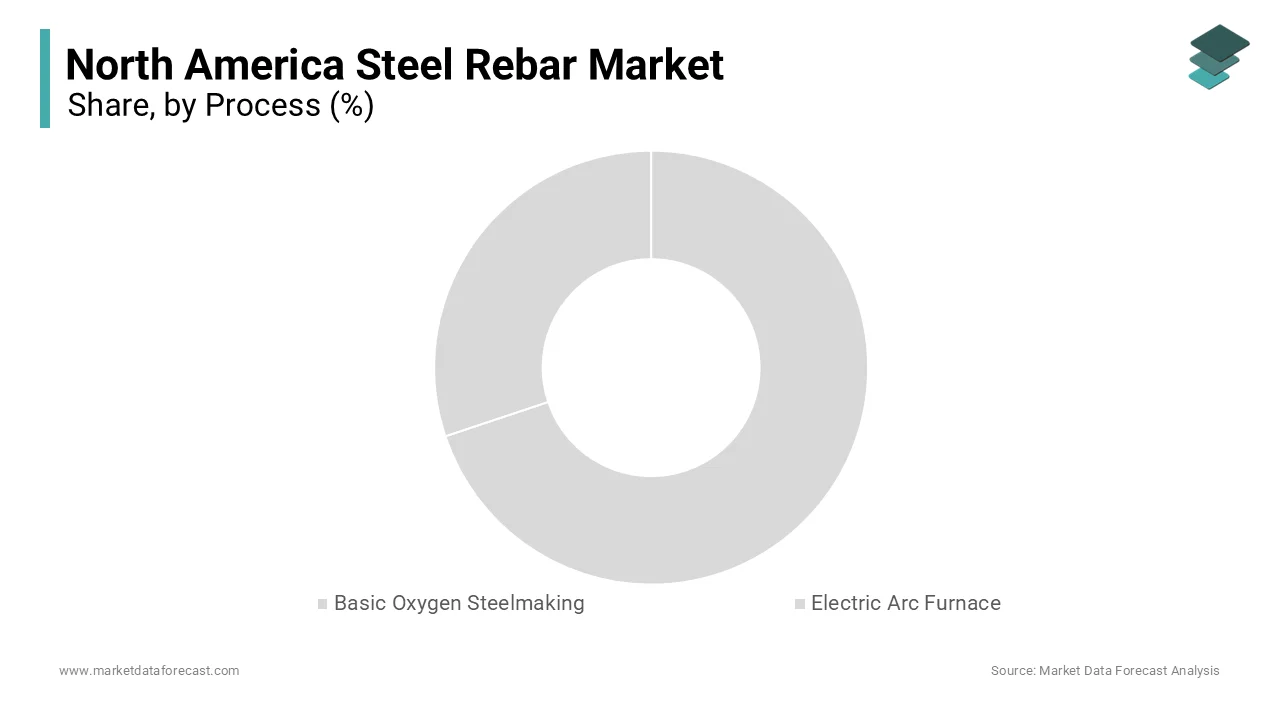
The Basic Oxygen Steelmaking segment is a growing category in the North America Steel Rebar Market particularly for applications requiring high purity and specialized steel grades. This process is essential for producing virgin steel with consistent chemical composition which is critical for specific infrastructure projects demanding extreme durability. According to the World Steel Association, Basic Oxygen Steelmaking accounts for approximately 71 percent of global steel production and remains vital for certain high specification applications. Data from the American Iron and Steel Institute indicates that while Electric Arc Furnace dominates rebar production, Basic Oxygen Steelmaking is preferred for flat-rolled products used in automotive and appliance manufacturing. The ability to control impurities more precisely makes Basic Oxygen Steelmaking suitable for rebar used in seismic zones or corrosive environments. As per the Federal Highway Administration, certain bridge and tunnel projects specify Grade 60 or Grade 75 rebar meeting ASTM A615 or A706 standards to ensure long-term structural integrity. Advances in technology have improved the efficiency of Basic Oxygen Steelmaking reducing its environmental footprint and making it more competitive. Although the growth rate is modest compared to Electric Arc Furnace the steady demand for high performance steel in critical infrastructure supports its continued relevance. Consequently Basic Oxygen Steelmaking maintains a niche but important role in the market driven by quality requirements. The growth of the Basic Oxygen Steelmaking segment is supported by its integration with large integrated steel mills which benefit from significant economies of scale. These mills produce steel from iron ore allowing for consistent quality and large volume output which is advantageous for major infrastructure projects. The production of rebar as part of a broader product portfolio allows these mills to optimize resource utilization and reduce per unit costs. As per the National Association of Manufacturers, the efficiency of modern steelmaking technologies, such as Electric Arc Furnaces, contributes to the competitiveness of domestic steel in the global market. While the segment may not exhibit the highest compound annual growth rate its strategic importance in the supply chain ensures steady demand. Technological upgrades in oxygen blowing and waste heat recovery have enhanced the sustainability of Basic Oxygen Steelmaking addressing some environmental concerns. This continuous improvement helps maintain its position in the market. So, the structural advantages of integrated mills support the sustained presence of Basic Oxygen Steelmaking in the North America Steel Rebar Market.
By Coating Type Insights
The plain carbon steel rebar segment led the North America Steel Rebar Market in 2025. This leading position of the segment is attributed to its cost effectiveness and wide applicability in general construction projects. It is the most commonly used type of reinforcement bar because it offers sufficient strength and durability for standard concrete structures at a lower price point compared to coated alternatives. According to the American Concrete Institute plain carbon rebar accounts for the majority of reinforcement material used in residential and commercial buildings where exposure to corrosive elements is minimal. The absence of additional coating processes reduces manufacturing time and costs making it an attractive option for budget conscious developers. Moreover, the ease of welding and bending plain carbon steel further enhances its utility on construction sites. Contractors are familiar with its handling characteristics reducing labor errors and delays. Furthermore the widespread availability of plain carbon rebar from numerous suppliers ensures competitive pricing and reliable supply chains. This combination of affordability versatility and familiarity solidifies its position as the dominant coating type in the market. The dominance of the plain carbon segment is further reinforced by established supply chains and standardized building codes that favor its use in typical construction scenarios. Decades of industry experience have created robust distribution networks for plain carbon rebar ensuring timely delivery to construction sites across the continent. According to the Concrete Reinforcing Steel Institute (CRSI), supply chain efficiencies for plain carbon products are well-optimized, reducing lead times and inventory costs. Data from the American Concrete Institute (ACI) shows that building codes in the United States extensively detail the specifications for plain carbon rebar, providing clear guidelines for engineers and architects. This regulatory clarity reduces uncertainty and accelerates project approval processes. As per the Canadian Standards Association plain carbon rebar meets the requirements for most structural applications eliminating the need for specialized approvals. The familiarity of contractors with plain carbon steel reduces training needs and minimizes installation errors. Additionally the recyclability of plain carbon steel at the end of a structure's life cycle supports sustainability goals without the complexity of removing coatings. This ease of recycling aligns with circular economy principles. Hence, the entrenched infrastructure of supply regulation and practice ensures that plain carbon rebar remains the primary choice for the majority of construction projects in North America.
The epoxy coated rebar segment is likely to experience the fastest CAGR of 6.5% from 2026 to 2034. This rapid growth of the segment is propelled by the increasing need for infrastructure rehabilitation and the superior corrosion resistance offered by epoxy coatings. In regions where deicing salts are used extensively during winter such as the Northeastern United States and Canada plain carbon rebar is prone to rapid deterioration. According to the Federal Highway Administration corrosion of reinforcing steel is a leading cause of concrete bridge degradation costing billions in repairs annually. As state and provincial governments invest in repairing aging infrastructure the demand for durable materials like epoxy coated rebar is surging. As per the American Society of Civil Engineers infrastructure report cards highlight the urgent need for corrosion resistant materials to improve safety and reduce maintenance costs. The initial higher cost of epoxy coated rebar is offset by long term savings in maintenance and replacement. Consequently the focus on longevity and lifecycle cost efficiency drives the accelerated adoption of epoxy coated rebar in critical infrastructure projects. The swift expansion of the epoxy coated segment is further fueled by regulatory mandates and specification requirements for construction in coastal and high humidity areas. Building codes in many coastal states and provinces now mandate the use of corrosion resistant reinforcement for bridges parking garages and marine structures. According to the American Concrete Institute specifications for concrete in marine environments often require epoxy coated or other protected rebar to prevent chloride induced corrosion. These regulatory requirements create a captive market for epoxy coated products regardless of price fluctuations. Developers and contractors must comply with these standards to obtain permits and insurance coverage. Additionally the growing awareness of lifecycle costs among public agencies encourages the specification of epoxy coated rebar even in non mandatory scenarios. The proven track record of epoxy coatings in preventing structural failure builds confidence among engineers. Therefore, regulatory pressure and technical necessity drive the fast paced growth of the epoxy coated rebar segment.
By End Use Sector Insights
The infrastructure segment held the majority share in the North America Steel Rebar Market in 2025. This supremacy of the segment is credited to substantial government investment and extensive public works projects. Roads bridges airports and water treatment facilities require massive quantities of steel rebar for structural reinforcement. According to the United States Department of Transportation, the Infrastructure Investment and Jobs Act allocates approximately $350 billion for federal highway and bridge funding over five years, with $110 billion specifically designated for "Roads, Bridges, and Major Projects" in new spending above baseline levels. Data from the American Road and Transportation Builders Association indicates that thousands of bridge replacement projects are scheduled over the next decade each requiring significant tonnage of rebar. In Canada the Investing in Canada Plan provides billions for transit and community infrastructure further boosting demand. As per Statistics Canada public sector construction spending has reached record levels supporting the infrastructure segment. The long duration of these projects ensures a steady and predictable demand for steel rebar. Government agencies prioritize durability and safety leading to the specification of high quality reinforcement materials. The sheer scale of infrastructure development dwarfs other sectors in terms of material volume. Consequently the sustained flow of public funding and the critical nature of infrastructure assets solidify the dominance of this end use sector. The leadership of the infrastructure segment is further strengthened by the focus on modernizing aging assets and enhancing resilience against climate change. Many existing structures in North America were built decades ago and require retrofitting or replacement to meet current safety standards. According to the American Society of Civil Engineers the deteriorating condition of infrastructure poses significant economic and safety risks necessitating urgent action. Data from the Federal Emergency Management Agency shows that investments in resilient infrastructure reduce disaster recovery costs significantly. Rebar is essential for strengthening foundations and structures to withstand extreme weather events such as hurricanes and floods. As per the National Oceanic and Atmospheric Administration the frequency of severe weather events is increasing driving the need for robust construction materials. Governments are incorporating resilience criteria into infrastructure planning leading to higher specifications for reinforcement. The replacement of obsolete systems such as water pipes and sewage treatment plants also contributes to rebar demand. This proactive approach to infrastructure management ensures continuous consumption of steel rebar. So, the imperative to build safer and more resilient communities sustains the leading position of the infrastructure sector.
The housing segment is on the rise and is expected to be the fastest growing segment in the market by witnessing a CAGR of 5.8% over the forecast period owing to rapid urbanization and persistent housing shortages that necessitate new residential construction. According to the United States Census Bureau, housing starts have moderated in recent years due to high mortgage rates, though long-term projections anticipate growth as demand remains high and rates eventually decline. Data from the National Association of Home Builders indicates that multi family housing projects which rely heavily on reinforced concrete are increasing at a faster rate than single family homes. In urban centers the trend toward vertical living requires extensive use of steel rebar for high rise foundations and frames. Municipal zoning changes encouraging densification further support the construction of apartment complexes and condominiums. The need for affordable housing also drives the development of large scale residential projects. These factors collectively create a robust pipeline for rebar consumption in the housing sector. Consequently the structural shift toward urban living and the urgency to address housing deficits drive the accelerated growth of this segment. The quick surge of the housing segment is further fueled by the renovation and retrofitting of existing residential structures to improve energy efficiency and safety. Homeowners are increasingly investing in additions basement conversions and structural upgrades which often require steel reinforcement. According to the Joint Center for Housing Studies of Harvard University remodeling expenditures in the United States have reached historic highs reflecting strong consumer confidence. Older homes often require foundation strengthening or wall reinforcements to support modern loads and meet updated building codes. As per the International Code Council recent updates to residential building standards emphasize seismic and wind resistance requiring additional rebar in many regions. The trend toward sustainable living also prompts retrofits that involve concrete work for insulation and thermal mass. DIY and professional contractors alike are utilizing rebar for various residential applications. This aftermarket demand complements new construction activity creating a dual driver for growth. Consequently, the combination of new builds and extensive renovations positions the housing sector as the fastest growing end user of steel rebar.
REGIONAL ANALYSIS
United States Steel Rebar Market Analysis
The United States was the top performer in the North America steel rebar market and accounted for a 85.4% share in 2025. This prominence of the US market is credited to by its massive construction industry and extensive infrastructure network. The country is the primary consumer of steel rebar due to the scale of its public and private development projects. According to the United States Census Bureau the value of construction put in place exceeds 1.9 trillion USD annually supporting robust demand for reinforcement materials. Data from the Federal Highway Administration shows that the nation manages approximately 4.1 million miles of public roads and over 617,000 bridges, requiring continuous maintenance and expansion. The implementation of the Infrastructure Investment and Jobs Act has injected billions into transportation projects accelerating rebar consumption. As per the National Association of Home Builders residential construction remains strong despite economic fluctuations driven by housing shortages. The presence of major steel producers such as Nucor and Gerdau ensures a stable domestic supply chain. State level initiatives for school and hospital construction further contribute to demand. The United States market is characterized by high technological adoption and strict quality standards. Thus, the United States remains the dominant force in the regional market with sustained growth prospects.
Canada Steel Rebar Market Analysis
Canada occupies a significant share of the North America Steel Rebar Market due to steady infrastructure investment and resource driven construction. The country’s vast geography requires extensive transportation networks which drive demand for reinforcement steel. According to Statistics Canada, public infrastructure spending has trended upward in nominal terms, though the pace of construction and asset condition varies by sector, with a recent acceleration in road construction and water pipes from 2020 to 2022. Data from Infrastructure Canada indicates that billions of dollars are allocated annually for green and community infrastructure projects. The oil and gas sector also contributes to industrial construction requiring specialized rebar applications. As per the Canada Mortgage and Housing Corporation (CMHC), while national housing starts grew in 2025, major cities like Toronto and Vancouver saw significant year-over-year declines, 31% and 3% respectively, due to high costs and weak condominium pre-sales. The government’s focus on sustainable building practices encourages the use of high quality and durable materials. Canadian steel producers benefit from proximity to the United States market facilitating cross border trade. Regulatory standards for seismic resilience in certain regions further boost demand for advanced rebar types. Hence, Canada represents a stable and growing market with strong fundamentals.
COMPETITIVE LANDSCAPE
The competition in the North America steel rebar market is characterized by intense rivalry among large integrated producers and regional mini mills vying for dominance through cost efficiency and service quality. Major players leverage their scale and vertical integration to offer competitive pricing and reliable supply chains. Regional manufacturers compete by focusing on niche markets and providing customized solutions for local construction projects. Product differentiation through advanced high strength and coated rebar variants helps companies capture specific segments. Sustainability has become a key competitive factor with firms investing in green steel production to meet regulatory and customer demands. Trade policies and tariffs influence competitive dynamics by affecting import volumes and pricing structures. Customer relationships and logistical capabilities are critical differentiators in securing large infrastructure contracts. The market remains fragmented in certain regions allowing smaller players to thrive. Overall the landscape favors companies that can balance operational efficiency with innovation and environmental responsibility to maintain market share.
KEY MARKET PLAYERS
Companies playing a prominent role in the north america steel rebar market include
- Nucor Corporation
- Gerdau
- Acerinox S.A
- Acerinox’s Group and General Foundation CSIC
- Posco Ss Vina
Top Players in the Market
- Nucor Corporation stands as the largest steel producer in the United States and a dominant force in the North America steel rebar market. The company utilizes electric arc furnace technology to produce high quality recycled steel products efficiently. Recent actions to strengthen its market position include significant capital investments in new micro mill facilities across the Southeast and Midwest regions. These expansions enhance production capacity and reduce logistics costs for regional customers. Nucor has also focused on sustainability initiatives by increasing the use of renewable energy in its operations. The company continues to innovate with advanced high strength rebar products that meet stringent infrastructure standards. By leveraging its decentralized management structure and robust supply chain Nucor maintains operational flexibility. These strategic moves reinforce its leadership by ensuring reliable supply and competitive pricing for construction clients nationwide.
- Gerdau S.A. is a leading global steel producer with a substantial presence in the North America steel rebar market through its extensive network of mini mills. The company specializes in long steel products including rebar wire rod and merchant bar. Recent actions to strengthen its market position include the modernization of its manufacturing facilities in the United States and Canada to improve efficiency and product quality. Gerdau has invested heavily in digital technologies to optimize production processes and enhance customer service. The company focuses on sustainable practices by maximizing scrap recycling and reducing carbon emissions. Strategic partnerships with local distributors ensure broad market reach and timely delivery. Gerdau also engages in community development programs to build strong regional relationships. These efforts solidify its reputation as a reliable supplier committed to innovation and environmental responsibility in the North American construction sector.
- Commercial Metals Company is a major manufacturer and recycler of steel and metal products with a strong focus on the North America steel rebar market. The company operates a vertically integrated model that includes steel production fabrication and distribution. Recent actions to strengthen its market position include the acquisition of strategic assets to expand its geographic footprint and product offerings. CMC has invested in state of the art micro mills that utilize advanced technology to produce low carbon steel efficiently. The company emphasizes sustainability by promoting the circular economy through extensive scrap metal recycling programs. CMC also enhances its value added services such as just in time delivery and custom fabrication for large construction projects. By focusing on operational excellence and customer centric solutions CMC drives growth. These initiatives reinforce its competitive edge by providing high quality sustainable steel products to the infrastructure and construction industries.
Top Strategies Used by Key Market Participants
Key players in the North America steel rebar market primarily focus on capacity expansion and technological modernization to enhance production efficiency. Companies are investing in electric arc furnace technologies to reduce carbon footprints and align with sustainability goals. Strategic acquisitions of regional mills and distribution centers help expand geographic reach and market penetration. Vertical integration allows firms to control supply chains from scrap sourcing to final delivery ensuring cost stability. Product innovation including high strength and corrosion resistant rebar addresses specific infrastructure needs. Partnerships with construction firms and government agencies secure long term contracts and steady demand. Digital transformation initiatives optimize logistics and inventory management improving customer service. These combined strategies enable companies to maintain competitiveness and drive growth in a dynamic and regulated market environment.
MARKET SEGMENTATION
This research report on the North America steel rebar market is segmented and sub-segmented based on the following categories.
By Process
- Basic Oxygen Steelmaking
- Electric Arc Furnace
By Coating Type
- Plain Carbon
- Galvanized
- Epoxy Coated
By Bar Size
- #3 Bar Size
- #4 Bar Size
- #5 Bar Size
- #8 Bar Size
- Others
By End-Use Sector
- Infrastructure
- Housing
- Industrial
By Region
- United States
- Mexico
- Canada
Frequently Asked Questions
1.What is the North America steel rebar market?
The North America steel rebar market refers to the production, distribution, and consumption of reinforcing steel bars used to strengthen concrete structures across the United States, Canada, and Mexico.
2.What factors are driving growth in the North America steel rebar market?
Growth is driven by rising infrastructure development, residential and commercial construction activities, government investment in public works, and urbanization.
3.What are the main types of steel rebar used in North America?
Common types include carbon steel rebar, epoxy coated rebar, stainless steel rebar, and glass fiber reinforced polymer rebar.
4.Which countries dominate the North America steel rebar market?
The United States holds the largest share due to extensive construction activities, followed by Canada and Mexico.
5.What are the primary applications of steel rebar?
Steel rebar is widely used in bridges, highways, residential buildings, commercial complexes, tunnels, dams, and industrial structures.
6.How do government infrastructure programs impact the market?
Federal and state infrastructure funding programs significantly increase demand for rebar in transportation, energy, and public utility projects.
7.What challenges does the North America steel rebar market face?
Challenges include raw material price volatility, trade tariffs, environmental regulations, and fluctuations in construction activity.
8.How does sustainability influence the steel rebar market?
Manufacturers are adopting electric arc furnace technology, increasing recycled steel usage, and reducing carbon emissions to meet sustainability targets.
9.What role do imports and exports play in the market?
Trade policies and anti dumping duties affect rebar imports from other regions, influencing pricing and domestic production levels.
10.What is the future outlook for the North America steel rebar market?
The market is expected to grow steadily, supported by infrastructure modernization initiatives, population growth, and ongoing construction investments.
Access the study in MULTIPLE FORMATS
Purchase options starting from
$ 2000
Didn’t find what you’re looking for?
TALK TO OUR ANALYST TEAM
Need something within your budget?
NO WORRIES! WE GOT YOU COVERED!
Call us on: +1 888 702 9696 (U.S Toll Free)
Write to us: sales@marketdataforecast.com