- Product Description Description
- Table of Contents TOC
- List of Table & Figure LOT
- Get Free Sample PDF Sample PDF
Market Size, 2025
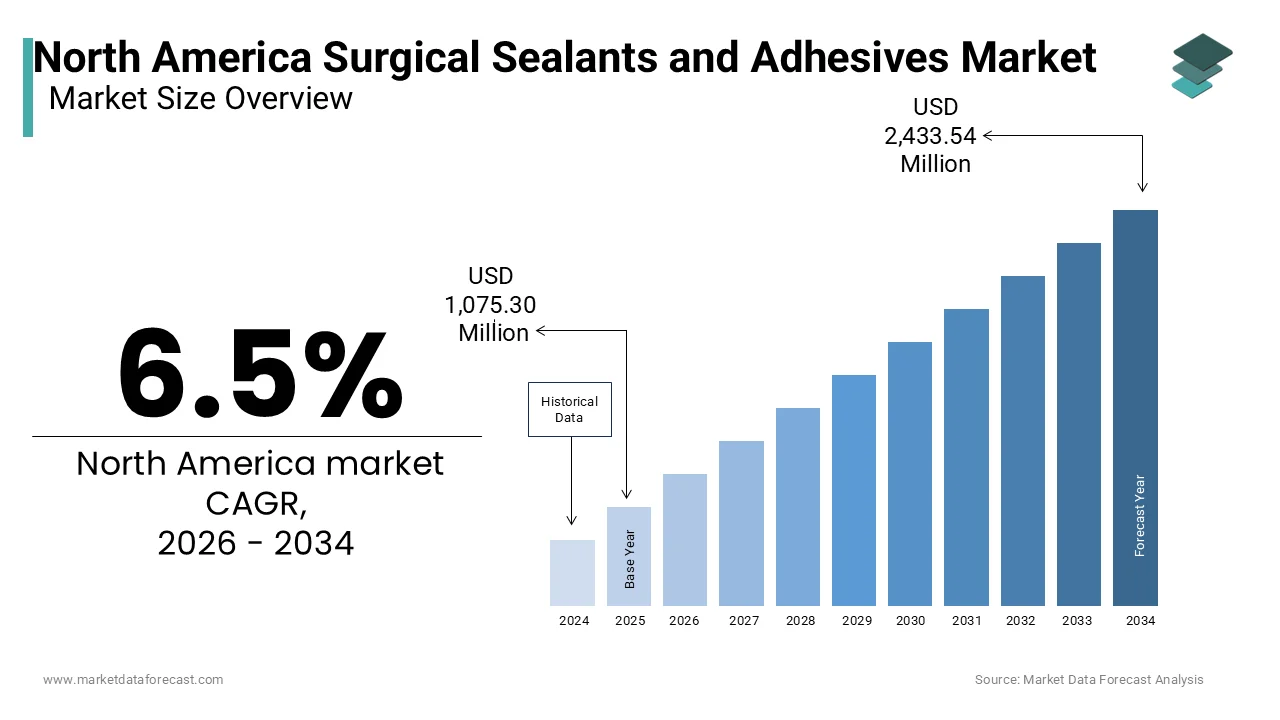
$1,075.30 MnMarket Estimate, 2026
$1,177.45 MnMarket Forecast, 2034
$2,433.54 MnCAGR, 2026–2034
6.5%North America Surgical Sealants and Adhesives Market Size
The North America surgical sealants and adhesives market was valued at USD 1,075.30 million in 2025, is estimated to reach USD 1,177.45 million in 2026, and is projected to reach USD 2,433.54 million by 2034, growing at a CAGR of 6.5% from 2026 to 2034.
Surgical sealants and adhesives encompass a specialized category of hemostatic agents and tissue bonding solutions designed to facilitate wound closure, prevent fluid leakage, and control bleeding during surgical procedures. These products serve as critical adjuncts to traditional sutures and staples, offering enhanced precision and reduced operative times in complex surgeries. The region is characterized by a high volume of surgical interventions driven by an aging demographic and the prevalence of chronic diseases. According to the Centers for Disease Control and Prevention, approximately 40 million to 50 million major surgical procedures are performed annually in the United States, creating a substantial baseline demand for advanced closure technologies. Furthermore, as per data from the American College of Surgeons, individuals aged 65 and older account for more than 40% of all surgical procedures, a cohort particularly susceptible to complications such as seroma and hematoma formation. In Canada, according to the Canadian Institute for Health Information, surgical volumes have surpassed 2.5 million procedures annually in the most recent reporting period. The shift towards minimally invasive techniques, including laparoscopic and robotic-assisted procedures, further necessitates the use of specialized sealants that can function effectively in confined spaces. Regulatory bodies such as the Food and Drug Administration maintain stringent approval processes, ensuring that only high-efficacy and safe products reach the market. This rigorous environment fosters innovation while maintaining high standards of patient safety, positioning North America as a leader in the adoption of next-generation surgical adhesives and sealants across diverse medical specialties.
MARKET DRIVERS
Rising Prevalence of Chronic Diseases and Surgical Interventions
The rising prevalence of chronic diseases and the subsequent increase in surgical interventions are among the major factors propelling the expansion of the North America surgical sealants and adhesives market. Conditions such as cardiovascular disease, cancer, and obesity require complex surgical management where effective hemostasis and tissue sealing are paramount. According to the American Heart Association, nearly 48% of all adults in the United States have some form of cardiovascular disease, leading to a high volume of cardiac and vascular surgeries that utilize sealants to prevent blood loss. As per the National Cancer Institute, there were an estimated 2 million new cancer cases diagnosed in the United States in 2024, many of which required oncological resections involving delicate tissue handling and sealing. Obesity rates also contribute significantly, and according to the Centers for Disease Control and Prevention, the prevalence of obesity among U.S. adults was 41.9% in the 2017 to 2020 period. In Canada, as per the Public Health Agency of Canada, chronic diseases are responsible for approximately 67% of total direct healthcare costs and lead to frequent surgical interventions. The increasing complexity of these procedures demands reliable adhesion solutions that reduce operation time and improve outcomes. As the population ages and chronic condition rates climb, the frequency of surgeries requiring advanced closure methods rises, directly stimulating the consumption of surgical sealants and adhesives in hospitals and ambulatory surgical centers across the region.
Adoption of Minimally Invasive and Robotic-Assisted Surgeries
The widespread adoption of minimally invasive and robotic-assisted surgeries is further contributing to the expansion of the North American surgical sealants and adhesives market. These advanced surgical techniques offer reduced recovery times and lower infection rates but require specialized tools for tissue approximation and hemostasis due to limited access and visibility. According to the Society of American Gastrointestinal and Endoscopic Surgeons, a majority of abdominal procedures are now performed using minimally invasive techniques. As per data from Intuitive Surgical, the da Vinci Surgical System has been used in more than 14 million procedures worldwide, with a significant portion occurring in North America. These procedures often involve delicate tissues where traditional suturing is challenging, making fibrin and synthetic sealants essential for achieving secure closures. According to clinical reports published in surgical journals, the volume of minimally invasive orthopedic procedures has increased significantly in recent years, utilizing adhesives for soft tissue management.
Furthermore, the precision required in neurosurgery and ophthalmology, sectors heavily reliant on robotics, drives the demand for high-strength, low-toxicity adhesives. The ability of modern sealants to polymerize quickly and adhere to wet tissues makes them indispensable in these settings. As healthcare providers prioritize patient outcomes and operational efficiency, the integration of advanced sealants into minimally invasive protocols continues to grow, sustaining robust market demand.
MARKET RESTRAINTS
High Cost of Advanced Sealant Products and Reimbursement Constraints
The high cost of advanced surgical sealant products, coupled with reimbursement constraints,s is a significant restraint on market growth in North America. Premium sealants, particularly those based on recombinant human thrombin or synthetic polymers, carry substantial price tags compared to traditional sutures and staples. According to the Healthcare Cost and Utilization Project, surgical supplies represent a major portion of hospital costs, prompting facilities to scrutinize spending on high-value consumables. In the United States, Medicare and private insurers often impose strict coverage criteria for surgical sealants, limiting reimbursement to specific indications such as high risk bleeding scenarios. As per the American Medical Association, administrative requirements for certain high-cost agents can delay adoption and create burdens for healthcare providers. In Canada, provincial health plans evaluate cost effectiveness rigorously, often favoring lower cost alternatives unless clinical superiority is unequivocally demonstrated. According to the Canadian Agency for Drugs and Technologies in Health, budget impact assessments often influence the inclusion of newer and more expensive sealants on hospital formularies. This financial pressure forces hospitals to negotiate aggressive contracts with suppliers or limit the use of premium products to complex cases only. Consequently, the uptake of innovative sealant technologies is slowed, as healthcare institutions prioritize cost containment over marginal clinical benefits, restricting market potential despite the availability of superior products.
Risk of Adverse Events and Product Recalls
The risk of adverse events and product recalls is further hindering the growth of the North America surgical sealants and adhesives market. Despite rigorous testing, some sealants have been associated with complications such as allergic reactions, tissue inflammation, and impaired wound healing. According to the Food and Drug Administration, various recalls of surgical sealants have occurred in recent years due to issues like packaging defects or potential for contamination. Recalls involving biological sealants due to theoretical risks of viral transmission have heightened scrutiny among surgeons and hospital procurement committees. As per reports from safety organizations, adverse events related to hemostatic agents can lead to prolonged hospital stays and increased liability costs. In Canada, Health Canada maintains a vigilant post-market surveillance system, issuing safety communications when risks are identified. These incidents erode clinician confidence and prompt a reevaluation of product selection criteria. Hospitals may revert to traditional methods or switch to competitors with stronger safety profiles, disrupting market stability. Additionally, the legal ramifications of product liability claims can deter manufacturers from launching novel formulations without extensive long-term safety data. This cautious environment slows the introduction of groundbreaking technologies and imposes additional regulatory and compliance costs on manufacturers, thereby restraining market growth and innovation pace in the region.
MARKET OPPORTUNITIES
Development of Bioabsorbable and Synthetic Sealants
The development of bioabsorbable and synthetic sealants is a substantial opportunity for market growth in North America. These advanced materials offer superior biocompatibility, reduced immunogenicity, and predictable degradation profiles compared to traditional biological sealants. According to the Journal of Biomedical Materials Research, synthetic sealants such as polyethylene glycol-based hydrogels are gaining traction due to their consistent performance and lack of reliance on human or animal-derived components. This shift addresses concerns regarding pathogen transmission and supply chain variability associated with biological products. In the United States, the Food and Drug Administration has approved several next-generation synthetic sealants for use in neurosurgery and cardiovascular applications, expanding their clinical utility. According to the American Society of Plastic Surgeons, there is an increasing adoption of specialized adhesives in cosmetic and reconstructive procedures due to their minimal scarring and ease of application.
Furthermore, the ability to engineer these materials with specific mechanical properties allows for customization based on tissue type and surgical requirements. Manufacturers are investing heavily in research and development to create sealants that mimic natural extracellular matrices, enhancing tissue integration and healing. As clinical evidence supporting the efficacy and safety of synthetic options accumulates, their acceptance among surgeons is expected to rise. This technological evolution opens new revenue streams for companies that can deliver innovative, reliable, and safe sealing solutions, driving market expansion in the highly regulated North American landscape.
Expansion into Ambulatory Surgical Centers and Outpatient Settings
The expansion of surgical sealant usage into ambulatory surgical centers and outpatient settings offers significant opportunities for market growth. As healthcare systems shift towards value-based care, there is a growing trend to perform procedures in lower-cost, high-efficiency environments. According to the Ambulatory Surgery Center Association, more than 5,000 Medicare-certified ambulatory surgical centers exist in the United States, performing millions of procedures annually. These facilities prioritize products that reduce operative time and simplify postoperative care, making quick-acting sealants and adhesives highly attractive. As per the Medicare Payment Advisory Commission, ambulatory centers are incentivized to minimize complications and readmissions, goals that are supported by the use of effective hemostatic agents. In Canada, the proliferation of specialized surgical clinics for elective procedures such as orthopedics and ophthalmology is creating new demand channels. These centers often have greater flexibility in adopting new technologies compared to large hospital systems burdened by bureaucratic procurement processes. Manufacturers can capitalize on this trend by developing user-friendly, ready-to-use sealant kits tailored for outpatient workflows. By focusing on ease of application and rapid hemostasis, companies can position their products as essential tools for enhancing throughput and patient satisfaction in the rapidly growing ambulatory care sector.
MARKET CHALLENGES
Stringent Regulatory Approval Processes and Compliance Burdens
Stringent regulatory approval processes and compliance burdens constitute a major challenge for the North American Surgical Sealants and Adhesives Market. The Food and Drug Administration in the United States and Health Canada in Canada enforce rigorous premarket approval requirements for Class III medical devices, which include many surgical sealants. According to the Food and Drug Administration, the review time for complex medical device approvals often takes several hundred days, delaying market entry for innovative products. Manufacturers must provide extensive clinical data demonstrating safety and efficacy, which involves costly and time-consuming trials. Regulatory bodies in North America maintain high scrutiny levels to ensure patient safety. According to the Medical Device Innovation Consortium, the cost of bringing a high-risk medical device to market can reach tens of millions of dollars. Additionally, post-market surveillance requirements mandate continuous monitoring and reporting of adverse events, adding to the operational burden. Any changes in manufacturing processes or materials often require supplemental approvals, further slowing innovation cycles. Small and medium-sized enterprises may struggle to navigate these complex regulatory landscapes, limiting competition and consolidation in the market. The uncertainty surrounding regulatory timelines and outcomes discourages investment in novel sealant technologies, hindering the pace of advancement and restricting the availability of cutting-edge solutions to healthcare providers and patients across the region.
Supply Chain Vulnerabilities and Raw Material Sourcing
Supply chain vulnerabilities and challenges in raw material sourcing present significant obstacles to the North American Surgical Sealants and Adhesives Market. Many sealants rely on specialized biological components such as human or bovine thrombin and fibrinogen, which are subject to supply fluctuations and regulatory restrictions. According to the Department of Health and Human Services, maintaining a stable supply of blood-derived products is a critical public health priority, and disruptions can lead to shortages of essential agents. The recent global health events exposed these fragilities, causing delays in the availability of key ingredients and finished products. In addition, synthetic sealants depend on specialty chemicals and polymers that may be sourced from a limited number of global suppliers. According to the International Trade Administration, trade policies and global logistics issues can impact the flow of these materials, increasing costs and lead times. Manufacturing facilities must maintain strict quality control standards, and any deviation can result in production halts. According to supply chain resilience studies, medical device manufacturers face frequent disruptions that can impact production schedules. These interruptions can compromise hospital inventory levels, forcing surgeons to revert to less optimal alternatives. Ensuring a resilient and diversified supply chain is crucial for maintaining market stability, yet it remains a persistent challenge for manufacturers operating in the highly regulated and demanding North American healthcare environment.
REPORT COVERAGE
| REPORT METRIC | DETAILS |
| Market Size Available | 2025 to 2034 |
| Base Year | 2025 |
| Forecast Period | 2026 to 2034 |
| Segments Covered | By Product, Indication, Application, and Region. |
| Various Analyses Covered | Global, Regional, and Country-Level Analysis, Segment-Level Analysis, Drivers, Restraints, Opportunities, Challenges; PESTLE Analysis; Porter’s Five Forces Analysis, Competitive Landscape, Analyst Overview of Investment Opportunities |
| Countries Covered | The United States |
| Market Leaders Profiled | CryoLife, Inc, Johnson & Johnson, Ethicon, Inc., Baxter International, Inc, C.R. Bard, Inc, Cohera Medical, Inc., Ocular Therapuetix, Inc, Vivostat A/,d Sealants Ltd, Medtronic plc, Sanofi Group, B. Braun Melsungen AG. |
SEGMENTAL ANALYSIS
By Product Insights
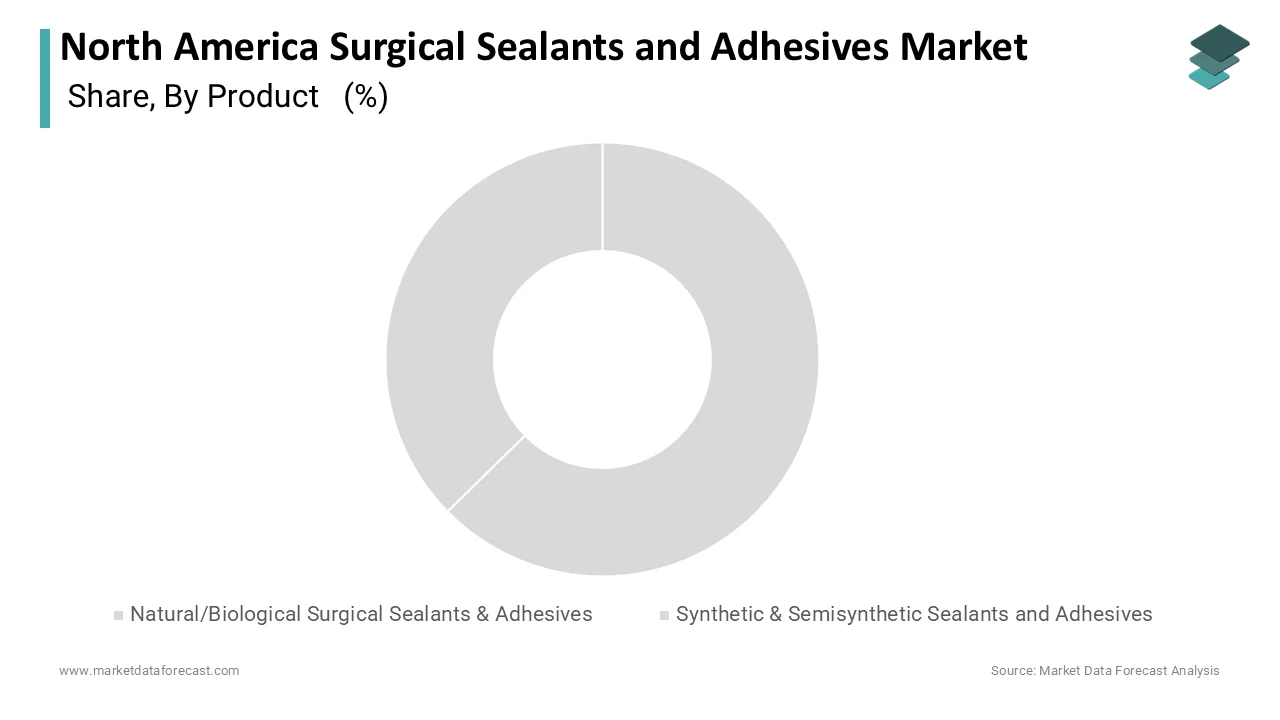
The synthetic and semisynthetic sealants and adhesives segment dominated the market by holding 56.5% of the regional market share in 2025. The superior mechanical strength and consistency of synthetic sealants are the primary factors driving their market dominance. Unlike biological products, which can vary batch to batch due to their origin, synthetic sealants offer predictable performance and high tensile strength. According to the Journal of Biomedical Materials Research, polyethyleneglycol-based hydrogels exhibit a burst pressure resistance that is 30% higher than fibrin sealants, making them ideal for high-pressure applications such as vascular and pulmonary surgeries. In the United States, the Food and Drug Administration has approved numerous synthetic sealants for use in critical care settings where reliability is paramount. As per data from surgical colleges, many surgeons prefer synthetic options for procedures requiring durable tissue approximation, such as abdominal wall closures, due to their ability to maintain integrity under stress.
Furthermore, synthetic sealants do not rely on human or animal-derived components, eliminating the risk of pathogen transmission. According to the Centers for Disease Control and Prevention, healthcare-associated infections are a major concern, and using sterile, synthetic materials helps mitigate this risk. The consistency in polymerization time and adhesion strength allows for standardized surgical protocols, reducing operative variability. This reliability is crucial in high-volume centers where efficiency and predictability are essential. As surgical techniques become more complex, the demand for robust, consistent sealing solutions continues to favor synthetic products, solidifying their leadership in the North American market.
On the other hand, the polyethylene glycol-based hydrogels segment represents the fastest-growing segment within the synthetic category and is projected to expand at a CAGR of 9.2% over the forecast period. The versatility of polyethylene glycol-based hydrogels in minimally invasive and robotic surgeries is driving their rapid growth. These hydrogels can be delivered through laparoscopic ports and catheters, expanding upon contact with tissue fluids to form a secure seal. According to the Society of American Gastrointestinal and Endoscopic Surgeons, there has been a significant annual increase in the use of specialized technology for minimally invasive procedures in the United States, creating a strong demand for sealants compatible with these techniques. As per reports from leading robotic surgery system providers, more than 2 million robotic procedures are performed annually worldwide, many of which utilize hydrogel sealants for tissue management. The ability of PEG hydrogels to adhere to wet tissues without the need for drying makes them indispensable in endoscopic environments. According to the Journal of Laparoendoscopic and Advanced Surgical Techniques, the use of hydrogel sealants can significantly reduce operative time in complex laparoscopic cases compared to traditional suturing.
Furthermore, their transparency allows for visual monitoring of the sealed area, enhancing surgical precision. In Canada, the adoption of minimally invasive techniques is rising, and as per the Canadian Institute for Health Information, there is a steady increase in the utilization of laparoscopic surgeries. This trend drives the uptake of PEG hydrogels as they offer a reliable solution for sealing leaks and preventing adhesions in confined spaces. As robotic surgery becomes more prevalent, the demand for specialized hydrogel sealants is expected to accelerate, propelling this segment’s growth.
By Indication Insights
The tissue sealing and hemostasis segment constituted the largest indication segment in the North America surgical sealants and adhesives market and held 84.1% of the regional market share in 2025. The universal requirement for effective hemostasis in complex surgeries is the primary factor driving the dominance of this segment. Uncontrolled bleeding is a leading cause of intraoperative complications and mortality. According to the American College of Surgeons, hemorrhage is a major cause of preventable death in trauma patients, highlighting the critical need for rapid hemostatic agents. In cardiovascular surgeries, where patients are often anticoagulated, sealants are essential for achieving hemostasis at suture lines. According to the Society of Thoracic Surgeons, hundreds of thousands of cardiac surgeries are performed annually in North America, each requiring robust hemostatic support. Similarly, in liver and pancreatic surgeries, where tissue is highly vascular, sealants prevent bile and blood leaks. According to reports from hepatopancreato-biliary associations, the use of sealants has been shown to reduce postoperative drainage volume by up to 40% in certain procedures, leading to shorter hospital stays. The aging population, which is more prone to bleeding disorders due to medication use, further amplifies this demand. According to the Centers for Disease Control and Prevention, a significant portion of adults aged 65 and older use medications that increase the risk of surgical bleeding. This widespread clinical need ensures that tissue sealing and hemostasis remain the primary indication for surgical sealants, driving consistent and high volume consumption across hospitals and ambulatory surgical centers in the region.
However, the tissue engineering segment is expected to register a CAGR of 13.1% over the forecast period in the North American market. Advancements in regenerative medicine and the use of sealants as scaffolds for tissue regeneration are the key drivers behind the rapid growth of the tissue engineering segment. Surgical sealants are increasingly being engineered to serve as three-dimensional matrices that support cell attachment and proliferation. According to the National Institutes of Health, there is significant investment in research for bioactive sealants that release growth factors, with products moving through clinical trials. In the United States, the Food and Drug Administration has granted special status to several sealant-based tissue engineering products for wound healing and cartilage repair. According to the Tissue Engineering and Regenerative Medicine International Society, North America leads in the innovation of scaffold-based therapies. These sealants provide a temporary structure that mimics the extracellular matrix, allowing native cells to migrate and regenerate damaged tissue. In orthopedics, sealants infused with cells are being used to repair cartilage defects, offering an alternative to joint replacement. As per reports from orthopedic associations, early clinical studies show promising results for these regenerative applications. In Canada, research institutions are developing novel hydrogel scaffolds for applications such as nerve regeneration. As these technologies mature and gain regulatory approval, the application of surgical sealants in tissue engineering is expected to expand, driving significant segment growth.
By Application Insights
The general surgeries occupied the leading share of 36.9% of the North American market in 2025. The high volume of abdominal and gastrointestinal procedures is the primary factor driving the dominance of the general surgeries segment. Conditions such as appendicitis, cholecystitis, and colorectal cancer require frequent surgical intervention. According to the American College of Surgeons, millions of general surgery procedures are performed annually in the United States. In these procedures, sealants are essential for reinforcing staple lines and preventing anastomotic leaks, which are serious complications. According to data from colorectal surgery associations, the use of sealants can reduce the incidence of leaks in certain procedures. Hernia repairs, another common general surgery, also utilize sealants for mesh fixation and tissue reinforcement. According to clinical reports, hundreds of thousands of hernia repairs are conducted each year in North America. The aging population contributes to this high volume, as older adults are more susceptible to abdominal wall weaknesses and gastrointestinal disorders. According to the Centers for Disease Control and Prevention, digestive diseases are a major cause of hospitalization. In Canada, according to the Canadian Institute for Health Information, general surgery remains one of the most frequently performed surgical specialties. This consistent and high demand for sealants in routine and complex general surgeries ensures the segment's market leadership.
However, the cosmetic surgeries segment represents the fastest-growing application segment in the North America surgical sealants and adhesives market and is expected to exhibit a CAGR of 10.3% over the forecast period, owing to the rising popularity of aesthetic procedures and the focus on scar minimization. Patients undergoing facelifts, breast augmentations, and body contouring procedures prioritize minimal scarring and quick recovery. According to the American Society of Plastic Surgeons, nearly 2 million cosmetic surgical procedures were performed in the United States in recent years. Surgical adhesives, particularly cyanoacrylates, are preferred for closing incisions in visible areas as they eliminate the need for suture removal and reduce track marks. According to reports in aesthetic surgery journals, the use of tissue adhesives is associated with high patient satisfaction due to improved cosmetic outcomes. In Canada, according to the Canadian Society for Aesthetic Plastic Surgery, there has been a steady increase in the number of cosmetic procedures performed annually. These adhesives provide a flexible, waterproof barrier that protects the wound while allowing for natural movement. The demand for minimally invasive aesthetic treatments also drives the use of sealants in procedures to manage postoperative recovery. As the stigma around cosmetic surgery decreases and disposable income rises, more individuals are seeking these procedures, boosting the demand for specialized adhesives that enhance aesthetic results. This trend is expected to continue, propelling the segment’s rapid growth.
COUNTRY LEVEL ANALYSIS
United States Surgical Sealants And Adhesives Market Analysis
The United States dominated the surgical sealants and adhesives market in North America in 2025 with 80.6% of the regional market share due to the advanced healthcare infrastructure, high surgical volumes, and strong reimbursement frameworks. The primary driver of market growth is the high prevalence of chronic diseases and the adoption of minimally invasive surgeries. According to the Centers for Disease Control and Prevention, heart disease and cancer remain the leading causes of death in the U.S., driving the need for surgical care. As per data from the American College of Surgeons, surgical volumes in the U.S. exceed 50 million procedures annually. The presence of major medical device manufacturers fosters innovation and competition. The Food and Drug Administration’s rigorous regulatory pathway ensures product safety while providing clear guidelines for market entry. According to the Centers for Medicare and Medicaid Services, healthcare spending in the U.S. reached 4.5 trillion dollars in 2022, supporting the use of advanced medical technologies. The rise of ambulatory surgical centers, which perform a vast majority of outpatient procedures, further boosts demand for quick-acting adhesives. Additionally, the aging population requires more orthopedic and general surgeries, sustaining long-term growth. The US market’s maturity and technological leadership make it the central hub for surgical sealant innovation and consumption in North America.
Canada Surgical Sealants And Adhesives Market Analysis
Canada ranked second in the North American Surgical Sealants and Adhesives Market in 2025, owing to the increasing number of surgical procedures and the adoption of advanced surgical techniques. According to the Canadian Institute for Health Information, more than 2.3 million surgeries are performed annually in Canada, and efforts to improve efficiency are ongoing. The government’s focus on reducing complications encourages the use of effective hemostatic agents. Health Canada’s regulatory framework ensures high safety standards, influencing product selection. According to the Canadian Agency for Drugs and Technologies in Health, clinical outcomes and economic evaluations are central to formulary decisions. The aging population, with seniors making up approximately 19% of the population, increases the demand for various surgeries. As per the Canadian Cardiovascular Society, heart disease affects millions of Canadians, driving heart surgery volumes and sealant usage. Additionally, the presence of major hospitals in populous provinces creates concentrated demand hubs. While budget constraints exist, the commitment to quality care ensures steady adoption of innovative sealants. Canada’s stable healthcare system and growing surgical volumes sustain its significant position in the regional market.
Mexico Surgical Sealants And Adhesives Market Analysis
Mexico is anticipated to account for a notable share of the North America surgical sealants and adhesives market during the forecast period due to a growing private healthcare sector and increasing medical tourism. The primary driver of market growth is the rising prevalence of obesity and diabetes, which leads to higher rates of bariatric and general surgeries. According to the World Health Organization, Mexico has one of the highest rates of adult obesity in the world, affecting over 35% of the adult population. The National Institute of Statistics and Geography reports that private healthcare expenditure is a significant component of total health spending. Medical tourism, particularly in cities near the U.S. border, attracts patients seeking surgeries, boosting the demand for high-quality sealants. The Federal Commission for the Protection against Sanitary Risk regulates medical devices, ensuring they meet safety requirements. According to reports from medical associations, private hospitals in major cities are adopting advanced standards, driving the use of premium products. Although public healthcare faces resource challenges, the growth of the private sector and the high burden of chronic disease ensure a steady market for surgical adhesives. Mexico’s strategic location and demographic trends position it as an emerging market in the region.
COMPETITIVE LANDSCAPE
The competitive landscape of the North America Surgical Sealants and Adhesives Market is characterized by the presence of established multinational corporations and specialized niche players. Global leaders dominate the sector due to their extensive product portfolios, strong brand recognition,n and robust distribution networks. These companies leverage their financial resources to invest heavily in research and development,nt resulting in continuous innovation of hemostatic and sealing technologies. However, ver smaller firms are gaining traction by offering specialized solutions for specific surgical applications such as neurosurgery or ophthalmology. The market exhibits moderate consolidation as larger entities acquire innovative startups to expand their technological capabilities. Competition is further intensified by stringent regulatory requirements, which create barriers to entry for new participants. Companies differentiate themselves through superior clinical evidence ae comprehensive surgeon training programs, ms and strategic partnerships with healthcare providers. The race to develop bioabsorbable and synthetic alternatives to biological products adds another layer of complexity to the competitive dynamics. As healthcare providers prioritize cost effectiveness and patient outcomes,mes the intensity of competition is expected to increase, driving further innovation and strategic maneuvering among key market participants in the region.
KEY MARKET PLAYERS
Some of the notable companies operating in the North America surgical sealants and adhesives market profiled in the report are
- CryoLife, Inc.
- Johnson & Johnson
- Ethicon, Inc.
- Baxter International, Inc.
- C.R. Bard, Inc.
- Cohera Medical, Inc.
- Ocular Therapeutix, Inc.
- Vivostat A/S
- Sealants Ltd.
- Medtronic plc
- Sanofi Group
- B. Braun Melsungen AG
TOP LEADING PLAYERS IN THE MARKET
- Johnson and Johnson Services Inc maintains a dominant position in the North American surgical sealants market through its Ethicon subsidiary. The company contributes significantly to the global sector by offering a comprehensive portfolio of hemostatic agents,ts including fibrin sealants and synthetic adhesives. Recently,ntly the organization has focused on expanding its manufacturing capabilities in the United States to ensure supply chain resilience. Johnson and Johnson actively collaborates with surgical societies to provide extensive training programs for healthcare professionals on the proper application of their products. The company invests heavily in research and development to next-generation bioabsorbable materials that enhance patient outcomes. By integrating digital health tools with traditional surgical solutions, Johnson and Johnson strengthens its value proposition. Its strategic partnerships with hospitals and ambulatory surgical centers facilitate broader adoption of advanced sealing technologies. These efforts enable the company to maintain its leadership status while addressing the evolving needs of surgeons and patients across the region.
- Baxter International Inc is a key player in the North American surgical sealants market,arket known for its innovative hemostatic solutions. The company plays a vital role in the global market by developing high-performance fibrin sealants and collagen-based products. In recent years, Baxter has strengthened its position by acquiring specialized biotech firms to expand its product pipeline. The organization focuses on improving operational efficiency through advanced manufacturing techniques and quality control measures. Baxter engages in strategic collaborations with research institutions to drive innovation in tissue engineering and regenerative medicine. The company also prioritizes sustainability by implementing eco-friendly packaging and production processes. By leveraging its extensive distribution network, Baxter ensures the timely delivery of critical surgical supplies to healthcare facilities. Its commitment to clinical excellence and patient safety resonates with medical professionals. These initiatives help Baxter solidify its reputation as a trusted partner in surgical care while driving growth in the competitive North American landscape.
- B Braun SE holds a significant presence in the North American surgical sealants market through its diverse portfolio of surgical care products. The company contributes to the global sector by providing reliable and cost-effective hemostatic agents and tissue adhesives. Recently, B. Braun has expanded its production facilities in the United States to meet growing demand and reduce lead times. The organization emphasizes education and training by hosting workshops and symposiums for surgeons and nursing staff. B Braun focuses on developing sustainable solutions that align with environmental goals and hospital efficiency targets. The company actively participates in industry conferences to showcase its latest innovations and clinical data. By fostering strong relationships with key opinion leaders and healthcare providers, B. Braun enhances its market visibility. Its dedication to quality and affordability makes its products accessible to a wide range of medical institutions. These strategic actions enable B Braun to compete effectively and strengthen its foothold in the dynamic North America surgical sealants and adhesives market.
TOP STRATEGIES USED BY THE KEY MARKET PARTICIPANTS
Key players in the North America Surgical Sealants and Adhesives Market primarily utilize product innovation and strategic partnerships to strengthen their competitive positions. Companies invest heavily in research and development to create advanced bioabsorbable and synthetic sealants that offer superior performance and safety profiles. This approach allows them to differentiate their offerings and meet the specific needs of complex surgical procedures. Another major strategy involves expanding manufacturing capabilities within the region to ensure supply chain resilience and reduce dependency on international sources. Firms also focus on educational initiatives by providing comprehensive training programs for surgeons and healthcare staff to promote proper product usage. Additionally, key participants engage in mergers and acquisitions to broaden their product portfolios and access new technologies. They leverage digital health integration to enhance surgical workflows and improve patient outcomes. These multifaceted strategies enable companies to address regulatory challenges while capitalizing on the growing demand for minimally invasive surgical solutions throughout the North American healthcare landscape.
MARKET SEGMENTATION
This research report on the North America Surgical Sealants and Adhesives Market has been segmented and sub-segmented into the following categories.s
By Product
-
Natural/Biological Surgical Sealants & Adhesives
-
Polypeptide/Protein-based Sealants & Adhesives
- Polysaccharide-based Sealants & Adhesives
-
- Synthetic & Semisynthetic Sealants and Adhesives
- Cyanoacrylates
- Polyethylene Glycol-based Hydrogel
- Urethane-based Adhesives
By Indication
- Tissue Sealing & Hemostasis
- Tissue Engineering
By Application
- Central Nervous System Surgeries
- General Surgeries
- Cardiovascular Surgeries
- Orthopedic Surgeries
- Cosmetic Surgeries
- Ophthalmic Surgeries
- Urological Surgeries
- Pulmonary Surgeries
By Country
- The United States
- Canada
- Rest of North America