- Product Description Description
- Table of Contents TOC
- List of Table & Figure LOT
- Get Free Sample PDF Sample PDF
Market Size, 2025
$1.50 BnMarket Estimate, 2026
$1.57 BnMarket Forecast, 2034
$2.28 BnCAGR, 2026–2034
4.7%North America Surgical Sutures Market Size, Growth, Trends & Forecast (2026–2034)
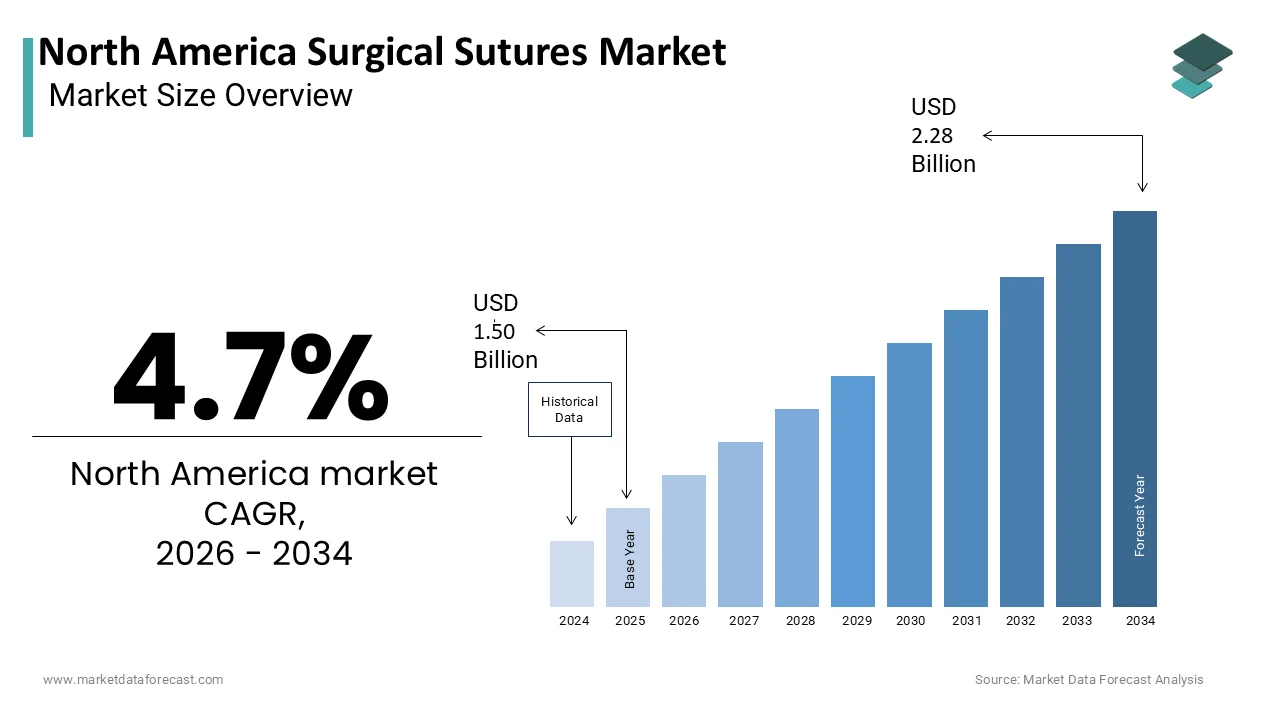
The North American surgical sutures market size was valued at USD 1.50 billion in 2025, is anticipated to reach USD 1.57 billion in 2026, and is projected to scale to approximately USD 2.28 billion by 2034, expanding at a compound annual growth rate (CAGR) of 4.7% during the forecast period from 2026 to 2034. Market expansion is primarily propelled by the rising volume of ambulatory surgical procedures, increasing rates of chronic wounds and comorbidities, and technological innovations such as antimicrobial coatings and robotic-compatible suture lines.
Key Executive Metrics (At-a-Glance)
- 2025 Base Valuation: USD 1.50 Billion
- 2026 Current Valuation: USD 1.57 Billion
- 2034 Forecast Valuation: USD 2.28 Billion
- Compound Annual Growth Rate (CAGR): 4.7% (2026–2034)
- Leading Regional Country: United States (occupying 80.8% of the North American market share in 2025, driven by massive procedural volume and healthcare expenditure)
- Key Geographic Regions: The United States, Canada, and Rest of North America
Core Market Drivers & Opportunities
- Ambulatory Care Migration: Surging volume of outpatient and ASC procedures requiring specialized fine-gauge and knotless technologies.
- Complex Chronic Wounds: Escalating prevalence of diabetes, obesity, and cardiovascular illnesses demanding advanced, tension-distributing closure materials.
- Antimicrobial & Robotic Innovations: Growth in triclosan-coated sutures for surgical site infection reduction and specialized strands optimized for robotic-assisted platforms.
Primary Market Restraints & Challenges
- Hospital Cost Containment: Aggressive group purchasing organization (GPO) standardization protocols prioritizing unit cost reduction over clinical preference.
- Alternative Modalities: Proliferation of surgical staplers, tissue adhesives, and energy-based vessel sealing devices capturing superficial and anastomotic volume.
Market Segmentation: Largest and Fastest-Growing Sectors
| Segment Category | Largest Segment | Fastest-Growing Segment |
|---|---|---|
| By Product | Synthetic Absorbable Sutures (Predictable absorption and low tissue reactivity) | Automated Suturing Devices (CAGR of 13.5%, driven by OR efficiency and ergonomics) |
| By Application | General Surgery (Sheer procedural volume across 17 million annual US inpatient operations) | Ophthalmic Surgeries (CAGR of 12.2%, driven by demographic aging and cataract procedures) |
| By End User | Hospitals (68% of total surgical volume, focusing on high-acuity interventions) | Ambulatory Surgical Centers (CAGR of 14.4%, propelled by policy shifts toward outpatient care) |
| By Country | The United States (80.8% share in 2025) | The United States (Driven by private insurance expansion and ASC proliferation) |
Major Industry Players Profiled
Key market participants shaping the North American surgical sutures landscape include Johnson & Johnson Inc. (Ethicon), B. Braun Melsungen AG, Smith & Nephew plc, DemeTECH Corporation, CONMED Corporation, W. L. Gore & Associates, Inc., Boston Scientific Corporation, 3M Healthcare, Medtronic Inc., and Sutures India Pvt. Ltd.
North America Surgical Sutures Market Size
The North American Surgical Sutures Market is projected to grow from USD 1.50 billion in 2025 to USD 1.57 billion in 2026 and reach approximately USD 2.28 billion by 2034, registering a CAGR of 4.7% during the forecast period from 2026 to 2034.
According to the Centers for Disease Control and Prevention National Center for Health Statistics, approximately 51 million inpatient surgical procedures are performed annually in the United States alone, creating a foundational baseline demand for wound closure technologies. As per the American College of Surgeons, over 70% of these interventions now utilize some form of suture material either as primary closure or adjunctive reinforcement, despite the proliferation of staplers and adhesives. According to the Canadian Institute for Health Information, Canada performs nearly 2.8 million day surgeries yearly, which increasingly rely on specialized suturing techniques optimized for rapid recovery and minimal scarring. Regulatory oversight by the US Food and Drug Administration and Health Canada ensures stringent biocompatibility and tensile strength standards governing every product category. The market definition has expanded beyond simple thread manufacturing to encompass integrated wound management solutions, including barbed sutures, antimicrobial-coated variants, and smart tensioning systems that address specific physiological requirements across general surgery, orthopedics, cardiovascular, and ophthalmic specialties throughout the continent.
MARKET DRIVERS
Rising Volume of Ambulatory Surgical Procedures
The structural migration of surgical care from inpatient hospital settings to ambulatory surgery centers is propelling the North America surgical sutures market growth. According to the Ambulatory Surgery Center Association, Medicare-certified ASCs performed over 3.6 million cases in 2023, which is representing a 14% increase compared to pre-pandemic levels, driven by cost efficiency and patient preference for same-day discharge. These facilities predominantly handle ophthalmic, orthopedic, and plastic surgery procedures where fine gauge monofilament sutures and specialized knotless technologies are essential for minimizing operative time and postoperative inflammation. As per the Medicare Payment Advisory Commission, ASC payment rates for common procedures remain significantly lower than hospital outpatient departments, incentivizing payers to redirect volume toward freestanding centers that consume high volumes of premium suture products per case. According to the American Society of Cataract and Refractive Surgery, over 4 million cataract surgeries occur annually in North America, with nearly all requiring precision nylon or polypropylene sutures for corneal wound construction. Unlike hospitals that may bulk purchase standard sutures, ASCs frequently procure specialized SKUs tailored to specific surgeon preferences, creating fragmented but high-value demand streams. This decentralized care model sustains consistent consumption patterns independent of hospital capital expenditure cycles, ensuring stable market velocity even during periods of broader healthcare economic uncertainty.
Increasing Prevalence of Chronic Wounds and Complex Closures
The escalating prevalence of chronic diseases and associated comorbidities across North America drives demand for advanced suture technologies capable of managing compromised tissue integrity and complex wound environments, which is further contributing to the regional market expansion. According to the Centers for Disease Control and Prevention, 37 million American adults have diabetes, with diabetic foot ulcers affecting approximately 19 to 34% of this population during their lifetime, necessitating frequent debridement and layered closure techniques using specialized absorbable sutures. According to the Agency for Healthcare Research and Quality, obesity related surgical complications, including wound dehiscence and infection, occur at rates 2 to 3 times higher than in normal-weight patients, prompting surgeons to adopt barbed sutures and retention sutures that distribute tension more evenly across fragile fascial planes. As per the American Heart Association, over 126 million adults live with cardiovascular disease requiring anticoagulation therapy that increases bleeding risk during soft tissue repair, making hemostatic and atraumatic suture designs clinically preferable. Cancer survivorship also contributes to demand, as the National Cancer Institute estimates 18 million cancer survivors in the US, many requiring reconstructive surgeries after tumor resection. These complex patient profiles transform sutures from commodity items into critical therapeutic tools where material selection directly impacts healing outcomes, complication rates, and readmission penalties under value-based purchasing frameworks.
MARKET RESTRAINTS
Aggressive Hospital Cost Containment Measures
Intensifying financial pressures within North American healthcare systems create significant headwinds for premium suture adoption as hospitals prioritize unit cost reduction over perceived clinical differentiation, which is primarily hampering the North American market growth. According to the American Hospital Association, median hospital operating margins fell to negative 2.8% in 2023, forcing supply chain executives to implement aggressive standardization protocols that limit SKU variety and favor lowest-cost compliant vendors. According to the Centers for Medicare and Medicaid Services, the Hospital Readmissions Reduction Program penalizes facilities up to 3% of total Medicare payments for excess readmissions, yet administrators often struggle to justify spending 3 to 5 times more on advanced barbed or antibacterial sutures without definitive randomized trial evidence linking specific products to reduced complications. As per Premier Healthcare Alliance benchmarking data, health systems achieved an average 18% savings on suture spend between 2020 and 2023 through group purchasing organization contracts that consolidate volume with single suppliers regardless of surgeon preference. Private equity ownership of physician practices further amplifies cost sensitivity as investors mandate strict formulary compliance to protect returns. This procurement environment commoditizes segments lacking robust health economics data, stifling innovation diffusion even when clinical benefits exist. Manufacturers face difficult choices between maintaining premium pricing with shrinking market access or accepting margin erosion to retain volume in an increasingly price-driven tender landscape.
Proliferation of Alternative Wound Closure Modalities
The continuous advancement and clinical acceptance of alternative wound closure technologies is further hampering the regional market expansion. According to the American Society of Plastic Surgeons, tissue adhesive utilization for laceration repair and pediatric closures increased 22% from 2019 to 2023 as emergency departments seek faster throughput and improved cosmetic outcomes without needle stick risks. According to the Society of Thoracic Surgeons national database, surgical stapler adoption for pulmonary and gastrointestinal anastomoses now exceeds 85% in major academic centers, reducing reliance on hand-sewn techniques except in anatomically constrained situations. As per the American Academy of Orthopaedic Surgeons, skin closure strips and subcuticular glue combinations have replaced superficial sutures in over 40% of total joint arthroplasty cases due to comparable infection rates and superior patient satisfaction scores. Energy-based vessel sealing devices similarly reduce the need for ligating sutures during dissection phases of abdominal and pelvic surgeries. While sutures remain irreplaceable for deep tissue approximation and vascular work, these alternatives capture incremental growth in high-volume superficial closure segments. Manufacturers must continuously demonstrate unique value propositions against evolving competitive modalities rather than competing solely against other suture brands, creating multidimensional substitution pressure across the wound closure spectrum.
MARKET OPPORTUNITIES
Integration of Antimicrobial and Bioactive Coatings
Hospital-acquired infection reduction initiatives represent a substantial opportunity for the North American surgical sutures market. According to the Centers for Disease Control and Prevention, surgical site infections affect approximately 2 to 4% of inpatient procedures, costing the US healthcare system an estimated 10 billion dollars annually in excess treatment expenses and extended lengths of stay. According to The Joint Commission’s revised National Patient Safety Goals, evidence-based strategies for SSI prevention create institutional mandates that favor triclosan-coated and chlorhexidine-impregnated sutures with demonstrated efficacy in peer-reviewed literature. As per the American College of Surgeons NSQIP database analysis, facilities adopting antimicrobial sutures for colorectal and breast reconstruction reported a 30% relative reduction in SSI rates, translating to average savings of 18,000 dollars per avoided infection. Medicare’s refusal to reimburse for certain hospital-acquired conditions further strengthens economic justification for premium-priced prophylactic products. Beyond antimicrobials, emerging research into growth factor delivery and immunomodulatory coatings addresses impaired healing in diabetic and elderly populations, representing untapped premium segments. These functional enhancements allow manufacturers to align product value with hospital quality metrics and bundled payment incentives rather than competing solely on unit price, unlocking willingness to pay among value-focused health systems seeking total cost of care reduction.
Expansion of Minimally Invasive and Robotic Surgery Applications
The accelerating adoption of robotic-assisted and minimally invasive surgical platforms across North America creates specialized suture opportunities distinct from open surgery requirements, which is another notable opportunity for the North American market. According to Intuitive Surgical annual disclosures, cumulative da Vinci system installations exceeded 9,000 units globally by the end of 2023, with North America accounting for approximately 65% of the installed base, driving corresponding demand for proprietary and compatible sutures optimized for endoscopic manipulation. According to the Society of American Gastrointestinal and Endoscopic Surgeons, robotic hernia repair volume grew 35% annually from 2020 to 2023, requiring longer strand lengths, specialized needle geometries, and enhanced knot security characteristics that differ fundamentally from conventional laparoscopic or open sutures. As per the American Urological Association, robotic prostatectomy now represents over 85% of radical prostatectomies performed in the US, with each case consuming multiple specialized barbed sutures for vesicourethral anastomosis. Gynecologic oncology and transoral robotics similarly expand addressable markets for fine gauge absorbable sutures with controlled memory and reduced tissue drag. These platform-dependent consumables create defensible niches where technical specifications matter more than price, enabling premium positioning. Manufacturers investing in robotic compatibility testing and surgeon training programs can capture a disproportionate share of this high-growth segment while building switching costs through procedural integration.
MARKET CHALLENGES
Supply Chain Vulnerability and Raw Material Dependency
Heavy reliance on geographically concentrated raw material sources and overseas manufacturing is a significant challenge for the North American market. According to the US International Trade Commission, over 70% of synthetic polymer resins used in surgical suture production originate from facilities in China and Southeast Asia, exposing domestic manufacturers to geopolitical tensions, trade tariffs, and logistics disruptions beyond their control. According to the Food and Drug Administration Medical Device Shortages Dashboard, 14 separate suture-related shortage notices were listed between 2022 and 2024, primarily attributed to resin contamination events and port congestion delaying shipments by 6 to 12 weeks. As per the Association for the Advancement of Medical Instrumentation, sterilization capacity constraints following ethylene oxide facility closures created additional bottlenecks, with backlog times extending to 8 weeks for gamma-irradiated products during peak demand periods. Just-in-time inventory practices adopted during the cost containment era left hospitals with minimal buffer stock, amplifying the impact of any disruption. Domestic reshoring initiatives face multiyear timelines due to regulatory revalidation requirements and skilled labor shortages. These systemic fragilities force manufacturers to maintain expensive safety stocks and dual sourcing strategies, eroding margins while customers experience unpredictable availability that undermines trust in premium brands during critical shortage windows.
Regulatory Reclassification and Post-Market Surveillance Burdens
Intensifying regulatory scrutiny and evolving classification frameworks impose substantial compliance burdens that delay innovation and increase development costs for North American suture manufacturers, which further challenges regional market growth. According to the Food and Drug Administration Center for Devices and Radiological Health, 510(k) clearance review times for modified suture designs averaged 148 days in 2023, representing a 35% increase compared to the 2019 baseline as reviewers demand additional biocompatibility and performance testing data. The Unique Device Identification implementation deadline extensions still require significant IT infrastructure investments for lot-level traceability across global supply chains, with annual maintenance costs exceeding 2 million dollars for mid-sized manufacturers. As per the Medical Device User Fee Amendments V performance metrics, supplemental submissions for labeling changes or manufacturing site transfers now trigger full quality system inspections, adding 4 to 6 months to commercialization timelines. Post-market surveillance requirements have expanded beyond passive adverse event reporting to include proactive real-world performance studies for certain device codes, generating ongoing data collection expenses. European Union MDR divergence from FDA requirements prevents harmonized testing protocols, forcing duplicate validation efforts for companies serving both markets. These regulatory complexities disproportionately burden smaller innovators, consolidating market power among incumbents with established compliance infrastructure while slowing the overall pace of incremental improvement reaching clinicians.
REPORT COVERAGE
| REPORT METRIC | DETAILS |
| Market Size Available | 2025 to 2034 |
| Base Year | 2025 |
| Forecast Period | 2026 to 2034 |
| Segments Covered | By Product, Application, End User, and Region. |
| Various Analyses Covered | Global, Regional, and Country-Level Analysis, Segment-Level Analysis, Drivers, Restraints, Opportunities, Challenges; PESTLE Analysis; Porter’s Five Forces Analysis, Competitive Landscape, Analyst Overview of Investment Opportunities |
| Countries Covered | The United States, Canada, Rest of North America |
| Market Leaders Profiled | Johnson & Johnson Inc., B. Braun Melsungen AGSmith & Nephew plc, DemeTECH Corporation, CONMED Corporation, W. L. Gore & Associates, Inc., Boston Scientific Corporation, 3 M Healthcare |
SEGMENTAL ANALYSIS
By Product Insights
The synthetic absorbable segment dominated the market by capturing the highest share of the regional market in 2025 and is estimated to hold dominance during the forecast period due to its predictable absorption kinetics and reduced tissue reactivity compared to natural alternatives. According to the American College of Surgeons, over 65% of soft tissue closures in general and gynecological surgeries now utilize synthetic absorbable materials such as polyglactin 910 or poliglecaprone 25 because they retain tensile strength for defined periods matching physiological healing timelines. According to the Centers for Disease Control and Prevention National Healthcare Safety Network data, surgical site infection rates are statistically lower with synthetic monofilament absorbables versus braided natural sutures, prompting institutional formulary standardization across major health systems. As per the Food and Drug Administration 510(k) clearance database, synthetic absorbables received 78% of new suture clearances between 2020 and 2023, reflecting manufacturer innovation focus and clinical preference shifts. Natural catgut usage has declined below 5% of total absorbable volume due to variable absorption and inflammatory response concerns documented in peer-reviewed literature. Hospitals prioritize predictable outcomes over marginal cost savings, making synthetic absorbables the default choice for internal tissue approximation across diverse procedure types throughout North America.
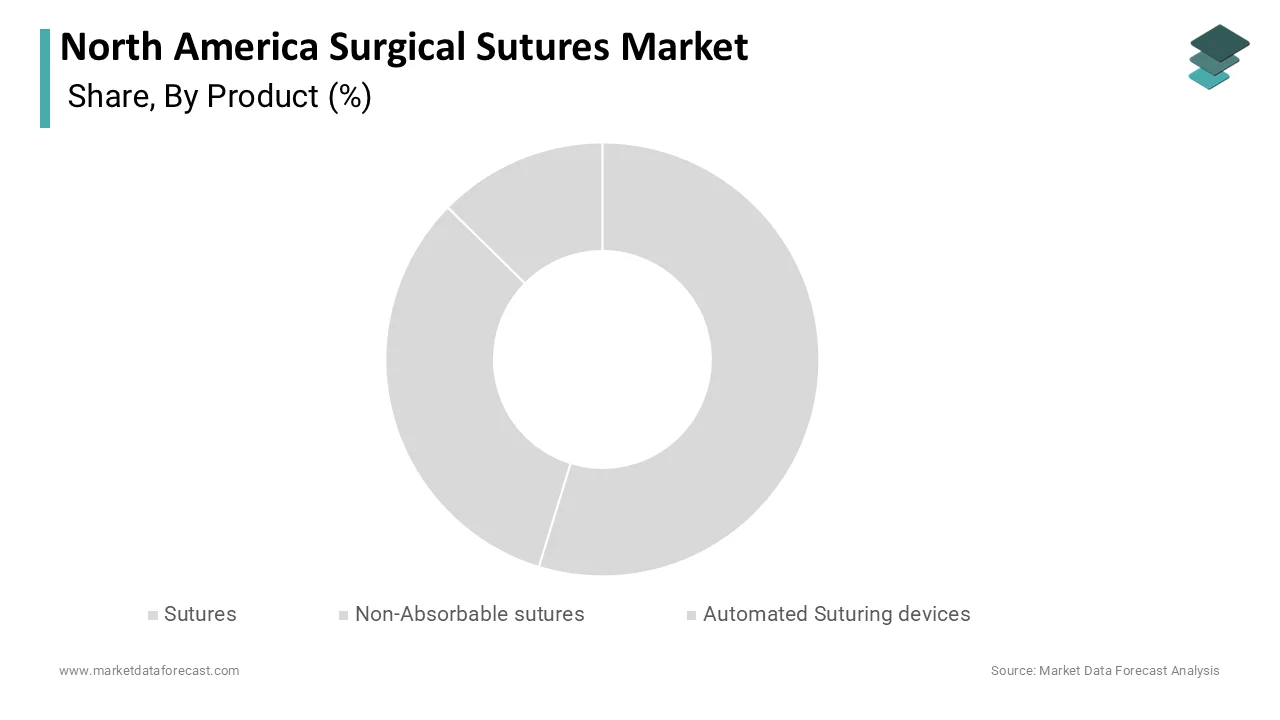
On the other hand, the automated suturing devices segment is estimated to register a promising CAGR of 13.5% over the forecast period owing to the operating room efficiency mandates and surgeon ergonomic concerns. According to the Association of PeriOperative Registered Nurses, average OR minute costs exceed 36 dollars in US academic medical centers, creating intense pressure to reduce closure time, where automated devices demonstrate 20 to 30% time savings versus manual knot tying in published comparative studies. According to the American Society of General Surgeons workforce survey, 42% of practicing surgeons experience hand or wrist pain attributable to repetitive suturing motions, driving adoption of mechanical assist devices that reduce physical strain during long cases. As per Intuitive Surgical clinical outcomes data, robotic-compatible automated suturing instruments decreased anastomosis construction time by an average of 12 minutes per case, translating to significant throughput gains in high-volume bariatric and colorectal programs. Labor shortages exacerbate efficiency pressures, as scrub tech availability constrains case turnover, making technologies that reduce assistant dependency particularly valuable. Unlike consumable sutures facing commoditization, automated devices command premium pricing justified by measurable productivity returns, positioning automated devices as a primary growth engine through 2030.
By Application Insights
The general surgery segment led the market by capturing the highest share of the North American market in 2025 and is predicted to continue growing at a prominent CAGR in this regional market during the forecast period due to sheer procedural volume encompassing diverse operations requiring multiple suture types per case. According to the Centers for Disease Control and Prevention National Hospital Discharge Survey, general surgery procedures including appendectomies, cholecystectomies, hernia repairs, and bowel resections account for approximately 35% of all inpatient operations in the United States, totaling over 17 million cases annually. According to the American Hernia Society Quality Collaborative, ventral and inguinal hernia repairs alone consume an average of 4.2 sutures per case, creating massive baseline demand that specialty segments cannot match despite higher per-case intensity. As per the Agency for Healthcare Research and Quality Healthcare Cost and Utilization Project, gastrointestinal procedures represent the largest category of hospital surgical admissions, with each colectomy or gastrectomy requiring layered closure using both absorbable and nonabsorbable sutures. Emergency general surgery adds unpredictable but substantial volume, as trauma and acute abdomen cases require immediate intervention regardless of elective surgery cancellations during resource constraints. This combination of high-frequency multilayer closure requirements and emergency demand stability creates a consumption foundation that anchors general surgery as a perpetual market leader.
The ophthalmic surgeries segment is expected to showcase the fastest CAGR of 12.2% over the forecast period in this regional market owing to the demographic aging and refractive surgery expansion. According to the American Society of Cataract and Refractive Surgery, over 4.5 million cataract procedures are performed annually in North America, with volume projected to increase 22% by 2030 as the baby boomer cohort reaches peak incidence age. Each cataract extraction typically requires 10-0 nylon or polypropylene sutures for corneal wound construction, creating high per-case consumption intensity unmatched by other microsurgical specialties. As per the Federal Trade Commission Eyeglass Rule amendment analysis, refractive lens exchange procedures grew 35% from 2021 to 2023 as presbyopia-correcting IOL technology improved, expanding the addressable patient population beyond traditional cataract indications. Glaucoma filtration surgeries and corneal transplants add incremental demand for ultrafine 10-0 and 11-0 sutures with specialized needle geometries commanding premium pricing. Unlike general surgery where staplers and adhesives substitute for sutures, ophthalmic microsurgery remains fundamentally dependent on precision suturing due to micron-level tolerance requirements preventing technological displacement.
By End Use Insights
The hospitals segment led the market by holding the highest share of the North American market in 2025 due to the concentration of complex high acuity procedures requiring extensive suture utilization. According to the American Hospital Association Annual Survey, US community hospitals performed 24 million inpatient surgeries in 2023, representing 68% of total national surgical volume, with case mix weighted toward multi-layer closures in trauma, oncology, and transplant procedures. According to the Centers for Medicare and Medicaid Services Inpatient Prospective Payment System data, average suture spend per inpatient stay exceeds 180 dollars, compared to 45 dollars for outpatient encounters, reflecting procedural complexity differentials. As per the Society of Thoracic Surgeons National Database, cardiac and vascular operations performed exclusively in hospital settings consume specialized non-absorbable sutures at rates 5 to 8 times higher than general surgery cases, creating concentrated demand nodes. Emergency departments within hospitals handle 139 million visits annually, with laceration repairs and urgent surgical interventions generating additional suture consumption absent in ambulatory settings. Teaching hospital status further amplifies volume as academic centers serve as referral destinations for rare and complicated cases requiring extensive reconstructive work.
The ambulatory surgical centers segment is predicted to register a CAGR of 14.4% over the forecast period in the North American market owing to the deliberate payer policies redirecting appropriate cases from hospital outpatient departments. According to the Medicare Payment Advisory Commission Report to Congress 2024, CMS added 11 new procedure codes to the ASC payable list in 2024, including several orthopedic and ophthalmic surgeries previously restricted to hospital settings, expanding addressable volume. According to the Ambulatory Surgery Center Association membership census, the certified ASC count increased 8% annually from 2020 to 2023, reaching 6,200 facilities as private equity and health system joint ventures accelerate development. As per UnitedHealthcare Commercial Policy Bulletin updates, prior authorization requirements for ASC-eligible procedures were reduced by 40% in 2023, removing administrative barriers that historically favored hospital scheduling. Employer-sponsored health plans increasingly implement tiered networks steering employees toward ASCs through lower copays and deductibles, leveraging cost differentials averaging 45% less than HOPD rates. This policy-driven migration creates structural volume shifts independent of organic surgical growth, explaining superior CAGR as payers systematically expand ASC-eligible procedure lists.
COUNTRY LEVEL ANALYSIS
U.S. Surgical Sutures Market Analysis
The U.S. occupied 80.8% of the North American market share in 2025 and is predicted to continue holding a dominant position in the North American surgical sutures market throughout the forecast period. This overwhelming share reflects the world's largest healthcare expenditure base, with national health spending reaching 4.9 trillion dollars in 2023 per Centers for Medicare and Medicaid Services National Health Expenditure Accounts. The country performs over 51 million inpatient procedures annually plus 35 million ambulatory surgeries, creating an unmatched procedural volume foundation. Private insurance coverage for 67% of the population under 6,5 per the Census Bureau Current Population Survey, ey enables premium product adoption less constrained by public sector tender processes dominating other developed markets. Domestic manufacturing presence, including Ethicon, Covidien, and B. Braun facilities, ensures supply security and regulatory alignment supporting market stability. Venture capital investment in surgical technology startups exceeded 2.8 billion dollars in 2023 per PitchBook data, fostering an innovation pipeline feeding the domestic market first. The regulatory framework balancing safety with access through the 510(k) pathway enables faster commercialization than European counterparts.
Canada Surgical Sutures Market Analysis
Canada is anticipated to showcase a healthy CAGR in the North American market over the forecast period owing to the payer procurement dynamics and strong public hospital dominance. According to the Canadian Institute for Health Information National Health Expenditure Trends 2023, provincial health ministries collectively spent 242 billion Canadian dollars on healthcare, with surgical supplies procured through centralized group purchasing organizations like HealthPRO and Mohawk Medbuy, achieving volume leverage unavailable in the fragmented US system. The country performs approximately 2.8 million day surgeries and 1.9 million inpatient procedures annually, creating a stable, slower-growing demand base compared to US private sector expansion. As per Statistics Canada Health Care Personnel Survey, surgical specialist density remains 15% below US levels, constraining procedural throughput growth despite universal access guarantees. Provincial formularies emphasize cost-effectiveness evaluations favoring generic equivalents over premium innovations unless robust Canadian-specific evidence demonstrates superior outcomes, slowing the adoption of advanced technologies. However, universal coverage ensures consistent baseline demand unaffected by insurance status variations, creating recession-resilient market characteristics. Cross-border trade integration allows Canadian facilities to access US-manufactured products efficiently, mitigating domestic production limitations.
COMPETITIVE LANDSCAPE
Competition within the North American surgical sutures market exhibits moderate intensity,y characterized by an oligopolistic structure among three dominant multinational corporations alongside emerging niche specialists and private label entrants. Barriers to entry remain substantial due to FDA regulatory requirements, sterilization validation, capital-intensive manufacturing, ng and entrenched surgeon training preferences,ces limiting new competitor threats in core segments. Incumbents differentiate through proprietary technologies, clinical evidence portfolios,s and integrated platform ecosystems rather than price competition alone, preserving premium margins in innovative categories. Private label expansion by group purchasing organizations introduces downward pricing pressure in commodity absorbable and nonabsorbable segments,s forcing incumbents to continuously innovate or accept margin erosion. Geographic concentration of manufacturing creates shared supply chain vulnerabilities where disruptions affect all players simultaneously, ly temporarily suspending competitive dynamics during shortage periods. Customer consolidation through health system mergers increases buyer leverage, enabling aggressive contract negotiations favoring vendors offering comprehensive solutions over single-category specialists. Competitive intensity varies significantly by segment, with advanced barbed and antibacterial sutures experiencing feature-based rivalry, while standard synthetics face increasing commoditization. This bifurcated competitive landscape rewards companies balancing innovation leadership with operational excellence while punishing those unable to adapt to value-based procurement paradigms reshaping North American healthcare purchasing.
KEY MARKET PLAYERS
Some of the companies that are playing a dominating role in the North America Surgical Sutures Market include:
- Johnson & Johnson Inc.
- B. Braun Melsungen AG
- Smith & Nephew plc
- DemeTECH Corporation
- CONMED Corporation
- W. L. Gore & Associates, Inc.
- Boston Scientific Corporation
- 3M Healthcare
- Medtronic Inc.
- Sutures India Pvt. Ltd.
TOP LEADING PLAYERS IN THE MARKET
- Ethicon Inc maintains profound influence across the North American surgical sutures landscape through its comprehensive portfolio spanning absorbable, nonabsorbable,e and specialized wound closure technologies. The company contributes extensively by supplying standardized suture products to over 90% of U.S. teaching hospitals, as well as establishing foundational training protocols that shape surgeon preferences throughout careers. Ethicon recently strengthened its position by launching next-generation antibacterial-coated sutures with expanded indications for colorectal and breast reconstruction, addressing hospital-acquired infection reduction mandates. Their investment in digital surgical education platforms integrates suture technique training with product selection guidance,e reinforcing clinical adoption patterns. Manufacturing facility expansions in Puerto Rico and Mexico enhance supply chain resilience against geopolitical disruptions,ons ensuring consistent availability during shortage periods. These strategic initiatives reinforce technological leadership and operational reliability without relying on market share metrics to demonstrate sustained competitive advantage in wound closure innovation and education throughout North American healthcare systems.
- Medtronic plc plays a pivotal role in the North American surgical sutures ecosystem through integrated minimally invasive surgery platforms combining energy devices, staplers, and specialized sutures. The company contributes regionally by offering procedural solutions rather than standalone products, thus creating workflow efficiencies and value for high-volume ambulatory surgery centers and robotic programs. Medtronic recently enhanced its market position by introducing barbed suture lines optimized for laparoscopic and robotic hernia repair, addressing growing minimally invasive procedure volumes. Their partnerships with surgical residency programs provide simulation equipment and curriculum support, building brand familiarity among next-generation surgeons before independent practice. Supply chain diversification, including domestic polymer resin sourcing,g reduces vulnerability to international trade disruptions affecting competitors. Digital inventory management tools integrated with hospital ERP systems streamline reordering and reduce stockouts, thus improving customer retention. The platform-centric strategies differentiate offerings from commodity suture vendors while creating switching costs through procedural integration, strengthening long term competitive positioning across diverse North American surgical settings.
- B Braun Melsungen AG has established a substantial presence in the North American surgical sutures market through focused specialization in premium synthetic absorbables and infection prevention technologies. The company contributes uniquely by emphasizing evidence-based clinical outcomes and health economics data supporting value-based purchasing decisions increasingly dominant in US hospital procurement. B Braun recently strengthened its position by expanding its triclosan-coated suture portfolio with new peer-reviewed publications demonstrating surgical site infection reduction in diabetic and obese patient populations. Their direct hospital engagement model bypasses traditional distributor margins, enabling competitive pricing while maintaining premium positioning through clinical service support. Manufacturing capacity additions atthe Pennsylvania facility improve domestic supply security and reduce lead times for East Coast customers. Educational initiatives targeting perioperative nurses address often overlooked decision influencers in suture selection processes. This clinically focused approach differentiates B Braun from larger conglomerates competing primarily on breadth, allowing sustained relevance through depth of expertise in infection prevention and complex wound management niches throughout North America.
TOP STRATEGIES USED BY KEY MARKET PARTICIPANTS
Key players in the North American surgical sutures market employ multifaceted strategic approaches to maintain competitive advantage amid intensifying cost pressures and evolving clinical requirements. Product differentiation through functional enhancements like antimicrobial coatings, gs barbed designs,gns and smart tensioning systems creates defensible premium segments resistant to commoditization. Strategic bundling with complementary devices such as staplers, lasers, energy platforms, and trocars increases switching costs and captures broader procedural spend beyond individual suture SKUs. Clinical evidence generation through sponsored trialreal-world world outcome studies justifies premium pricing under value-based purchasing frameworks demanding demonstrated return on investment. Supply chain resilience investments, including domestic manufacturing, dual sourcing, ng and safety stock optimization, can address post-pandemic reliability concerns influencing procurement decisions. Educational ecosystem development through simulation, labs, residency sponsorships, a nd digital training platforms builds long-term brand loyalty among formative-stage surgeons. Direct hospital engagement models bypass distributor markups while enabling deeper clinical relationships and faster feedback loops for product refinement. Portfolio rationalization focuses resources on high-margin, innovative segments while divesting commoditized categories to specialized generic manufacturers. These interconnected strategies collectively address fundamental market dynamics where clinical performance, economic value,e and supply reliability increasingly outweigh historical brand allegiance in purchasing decisions across diverse North American healthcare settings.
MARKET SEGMENTATION
This research report on the North American surgical sutures market has been segmented and sub-segmented into the following categories
By Product
-
Sutures
-
Absorbable sutures
- Natural sutures
- Synthetic sutures
- Non-Absorbable sutures
- Nylon sutures
- Proline sutures
- Stainless steel sutures
- Other Non-absorbable sutures
- Automated Suturing devices
- Disposable
- Reusable
-
By Application
- Surgeries
- General Surgeries
- Gynecological Surgeries
- Orthopedic Surgeries
- Ophthalmic Surgeries
- Other Applications
By End Use
- Hospitals
- Other End-Users
By Region
- The United States
- Canada
- Rest of North America