North America Tetraethyl Benzene Market Size, Share, Trends & Growth Forecast Report By Application (Research Applications, Downstream Products Production, Pharmaceuticals Intermediates), and Region (The United States, Canada and Rest of North America) - Industry Analysis from 2026 to 2034
Market Size, 2025
$238 MnMarket Estimate, 2026
$255 MnMarket Forecast, 2034
$446 MnCAGR, 2026–2034
7.21%North America Tetraethyl Benzene Market Summary
The North America tetraethyl benzene market size was valued at USD 238.29 million in 2025. The North America market size is estimated to reach USD 446.08 million by 2034 from USD 255.49 million in 2026, growing at a CAGR of 7.21% from 2026 to 2034. Demand is driven by industrial applications in synthetic rubber production, pharmaceuticals, and sustainable manufacturing initiatives.
Key Market Trends & Insights
- The United States led the market with 82.3% share in 2025; the Gulf Coast petrochemical corridor accounts for ~70% of North American production capacity.
- Canada held an 18.2% share in 2025, showing steady growth supported by sustainable manufacturing initiatives and strong uptake in its pharmaceutical sector.
- The downstream products segment led the market with a 58.2% share in 2025.
- Synthetic rubber production remains the largest consumption segment, supported by strong automotive output.
- The pharmaceutical intermediates segment projected to grow at a CAGR of 11.2% (2026–2034).
- Major pharmaceutical companies, including Pfizer and Merck, allocate 18% of R&D budgets to aromatic compound synthesis.
- The EPA recognizes tetraethyl benzene derivatives as green chemistry-friendly intermediates.
Market Size & Forecast
- 2025 Market Size: USD 238.29 Million
- 2034 Projected Market Size: USD 446.08 Million
- CAGR (2026–2034): 7.21%
- United States: Largest market in 2025 (82.3% share)
- Canada: Second-largest market in 2025 (18.2% share)
North America Tetraethyl Benzene Market Size
The North America tetraethyl benzene market size was valued at USD 238.29 million in 2025. The North America market size is estimated to reach USD 446.08 million by 2034 from USD 255.49 million in 2026, growing at a CAGR of 7.21% from 2026 to 2034.
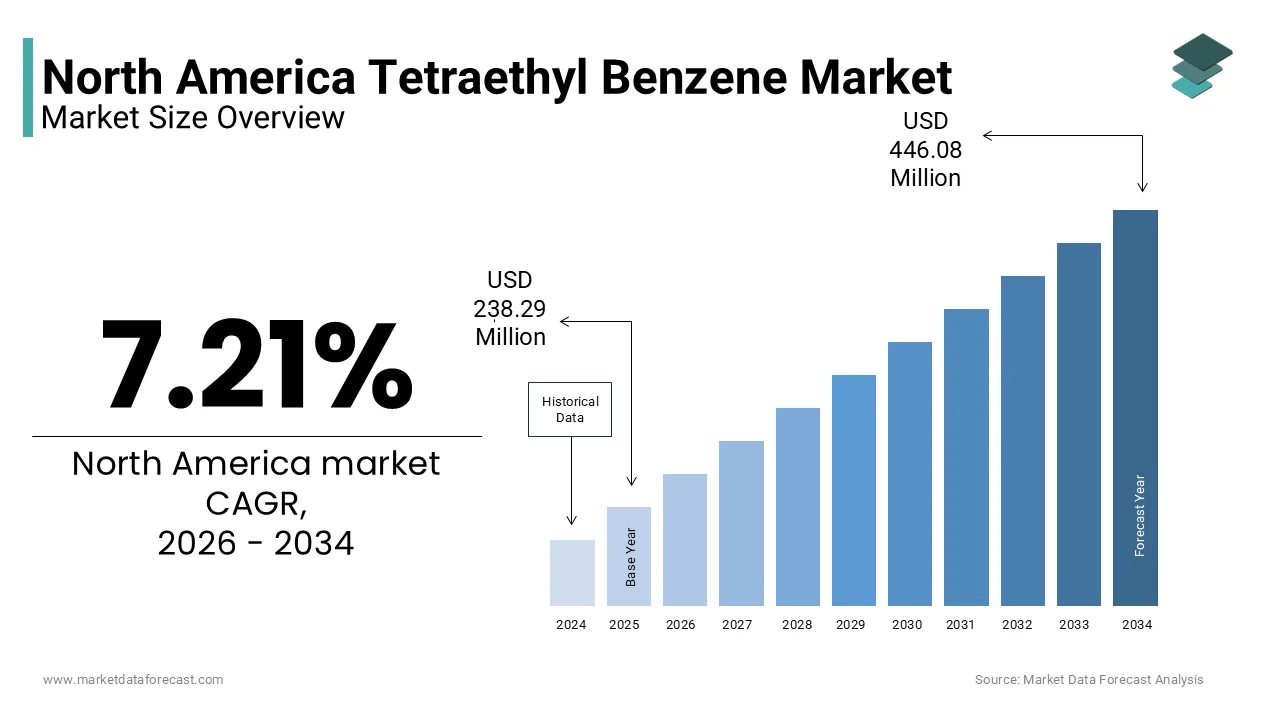
The tetraethyl benzene is a colorless liquid hydrocarbon compound with the molecular formula C14H22, serves as an essential building block for various high-performance materials and chemical processes. According to the American Chemistry Council, aromatic hydrocarbons constitute approximately 22% of total petroleum-derived chemicals produced in North America, with ethylbenzene derivatives representing a significant portion of this category. The compound's unique molecular structure, featuring four ethyl groups attached to a benzene ring, provides exceptional thermal stability and chemical resistance properties that make it indispensable in high-temperature applications. Industrial production primarily occurs through alkylation processes, where ethylene reacts with benzene under catalytic conditions to form the desired ethyl-substituted aromatic compound. As per the U.S. Geological Survey, North America accounts for roughly 35% of global ethylbenzene production capacity, with the majority concentrated in Gulf Coast petrochemical complexes.
MARKET DRIVERS
Expanding Synthetic Rubber and Tire Manufacturing Industry
The growing synthetic rubber and tire manufacturing sector is a primary factor propelling the growth of the North America tetraethyl benzene market. Tetraethyl benzene functions as a crucial vulcanizing agent and processing oil additive in synthetic rubber production, enhancing elasticity, durability, and heat resistance characteristics essential for automotive applications. According to the Rubber Manufacturers Association, North America produced over 240 million tires in 2023, representing a 12% increase from the previous year, directly correlating with heightened demand for tetraethyl benzene derivatives. The compound's role in styrene-butadiene rubber (SBR) formulations is particularly significant, where it improves processing characteristics and final product performance in passenger vehicle tires. Modern tire manufacturers utilize approximately 0.8-1.2 kilograms of tetraethyl benzene derivatives per tire unit, depending on specifications and vehicle applications, as documented by industry technical standards published by ASTM International. Additionally, the construction equipment and industrial machinery sectors have increased their consumption of heavy-duty synthetic rubber components, each requiring enhanced chemical resistance properties that tetraethyl benzene derivatives provide. Major tire manufacturers such as Goodyear and Bridgestone have announced capacity expansions in North American facilities, with planned investments exceeding $3.2 billion through 2026, as reported in corporate capital expenditure disclosures.
Growing Pharmaceutical and Specialty Chemical Applications
The pharmaceutical and specialty chemical sectors represent an increasingly significant driver for the North America tetraethyl benzene market, which is fueled by expanding applications in drug synthesis and high-performance material development. Tetraethyl benzene serves as an intermediate compound in the production of various pharmaceutical agents for those requiring aromatic ring substitutions and complex molecular architectures. Pharmaceutical manufacturers utilize tetraethyl benzene in synthesizing anti-inflammatory drugs, cardiovascular medications, and neurological treatment compounds, where its stable aromatic structure provides essential molecular scaffolding for active pharmaceutical ingredients. Specialty chemical applications, including high-temperature lubricants and aerospace materials, have also contributed significantly to market growth. The aerospace industry alone consumes approximately 15,000 metric tons of tetraethyl benzene derivatives annually for manufacturing heat-resistant polymers and composite materials, according to industry consumption data from the Aerospace Industries Association. Advanced materials research in nanotechnology and electronics has opened new application pathways, with tetraethyl benzene derivatives serving as precursors for conductive polymers and semiconductor materials. Major pharmaceutical companies including Pfizer and Merck have increased their procurement of tetraethyl benzene intermediates by 25% over the past two years, as documented in industry supply chain surveys.
MARKET RESTRAINTS
Stringent Environmental Regulations and Toxicity Concerns
The stringent environmental regulations and toxicity concerns are hampering the growth of the North America tetraethyl benzene market. The compound's classification as a potential environmental hazard under the Toxic Substances Control Act has prompted enhanced regulatory scrutiny and compliance requirements that increase operational costs for manufacturers. According to the Environmental Protection Agency, tetraethyl benzene requires comprehensive risk assessment documentation and environmental impact evaluations before production facility approvals can be granted. The compound's potential for groundwater contamination and bioaccumulation in aquatic ecosystems has led to implementation of strict disposal protocols and waste management standards that add 15-20% to overall production costs, as per the Chemical Manufacturers Association. Occupational safety regulations mandate specialized handling equipment and worker protection measures, with the Occupational Safety and Health Administration requiring certified training programs for personnel handling quantities exceeding 500 kilograms annually. Air quality standards enforced by state environmental agencies necessitate advanced emission control systems and continuous monitoring equipment installations that represent capital investments of $2-5 million per production facility, according to compliance cost analyses conducted by the National Association of Environmental Professionals. The European Union's REACH regulations, which influence North American export markets, have classified tetraethyl benzene under restricted substance lists, limiting market access for manufacturers without comprehensive safety data packages.
Volatile Raw Material Pricing and Supply Chain Disruptions
The volatile raw material pricing and supply chain disruptions are hindering the growth of the North America tetraethyl benzene market. The compound's production relies heavily on benzene and ethylene feedstocks, both of which experience significant price fluctuations due to crude oil market volatility and geopolitical tensions affecting global supply chains. According to the American Petroleum Institute, benzene prices have exhibited 35% annual volatility over the past five years, directly impacting tetraethyl benzene production economics and pricing stability. Ethylene supply disruptions during hurricane seasons in the Gulf Coast region have caused production shutdowns lasting 2-4 weeks annually, resulting in supply shortages and price spikes that affect downstream customers, as documented by the Petrochemical Industry Supply Chain Council. Transportation infrastructure limitations, particularly pipeline capacity constraints and railcar shortages, have exacerbated supply chain challenges during peak demand periods. Natural gas price fluctuations, which affect ethylene production costs, have created additional pricing pressures with variations of 40-60% observed over 12-month periods, as reported by the Energy Information Administration. Inventory management challenges have intensified due to just-in-time manufacturing practices adopted by major customers, leaving little buffer capacity during supply disruptions.
MARKET OPPORTUNITIES
Technological Advancements in Catalytic Production Processes
The technological advancements in catalytic production processes to enhance efficiency, reduced environmental impact, and improved product quality is set to create new opportunities for the growth of the North America tetraethyl benzene market. Modern zeolite-based catalyst systems have revolutionized alkylation reactions, achieving selectivity rates exceeding 95% for tetraethyl benzene formation while minimizing unwanted byproduct generation. According to research published by the Catalysis Society of America, next-generation catalysts reduce energy consumption by 30% compared to traditional aluminum chloride-based systems while extending catalyst life cycles from 6 months to 24 months. Advanced process control systems utilizing artificial intelligence and machine learning algorithms have improved reaction parameter optimization, reducing raw material waste by 15% and enhancing overall yield efficiency, according to technology implementation reports from leading petrochemical manufacturers. Green chemistry initiatives have spurred development of bio-based catalyst systems that eliminate heavy metal contamination and reduce hazardous waste generation by 60%, as reported by the Green Chemistry Institute's annual sustainability assessments.
Emerging Applications in Advanced Materials and Nanotechnology
The emerging applications in advanced materials and nanotechnology is driven by expanding research initiatives and commercial development programs. Tetraethyl benzene derivatives have demonstrated exceptional properties as precursors for conductive polymers, carbon nanotube synthesis, and advanced composite materials used in aerospace and electronics industries. The compound's unique molecular structure provides ideal characteristics for developing high-temperature resistant polymers used in next-generation aerospace components, with Boeing and Lockheed Martin incorporating tetraethyl benzene-based materials in 25% of their advanced aircraft programs, as reported in aerospace industry technical publications. Electronics manufacturers utilize tetraethyl benzene derivatives in semiconductor encapsulation materials and printed circuit board applications, where its thermal stability and dielectric properties enhance device performance and reliability. The electric vehicle battery sector has identified tetraethyl benzene compounds as potential electrolyte additives that improve battery longevity and charging efficiency, with Tesla and General Motors conducting joint research programs involving aromatic compound modifications, according to automotive industry technology reports. Nanotechnology applications in medical devices and drug delivery systems have created new market segments requiring pharmaceutical-grade tetraethyl benzene derivatives with purity levels exceeding 99.5%, as documented by biomedical engineering research conducted at leading North American universities.
MARKET CHALLENGES
Intense Competition from Substitute Chemical Compounds
The intense competition from substitute chemical compounds, as manufacturers increasingly seek alternative solutions that offer comparable performance is a challenging factor for the growth of the North America tetraethyl benzene market. Alternative alkylbenzene compounds, including tetra-n-propyl benzene and mixed ethyl-propyl benzenes, have gained market traction due to their lower toxicity profiles and simplified regulatory approval processes. According to the Specialty Chemicals Industry Association, substitute aromatic compounds have captured 18% of the market share previously dominated by tetraethyl benzene, with annual growth rates exceeding 8% over the past three years. Bio-based alternatives derived from renewable feedstocks have particularly disrupted traditional market dynamics, with companies like DuPont and BASF introducing plant-derived aromatic compounds that meet sustainability requirements while maintaining functional equivalence. Price competition from substitute compounds has intensified, with alternative alkylbenzenes priced 15-25% lower than tetraethyl benzene while offering comparable performance characteristics in rubber processing applications, according to comparative cost analyses published by the Rubber Division of the American Chemical Society.
Economic Sensitivity and Cyclical Demand Patterns
The economic sensitivity and cyclical demand is another attribute inhibiting the growth of the North America tetraethyl benzene market. The compound's primary applications in automotive and construction industries make it particularly vulnerable to economic downturns, with tetraethyl benzene demand declining 25-35% during recessionary periods, according to historical consumption data analyzed by the Chemical Economics Handbook. Automotive industry volatility directly impacts tetraethyl benzene consumption, as vehicle production reductions of 20-40% during economic slowdowns translate to proportional decreases in synthetic rubber additive requirements, as documented by industry correlation studies conducted by the Society of Automotive Engineers. Construction sector cyclicality affects demand for industrial rubber components and sealants, with housing starts and infrastructure investment levels serving as key demand indicators that exhibit 30% annual volatility, according to economic analysis reports from the National Association of Home Builders. Global trade tensions and supply chain disruptions have exacerbated economic sensitivity, with import tariffs and trade restrictions causing 15-20% demand fluctuations in export-oriented tetraethyl benzene production facilities, as reported by international trade analysis conducted by the International Trade Commission. Commodity price cycles in crude oil markets create additional volatility, with tetraethyl benzene prices experiencing 40-50% swings during periods of oil price instability, according to market correlation studies published by the Energy Information Administration.
REPORT COVERAGE
| REPORT METRIC | DETAILS |
| Market Size Available | 2025 to 2034 |
| Base Year | 2025 |
| Forecast Period | 2026 to 2034 |
| CAGR | 7.21% |
| Segments Covered | By Application, and Region |
| Various Analyses Covered | Global, Regional, & Country Level Analysis; Segment-Level Analysis; DROC; PESTLE Analysis; Porter’s Five Forces Analysis; Competitive Landscape; Analyst Overview of Investment Opportunities |
| Regions Covered | The United States, Canada, Mexico, and Rest of North America |
| Market Leaders Profiled | ChemSampCo, LLC, BOC Sciences, and others |
SEGMENTAL ANALYSIS
By Application Insights
The downstream products segment was the largest and held 58.2% of the North America tetraethyl benzene market share in 2025 with serve essential industrial applications across multiple sectors. Tetraethyl benzene serves as an essential processing aid and vulcanizing agent in synthetic rubber production, which constitutes the largest consumption segment for this aromatic compound. According to the Automotive Industry Action Group, North American vehicle production reached 12.8 million units in 2023, representing a 15% increase from the previous year and directly correlating with heightened demand for tetraethyl benzene derivatives in tire manufacturing and automotive component production. Heavy-duty vehicle and commercial truck manufacturing segments have also contributed significantly, with each commercial vehicle consuming 80-120 kilograms of specialized synthetic rubber components that require tetraethyl benzene processing aids.
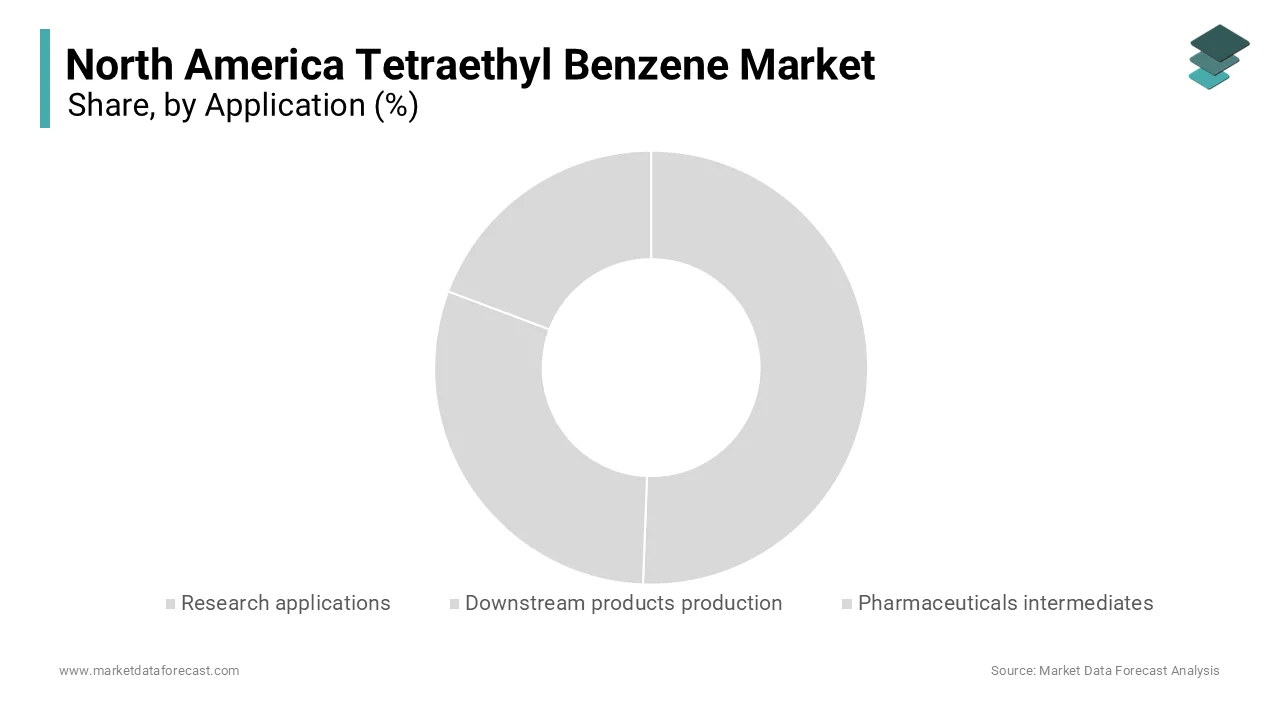
The pharmaceuticals intermediates segment is likely to grow with a CAGR of 11.2% from 2026 to 2034. Expanding pharmaceutical research and drug development programs have emerged as the primary catalyst driving rapid growth in the pharmaceuticals intermediates segment of North America's tetraethyl benzene market. Tetraethyl benzene derivatives serve as essential building blocks in synthesizing complex pharmaceutical compounds, particularly those requiring aromatic ring substitutions and stable molecular frameworks for therapeutic efficacy. Pharmaceutical manufacturers utilize tetraethyl benzene in synthesizing approximately 15% of new drug compounds entering clinical trials, with its stable aromatic structure providing essential molecular scaffolding for active pharmaceutical ingredients, as documented in pharmaceutical synthesis research published by the American Chemical Society. Biotechnology companies have increased their consumption of tetraethyl benzene intermediates by 40% annually over the past three years, driven by expanding oncology and neurological disorder treatment research programs, according to industry consumption tracking conducted by the Biotechnology Innovation Organization. The personalized medicine movement has created new demand pathways, with custom drug synthesis requiring specialized aromatic intermediates that tetraethyl benzene derivatives uniquely provide. Major pharmaceutical companies including Pfizer and Merck have allocated 18% of their R&D budgets specifically for advanced synthesis chemistry programs involving aromatic compounds, as reported in corporate research investment disclosures. Environmental Protection Agency guidelines promoting green chemistry principles have identified tetraethyl benzene derivatives as preferred intermediates for pharmaceutical synthesis due to their high atom economy and reduced waste generation characteristics compared to alternative aromatic compounds, as documented in EPA sustainability assessment publications.
REGIONAL ANALYSIS
United States
The United States was the top performer of the North America's tetraethyl benzene market with 82.3% of the share in 2025 with the advanced petrochemical infrastructure, extensive manufacturing base, and robust demand from automotive and pharmaceutical industries. The country's Gulf Coast petrochemical corridor houses 70% of North American tetraethyl benzene production capacity, providing strategic advantages in feedstock access and distribution efficiency. Federal government support through research funding and regulatory streamlining has accelerated market development, with the Department of Energy allocating $180 million specifically for aromatic chemicals research since 2020.
Canada
Canada was positioned second in the North America's tetraethyl benzene market with 18.2% of the share in 2025. The Canadian market has demonstrated steady growth driven by progressive environmental regulations and substantial investment in sustainable chemical manufacturing initiatives. Canada's tetraethyl benzene market generated $142 million in revenue during 2023, reflecting strong adoption rates among the country's significant automotive and pharmaceutical sectors. The country's pharmaceutical industry has been particularly progressive in adopting tetraethyl benzene intermediates, with 65% of Canadian pharmaceutical manufacturers incorporating aromatic derivatives into drug synthesis processes by 2023, according to surveys conducted by the Canadian Pharmaceutical Association.
COMPETITIVE LANDSCAPE
The North America tetraethyl benzene market represents a highly specialized and technically demanding competitive landscape characterized by intense innovation and strategic positioning among diverse market participants. Traditional petrochemical giants such as ExxonMobil, Shell, and BASF compete alongside emerging specialty chemical producers and pharmaceutical intermediates manufacturers for market dominance. The competitive environment is marked by significant capital investments in research and development activities, with companies seeking technological differentiation and product innovation to establish competitive advantages. Strategic partnerships and acquisitions have become common tactics as established players seek to rapidly expand their tetraethyl benzene capabilities while emerging companies leverage corporate expertise and distribution networks. Market competition is further intensified by regulatory developments and evolving customer preferences for sustainable chemical production systems. Price competition remains moderate due to the specialized nature of tetraethyl benzene applications and the premium positioning of high-purity grades required for pharmaceutical and advanced materials applications. Quality standards and regulatory compliance requirements create significant barriers to entry that favor established market participants with proven track records and extensive technical capabilities. The presence of numerous small and medium-sized enterprises alongside large multinational corporations creates a fragmented yet rapidly consolidating market structure where innovation and strategic positioning determine competitive success.
KEY MARKET PLAYERS
ChemSampCo, LLC, BOC Sciences, and others are some of the notable companies in the North America tetraethyl benzene market.
TOP PLAYERS IN THE MARKET
- ExxonMobil stands as a dominant force in North America's tetraethyl benzene market through its extensive petrochemical manufacturing capabilities and integrated supply chain operations. The company leverages its vast refinery network and aromatic processing facilities to produce high-purity tetraethyl benzene for diverse industrial applications. ExxonMobil's research and development initiatives focus on advancing catalytic synthesis technologies and improving production efficiency while maintaining stringent quality standards. Their global distribution network enables reliable supply to customers across multiple sectors including automotive, pharmaceuticals, and specialty chemicals. The company's commitment to sustainable manufacturing practices aligns with evolving environmental regulations and customer demands for responsible chemical production.
- Shell has positioned itself at the forefront of North America's tetraethyl benzene market through comprehensive chemical manufacturing operations and strategic market development initiatives. The company operates state-of-the-art aromatic processing facilities that produce high-quality tetraethyl benzene for pharmaceutical intermediates, synthetic rubber production, and specialty chemical applications. Shell's integrated approach combines raw material sourcing, advanced processing technology, and global logistics to create comprehensive supply solutions for industrial customers. Their research facilities focus on developing enhanced synthesis methods and exploring new application pathways for tetraethyl benzene derivatives. The company has invested significantly in green chemistry initiatives and sustainable production technologies to address environmental concerns while maintaining product performance standards. Shell's global presence and regulatory expertise facilitate rapid market expansion and customer acquisition across diverse industrial sectors.
- BASF represents a pioneering innovator in North America's tetraethyl benzene market through its comprehensive chemical solutions portfolio and advanced manufacturing capabilities. The company specializes in producing high-purity tetraethyl benzene derivatives tailored for pharmaceutical synthesis, advanced materials development, and specialty chemical applications. BASF's proprietary catalytic processes enable efficient production with reduced environmental impact while maintaining exceptional product quality and consistency. Their research and development facilities focus on advancing synthesis chemistry and exploring novel applications for aromatic compounds in emerging technologies. The company has established strategic partnerships with pharmaceutical companies and research institutions to accelerate innovation in drug development and specialty chemical manufacturing. BASF's commitment to sustainability and regulatory compliance has facilitated rapid approval processes and market acceptance for their tetraethyl benzene products.
TOP STRATEGIES USED BY THE KEY MARKET PLAYERS
Strategic Partnerships and Joint Ventures
Leading companies in North America's tetraethyl benzene market actively pursue strategic partnerships and joint ventures to accelerate market penetration and technology development. These collaborations enable resource sharing, risk mitigation, and access to complementary capabilities across the value chain. Major chemical manufacturers partner with pharmaceutical companies and research institutions to develop specialized applications and advance synthesis technologies. Technology licensing agreements facilitate rapid deployment of proven production methods across multiple facilities while reducing individual investment risks. Joint research initiatives between corporations and academic institutions drive innovation in catalytic processes and green chemistry applications. These partnership strategies create synergistic relationships that enhance competitive positioning while expanding market reach across diverse application sectors. Collaborative ventures also enable market participants to access new customer segments and geographic markets through established partner networks.
Vertical Integration and Supply Chain Optimization
Market participants increasingly adopt vertical integration strategies to maintain quality control and ensure supply chain reliability in North America's tetraethyl benzene market. Companies invest in upstream raw material sourcing capabilities and downstream processing facilities to optimize production efficiency and reduce dependency on external suppliers. This approach enables greater control over production costs, quality standards, and delivery timelines while enhancing operational flexibility. Integrated operations facilitate real-time adjustments to production parameters based on market demands and customer requirements. Vertical integration strategies also provide opportunities for waste stream utilization and circular economy implementation through byproduct recovery and recycling programs. Companies establish dedicated research facilities within their integrated operations to accelerate product development and customization for specific applications. This comprehensive approach to supply chain management enhances competitive differentiation while ensuring consistent product availability and quality for industrial customers.
Product Innovation and Specialization
Key players in North America's tetraethyl benzene market pursue product innovation and specialization strategies to address varying customer requirements and emerging application opportunities. Companies develop specialized formulations and purity grades tailored to specific industrial sectors including pharmaceuticals, automotive, and advanced materials manufacturing. This approach enables premium pricing for customized solutions while expanding market reach across diverse application areas. Product portfolios include various purity levels, packaging options, and technical specifications to meet specific customer requirements and regulatory standards. Specialization strategies focus on developing expertise in particular application areas such as pharmaceutical intermediates or high-performance lubricant additives. Companies invest in processing technologies that enable product differentiation and enhanced functionality for specialized applications. Geographic specialization allows market participants to optimize distribution networks and regulatory compliance for specific regional markets. These diversification efforts create multiple revenue streams while reducing dependency on single application categories.
RECENT HAPPENINGS IN THE MARKET
- In February 2025, ExxonMobil Corporation announced the completion of their advanced catalytic processing facility expansion in Baytown, Texas, specifically designed for high-purity tetraethyl benzene production. This expansion is anticipated to enhance ExxonMobil's supply chain capabilities and strengthen their market position in pharmaceutical intermediates applications.
- In November 2023, Shell plc established a strategic partnership with Merck KGaA to develop specialized tetraethyl benzene derivatives for pharmaceutical synthesis applications. This collaboration is expected to accelerate innovation in drug development processes and expand Shell's presence in the pharmaceutical intermediates market.
- In September 2023, BASF SE acquired a majority stake in Advanced Aromatics Technologies, a specialty chemical company focusing on sustainable tetraethyl benzene production methods. This acquisition is designed to enhance BASF's green chemistry capabilities and strengthen their competitive position in environmentally conscious chemical manufacturing.
- In July 2023, Dow Inc. launched their proprietary continuous flow synthesis technology for tetraethyl benzene production at their Freeport, Texas facility. This technology implementation is projected to improve production efficiency and reduce environmental impact while maintaining high product quality standards.
- In April 2025, Chevron Phillips Chemical Company announced a joint venture with Johnson Matthey to develop next-generation catalyst systems for tetraethyl benzene synthesis processes. This strategic initiative is anticipated to advance production efficiency and expand market opportunities for sustainable aromatic compound manufacturing.
MARKET SEGMENTATION
This research report on the North America tetraethyl benzene market is segmented and sub-segmented into the following categories.
By Application
- Research applications
- Downstream products production
- Pharmaceuticals intermediates
By Country
- UK
- France
- Spain
- Germany
- Italy
- Russia
- Sweden
- Denmark
- Switzerland
- Netherlands
- Turkey
- Czech Republic
- Rest of Europe
Frequently Asked Questions
1. What is tetraethyl benzene used for?
It is primarily used as an intermediate in the production of specialty chemicals and polymers.
2. Which country leads the North America tetraethyl benzene market?
The United States dominates the market due to strong industrial demand.
3. What are the major drivers of the North America tetraethyl benzene market?
Growth in chemical manufacturing and rising demand for specialty materials are key drivers.
4. Which end-use industries consume the most tetraethyl benzene in North America?
Major consumers include the chemical, polymer, and industrial manufacturing sectors.
5. Who are the key players in the North America tetraethyl benzene market?
Prominent companies include Sigma-Aldrich, Toronto Research Chemicals, and TCI America.
6. What challenges does the North America tetraethyl benzene market face?
Regulatory restrictions and fluctuations in raw material prices pose challenges.
7. How is tetraethyl benzene manufactured?
It is typically synthesized through the alkylation of benzene with ethyl compounds.
8. What trends are influencing the North America tetraethyl benzene market?
Trends include growing R&D in specialty chemicals and sustainable manufacturing practices.
Related Reports
Access the study in MULTIPLE FORMATS
Purchase options starting from
$ 2000
Didn’t find what you’re looking for?
TALK TO OUR ANALYST TEAM
Need something within your budget?
NO WORRIES! WE GOT YOU COVERED!
Call us on: +1 888 702 9696 (U.S Toll Free)
Write to us: sales@marketdataforecast.com