- Product Description Description
- Table of Contents TOC
- List of Table & Figure LOT
- Get Free Sample PDF Sample PDF
Market Size, 2025
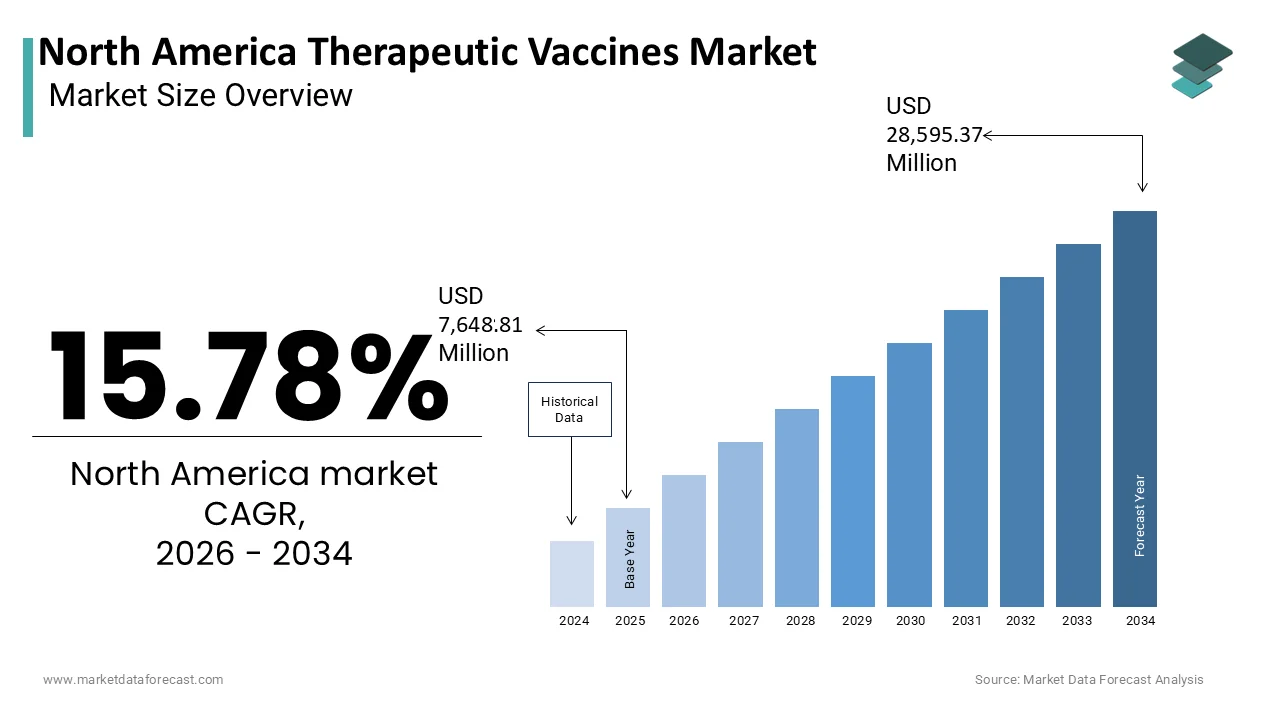
$7,648.81 MnMarket Estimate, 2026
$8,855.79 MnMarket Forecast, 2034
$28,595.37 MnCAGR, 2026–2034
15.78%Executive Summary: North America Therapeutic Vaccines Market
- Market Scope: Comprehensive North American therapeutic vaccines industry analysis covering disease types, therapeutic application verticals, regional leadership frameworks, and competitive landscapes.
- Market Valuation: Valued at USD 7,648.81 million (2025), estimated at USD 8,855.79 million (2026), and projected to reach USD 28,595.37 million by 2034, registering a robust CAGR of 15.78% (2026–2034).
- Primary Growth Drivers: Increased government funding for vaccine development, rising disease prevalence across cancer and infectious conditions, technological advancements, and strategic investments by major players. Restraints include high treatment costs and stringent regulatory policies.
Key Market Segment Metrics (2026–2034)
| Category | Leading Segment (2025 Position) | Fastest-Growing Segment |
|---|---|---|
| By Disease Type | Cancer and Infectious Diseases (primary therapeutic application areas driving market volume) | Neurological and Autoimmune Disease therapeutic vaccines |
| By Region | United States (holds the highest market share supported by advanced healthcare infrastructure) | Canada (expected to witness a healthy CAGR driven by favorable reimbursement policies) |
Major Market Players & Market Structure
Market Structure: Highly competitive regional market dependent on public purchasers and major biopharmaceutical leaders investing in vaccine R&D, advanced therapeutic applications, and strategic healthcare partnerships.
Key Companies: GlaxoSmithKline, plc, Merck and Company, Bavarian Nordic, CSL Limited, Emergent BioSolutions Inc., Novartis AG, Johnson and Johnson, MedImmune, LLC, Pfizer, Inc., and Sanofi Pasteur.
North America Therapeutic Vaccines Market Size
The North America Therapeutic Vaccines Market is projected to grow from USD 7,648.81 million in 2025 to USD 8,855.79 million in 2026 and reach USD 28,595.37 million by 2034, registering a CAGR of 15.78% from 2026 to 2034.
A therapeutic vaccine is a special medical treatment given after a person already has a disease. It trains the body's immune system to fight and kill active illness cells, unlike standard shots that stop a disease before it starts. Unlike prophylactic vaccines that prevent infection, these biologics target established conditions including various malignancies, autoimmune disorders, and persistent viral infections such as HIV and hepatitis B. According to the American Cancer Society, an estimated 2,001,140 new cancer cases were diagnosed in the United States in 2024, driving clinical development of novel oncology therapeutics. As per the Centers for Disease Control and Prevention, an estimated 1.2 million people in the United States are living with HIV, driving sustained pharmaceutical investments in long-acting therapeutic modalities. According to Statistics Canada, cancer stands as the leading cause of death in Canada and is responsible for approximately 25% of all mortalities, motivating regional investments in clinical-stage targeted oncology therapeutics. This market operates at the convergence of advanced genomics, immunology, and precision medicine, distinguishing itself through personalized manufacturing processes and complex regulatory pathways. It is fundamentally driven by the shift toward disease modification rather than symptom management, utilizing patient-specific antigens to generate durable clinical responses in previously refractory indications.
MARKET DRIVERS
Rising Cancer Prevalence Accelerates Immunotherapy Adoption
An increase in cancer cases is causing doctors and hospitals to use immunotherapy treatments faster, which propels the growth of the North America therapeutic vaccines market. According to the American Cancer Society, an estimated 2,041,910 new cancer cases will be diagnosed in the United States in 2025, expanding the target clinical cohort for innovative oncology treatments. As per the Canadian Cancer Society, lung, breast, prostate, and colorectal cancers collectively comprise 47% of all new annual cancer diagnoses in Canada, driving structural investments in antigen-specific therapeutic research. According to the National Cancer Institute, the 5-year relative survival rate for all cancers combined has risen to 70%, expanding the domestic pool of patients requiring long-term clinical maintenance regimens. This demographic shift favors therapeutic vaccines, which offer toxicity profiles superior to continuous cytotoxic chemotherapy. Consequently, healthcare systems increasingly integrate active immunotherapies into standard care protocols to manage this expanding chronic disease burden, directly fueling market volume independent of economic cycles.
Technological Convergence Enables Personalized Antigen Targeting
The integration of technologies facilitates individualized antigen recognition, which further contributes to the expansion of the North America therapeutic vaccines market. According to the National Human Genome Research Institute, technological integration has dropped the base cost of sequencing a human genome below USD 200 by 2024, facilitating scalable adoption of routine molecular profiling inside medical facilities. As per the U.S. Food and Drug Administration, preclinical bioinformatic modeling has fueled a rising volume of active clinical trials investigating personalized neoantigen formulations across global healthcare networks. According to the Department of Energy’s Genomic Science Program, computational workflows optimize epitope identification to improve the clinical translation rate of prospective biological therapeutics during initial screening. This technological stack transforms therapeutic vaccines from broad-spectrum agents into precision medicines tailored to individual mutational landscapes. Additionally, improvements in lipid nanoparticle delivery systems have enhanced mRNA stability and cellular uptake, addressing historical efficacy barriers. These innovations collectively lower the technical risk of development and improve clinical response rates, thereby validating the therapeutic modality and encouraging sustained investment from both public funding bodies and private biopharmaceutical entities across North America.
MARKET RESTRAINTS
Manufacturing Complexity Creates Scalability Bottlenecks
Production complexities restrict capacity to scale efficiently and ultimately hamper the growth of the North America Therapeutic vaccines market. According to National Academies of Sciences, Engineering, and Medicine perspectives, patient-derived cell variability represents a highly complex parameter in autologous manufacturing that elevates clinical product consistency risks across global processing networks. As per the U.S. Food and Drug Administration guidelines, establishing specialized cellular and gene therapy products involves rigorous analytical testing and specific potency assay designs, driving manufacturing investments across commercial bio-facilities. According to the National Institute of Standards and Technology project documentation, the development of reference material 8671 provides an industry-wide standard for monoclonal antibody characterization, enhancing the consistency of analytical testing protocols within biotechnology laboratories. Unlike small molecule drugs manufactured in weeks, autologous vaccines require vein-to-vein timelines of 3 to 6 weeks, during which patients with aggressive disease may deteriorate beyond eligibility. This logistical friction restricts treatment access to specialized academic centers with dedicated apheresis units, excluding community hospitals that serve the majority of North American patients. Therefore, despite clinical efficacy, the physical constraints of bespoke manufacturing cap total addressable volume and delay widespread commercial adoption until automated closed-loop systems achieve industrial maturity.
Reimbursement Uncertainty Suppresses Commercial Viability
Uncertainty around reimbursement limits the expansion of the North America therapeutic vaccines market. According to the American Journal of Managed Care, novel oncology immunotherapies frequently exceed an annual price threshold of USD 100,000 per patient, expanding budget impacts for healthcare payers evaluating regional treatment coverage metrics. As per the Tufts Center for the Study of Drug Development historical analysis, traditional biopharmaceutical discovery architectures encounter an overall clinical development success rate of approximately 11.3%, shaping corporate pipelines and clinical investment allocations. According to the Congressional Research Service industry metrics, high-cost specialty biological drugs represent less than 3% of all retail prescriptions but command approximately 40% of total domestic medication spending, accelerating public sector expenditure pressure. Private insurers frequently impose step-edit requirements mandating failure of cheaper conventional therapies before authorizing therapeutic vaccines, delaying treatment initiation by months. This financial toxicity creates a paradox where approved products remain commercially inaccessible to significant patient segments. Without predictable payment models aligned with long-term curative potential, revenue realization lags scientific success, discouraging investment in indications requiring chronic dosing regimens.
MARKET OPPORTUNITIES
Chronic Infectious Disease Functional Cure Strategies
Therapeutic approaches toward functional cures for chronic infections give rise to new potential for the North America therapeutic vaccines market. According to the Centers for Disease Control and Prevention, an estimated 860,000 individuals in the United States are living with chronic Hepatitis B, expanding the target patient segment for functional cure strategies. As per the Public Health Agency of Canada, diagnosis rates for sexually transmitted and blood-borne infections remain high across regional territories, accelerating domestic development of novel therapeutic formulations. According to the National Institute of Allergy and Infectious Diseases, structural financing frameworks support targeted research into immune-based therapies and reservoir reduction to establish long-term clinical remission for patients. Current antiretroviral therapies suppress viral replication but do not eliminate latent reservoirs; therapeutic vaccines targeting conserved viral epitopes could enable treatment interruption, dramatically improving quality of life and reducing lifetime healthcare costs. Success in infectious disease offers a clearer regulatory pathway and more straightforward endpoints than oncology, potentially accelerating time-to-market. Furthermore, government procurement commitments for pandemic preparedness create de-risked commercialization channels for platforms adaptable to emerging pathogens.
Autoimmune Disease Tolerance Induction Platforms
The emergence of autoimmune disease tolerance induction platforms is a paradigm shift in the North American therapeutic vaccines market. This movement shifts the industry away from broad immunosuppression and toward highly targeted, disease-modifying cures. According to the National Multiple Sclerosis Society, nearly 1 million people in the United States have been diagnosed with multiple sclerosis, accelerating the clinical transition toward selective cellular therapeutics. As per the Arthritis Foundation, rheumatoid arthritis affects 1.3 million Americans, driving intense biopharmaceutical interest in localized antigen-specific therapies. Unlike oncology vaccines that stimulate immunity, autoimmune therapeutic vaccines aim to induce peripheral tolerance against self-antigens, offering disease modification rather than symptomatic relief. Recent advances in mucosal delivery and nanoparticle encapsulation have improved safety profiles in early-stage trials. This modality addresses the fundamental limitation of current autoimmune care: non-specific immunosuppression. Successful development would redefine treatment paradigms across dozens of indications, unlocking a multi-billion dollar opportunity distinct from the crowded checkpoint inhibitor landscape.
MARKET CHALLENGES
Clinical Trial Design Heterogeneity Complicates Evidence Generation
Wide discrepancies in how clinical studies are structured are a major barrier to the commercialization of these vaccines in the North American therapeutic vaccines market. Because mismatched trial methodologies make it incredibly difficult to compare data across different patient cohorts, developers struggle to generate the uniform, high-fidelity evidence required by regional regulatory bodies. According to the U.S. Food and Drug Administration, clinical trial endpoints for complex biologics are increasingly requiring advanced model-informed drug development parameters to address historical protocol design gaps. As per the National Cancer Institute, targeted immuno-oncology trial recruitment paradigms leverage biomarker profiling to optimize clinical sample cohorts across regional infrastructure centers. According to the Clinical Trials Transformation Initiative, decentralized infrastructure models improve the global coordination of clinical trial sites by mitigating historical operational complexities. Patient heterogeneity in immune baseline status, prior therapy exposure, and tumor microenvironment composition introduces confounding variables that obscure signal detection in conventional randomized controlled trials. Moreover, overall survival endpoints require follow-up periods exceeding 5 years, delaying readouts while competitive landscapes evolve rapidly. This evidentiary bottleneck means promising mechanisms often fail not due to biological inefficacy but due to methodological misalignment. Developing validated intermediate endpoints and enrichment strategies remains critical yet unresolved, perpetuating high attrition rates and investor skepticism despite strong preclinical rationale.
Regulatory Pathway Ambiguity for Novel Modalities
The lack of clear regulatory frameworks for next-generation immunotherapies is a critical hurdle for the North American therapeutic vaccines market. As traditional regulatory frameworks struggle to assess cutting-edge, non-traditional platforms, developers must navigate evolving compliance expectations from agencies such as the FDA and Health Canada. According to the U.S. Government Accountability Office, biological manufacturing audits require standardized foreign facility inspections to secure consistent safety verification protocols across international supply networks. As per Health Canada, administrative structures for advanced therapy medicinal products align regional policies with global regulatory agencies to accelerate clinical follow-on data collection. According to the International Council for Harmonisation, unified product quality guidance frameworks exclude the vast majority of human vaccine formulations from their standard pharmaceutical evaluation protocols. Sponsors must negotiate bespoke regulatory agreements for each candidate, introducing unpredictability into development planning. Changes in manufacturing process mid-development, common for evolving platforms, trigger comparability studies costing millions and adding years to timelines. This regulatory friction disproportionately impacts smaller innovators lacking resources for extensive agency engagement. Until harmonized frameworks for characterizing complex therapeutic vaccines are established, approval risk will remain elevated. This constraint limits capital allocation and slows the translation of scientific breakthroughs into approved treatments for North American patients.
REPORT COVERAGE
| REPORT METRIC | DETAILS |
| Market Size Available | 2025 to 2034 |
| Base Year | 2025 |
| Forecast Period | 2026 to 2034 |
| Segments Covered | By Disease Type and Region. |
| Various Analyses Covered | Global, Regional, and Country-Level Analysis, Segment-Level Analysis, Drivers, Restraints, Opportunities, Challenges; PESTLE Analysis; Porter’s Five Forces Analysis, Competitive Landscape, Analyst Overview of Investment Opportunities |
| Countries Covered | The United States |
| Market Leaders Profiled |
|
SEGMENTAL ANALYSIS
By Disease Type Insights
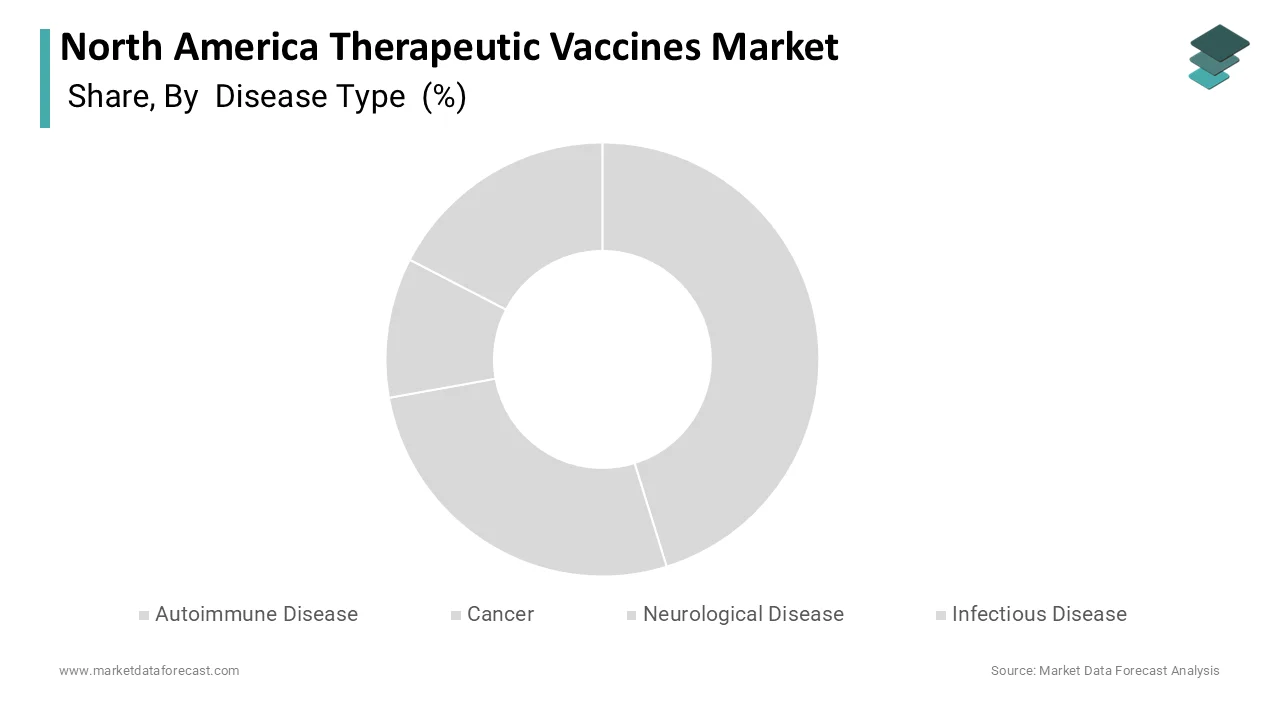
The cancer therapeutic vaccines segment dominated the North American therapeutic vaccines market and accounted for a 58.6% share in 2025. This dominance of the segment was driven by the sheer epidemiological volume of malignancies requiring long-term management beyond initial curative intent. The Canadian Cancer Society reports that nearly 1 in 2 Canadians will develop cancer in their lifetime, ensuring sustained demand across the northern border. Unlike infectious diseases where vaccination can lead to eradication and market contraction, oncology represents a chronic indication with high recurrence rates necessitating prolonged treatment courses. Furthermore, the aging demographic profile of North America acts as a biological multiplier. This structural prevalence ensures that oncology remains the primary revenue driver regardless of success in other indications, as the absolute number of treatable patients dwarfs those in rare autoimmune or neurological categories.
Strong project progress and official approvals strengthen the dominance of this segment. According to the U.S. Food and Drug Administration, priority review models and breakthrough therapy mechanisms expedite regulatory pathways for complex biologics targeting life-threatening oncology indications. As per the National Institutes of Health, annual structural spending allocations fund diverse cancer and condition categories, leveraging massive public resource streams to de-risk early-stage clinical research. The approval of personalized neoantigen vaccines for melanoma and non-small cell lung cancer has established commercial precedents that validate reimbursement pathways and manufacturing standards. According to clinical pipeline tracking data, private biopharmaceutical firms are expanding late-stage clinical trials for cancer vaccines in North America to capture growing demand for precision immunology. This concentration of late-stage assets creates a self-reinforcing cycle where clinical success attracts further capital and talent, widening the gap versus emerging segments. Additionally, the integration of therapeutic vaccines with checkpoint inhibitors has become standard of care in multiple tumor types, embedding these products into established treatment algorithms and securing long-term formulary positions that newer indications have yet to achieve.
The Alzheimer's disease vaccine segment is projected to grow at a CAGR of 24.6% between 2026 and 2034. This explosive growth is propelled by the convergence of demographic inevitability and recent scientific breakthroughs validating active immunization as a viable disease-modifying strategy. As per the Centers for Disease Control and Prevention, more than 6 million Americans age 65 and older are living with Alzheimer's disease, a metric projected to surpass 13 million by 2060. According to the National Institute on Aging, the federal government allocated approximately USD 3.8 billion to Alzheimer's disease and related dementias research in fiscal year 2024, driving unprecedented funding into neurodegenerative research. Recent regulatory approvals of anti-amyloid monoclonal antibodies have paved the way for vaccine candidates targeting similar pathologies but with improved safety profiles and subcutaneous administration convenience. Unlike oncology where competition is saturated, the Alzheimer’s vaccine space remains relatively uncrowded with only a handful of late-stage candidates, allowing first movers to capture disproportionate value. The failure of decades of small molecule drug development has shifted industry focus toward biologics, positioning therapeutic vaccines as the next logical frontier in neurodegenerative disease management.
Shifting toward preventive care increases the eligible target audience and propels the expansion of this market segment. According to the World Health Organization, institutional public health strategies emphasize multi-domain risk reduction frameworks to mitigate global cognitive decline trends across aging patient cohorts. As per the Canadian Institutes of Health Research, longitudinal medical tracking registries map chronic biomarker indicators in pre-symptomatic groups to advance preventive pharmaceutical design models. This paradigm shift transforms Alzheimer’s from a terminal care indication to a chronic prevention model analogous to cardiovascular risk management. Pharmaceutical companies are responding by designing trials that enroll cognitively normal but biomarker-positive subjects, potentially increasing the eligible patient pool by a factor of 10 compared to symptomatic-only approaches. According to the National Institute on Aging, clinical research networks fund targeted active immunization protocols to demonstrate clear health economic utility for next-generation drug coverage models. This expansion from treatment to prevention fundamentally alters market dynamics, enabling volume-based pricing models rather than orphan-drug premiums and attracting investment from players previously deterred by limited late-stage efficacy windows.
COUNTRY LEVEL ANALYSIS
United States Therapeutic Vaccines Market Analysis
The United States was the top performer in the North America therapeutic vaccines market and accounted for an 82.5% share in 2025. This dominance of the US market was propelled by its role as the undisputed innovation engine and primary commercialization venue for novel immunotherapies. Market status is characterized by unparalleled infrastructure density supporting end-to-end development from basic discovery to scaled manufacturing. According to the National Institutes of Health, structural financial allocations support clinical-stage therapeutic vaccine pipelines to anchor domestic clinical trial infrastructure. As per the National Cancer Institute, the presence of 58 NCI-designated Comprehensive Cancer Centers accelerates regional clinical trial capacity and patient enrollment for oncology studies. According to the Centers for Medicare & Medicaid Services, Medicare covers traditionally approved monoclonal antibodies directed against amyloid for the treatment of Alzheimer's disease, provided that clinicians enter data into a national registry. As per PitchBook, private venture capital financing fuels clinical-stage oncology drug developers to expand early-stage pipeline replenishment. This ecosystem gravity attracts global talent and capital, making the U.S. not merely the largest market but the definitive testing ground where therapeutic viability is established before international expansion. Regulatory familiarity and established coding frameworks further reduce commercialization friction relative to neighboring jurisdictions.
Canada Therapeutic Vaccines Market Analysis
Canada plays a key role in the North America therapeutic vaccines market and accounted for a 14.6% share in 2025. It occupies a specialized niche as a high-quality clinical trial destination and progressive policy innovator, despite its smaller domestic population. Market status is defined by operational excellence in research execution and universal healthcare integration that facilitates rapid post-approval adoption. As per the Canadian Institutes of Health Research, national funding frameworks expand domestic clinical infrastructure to support therapeutic trial design across regional sites. According to the Canadian Institutes of Health Research, national funding frameworks expand domestic clinical infrastructure to support therapeutic trial design across regional sites. Canada’s single-payer structure enables real-world evidence generation at national scale, providing valuable post-marketing data that informs U.S. labeling expansions and health technology assessments. As per the Government of Canada, the federal Biomanufacturing and Life Sciences Strategy allocated over CAD 2.2 billion from Budget 2021 over seven years to expand domestic production and long-term health sector competitiveness. While commercially smaller than the U.S., Canada’s role as a regulatory harmonization partner and clinical validation site makes it strategically indispensable for developers seeking North American market entry.
COMPETITIVE LANDSCAPE
Competition in the North American therapeutic vaccines market is characterized by technological differentiation rather than head-to-head product rivalry,valry as platforms target distinct biological mechanisms and patient populations. Established pharmaceutical companies leverage existing oncology franchises and commercial infrastructure but face innovation inertia versus specialized biotechs with purpose-built platforms. Platform companies compete on immunogenicity, potency, manufacturing scalability,y and indication breadth rather than single-product superiority, creating winner-take-most dynamics within technological niches. Academic institutions remain significant competitors through investigator-initiated trials and spin-out companies translating publicly funded discoveries into commercial candidates, often at earlier stages than private sector peers. Competition intensifies around talent acquisition, particularly for professionals with combined immunology and manufacturing expertise, creating wage inflation and retention challenges across industry. Regulatory approval serves as the primary competitive moat, as first-mover advantage in novel modalities establishes clinical standards and reimbursement precedents difficult for followers to displace. Future competition will favor organizations balancing scientific innovation with operational exec, recognizing that promising biology fails without reliable manufacturing and clear regulatory pathways. Consolidation is likely as capital-intensive development exceeds the resources of smaller players, but platform diversity ensures multiple viable competitive positions persist.
KEY MARKET PLAYERS
Some of the companies that are playing a dominating role in the North America Therapeutic Vaccines Market include:
- GlaxoSmithKline plc
- Merck & Co., Inc.
- Bavarian Nordic A/S
- CSL Limited
- Emergent BioSolutions Inc.
- Novartis AG
- Johnson & Johnson
- MedImmune, LLC
- Pfizer Inc.
- Sanofi Pasteur
TOP LEADING PLAYERS IN THE MARKET
- Moderna Inc maintains significant involvement across North America through its mRNA platform technology applied to personalized cancer vaccines and infectious disease therapeutics. Strategic partnerships with Merck enable co-development and co-commercialization leveraging complementary oncology infrastructure. Recent clinical trial initiations for pancreatic and lung cancer vaccines broaden the pipeline beyond melanoma, addressing additional high-unmet-need indications. These integrated development and manufacturing investments strengthen market position through platform versatility and scalable personalized medicine capabilities that differentiate from traditional biologic approaches.
- BioNTech SE contributes substantially to the North American therapeutic vaccines market through individualized neoantigen therapies and autoimmune tolerance induction programs leveraging proprietary mRNA and lipid nanoparticle technologies. Collaboration with Genentech on a HER2-positive breast cancer vaccine combines complementary expertise,e accelerating development timelines. These strategic North American infrastructure investments and indication diversification demonstrate commitment to establishing durable regional presence beyond initial oncology focus while building multi-disease platform applicability.
- Gritstone Bio Inc strengthens North American therapeutic vaccines presence through a self-amplifying RNA platform enabling potent T-cell responses against difficult-to-treat solid tumors and chronic viral infections. Pipeline expansion into microsatellite-stable colorectal cancer addresses an immunologically cold tumor segment underserved by checkpoint inhibitors. These focused platform validation and strategic partnership initiatives position Gritstone as a specialized player addressing niches where conventional vaccine platforms show limited efficacy, differentiating through superior immunogenicity and targeted indication selection.
TOP STRATEGIES USED BY KEY MARKET PARTICIPANTS
Key players prioritize platform technology diversification,n enabling application across multiple disease indications from a single technological base, reducing per-indication development costs and spreading clinical risk. Companies pursue strategic partnerships with large pharmaceutical firms,s securing non-dilutive funding, commercialization infrastructure,e and regulatory expertise while retaining platform ownership rights. Manufacturing capacity expansion focuses on modular, flexible facilities capable of producing both autologous and allogeneic products,s accommodating evolving clinical requirements without complete facility redesigns. Clinical trial designs increasingly incorporate adaptive elements and biomarker enrichment strategies, es improving success probabilities and reducing patient enrollment timelines versus traditional fixed protocols. Regulatory engagement begins at the pre-IND stage, establishing alignment on novel endpoints and manufacturing characterization requirements,s preventing late-stage surprises that delay approvals. Real-world evidence generation complements pivotal trials, ls supporting label expansions and payer coverage negotiations through demonstrated effectiveness in diverse populations. Talent acquisition targets cross-disciplinary experts combining immunology,y bioinformatics i, cs and manufacturing engineering, ing recognizing that therapeutic vaccine success requires integrated competencies beyond traditional drug development silos. These interconnected strategies address unique technical and commercial challenges distinguishing therapeutic vaccines from conventional biologics.
MARKET SEGMENTATION
This research report on the North America Therapeutic Vaccines Market is segmented and sub-segmented into the following categories.
By Disease Type
- Autoimmune Disease
- Cancer
- Neurological Disease
- Parkinson's Disease Vaccine
- Alzheimer's Disease Vaccine
- Infectious Disease
- Hepatitis C
- HIV/AIDS
- Others
By Country
- The United States
- Canada
- Rest of North America