- Product Description Description
- Table of Contents TOC
- List of Table & Figure LOT
- Get Free Sample PDF Sample PDF
Market Size, 2025
$1.54 BnMarket Estimate, 2026
$1.63 BnMarket Forecast, 2034
$2.52 BnCAGR, 2026–2034
5.58%North America Tragacanth Market Size, Growth, Trends & Forecast (2026–2034)
The Tragacanth market size in North America was valued at USD 1.54 billion in 2025, is anticipated to reach USD 1.63 billion in 2026, and is projected to scale up to USD 2.52 billion by 2034, registering a compound annual growth rate (CAGR) of 5.58% during the forecast period from 2026 to 2034. Driven by the surging integration of multifunctional hydrocolloids in advanced pharmaceutical formulations, clean-label food additives, and growing preferences for natural ingredients across personal care, the North American tragacanth market continues to expand steadily.
Key Executive Metrics (At-a-Glance)
- 2025 Base Valuation: USD 1.54 Billion
- 2026 Current Valuation: USD 1.63 Billion
- 2034 Forecast Valuation: USD 2.52 Billion
- Compound Annual Growth Rate (CAGR): 5.58% (2026–2034)
- Dominant Product Type: Flakes (holding an estimated 62.4% volume share due to superior solubility and ease of industrial processing)
- Fastest-Growing Product Type: Ribbons (expanding at a CAGR of 6.8% driven by artisanal and organic producers valuing minimal processing)
- Dominant Application Segment: Pharmaceuticals & Medical (capturing 54.5% consumption share anchored in controlled-release drug delivery and excipient utility)
- Fastest-Growing Application Segment: Personal Care & Cosmetics (registering a CAGR of 7.4% fueled by clean-label skincare and haircare trends)
- Dominant Distribution Channel: Direct Selling (capturing 45.3% revenue share via specialized manufacturer-to-industry support)
- Fastest-Growing Distribution Channel: Internet Retailing (projected at a CAGR of 9.2% driven by B2B e-procurement and indie cosmetic innovations)
- Dominant Country: United States (commanding 89.1% of regional consumption backed by advanced pharmaceutical infrastructure and FDA GRAS status)
Core Market Drivers
- Advanced Pharmaceutical Delivery: Increasing utilization of tragacanth's intrinsic pseudoplasticity in controlled-release tablets, oral films, and geriatric medications.
- Clean-Label Food Innovations: Growing consumer preference for plant-derived hydrocolloids in gourmet, organic, and plant-based dairy product lines.
Primary Market Restraints & Challenges
- Geopolitical & Sourcing Vulnerabilities: Heavy dependence on wild-harvested supplies from politically fragile regions (primarily Iran) combined with batch-to-batch chemical variability.
North America Tragacanth Market Segmentation Breakdown
| Segment Category | Leading Sub-Segment (2025 Base) | Fastest-Growing Sub-Segment (2026–2034) |
|---|---|---|
| By Product Type | Flakes (dominant volume leader providing rapid hydration and suitability for high-throughput lines) | Ribbons (fastest-growing category favored by artisanal and organic producers for native purity) |
| By Application | Pharmaceuticals & Medical (dominant consumption sector rooted in controlled-release excipient use) | Personal Care & Cosmetics (fastest-growing sector driven by clean-label serums, masks, and lotions) |
| By Distribution Channel | Direct Selling (dominant channel requiring technical support, compliance documentation, and customization) | Internet Retailing (fastest-growing channel expanding through B2B e-procurement platforms and indie innovators) |
| By Country | United States (major regional consumption base backed by major processors and FDA GRAS recognition) | Canada (expanding dynamically via natural health products, organic food innovation, and green chemistry R&D) |
Major Industry Players Profiled
Key enterprises shaping the competitive North American tragacanth market include Nexira, Ashland Inc., TIC Gums, Kachabo Gums, Lakrena International, Hawkins Watts Limited, Scents of Earth, Alfa Chemical Corp, and Wizard’s Cauldron, Inc.
North America Tragacanth Market Size
The Tragacanth market size in North America was valued at USD 1.54 billion in 2025 and is expected to reach USD 2.52 billion by 2034 from USD 1.63 billion in 2026, growing at a CAGR of 5.58% from 2026 to 2034.
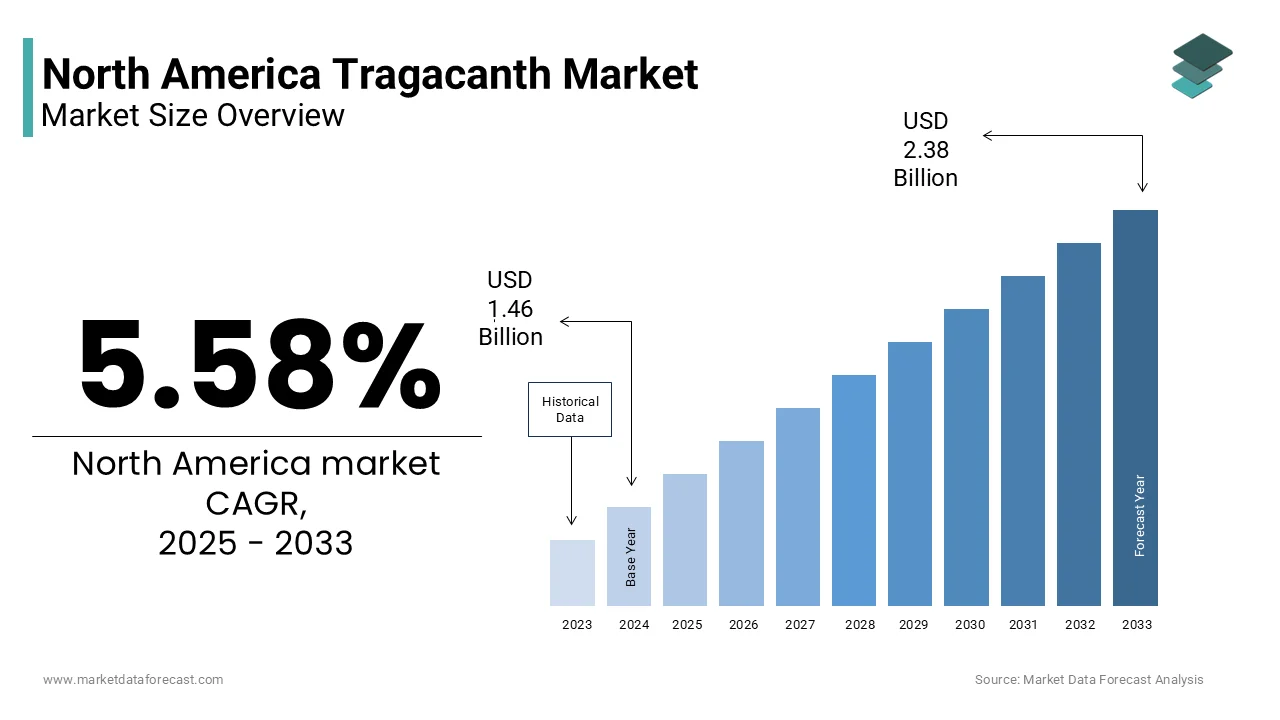
Tragacanth is a natural polysaccharide exuded from various Astragalus species native to arid regions of Western Asia. Primarily imported in raw or purified form, tragacanth functions as a multifunctional hydrocolloid in pharmaceuticals, specialty foods, cosmetics, and niche industrial applications due to its emulsifying, gelling, and adhesive properties. Despite its relatively small volume compared to other gums, its unique rheological behavior—particularly its high viscosity at low concentrations and mucoadhesive characteristics—ensures continued relevance in formulations where synthetic substitutes underperform. The United States dominates regional consumption, supported by regulatory recognition from the U.S. Food and Drug Administration (FDA), which includes tragacanth in its GRAS (Generally Recognized As Safe) list for food and medicinal use.
MARKET DRIVERS
Expansion in Advanced Pharmaceutical Formulations
Its increasing integration into advanced pharmaceutical delivery systems, particularly in controlled-release tablets, oral films, and topical dermatological preparations, is One of the most influential demand drivers in the North America Tragacanth Market. Tragacanth’s intrinsic pseudoplasticity and water-binding capacity enable precise modulation of drug release kinetics, making it especially valuable in geriatric medicine where dosing frequency must be minimized. The aging demographic across North America intensifies this trend; as per the U.S. Census Bureau, adults aged 65 and older constituted 17.3% of the U.S. population in 2023—a figure expected to rise to 23% by 2050. Additionally, academic institutions such as the University of Michigan College of Pharmacy are conducting trials on tragacanth-based buccal films for rapid opioid reversal, underscoring renewed scientific interest. These developments reflect a shift toward leveraging natural polymers not merely as fillers but as active functional components in next-generation therapeutics.
Rising Demand for Clean-Label Ingredients in Premium Food Products
The escalating consumer preference for clean-label, plant-derived additives in gourmet and organic food products is a pivotal force shaping the North America Tragacanth Market. Tragacanth serves as a natural stabilizer in artisanal ice creams, plant-based dairy alternatives, and bakery glazes, offering superior texture control without synthetic chemicals. Like, a considerable portion of American consumers actively avoid processed foods containing artificial thickeners. This behavioral shift has prompted major organic brands like Kite Hill and Oatly to reformulate their frozen dessert lines using tragacanth to prevent ice crystal formation during freeze-thaw cycles. This convergence of regulatory acceptance, consumer sentiment, and product innovation positions tragacanth as a critical enabler of transparency-driven food development across North America.
MARKET RESTRAINTS
Geopolitical and Ecological Vulnerability in Sourcing Regions
Its overwhelming dependence on wild-harvested supplies from politically unstable and environmentally fragile regions, primarily Iran, is a fundamental limitation affecting the North America Tragacanth Market. The Astragalus genus thrives in the semi-arid Zagros Mountains, where harvesting remains labor-intensive and unmechanized. Compounding these ecological pressures, U.S. sanctions on Iranian agricultural exports severely restrict direct importation, forcing reliance on re-exports through intermediaries such as Turkey and the United Arab Emirates. This dual vulnerability, ecological degradation and geopolitical disruption, undermines supply chain resilience and impedes long-term investment in tragacanth-based product development across North America.
Batch-to-Batch Variability and Regulatory Hurdles in High-Specification Industries
The inherent inconsistency in tragacanth’s chemical composition, which undermines its reliability in regulated environments such as pharmaceuticals and clinical nutrition, is another significant barrier to market expansion. Tragacanth consists of two primary fractions, soluble tragacanthin and insoluble bassorin, whose proportions fluctuate based on plant age, harvest season, and environmental stress. Such variability poses compliance risks under Current Good Manufacturing Practices (cGMP), where formulation consistency is mandatory. While the U.S. Pharmacopeia (USP) allows broad specification ranges for tragacanth NF, many drug developers opt for synthetics like hydroxypropyl methylcellulose to ensure reproducibility. These technical and safety-related challenges reduce willingness among large manufacturers to adopt tragacanth in high-volume, standardized production, thereby limiting its penetration despite functional superiority.
MARKET OPPORTUNITIES
Development of Fermentation-Derived Bio-Identical Tragacanth Polysaccharides
The advent of biotechnological platforms capable of synthesizing bio-identical tragacanth polysaccharides via microbial fermentation, potentially revolutionizing supply dynamics in North America is an emerging opportunity. Companies such as Geltor and Conagen are engineering yeast and bacterial strains to replicate the complex heteropolysaccharide structure of natural tragacanthin. This innovation could eliminate dependency on wild harvesting while ensuring consistent molecular profiles essential for pharmaceutical use. With pilot facilities in North Carolina and Alberta advancing toward commercial viability, and the FDA already approving several microbially derived gums under GRAS status, this technological leap may redefine tragacanth accessibility and catalyze broader adoption across industries.
Integration into Sustainable Packaging and Biodegradable Adhesives
A transformative avenue for growth involves tragacanth’s potential application in eco-conscious packaging materials and compostable adhesives, aligning with North America’s aggressive sustainability mandates. With increasing bans on single-use plastics, industries are exploring natural polymers for water-soluble labels, dissolvable pouches, and moisture-activated sealing agents. Tragacanth’s innate tackiness and film-forming ability make it ideal for replacing petroleum-based adhesives in envelopes, gummed tapes, and biodegradable wrappers. Industry leaders such as WestRock and DS Smith have initiated feasibility studies for integrating tragacanth into recyclable packaging linings. Given that the North American bioplastics market is forecasted to reach 1.2 million metric tons by 2027, as stated by the Biodegradable Products Institute, tragacanth could secure a specialized yet strategically important role in the continent’s green materials ecosystem.
MARKET CHALLENGES
Absence of Cultivation Protocols and Climate-Induced Yield Instability
The lack of established cultivation techniques for Astragalus species, perpetuating reliance on unpredictable wild harvests vulnerable to climate extremes, is a principal challenge undermining the North America Tragacanth Market. Unlike gum arabic or guar, which benefit from structured agroforestry programs, tragacanth-yielding plants require five to seven years to mature and are highly susceptible to root rot in irrigated soils. Without domestication, supply forecasting remains nearly impossible. This biological fragility creates a systemic bottleneck, discouraging long-term investment in downstream applications and constraining scalability within North America.
Limited Technical Expertise and Educational Gaps Among Formulators
The paucity of specialized knowledge regarding tragacanth utilization among mid-tier R&D teams across food, pharmaceutical, and cosmetic sectors, is another critical obstacle. While major corporations maintain dedicated natural ingredient divisions, smaller innovators often lack access to formulation guidelines on hydration kinetics, pH stability thresholds, and synergistic blending with co-gums. This educational deficit translates into conservative decision-making. Furthermore, practical application data remains scarce; the U.S. Pharmacopeia provides monographs, but industry-specific formulation manuals are limited. Without targeted knowledge dissemination, tragacanth remains confined to legacy uses, hindering its integration into modern innovation pipelines across North America.
REPORT COVERAGE
| REPORT METRIC | DETAILS |
| Market Size Available | 2025 to 2034 |
| Base Year | 2025 |
| Forecast Period | 2026 to 2034 |
| CAGR | 5.58% |
| Segments Covered | By Product Type, Application Type, Distribution Channel, and Region |
| Various Analyses Covered | Regional & Country Level Analysis, Segment-Level Analysis, DROC, PESTLE Analysis, Porter’s Five Forces Analysis, Competitive Landscape, Analyst Overview on Investment Opportunities |
| Regions Covered | The United States, Canada, Mexico, and Rest of North America |
| Market Leaders Profiled | Kachabo Gums, Lakrena International, Hawkins Watts Limited, Scents of Earth, Alfa Chemical Corp, and Wizard’s Cauldron, Inc, and others |
SEGMENTAL ANALYSIS
By Product Type Insights
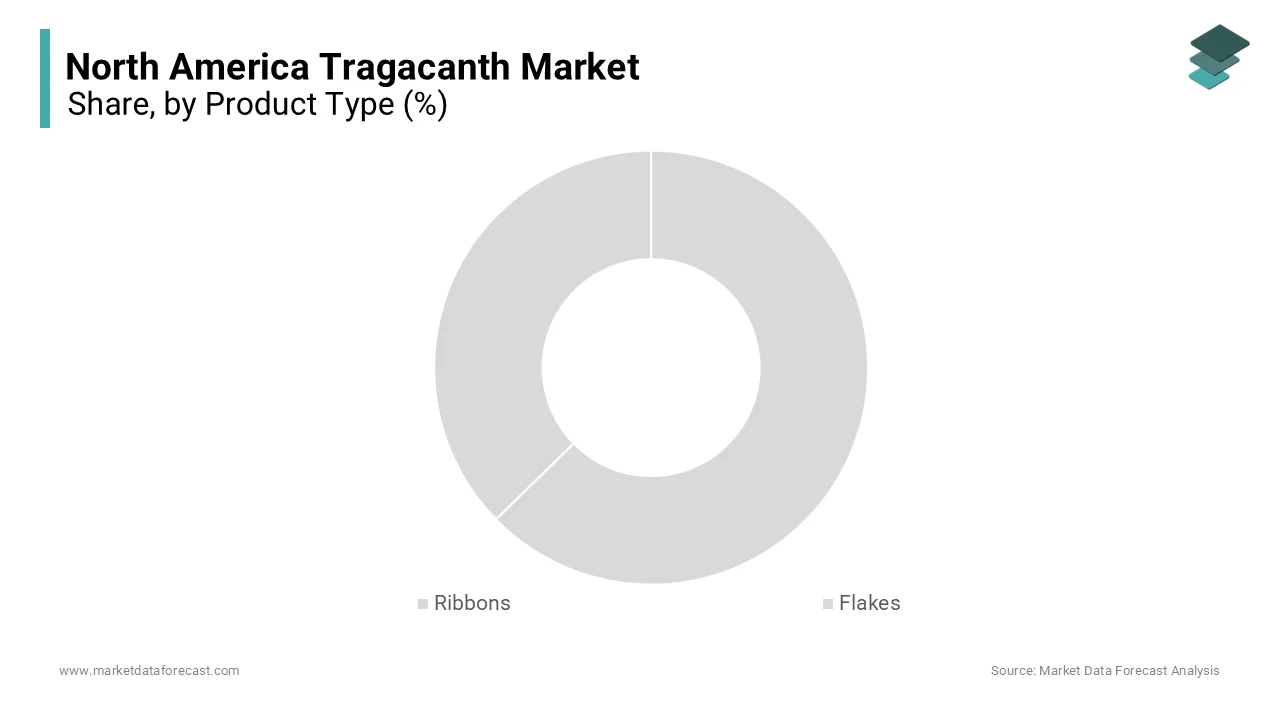
The flakes segment constituted the largest segment in the North America Tragacanth Market by commanding an estimated 62.4% of total volume in 2025. The dominance of this segment is primarily driven by flake form’s superior solubility and ease of integration into industrial-scale processes across pharmaceutical and food manufacturing. Unlike ribbons, which require prolonged soaking and mechanical dispersion, tragacanth flakes hydrate rapidly due to increased surface area exposure, reducing processing time and energy costs.
The efficiency makes it particularly attractive for high-throughput production lines in oral suspension and emulsion manufacturing. Besides, major ingredient suppliers such as Nexira and TIC Gums have shifted packaging toward pre-ground flakes to meet downstream demand. These operational advantages solidify flakes as the preferred physical form across precision-driven sectors.
The ribbons segment, while smaller in market share at approximately 38%, is emerging as the fastest-growing product type and is projected to expand at a CAGR of 6.8% from 2026 to 2034. The accelerated growth of this segment rising interest among artisanal and organic producers who value ribbons for their minimal processing and perceived purity. In niche applications such as handcrafted confectionery, traditional herbal medicine compounding, and small-batch cosmetics, ribbons are favoured because they undergo no mechanical grinding, preserving native polysaccharide integrity. Moreover, a further contributing factor is import dynamics—raw ribbons are less expensive to export from source countries like Iran and Turkey, where grading systems classify unprocessed exudates as premium grades. With increasing emphasis on minimally altered natural ingredients, the ribbon segment is gaining traction beyond legacy uses, positioning itself as a high-potential category within the evolving tragacanth landscape.
By Application Type Insights
The pharmaceuticals & medical segment led the North America Tragacanth Market by accounting for 54.5% of total consumption in 2025. The lead position of this segment is anchored in tragacanth’s irreplaceable role as a natural excipient in controlled-release formulations, tablet binders, and mucoadhesive delivery systems. Its ability to swell and form viscous gels in gastrointestinal conditions enables precise modulation of drug release kinetics, particularly in geriatric and chronic disease treatments. The aging population further amplifies demand; as per the U.S. Census Bureau, adults aged 65 and older will number nearly 80 million by 2030, driving prescriptions for long-acting medications. Additionally, academic institutions such as the University of Toronto’s Faculty of Pharmacy are exploring tragacanth in nasal sprays for rapid CNS drug delivery, citing its non-toxicity and biocompatibility. Coupled with GRAS status and compliance with cGMP standards, these attributes reinforce its entrenched position in regulated therapeutics, ensuring sustained dominance in the application hierarchy.
The personal care & cosmetics segment is expanding at the fastest pace and is registering a CAGR of 7.4% between 2026 and 2034. The acceleration of this segment is fueled by shifting consumer preferences toward clean-label, plant-derived ingredients in skincare and haircare formulations. Tragacanth functions as a natural thickener, emulsion stabilizer, and film-forming agent in serums, masks, and organic lotions, offering sensory benefits without synthetic rheology modifiers. Brands such as Herbivore Botanicals and Youth to the People have reformulated key products using tragacanth to replace xanthan gum and PEG derivatives, citing improved skin feel and environmental transparency. With e-commerce beauty brands prioritizing sustainability and ingredient traceability, tragacanth’s multifunctionality positions it as a strategic component in next-generation cosmetic innovation.
By Distribution Channel Insights
The direct selling segment remained the dominant distribution channel in the North America Tragacanth Market by capturing an estimated 45.3% of total revenue in 2025. This model prevails due to the specialized nature of tragacanth, which requires technical support, batch certification, and formulation guidance—services best delivered through manufacturer-to-industry relationships. Major suppliers such as Ashland Inc., Nexira, and TIC Gums operate dedicated account management teams that engage directly with pharmaceutical and food R&D departments, ensuring proper application integration. Regulatory compliance further reinforces this trend—the FDA mandates traceability documentation for excipients used in drug manufacturing, necessitating auditable supplier histories only feasible through direct engagement. Additionally, customized processing—such as particle size reduction or blending with co-gums—is routinely offered under direct agreements. Given the low-volume, high-value nature of tragacanth transactions, this personalized, knowledge-intensive distribution method continues to define market logistics across North America.
The internet retailing segment is the fastest-growing distribution channel and is projected to grow at a CAGR of 9.2% from 2026 to 2034. The surge of this segment is driven by the proliferation of B2B e-procurement platforms and the rising accessibility of tragacanth for small-scale innovators, including indie cosmetic makers, microbreweries, and homeopathic practitioners. Online marketplaces such as Brenntag Connect, UL Prospector, and even Amazon Business now list certified food-grade and pharmaceutical-grade tragacanth, enabling instant access to previously restricted supplies. Internet platforms offer tiered pricing, technical datasheets, and peer reviews, lowering entry barriers. Additionally, multilingual support and integrated payment gateways facilitate cross-border trade, particularly with Canadian and Mexican buyers.
REGIONAL ANALYSIS
United States
United States stood as the preeminent force in the North America Tragacanth Market by commanding a 89.1% share of regional consumption in 2025. The nation's lead position is underpinned by its highly developed pharmaceutical sector, robust food innovation infrastructure, and regulatory framework that facilitates the use of natural excipients. Additionally, the presence of major ingredient processors such as Ingredion and Kerry Group enables localized refinement and blending, reducing dependency on imported finished forms. The FDA’s GRAS designation for tragacanth provides legal certainty for manufacturers. Furthermore, the rise of clean-label food brands concentrated in California, New York, and Colorado has intensified demand for botanical stabilizers. With advanced cold-chain logistics and a dense network of specialty chemical distributors, the U.S. remains the epicenter of tragacanth utilization across multiple high-value industries.
Canada
Canada occupies a strong position in the regional market. While significantly smaller than the U.S. market, Canada demonstrates growing momentum in organic food production and natural health products, both of which drive tragacanth adoption. Moreover, Health Canada permits tragacanth in licensed natural health products (NHPs), including throat lozenges and herbal suspensions, reinforcing its medicinal relevance. The University of British Columbia’s Faculty of Land and Food Systems has initiated research into tragacanth-based edible coatings for organic produce, aiming to extend shelf life without synthetic preservatives. Environment and Climate Change Canada’s ban on single-use plastics has also spurred interest in biodegradable packaging adhesives, with pilot studies at FPInnovations exploring tragacanth films for labeling applications. Regional clusters in Quebec and British Columbia are fostering innovation in green chemistry, positioning Canada as a progressive adopter of sustainable natural materials, albeit on a smaller scale.
Mexico
Mexico, though part of the broader North American market, represents a nascent yet strategically relevant segment. Unlike the U.S. and Canada, Mexico does not domestically consume significant quantities of tragacanth but plays an emerging role as a light-processing hub for re-export and pharmaceutical contract manufacturing. The country hosts several FDA-registered drug production facilities, many producing generic formulations for the U.S. market, some of which utilize tragacanth sourced through third-party suppliers. While local awareness of tragacanth remains limited, multinational firms operating in Querétaro and Monterrey are beginning to integrate it into tablet coatings and suspensions. Additionally, the rise of clean-label beverage brands in urban centers like Guadalajara and Mexico City has prompted exploratory use in emulsion stabilization. However, lack of cold-storage infrastructure and inconsistent quality monitoring hinder widespread adoption. Still, under the USMCA agreement, tariff-free movement of specialty chemicals supports future growth. With increasing technology transfer from U.S. partners, Mexico may evolve from a minor consumer to a value-added processor within the regional tragacanth supply chain.
KEY MARKET PLAYERS AND COMPETITIVE LANDSCAPE
Kachabo Gums, Lakrena International, Hawkins Watts Limited, Scents of Earth, Alfa Chemical Corp, and Wizard’s Cauldron, Inc are notable companies in the North America tragacanth market.
The competitive landscape of the North America Tragacanth Market is characterized by a blend of specialization, technical differentiation, and strategic positioning rather than price-based rivalry. With tragacanth remaining a low-volume, high-value ingredient, competition centers on reliability, purity, and application expertise rather than mass availability. Leading participants distinguish themselves through formulation intelligence, regulatory readiness, and supply chain transparency, catering primarily to industries where performance justifies premium positioning. The scarcity of raw material and absence of synthetic substitutes create a unique environment where supplier credibility becomes a decisive factor. Companies invest heavily in building trust through certification, scientific validation, and direct technical support. While the number of active suppliers is limited, each player targets distinct niches—pharmaceutical excipients, gourmet food stabilization, or green materials—minimizing head-to-head confrontation. New entrants face steep barriers due to the need for botanical sourcing networks and formulation know-how. As interest grows in sustainable and natural alternatives, existing players are expanding their value proposition beyond supply to include innovation partnerships, further consolidating their influence. The market remains largely relationship-driven, with long-term contracts and collaborative development defining competitive advantage.
TOP PLAYERS IN THE MARKET
Nexira
Nexira, a France-based global leader in natural ingredients, plays a pivotal role in the North America Tragacanth Market through its vertically integrated supply chain and commitment to sustainable sourcing. The company specializes in plant-derived hydrocolloids and functional botanicals, offering high-purity tragacanth tailored for pharmaceutical and premium food applications. Nexira’s expertise lies in ensuring consistent quality through rigorous traceability protocols and advanced purification techniques. Its North American operations focus on collaboration with research institutions and formulation specialists to expand tragacanth’s utility in clean-label and clinical nutrition products. By emphasizing innovation and regulatory compliance, Nexira has established itself as a trusted partner for manufacturers seeking reliable access to rare natural gums.
Ashland Inc.
Ashland Inc., headquartered in the United States, is a major specialty chemicals manufacturer with deep integration into the pharmaceutical and personal care sectors. The company supplies highly refined tragacanth under stringent cGMP standards, catering to clients requiring excipients with documented biofunctionality and batch reproducibility. Ashland leverages its extensive R&D infrastructure to optimize tragacanth performance in controlled-release matrices and dermatological formulations. With a strong distribution network and technical service teams, the company supports complex formulation challenges across industries. Its strategic positioning bridges traditional natural ingredients with modern drug delivery science, reinforcing tragacanth’s relevance in high-specification environments where efficacy and safety are paramount.
TIC Gums
TIC Gums, a U.S.-based ingredient solutions provider, distinguishes itself through application-driven innovation and customer-centric formulation support. The company offers tragacanth in various physical forms, including blends engineered for specific textures and stability profiles in food and beverage systems. TIC Gums excels in translating the functional properties of natural gums into practical, scalable solutions for artisanal and industrial producers alike. Its technical experts work closely with clients to overcome processing challenges related to hydration, viscosity, and compatibility. By maintaining an agile development model and promoting education around hydrocolloid science, TIC Gums enhances tragacanth’s adoption in niche markets such as plant-based dairy and organic confectionery, where authenticity and performance are equally valued.
TOP STRATEGIES USED BY KEY MARKET PLAYERS
One dominant strategy employed by leading players is vertical integration of the supply chain , ensuring control over sourcing, purification, and final product consistency. Given tragacanth’s reliance on wild-harvested raw material from politically sensitive regions, companies are investing in long-term supplier partnerships and quality verification systems to mitigate risks and guarantee authenticity. This approach strengthens trust among regulated industry clients who demand full traceability.
Another critical strategy is application-specific innovation , where firms develop customized tragacanth formulations tailored to precise industrial needs—such as rapid-dispersing powders for pharmaceutical suspensions or film-forming grades for eco-friendly adhesives. By focusing on performance enhancement rather than mere supply, companies position themselves as solution providers, increasing customer dependency and brand loyalty.
A third key approach is technical knowledge dissemination , involving direct engagement with formulators, hosting workshops, publishing formulation guides, and collaborating with academic institutions. Since tragacanth requires specialized handling, educating end-users helps overcome adoption barriers, particularly among smaller manufacturers. This educational outreach not only drives usage but also establishes thought leadership, reinforcing market authority in a niche yet technically demanding segment.
RECENT HAPPENINGS IN THE MARKET
- In March 2023, Nexira launched a dedicated natural hydrocolloids innovation hub in Atlanta, Georgia, focused on advancing the use of tragacanth in pharmaceutical and organic food applications through collaborative R&D with North American partners.
- In July 2023, Ashland Inc. formed a strategic sourcing alliance with a Turkish botanical collector to secure exclusive access to premium-grade Astragalus exudates, enhancing supply stability and quality control for its North American clientele.
- In November 2023, TIC Gums introduced a digital formulation assistance platform that provides real-time guidance on tragacanth integration in emulsions, gels, and coatings, strengthening its position as a technical solutions provider.
- In January 2025, Nexira partnered with a Canadian biotech firm to explore enzymatic refinement methods for improving tragacanth solubility and consistency, aiming to overcome traditional formulation limitations.
- In May 2025, Ashland expanded its technical service team in Philadelphia to offer on-site formulation support for pharmaceutical companies adopting natural polymers, reinforcing its leadership in regulated tragacanth applications.
MARKET SEGMENTATION
This research report on the North America tragacanth market has been segmented and sub-segmented based on the following categories.
By Product Type
-
Ribbons
-
Flakes
By Application Type
-
Pharmaceuticals & Medical
-
Foods
-
Personal Care & Cosmetics
By Distribution Channel
-
Internet Retailing
-
Mass Retailers
-
Direct Selling
By Country
-
The United States
-
Canada
-
Rest of North America