- Product Description Description
- Table of Contents TOC
- List of Table & Figure LOT
- Get Free Sample PDF Sample PDF
Market Size, 2025
$1.05 BnMarket Estimate, 2026
$1.16 BnMarket Forecast, 2034
$2.52 BnCAGR, 2026–2034
10.16%Executive Summary: North America Water Enhancers Market
- Market Scope: Comprehensive market overview covering product types, active ingredients, source types, and regional country dynamics across North America.
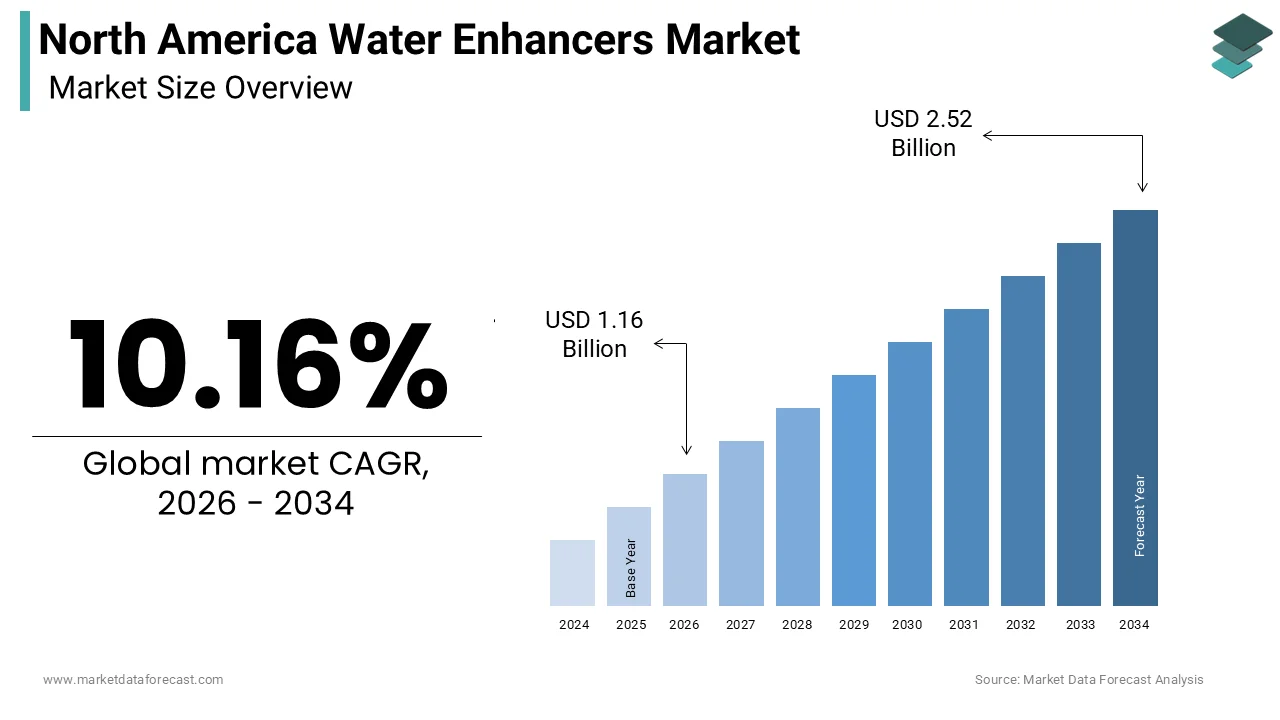
- Market Valuation: Valued at USD 1.05 billion in 2025, expected to reach USD 1.16 billion in 2026, and projected to scale up to USD 2.52 billion by 2034, expanding at a robust CAGR of 10.16% from 2026 to 2034.
- Primary Growth Drivers: High prevalence of lifestyle health conditions driving sugar reduction, surging fitness and active lifestyle participation, and consumer demand for convenient, functional hydration alternatives.
Key Market Segment Metrics
| Category | Leading Segment (Base Year Position) | Fastest-Growing Segment |
|---|---|---|
| By Product Type | Flavored Drops (dominated in 2025 due to versatility, portability, and customizable taste profiles) | Fitness and Workout Drops (projected at 8.5% CAGR driven by high-intensity training and electrolyte replenishment) |
| By Active Ingredient Type | Sweeteners (led in 2025 by fulfilling zero-calorie taste demands using alternatives like stevia and monk fruit) | Electrolytes (estimated at 9.2% CAGR propelled by hydration balance needs and wellness trends) |
| By Source Type | Fruits (held majority share in 2025, carrying a strong "health halo" with popular flavor extracts like lemon and berry) | Coconut Water (anticipated at 10.5% CAGR as a natural plant-based electrolyte and hydration source) |
| By Region | United States (largest player with a 75.3% share in 2025, driven by mature wellness markets and high consumer spending) | Canada (steadily growing market supported by clean-label preferences and preventive health trends) |
Major Market Players & Market Structure
Market Structure: Intense and competitive landscape featuring established beverage giants and agile niche brands focusing heavily on product innovation, clean labels, and direct-to-consumer digital channels.
Key Companies: Arizona Beverages USA, The Coca-Cola Company, PepsiCo, Nestle, Kraft Foods (Keurig Dr Pepper Inc), and other emerging regional participants.
 Download Free Sample Report
North America Water Enhancers Market Size
The size of the North American water enhancers market was expected to be worth USD 1.05 billion in 2025 and is anticipated to be worth USD 2.52 billion by 2034, from USD 1.16 billion in 2026, growing at a CAGR of 10.16% during the forecast period.
Water enhancers are concentrated liquid drops or powders added to plain water to improve its flavour, typically without adding extra sugar or calories. They are designed to make hydration more enjoyable for people who find plain water boring, serving as a healthier alternative to sugary sodas or juices. These products serve as a convenient alternative to sugary soft drinks and juices, aligning with the growing consumer preference for hydration solutions that support health and wellness goals. The market is deeply influenced by the widespread awareness of hydration benefits and the increasing prevalence of lifestyle-related health conditions across the United States, Canada, and Mexico. According to a study, approximately 43% of men and 41% of women aged 20 to 50 fail to meet the daily fluid intake levels recommended by the National Academy of Medicine, representing a substantial gap that water enhancers look to bridge by providing more palatable options. The region faces unique climatic variations and active lifestyle trends that drive consistent demand for portable and customizable flavoring options. As per the International Food Information Council, roughly 60% of American adults report trying to reduce or limit their sugar consumption, a behavioral trend that aligns with a documented 38% drop in actual beverage sugar intake tracked by the National Health and Nutrition Examination Survey and directly correlates with the rise of zero-calorie water enhancers. Furthermore, the rise in fitness activities and sports participation has increased the need for electrolyte-enhanced hydration products. This convergence of health consciousness, dietary restrictions, and active living establishes a strong foundation for the continued expansion of water enhancer applications across diverse demographic segments in North America.
MARKET DRIVERS
Rising Prevalence Of Chronic Diseases Drives Demand For Healthy Hydration Alternatives
The escalating prevalence of chronic diseases such as obesity, type 2 diabetes, and cardiovascular conditions is a primary driver for the North America water enhancers market. Consumers are increasingly seeking beverages that do not contribute to these health issues, leading to a significant shift away from high-sugar sodas and juices. According to the Centers for Disease Control and Prevention, U.S. adult obesity prevalence reached 41.9%, laying the foundation for broad public health pushes toward zero-sugar hydration alternatives that help curb daily caloric intake. Water enhancers offer a viable solution by providing flavor without the caloric load, thereby supporting weight management and blood sugar control efforts. Historically, the American Diabetes Association has highlighted that over 37 million Americans live with diabetes, a demographic reality that directly translates to massive market demand for low-glycemic, sugar-free beverage alternatives like water enhancers. Many water enhancers are formulated with natural sweeteners like stevia or monk fruit, appealing to health-conscious individuals who wish to avoid artificial additives. Additionally, medical professionals often recommend increased water intake as part of preventive care strategies, further boosting the adoption of flavored water solutions. The growing availability of clinically backed hydration products in pharmacies and health food stores reinforces this trend. Consumers are becoming more educated about the link between sugar consumption and chronic illness. As a result, the demand for clean-label and functional water enhancers continues to rise, driving market growth across the region.
Increasing Participation In Fitness And Active Lifestyles Boosts Functional Hydration Needs
The surge in participation in fitness activities and the adoption of active lifestyles across the region further contribute to the growth of the North America water enhancers market. This significantly boosts the demand for functional water enhancers. Individuals engaged in regular exercise require effective hydration strategies to maintain performance and recovery, leading them to seek products that offer more than just basic flavor. According to the Sports and Fitness Industry Association, over half of the U.S. population regularly participates in physical activity, establishing an expansive, active consumer base that relies on functional hydration to sustain workouts. Water enhancers fortified with electrolytes, vitamins, and amino acids cater specifically to this demographic by helping to replenish nutrients lost through sweat. The trend towards holistic wellness extends beyond gym goers to include outdoor enthusiasts, runners, and cyclists who prioritize portable and convenient hydration options. Moreover, the Outdoor Foundation indicates that over 160 million Americans participate in outdoor recreation, showcasing an expansive demographic of mobile, active consumers requiring portable, on-the-go hydration enhancers. Manufacturers are responding by developing specialized formulations that target endurance, energy, and recovery, thereby differentiating their products in a competitive landscape. The integration of water enhancers into daily fitness routines is further supported by social media influencers and fitness experts who advocate for proper hydration as a key component of health. This cultural shift towards valuing physical well-being ensures sustained demand for innovative and performance-driven water enhancement products.
MARKET RESTRAINTS
Consumer Skepticism Towards Artificial Ingredients And Sweeteners Restrains Growth
Consumer skepticism towards artificial ingredients and synthetic sweeteners restricts the growth of the North America water enhancers market. Despite the demand for low-calorie options, a growing segment of the population is wary of substances such as aspartame, sucralose, and artificial colors due to perceived health risks. According to surveys by the International Food Information Council, nearly 40% of individuals actively avoid artificial ingredients in foods and beverages, posing a notable hurdle for water enhancers that rely on synthetic sweeteners. This sentiment limits the market potential for traditional water enhancers that rely on cost-effective synthetic components. The controversy surrounding certain sweeteners has led to regulatory scrutiny and negative media coverage, which further erodes consumer trust. For instance, the World Health Organization's formal guidelines advising against the use of non-sugar sweeteners for long-term weight management have intensified consumer scrutiny, creating headwinds for water enhancers utilizing synthetic sugar substitutes. Manufacturers face the challenge of reformulating products to meet clean label demands while maintaining taste and affordability, which often results in higher production costs. Small and medium-sized brands struggle to compete with established players who have the resources to invest in natural ingredient sourcing. Additionally, the lack of clear labeling standards for terms like natural can confuse consumers, leading to hesitation in purchasing decisions. This prevailing caution among health-conscious buyers restricts the widespread adoption of many conventional water enhancer products, forcing companies to innovate rapidly or risk losing market relevance.
Regulatory Complexity And Labeling Requirements Impede Product Innovation
The complex regulatory landscape and stringent labeling requirements in the region are substantial barriers for manufacturers in the North American water enhancers market. Each country within the region, including the United States, Canada, and Mexico, maintains distinct food safety regulations that govern the approval and labeling of food additives and sweeteners. Under U.S. Food and Drug Administration oversight, any novel beverage ingredient or structural health claim requires strict pre-market scientific evaluation, creating high regulatory barriers that can slow down product formulation pipelines. In Canada, the Canadian Food Inspection Agency enforces strict rules regarding nutrient content claims and ingredient listing. This lack of harmonization creates operational hurdles for companies seeking to distribute products across borders, as they must navigate multiple regulatory frameworks simultaneously. The recent updates to labeling laws requiring the disclosure of added sugars and specific sweetener types further complicate product formulation and packaging design. Manufacturers must constantly monitor legislative changes to ensure compliance, which diverts resources from research and development. Small enterprises often lack the legal expertise to manage these complexities effectively, limiting their ability to introduce innovative products. Furthermore, inconsistent enforcement of regulations across different states or provinces can lead to market fragmentation. These regulatory barriers slow down the pace of innovation and increase the cost of market entry, thereby restraining the overall growth and dynamism of the water enhancers sector in North America.
MARKET OPPORTUNITIES
Expansion Into Functional And Wellness Oriented Product Lines Creates Opportunities
The expansion into functional and wellness-oriented product lines offers a significant opportunity for the North American water enhancers market. Consumers are increasingly looking for beverages that offer additional health benefits beyond basic hydration, such as immune support, stress relief, and improved sleep. Water enhancers infused with ingredients like vitamin C, zinc, magnesium, and adaptogens like ashwagandha cater to this growing interest in holistic health. The rise of mental wellness awareness has also spurred demand for calming formulations that help manage anxiety and promote relaxation. Manufacturers can capitalize on this trend by developing niche products that target specific health concerns, thereby differentiating themselves in a crowded market. The aging population in North America, with individuals aged 65 and older comprising 17 percent of the US population, as per the Census Bureau. Additionally, the popularity of personalized nutrition allows brands to offer customizable enhancer packs that meet individual dietary needs. By aligning product development with emerging wellness trends, companies can attract health-conscious consumers. These consumers are willing to pay a premium for value-added hydration solutions, which drives revenue growth and market expansion.
Growth Of E Commerce And Direct To Consumer Channels Offers Potential
The rapid growth of e-commerce and direct-to-consumer channels is a key growth area for the North America water enhancers market. Online retail platforms provide manufacturers with direct access to consumers, enabling them to gather valuable data on preferences and buying behavior. The U.S. Department of Commerce confirms that annual domestic e-commerce sales exceed $1 trillion, a robust digital landscape where health and personal care products are experiencing rapid growth. Water enhancer brands can leverage these digital channels to reach niche audiences and offer subscription models that ensure recurring revenue. The convenience of home delivery appeals to busy consumers who prefer to stock up on essentials without visiting physical stores. Social media marketing and influencer partnerships further amplify brand visibility and drive traffic to online stores. Platforms like Amazon and specialized health retailers allow smaller brands to compete with larger incumbents by highlighting unique selling propositions such as organic certification or sustainable packaging. The ability to test new flavors and formulations through limited online releases reduces the risk associated with traditional retail launches. Additionally, direct-to-consumer models enable companies to build stronger customer relationships through personalized communication and loyalty programs. As digital literacy increases across all age groups, the reliance on online shopping for health products continues to rise. This shift in retail dynamics provides a fertile ground for water enhancer companies to expand their reach, optimize supply chains, and enhance customer engagement in the North American market.
MARKET CHALLENGES
Intense Competition From Private Label And Generic Brands Poses A Challenge
Intense competition from private label and generic brands is a significant challenge to established players in the North American water enhancers market. Retail giants such as Walmart, Costco, and Amazon have developed their own lines of water enhancers that offer similar benefits at lower price points. These store brands benefit from existing distribution networks and customer loyalty, making it difficult for national brands to maintain pricing power. The low barrier to entry in the water enhancer segment allows numerous small manufacturers to flood the market with comparable products, leading to price wars and margin compression. Established companies must continuously invest in marketing and innovation to differentiate their offerings, which increases operational costs. Furthermore, private label brands often mimic successful formulations and packaging designs, diluting brand identity and confusing consumers. The lack of patent protection for many basic emulsifier and flavor combinations makes it easy for competitors to replicate popular products. This saturated market environment forces companies to focus heavily on brand equity and customer experience, which may not always yield immediate financial returns. The persistent pressure from low-cost alternatives threatens the profitability and long-term sustainability of premium water enhancer brands in the region.
Supply Chain Volatility And Raw Material Sourcing Issues Impact Stability
Supply chain volatility and raw material sourcing issues are major hurdles for the North America water enhancers market. Many key ingredients, such as natural flavors, stevia, and essential vitamins, are sourced globally, making manufacturers vulnerable to disruptions caused by geopolitical tensions, climate change, and logistical bottlenecks. According to the Institute for Supply Management, supply chain delays have been a persistent issue for manufacturing sectors. Fluctuations in the availability of agricultural commodities due to weather events can lead to sudden price spikes and shortages of critical inputs. For instance, droughts in key growing regions can affect the yield of stevia and fruit extracts, impacting production schedules. The reliance on imported materials also exposes companies to currency exchange rate fluctuations, which can erode profit margins. Additionally, the increasing demand for sustainable and ethically sourced ingredients adds complexity to procurement processes, as companies must verify supplier practices and certifications. Any disruption in the supply chain can result in stockouts, delayed product launches, and damaged customer relationships. Manufacturers must invest in resilient supply chain strategies, such as diversifying suppliers and holding larger inventory buffers, which increase capital requirements. The unpredictability of global trade dynamics and environmental factors creates an unstable operating environment that hinders consistent growth and planning for water enhancer producers in North America.
REPORT COVERAGE
| REPORT METRIC | DETAILS |
| Market Size Available | 2025 to 2034 |
| Base Year | 2025 |
| Forecast Period | 2026 to 2034 |
| CAGR | 10.16% |
| Segments Covered | By Product Type, Active Ingredient Type, Source Type, And Region |
| Various Analyses Covered | Global, Regional & Country Level Analysis, Segment-Level Analysis, DROC, PESTLE Analysis, Porter’s Five Forces Analysis, Competitive Landscape, Analyst Overview of Investment Opportunities |
| Regions Covered | The US, Canada, and the Rest of North America |
| Market Leaders Profiled | Arizona Beverages USA, The Coca-Cola Company, PepsiCo, Nestle, and Kraft Foods |
SEGMENTAL ANALYSIS
By Product Type Insights
The flavoured drops segment dominated the North America water enhancers market and accounted for a substantial share in 2025. This dominance of the segment was driven by its versatility, ease of use, and broad appeal across diverse consumer demographics. These products allow users to customize the intensity of flavor in their water without adding calories or sugar, aligning perfectly with the growing trend towards personalized nutrition and hydration. According to the International Bottled Water Association, bottled water has firmly surpassed carbonated soft drinks as America’s top packaged beverage by volume, establishing a vast base of water consumers that brands target with flavor drops to combat beverage boredom. The convenience of portable bottles makes flavoured drops ideal for on-the-go consumption, appealing to busy professionals, students, and travelers. Major brands have invested heavily in expanding their flavor portfolios to include exotic and seasonal varieties, keeping consumer interest high. The low price point compared to ready-to-drink beverages also contributes to their popularity, making them an economical choice for daily hydration. Furthermore, the availability of flavoured drops in various retail channels, from grocery stores to online platforms, ensures widespread accessibility. This combination of affordability, convenience, and health alignment secures the leading position of flavoured drops in the regional market.
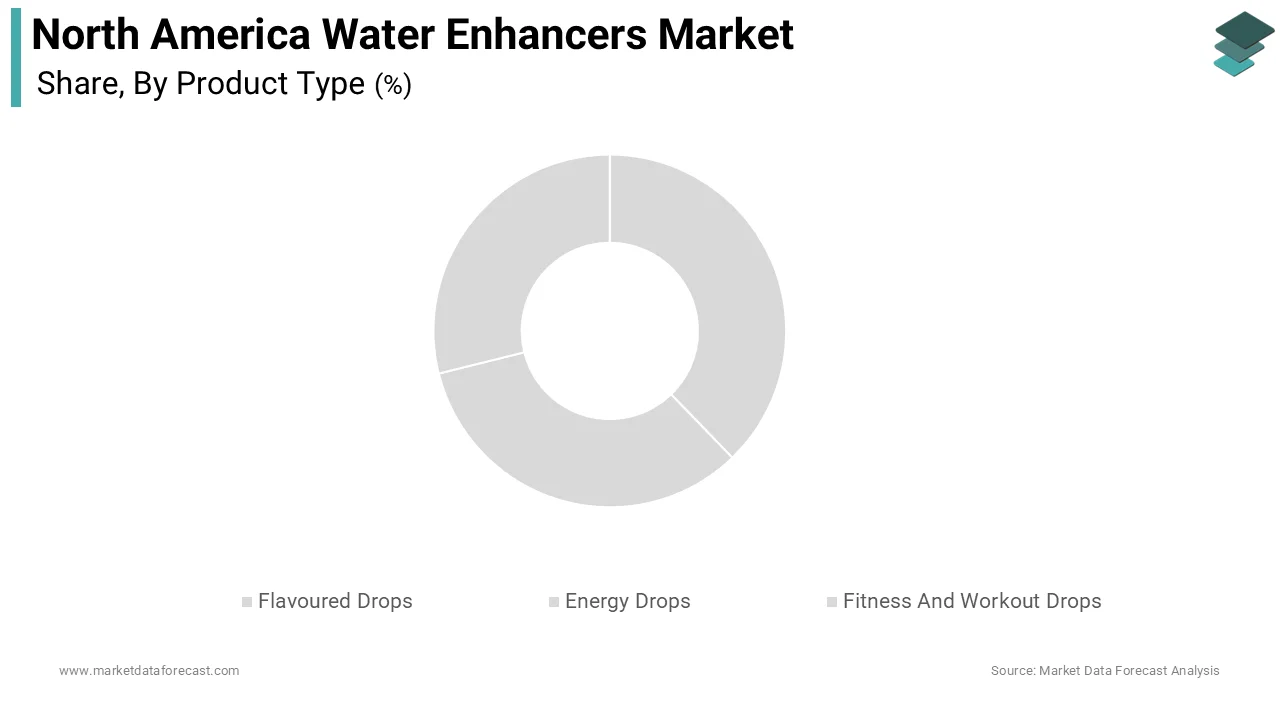
On the other hand, the fitness and workout drops segment is predicted to witness the highest CAGR of 8.5% during the forecast period. This rapid expansion of the segment is fuelled by the increasing participation in high-intensity workouts and the growing awareness of the importance of electrolyte replenishment for athletic performance. According to the Health & Fitness Association, membership in health clubs and fitness centers in the United States has reached record highs, with over 64 million members in recent years. These active individuals seek convenient ways to hydrate effectively without carrying bulky sports drinks, making compact fitness drops an attractive solution. The formulation of these drops often includes essential electrolytes such as sodium, potassium, and magnesium, which help prevent muscle cramps and maintain fluid balance during intense physical activity. As per the American College of Sports Medicine, proper hydration can improve exercise performance, motivating athletes to adopt specialized hydration strategies. Additionally, the rise of functional fitness trends like CrossFit and marathon running has created a niche market for performance-oriented hydration products. Manufacturers are responding by introducing drops with added branched-chain amino acids and caffeine to support energy and recovery. The integration of these products into pre and post-workout routines ensures sustained demand, positioning fitness and workout drops as the most dynamic segment in the market.
By Active Ingredients Type Insights
The sweeteners segment led the North America water enhancers market and captured a significant share in 2025. This leading position of the segment was attributed to the fundamental consumer desire for palatable hydration without caloric intake. The majority of water enhancers rely on sweeteners such as stevia, sucralose, and monk fruit to provide a pleasant taste profile that mimics sugary beverages while remaining low or zero-calorie. The widespread acceptance of non-nutritive sweeteners in mainstream diets has made them a staple ingredient in hydration products. The shift away from high fructose corn syrup in favor of natural sweeteners like stevia has further boosted this segment, as consumers perceive these ingredients as healthier alternatives. The ability of sweeteners to mask the bitter taste of certain vitamins and minerals also enhances their utility in functional water enhancers. With obesity rates remaining a critical public health concern, the demand for sweetened calorie-free hydration solutions continues to drive the dominance of this ingredient category in the North American market.
However, the electrolytes segment is estimated to register the fastest CAGR of 9.2% from 2026 to 2034. This quick surge of the segment is propelled by the increasing recognition of electrolytes as essential components for maintaining hydration balance, particularly among active individuals and those living in hot climates. According to the Centers for Disease Control and Prevention, heat-related illnesses are a significant health risk in many parts of North America, and consumer awareness around fluid intake has heightened, boosting the relevance of electrolyte-infused water enhancers. Electrolyte-enhanced water enhancers offer a convenient way to restore sodium, potassium, and chloride levels lost through sweat, preventing dehydration and fatigue. As per data from the Gatorade Sports Science Institute, even mild dehydration can impair cognitive function and physical performance. The growing popularity of ketogenic and low-carbohydrate diets, which often result in increased water and electrolyte loss, has also contributed to this trend. Manufacturers are formulating drops with precise electrolyte ratios to cater to specific needs, such as endurance training or illness recovery. The expansion of the wellness industry and the emphasis on holistic health have further elevated the status of electrolytes from a niche sports ingredient to a daily essential. This broadening application scope ensures that electrolytes remain the most rapidly expanding ingredient segment in the market.
By Source Type Insights
In 2025, the fruits segment held the majority share of the North America water enhancers market, owing to its natural appeal, familiar flavours, and perceived health benefits. Consumer preference for natural ingredients has driven manufacturers to source flavors and extracts primarily from fruits such as lemon, berry, mango, and watermelon. The United States Department of Agriculture explicitly emphasizes whole fruit consumption for a balanced diet. However, consumer trends show that fruit-flavored options carry a powerful "health halo" that brands exploit to market clean-label liquid drops. The vibrant and refreshing taste profiles of fruits make them highly popular in water enhancers, appealing to both children and adults. As per research, sales of natural and organic fruit-based products have grown steadily, reflecting a broader trend towards clean-label ingredients. Fruit-sourced enhancers are often marketed as containing real fruit juice or essence, which enhances their credibility and attractiveness to health-conscious buyers. The versatility of fruit flavors allows for extensive innovation, with companies introducing unique blends and seasonal varieties to keep the product line fresh. Additionally, fruits are rich in antioxidants and vitamins, which can be retained in the extraction process, adding functional value to the enhancers. The strong cultural association of fruits with health and vitality ensures their continued dominance as the primary source for water enhancement products in the region.
But the coconut water segment is anticipated to witness the fastest CAGR of 10.5% over the forecast period due to the rising popularity of coconut water as a natural source of electrolytes and hydration, often referred to as nature's sports drink. Consumers are increasingly seeking plant-based and natural hydration solutions, and coconut water fits this demand perfectly due to its high potassium content and low-calorie profile. Manufacturers are incorporating coconut water powder or concentrate into water enhancer formulations to provide natural electrolyte benefits without the bulk of liquid coconut water. This innovation allows for portability and longer shelf life while retaining the health attributes of the raw ingredient. The tropical and mild flavor of coconut water also appeals to consumers looking for subtle and refreshing taste options. As awareness of its hydrating properties spreads, coconut water-based enhancers are gaining traction among fitness enthusiasts and health-conscious individuals, driving robust growth in this segment.
REGIONAL ANALYSIS
United States Water Enhancers Market Analysis
The United States was the largest player in the North America water enhancers market and occupied a75.3% share in 2025. This prominence of the US market was supported by its large population, high health consciousness, and advanced retail infrastructure. The country is the epicenter of the wellness movement, with consumers actively seeking ways to improve their dietary habits and hydration practices. According to the Centers for Disease Control and Prevention, chronic diseases linked to poor nutrition and physical inactivity remain a major public health challenge, which has heavily fueled national wellness trends and commercial market growth toward healthier hydration choices like water enhancers. The presence of major global brands and innovative startups ensures a competitive and dynamic market landscape. In addition, the US Department of Agriculture focuses on improving the availability and affordability of core healthy food options. However, research shows that this broader health awareness actually drives the adoption of low-calorie water enhancers as a convenient, everyday hydration aid. The widespread use of digital marketing and e-commerce platforms allows companies to reach niche audiences effectively, driving sales of specialized products such as keto-friendly or vegan enhancers. Additionally, the strong influence of fitness culture and social media trends accelerates the adoption of new hydration technologies. The regulatory framework, while stringent, provides clarity for manufacturers, fostering innovation in clean-label and natural ingredients. The United States has a mature market and high consumer spending power. As a result, it remains the primary driver of growth and innovation in the North American water enhancers sector.
Canada Water Enhancers Market Analysis
Canada is a steadily growing region in the North American water enhancers market. Market players are responding with a strong focus on natural ingredients and environmental sustainability. Canadian consumers are known for their preference for clean-label products and are willing to pay a premium for items that align with their values. According to Statistics Canada, the health and personal care retail sector has seen consistent revenue growth, a trajectory supported by Global Wellness Institute data showing that Canada now commands a multi-billion dollar wellness economy focused on preventative health. The cold climate in many parts of the country does not diminish the focus on hydration, as indoor heating and winter sports create specific hydration needs. In line with Health Canada's dietary guidelines promoting water as the primary beverage over sugary drinks, shifting consumer behaviors and public health interventions targeting free sugars are creating a highly receptive market for zero-sugar water alternatives. The Canadian market is also influenced by strict labeling regulations that require transparency in ingredient sourcing, which favors brands that use natural and organic components. The presence of a robust network of health food stores and pharmacies facilitates the distribution of specialized water enhancers. Additionally, the growing immigrant population brings diverse culinary preferences, encouraging manufacturers to introduce unique and exotic flavors. The commitment to sustainability among Canadian brands, such as using recyclable packaging, further enhances brand loyalty. With a well-educated consumer base and a supportive regulatory environment, Canada continues to expand its footprint in the regional water enhancers market.
COMPETITION OVERVIEW
The competition in the North American water enhancers market is intense and characterized by a mix of established beverage giants and agile niche brands striving for consumer attention. Large corporations leverage their extensive distribution networks and brand recognition to dominate shelf space in major retail outlets. These players benefit from significant marketing budgets that allow them to launch widespread advertising campaigns and sponsor fitness events. Smaller brands compete by focusing on specific niches such as organic, keto-friendly, or vegan formulations that appeal to health-conscious segments. The low barrier to entry in the liquid enhancer segment leads to frequent new product launches, creating a saturated marketplace. Price competition is fierce, with private label options from major retailers offering cheaper alternatives that challenge branded products. Innovation in packaging design and delivery mechanisms, such as single-serve sticks or concentrated drops, serves as a key differentiator. Companies must continuously adapt to changing regulatory standards and consumer trends to maintain relevance. The rise of direct-to-consumer models also disrupts traditional retail dynamics, allowing startups to build loyal communities online. This multifaceted competitive landscape requires constant vigilance and strategic agility from all market participants.
KEY MARKET PLAYERS
A few major key players in the North American Enhancers Market include
- Arizona Beverages USA
- The Coca-Cola Company
- PepsiCo
- Nestle
- Kraft Food
Top Strategies Used By Key Market Participants
Key players in the North America water enhancers market primarily focus on product innovation and clean label formulation to meet evolving consumer preferences. Companies are increasingly investing in research and development to create natural and organic variants that avoid artificial sweeteners and colors. Strategic partnerships with fitness centers and wellness influencers help brands reach target audiences effectively and build credibility. Expansion into e-commerce channels allows manufacturers to offer subscription models and personalized recommendations, enhancing customer retention. Sustainability initiatives such as recyclable packaging and reduced plastic use are also central strategies to appeal to environmentally conscious buyers. Additionally, companies are diversifying their flavor portfolios to include exotic and seasonal options that keep consumer interest high. These combined efforts enable key participants to differentiate their offerings and maintain a competitive advantage in a dynamic market.
Leading Players In The North America Market
- Keurig Dr Pepper Inc maintains a dominant presence in the North American water enhancers market through its widely recognized Mio brand. The company focuses on delivering affordable and accessible liquid water enhancers that appeal to mass market consumers seeking sugar-free hydration options. Keurig Dr Pepper has recently expanded its flavor portfolio to include exotic fruit blends and functional variants with added vitamins. The company leverages its extensive distribution network across grocery stores and convenience outlets to ensure high product visibility. Recent marketing campaigns emphasize the convenience and customization aspects of Mio, targeting health-conscious individuals who want to reduce sugar intake without sacrificing taste. Keurig Dr Pepper continuously innovates packaging sizes and introduces limited edition flavors. Through these strategies, the company strengthens its brand loyalty and market relevance in the hydration landscape.
- Nestle SA contributes significantly to the North America water enhancers market through its Propel fitness water and powder enhancer lines. The company positions its products as performance-oriented hydration solutions that cater to active lifestyles and fitness enthusiasts. Nestle has recently reformulated its Propel products to include higher levels of electrolytes and B vitamins while removing artificial colors. This alignment with clean label trends helps the company attract health-conscious consumers who prioritize transparency in ingredients. Nestle utilizes its strong relationships with gyms, sports facilities, and wellness retailers to promote Propel as an essential post-workout beverage. The company also invests in digital engagement strategies to educate consumers about the benefits of proper hydration. By focusing on functional benefits and scientific backing, Nestle reinforces its position as a trusted provider of high-quality water enhancement solutions.
- SodaStream International Ltd offers a unique value proposition in the North American water enhancers market by providing home carbonation systems paired with proprietary flavor syrups. The company empowers consumers to create customized sparkling water at home, reducing reliance on single-use plastic bottles and sugary sodas. SodaStream has recently expanded its flavor range to include organic and natural options that align with sustainability goals. The company actively promotes its eco-friendly model by highlighting the reduction in plastic waste associated with its reusable bottles. SodaStream strengthens its market position through strategic partnerships with retail giants and online platforms that offer bundle deals for machines and flavors. By emphasizing environmental responsibility and cost savings, SodaStream appeals to environmentally conscious consumers. The integration of smart technology in newer models further enhances user experience, driving adoption and reinforcing its innovative stance in the hydration sector.
MARKET SEGMENTATION
This research report on the North America water enhancers market has been segmented and sub-segmented based on product type, active ingredient type, source type, and region.
By Product Type
- Flavoured Drops
- Energy Drops
- Fitness And Workout Drops
By Active Ingredients Type
- Vitamins
- Electrolytes
- Sweeteners And Anti-Oxidants
By Source Type
- Fruits
- Vegetables
- Tea And Coffee
- Coconut Water
By Region
- US
- Canada
- Rest of North America