- Product Description Description
- Table of Contents TOC
- List of Table & Figure LOT
- Get Free Sample PDF Sample PDF
Market Size, 2025
$12.56 BnMarket Estimate, 2026
$13.05 BnMarket Forecast, 2034
$17.68 BnCAGR, 2026–2034
3.87%North America Water Treatment Chemicals Market Size, Growth, Trends & Forecast (2026–2034)
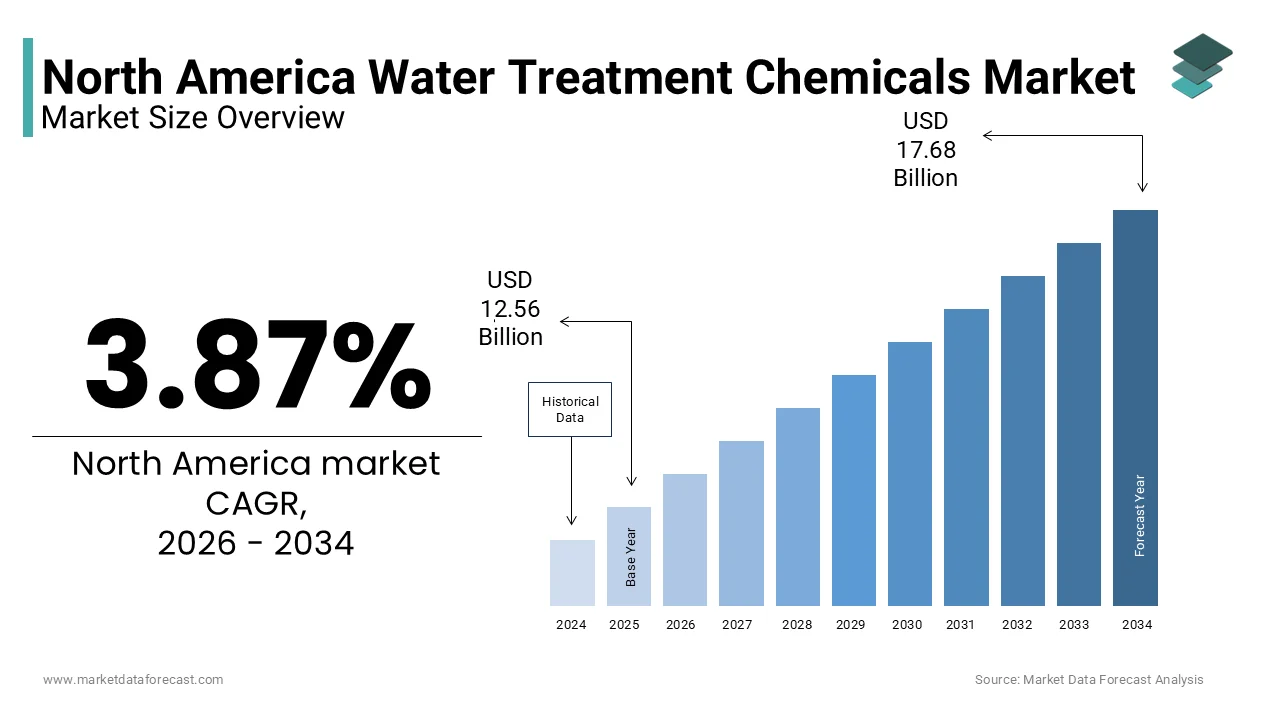
The North America water treatment chemicals market size was valued at USD 12.56 billion in 2025, is anticipated to reach USD 13.05 billion in 2026, and is projected to scale up to USD 17.68 billion by the end of 2034, registering a compound annual growth rate (CAGR) of 3.87% during the forecast period from 2026 to 2034. Driven by stringent regulatory compliance (such as the EPA Lead and Copper Rule revisions), industrial water reuse initiatives, and growing energy sector demand, the water treatment chemicals industry continues to expand steadily across municipal and industrial applications.
Key Executive Metrics (At-a-Glance)
- 2025 Base Valuation: USD 12.56 Billion
- 2026 Current Valuation: USD 13.05 Billion
- 2034 Forecast Valuation: USD 17.68 Billion
- Compound Annual Growth Rate (CAGR): 3.87% (2026–2034)
- Dominant Product Segment: Coagulants & Flocculants (holding a prominent share due to high-volume use in suspended solid and turbidity removal)
- Dominant Country: The United States (holding a leading 80.2% share of the North American market in 2025)
Core Market Drivers
- Stringent Regulatory Frameworks and Compliance Mandates: Rigorous federal and state environmental mandates (e.g., EPA Lead and Copper Rule revisions) driving demand for corrosion inhibitors and pH stabilizers.
- Industrial Expansion and Water Reuse Initiatives: Large-scale industrial water recycling programs in oil & gas (hydraulic fracturing) and power generation requiring sophisticated chemical conditioning.
Primary Market Restraints & Challenges
- Raw Material Volatility & Aging Infrastructure: Price fluctuations in petroleum derivatives/minerals (chlorine, caustic soda), supply chain bottlenecks, and deteriorating municipal water assets complicating chemical dosing.
North America Water Treatment Chemicals Market Segmentation Breakdown
| Segment Category | Leading Sub-Segment | Fastest-Growing Sub-Segment |
|---|---|---|
| By Product Type | Coagulants & Flocculants (essential for initial solids and organic matter removal; aluminum sulfate/polyaluminum chloride account for ~45% of municipal chemical spending) | Specialty Chemicals (projected at a 6.8% CAGR driven by industrial water reuse and zero liquid discharge initiatives) |
| By Country | The United States (held 80.2% share backed by stringent regulations, industrial base, and water stress regions) | Canada (projected with strong focus on environmental sustainability, effluent regulations, and community water security) |
Major Industry Players Profiled
Key enterprises shaping the competitive North America water treatment chemicals market include Ecolab Inc. (Nalco Company), Kemira Oyj, Solenis LLC, Schlumberger Limited, Calgon Carbon Corporation, Veolia, BASF, Dow Inc., Solvay, Kurita Water Industries Ltd., and Syensqo among others.
 Download Free Sample Report
North America Water Treatment Chemicals Market Size
The North America water treatment chemicals market was valued at USD 12.56 billion in 2025 and is projected to reach USD 17.68 billion by 2034 from USD 13.05 billion in 2026, growing at a CAGR of 3.87%.
The water treatment chemicals are designed to purify water for industrial municipal and residential applications by ensuring compliance with safety standards and operational efficiency. As per data from the United States Geological Survey, approximately 80% of freshwater withdrawals in North America are used for thermoelectric power and irrigation both of which necessitate rigorous water conditioning to prevent scaling and corrosion. Industrial sectors such as oil and gas chemicals and food processing further amplify demand due to their high-water usage and strict discharge limits.
MARKET DRIVERS
Stringent Regulatory Frameworks and Compliance Mandates
The rigorous environmental regulations enforced by federal and state agencies is accelerating the growth of the North America water treatment chemicals market. According to the United States Environmental Protection Agency, the Lead and Copper Rule revisions require thousands of water systems to replace lead service lines and optimize corrosion control treatments directly increasing the demand for specific inhibitors and pH stabilizers. Consequently, operators must procure high performance chemicals such as polyaluminum chloride and specialized polymers to ensure consistent adherence to evolving standards. The complexity of treating emerging contaminants like per and polyfluoroalkyl substances further drives innovation and consumption of novel adsorbents and oxidants.
Industrial Expansion and Water Reuse Initiatives
The growth of water intensive industries and the increasing adoption of water reuse strategies, significantly boosting the growth of the North America water treatment chemicals market. According to the United States Department of Energy, the production of shale gas and oil requires vast quantities of water for hydraulic fracturing necessitating robust chemical treatments to manage produced water and prevent equipment fouling. As per data, over 60% of large industrial facilities in North America have implemented water recycling programs to reduce freshwater intake and discharge volumes driving the need for advanced biocides and antiscalants. This operational shift directly benefits the market because recycled water often contains higher concentrations of contaminants requiring more sophisticated chemical regimes than fresh water sources. Industries such as pharmaceuticals electronics and food beverage rely on ultra-pure water standards, which demand precise chemical conditioning to remove trace impurities. The economic incentive to minimize water procurement costs encourages companies to invest in closed loop systems that depend heavily on continuous chemical monitoring and adjustment.
MARKET RESTRAINTS
Volatility in Raw Material Prices and Supply Chain Disruptions
The fluctuating costs of key raw materials such as petroleum derivatives and minerals on the profitability and pricing stability is restricting the growth of the North America water treatment chemicals market. According to the United States Bureau of Labor Statistics, the producer price index for basic industrial chemicals increased by 15% in recent years due to global supply chain hurdles and energy cost spikes. As per data, disruptions in the supply of chlorine and caustic soda which are essential for disinfection and pH adjustment have led to intermittent shortages and price surges affecting end user budgets. This volatility directly impacts market dynamics because water treatment chemicals are often viewed as operational expenses that facilities seek to minimize leading to delayed purchases or substitution with lower cost alternatives. Long term contracts become difficult to negotiate when input costs are unpredictable forcing manufacturers to absorb margins or pass costs to customers risking volume loss. Additionally, geopolitical tensions affecting global trade routes further exacerbate supply insecurity for imported precursors.
Environmental Concerns Regarding Chemical Discharge and Toxicity
The growing awareness of the ecological impact of residual treatment chemicals and their byproducts are additionally declining the growth of the North America water treatment chemicals market. As per statistics from the Water Research Foundation, municipalities are exploring alternative treatment methods to reduce the chemical footprint of their operations due to public pressure and environmental advocacy. This sentiment directly affects market dynamics as regulators consider banning or restricting specific chemicals such as certain phosphates and brominated biocides known for their persistence in the environment. Facilities face increased scrutiny and monitoring requirements to prove that their discharge does not harm local ecosystems leading to higher operational costs. The push for green chemistry encourages the adoption of less proven but environmentally friendly alternatives which may have lower efficacy or higher costs.
MARKET OPPORTUNITIES
Development of Bio Based and Green Chemical Solutions
The rising demand for sustainable and non-toxic water treatment agents with bio based and green chemical formulations is attributed to foster new opportunities for the growth of the North America water treatment chemicals market. The bio-based coagulants and flocculants have demonstrated comparable performance to synthetic counterparts, while offering biodegradability and reduced sludge production. This technological shift directly benefits the market by allowing suppliers to cater to environmentally conscious clients and comply with emerging green procurement policies. Municipalities and corporations aiming for zero liquid discharge and carbon neutrality are increasingly willing to pay a premium for eco-friendly solutions that minimize ecological footprints. Regulatory incentives for sustainable manufacturing further support this transition encouraging investment in fermentation and extraction technologies.
Integration of Digital Monitoring and Smart Dosing Systems
The integration of digital technologies and real time monitoring systems with chemical dosing for optimizing efficiency and reducing waste is another factor to fuel the growth of the North Ameerica water treatment chemicals market. This digital transformation directly drives expansion by enhancing the value proposition of chemical suppliers who provide integrated software and hardware solutions. Real time analytics allow for immediate adjustment of dosages in response to fluctuating contaminant levels preventing overuse and ensuring consistent compliance. Suppliers can offer performance-based contracts where they guarantee treatment outcomes using smart systems creating recurring revenue streams. The ability to remotely monitor and manage chemical inventory reduces operational burdens for facility managers. Consequently, this emergence of chemistry and digitalization opens new avenues for service oriented business models and strengthens customer loyalty through demonstrable cost savings and operational reliability.
MARKET CHALLENGES
Aging Infrastructure and Inefficient Treatment Processes
The deteriorating condition of water infrastructure is a major challenge for the growth of the North America water treatment chemicals market. Leaking pipesand outdated treatment plants result in significant water loss and inconsistent flow rates, which complicate chemical dosing and reduce treatment efficacy. This infrastructural deficit directly affects market dynamics because inefficient systems require higher chemical loads to achieve desired water quality increasing costs and environmental burden. Utilities struggle to balance maintenance budgets with chemical procurement leading to suboptimal treatment practices. The unpredictability of old systems makes it difficult to implement advanced chemical regimes that require stable operating conditions. Manufacturers face challenges in demonstrating product value when the underlying infrastructure undermines performance.
Shortage of Skilled Technical Personnel
A shortage of trained professionals capable of managing complex water treatment processes and chemical handling procedures constrains the optimal utilization of advanced treatment solutions that is also to decline the growth of the North America water treatment chemicals market. Facilities hesitate to adopt sophisticated chemical programs if they lack staff with the expertise to manage them safely and efficiently. Training new employees requires time and resources that many strained utilities do not have. Consequently, the skills gap limits the adoption of innovative chemical technologies and increases operational risks. Addressing this human capital crisis requires industry wide collaboration on education and certification programs to ensure a competent workforce capable of leveraging modern water treatment advancements.
REPORT COVERAGE
| REPORT METRIC | DETAILS |
| Market Size Available | 2025 to 2034 |
| Base Year | 2025 |
| Forecast Period | 2026 to 2034 |
| CAGR | 3.87% |
| Segments Covered | By Product Type, Application, End Use, and Region |
| Various Analyses Covered | Regional & Country Level Analysis, Segment-Level Analysis, DROC, PESTLE Analysis, Porter’s Five Forces Analysis, Competitive Landscape, Analyst Overview on Investment Opportunities |
| Regions Covered | The United States, Canada, Mexico, and Rest of North America |
| Market Leaders Profiled | Schlumberger Limited, Calgon Carbon Corporation, Nalco Company, Ecolab Inc., Veolia, BASF, Dow Inc., Kemira Oyj, Solvay, Solenis LLC, Kurita Water Industries Ltd., and Syensqo. |
SEGMENTAL ANALYSIS
By Product Type Insights
The coagulants and flocculants segment held a prominent share of the North America Water Treatment Chemicals Market, as they are essential for the initial removal of suspended solids turbidity and organic matter in both municipal and industrial water treatment processes. As per data, the consumption of aluminum sulfate and polyaluminum chloride accounts for approximately 45% of total chemical spending by municipal utilities due to their cost effectiveness and proven efficacy in removing particulates. This widespread adoption directly drives market leadership because these chemicals are consumed in high volumes regardless of plant size or location. The increasing turbidity levels in source waters due to climate change induced storms further amplify the demand for robust coagulants that can handle variable load conditions. Industrial facilities such as paper mills and mining operations also rely heavily on these chemicals to separate solids from process water before discharge or reuse.
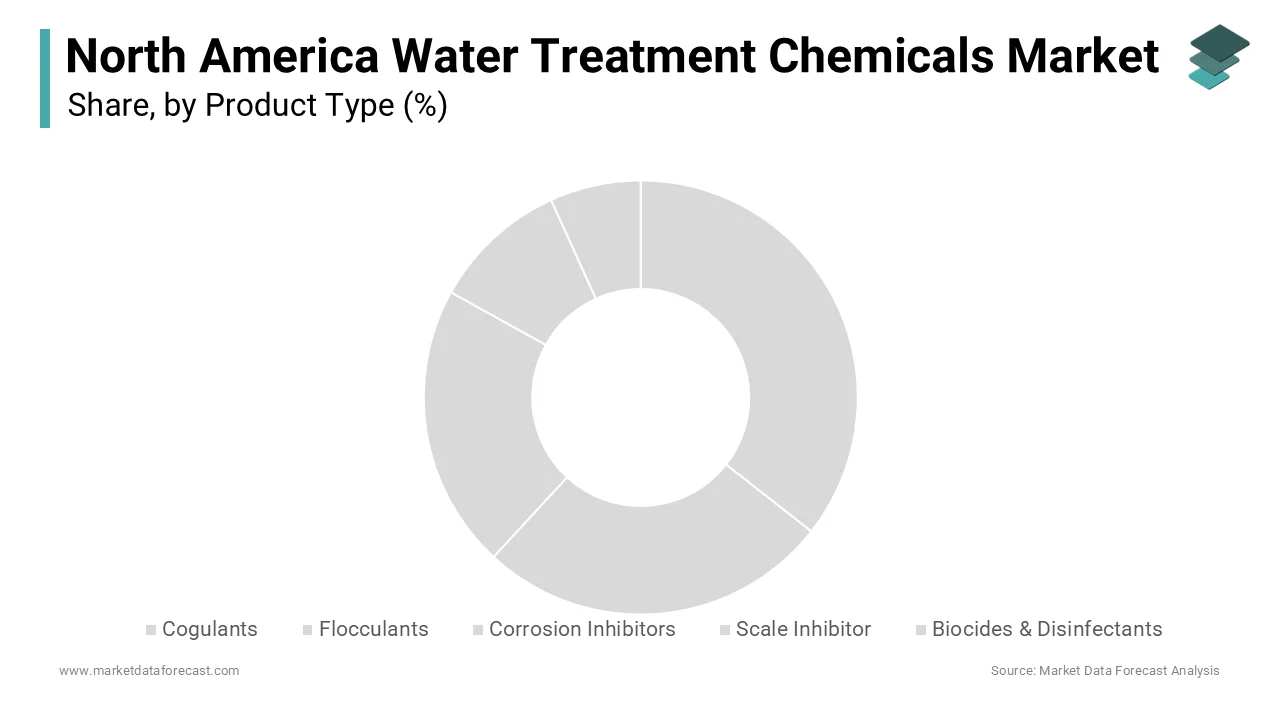
The specialty chemicals segment is likely to grow at a fastest CAGR of 6.8% during the forecast period with the rapid expansion of industrial water reuse and zero liquid discharge initiatives. This operational shift directly benefits, as recycled water has higher scaling potential necessitating continuous dosing of specialized inhibitors. The high value of industrial assets such as boilers cooling towers and reverse osmosis membranes makes prevention of fouling a top priority for facility managers. Manufacturers develop customized chemical programs that address specific water chemistry challenges offering superior protection compared to generic solutions.
REGIONAL ANALYSIS
The United States was the top performer of the North America Water Treatment Chemicals Market by holding 80.2% of share in 2025 with its extensive industrial base stringent environmental regulations and aging municipal infrastructure. The presence of major chemical manufacturers and a robust distribution network ensure wide availability of products. High water stress in states like California and Texas further accelerates the adoption of reuse technologies and associated specialty chemicals. The shale gas boom has also created substantial demand for water treatment solutions in the energy sector.
Canada water treatment chemicals market was ranked next with 10.2% of share in 2025 with its abundant water resources and strong focus on environmental sustainability and indigenous community water security. As per data, stricter regulations on effluent discharge from industrial operations are driving the adoption of advanced treatment chemicals to minimize environmental impact. Municipalities are investing in upgrading treatment plants to address emerging contaminants such as pharmaceuticals and personal care products. The vast geographic area requires efficient logistics and localized supply solutions. Government funding for clean water projects in remote communities supports market expansion. The emphasis on green chemistry and sustainable practices encourages the use of bio based and less toxic alternatives.
COMPETITIVE LANDSCAPE
The competition in the North America water treatment chemicals market is characterized by intense rivalry among global specialty chemical giants and regional distributors, who compete on technical expertise service quality and product innovation rather than price alone. Major competitors differentiate themselves through integrated digital solutions that provide real time data analytics and automated dosing capabilities creating high switching costs for customers. Product differentiation is achieved through proprietary formulations that address specific contaminants or process challenges more effectively than generic alternatives. Regulatory compliance serves as a significant barrier to entry favoring established players with robust testing and certification capabilities. Strategic partnerships with equipment manufacturers and engineering firms help secure long-term contracts and embedded positions in new infrastructure projects.
KEY MARKET PLAYERS
Some of the key players in the North America water treatment chemicals market are
- Schlumberger Limited
- Calgon Carbon Corporation
- Nalco Company
- Ecolab Inc.
- Veolia
- BASF
- Dow Inc.
- Kemira Oyj
- Solvay
- Solenis LLC
- Kurita Water Industries Ltd.
- Syensqo
Top Players in the Market
- Ecolab Inc. is a global leader in water hygiene and technologies providing comprehensive water treatment solutions for industrial municipal and commercial customers across North America. The company leverages its extensive expertise in data driven analytics and digital monitoring to optimize chemical usage and improve operational efficiency for clients. Recent actions include the expansion of its 3D TRASAR technology which uses real time data to automate chemical dosing and prevent equipment corrosion and scaling. Ecolab actively collaborates with customers to develop customized sustainability programs that reduce water consumption and environmental impact. Their strategic focus on integrated service models strengthens customer retention and drives recurring revenue.
- Kemira Oyj contributes significantly to the market through its specialized portfolio of water treatment chemicals focusing on industrial applications such as pulp and paper oil and gas and mining. The company emphasizes sustainable solutions and circular economy principles offering bio based and low toxicity products that meet stringent environmental standards. Recent initiatives involve the launch of new polymer technologies that enhance dewatering efficiency and reduce sludge volume in wastewater treatment processes. Kemira invests heavily in research and development to create innovative formulations that address specific customer needs in harsh operating conditions. They actively engage in partnerships with industrial players to pilot new technologies and demonstrate value.
- Solenis LLC plays a pivotal role in the market by providing a wide range of process chemicals and water treatment solutions for the pulp paper and industrial sectors. The company focuses on improving operational efficiency and product quality for its clients through advanced chemical technologies and expert technical support. Recent actions include the acquisition of specialized water treatment businesses to expand its product offerings and geographic reach in North America. Solenis actively develops proprietary polymers and biocides that enhance water clarity and reduce microbial growth in industrial systems. They prioritize customer collaboration to solve complex water related challenges and optimize process performance. By leveraging its deep industry knowledge and innovation capabilities, Solenis strengthens its position as a key supplier of high performance water treatment chemicals that drive productivity and sustainability for industrial customers.
Top Strategies Used by Key Market Participants
Key players in the North America Water Treatment Chemicals Market primarily employ digital integration strategies by combining chemical products with smart monitoring software to optimize dosing and demonstrate measurable value to clients. Companies focus on developing sustainable and bio based formulations to meet stringent environmental regulations and corporate sustainability goals. Strategic mergers and acquisitions are utilized to expand product portfolios and gain access to specialized technologies or regional markets. Manufacturers invest in technical service teams to provide on site support and customized solutions that enhance customer retention. Performance based contracting models are adopted to align supplier incentives with client outcomes reducing risk for end users.
MARKET SEGMENTATION
This research report on the North America water treatment chemicals market has been segmented and sub-segmented based on the following categories.
By Product Type
- Cogulants
- Flocculants
- Corrosion Inhibitors
- Scale Inhibitor
- Biocides & Disinfectants
By Application
- Traw water treatment
- Water desalination
- Cooling
- Boilers
- Effluent Water Treatment
By End Use
- Municipal
- Power
- Oil & Gas
- Mining
By Country
- The United States
- Canada
- Rest of North America