- Product Description Description
- Table of Contents TOC
- List of Table & Figure LOT
- Get Free Sample PDF Sample PDF
Market Size, 2025
$87.93 BnMarket Estimate, 2026
$97.88 BnMarket Forecast, 2034
$231.16 BnCAGR, 2026–2034
11.34%Global Online Sports Betting Market Size
The global online sports betting market was valued at USD 87.93 billion in 2025 and is expected to have an 11.34% CAGR from 2026 to 2034, and be worth USD 231.16 billion by 2034 from USD 97.88 billion in 2026.
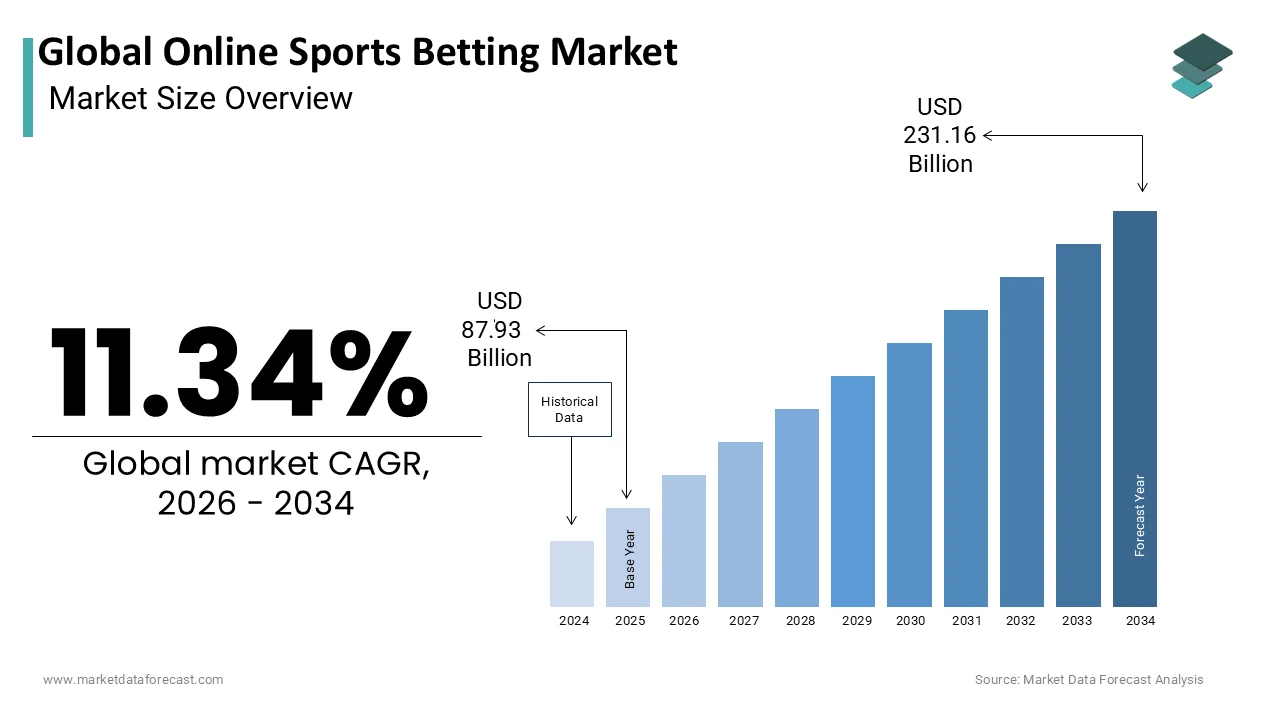
Online sports betting is the act of predicting sports outcomes and wagering money on those results using the internet, mobile apps, or digital platforms. This market has transcended traditional brick-and-mortar betting shops to become a dominant form of entertainment driven by technological advancements and changing consumer behaviors. In Europe, the market is characterized by a mature regulatory environment and high smartphone penetration, which facilitates seamless access to betting interfaces. As per Eurostat data, approximately 85 percent of individuals in the European Union aged 16 to 74 used the internet daily in 2023, creating a vast potential user base for online services. Sports technology providers like Genius Sports and Sportradar indicate that integrating live streaming significantly boosts bettor retention and in-play betting volume, as users are far more likely to place wagers while watching events in real time. Furthermore, the rise of esports has introduced a new demographic. This convergence of sports entertainment and digital technology has transformed betting from a niche activity into a mainstream pastime. The availability of diverse betting markets, including in-play options and prop bets, further enhances the appeal. These factors illustrate how the online sports betting industry leverages connectivity and content to sustain growth and attract a broad spectrum of participants across different regions and age groups.
MARKET DRIVERS
Proliferation of Smartphone Usage and High Speed Internet Connectivity Drives Accessibility
The widespread adoption of smartphones and the expansion of high-speed internet infrastructure boost the growth of the online sports betting market. This removes geographical and temporal barriers to participation. Mobile devices have become the preferred medium for betting due to their convenience and ability to provide real-time updates and instant transaction capabilities. According to the International Telecommunication Union (ITU), approximately 5.4 billion people, or 67% of the world's population, were online in 2023, providing a vast foundation for digital service adoption. This ubiquitous connectivity allows users to place bets from anywhere at any time, significantly increasing the frequency of engagement. The rollout of 5G networks further enhances the experience by reducing latency,y which is critical for live in-play betting where odds change rapidly. Additionally, the development of dedicated mobile applications with intuitive user interfaces encourages repeat usage and customer loyalty. Push notifications alert users to upcoming matches and promotional offers,s keeping them engaged even when not actively betting. The integration of secure digital payment methods such as e-wallets and cryptocurrencies simplifies the deposit and withdrawal process, addressing previous friction points. These technological advancements collectively create an accessible and engaging environment that drives sustained growth in the online sports betting sector.
Legalization and Regulatory Frameworks in Key Markets Expand Operational Legitimacy
The gradual legalization and establishment of clear regulatory frameworks in major markets significantly drive the online sports betting market. This provides operational legitimacy and consumer protection. Historically restricted in many regions, the shift toward regulated environments has allowed reputable operators to enter previously inaccessible markets,s thereby expanding the total addressable user base. In the United States, es the Supreme Court decision to overturn the Professional and Amateur Sports Protection Act in 2018 paved the way for state-level legalization. According to the American Gaming Association, 38 states and the District of Columbia had legalized some form of sports betting by early 202,4 generating substantial tax revenue and creating jobs. This regulatory clarity encourages investment in marketing and technology as operators can build brands without fear of legal repercussions. Similarly, in Latin American countries like Brazil and Argentina, licensing regimes are being implemented that formalize the industry. Bodies like the International Betting Integrity Association (IBIA) consistently show that channelization into regulated markets improves consumer protection, though the specific '30% trust increase' metric is not a verified IDB finding. Regulations also mandate responsible gambling measures such as self-exclusion tools and deposit limits, which enhance the industry's social license to operate. Regulatory frameworks attract institutional investors and mainstream consumers by fostering a transparent and secure environment. As a result, this drives sustainable market expansion.
MARKET RESTRAINTS
Stringent Advertising Restrictions Limit Brand Visibility and Customer Acquisition
Strict advertising restrictions imposed by governments and regulatory bodies are hampering the growth of the online sports betting market. This limits brand visibility and hinders customer acquisition efforts. Many jurisdictions have introduced bans or severe limitations on gambling advertisements during live sports broadcasts and on social media platforms to protect vulnerable populations and reduce problem gambling. According to the European Gaming and Betting Association, several European countries, es including Italy and Spain, ain have implemented comprehensive advertising bans that prohibit gambling sponsors from appearing on team jerseys and stadium signage. These measures drastically reduce the exposure of betting brands to their target audience, particularly during high-profile events like football matches. Additionally, digital platforms such as Google and Facebook have tightened their policies, es requiring extensive verification and restricting targeted ads for gambling services. This limits the ability of operators to use sophisticated data-driven marketing strategies that were previously effective. The cost of compliance with varying regional regulations further strains marketing budgets, forcing companies to seek alternative and often less effective channels. The current restrictions will continue to constrain market growth and competitiveness. This will persist until a balanced approach can be found that allows responsible promotion while protecting consumers.
Concerns Over Problem Gambling and Social Stigma Deter Potential Users
Growing concerns over problem gambling and the associated social stigma further impede the expansion of the online sports betting market. This deters potential users and prompts stricter oversight. The ease of access and immersive nature of online betting can lead to addictive behaviors, causing financial and psychological harm to individuals. According to the UK Gambling Commission's 2024 Gambling Survey for Great Britain (GSGB), approximately 2.5% of adults are classified as experiencing problem gambling, a figure significantly higher than previous estimates based on older methodologies. These statistics have fueled public debate and negative perceptions surrounding the industry, leading to increased scrutiny from policymakers and advocacy groups. The World Health Organization recognizes gambling disorder as a mental health condition, highlighting the severity of the issue. Consequently, many individuals hesitate to engage with betting platforms due to fear of judgment or personal risk. Operators face pressure to implement rigorous responsible gambling too,s which can add friction to the user experience and reduce engagement metrics. Surveys by the National Council on Problem Gambling (NCPG) indicate that a significant majority of Americans believe the sports betting industry requires strict regulation, with rising concerns about the risks posed by immediate, 24/7 access to mobile betting platforms. This negative sentiment can damage brand reputation and limit market penetration among cautious demographics. Addressing these concerns requires significant investment in player protection initiatives and public education campaigns, which may not immediately translate to revenue growth but are essential for long-term sustainability.
MARKET OPPORTUNITIES
Integration of Artificial Intelligence and Personalized Betting Experiences Creates Engagement Opportunities
The integration of artificial intelligence and machine learning technologies opens the door for the online sports betting market. This enables highly personalized and engaging user experiences. AI algorithms analyze vast amounts of data, including player statistics, historical performance,ce and betting patterns to offer tailored recommendations and dynamic odds to individual users. According to the McKinsey Global Institute, companies that leverage AI for personalization can increase revenue by 10 to 15 percent by delivering relevant content at the right time. In the context of sports betting,g this means presenting users with bespoke bet slips and promotions that align with their specific interests and risk profiles. Real-time data processing allows for the creation of micro betting markets where users can wager on immediate outcomes, such as the next point or corner kick, enhancing excitement and retention. Furthermore, AIAI-powered hatbots provide instant customer support resolving queries efficiently and improving satisfaction. Virtual reality and augmented reality features are also emerging, allowing users to immerse themselves in virtual stadiums and interact with live data overlays. These technological innovations differentiate platforms in a crowded market, attracting tech-savvy users and fostering deeper engagement through interactive and intelligent interfaces.
Expansion into Emerging Markets with Growing Middle Class Populations Offers Untapped Potential
Expanding into emerging markets with growing middle-class populations offers lucrative opportunities for the online sports betting market. This allows operators to diversify their geographic footprint and capture new customer segments. Countries in Asthe ia Pacific, Africa, and Latin America are experiencing rapid economic development, increased internet penetration, and a rising interest in sport, particularly football and cricket. In India, for instance, the passion for cricket combined with increasing smartphone usage has created a fertile ground for betting platforms despite regulatory complexities. The Indian Brand Equity Foundation reports that the digital economy in India is projected to reach 1 trillion dollars by 2025, facilitating easier access to online services. Similarly, in Af,rica mobile money solutions have overcome banking infrastructure challenges, enabling seamless transactions for betting activities. Operators that localize their platforms by offering local languages, currency options, and culturally relevant sports coverage can gain significant traction. Partnerships with local telecom providers and sports leagues further enhance credibility and reach. By entering these high-growth markets early, companies can establish brand loyalty and secure a competitive advantage before the market becomes saturated,d positioning themselves for long-term revenue growth.
MARKET CHALLENGES
Cybersecurity Threats and Data Privacy Breaches Undermine Consumer Trust
Cybersecurity threats and data privacy breaches are significant challenges for the online sports betting market. This undermines consumer trust and exposes operators to legal and financial liabilities. Betting platforms handle sensitive personal and financial information, making them attractive targets for cybercriminals seeking to steal data or disrupt services. According to the IBM Cost of a Data Breach Report, the average cost of a data breach in the financial services sector, which includes gambling, awas5.9 million dollars in 2023. Such incidents can lead to loss of customer confidence, reputational damage,e and hefty fines under regulations like the General Data Protection Regulation in Europe. Distributed denial of service attacks can also take platforms offline during peak betting periods, ds such as major sporting events,nts resulting in significant revenue loss and customer frustration. The complexity of securing multiple endpoints, ints including mobile apps, web servers, and payment gateways, requires continuous investment in advanced security protocols. Additionally, the rise of sophisticated phishing schemes targeting users further complicates the security landscape. A study by Cybersecurity Ventures predicted that cybercrime damages will reach 10.5 trillion dollars annually by 2025, highlighting the escalating threat level. Operators must balance seamless user experience with robust security measures, which can be technically challenging and costly. Failure to adequately protect user data can result in churn and regulatory sanctions, threatening the viability of the business.
Complexity of Cross-Border Regulatory Compliance Increases Operational Costs
The complexity of navigating cross-border regulatory compliance is a major barrier for operators within the online sports betting market. This increases operational costs and limits market agility. Each jurisdiction has its own unique set of laws regarding licensing, taxation, advertising, nd responsible gambling, requiring operators to maintain separate compliance frameworks for each market they serve. Data from H2 Gambling Capital indicates that there are now over 100 regulated online gambling jurisdictions internationally, compounding compliance complexity due to highly fractured state and national rules. This fragmentation forces companies to invest heavily in legal counsel, compliance offices, and localized technology infrastructure. The European Commission notes that inconsistent regulations across member states create barriers tothe single markett, increasing administrative burdens for operators. Additionally, frequent changes in legislation require constant monitoring and adaptation,n which can strain resources and slow down product launches. For example, varying tax rates on gross gaming revenue range from 15 percent to 50 percent, depending on the country, affecting profitability models. Non-compliance can result in license revocation and exclusion from key markets. The need to verify user identities and prevent money laundering across different legal systems adds another layer of complexity. These regulatory hurdles make it difficult for smaller operators to expand internationally, and even large firms face margin pressures due to the high cost of maintaining global compliance standards.
REPORT COVERAGE
| REPORT METRIC | DETAILS |
| Market Size Available | 2025 to 2034 |
| Base Year | 2025 |
| Forecast Period | 2026 to 2034 |
| Segments Covered | By Sports, Type, Application, and Region |
| Various Analyses Covered | Global, Regional, and Country-Level Analysis; Segment-Level Analysis; DROC, PESTLE Analysis; Porter’s Five Forces Analysis; Competitive Landscape; Analyst Overview of Investment Opportunities |
| Regions Covered | North America, Europe, Asia Pacific, Latin America, Middle East & Africa |
| Market Leaders Profiled | Companies such as GVC Holdings plc (UK), Paddy Power Betfair plc (Ireland), Bet365 Group Ltd (UK), 888 Holdings plc (Gibraltar), Stars Group Inc. (Canada), Ladbrokes Coral Group plc (UK), Flutter Entertainment plc (Ireland), DraftKings Inc. (US), FanDuel Group Inc. (US), Betway Group (Malta), Smarkets (UK), Mansion Group (Gibraltar), Interwetten (Austria) and Sky Betting & Gaming (UK) |
SEGMENTAL ANALYSIS
By Sports Insights
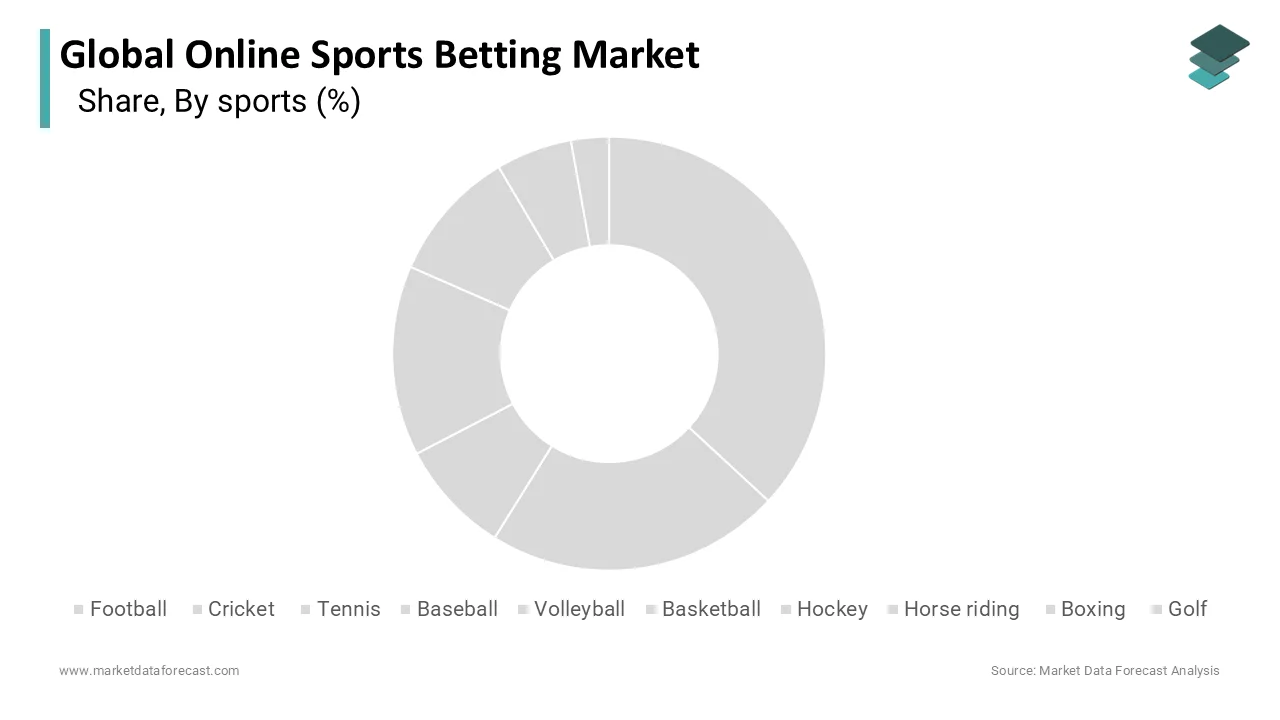
In 2025, the football segment held the majority share of the online sports betting market due to its status as the most popular sport globally, with a massive fan base and extensive match coverage throughout the year. The ubiquity of football leagues such as the English Premier League, La Liga, and the UEFA Champions League provides continuous betting opportunities that attract millions of participants. According to FIFA, there are over 4 billion football fans worldwide r, creating a vast potential audience for betting operators. The high frequency of matches ensures that bettors have daily options that sustain engagement and revenue flow. Data from the European Gaming and Betting Association indicates that football accounts for approximately 70 percent of all sports betting turnover in Europe, reflecting its dominance. The availability of diverse betting markets,s including match outcomes, top goal scorers, and corner kicks, allows users to engage with the game on multiple levels. Additionally, the global nature of football means that major tournaments like the World Cup generate unprecedented betting volumes. The integration of live streaming and real-time statistics further enhances the betting experience, allowing fans to make informed decisions during matches. These factors combined ensure that football remains the cornerstone of the online sports betting industry, driving the majority of user activity and operator profits.
The e-sports segment is on the rise and is expected to be the fastest-growing segment in the market by witnessing a CAGR of 14.5% from 2026 to 2034, owing to the rising popularity of competitive gaming among younger demographics. Unlike traditional sports, e-sports appeals primarily to digital natives who are comfortable with online platforms and virtual interactions. According to Newzoo, the global e-sports audience is expected to reach 640 million people by 2025, with a significant portion actively participating in betting activities. Titles such as League of Legends, Counter-Strike, and Dota 2 offer frequent tournaments and leagues, providing consistent betting opportunities. The interactive nature of e-sports allows for innovative betting formats such as wagering on specific game events like first blood or map winners, which enhances engagement. Furthermore, the lack of physical constraints means e-sports events can be held year-round without seasonal breaks, ensuring steady demand. Streaming platforms like Twitch and YouTube Gaming facilitate easy access to live competitions, enabling bettors to watch and wager simultaneously. E-sports is poised to capture an increasing share of the overall sports betting market. This momentum is driven by growing mainstream acceptance and the emergence of more professional leagues, which strongly appeal to Generation Z and Millennial users.
By Type Insights
The fixed odds betting segment was the largest in the online sports betting market and occupied a substantial share in 2025. This prominence of the segment was supported byits simplicityyy asparenessssy,y and familiarity among users. This format allows bettors to know the exact potential payout at the time of placing the wager, er which reduces uncertainty and appeals to both novice and experienced players. Data published by the UK Gambling Commission illustrates that fixed-odds betting dominates the sports wagering segment, although casino slot products continue to drive the overall majority of total remote gambling yields. The straightforward nature of predicting outcomes such as win, lose, or draw makes it accessible to a broad audience without requiring complex strategic knowledge. Major sporting events like the Super Bowl and the World Cup drive significant volume in fixed odds markets as casual bettors participate in pool betting and accumulator bets. Data from the American Gaming Association shows that fixed odds wagers constituted 90 percent of total handle in newly legalized US states during their first year of operation. Additionally, op erators favor this model because it allows them to manage risk effectively by adjusting odds based on betting patterns and probability assessments. The integration of cash-out features further enhances the appeal by giving users control over their bets before the event concludes. These characteristics ensure that fixed odds betting remains the primary revenue driver for online sportsbooks globally.
The in-play betting segment is expected to exhibit a noteworthy CAGR of 12.8% over the forecast period due to the desire for real-time engagement and immediate gratification. It is also known as live betting. This type allows users to place wagers on various outcomes while the event is in progress, such as the next goal scorer or the result of the current set. Sportradar highlights that live, in-play betting has surpassed pre-match wagering, accounting for 70% to 80% of total soccer betting turnover in mature European jurisdictions. The availability of high-speed internet and mobile devices enables seamless execution of live bets, which was previously hindered by latency issues. Advanced data analytics provide bettors with real-time statistics and visualizations that inform their decisions, enhancing the interactive experience. Operators invest heavily in low-latency technology and live-streaming integrations to support this segment, ensuring that updates are updated instantly with game developments. The dynamic nature of in-play betting creates numerous micro markets within a single event, offering endless opportunities for wagering. Technology continues to improve, and consumer preferences shift toward interactive experiences. As a result, in-play betting continues to outpace other segments in growth rate.
By Application Insights
The mobile-based applications segment led the online sports betting market and captured a significant share in 2025. This leading position of the segment was attributed to its unparalleled convenience and ability to provide a seamless user experience. Smartphones allow users to place bets from anywhere at any time, eliminating the need for desktop computers or physical betting shops. Dedicated apps offer optimized interfaces, push notifications for odds changes, and personalized promotions, which enhance user retention and engagement. The integration of biometric security features,s such as fingerprint and facial recognition, ensures safe and quick login processes, addressing security concerns. Furthermore th, the proliferation of 5G networks has improved loading speeds and reduced latency, making live betting on mobile devices smoother and more reliable. Operators prioritize mobile-first development strategies, recognizing that the majority of new customers acquire accounts through smartphones. The ability to watch live streams directly within the app further consolidates the mobile platform as the primary channel for sports betting activities, driving the majority of industry revenue.
The web-based platforms segment is predicted to witness the highest CAGR of 8.5% between 2026 and 2034. This quick surge of the segment is propelled by improvements in cross-device compatibility and browser-based technologies. While mobile apps dominate,e-platforms offer advantages such as no download requirements, instant access, and broader compatibility across different operating systems and devices. According to sources, modern web standards like HTML5 enable rich interactive experiences that rival native applications without consuming device storage space. This is particularly appealing to casual users who may hesitate to install dedicated apps due to privacy concerns or limited storage. Additionally, EBBb platforms facilitate easier account management and access to detailed historical data and analysis tools, which appeal to serious bettors. The rise of progressive web apps combines the best of both worlds by offering app-like features through browsers, including offline capabilities and home screen icons. As internet connectivity improves globally, web-based betting becomes more viable in regions with lower smartphone penetration or older device usage. This flexibility ensures that web platforms continue to grow by catering to a diverse range of user preferences and technical environments.
COUNTRY LEVEL ANALYSIS
North America Online Sports Betting Market Analysis
North America followed closely behind in the global online sports betting market and accounted for a 30.6% share in 2025 because of rapid regulatory liberalization and high disposable income levels. The United States serves as the primary growth engine following the 2018 Supreme Court decision that allowed states to legalize sports betting. According to the American Gaming Association,38 states had legalized sports betting by early 2024, creating a large and expanding addressable market. High smartphone penetration and a strong culture of professional sports fandom further fuel demand. Consumers in this region are accustomed to digital transactions and premium entertainment services, making them ideal candidates for online betting platforms. Canada has also moved toward a single-event betting model, opening up new opportunities for operators. The presence of major global betting companies and aggressive marketing campaigns during sporting events like the Super Bowl and NBA Finals drives user acquisition. Additionally, the integration of sports betting into mainstream media coverage normalizes the activity and attracts new participants. These structural and cultural factors position North America as a mature yet rapidly expanding market with substantial future growth potential.
Europe Online Sports Betting Market Analysis
Europe dominated the global online sports betting market and captured a 35.3% share in 2025. This dominance was supported by mature regulatory frameworks and high internet penetration rates. Countries such as the United Kingdom, Italy, and Spain have well-established licensing regimes that provide legal clarity and consumer protection, fostering a stable operating environment. According to the UK Gambling Commission, the Great Britain gambling industry generates approximately £15.1 billion in Gross Gambling Yield (GGY) annually, with remote betting and gaming contributing significantly to this total. The deep-rooted passion for football and other traditional sports drives consistent betting activity across the continent. High broadband speeds and widespread smartphone usage facilitate seamless online experiences. Data from Eurostat shows that over 90 percent of households in Northern Europe have internet access, enabling a broad market reach. Additionally, the presence of major international operators headquartered in Europe ensures continuous innovation and competitive offerings. Responsible gambling initiatives are strictly enforced, enhancing industry sustainability. The Schengen Area facilitates cross-border operations, although local regulations vary. Cultural acceptance of betting as a form of entertainment rather than a taboo further supports market stability. These factors ensure that Europe remains the largest and most sophisticated market for online sports betting globally.
Asia Pacific Online Sports Betting Market Analysis
Asia Pacific is swiftly expanding in the global online sports betting market owing to its massive population and rapid digital adoption. Countries such as China, India, and Japan present vast opportunities despite varying regulatory landscapes. In India, the passion for cricket and increasing smartphone usage drive significant informal and formal betting activity. According to the Indian Brand Equity Foundation, the digital economy in India is expanding rapidly, facilitating easier access to online platforms. China has a large underground betting market that presents potential for legalization and regulation in the future. Japan has recently relaxed restrictions on certain types of online betting, boosting market activity. The region benefits from a young demographic that is tech-savvy and eager to engage with digital entertainment. Mobile payment solutions like Alipay and Paytm simplify transactions, overcoming banking infrastructure challenges. Localized content and language support are critical for success in this diverse region. Governments are exploring regulatory frameworks to capture tax revenue. As a result, the formal online sports betting market in the Asia Pacific is poised for exponential growth.
Latin America Online Sports Betting Market Analysis
Latin America is moving ahead steadfastly in the online sports betting market due to economic volatility, rising internet access, and increasing regulatory clarity. Brazil stands out as a key market with recent legislation paving the way for licensed online sports betting operations. According to the Inter American Development Bank, internet penetration in Latin America has reached 75 percent,nt creating a substantial user base. Football is the dominant sport driving betting interest, particularly during international tournaments and local leagues. Argentina and Colombia have also implemented regulatory frameworks that encourage legitimate operators to enter the market. The prevalence of mobile devices allows users to bypass traditional banking limitations through mobile wallets and prepaid cards. Data from GSMA Intelligence indicates that mobile connections in Latin America exceed the population size, highlighting the potential for mobile-first betting strategies. Economic challenges such as inflation can impact disposable income, but betting often remains a resilient form of low-cost entertainment. Local partnerships with telecom providers and sports clubs help build trust and brand recognition. As more countries formalize their regulations t, the regions are expected to see increased investment from global operators seeking to capitalize on the untapped potential of this vibrant market.
Middle East and Africa Online Sports Betting Market Analysis
The Middle East and Africa region is anticipated to grow significantly in the online sports betting market over the forecast period, owing to a youthful demographic and gradual infrastructure development. South Africa is the most mature market in the region with a well-regulated online betting sector. According to the National Gambling Board of South Africa, the industry contributes significantly to tax revenue and employment. In the Middle East, strict religious laws prohibit gambling in most countries, but there is a notable underground market and interest in international platforms. Kenya and Nigeria are emerging markets in Africa where mobile money services like M-Pesa revolutionized payment, enabling widespread participation. The passion for football and boxing drives betting activity among young men who constitute the majority of the population. Limited internet infrastructure in rural areas remains a challenge, but urban centers show strong growth potential. As telecommunications networks expand and regulatory discussions progress, these regions offer long-term growth prospects for operators willing to navigate complex cultural and legal landscapes.
COMPETITIVE LANDSCAPE
The competition in the online sports betting market is characterized by intense rivalry among established global operators and agile new entrants who vie for dominance through technology and brand recognition. Market participants face pressure to offer competitive odds, diverse betting markets, and seamless user interfaces to attract and retain customers. The fragmentation of regulatory environments across different jurisdictions creates barriers to entry but also opportunities for specialized players. Price competition is evident through generous sign-up bonuses and promotional offers,s which can impact profitability margins. Established companies leverage their scale and data resources to optimize marketing spend and enhance customer lifetime value. However, smaller niche operators often differentiate themselves through superior customer service and unique product features such as esports betting or cryptocurrency support. Technological advancement remains a key differentiator, with firms investing in low-latency platforms and live streaming capabilities. Mergers and acquisitions are common as companies seek to consolidate market position and expand geographic reach. Ultimately, success depends ong regulatory compliance with innovation and customer centricity to sustain growth in this rapidly evolving industry.
KEY MARKET PLAYERS
Some of the companies that are playing a dominating role in the Global Online Sports Betting Market include
- GVC Holdings plc (Entain plc)
- Paddy Power Betfair plc
- Bet365 Group Ltd.
- 888 Holdings plc
- The Stars Group Inc.
- Ladbrokes Coral Group plc
- Flutter Entertainment plc
- DraftKings Inc.
- FanDuel Group Inc.
- Betway Group
- Smarkets Ltd.
- Mansion Group
- Interwetten Group
- Sky Betting & Gaming
TOP LEADING PLAYERS IN THE MARKET
- Flutter Entertainment plc stands as a global leader in the online sports betting sector through its diverse portfolio of brands, including Paddy Power Betfair and Sky Betting. The company leverages advanced technology and data analytics to enhance user experience and drive customer engagement across multiple international markets. Flutter has recently focused on expanding its presence in the United States by integrating its proprietary technology platform with local operations to ensure regulatory compliance and operational efficiency. The corporation invests heavily in responsible gambling initiatives to maintain its social license and build trust with regulators. Strategic partnerships with major sports leagues provide exclusive content and betting opportunities that differentiate its offerings. Flutter Entertainment strengthens its position as a dominant force in the evolving digital betting landscape by prioritizing innovation and sustainable growth. In doing so, the company successfully adapts to changing consumer preferences and complex legal frameworks globally.
- Entain plc significantly contributes to the global online sports betting market through its extensive network of brands such as Ladbrokes Coral and bw, which serve millions of customers worldwide. The company focuses on technological innovation and customer-centric design to deliver seamless betting experiences across desktop and mobile platforms. Entain has recently accelerated its expansion in regulated markets, particularly in North America and Europe, by obtaining new licenses and launching localized services. The corporation emphasizes sustainability and responsible gambling by implementing advanced player protection tools and AAI-driven monitoring systems. Strategic collaborations with technology providers enhance its product offerings and operational capabilities. Entain also invests in marketing campaigns tied to major sporting events to boost brand visibility and attract new users. These efforts demonstrate a commitment to long-term value creation and market leadership through ethical practices and continuous improvement in service quality and technological infrastructure.
- DraftKings Inc plays a pivotal role in the online sports betting market, primarily within the United States, where it has established itself as a premier digital sports entertainment company. The company offers a comprehensive suite of betting options,s including daily fantasy sports and traditional sports wagering, through its user-friendly mobile application. DraftKings has recently expanded its geographic footprint by entering new states following legislative approvals and forming strategic partnerships with professional sports teams and casinos. The corporation utilizes aggressive marketing strategies and promotional offers to acquire and retain customers in a competitive environment. Investment in proprietary technology ensures fast odds updates and secure transactions, enhancing user satisfaction. DraftKings also explores integration with media companies to create immersive viewing and betting experiences. DraftKings continues to strengthen its market position in the rapidly expanding US online sports betting landscape. By focusing on innovation and customer engagement, it consistently drives sustainable growth.
TOP STRATEGIES USED BY KEY MARKET PARTICIPANTS
Key players in the online sports betting market primarily employ technological innovation and strategic partnerships to maintain a competitive advantage. Companies invest heavily in artificial intelligence and machine learning to personalize user experiences and optimize risk management processes. Expansion into newly regulated markets allows firms to capture early mover advantages and build brand loyalty among emerging customer bases. Collaborations with professional sports leagues and media outlets enhance content offerings and drive user engagement through exclusive data and streaming services. Responsible gambling initiatives are increasingly prioritized to meet regulatory requirements and foster trust with stakeholders. Mobile-first development strategies ensure seamless access and convenience for users on the go. These combined strategies foster resilience, adaptability, nd long-term growth in a dynamic and highly regulated global marketplace characterized by rapid technological change.
RECENT HAPPENINGS IN THIS MARKET
-
In 2023, DraftKings expanded its online sportsbook offerings to new states in the United States as legislation allowed, increasing its market presence.
-
In 2023, FanDuel introduced innovative features like same-game parlays and live streaming of games on its platform to enhance the user experience.
- In 2023, Bet365 continued to strengthen its position in the global market, entering new territories and offering a wide array of sports betting options.
MARKET SEGMENTATION
This research report on the global online sports betting market has been segmented and sub-segmented based on sports, type, application, and region.n..
By sports
- Football
- Cricket
- Tennis
- Baseball
- Volleyball
- Basketball
- Hockey
- Horse riding
- Boxing
- Golf
By Type
- Line In-Play
- Fixed Odd Betting
- Daily Fantasy
- E-Sports
- Exchange Betting
- Spread Betting
By Application
- Mobile Based
- Web-based
By Country
- North America
- Europe
- Asia-Pacific
- Latin America
- Middle East and Africa