- Product Description Description
- Table of Contents TOC
- List of Table & Figure LOT
- Get Free Sample PDF Sample PDF
Market Size, 2025
$3.47 BnMarket Estimate, 2026
$3.81 BnMarket Forecast, 2034
$8.06 BnCAGR, 2026–2034
9.82%Global Oryzanol Market Size, Growth, Trends & Forecast (2026–2034)
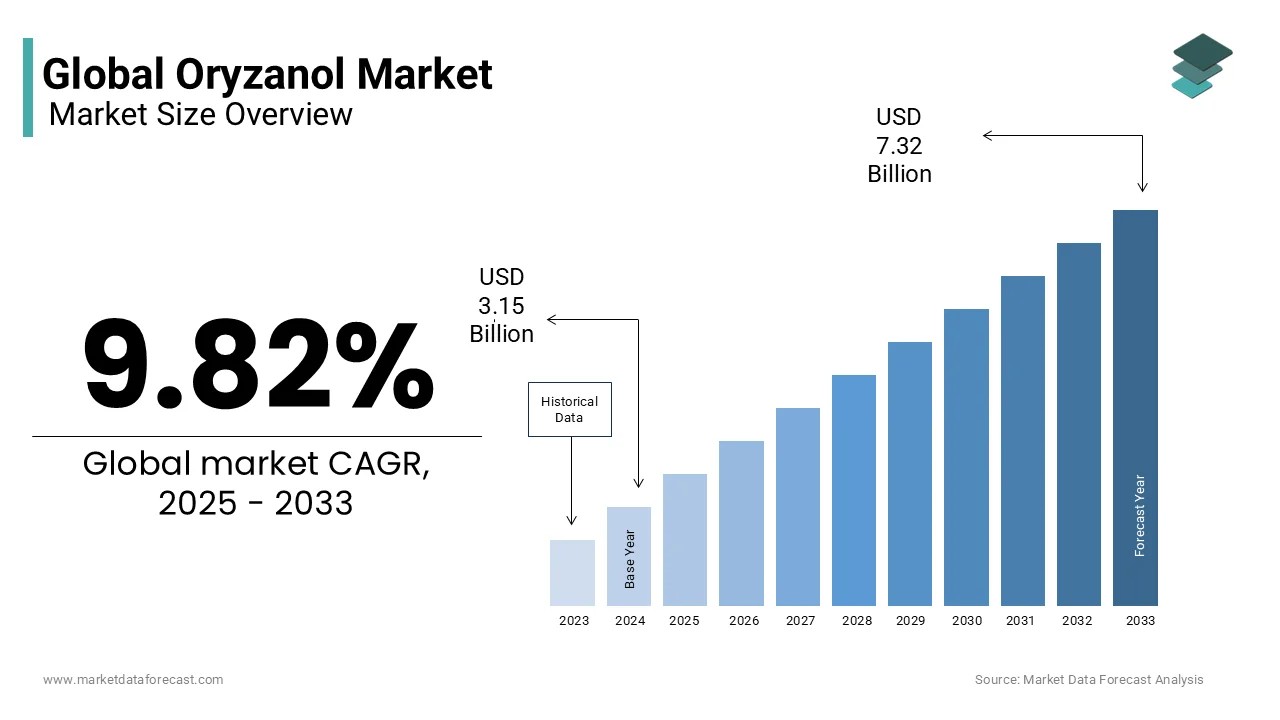
The global oryzanol market size was valued at USD 3.47 billion in 2025, is anticipated to reach USD 3.81 billion in 2026, and is projected to scale up to USD 8.06 billion by 2034, registering a compound annual growth rate (CAGR) of 9.82% during the forecast period from 2026 to 2034. Driven by increasing demand for natural cholesterol-lowering agents, powerful antioxidant properties, and widespread use in functional foods, cosmetics, and nutraceuticals, the oryzanol industry continues to expand steadily worldwide.
Key Executive Metrics (At-a-Glance)
- 2025 Base Valuation: USD 3.47 Billion
- 2026 Current Valuation: USD 3.81 Billion
- 2034 Forecast Valuation: USD 8.06 Billion
- Compound Annual Growth Rate (CAGR): 9.82% (2026–2034)
- Dominant Source Segment: Rice Bran Oil (dominated with 64.8% of total share in 2025)
- Fastest-Growing Source Segment: Fruits and Vegetables (projected to grow at a CAGR of 10.4% from 2026 to 2034)
- Dominant Application Segment: Cosmetics (captured 35% of total revenue in 2025)
- Fastest-Growing Application Segment: Animal Feed (expected to expand at a CAGR of 11.2%)
- Dominant Region: Asia-Pacific (led by major production bases in China, India, Japan, and Thailand)
Core Market Drivers
- Cholesterol Management: Surging consumer preference for plant-based ingredients and natural interventions that help reduce LDL cholesterol and support cardiovascular health.
- Cosmetic Applications: Expanding adoption in sunscreens, anti-aging serums, and moisturizers due to strong antioxidant and UV-absorbing properties.
- Agricultural Byproducts: Steady raw material supply supported by global rice production exceeding 520 million metric tons, facilitating efficient extraction from rice milling byproducts.
Primary Market Restraints & Challenges
- Regulatory Hurdles: Limited awareness, lack of standardized health claims, and strict regulatory frameworks (such as EFSA evaluation criteria) in Western markets.
- Supply Chain Volatility: Raw material availability issues tied to climate variability affecting rice cultivation yields and extraction processes.
Global Oryzanol Market Segmentation Breakdown
| Segment Category | Leading Sub-Segment (2025 Base) | Fastest-Growing Sub-Segment (2026–2034) |
|---|---|---|
| By Source | Rice Bran Oil (accounted for 64.8% of total share in 2025) | Fruits and Vegetables (projected to grow at a 10.4% CAGR) |
| By Application | Cosmetics (captured 35% of total revenue in 2025) | Animal Feed (expected to expand at an 11.2% CAGR) |
| By Region | Asia-Pacific (maintained dominant position due to abundant raw material availability) | Asia-Pacific & North America (driven by expanding functional food and wellness sectors) |
Major Industry Players Profiled
Key enterprises shaping the competitive global oryzanol market include Henry Lamotte Oils GmbH, Fengchen Group Co., Ltd., NutriScience Innovations, LLC, Merck KGaA, Ricela Health Foods Ltd., Oryza Oil & Fat Chemical Co., Ltd., TANOBIO, Tokyo Chemical Industry, Kangcare Bioindustry Co., Ltd., BASF SE, Cargill, Incorporated, and Koninklijke DSM N.V. (Royal DSM).
Global Oryzanol Market Size
The global oryzanol market size was valued at USD 3.47 billion in 2025 and is expected to reach USD 8.06 billion by 2034 from USD 3.81 billion in 2026. The market's promising CAGR for the predicted period is 9.82%.
Oryzanol is a naturally occurring compound derived primarily from rice bran oil, though it is also found in corn and barley. Chemically, oryzanol is a mixture of ferulic acid esters and phytosterols, known for its potent antioxidant properties, cholesterol-lowering effects, and applications in skincare and pharmaceutical formulations. It has gained traction across multiple industries including food and nutrition, cosmetics, nutraceuticals, and animal feed due to its diverse health benefits.
In recent years, oryzanol has been increasingly incorporated into functional foods and dietary supplements aimed at reducing LDL cholesterol levels and supporting cardiovascular health. According to the World Health Organization (WHO), cardiovascular diseases remain the leading cause of global mortality, driving interest in natural compounds like oryzanol that can aid in prevention through dietary intervention. Besides, the cosmetic industry has embraced oryzanol for its UV-absorbing and anti-aging properties, making it a valuable ingredient in sunscreens and skin-repair formulations.
As per data from the Food and Agriculture Organization (FAO), global rice production exceeded 520 million metric tons in 2023, with countries like China, India, and Indonesia serving as major contributors. This steady supply of raw material supports the continued growth of the oryzanol market. Moreover, rising consumer preference for plant-based ingredients and clean-label products has further boosted demand across both developed and emerging markets, positioning oryzanol as a key player in the evolving health and wellness sector.
MARKET DRIVERS

Increasing Demand for Natural Cholesterol-Lowering Ingredients in Functional Foods and Dietary Supplements
The rising demand for natural cholesterol-lowering agents in functional foods and dietary supplements is one of the primary drivers fuelling the growth of the oryzanol market. As cardiovascular diseases continue to be a leading cause of mortality globally, consumers are increasingly seeking out food-based interventions that support heart health without the side effects associated with synthetic drugs.
Scientific research has demonstrated that oryzanol can inhibit cholesterol absorption in the intestines, thereby reducing low-density lipoprotein (LDL) levels. This growing body of evidence has encouraged manufacturers of margarine, plant-based spreads, and fortified beverages to incorporate oryzanol into their formulations.
Besides, regulatory bodies such as the European Food Safety Authority (EFSA) have recognized the cholesterol-lowering potential of certain phytosterol-rich compounds, which include oryzanol derivatives. As a result, companies like BASF, Cargill, and Archer Daniels Midland have expanded their portfolios to include oryzanol-based nutraceutical ingredients tailored for heart-healthy product lines.
Expanding Use in Cosmetics and Personal Care Products Due to Antioxidant and Skin-Protective Properties
Its expanding application in the cosmetics and personal care industry is another significant factor contributing to the growth of the oryzanol market. Consumers are increasingly prioritizing skincare products that offer protection against environmental stressors, aging, and oxidative damage—areas where oryzanol excels due to its strong antioxidant activity.
Oryzanol’s unique molecular structure allows it to absorb ultraviolet radiation effectively, making it a valuable ingredient in sunscreen formulations. These have prompted major cosmetic brands such as L’Oréal, Estée Lauder, and Shiseido to integrate oryzanol into anti-aging serums, moisturizers, and post-sun exposure treatments.
Moreover, the trend toward clean-label and eco-friendly beauty products aligns well with oryzanol’s plant-based origin and sustainable sourcing. Rice bran, the primary source of oryzanol, is a byproduct of rice milling, offering an environmentally responsible alternative to synthetic additives.
MARKET RESTRAINTS
Limited Awareness and Clinical Validation in Some Regions
The limited awareness and insufficient clinical validation of its health benefits in certain regions is a major restraint affecting the oryzanol market. While oryzanol has been extensively studied in Japan and other parts of Asia, where rice-based diets are common, its acceptance in Western markets remains relatively low due to a lack of widespread consumer education and regulatory endorsement.
This knowledge gap results in lower consumer confidence and hesitancy among healthcare professionals to recommend oryzanol-based products. In Europe, for instance, the European Food Safety Authority (EFSA) has not yet approved specific health claims related to oryzanol, unlike other plant sterols that have received favorable evaluations. As a consequence, food and supplement manufacturers face challenges in marketing oryzanol as a scientifically backed ingredient, especially in highly regulated markets.
Furthermore, misinformation and inconsistent labeling practices contribute to confusion among consumers. Some products marketed as “phytosterol-rich” may contain minimal amounts of oryzanol, leading to skepticism about its efficacy.
Supply Chain Constraints and Raw Material Availability Issues
A further crucial challenge facing the oryzanol market is the volatility in raw material availability and supply chain disruptions. Oryzanol is primarily extracted from rice bran, a byproduct of rice milling, making its production dependent on rice cultivation cycles and regional agricultural conditions. According to the Food and Agriculture Organization (FAO), fluctuations in rice yields due to climate variability, pest infestations, and shifting land use policies have impacted the consistent supply of rice bran for industrial extraction.
For example, in 2023, droughts in Southeast Asia and unseasonal rains in parts of India disrupted rice harvesting schedules, causing delays in raw material procurement for oryzanol processors.
Moreover, the logistics involved in transporting and storing rice bran pose additional challenges. Unlike more stable raw materials, rice bran is prone to rancidity and microbial contamination if not processed promptly, requiring cold storage and rapid processing capabilities. Small-scale producers often lack the infrastructure to manage these requirements, leading to quality inconsistencies and supply bottlenecks.
Furthermore, competition from other rice bran oil derivatives, such as tocotrienols and gamma-oryzanol concentrates, creates pricing pressures and allocation conflicts.
MARKET OPPORTUNITIES
Rising Demand for Plant-Based Nutritional Ingredients in Sports Nutrition and Weight Management Supplements
The growing popularity of plant-based nutritional ingredients within the sports nutrition and weight management supplement sectors is an emerging opportunity for the oryzanol market. Athletes and fitness enthusiasts are increasingly turning to natural compounds that support endurance, recovery, and metabolic regulation without adverse side effects.
Oryzanol has shown potential in enhancing muscle recovery and improving lipid metabolism, making it a promising candidate for sports and fitness applications.
Moreover, the shift toward clean-label and non-stimulant-based weight loss solutions has created new avenues for oryzanol integration. Brands such as NOW Foods, Garden of Life, and Nature's Way have begun exploring oryzanol-enriched formulations aimed at promoting healthy cholesterol levels and metabolic efficiency.
Expansion into Animal Feed Applications for Improved Livestock Health and Productivity
Its application in animal feed formulations aimed at enhancing livestock health and productivity is another promising avenue for the oryzanol market. As concerns around antibiotic resistance grow, the agricultural sector is increasingly seeking natural alternatives that support immunity, digestion, and overall animal well-being. According to the Food and Agriculture Organization (FAO), the global livestock industry is under pressure to adopt sustainable feeding strategies that minimize reliance on antimicrobial growth promoters while maintaining yield efficiency.
Studies published in the Journal of Animal Physiology and Animal Nutrition demonstrated that oryzanol supplementation in poultry and swine diets improved lipid metabolism, reduced oxidative stress, and enhanced gut health. These benefits contribute to better weight gain, disease resistance, and meat quality, making oryzanol an attractive additive for commercial feed producers.
Apart from these, regulatory agencies such as the U.S. Food and Drug Administration (FDA) and the European Medicines Agency (EMA) have been encouraging the development of plant-based feed additives as part of broader initiatives to phase out routine antibiotic use in livestock. Companies like DSM, Evonik, and Adisseo are actively researching oryzanol-enriched feed solutions to capitalize on this shift.
MARKET CHALLENGES
High Cost of Extraction and Processing Compared to Alternative Phytosterols
The relatively high cost of extraction and purification compared to other commercially available phytosterols is a major challenge impeding the widespread adoption of oryzanol. Unlike more commonly used plant sterols such as beta-sitosterol, which are readily sourced from soybean and palm oils, oryzanol requires a multi-step refining process involving solvent extraction, molecular distillation, and chromatographic separation.
Moreover, the complexity of oryzanol’s chemical structure necessitates specialized equipment and skilled labor, further increasing manufacturing expenses.
Also, fluctuating prices of raw rice bran oil and energy inputs add financial uncertainty to the supply chain.
Regulatory Hurdles and Lack of Standardized Health Claims Across Markets
A different critical challenge facing the oryzanol market is the inconsistency in regulatory frameworks and health claim approvals across different regions. While oryzanol has demonstrated beneficial effects on cholesterol reduction and antioxidant activity in various scientific studies, regulatory bodies have been cautious in endorsing broad health claims without more extensive clinical validation. According to the European Food Safety Authority (EFSA), many proposed health benefit assertions for oryzanol have been rejected due to insufficient large-scale trial data, limiting how manufacturers can market their products.
In contrast, Japan has taken a more progressive stance, allowing certain functional food claims related to oryzanol based on traditional usage and preliminary research. This divergence complicates international trade and forces companies to tailor formulations and marketing strategies for each jurisdiction. Also, compliance with varying regulations can delay product launches by several months in some markets.
Besides, labeling inconsistencies regarding the concentration and type of oryzanol present in a product create confusion among consumers. Some products may contain low-quality extracts or misleading representations of active ingredients.
REPORT COVERAGE
| REPORT METRIC | DETAILS |
| Market Size Available | 2025 to 2034 |
| Base Year | 2025 |
| Forecast Period | 2026 to 2034 |
| CAGR | 9.82% |
| Segments Covered | By Source, Application, and Region. |
| Various Analyses Covered | Global, Regional and Country Level Analysis; Segment-Level Analysis; DROC; PESTLE Analysis; Porter’s Five Forces Analysis; Competitive Landscape; Analyst Overview of Investment Opportunities |
| Regions Covered | North America, Europe, APAC, Latin America, Middle East & Africa |
| Market Leaders Profiled | Henry Lamotte Oils GmbH, Fengchen Group Co., Ltd., NutriScience Innovations, LLC, Merck KGaA, Ricela Health Foods Ltd., Oryza Oil&Fat Chemical Co., Ltd, TANOBIO, Tokyo Chemical Industry, Kangcare Bioindustry Co., Ltd. |
SEGMENTAL ANALYSIS
By Source Insights
The rice bran oil segment is largest source in the oryzanol market, which accounted for 64.8% of total share in 2025. The dominance of this segment is primarily attributed to the abundance of rice bran as a byproduct of rice milling and its high concentration of oryzanol compared to other plant sources. One more key driver behind this segment’s growth is the widespread availability and cost-effectiveness of rice bran oil extraction. The large-scale agricultural activity ensures a steady supply of raw material for oryzanol extraction, particularly in countries like China, India, and Thailand, where rice processing infrastructure is well-established.

Additionally, rice bran oil is recognized for its nutritional and functional benefits , making it a preferred choice not only for oryzanol extraction but also for edible oil production. This makes it an efficient and economically viable feedstock for commercial oryzanol production. Moreover, government-backed initiatives promoting value addition from agricultural byproducts have further strengthened the position of rice bran oil in the oryzanol market . In Japan and South Korea, for instance, there are longstanding programs supporting the utilization of rice-derived compounds in nutraceuticals and cosmetics.
The fruits and vegetables segment is the fastest-growing in the oryzanol market by source and is projected to grow at a CAGR of 10.4% between 2026 and 2034. The rising demand for clean-label and multi-source antioxidant formulations in the food and beverage industry is a major factor driving this growth. While currently smaller in volume compared to rice bran oil, this segment is gaining traction due to increasing consumer interest in diverse plant-based antioxidants and expanding applications in functional foods and dietary supplements. Consumers are increasingly seeking products that combine multiple natural ingredients to enhance health benefits.
Additionally, advancements in green extraction technologies have made it more feasible to isolate oryzanol from unconventional sources such as berries, leafy greens, and root vegetables. Furthermore, the expansion of plant-based diets and functional beverages has spurred innovation in ingredient sourcing. Companies like Naturex and BASF are developing oryzanol-rich extracts from fruits and vegetables to meet the rising demand for vegan and vegetarian-friendly health products.
By Application Insights
The cosmetics segment remained the dominant application segment in the oryzanol market by capturing 35% of total revenue in 2025. The primary reason for this segment’s dominance is the increasing incorporation of oryzanol into skincare formulations targeting anti-aging, sun protection, and post-inflammatory care. The cosmetics industry has been a major adopter of oryzanol due to its potent antioxidant properties, UV protection capabilities, and ability to improve skin texture and hydration. Also, oryzanol has shown strong efficacy in reducing oxidative stress and preventing UV-induced damage, making it a valuable ingredient in sunscreens, moisturizers, and serums. Leading beauty brands such as Shiseido, L’Oréal, and Estée Lauder have launched premium skincare lines enriched with oryzanol to cater to consumers seeking natural and scientifically backed solutions.
A further significant driver is the growing trend toward clean-label and plant-based cosmetic products , particularly among millennials and Gen Z consumers. Oryzanol fits seamlessly into this trend, offering both functional benefits and eco-friendly appeal due to its derivation from rice bran, a renewable byproduct of agriculture. Moreover, regulatory support and consumer preference for non-synthetic additives have reinforced the adoption of oryzanol in personal care products. In regions like Japan and South Korea, where K-beauty and J-beauty trends emphasize natural ingredients, oryzanol-based formulations are gaining popularity.
The animal feed segment is the fastest-growing application in the oryzanol market and is expected to expand at a CAGR of 11.2% in the future. This rapid growth is driven by increasing concerns about antibiotic resistance and the need for sustainable alternatives that enhance livestock immunity and productivity. A different key factor fueling this expansion is the use of oryzanol as a natural growth promoter in poultry and swine nutrition. Studies pointed out that oryzanol supplementation improved lipid metabolism, reduced oxidative stress, and enhanced gut health in livestock. These benefits contribute to better weight gain, disease resistance, and meat quality, making oryzanol an attractive additive for commercial feed producers.
In addition, regulatory agencies such as the U.S. Food and Drug Administration (FDA) and the European Medicines Agency (EMA) have encouraged the development of plant-based feed additives as part of broader initiatives to phase out routine antibiotic use in livestock. Moreover, leading animal nutrition companies are investing in research and product development to incorporate oryzanol into specialized feed formulations. Firms such as DSM, Evonik, and Adisseo are exploring ways to optimize oryzanol’s performance in poultry, dairy, and aquaculture sectors.
REGIONAL ANALYSIS
Asia Pacific
Asia Pacific maintains a dominant position due to abundant raw material availability and long-standing applications of oryzanol in food, cosmetics, and pharmaceutical industries. Japan plays a central role in shaping market dynamics, supported by a mature nutraceutical and skincare industry that extensively utilizes oryzanol. China also contributes significantly to regional growth, particularly through its expanding functional food and animal feed sectors. India, another key player, benefits from vast rice cultivation and government-led initiatives promoting agro-processing and export of rice-based extracts. With continued investment in extraction technologies and diversification into new applications, Asia-Pacific remains the leading hub for oryzanol production and consumption.
North America
North America occupies a strong position in the global oryzanol market. The region's market growth is primarily driven by increasing demand for functional foods, dietary supplements, and natural skincare products that offer proven health benefits.One of the key factors propelling demand in North America is the rising prevalence of cardiovascular diseases and the corresponding search for cholesterol-lowering alternatives. According to the Centers for Disease Control and Prevention (CDC), heart disease remains the leading cause of death in the United States, prompting greater interest in plant-based interventions such as oryzanol. Additionally, the expansion of the clean-label movement and plant-based nutrition sector has created new opportunities for oryzanol integration. Functional beverages, sports nutrition bars, and cholesterol-lowering yogurts increasingly feature oryzanol as a natural additive that aligns with wellness-oriented consumer preferences. Moreover, regulatory clarity and health claim approvals by the FDA have reinforced consumer trust in oryzanol-based products. The agency has permitted limited but impactful labeling statements regarding its effects on lipid metabolism, facilitating broader acceptance in mainstream wellness markets.
Europe
Europe maintains a significant position in the global oryzanol market. The region’s market growth is driven by increasing demand for natural health products, stringent food safety regulations, and a strong tradition of herbal medicine and wellness-focused consumption. One of the primary drivers of oryzanol adoption in Europe is the rising consumer preference for clean-label, plant-based dietary supplements. Oryzanol is frequently included in heart-healthy supplement formulations due to its documented cholesterol-lowering properties, reinforcing its relevance in the region. Additionally, the expansion of the organic and functional food sectors has created new opportunities for oryzanol integration. Functional beverages, fortified dairy alternatives, and plant-based protein powders increasingly feature oryzanol to enhance nutritional value and appeal to health-conscious consumers. Moreover, regulatory oversight by the European Food Safety Authority (EFSA) influences market dynamics by ensuring quality and consistency in product claims. While EFSA has imposed stricter standards for health benefit assertions, this has also led to increased transparency and consumer trust.
Latin America
Latin America holds a moderate but growing share of the global oryzanol market. The region’s market expansion is primarily driven by increasing urbanization, rising disposable incomes, and growing awareness of natural health and wellness products. Brazil leads the Latin American market, supported by a burgeoning nutraceutical industry and a strong presence of functional food and beverage manufacturers. Mexico is also witnessing a surge in demand for oryzanol-infused products, particularly in the form of ready-to-drink (RTD) teas and wellness shots. Additionally, Argentina and Chile are showing promising growth in the dietary supplement sector, with oryzanol being integrated into weight management and antioxidant formulations. Moreover, rising investment in herbal medicine research and local rice cultivation initiatives is contributing to market development. Governments in several Andean countries are promoting sustainable agriculture and medicinal plant exports, creating opportunities for oryzanol sourcing and application.
Middle East and Africa
The Middle East and Africa market in this area is experiencing gradual growth due to increasing health consciousness, rising disposable incomes, and expanding wellness-oriented retail channels. One of the key contributors to market expansion is the growing interest in natural and herbal health products across Gulf Cooperation Council (GCC) countries . In the United Arab Emirates and Saudi Arabia, there has been a notable rise in demand for dietary supplements and functional foods that align with Islamic principles of halal and natural wellness. In Africa, the market is being driven by urbanization and rising awareness of preventive healthcare . Countries like South Africa and Egypt are seeing increased adoption of oryzanol supplements, particularly among middle-class consumers seeking alternatives to synthetic medications. Additionally, the expansion of modern retail formats and e-commerce platforms is making oryzanol products more accessible across the region. Online health stores in Kenya, Nigeria, and Morocco are offering a range of oryzanol supplements and functional beverages, catering to digitally savvy consumers.
KEY MARKET PLAYERS AND COMPETITIVE LANDSCAPE
Henry Lamotte Oils GmbH, Fengchen Group Co., Ltd., NutriScience Innovations, LLC, Merck KGaA, Ricela Health Foods Ltd., Oryza Oil&Fat Chemical Co., Ltd, TANOBIO, Tokyo Chemical Industry, Kangcare Bioindustry Co., Ltd are some of the notable companies in the global Oryzanol market.
The oryzanol market features a competitive landscape driven by innovation, sustainability, and global reach. Major players compete not only on product quality but also on their ability to offer customized solutions tailored to specific industries such as pharmaceuticals, nutraceuticals, and functional foods. Companies are increasingly focusing on expanding their geographical footprint by entering emerging markets where demand for natural and plant-based ingredients is rising. Strategic acquisitions and alliances are common tactics used to consolidate market positions and improve supply chain efficiency. Additionally, branding and marketing efforts emphasize the health benefits of oryzanol, helping firms differentiate their offerings in a crowded marketplace. As consumer awareness about cholesterol management and natural antioxidants grows, competition intensifies, prompting companies to invest heavily in research, certifications, and sustainable sourcing practices. This evolving environment ensures continuous innovation and drives long-term growth in the oryzanol sector.
TOP PLAYERS IN THE MARKET
BASF SE
BASF is a leading multinational chemical company that plays a pivotal role in the global oryzanol market. Known for its innovation and extensive R&D capabilities, BASF has developed high-quality oryzanol-based products used across various industries, particularly in pharmaceuticals and nutraceuticals. The company emphasizes sustainable sourcing and advanced formulation technologies, contributing significantly to market growth and product diversification.
Cargill, Incorporated
Cargill is a major player in the agricultural and food ingredient sectors, offering oryzanol as part of its broader portfolio of plant-based extracts. Leveraging its vast supply chain and global reach, Cargill supports the expansion of the oryzanol market by supplying raw materials and finished products to manufacturers worldwide. Its commitment to sustainability and customer-centric solutions strengthens its position in the industry.
Koninklijke DSM N.V. (Royal DSM)
DSM is a science-based company focused on health, nutrition, and biosciences. In the oryzanol market, DSM contributes by integrating oryzanol into functional foods, dietary supplements, and pharmaceuticals. With a strong emphasis on research and development, DSM enhances the application scope of oryzanol, promoting its use for cholesterol-lowering properties and antioxidant benefits, thereby influencing global demand.
TOP STRATEGIES USED BY KEY MARKET PLAYERS
Key players in the oryzanol market employ several strategic approaches to solidify their market presence. First, product innovation and R&D investment are crucial, as companies develop new formulations and applications for oryzanol in health and wellness sectors. Second, strategic partnerships and collaborations help firms expand their reach, enhance distribution networks, and access new markets through joint ventures with local producers or research institutions. Third, sustainable sourcing and eco-friendly production practices have become essential for maintaining consumer trust and meeting regulatory standards, especially in regions with growing environmental awareness.
RECENT HAPPENINGS IN THE MARKET
- In June 2023, BASF launched a new line of plant-based nutritional supplements incorporating oryzanol, targeting the growing health-conscious consumer segment.
- In September 2023, Cargill expanded its rice bran oil processing facility in Asia to increase oryzanol extraction capacity and support regional demand.
- In January 2025, Royal DSM partnered with a biotech startup to explore enhanced bioavailability of oryzanol in dietary supplements and functional foods.
- In March 2025, a key manufacturer introduced an organic-certified oryzanol variant to meet increasing demand for clean-label ingredients in North America.
- In May 2025, a leading supplier initiated a collaboration with a university to conduct clinical studies on the cardiovascular benefits of oryzanol, aiming to boost product credibility and market acceptance.
MARKET SEGMENTATION
This research report on the global oryzanol market has been segmented and sub-segmented based on source, application, and region.
By Source
- Rice Bran Oil
- Wheat Bran
- Fruits and Vegetables
By Application
- Pharmaceuticals
- Cosmetics
- Nutraceuticals & Sport Supplements
- Animal Feed
By Region
- North America
- Europe
- Asia-Pacific
- Latin America
- Middle East and Africa