- Product Description Description
- Table of Contents TOC
- List of Table & Figure LOT
- Get Free Sample PDF Sample PDF
Market Size, 2025
$2.41 BnMarket Estimate, 2026
$2.78 BnMarket Forecast, 2034
$8.79 BnCAGR, 2026–2034
15.47%Global Ozempic Market Report Summary
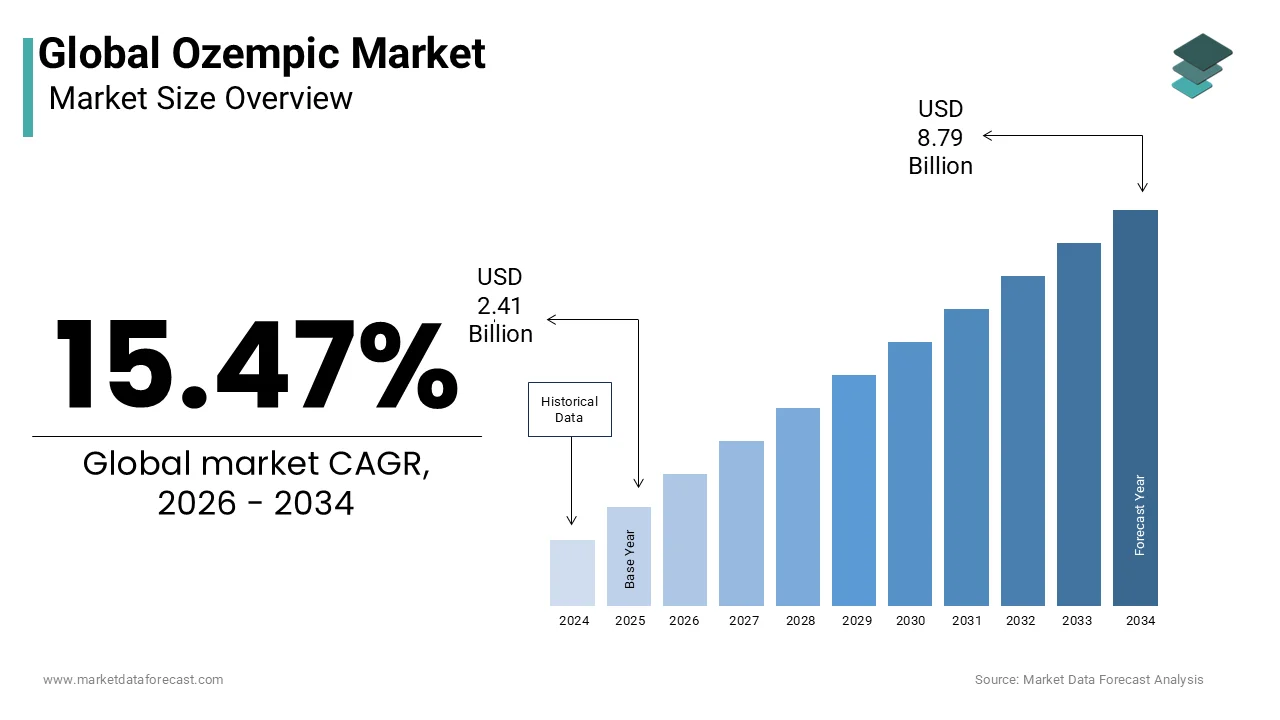
The global Ozempic market was valued at USD 2.41 billion in 2025 and is projected to reach USD 8.79 billion by 2034 from USD 2.78 billion in 2026, growing at a CAGR of 15.47% during the forecast period. Market growth is primarily driven by the rising prevalence of type 2 diabetes, increasing obesity rates, and growing adoption of GLP 1 receptor agonists for glycemic control and weight management. Expanding clinical evidence supporting cardiovascular benefits, strong physician preference for once weekly injectable therapies, and broader insurance coverage in developed markets are further accelerating global demand for Ozempic.
Key Market Trends
- Rising global burden of type 2 diabetes, increasing demand for advanced glucose lowering therapies.
- Growing off label and approved use for weight management, supported by strong clinical outcomes and patient awareness.
- Increasing healthcare expenditure and reimbursement support in developed economies.
- Expansion of injectable drug delivery technologies that enhance patient compliance and dosing convenience.
- Strong pipeline development and competitive activity in the GLP 1 receptor agonist segment.
Segmental Insights
- Based on indication, the Type 2 Diabetes segment maintained the majority share of the Ozempic market in 2025. The segment’s dominance is attributed to the drug’s established efficacy in glycemic control, reduction in HbA1c levels, and additional cardiovascular risk reduction benefits.
- Based on route of administration, the injectable segment remained dominant in the Ozempic market in 2025. Injectable formulations are widely adopted due to their proven clinical effectiveness, sustained release profile, and strong physician recommendation.
- Based on distribution channel, the retail pharmacies segment was the largest in the Ozempic market and occupied a 61.1% share in 2025. Retail pharmacies play a critical role in chronic disease management, prescription refills, and patient counseling services.
Regional Insights
- North America was the leading region in the global Ozempic market and held a 48.2% share in 2025. The region’s dominance is supported by high diabetes prevalence, advanced healthcare infrastructure, strong reimbursement frameworks, and early adoption of innovative biologic therapies.
- Other regions are also witnessing rapid growth, driven by rising obesity rates, expanding healthcare access, and increasing awareness of GLP 1 based treatments across Europe and Asia Pacific.
Competitive Landscape
The global Ozempic market is highly competitive and innovation driven, with major pharmaceutical companies investing in research and development, lifecycle management strategies, and geographic expansion. Strategic partnerships, clinical trial expansion, and regulatory approvals for additional indications are key competitive strategies shaping the market landscape.
Prominent players in the global Ozempic market include Novo Nordisk, Sanofi, Boehringer Ingelheim, Eli Lilly and Company, Merck and Co., AstraZeneca, Pfizer, and Bristol Myers Squibb.
Global Ozempic Market Size
The global ozempic market size was valued at USD 2.41 billion in 2025 and is projected to reach USD 8.79 billion by 2034 from USD 2.78 billion in 2026, growing at a CAGR of 15.47%.
Ozempic is a once weekly injectable glucagon like peptide one receptor agonist whose active pharmaceutical ingredient is semaglutide. It is a prescription medication approved for the treatment of adults with type two diabetes mellitus to improve glycemic control and to reduce the risk of major adverse cardiovascular events in those with established cardiovascular disease or high risk factors. Its mechanism of action involves mimicking the natural incretin hormone GLP one, thereby stimulating insulin secretion, suppressing glucagon release, and promoting satiety through central nervous system effects. The market for Ozempic is defined by its therapeutic application in metabolic health, distinct from its molecular sibling Wegovy which carries a specific indication for chronic weight management. The clinical relevance of this drug class is underscored by the escalating global burden of type two diabetes, a condition now affecting an estimated eight hundred and thirty million people worldwide according to the World Health Organization, with the majority residing in low and middle income countries. The International Diabetes Federation’s most recent data indicates that diabetes prevalence among adults has doubled since 1990, reaching fourteen percent globally by 2022, creating a vast and growing patient pool for which GLP one based therapies are increasingly considered a standard of care.
MARKET DRIVERS
Expanding Clinical Indications Validated by Robust Cardiovascular Outcome Data
The compelling body of evidence from large-scale cardiovascular outcome trials is the main force behind the growth of the Ozempic market. These trials demonstrate significant risk reduction beyond glycemic control. Pivotal studies such as SUSTAIN six and PIONEER six have consistently shown that semaglutide reduces the composite endpoint of major adverse cardiovascular events, which includes cardiovascular death, non fatal myocardial infarction, and non fatal stroke, in patients with type two diabetes and either established cardiovascular disease or high risk factors. Robust outcome data, including the landmark SELECT trial (encompassing over 17,600 participants) and the SUSTAIN-6 trial (3,297 participants), confirmed a statistically significant and clinically meaningful reduction in MACE (Major Adverse Cardiovascular Events) incidence for those treated with semaglutide compared to placebo, showing superior protection in patients with obesity/overweight and established CV disease. This cardioprotective benefit has been instrumental in reshaping clinical guidelines, leading major bodies like the American Diabetes Association and the European Association for the Study of Diabetes to recommend GLP one receptor agonists with proven cardiovascular benefit, such as Ozempic, as a preferred second line therapy after metformin for patients with type two diabetes and atherosclerotic cardiovascular disease. Consequently, a substantial portion of the patient population, particularly those with Type 2 Diabetes and established Atherosclerotic Cardiovascular Disease (ASCVD) or high cardiovascular risk, as prioritized in the latest ADA/EASD consensus guidelines, are appropriate candidates for this therapy, directly fueling high market demand through expanded clinical utility and increased physician prescribing confidence.
Surge in Off Label Use for Weight Management Amplifying Demand
The unprecedented surge in off-label prescribing of Ozempic for weight loss is also accelerating the expansion of the Ozempic market. This surge is driven by the drug's potent anorectic effects and amplified by widespread social media discourse. Despite its official indication being limited to type 2 diabetes by the EMA and FDA, Ozempic's significant efficacy in weight reduction has resulted in its widespread off-label use for obesity and overweight management. Real world data illustrates this trend starkly. Analysis of employer-sponsored insurance claims indicates that the proportion of individuals with a documented diabetes diagnosis among those prescribed Ozempic has dropped, driven by a sharp increase in off-label prescribing for weight loss. Studies on GLP-1 medication usage trends indicate that a significant portion of patients are accessing Ozempic primarily for weight management rather than for the treatment of type 2 diabetes. This cultural and clinical phenomenon, while not sanctioned by regulatory labels, has created an immense secondary demand stream that far exceeds the original diabetic patient base. The resulting strain on the pharmaceutical supply chain is a direct testament to the magnitude of this off label adoption, effectively broadening the drug’s market footprint into the vast global obesity epidemic, which affects over one billion people worldwide according to the World Health Organization.
MARKET RESTRAINTS
Chronic Global Supply Shortages Constraining Patient Access
The persistent and severe global shortage of the drug, which directly impedes access for its primary indicated patient population of individuals with type two diabetes, is a significant restraint on the Ozempic market. This scarcity is primarily a consequence of demand vastly outstripping the manufacturer’s production capacity, a situation exacerbated by the aforementioned off label use for weight loss. Manufacturing complexities, including the scarcity of specialized raw materials and the intricate nature of peptide synthesis, further limit the ability to rapidly scale output. As per analyses from pharmaceutical industry observers, these shortages have left many patients who rely on Ozempic for essential glycemic and cardiovascular management struggling to obtain their prescriptions. United Kingdom health authorities anticipated that supply constraints for specific diabetes medications would persist throughout a significant portion of the following year. The ethical and clinical dilemma is profound, as the diversion of a life improving therapy for a non approved cosmetic purpose creates a critical access barrier for those with a medically necessary indication. This ongoing supply crisis acts as a hard ceiling on market growth, preventing the full realization of potential patient uptake even where clinical need and physician recommendation are present.
Regulatory and Reimbursement Hurdles in Key European Markets
The complex and often restrictive reimbursement landscape across various European healthcare systems is among the major barriers to global Ozempic market expansion. Consequently, patient access can be significantly delayed or limited despite regulatory approval. Furthermore, while the European Commission granted centralized authorization for Ozempic, individual nations determine the drug's price and reimbursement eligibility. These processes can be lengthy and may result in stringent criteria for use, such as requiring failure on multiple prior lines of therapy or the presence of specific comorbidities before coverage is granted. In some countries, the high cost of GLP one receptor agonists relative to older, generic diabetes medications leads payers to impose strict budget impact controls. This fragmented and cautious approach to reimbursement across Europe creates a patchwork of access, where a patient’s ability to receive Ozempic is heavily dependent on their geographic location and the specific policies of their national health service. Such barriers slow down market penetration and prevent the equitable delivery of a clinically beneficial therapy to all eligible patients within the region.
MARKET OPPORTUNITIES
Expansion into Primary Prevention for High Risk Populations
Its potential expansion into primary prevention is a key opportunity for the Ozempic market. This would target individuals at high risk of developing type two diabetes or experiencing their first major adverse cardiovascular event. Current approvals are largely confined to secondary prevention in diagnosed diabetics or those with existing cardiovascular disease. However, emerging data suggests that the drug’s benefits on weight, blood pressure, and lipid profiles could be leveraged much earlier in the disease continuum. For example, the STEP program for Wegovy demonstrated that semaglutide could reduce the incidence of new onset type two diabetes by over fifty percent in obese individuals without diabetes. If future dedicated trials, such as the ongoing SOUL study for oral semaglutide, confirm a robust primary cardiovascular prevention benefit, it would open a massive new addressable population. This group includes the hundreds of millions of people globally with prediabetes or multiple cardiovascular risk factors but no formal diagnosis of diabetes or established heart disease, representing a strategic frontier for market growth beyond its current therapeutic boundaries.
Development of Oral Formulations to Enhance Adherence and Accessibility
The ongoing development and potential market entry of more convenient oral formulations of semaglutide offers a lucrative avenue for expansion of the Ozempic market. The current standard of care requires a once weekly subcutaneous injection, which can be a significant barrier to initiation and long term adherence for many patients due to needle phobia or perceived inconvenience. An effective oral alternative would dramatically lower this psychological and practical hurdle, potentially broadening the drug’s appeal to a much wider segment of the eligible population. The FDA has already approved an oral version of semaglutide for type two diabetes, and its performance in the market will be a critical indicator of this opportunity’s magnitude. If real world evidence confirms comparable efficacy and safety to the injectable form, the oral formulation could become a first line option for many, accelerating market penetration and capturing patients who would otherwise opt for less effective but easier to administer therapies. This shift in delivery method represents a fundamental innovation in patient experience that could reshape the competitive dynamics of the entire GLP one market.
MARKET CHALLENGES
Intensifying Competition from a New Generation of Multi Agonists
The imminent arrival of next-generation and multi-agonist drugs is a central obstacle for the Ozempic market growth. These new treatments target multiple hormonal pathways simultaneously, such as GLP-1/GIP or GLP-1/glucagon receptors. These novel agents, exemplified by drugs like tirzepatide, have demonstrated in head to head clinical trials superior efficacy in both glycemic control and weight loss compared to semaglutide monotherapy. Clinical trial data indicates that newer multi-agonist therapies deliver superior efficacy in glycemic control and weight reduction compared to existing, established treatments. As these multi agonists gain regulatory approvals and establish their place in clinical guidelines, they pose a direct threat to Ozempic’s market leadership by offering a more potent therapeutic option. This competitive pressure forces a reevaluation of Ozempic’s value proposition and could lead to a gradual erosion of its market share, particularly among newly diagnosed patients and those seeking maximum weight reduction, thereby challenging its long term commercial dominance in the metabolic health space.
Ethical and Public Health Concerns Surrounding Off Label Use
The growing ethical and public health controversy surrounding the widespread off-label use of Ozempic for weight loss is further constraining the expansion of the Ozempic market. This issue has sparked significant concern among medical professionals and health policymakers. This practice diverts a finite supply of a critical medicine away from its intended patient population of individuals with type two diabetes, for whom it is a vital tool for managing a serious chronic disease and preventing life threatening complications. Additionally, widespread public concern exists regarding the impact of off-label demand on the availability of medications for patients with type 2 diabetes. Furthermore, the use of a potent injectable medication for a non approved cosmetic purpose raises questions about the medicalization of obesity and the potential for misuse or development of disordered eating patterns, especially when driven by social media trends rather than clinical need. Regulatory bodies like the European Medicines Agency have explicitly stated that Ozempic is not intended for weight loss, highlighting the tension between patient demand and appropriate medical use. This controversy not only fuels the supply crisis but also risks tarnishing the drug’s reputation and inviting stricter prescribing controls, which could ultimately dampen overall market growth.
REPORT COVERAGE
| REPORT METRIC | DETAILS |
| Market Size Available | 2025 to 2034 |
| Base Year | 2025 |
| Forecast Period | 2026 to 2034 |
| CAGR | 15.47% |
| Segments Covered | By Indication, Route of Administration, Distribution Channel, Patient Demographics, and Region |
| Various Analyses Covered | Global, Regional, & Country Level Analysis; Segment-Level Analysis; DROC, PESTLE Analysis; Porter’s Five Forces Analysis; Competitive Landscape; Analyst Overview of Investment Opportunities |
| Regions Covered | North America, Europe, APAC, Latin America, Middle East & Africa |
| Market Leaders Profiled | Novo Nordisk (DK), Sanofi (FR), Boehringer Ingelheim (DE), Eli Lilly and Company (US), Merck & Co. (US), AstraZeneca (GB), Pfizer (US), Bristol-Myers Squibb (US) |
SEGMENTAL ANALYSIS
By Indication Insights
The Type 2 Diabetes segment maintained the majority share of the Ozempic market in 2025. The leading share of the segment is supported by its original and primary regulatory approval by global health authorities including the US Food and Drug Administration and the European Medicines Agency. Physicians prescribe Ozempic first and foremost to manage hyperglycemia in adults with type 2 diabetes, particularly those with inadequate control on metformin or other oral agents. The drug’s integration into major clinical guidelines has solidified its position. For instance, the American Diabetes Association and the European Association for the Study of Diabetes jointly recommend GLP one receptor agonists like semaglutide as a preferred second line therapy for patients with established atherosclerotic cardiovascular disease. This guideline endorsement translates directly into prescribing behavior across high income nations. Furthermore, real-world evidence and regulatory, market-level interventions in Europe during recent periods suggest that while a majority of Ozempic usage remains directed toward type 2 diabetes, a significant, rising, and highly scrutinized volume of prescriptions is driven by off-label weight loss demand, resulting in supply shortages for patients with diabetes. The sheer scale of the global diabetic population provides a vast and stable foundation for this segment’s continued leadership.
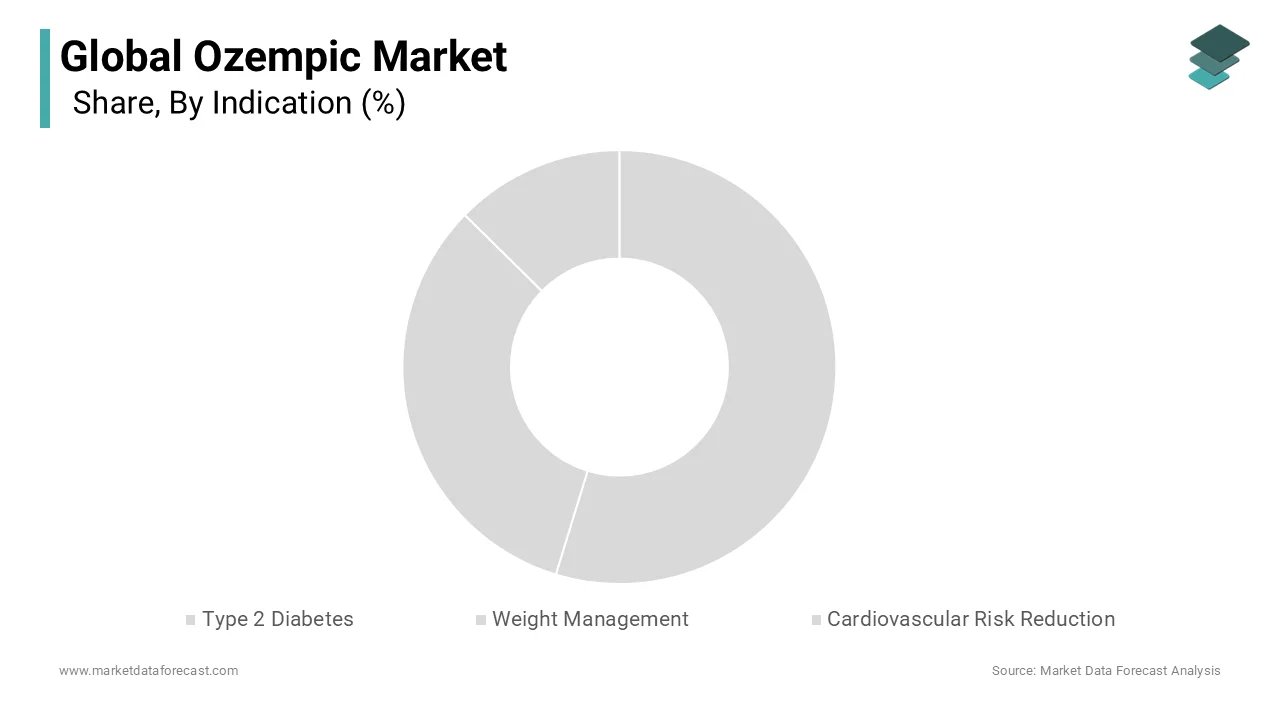
On the other hand, the weight management segment is predicted to witness the highest CAGR of 28.4% over the forecast period due to the confluence of a global obesity epidemic and limited access to approved anti obesity medications. Despite lacking formal authorization for obesity treatment in many areas, the off-label application of Ozempic for weight management has surged due to its profound impact on appetite and high profile. The World Health Organization, in collaboration with international researchers, reports that worldwide obesity has risen to affect more than one billion individuals, with significant increases observed among both adults and youth. According to the Centers for Disease Control and Prevention, the age-adjusted prevalence of obesity among adults in the United States remains high, with recent data showing a, albeit statistically non-significant, stabilization below the previous peak, while severe obesity has shown signs of continued increase. Faced with this crisis and constrained supply of Wegovy, the FDA approved semaglutide formulation for weight management, clinicians and patients have increasingly turned to Ozempic as a functional alternative. Recent analyses of pharmacy claims data indicate that demand for medication indicated for type 2 diabetes has grown significantly for off-label weight management, highlighting intense consumer interest and challenges in supply management.
By Route of Administration Insights
The injectable segment remained dominant in the Ozempic market and accounted for a substantial share in 2025. This dominance of the segment is driven by the pharmacokinetic properties of semaglutide, a peptide that is highly susceptible to degradation in the gastrointestinal tract. To achieve therapeutic blood concentrations, the molecule must be delivered subcutaneously, which ensures slow absorption and a prolonged half life suitable for once weekly dosing. Following its 2017 introduction, the subcutaneous, once-weekly injection pen became the foundational, primary method for delivering Ozempic for type 2 diabetes, establishing a dominant, long-term habit of care for patients and prescribers, despite the later introduction of oral formulations by the same company. Healthcare systems worldwide have integrated this delivery method into their diabetes management protocols, and patient training programs are universally built around injection techniques. According to patient experience data regarding GLP-1 agonists, a high proportion of individuals successfully adapt to the once-weekly self-injection routine following an initial onboarding period, resulting in a generally high level of confidence in managing the delivery device independently. The manufacturing and distribution infrastructure is also entirely optimized for the injectable format, reinforcing its market hegemony in the absence of a therapeutically equivalent oral alternative under the Ozempic brand.
The oral segment is estimated to register the fastest CAGR of 35.1% from 2026 to 2034 owing to a profound unmet need for needle free options in chronic metabolic disease management. While this growth is currently driven by Rybelsus—the oral semaglutide product approved for type 2 diabetes—it directly informs the future trajectory of the Ozempic franchise should an oral version be branded or repurposed. A substantial portion of patients with type 2 diabetes delay or avoid initiating injectable therapy, with fear of needles and perceived inconvenience being significant barriers to acceptance. The approval of oral semaglutide by the US Food and Drug Administration in 2019 marked a watershed moment, demonstrating that effective systemic delivery of the peptide was possible using a proprietary absorption enhancer. Recent, real-world data indicates that oral semaglutide has successfully captured a meaningful share of new GLP-1 therapy initiations in the US, with a higher adoption rate observed among younger patients. This rapid uptake signals a clear market preference for oral administration, positioning it as the highest growth vector for the entire semaglutide portfolio.
By Distribution Channel Insights
The retail pharmacies segment continued to be the largest segment in the Ozempic market and occupied a 61.1% share in 2025 because of the chronic outpatient nature of type 2 diabetes management, which necessitates regular, long term medication refills outside acute hospital settings. In countries with mature retail pharmacy networks such as the United States Germany and the United Kingdom, community pharmacies serve as the primary access point for specialty medications like Ozempic. These pharmacies have developed robust specialty medication programs that include patient onboarding, injection training, insurance verification, and adherence support, services critical for complex therapies. Data suggests that while many prescriptions were filled, the supply chain faced significant shortages and counterfeit infiltration during this period. Additionally, the rise of integrated pharmacy benefit managers in North America has further consolidated dispensing through select retail partners who can manage prior authorizations and co pay assistance efficiently. This ecosystem of logistical and clinical support makes retail pharmacies the default and most scalable channel for widespread patient access.
The online pharmacies segment is anticipated to witness the fastest CAGR of 22.7% during the forecast period. This rapid growth of the segment is propelled by the convergence of digital health adoption, telemedicine expansion, and consumer demand for convenience—trends dramatically amplified by the post pandemic healthcare landscape. Digital platforms enable seamless end to end care, from virtual consultations with licensed physicians to home delivery of temperature sensitive biologics like Ozempic. Telehealth platforms in the United States have driven massive, accelerated adoption of GLP-1 receptor agonists for chronic weight management, with the number of prescriptions growing exponentially, particularly as digital health providers expand access to obesity medication. Similarly, online pharmacies in Sweden and the Netherlands are experiencing increased usage for chronic medication management, supported by national e-prescription infrastructure and regulatory frameworks that facilitate digital health services. The discreet and frictionless nature of online ordering is particularly appealing for patients seeking weight management solutions, many of whom may avoid traditional clinical settings due to stigma. Clearer regulatory guidelines for the digital distribution of cold chain medications are driving this segment toward a more significant market share.
REGIONAL ANALYSIS
North America Ozempic Market Analysis
North America was the top performer in the global Ozempic market and held a 48.2% share in 2025. The United States is the single largest national market, driven by a high prevalence of type 2 diabetes and obesity, a well established reimbursement system for premium biologics, and early adoption of GLP one receptor agonists in clinical practice. Furthermore, the American obesity rate stands at notable level, creating a massive dual demand pool. Private and public insurers, including Medicare Part D, provide coverage for Ozempic under specific criteria, facilitating broad access despite its high list price. The presence of Novo Nordisk’s primary commercial operations and aggressive direct to consumer marketing campaigns have also accelerated brand recognition and physician familiarity.
Europe Ozempic Market Analysis
Europe was the second largest regional player in the Ozempic market and captured a 29.6% share in 2025. The expansion of the European market is fuelled by a heterogeneous but generally favorable regulatory and reimbursement environment. Countries such as Germany France and the United Kingdom lead adoption due to strong national diabetes programs and centralized health technology assessment processes that have granted positive recommendations for semaglutide. The European Medicines Agency’s early approval enabled coordinated market entry, though individual country pricing negotiations have resulted in variable access timelines. The International Diabetes Federation estimates that over sixty one million adults in Europe live with diabetes, with type 2 accounting for the vast majority. Recent policy shifts, such as Germany’s update to its national diabetes guideline that prioritizes GLP one agonists for high risk patients, have further stimulated demand. Notwithstanding ongoing supply limitations, European healthcare providers continue to favor Ozempic, resulting in high utilization, with studies indicating a significant portion of users with established cardiovascular or kidney disease, alongside growing off-label use for weight management.
Asia Pacific Ozempic Market Analysis
The Asia Pacific is experiencing rapid growth in the Ozempic market due to rising diabetes prevalence and increasing healthcare expenditure. China and Japan are the primary contributors, together representing over seventy five percent of regional sales. The International Diabetes Federation identifies China as home to the world’s largest diabetic population, with over one hundred and forty million affected adults. Japan faces a similar challenge with an aging population and high rates of metabolic syndrome. Regulatory approvals have been secured in key markets. China's National Medical Products Administration approved Ozempic for diabetes management years after it had already received approval from Japan's Pharmaceuticals and Medical Devices Agency. However, market penetration remains limited by high out of pocket costs and restricted inclusion in national reimbursement lists. A significant portion of urban Chinese patients with diabetes find the cost of Ozempic to be a barrier to access without insurance, driving high demand for more affordable alternatives or generic versions. Nevertheless, growing awareness among affluent urban populations and the expansion of private healthcare networks are creating a viable premium segment that is expected to drive double digit annual growth through 2030.
Latin America Ozempic Market Analysis
Latin America witnessed a steady expansion in the global Ozempic market, with Brazil and Mexico emerging as the leading national markets. The region’s growth is supported by a rapidly escalating burden of type 2 diabetes and obesity, particularly in urban centers. PAHO reports that diabetes prevalence is rising rapidly across Latin America, while Mexico consistently shows one of the highest regional rates of combined overweight and obesity among adults. Regulatory approvals exist in most major countries, but access is severely constrained by economic factors and fragmented public health systems. In Brazil, Ozempic is available only through the private sector, where it is priced beyond the reach of the average citizen. A 2024-2025 analysis of diabetes management in Latin America shows that despite high demand, access to GLP-1 therapies is severely restricted due to high costs and low availability in many countries. Despite these limitations, a growing middle class and the proliferation of private insurance plans are slowly expanding the addressable market, positioning the region for moderate but steady growth as affordability improves.
Middle East and Africa Ozempic Market Analysis
The Middle East and Africa is anticipated to grow notably in the Ozempic market during the forecast period. It exhibits pockets of high potential, particularly in the Gulf Cooperation Council countries. Nations like Saudi Arabia and the United Arab Emirates have some of the world’s highest diabetes prevalence rates. The International Diabetes Federation indicates a high prevalence of diabetes among adults in Saudi Arabia, with a large portion of the population living with the condition. These governments have prioritized non communicable disease management through national health transformation initiatives, creating a conducive environment for advanced therapies. Ozempic has received regulatory approval in several GCC states and is increasingly covered under government health insurance schemes for high risk patients. However, the broader African continent remains largely untapped due to limited healthcare infrastructure, low diagnostic rates, and extreme cost sensitivity. Reports indicate that a significant majority of adults with diabetes in sub-Saharan Africa remain undiagnosed and do not receive proper treatment, with awareness and pharmacological care access being very low. Consequently, while the GCC drives the region’s current modest sales, the long term growth trajectory depends on systemic improvements in disease detection and healthcare financing across the wider African landscape.
COMPETITIVE LANDSCAPE
The Ozempic market is characterized by intense but asymmetric competition centered on clinical superiority manufacturing scale and therapeutic scope. Novo Nordisk maintains originator exclusivity but faces mounting pressure from Eli Lilly whose tirzepatide has demonstrated statistically significant advantages in both HbA1c reduction and weight loss in pivotal trials like SURPASS two. This has triggered a paradigm shift in treatment algorithms with some endocrinologists now favoring dual agonists as first line injectable therapy. Beyond direct molecule rivalry competition extends to adjacent drug classes such as SGLT2 inhibitors which offer oral administration and cardio renal benefits without injection burden. The scarcity of approved anti obesity medications further distorts dynamics as off label Ozempic use competes with its own sibling Wegovy for limited production capacity. Regulatory agencies are increasingly scrutinizing promotional practices and access equity adding another layer of complexity. Consequently the competitive battlefield spans clinical data supply chain resilience pricing strategy and ethical stewardship of scarce resources.
KEY MARKET PLAYERS
Some of the key players dominating the global ozempic market are
- Novo Nordisk (DK)
- Sanofi (FR)
- Boehringer Ingelheim (DE)
- Eli Lilly and Company (US)
- Merck and Co. (US)
- AstraZeneca (GB)
- Pfizer (US)
- Bristol Myers Squibb (US)
Top Players in the Market
- Novo Nordisk is the originator and sole manufacturer of Ozempic, a once weekly injectable semaglutide formulation approved for type 2 diabetes and cardiovascular risk reduction. Headquartered in Denmark, the company has pioneered the GLP one receptor agonist class and invested heavily in large scale clinical trials such as SUSTAIN and PIONEER to validate Ozempic’s efficacy and safety. In recent years, Novo Nordisk has significantly expanded its manufacturing capacity with multi billion dollar investments in facilities across Denmark the United States and France to address chronic supply shortages. The company has also intensified its engagement with regulatory bodies to clarify appropriate use and combat off label demand pressures while advancing next generation candidates like CagriSema to maintain long term leadership in metabolic health therapeutics.
- Eli Lilly and Company is a major competitor in the broader GLP one market through its development of tirzepatide, a dual GIP GLP one receptor agonist marketed as Mounjaro for type 2 diabetes and Zepbound for obesity. Although not a direct manufacturer of Ozempic, Eli Lilly exerts significant competitive pressure by offering superior glycemic and weight loss outcomes in head to head trials against semaglutide. The company has responded to surging demand by investing since 2022 to expand production capacity at its Indiana sites. Eli Lilly has also accelerated global regulatory submissions and secured early reimbursement approvals in key European markets, positioning its agents as preferred alternatives and directly challenging Ozempic’s clinical and commercial dominance in metabolic disease management.
- AstraZeneca participates in the metabolic disorders landscape primarily through its SGLT2 inhibitor Farxiga, which competes with Ozempic in type 2 diabetes and heart failure indications. While not producing a GLP one agonist, AstraZeneca influences the Ozempic market by offering a complementary or alternative therapeutic pathway endorsed in major guidelines. The company has strengthened its position by securing broad regulatory approvals for Farxiga in chronic kidney disease and cardiovascular risk reduction, creating cross indication competition. Recent real world evidence collaborations and value based pricing agreements with European payers have enhanced Farxiga’s accessibility, providing clinicians with a non injectable oral option that indirectly constrains Ozempic’s expansion into certain patient segments prioritizing convenience or cost efficiency.
Top Strategies Used by the Key Market Participants
Key players in the Ozempic market employ several core strategies to sustain competitive advantage. First they invest aggressively in large scale manufacturing infrastructure to overcome supply constraints and meet unprecedented global demand. Second they conduct robust cardiovascular and renal outcomes trials to expand labeled indications and reinforce clinical differentiation. Third they pursue strategic pricing and access negotiations with national health systems and pharmacy benefit managers to secure favorable reimbursement status. Fourth they develop next generation multi agonist molecules to demonstrate superior efficacy in head to head studies. Fifth they leverage digital health platforms and telemedicine partnerships to streamline patient onboarding and improve adherence. Sixth they actively engage in pharmacovigilance and risk evaluation programs to maintain strong safety profiles. Seventh they launch targeted educational initiatives for healthcare providers to optimize appropriate prescribing within approved indications and mitigate off label diversion pressures.
MARKET SEGMENTATION
This research report on the global ozempic market is segmented and sub-segmented into the following categories.
By Indication
- Type 2 Diabetes
- Weight Management
- Cardiovascular Risk Reduction
By Route of Administration
- Injectable
- Oral
By Distribution Channel
- Hospital Pharmacies
- Retail Pharmacies
- Online Pharmacies
By Patient Demographics
- Adults
- Elderly
- Pediatric
By Region
- North America
- Europe
- Asia Pacific
- Latin America
- Middle East & Africa