- Product Description Description
- Table of Contents TOC
- List of Table & Figure LOT
- Get Free Sample PDF Sample PDF
Market Size, 2025
$68.67 BnMarket Estimate, 2026
$72.52 BnMarket Forecast, 2034
$112.14 BnCAGR, 2026–2034
5.6%Global Pet Food Extrusion Market Size, Share, Trends & Forecast (2026-2034)
- Market Scope: Comprehensive global market intelligence tracking pet food extrusion systems across product formats, animal types, ingredient profiles, extruder machinery types, processing techniques, distribution channels, packaging materials, and regional geographies.
- Market Valuation: Valued at USD 68.67 billion in 2025, estimated at USD 72.52 billion in 2026, and projected to reach USD 112.14 billion by 2034, growing at a steady CAGR of 5.6% from 2026 to 2034.
- Primary Growth Drivers: Escalating pet adoption rates, rising trend of pet humanization, growing willingness among owners to spend on premium and super-premium nutrition, and technological advancements in extrusion machinery improving pet food digestibility and shelf-life.
Key Global Pet Food Extrusion Segment Metrics (2026–2034)
| Category | Leading Segment (2025 Position) | Fastest-Growing Segment |
|---|---|---|
| By Product Type | Complete Diets (specifically dry pet food formats capturing major market volume due to extended shelf-life and balanced nutrition) | Treats & Complementary Products (expanding rapidly as pet owners increasingly purchase value-added snack items) |
| By Extruder Type | Single Screw Extruders (dominant machinery choice valued for simplicity, low capital investment, and easy maintenance) | Twin Screw Extruders (growing rapidly due to high versatility, flexibility, and capability to handle complex recipe formulations) |
| By Animal Type | Dogs & Cats (accounting for the vast majority of consumption backed by high household penetration rates) | Specialized Pet Categories (including fish and birds, driven by rising exotic pet ownership) |
| By Region / Country | North America (holding the largest regional market share due to mature pet care markets and high humanization trends) | Asia-Pacific (projected to register strong growth driven by urbanization and rising disposable incomes) |
Major Industry Players & Market Structure
Market Structure: Fragmented yet competitive global market featuring major multinational pet food conglomerates and specialized processing equipment manufacturers competing on machinery efficiency, formulation flexibility, and strategic mergers and acquisitions.
Key Market Players: The J.M. Smucker Company, Mars, Andritz, Nestle, Buhler, American Extrusion International, Brabender, Doering Systems, Coperion, Baker Perkins, Kahl Group, The Bonnot Company, Diamond America, Pavan, Lindquist Machine, and Clextral.
 Download Free Sample Report
Global Pet Food Extrusion Market Size
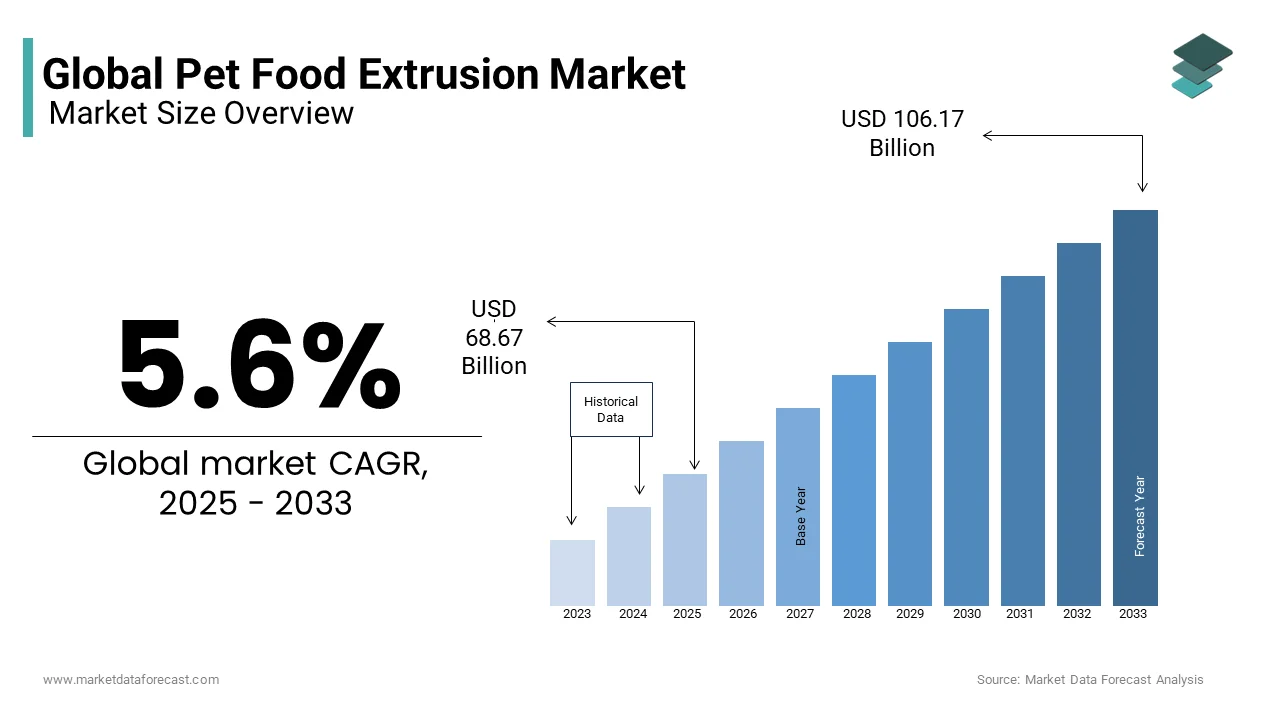
The global pet food extrusion market size was valued at USD 68.67 billion in 2025 and is anticipated to reach a valuation of USD 72.52 billion in 2026 and USD 112.14 billion by 2034, growing at a CAGR of 5.6%, from 2026 to 2034.
Pet Food Extrusion Market Definition and Current Scenario
Pet food extrusion is a high-temperature, short-time cooking and shaping process that transforms raw mixed ingredients into uniform dry kibble or treats. This mechanical process gelatinizes starches and denatures proteins to enhance digestibility and palatability for companion animals. As per the American Pet Products Association, 66% of US households own a pet, which translates to approximately 86.9 million homes requiring consistent supplies of nutritionally balanced dry food. As per research, a high percentage of dogs and cats in Europe rely on extruded dry food as their primary diet due to its convenience, nutritional balance, and long shelf stability. These consumption patterns drive continuous investment in twin screw extruders capable of handling diverse ingredient profiles including novel proteins and grain free formulations. The technology enables precise control over kibble density size and texture which directly influences consumer acceptance and animal health outcomes. Consequently the Pet Food Extrusion Market is defined by its critical role in transforming raw agricultural commodities into safe stable and nutritious finished products rather than merely serving as a manufacturing step. According to the Association of American Feed Control Officials, regulatory standards mandate minimum and maximum nutrient profile requirements for pet foods based on life stages rather than enforcing specific retention levels explicitly measured post-extrusion.
MARKET DRIVERS
Rising Global Companion Animal Population
Increasing Pet Ownership Rates Fuel Production Volume Demand
The expanding global population of companion animals directly necessitates higher output from facilities within the pet food extrusion market. This increase is required to meet daily nutritional requirements. As per research, the companion animal population creates a massive baseline demand for manufactured feed to satisfy nutrition requirements. This demographic shift toward pet humanization means owners prioritize premium quality kibble produced through sophisticated extrusion processes that preserve nutrient integrity. According to studies, dry food production in the United Kingdom requires industrial processing capabilities to feed millions of household pets. Extrusion technology allows manufacturers to scale production efficiently while maintaining consistent quality across large batches. The correlation between pet ownership growth and extrusion capacity expansion is evident as companies invest in larger diameter screws and higher throughput systems. Urbanization trends further support this driver as apartment dwellers prefer dry food for its ease of storage and feeding compared to raw or canned alternatives. As per sources, pet food formulas represent a primary component of companion animal care, with nutrition being a dominant focus for owners. This financial commitment ensures steady demand for extruded products regardless of economic fluctuations. Manufacturers respond by optimizing extrusion lines for maximum efficiency to serve this growing base of devoted pet owners who view their animals as family members deserving of high quality nutrition.
Demand for Premium and Functional Kibble Formulations
Consumer Preference for Specialized Nutrition Drives Technological Upgrades
Growing consumer demand for premium and functional pet foods compels manufacturers to adopt advanced extrusion technologies capable of handling complex ingredient matrices, which further propels the pet food extrusion market. According to research, pet owners select functional formulations that target condition-specific issues like joint care and digestive health. Twin screw extruders offer superior mixing and shear control necessary for incorporating sensitive additives like probiotics vitamins and omega fatty acids without degradation. The American Veterinary Medical Association notes that weight issues affect a significant percentage of dogs and cats in the United States, prompting demand for specialized weight management formulas. These specialized formulations often use alternative carbohydrates like lentils or chickpeas which behave differently under heat and pressure than traditional corn or wheat. Extrusion equipment must therefore provide flexible parameter control to ensure proper expansion and durability. As per studies, consumer preferences for natural ingredients influence the formulation and development of modern pet food products. This trend forces processors to upgrade to sanitary design extruders that prevent cross contamination and allow for frequent product changeovers. The ability to produce small batch customized runs efficiently becomes a competitive advantage. Consequently the push for functional nutrition drives investment in versatile extrusion systems that can adapt to evolving dietary trends and scientific insights into animal health.
MARKET RESTRAINTS
Volatility in Raw Material Costs and Supply
Fluctuating Ingredient Prices Squeeze Manufacturing Margins
Significant volatility in the prices of key extrusion inputs, such as corn, wheat, and meat meals, severely impacts the profitability of pet food manufacturing operations, which in turn restricts the growth of the pet food extrusion market. According to Food and Agriculture Organization index data, international cereal prices fell during the initial months of 2025 before dynamics shifted in 2026. These cost increases force manufacturers to either absorb losses or raise retail prices which can dampen consumer demand for premium extruded products. The US Department of Agriculture states that soybean meal prices remained at competitive levels with projections indicating a decline due to record high domestic crush volumes. As per studies, raw materials make up a high percentage of total pet food production costs, meaning that ingredient price volatility influences the financial structure of manufacturing businesses operations. Extrusion facilities operate with thin margins making them highly sensitive to input cost variations. Suppliers struggle to pass these costs downstream immediately due to long term contracts with retailers. According to the International Grains Council, geopolitical tensions and shipping bottlenecks at key global maritime waterways affect agricultural supply chains and restrict grain flows. This uncertainty complicates inventory planning and forces manufacturers to hold larger safety stocks tying up working capital. The inability to predict raw material costs accurately hinders long term investment in new extrusion lines. Companies may delay upgrades or expansions until price stability returns slowing technological adoption in the sector.
Stringent Environmental Regulations on Energy Usage
High Energy Consumption Faces Regulatory Scrutiny and Cost Pressure
The energy intensive nature of the extrusion process faces increasing regulatory scrutiny and cost pressures due to global sustainability mandates, and ultimately hampers the expansion of the pet food extrusion market. According to sources, industrial food processing consumes a notable portion of manufacturing energy, with thermal processing and cooking stages requiring major energy inputs. European Union directives mandate a 55% net reduction in greenhouse gas emissions across the entire economy by 2030 compared to 1990 levels rather than placing this specific statutory requirement solely on individual pet food manufacturers. Traditional single screw extruders consume significant electricity and steam to achieve the necessary temperatures for starch gelatinization and pathogen kill. As per studies, upgrading to advanced machinery configurations helps optimize energy usage but demands capital investments from manufacturing facilities. Many small and medium sized manufacturers lack the financial resources to upgrade older equipment leading to compliance risks. As per the Environmental Protection Agency, federal emissions standards govern industrial boiler systems used to generate steam in manufacturing operations. Failure to meet these standards results in hefty fines and operational restrictions. The transition to renewable energy sources also involves complex infrastructure changes that disrupt production schedules. These regulatory burdens increase operational costs and slow down the adoption of new extrusion capacities. Manufacturers must balance compliance costs with competitive pricing creating a challenging environment for market expansion particularly in regions with strict environmental laws.
MARKET OPPORTUNITIES
Expansion into Alternative Protein Sources
Insect and Plant Based Proteins Open New Processing Avenues
The rising interest in sustainable and alternative protein sources offers a significant opportunity for the pet food extrusion market. This helps to diversify its ingredient base. According to the International Platform of Insects for Food and Feed, alternative proteins such as insect larvae are utilized due to their nutritional value and low environmental footprint. Extrusion technology is uniquely suited to process insect meal such as black soldier fly larvae which requires specific temperature and shear conditions to ensure palatability and digestibility. The European Commission has approved several insect species for use in pet food creating a regulatory pathway for widespread adoption. As per research, companion animals demonstrate high acceptance levels for alternative protein formulas when processed properly. This acceptance encourages manufacturers to experiment with novel formulations that appeal to eco conscious consumers. Plant based proteins from peas and lentils also offer opportunities for hypoallergenic diets that rely on extrusion to improve texture and reduce anti nutritional factors. The flexibility of twin screw extruders allows for the integration of these diverse ingredients without major equipment overhauls. Suppliers developing specialized dies and screw configurations for alternative proteins can capture early market share. This shift aligns with broader sustainability goals and reduces dependency on traditional livestock supply chains. The ability to create high quality kibble from unconventional sources positions extrusion as a key enabler of future pet nutrition trends.
Customization Through Small Batch Production
On Demand Manufacturing Meets Personalized Nutrition Needs
Advancements in extrusion technology enable small-batch production capabilities, which pave the way for the expansion of the pet food extrusion market. These capabilities cater to the growing demand for personalized pet nutrition. As per research, consumer interest in custom formulations that focus on age-specific care or allergen removal prompts demand for tailored options. Modern modular extruders allow manufacturers to switch formulations quickly and efficiently reducing waste and enabling just in time production. According to the Institute of Food Technologists, digital control systems monitor processing parameters to ensure consistency during product manufacturing runs. The technological capability supports direct to consumer business models where brands offer tailored kibble blends shipped directly to households. As per studies, customized delivery networks require flexible supply agreements with automated processing facilities. Extrusion facilities that can handle frequent changeovers and diverse recipes gain a competitive edge in this niche market. The ability to produce limited edition flavors or therapeutic diets on demand reduces inventory risks and enhances customer loyalty. This opportunity transforms extrusion from a mass production tool into a versatile platform for innovation. Manufacturers investing in agile processing lines can capture higher margins from personalized segments. The trend toward individualized care drives demand for responsive and adaptable extrusion services.
MARKET CHALLENGES
Maintenance of Nutrient Stability During Processing
Thermal Degradation Compromises Product Quality and Efficacy
Maintaining the stability of heat-sensitive nutrients during the high-temperature extrusion process remains a persistent technical challenge for manufacturers in the pet food extrusion market. According to the Journal of Agricultural and Food Chemistry, thermal processing variables degrade heat-sensitive micronutrients during high-temperature cooking. This loss necessitates over fortification which increases costs and may lead to nutrient imbalances if not carefully managed. The Association of American Feed Control Officials requires strict adherence to labeled nutrient guarantees making consistency critical for regulatory compliance. As per research, temperature variations inside the process environment can influence the retention of heat-sensitive compounds. Manufacturers must optimize screw design and barrel cooling systems to minimize thermal exposure while ensuring adequate cooking for starch gelatinization. Balancing these competing requirements requires sophisticated process control and real time monitoring capabilities. Failure to maintain nutrient integrity leads to product recalls and brand damage. The challenge is exacerbated by the trend toward fresh and lightly processed claims which demand lower thermal loads. Developing gentle extrusion protocols that preserve bioavailability without compromising safety is technically complex. This issue limits the ability to market certain functional ingredients effectively. Continuous research into protective coating technologies and post extrusion application methods is essential but adds complexity to the production line.
Equipment Wear and Tear from Abrasive Ingredients
Mechanical Degradation Increases Operational Costs and Downtime
The use of abrasive ingredients such as bone meal and high-fiber plant materials accelerates wear and tear on extruder components, which remains a significant operational hurdle for the pet food extrusion market. According to studies, mechanical components within food processing equipment undergo surface degradation over time when running abrasive formulations. This wear alters the clearance between the screw and barrel affecting mixing efficiency and product consistency. As per sources, processing formulations with high fiber ingredients contributes to wear on contact parts, leading to maintenance interventions. Downtime for maintenance disrupts production schedules and increases labor costs impacting overall profitability. According to research, procuring replacement mechanical components for large-scale production machinery involves significant parts expenditure. Smaller manufacturers struggle to budget for these recurring expenses affecting their competitiveness. The need for hardened steel alloys or ceramic coatings adds to the initial capital expenditure of extrusion lines. Inconsistent wear patterns can also lead to uneven product density and poor kibble shape affecting consumer perception. Managing this challenge requires rigorous preventive maintenance programs and skilled technicians. The lack of standardized wear resistant materials across suppliers complicates procurement. This mechanical vulnerability constrains the ability to run high volume continuous operations without interruption.
REPORT COVERAGE
| REPORT METRIC | DETAILS |
| Market Size Available | 2025 to 2034 |
| Base Year | 2025 |
| Forecast Period | 2026 to 2034 |
| CAGR | 5.6% |
| Segments Covered | By Product, Animal, Ingredient, Extruder, Process, Distribution Channel, Packaging Material, and Region |
| Various Analyses Covered | Global, Regional & Country Level Analysis, Segment-Level Analysis, DROC, PESTLE Analysis, Porter’s Five Forces Analysis, Competitive Landscape, Analyst Overview on Investment Opportunities |
| Regions Covered | North America, Europe, APAC, Latin America, Middle East & Africa |
| Market Leaders Profiled | The J.M. Smucker Company, Mars, Andritz, Nestle, Buhler, American Extrusion International, Brabender, Doering Systems, Coperion, Baker Perkins, Kahl Group, The Bonnot, Diamond America, Pavan, Lindquist Machine, Clextral, and Others. |
SEGMENTAL ANALYSIS
By Product Insights
Complete Diets
The complete diets segment dominated the pet food extrusion market and accounted for a substantial share in 2025. This leading position was attributed to these products serving as the primary source of daily nutrition, providing the balanced macronutrients and micronutrients required by companion animals. According to sources, dry kibble serves as a widespread format for canine and feline nutrition due to its shelf stability and convenient feeding characteristics. This habitual consumption pattern ensures a steady and predictable demand for extruded complete foods regardless of economic fluctuations. The Association of American Feed Control Officials establishes nutrient profiles defining minimum and maximum levels of essential nutrients for growth, reproduction, and maintenance to verify that a product provides complete and balanced nutrition. As per the European Pet Food Industry Federation, complete dry foods constitute a significant segment of companion animal feeding regimes across European households. Extrusion technology allows manufacturers to incorporate essential vitamins minerals and proteins into a stable shelf ready product that meets these regulatory standards. The scalability of twin screw extruders enables mass production at competitive price points making complete diets accessible to a broad consumer base. Manufacturers focus on optimizing expansion ratios and kibble density to enhance palatability while maintaining structural integrity during packaging and transport. This segment benefits from high repeat purchase rates as pets consume these products daily. The critical role of complete diets in animal health sustains their market leadership through consistent volume requirements and established consumer trust in extruded formulations.
The economic advantage and extended shelf life of extruded complete diets significantly contribute to their dominant position in the market. According to research, dry pet foods offer cost efficiencies for households managing the nutritional upkeep of domestic animals. This cost efficiency drives widespread adoption among budget conscious consumers who prioritize value without compromising basic nutritional needs. The Food and Drug Administration records indicate that dry pet food typically features a moisture content around 10% to 12%, a parameter that differentiates it from canned varieties. This stability reduces logistics costs and waste for retailers and distributors facilitating broader geographic distribution. As per studies, dry complete pet foods feature stable shelf characteristics that distinguish their storage profiles from perishable fresh formats. Extrusion processes seal nutrients within the starch matrix protecting them from oxidation and environmental degradation. This preservation capability ensures that products remain safe and nutritious throughout the supply chain. Manufacturers leverage these advantages to offer large bulk packages that further reduce unit costs for consumers. The combination of affordability convenience and longevity makes extruded complete diets the default choice for the majority of pet owners. This structural benefit reinforces the segment's leadership by aligning with practical consumer needs and retail operational efficiencies.
Treats & Complementary Products
The Treats and Complementary Products segment is predicted to witness the highest CAGR of 9.5% from 2026 to 2034 due to the humanization of pets and the desire for indulgent rewards. According to sources, pet owners buy treats as rewards to build interactive engagement with their domestic companion animals. This emotional connection drives demand for high quality extruded snacks that mimic human food textures and flavors such as bacon cheese or peanut butter. As per research, consumer purchasing shows interest in functional treats optimized for specific health benefits like dental maintenance and physical mobility. Extrusion technology enables the creation of unique shapes and textures that enhance the sensory experience for pets while allowing for the inclusion of sensitive functional ingredients. According to studies, the cooking parameters used in manufacturing processes influence the aromatic profile and consumer acceptance of treats. Manufacturers innovate with dual texture extruders that create crunchy exteriors and soft centers appealing to discerning pets. This segment benefits from impulse buying behavior at retail checkpoints where attractive packaging and novel formulations capture consumer attention. The ability to produce small batches of specialized treats allows brands to respond quickly to trending flavors and dietary preferences. This agility supports rapid growth as consumers experiment with diverse snack options for their companions.
Increasing awareness of positive reinforcement training methods accelerates the growth of extruded treats and complementary products in the pet care sector. According to sources, small rewards are practical for reinforcing positive behavior changes during structured obedience training sessions. This professional endorsement drives consumer adoption of bite sized extruded treats that are easy to carry and quick to consume during training sessions. As per studies, structuring low-calorie reward portions assists in managing weight guidelines while conducting active behavior reinforcement. Extrusion processes allow manufacturers to produce tiny uniform pieces with controlled caloric content suitable for repetitive use. According to a survey, early companion animal ownership stages involve training milestones that support the ongoing utilization of behavioral training aids. These products often feature high protein content and strong aromas to maintain pet interest during learning exercises. Manufacturers develop specialized formulations that dissolve quickly in the mouth to prevent distraction. The integration of training needs with product design creates a niche market with high loyalty and repeat purchase potential. Brands that collaborate with trainers to validate efficacy gain competitive advantage. This functional application expands the utility of extruded products beyond mere indulgence driving segment growth.
By Animal Insights
Dogs
The dogs segment led the pet food extrusion market and captured a significant share in 2025. This dominance was driven by its large global population and higher daily food intake requirements compared to other companion animals. According to sources, the domestic canine population establishes a major worldwide presence, generating a baseline demand for manufacturing balanced nutrition options. The larger body size of most dog breeds necessitates greater quantities of food per day driving substantial volume demand for extruded products. As per studies, medium- to large-sized breeds make up a significant portion of domestic companion animals, influencing total feeding volumes. The biological requirement translates into higher frequency of purchases and larger package sizes boosting market revenue. According to the Pet Food Institute, production capacity handles substantial manufacturing volumes to deliver complete and balanced nutrition across regional distribution channels. Extrusion lines are often optimized for the larger kibble sizes and harder textures preferred by dogs ensuring efficient production. Manufacturers invest in robust equipment capable of handling high throughput volumes to meet this consistent demand. The diversity of dog sizes and activity levels also drives segmentation within the category from puppy to senior formulas. This broad applicability ensures that extrusion technology remains central to meeting the nutritional needs of the largest companion animal group globally.
The active nature of dogs and their tendency to chew vigorously necessitates durable kibble structures that only advanced extrusion can provide. According to research, the structural characteristics and compression attributes of manufactured kibble influence mechanical mastication and texture performance in companion animals. Extrusion parameters such as barrel temperature and screw speed are carefully calibrated to achieve the desired density and crunchiness that prevents rapid disintegration. The Veterinary Oral Health Council approves certain extruded diets that mechanically reduce plaque and tartar buildup through abrasive action during chewing. As per studies, feeding structurally optimized dry kibble formats assists in managing oral hygiene profiles compared to untextured food variants. This health benefit drives consumer preference for high quality extruded kibble over softer alternatives. Manufacturers develop specialized die designs that create complex shapes with ridges and pores to maximize surface area for cleaning. The ability to produce consistent texture across large batches is critical for brand loyalty as dogs often reject changes in kibble feel. This technical requirement reinforces the importance of precise extrusion control in the dog food segment. The link between physical structure and oral health creates a value proposition that sustains market leadership.
Cats
The cats segment is estimated to register the fastest CAGR of 8.2% during the forecast period, owing to the increasing number of indoor cats requiring specialized dietary management. According to sources, a notable portion of companion cats live indoors, a management style associated with distinct physical activity patterns and health care focuses. This demographic shift drives demand for extruded diets formulated with controlled calorie content and urinary pH balancing ingredients. The Cornell Feline Health Center records state that feline lower urinary tract disease encompasses a complex of clinical signs requiring specific multi-modal therapeutic and dietary management protocols. Extrusion technology allows for the precise incorporation of acidifiers and magnesium controls into kibble to mitigate these health risks. As per research, indoor environments influence the overall lifespan profiles of companion cats, leading to distinct lifecycle consumption traits. Manufacturers respond by developing small dense kibble pieces that encourage slower eating and better digestion. The compact size of cat kibble also appeals to owners living in urban apartments with limited storage space. This trend toward indoor confinement creates a stable and growing customer base for premium extruded cat foods. The focus on preventive health through diet strengthens the segment's growth trajectory.
The selective eating habits of cats drive innovation in extrusion processes to enhance palatability and aroma retention in dry food products. According to the Waltham Petcare Science Institute, cats are obligate carnivores whose feeding preferences are heavily shaped by specialized taste biology, particularly a preference for umami and a complete lack of functional sweet taste receptors. Extrusion conditions must be optimized to preserve volatile aroma compounds that attract finicky felines to dry kibble. As per sources, applying coatings like animal digests or fats to extruded kibble surfaces post-processing influences final palatability and consumption responses. This post extrusion application step is critical for meeting the sensory expectations of cats who may reject bland or stale tasting food. According to studies, formulating diets with concentrated animal proteins alters the mechanical shear profiles required during extrusion cooking to secure structural stability. Manufacturers invest in advanced preconditioning systems to hydrate ingredients uniformly before cooking enhancing flavor release. The ability to produce highly palatable kibble consistently is a key competitive differentiator in the cat food market. Brands that master aroma retention through precise thermal control gain loyal customers. This sensory focus drives continuous improvement in extrusion technology for the cat segment.
By Ingredient Insights
Grains & Oilseeds
In 2025, the grains and oilseeds segment held the majority share in the pet food extrusion market because it provides the necessary starch content for kibble expansion and structural integrity during processing. According to research, corn and wheat are utilized across global dry pet food formulations due to their behavioral properties during extrusion and structural contribution. Starch gelatinization during extrusion creates the porous matrix that gives kibble its characteristic light and crunchy texture. The American Soybean Association references that soybean proteins provide primary functional properties including the ability to increase viscosity, emulsify, form gels, absorb water, and create texturized structures. These ingredients act as the backbone of the extrusion process allowing for consistent shape formation and durability. As per the Institute of Food Technologists, analyzing the viscosity of grain formulations under heat and shear aids in managing processing parameters for food extrusion systems. This reliability reduces production downtime and ensures uniform product quality. Manufacturers rely on the consistent supply and standardized quality of major grains to maintain efficient production schedules. The versatility of grains allows them to be blended with various protein sources without compromising processing performance. This functional indispensability secures their leading position in the ingredient mix. The economic availability of grains further supports their widespread use in mass market pet food production.
The high energy density provided by grains and oilseeds makes them essential for meeting the caloric requirements of active companion animals. According to the National Research Council, carbohydrates from grains provide a dietary energy source for dogs and cats, though distinct minimum requirements are not mandatory for these species if adequate protein and gluconeogenic precursors are provided. Oilseeds such as canola and sunflower seeds contribute essential fatty acids that improve coat health and skin condition while adding caloric value. As per studies, fats derived from agricultural sources assist in the texturization of dry kibble and participate in the biological transport of fat-soluble vitamins. As per the European Pet Food Industry Federation, the inclusion of whole grains provides dietary fiber which supports digestive health and regularity in pets. Extrusion processes effectively break down cell walls in grains improving nutrient bioavailability and digestibility. This efficiency ensures that pets derive maximum energy from their food reducing waste and stool volume. Manufacturers balance grain inclusion levels to optimize energy content without causing excessive weight gain. The nutritional synergy between grains and other ingredients creates balanced diets that support overall well being. This functional benefit reinforces the dominance of grains and oilseeds in pet food formulations.
Additives
The additives segment is expected to accelerate at a CAGR of 11.5% between 2026 and 2034 as consumers seek functional health benefits for their pets. Also, the scientific validation encourages manufacturers to invest in advanced delivery systems for additives. According to sources, demand for specialized functional ingredients like glucosamine and chondroitin is driven by lifecycle needs and changing configurations in companion animal care. Extrusion facilities must adapt to handle these specialized ingredients without cross contamination or degradation. The ability to offer targeted health solutions commands premium pricing and enhances brand differentiation. Manufacturers collaborate with supplement suppliers to develop stable forms compatible with high temperature processing. This innovation drives rapid growth in the additives segment as pet owners prioritize preventive care.
Expanding regulatory approval for novel functional additives accelerates their integration into extruded pet food formulations. According to Food and Drug Administration rules, Generally Recognized as Safe status is a federal legal determination overseen by the FDA. This regulatory clarity encourages manufacturers to experiment with innovative ingredients that offer unique health benefits such as stress reduction or cognitive support. The European Food Safety Authority has also evaluated numerous novel feed additives providing a pathway for their adoption in European markets. As per reports, changing consumer interest in natural ingredients encourages manufacturers to assess modifications to product formulations. Extrusion processes are adapted to accommodate these new ingredients ensuring uniform distribution and stability. The availability of scientifically backed additives allows marketers to make specific health claims that resonate with educated consumers. This dynamic regulatory environment fosters continuous innovation in the additives segment. Suppliers of specialized additives partner with extruders to optimize inclusion rates and processing conditions. This collaboration drives the rapid expansion of the additive ingredient category.
REGIONAL ANALYSIS
North America Market Analysis
North America remained prominent in the pet food extrusion market and occupied a commanding share in 2025. This prominence was propelled by high pet ownership rates and advanced manufacturing infrastructure. According to the American Pet Products Association, 66 % of US households own a pet driving consistent demand for high quality extruded food. The presence of major global pet food manufacturers in the region ensures continuous investment in state of the art extrusion technology. The US Department of Agriculture reports that the United States is the world largest producer of corn and soybeans providing abundant and cost effective raw materials for extrusion. This local supply chain advantage reduces logistics costs and supports competitive pricing. Consumers in this region prioritize premium and natural products prompting manufacturers to adopt clean label extrusion practices. The strict regulatory framework enforced by the FDA and AAFCO ensures high safety standards which builds consumer trust. Innovation hubs in the region drive development of novel ingredients and processing techniques. The mature retail landscape including big box stores and online platforms facilitates wide distribution. This combination of resources demand and regulation sustains North America's leadership position.
Europe Market Analysis
Europe was the second-largest region within the pet food extrusion market in 2025. Factors such as stringent sustainability regulations and high consumer awareness of animal welfare contributed to its market position. According to the European Pet Food Industry Federation, the European pet food market volume reached 8.6 million tonnes, reflecting robust numbers for processed formulations across European networks. The European Union Green Deal mandates reduced carbon emissions prompting manufacturers to invest in energy efficient extrusion systems and sustainable sourcing. As per sources, consumer choices in European regional markets prioritize functional and specialized component ingredients for complete animal care. This preference drives adoption of flexible extrusion lines capable of handling alternative ingredients like insects and legumes. According to studies, sustainability considerations and environmental profiles affect the packaging and product design decisions of local manufacturers. This consciousness encourages use of locally sourced ingredients and eco friendly packaging. Regulatory harmonization across EU member states simplifies trade and standardizes quality requirements. High disposable incomes enable consumers to purchase premium extruded products. The region serves as a leader in sustainable extrusion practices influencing global trends.
Asia-Pacific Market Analysis
Asia-Pacific was the fastest-growing region for the pet food extrusion market due to rising middle-class incomes and rapid urbanization. According to sources, pet ownership across several developing nations in Asia shows upward trends as urban populations seek household companionship. The Chinese Ministry of Agriculture and Rural Affairs has implemented stricter feed safety standards encouraging modernization of extrusion facilities. As per the Japan Pet Food Association, Japan remains a mature market with high demand for premium functional kibble for aging pets. Manufacturers in the region invest in advanced twin screw extruders to meet quality expectations. Local production capabilities are expanding to reduce reliance on imports and lower costs. Cultural shifts toward viewing pets as family members drive demand for branded extruded products. E commerce platforms facilitate access to diverse product ranges in remote areas. Government initiatives supporting livestock and feed industries provide favorable conditions for growth. This dynamic environment positions Asia-Pacific as a key future growth engine.
Latin America Market Analysis
Latin America expanded steadily in the pet food extrusion market because of increasing pet humanization and economic recovery. According to studies, Latin American nations rely on dry kibble as a prevalent feeding format for household pets. The Brazilian Ministry of Agriculture records show that local agricultural infrastructure supports the production and logistical movement of packaged feed formulations. Local manufacturers upgrade extrusion lines to meet international quality standards for export markets. Economic stabilization encourages investment in modern processing equipment. Urbanization in major cities like Sao Paulo and Mexico City drives demand for convenient feeding solutions. The region benefits from abundant agricultural resources including corn and poultry by products. Trade agreements facilitate access to technology and ingredients from North America. Growing veterinary infrastructure supports education on proper nutrition. These factors contribute to steady market expansion and modernization of extrusion capabilities.
Middle East And Africa Market Analysis
The Middle East and Africa region continues to be an emerging market within the pet food extrusion market owing to urbanization and rising disposable incomes. According to the Gulf Cooperation Council Standardization Organization, import regulations for pet food are becoming more stringent requiring compliant extrusion processes. As per research, urban demographics influence the adoption of packaged feed formats in local companion animal management. Limited local production capacity means most extruded food is imported creating opportunities for local manufacturing investment. High temperatures in the region favor dry extruded food due to its shelf stability compared to wet formats. The United Arab Emirates sees high demand for premium imported brands among expatriate communities. Infrastructure improvements in logistics facilitate distribution across vast geographic areas. Cultural acceptance of pets as companions is increasing in urban centers. International brands enter the market through partnerships with local distributors. This gradual evolution supports steady growth in extrusion related activities.
KEY MARKET PLAYERS
A few of the market players in the global pet food extrusion market include
- J.M. Smucker Company
- Mars
- Andritz
- Nestle
- Wenger Manufacturing
- Buhler
- Clextra
- American Extrusion International
- Brabender
- Doering Systems
- Coperion
- Baker Perkins
- Kahl Group
- The Bonnot
- Diamond America
- Pavan
- Lindquist Machine
- Clextral.
Top Players In The Market
- Bühler Group is a global leader in processing technology providing advanced extrusion systems specifically designed for the pet food industry. The company focuses on delivering high efficiency twin screw extruders that ensure precise control over kibble texture and nutrient retention. Recent actions include the launch of digital monitoring tools that allow manufacturers to optimize energy consumption and reduce waste during production. Bühler collaborates with research institutions to develop sustainable processing methods that align with environmental regulations. Their commitment to innovation enables clients to produce premium quality dry food with consistent characteristics. By offering comprehensive training and support services Bühler strengthens long term partnerships with major pet food producers worldwide. This holistic approach ensures customers achieve maximum operational performance and product quality.
- Wenger Manufacturing specializes in designing and building custom extrusion equipment for the pet food sector with a strong emphasis on flexibility and reliability. The company provides complete processing lines including preconditioning extrusion drying and coating systems tailored to specific formulation needs. Recent initiatives involve expanding their service network to provide faster technical support and maintenance solutions globally. Wenger invests heavily in research to improve screw geometry and barrel designs for better mixing efficiency. Their focus on customer centric engineering allows producers to easily switch between different product types without significant downtime. This adaptability helps manufacturers respond quickly to changing market trends and consumer preferences. Wenger continues to set industry standards for durability and performance in high volume production environments.
- Clextra has established itself as a key provider of specialized extrusion technology focusing on innovative solutions for complex pet food formulations. The company offers compact and efficient extruders that are ideal for small batch production and niche markets such as functional treats. Recent actions include the development of low temperature extrusion processes that preserve sensitive ingredients like probiotics and vitamins. Clextra partners with ingredient suppliers to create optimized processing protocols for alternative proteins and grain free diets. Their agile manufacturing approach allows for rapid customization of equipment to meet unique client requirements. This strategy positions Clextra as a preferred partner for brands seeking differentiation through novel product attributes. The company continues to expand its footprint by addressing the growing demand for specialized pet nutrition solutions.
Top Strategies Used By Key Market Participants
Key players in the Pet Food Extrusion Market focus on technological innovation to enhance processing efficiency and product quality while reducing environmental impact. Companies invest heavily in research and development to create advanced twin screw extruders that offer greater flexibility for diverse ingredient profiles including alternative proteins. Strategic partnerships with ingredient suppliers enable manufacturers to optimize formulations for better digestibility and palatability through precise thermal processing. Expansion into emerging markets allows participants to capitalize on rising pet ownership rates and increasing demand for premium dry food products. Manufacturers also prioritize sustainability by developing energy efficient systems that lower carbon footprints and comply with strict regulatory standards. Digitalization efforts include implementing smart monitoring tools that provide real time data for predictive maintenance and process optimization. These strategies help companies maintain competitive advantage by delivering superior value to pet food producers through improved operational performance and product consistency.
MARKET SEGMENTATION
This research report on the global food extrusion market is segmented and sub-segmented into the following categories.
By Product Type
- Complete Diets
- Treats & Complementary Products
By Animal Type
- Dogs
- Cats
- Fish
- Birds
- Others
By Ingredient
- Animal Derivatives
- Vegetables & Fruits
- Grains & Oilseeds
- Vitamins & Minerals
- Additives
- Others
By Extruder Type
- Single Screw Extruder
- Twin Screw Extruder
By Process
- Hot Extrusion
- Cold Extrusion
By Distribution Channel
- Online Retail
- Supermarkets/Hypermarkets
- Specialty Pet Stores
- Veterinary Clinics
By Packaging Material
- Plastic Bags
- Cans
- Boxes
By Region
- North America
- Europe
- Asia Pacific
- Latin America
- Middle East and Africa