- Product Description Description
- Table of Contents TOC
- List of Table & Figure LOT
- Get Free Sample PDF Sample PDF
Market Size, 2025
$5.37 BnMarket Estimate, 2026
$5.64 BnMarket Forecast, 2034
$8.40 BnCAGR, 2026–2034
5.10%Executive Summary: Global Pet Food Processing Market
- Market Scope: Comprehensive global manufacturing and machinery assessment covering equipment types (forming, baking/drying, coating), pet types (dogs, cats, fish), food forms (wet vs. dry), sales channels, and regional processing hubs.
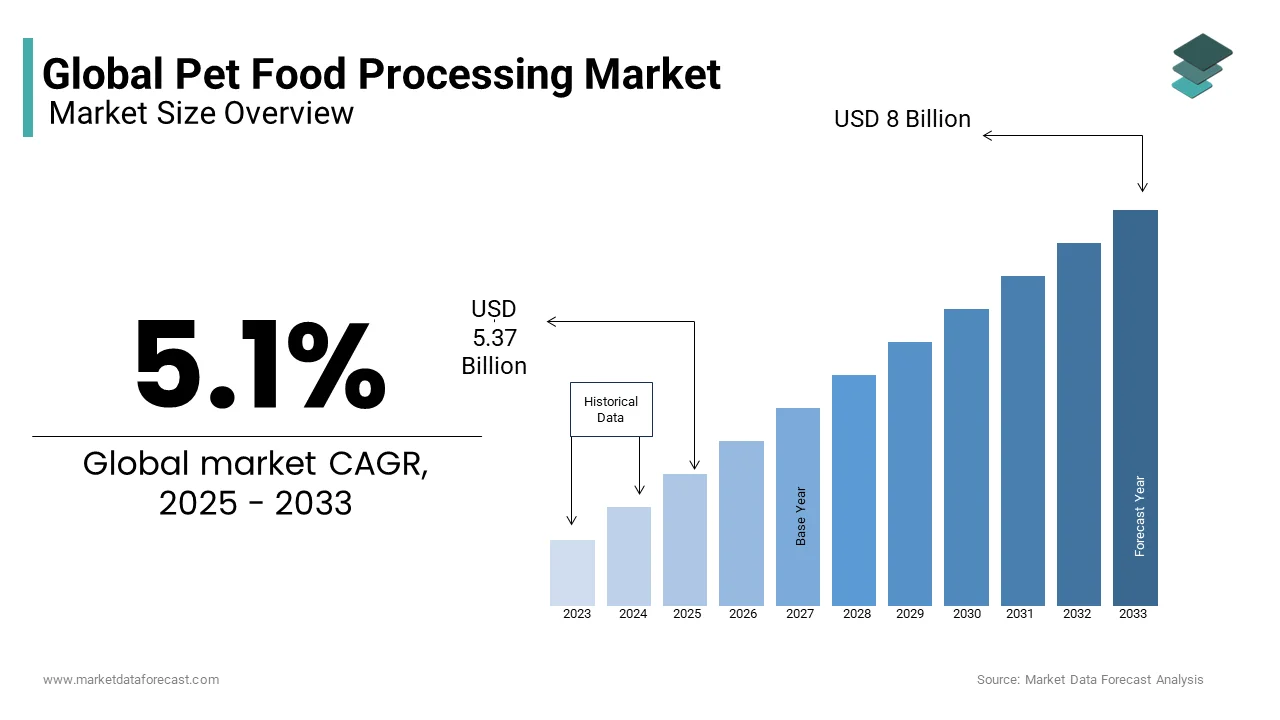
- Market Valuation: Valued at USD 5.37 billion (2025), estimated at USD 5.64 billion (2026), and projected to reach USD 8.40 billion by 2034, growing at a steady CAGR of 5.1% (2026–2034).
- Primary Growth Drivers: Widespread pet humanization trends, increasing consumer preference for natural, organic, and premium-grade pet nutrition, rising disposable incomes, and growing pet adoption rates globally.
Key Market Segment Metrics (2026–2034)
| Category | Leading Segment (2025 Position) | Fastest-Growing Segment |
|---|---|---|
| By Equipment Type | Forming equipment (dominating market share driven by extrusion-based manufacturing technologies) | Mixing & blending equipment (expanding steadily via processing automation and multi-functional integration) |
| By Pet Type | Dog sector (holding the primary market share due to high global dog ownership and premium feeding trends) | Cat and specialty pet sectors (surging due to rising demand for specialized wet and therapeutic diets) |
| By Food Form | Dry pet food (capturing majority production volume due to ease of handling, shelf life, and bulk storage) | Wet pet food (growing at a high rate driven by superior hydration and digestibility benefits for targeted pets) |
| By Region | North America (occupying the majority market share supported by advanced pet humanization and strict food safety standards) | Asia-Pacific (growing rapidly as a high-potential market propelled by rising pet adoption in China, India, and Japan) |
Major Market Players & Market Structure
Market Structure: Highly competitive global landscape featuring leading pet nutrition and processing conglomerates focusing on advanced extrusion machinery, ingredient innovation, and strict quality control protocols.
Key Companies: Mars Petcare US Inc., Nestlé Purina PetCare, Hill's Pet Nutrition, Big Heart Pet Brands, Blue Buffalo Co. Ltd., Tiernahrung Deuerer GmbH, Diamond Pet Foods, WellPet LLC, and others.
Global Pet Food Processing Market Size
The global pet food processing market size was valued at USD 5.37 billion in 2025 and is anticipated to reach a valuation of USD 5.64 billion in 2026 and USD 8.40 billion by 2034, growing at a CAGR of 5.1% from 2026 to 2034.
Pet food processing includes encompasses the industrial transformation of raw, animal- and plant-based ingredients into nutritionally balanced consumables for companion animals. This sector integrates extrusion, canning, drying, and packaging technologies to ensure product safety and shelf stability. The global proliferation of companion animals serves as a fundamental baseline for processing volumes. According to the American Pet Products Association, 66% of United States households own a pet, which translates to approximately 85 million homes requiring consistent food supplies. This widespread ownership creates a non-discretionary demand stream that sustains processing facility utilization rates. Furthermore, according to the European Pet Food Industry Federation, the European pet food market supports an annual production of around 9.1 million tons, creating a market worth more than 29 billion euros, where food constitutes the largest expenditure category. These spending patterns directly correlate to the throughput requirements of processing plants across the continent. The global market relies on precise thermal and mechanical treatments to eliminate pathogens while preserving nutrient integrity. Regulatory frameworks mandate strict hygiene protocols during these operations. The convergence of high ownership rates and substantial per capita spending ensures that processing infrastructure remains critical to the supply chain. Manufacturers must adapt their lines to handle diverse formulations ranging from dry kibble to wet pâtés. This operational complexity defines the current state of the market, where efficiency and compliance are paramount for sustained viability in a mature consumption landscape.
MARKET DRIVERS
Rising Humanization of Pets Drives Premium Processing Requirements
The trend of humanizing pets is a key factor driving the global pet food processing market growth by necessitating advanced manufacturing techniques for premium products. Pet owners increasingly view their companions as family members, which drives demand for high-quality, nutritious, and specialized diets. According to Packaged Facts, 51% of pet product purchasers prefer purchasing natural or organic pet food options over conventional alternatives. This preference compels processors to invest in sophisticated equipment capable of handling delicate ingredients without compromising nutritional value. Traditional extrusion methods often degrade heat-sensitive nutrients, thus forcing manufacturers to adopt gentle cooking technologies, such as freeze-drying or low-temperature baking. According to industry insights, over 60% of new product launches feature functional or specialized formulations. These formulations require precise ingredient blending and controlled processing environments to maintain consistency. Processors must implement rigorous quality control measures to meet these elevated standards. The shift toward human-grade ingredients means that facilities must adhere to stricter sanitation protocols similar to those in human food production. This transition increases capital expenditure but also opens higher-margin revenue streams. The emotional bond between owners and pets ensures that price sensitivity decreases when health benefits are perceived. Consequently, processing lines must be flexible enough to switch between standard and premium batches efficiently. This operational agility becomes a competitive advantage as brands strive to capture the loyalty of discerning consumers who prioritize transparency and quality in every aspect of pet care, including the manufacturing process behind the final product.
Expansion of E-Commerce Channels Accelerates Packaging Innovation
The expansion of e-commerce channels further fuels the pet food processing market expansion by driving innovation in packaging and logistics-compatible processing. Online sales of pet supplies have surged as consumers seek convenience and broader product selection. According to Digital Commerce 360, online pet product sales grew by 18% in the last fiscal year, outpacing overall retail growth rates. This shift requires processors to design packaging that withstands shipping stresses while maintaining product freshness during extended transit times. Traditional bulk packaging designed for brick-and-mortar stores often fails in direct-to-consumer models, leading to increased spoilage and returns. Processors must therefore integrate automated packaging lines that produce durable, resealable, and lightweight containers. As per the National Retail Federation, 70% of consumers consider packaging sustainability when making online purchases, which pushes manufacturers to adopt recyclable materials. These material changes often require adjustments in sealing temperatures and filling speeds to prevent leaks or contamination. Furthermore, the need for smaller shipment sizes influences batch processing schedules. Instead of large, uniform runs, facilities must manage more frequent changeovers to accommodate varied order volumes. This complexity demands advanced inventory management systems integrated with processing controls. The rise of subscription services further stabilizes demand but requires consistent output quality to prevent churn. Processors who adapt their operations to support e-commerce logistics gain a strategic edge. They can offer private-label services to online retailers who lack manufacturing capabilities. This symbiotic relationship fosters growth as digital platforms expand their pet care offerings. The ability to process and package efficiently for direct delivery becomes a critical success factor in capturing the growing share of digital pet food sales.
MARKET RESTRAINTS
Volatility in Raw Material Prices Constrains Production Margins
Volatility in raw material prices are hindering the pet food processing market growth by squeezing profit margins and disrupting cost forecasting. The industry relies heavily on agricultural commodities, such as corn, wheat, soy, and meat byproducts, which are subject to fluctuating market conditions. According to the United States Department of Agriculture, feed grain prices experienced significant increases over past cycles due to adverse weather patterns and geopolitical tensions. These spikes directly impact the input costs for processors who operate on thin margins. Unlike human food brands, pet food manufacturers often face greater resistance when attempting to pass these costs onto consumers. According to industry associations, roughly 40% of processing facilities report periodically reduced profitability solely due to ingredient cost inflation. This financial pressure forces companies to reformulate products using cheaper alternatives, which may compromise quality and brand reputation. Additionally, the unpredictability of supply chains complicates long-term planning. Processors must maintain larger inventory buffers to mitigate shortage risks, which ties up working capital. The reliance on specific protein sources, such as chicken or beef, makes the sector vulnerable to livestock disease outbreaks. When avian flu or swine fever strikes, supply drops and prices surge unexpectedly. Small- and medium-sized processors lack the hedging instruments available to larger corporations, making them particularly susceptible to these shocks. The inability to stabilize input costs leads to inconsistent pricing strategies that confuse retailers and consumers. Over time, this volatility discourages investment in new processing technologies as funds are diverted to cover operational shortfalls. The sector must navigate these financial headwinds by diversifying supplier bases and exploring alternative protein sources to build resilience against future commodity price swings.
Stringent Regulatory Compliance Increases Operational Complexity
Stringent regulatory compliance is negatively impacting the pet food processing market growth by increasing operational complexity and capital expenditure requirements. Governments worldwide are tightening standards for pet food safety, labeling, and ingredient sourcing to protect animal health. The Food and Drug Administration in the United States mandates rigorous testing for contaminants, such as mycotoxins and heavy metals, in finished products. Compliance with these standards requires processors to install advanced detection equipment and implement comprehensive traceability systems. According to European regulatory reports, approximately 30% of compliance infractions or product updates in recent periods relate to labeling errors or undeclared allergens, highlighting the precision required in modern processing. These issues damage brand equity and incur significant financial penalties. Processors must also adhere to evolving guidelines regarding sustainable sourcing and animal welfare. The World Organisation for Animal Health emphasizes that traceability from farm to bowl is becoming a regulatory expectation rather than a voluntary practice. Achieving this level of transparency demands integration of digital monitoring tools at every stage of production. Small processors often struggle to afford these technological upgrades, leading to market consolidation. Furthermore, the variation in regulations across different regions complicates export operations. A product compliant in one country may fail to meet standards in another, requiring separate production lines or extensive reformulation. This fragmentation increases administrative burdens and slows down time to market for new products. The constant evolution of legal frameworks means that compliance is not a one-time achievement but an ongoing operational challenge. Companies must dedicate substantial resources to legal counsel and quality assurance teams. This diversion of resources from innovation to compliance stifles growth potential and raises barriers to entry for new competitors in the processing sector.
MARKET OPPORTUNITIES
Development Of Alternative Protein Sources Opens New Formulation Avenues
The development of alternative protein sources is a significant opportunity for the pet food processing market by enabling novel formulation avenues and sustainability claims. Consumers are increasingly concerned about the environmental impact of traditional, meat-based pet foods. Insect protein and plant-based alternatives offer viable solutions that align with eco-conscious values. According to the International Platform of Insects for Food and Feed, insect farming requires up to 90% less land and water compared to conventional livestock production. This efficiency appeals to processors looking to reduce their ecological footprint while maintaining nutritional adequacy. Processing equipment must be adapted to handle these new ingredients, which often have different texture and moisture properties. The Association of American Feed Control Officials has approved several insect species for use in pet food, opening regulatory pathways for commercialization. Processors who invest in specialized grinding and extrusion technologies for these proteins can differentiate their offerings. Additionally, the rise of cultivated meat technology offers future potential for lab-grown proteins that eliminate slaughterhouse dependencies. Although currently expensive, the cost trajectory is declining rapidly. According to the Good Food Institute, production costs for cultivated meat have dropped significantly over recent development cycles, suggesting imminent commercial viability. Early adoption of processing lines compatible with these futuristic ingredients positions companies as innovators. This proactive approach attracts investment from venture capital firms focused on sustainable food tech. The ability to market products as cruelty-free and environmentally responsible resonates with younger demographics. These consumers are willing to pay a premium for ethical choices. By embracing alternative proteins, processors can tap into a growing niche that transcends traditional market boundaries. This strategic pivot not only mitigates supply chain risks associated with conventional meats but also future-proofs operations against shifting consumer preferences and regulatory pressures related to carbon emissions.
Integration Of Smart Manufacturing Technologies Enhances Efficiency
The integration of smart manufacturing technologies offers a major opportunity for the pet food processing market by enhancing operational efficiency and product consistency. Industry 4.0 solutions, such as Internet of Things sensors and artificial intelligence algorithms, enable real-time monitoring of processing parameters. According to the Society of Manufacturing Engineers, factories implementing predictive maintenance systems reduce unplanned downtime by 35%. This improvement is crucial for continuous processes like extrusion, where interruptions lead to significant material waste. Smart sensors can detect minute deviations in temperature, pressure, or moisture levels, allowing for immediate corrective actions. This precision ensures uniform product quality, which is essential for maintaining brand trust. Furthermore, data analytics provide insights into energy consumption patterns, helping processors optimize utility usage. According to the Energy Information Administration, industrial facilities can achieve up to 20% energy savings through smart grid integration and automated load management. These savings directly improve bottom-line performance in a cost-sensitive industry. Digital twins allow manufacturers to simulate production scenarios before physical implementation, reducing trial-and-error costs. This capability accelerates new product development cycles, enabling faster response to market trends. Connectivity also facilitates better supply chain coordination by sharing real-time inventory data with suppliers and distributors. This transparency reduces stockouts and overproduction issues. As labor shortages persist in the manufacturing sector, automation becomes increasingly vital. Smart robots can handle repetitive tasks, such as palletizing and packaging, freeing human workers for higher-value activities. The adoption of these technologies transforms traditional processing plants into agile, data-driven enterprises. Companies that lead this digital transition will set new industry benchmarks for productivity and sustainability. This technological leapfrogging creates a competitive moat that is difficult for laggards to overcome without substantial capital investment.
MARKET CHALLENGES
Supply Chain Disruptions Threaten Production Continuity
Supply chain disruptions are a major challenge to the expansion by threatening production continuity and increasing logistical costs. The global nature of ingredient sourcing makes the sector vulnerable to geopolitical conflicts, trade restrictions, and transportation bottlenecks. According to the International Chamber of Commerce, global shipping delays have impacted average lead times, affecting just-in-time manufacturing models. Processors relying on imported vitamins, minerals, or specialized additives face prolonged shortages that halt production lines. These interruptions force companies to seek local alternatives, which may not match the quality or cost profile of original suppliers. The fragility of single-source dependencies was exposed during recent global crises, prompting a reevaluation of procurement strategies. However, diversifying suppliers requires extensive qualification processes that take months to complete. During this transition period, processors operate with heightened risk exposure. Additionally, the rising cost of freight impacts the final landed cost of ingredients. The Baltic Dry Index indicates that shipping rates remain volatile due to fuel price fluctuations and port congestion. These increased logistics expenses erode margins unless passed on to consumers, which risks losing market share. Warehousing constraints further exacerbate the problem as processors struggle to store sufficient safety stock. The lack of visibility into tier-two and tier-three suppliers makes it difficult to anticipate upstream issues. Proactive risk management requires significant investment in supply chain mapping software and collaborative partnerships. Yet, many small- and mid-sized processors lack the resources to implement such sophisticated systems. The resulting operational instability undermines customer confidence and retailer relationships. Building resilient supply chains is no longer optional, but a critical survival imperative in an increasingly unpredictable global trade environment.
Labor Shortages Impede Operational Scalability
Labor shortages are another major challenge to the pet food processing market growth by impeding operational scalability and increasing wage pressures. The manufacturing sector faces a persistent deficit of skilled workers capable of operating complex processing machinery. According to the National Association of Manufacturers, roughly 80% of manufacturers report difficulty in finding qualified employees to fill production roles. This scarcity forces companies to offer higher wages and benefits, which inflates operational costs. Inadequate staffing levels lead to overtime fatigue among existing workers, increasing the risk of accidents and quality errors. According to the Occupational Safety and Health Administration, facilities with high turnover rates experience increased safety incidents due to inexperienced personnel. Training new employees requires time and resources that divert attention from core production activities. The aging workforce in many developed nations means that institutional knowledge is leaving the industry faster than it can be replaced. Younger workers often perceive manufacturing jobs as undesirable, leading to recruitment challenges. Automation offers a partial solution, but requires skilled technicians to program and maintain robotic systems, creating a different type of labor gap. The mismatch between available skills and job requirements results in prolonged vacancy periods. This instability disrupts production schedules and limits the ability to scale up output during peak demand seasons. Processors must invest heavily in employee retention programs and vocational training partnerships to build a sustainable talent pipeline. However, these initiatives take years to yield results. In the interim, the labor crunch constrains growth potential and forces some facilities to operate below capacity. The inability to secure reliable labor undermines the competitiveness of domestic processing operations against regions with more abundant workforces.
REPORT COVERAGE
| REPORT METRIC | DETAILS |
| Market Size Available | 2025 to 2034 |
| Base Year | 2025 |
| Forecast Period | 2026 to 2034 |
| CAGR | 5.1% |
| Segments Covered | By Type, Form, Pet Type, Sales Channel, and Region |
| Various Analyses Covered | Global, Regional & Country Level Analysis, Segment-Level Analysis, DROC, PESTLE Analysis, Porter’s Five Forces Analysis, Competitive Landscape, Analyst Overview on Investment Opportunities |
| Regions Covered | North America, Europe, APAC, Latin America, Middle East & Africa |
| Market Leaders Profiled | Mars Petcare US Inc, TiernahrungDeuerer GmbH, Procter & Gamble Company, Heristo Aktiengesellschaft, Big Heart Pet Brands, Blue Buffalo Co., Ltd, Diamond Pet Foods, WellPet LLC, Nestle Purina PetCare, Hill's Pet Nutrition and Others. |
SEGMENTAL ANALYSIS
By Equipment Insights
The forming equipment segment had the largest share of the global market in 2025 and is anticipated to maintain the dominant position in the global market over the forecast period because extrusion technology serves as the foundational process for producing dry kibble, which constitutes the majority of global pet food volume. According to the Institute of Food Technologists, over 70% of dry pet food products worldwide are manufactured using high-temperature short-time extrusion methods due to their ability to gelatinize starches and ensure microbial safety simultaneously. This widespread reliance on forming machinery drives sustained capital investment and replacement cycles across the industry. Furthermore, as reported by industry associations, extrusion lines account for approximately 45% of total equipment expenditure in new pet food processing facilities built in recent years. The dominance of this segment is directly linked to its unmatched versatility in handling diverse ingredient profiles ranging from traditional grains to novel proteins without requiring complete line reconfiguration. Manufacturers prioritize forming equipment because it dictates the final product texture, shape, and density, which are critical quality parameters for consumer acceptance. The continuous nature of extrusion processing also supports high throughput volumes necessary to meet mass market demand efficiently. As brands expand their portfolios to include functional treats and dental chews, these products still rely heavily on specialized forming dies and screws. Consequently, the forming equipment segment remains the central pillar of processing infrastructure upon which all other unit operations depend for upstream feed consistency and downstream coating adhesion.
On the other end, the coating equipment segment is emerging as the fastest-growing segment in the global pet food processing market and is expected to exhibit a CAGR of 7.07% over the forecast period as manufacturers increasingly prioritize palatability to differentiate commoditized kibble products in saturated retail environments. According to the International Journal of Food Science and Technology, post-extrusion fat and flavor application accounts for nearly 90% of a dry pet food’s sensory appeal, making coating efficiency a direct determinant of commercial success and repeat purchase rates. This biological imperative compels processors to upgrade from simple spray drums to advanced vacuum coating systems that ensure uniform coverage and reduce oxidative rancidity during storage. Moreover, as per trade data, investments in precision liquid dosing and powder enrobing technologies have increased by 22% year-over-year among top-tier manufacturers seeking to maintain premium positioning against private-label competitors. The correlation between these statistics and segmental growth is evident in the shift toward functional coatings that deliver probiotics, enzymes, or joint supplements, which require gentle, low-temperature application methods incompatible with older equipment. As consumers demand cleaner labels with reduced synthetic preservatives, processors must adopt sophisticated coating systems that enable natural antimicrobial barriers through precise oil distribution. This technological evolution transforms coating from a secondary finishing step into a critical value-addition stage. The rapid adoption rate reflects an industry-wide recognition that superior taste and functional delivery are now non-negotiable attributes that can only be achieved through next-generation coating machinery capable of micro-dosing accuracy and hygienic design standards.
By Pet Insights
The dog food processing segment captured the largest share of the global market in 2025 because canine dietary requirements necessitate higher caloric intake and larger serving sizes compared to other companion animals, resulting in greater raw material throughput and equipment utilization. According to the American Veterinary Medical Association, the average dog consumes approximately 2.5 times more food by weight annually than the average cat, translating directly into disproportionate processing volume demands for kibble and canned formats tailored to dogs. This biological reality establishes dog-centric production lines as the baseline capacity planning metric for most global manufacturers who design facilities around canine throughput before allocating residual capacity to feline or aquatic species. Furthermore, kennel club registration data reveals that medium- and large-breed dogs constitute 60% of the owned dog population in major Western markets, driving demand for large-format bags and bulk processing runs that maximize economies of scale in mixing, extrusion, and packaging operations. The statistical link to market dominance is clear, as fixed costs per ton decrease significantly with larger batch sizes, making dog food processing inherently more profitable and attractive for capital allocation. Retail shelf space allocation mirrors this volume disparity, reinforcing manufacturer focus on canine SKUs. Even as cat ownership grows, the sheer mass of dog food produced ensures that forming, drying, and cooling equipment remains optimized primarily for canine formulations. This gravitational pull of volume sustains the segment’s leadership regardless of emerging niche trends in other pet categories.
On the other side, the fish food processing segment is accelerating as the fastest-growing segment in the pet food processing market and is predicted to witness a CAGR of 8.2% over the forecast period owing to the explosive expansion of ornamental aquaculture and recirculating aquaculture systems that demand precisely engineered floating and sinking pellets. According to the Food and Agriculture Organization of the United Nations, global trade volume within aquatic sectors has increased significantly, creating unprecedented demand for specialized extruded feeds that maintain water stability and minimize nutrient leaching to protect sensitive aquatic ecosystems. This environmental imperative renders traditional compression pelleting obsolete and forces rapid adoption of advanced twin-screw extrusion and coating technologies specifically calibrated for aquatic species digestion and buoyancy control. Moreover, as per trade association data, approximately 65% of specialized hobbyists use premium extruded diets instead of flake foods due to superior conversion ratios and reduced tank maintenance requirements, directly correlating to higher value processing equipment sales per unit of feed produced. The relationship between these statistics and segmental velocity is causal, as the shift from low-tech flakes to high-tech pellets represents a complete technological paradigm shift requiring Greenfield investments rather than incremental upgrades. Unlike mature dog and cat markets where growth is replacement-driven, fish processing expansion is additive and transformative. Each new recirculating system installation creates fresh demand for custom feed formulations that existing generalist lines cannot produce efficiently. This structural gap between legacy capacity and emerging need generates the highest marginal growth rate as the sector builds out dedicated aquatic processing infrastructure to capture value from a rapidly professionalizing hobbyist and commercial aquaculture base.
By Sales Channel Insights
The specialized pet shops segment held the leading share of the global market in 2025 and is estimated to maintain the leading sales channel position in the global market throughout the forecast period because they serve as the primary venue for premium and therapeutic diet distribution, where staff expertise directly influences purchasing decisions for complex nutritional products. For instance, specialty retailers account for 58% of all premium and veterinary diet sales despite representing a smaller fraction of total retail locations, demonstrating their disproportionate role in moving high-margin processed goods that require explanation and trust building. This channel dominance directly shapes processing priorities as manufacturers develop exclusive SKUs and limited batch formulations specifically for specialty partners to avoid price erosion and maintain brand prestige in mass channels. Furthermore, industry conference data indicates that 72% of specialty store customers cite knowledgeable staff recommendations as their primary reason for choosing a specific brand over online alternatives, reinforcing the symbiotic relationship between artisanal processing and curated retail experiences. The statistical connection to market leadership lies in the fact that processing innovations, such as freeze-drying, air-baking, and raw coating, are first commercialized through specialty channels where early adopters accept higher prices for perceived quality. Mass merchants typically follow only after these technologies achieve cost reduction through scale. Thus, specialty shops act as the incubator for processing advancement, ensuring their continued relevance despite e-commerce growth. Manufacturers allocate R&D budgets and pilot line capacity based on specialty feedback loops, making this channel the de facto steering mechanism for the entire processing sector’s evolution toward premiumization and differentiation.
However, the online stores segment is predicted to showcase a CAGR of 10.2% over the forecast period in the global market owing to the subscription models that provide predictable demand signals, enabling optimized production scheduling and reduced inventory waste. According to digital analytics platforms, pet food subscription revenues grew notably year-over-year, with retention rates exceeding 80% for auto-replenishment customers, creating a stable baseload that allows processors to implement lean manufacturing principles and just-in-time packaging runs specifically aligned with digital fulfillment cycles. This predictability contrasts sharply with the volatility of brick-and-mortar retail, where promotional spikes cause inefficient overtime and idle periods. Moreover, according to direct selling reports, roughly 60% of direct-to-consumer pet food brands operate their own co-packing or dedicated processing lines to maintain quality control and shipping speed, bypassing traditional wholesale intermediaries entirely. The correlation between these statistics and segmental velocity is operational, as digital growth is not just about consumer convenience, but about manufacturing efficiency gains unlocked through demand visibility. Processors can reduce safety stocks and changeover times when serving subscription bases, improving overall equipment effectiveness. This operational advantage makes online channels increasingly attractive for margin-conscious manufacturers even beyond consumer-facing benefits. The shift toward factory-direct models also eliminates distributor markups, allowing reinvestment in processing upgrades. Thus, the segment’s rapid expansion is self-reinforcing, as better logistics attract more subscribers, which further stabilizes production, which lowers costs, which attracts more subscribers, creating a flywheel effect that outpaces traditional retail growth trajectories.
REGIONAL ANALYSIS
North America Market Analysis
North America dominated the market with the largest share of the global market in 2025 and is predicted to hold the preeminent position in the global market throughout the forecast period. The dominance of North America in the global market is attributed to the mature infrastructure, high per capita spending, and continuous technological modernization driven by premiumization trends. North America is likely to maintain robust expansion and stable industrial leadership over the next few years, backed by high consumer spending and advanced automation. The American Pet Products Association confirms that US pet food manufacturing output reached 12 million tons annually, supporting the region’s status as the world’s largest single-country market by value and volume. This scale enables extensive specialization in processing lines dedicated to grain-free, raw, and functional diets that command premium pricing. Furthermore, according to economic research services, domestic pet food exports grew by 14% last year, leveraging regional trade agreements to supply neighboring markets with high-quality processed goods, reinforcing regional processing hub dominance. The relationship between these statistics and market status is foundational, as decades of accumulated capital stock and skilled labor create a self-reinforcing ecosystem where equipment suppliers, ingredient vendors, and processors cluster geographically to reduce transaction costs and accelerate innovation diffusion. Regulatory harmonization under food safety standards also raises barriers to entry, protecting incumbent processors from lower-cost imports while ensuring consumer confidence in domestic products. The region’s leadership is thus sustained not merely by consumption, but by integrated industrial capabilities that make it the global benchmark for processing excellence, safety, and product diversity, setting standards that other regions aspire to emulate through technology transfer and foreign direct investment.
Europe Market Analysis
Europe occupies the second largest position in the pet food processing market distinguished by stringent sustainability mandates and strong regulatory frameworks that shape processing technology adoption toward energy efficiency and circular economy principles. Europe is likely to experience steady progression and accelerated green manufacturing adoption over the next few years driven by strict ecological policies. The European Pet Food Industry Federation reports that EU member states collectively produce 9.5 million tons of pet food annually with Germany France and Italy accounting for 60% of regional output concentrated in facilities compliant with FEDIAF nutritional guidelines and ISO 14001 environmental management systems. This regulatory density drives investment in low carbon processing technologies such as heat recovery extruders and biodegradable packaging lines that align with Green Deal objectives. Additionally Eurostat data reveals that renewable energy usage in European pet food manufacturing increased by 22% over the past three years as processors respond to carbon taxation and consumer eco labeling demands making sustainability a core operational metric rather than optional marketing. These statistics define Europe’s market status as the global leader in responsible processing where compliance costs are internalized as competitive advantages in export markets increasingly valuing environmental credentials. The region’s processing landscape is shaped by policy as much as profit creating a distinct technological pathway focused on resource efficiency traceability and animal welfare that differentiates European products in premium international segments. This regulatory driven innovation ensures Europe remains a critical reference point for sustainable processing standards even as Asia Pacific grows in absolute volume.
Asia Pacific Market Analysis
Asia Pacific represents the fastest expanding region in the pet food processing market with an expected CAGR of 6.17% propelled by rising disposable incomes urbanization and cultural shifts toward pet humanization that are triggering massive greenfield capacity additions across China India and Southeast Asia. Asia Pacific is likely to achieve rapid capacity scaling and accelerating technological integration over the next few years fueled by expanding urban middle-class populations. The China Pet Industry White Paper states that domestic pet food production capacity doubled between 2020 and 2025 reaching 3.8 million tons annually as local manufacturers rapidly scale up to meet surging demand previously served by imports. This buildout is accompanied by technology transfers from Western equipment suppliers adapting extrusion and canning lines to regional ingredient profiles and taste preferences. Furthermore the ASEAN Pet Food Alliance reports that cross border trade in processed pet food within Southeast Asia grew by 25% last year driven by tariff reductions and harmonized safety standards enabling regional specialization where Thailand focuses on wet food and Vietnam on dry kibble based on comparative advantages. These statistics illustrate that Asia Pacific’s market status is transitional moving from import dependency to self-sufficiency and eventual export competitiveness. The region’s growth is volume led but increasingly quality conscious as middle class consumers demand safer more nutritious options prompting upgrades from basic pelleting to advance thermal processing. Government support for agricultural value addition further accelerates processing investments making Asia Pacific the primary engine of global capacity expansion and the focal point for equipment supplier growth strategies in the coming decade.
Latin America Market Analysis
Latin America maintains a significant and growing position in the pet food processing market anchored by Brazil’s dominant manufacturing base and increasing regional integration that supports both domestic consumption and export oriented production. Latin America is likely to experience steady modernization and expanding trade integration over the next few years supported by local agricultural abundance. The Brazilian Association of the Pet Products Industry indicates that Brazil produces 4.2 million tons of pet food annually ranking third globally and serving as the primary supplier to neighboring South American countries through Mercosur trade agreements. This scale enables Brazilian processors to achieve cost efficiencies comparable to North American peers while benefiting from abundant local protein and grain supplies that reduce input cost volatility. Additionally the Inter-American Development Bank reports that foreign direct investment in Latin American pet food processing increased by 18% last year as multinational corporations establish regional hubs to serve the growing middle class and hedge against currency fluctuations in developed markets. These statistics define Latin America’s status as a resilient growth pole where favorable resource endowments and trade bloc integration create a competitive processing ecosystem distinct from import dependent regions. The market is characterized by consolidation as family owned firms merge or are acquired to fund technology upgrades needed to meet evolving quality expectations. While still behind North America and Europe in premium segment penetration Latin America’s processing sector is maturing rapidly with increasing focus on automation and food safety standards positioning it as a key future exporter to Africa and the Middle East as global supply chains diversify.
Middle East and Africa Market Analysis
Middle East And Africa currently holds the smallest but strategically emerging position in the pet food processing market by import dependency gradually giving way to localized processing initiatives supported by government diversification agendas and rising expatriate populations. Middle East And Africa is likely to register progressive industrial transition and localized manufacturing growth over the next few years driven by state food security initiatives. The Gulf Cooperation Council Standardization Organization states that regional pet food import volumes exceeded 800000 tons last year but domestic production capacity in UAE Saudi Arabia and South Africa grew by 15% annually as governments incentivize local manufacturing to enhance food security and reduce trade deficits. This nascent industrialization is focused initially on dry kibble and canned formats suited to hot climates and long shelf life requirements with processing lines often sourced from European and Asian suppliers adapted to desert operating conditions. Furthermore the African Union Interafrican Bureau for Animal Resources reports that South Africa alone accounts for 60% of sub Saharan Africa’s pet food production serving as a regional export hub to neighboring countries with growing urban pet ownership. These statistics reflect a market status in transition from pure consumption to early stage industrial development where processing investments are driven more by strategic policy than organic demand maturity. The region presents unique opportunities for equipment suppliers offering compact energy efficient and water conservative technologies suited to resource constrained environments. As pet ownership normalizes among younger demographics and tourism driven expat communities expand MEA is poised to become the next frontier for processing capacity addition albeit from a low base making it a watchlist region for long term strategic positioning rather than immediate volume contribution.
COMPETITIVE LANDSCAPE
The competitive landscape of the PET FOOD PROCESSING MARKET is characterized by intense rivalry among global conglomerates and agile regional specialists. Large multinational corporations leverage economies of scale and extensive distribution networks to dominate mass market segments while investing in premiumization strategies to capture higher margins. These entities utilize advanced automation and data analytics to optimize production efficiency and minimize operational costs. Conversely smaller niche players differentiate themselves through specialized formulations such as grain free or insect based proteins that appeal to health conscious consumers. They often rely on flexible manufacturing processes that allow for rapid adaptation to trending ingredients and dietary preferences. The barrier to entry remains moderate due to high capital requirements for compliant processing facilities but low for private label contracting. Competition drives continuous innovation in packaging sustainability and nutritional science as brands strive to distinguish their offerings in saturated retail environments. Regulatory compliance acts as a equalizer ensuring all participants adhere to strict safety standards. Strategic collaborations between equipment suppliers and food manufacturers accelerate technological adoption creating a dynamic ecosystem where operational excellence and brand storytelling determine market success and longevity in this evolving industry sector.
KEY MARKET PLAYERS
Some of the market players that are dominate the global pet food processing market.
- Mars Petcare US Inc
- TiernahrungDeuerer GmbH
- Mars Incorporated
- Procter & Gamble Company
- HeristoAktiengesellschaft
- Big Heart Pet Brands
- J M Smucker Company
- Blue Buffalo Co., Ltd
- Diamond Pet Foods
- WellPet LLC
- Nestle Purina Pet Care
- Hill's Pet Nutrition
Top Players In the Market
- Mars Incorporated maintains a formidable presence in the PET FOOD PROCESSING MARKET through its extensive portfolio of premium and mass market brands. The company leverages advanced extrusion and canning technologies to produce consistent high quality nutrition for dogs and cats globally. Recent strategic initiatives include significant investments in sustainable packaging solutions and the expansion of veterinary diet manufacturing capabilities. Mars actively integrates digital traceability systems into its processing lines to enhance supply chain transparency and consumer trust. The corporation focuses on acquiring niche health focused brands to diversify its product offerings and capture emerging wellness trends. By prioritizing research and development in alternative protein sources Mars ensures its processing infrastructure remains adaptable to shifting consumer preferences. This proactive approach solidifies its leadership position by aligning operational excellence with evolving market demands for ethical and nutritious pet food options.
- Nestlé Purina PetCare contributes significantly to the PET FOOD PROCESSING MARKET by driving innovation in nutritional science and manufacturing efficiency. The company operates state of the art facilities equipped with precision mixing and thermal processing equipment to ensure optimal nutrient retention. Recent actions involve expanding its production capacity in Asia Pacific to meet rising regional demand and reduce logistical dependencies. Purina emphasizes sustainability by implementing energy efficient drying systems and water recycling programs across its global plants. The brand actively collaborates with veterinary professionals to develop specialized therapeutic diets requiring complex processing protocols. By integrating artificial intelligence into quality control processes Purina enhances product consistency and safety standards. These efforts reinforce its reputation for scientific rigor and operational reliability while addressing environmental concerns through responsible manufacturing practices that appeal to eco conscious consumers.
- The J M Smucker Company strengthens its position in the PET FOOD PROCESSING MARKET through its ownership of prominent natural and premium pet food brands. The company focuses on high margin segments such as freeze dried and raw coated kibble which require specialized low temperature processing equipment. Recent strategies include optimizing its supply chain resilience by sourcing ingredients locally and investing in flexible manufacturing lines capable of rapid format changes. Smucker prioritizes clean label formulations that necessitate gentle handling techniques to preserve ingredient integrity and palatability. The corporation actively engages in community driven marketing campaigns supported by transparent sourcing narratives. By maintaining strict quality assurance protocols and adopting innovative packaging technologies Smucker ensures product freshness and extends shelf life without synthetic preservatives. This commitment to quality and agility allows the company to compete effectively against larger conglomerates by catering to discerning consumers seeking authentic and wholesome pet nutrition solutions.
Top Strategies Used By Key Market Participants
Key players in the PET FOOD PROCESSING MARKET primarily employ product innovation and strategic acquisitions to maintain competitive advantage. Companies invest heavily in research and development to create functional foods addressing specific health concerns such as joint mobility and digestive health. This approach requires advanced processing technologies like cold pressing and vacuum coating to preserve bioactive ingredients. Mergers and acquisitions allow established firms to integrate niche brands with unique formulations and loyal customer bases rapidly. Sustainability initiatives form another critical strategy as manufacturers adopt renewable energy sources and biodegradable packaging materials to meet regulatory and consumer expectations. Digital transformation enables real time monitoring of production parameters enhancing efficiency and reducing waste. Partnerships with veterinary experts help validate nutritional claims and build trust among pet owners. Expansion into emerging markets involves localizing production facilities to reduce costs and improve supply chain responsiveness. These combined strategies ensure companies remain agile and responsive to dynamic market conditions while fostering long term growth and brand loyalty through consistent quality and innovation.
MARKET SEGMENTATION
This research report on the global pet food processing market is segmented and sub-segmented into the following categories.
By Type
- Forming Equipment
- Baking and drying equipment
- Coating equipment
By Form
- Wet
- Dry
By Pet Type
- Cats
- Dogs
- Fish
By Sales Channel
- Specialized pet shops
- Online stores
- Hypermarkets/Supermarkets
- Grocery Stores
By Region
- North America
- Europe
- Asia-Pacific
- South America
- Middle East & Africa