- Product Description Description
- Table of Contents TOC
- List of Table & Figure LOT
- Get Free Sample PDF Sample PDF
Market Size, 2025
$5.99 BnMarket Estimate, 2026
$6.43 BnMarket Forecast, 2034
$11.29 BnCAGR, 2026–2034
7.3%Executive Summary: Global Phytonutrients Market
- Market Scope: Comprehensive global analysis of the phytonutrients market, tracking bioactive plant-derived compounds (such as flavonoids, carotenoids, and polyphenols) utilized across food & beverages, pharmaceuticals, cosmetics, and feed sectors.
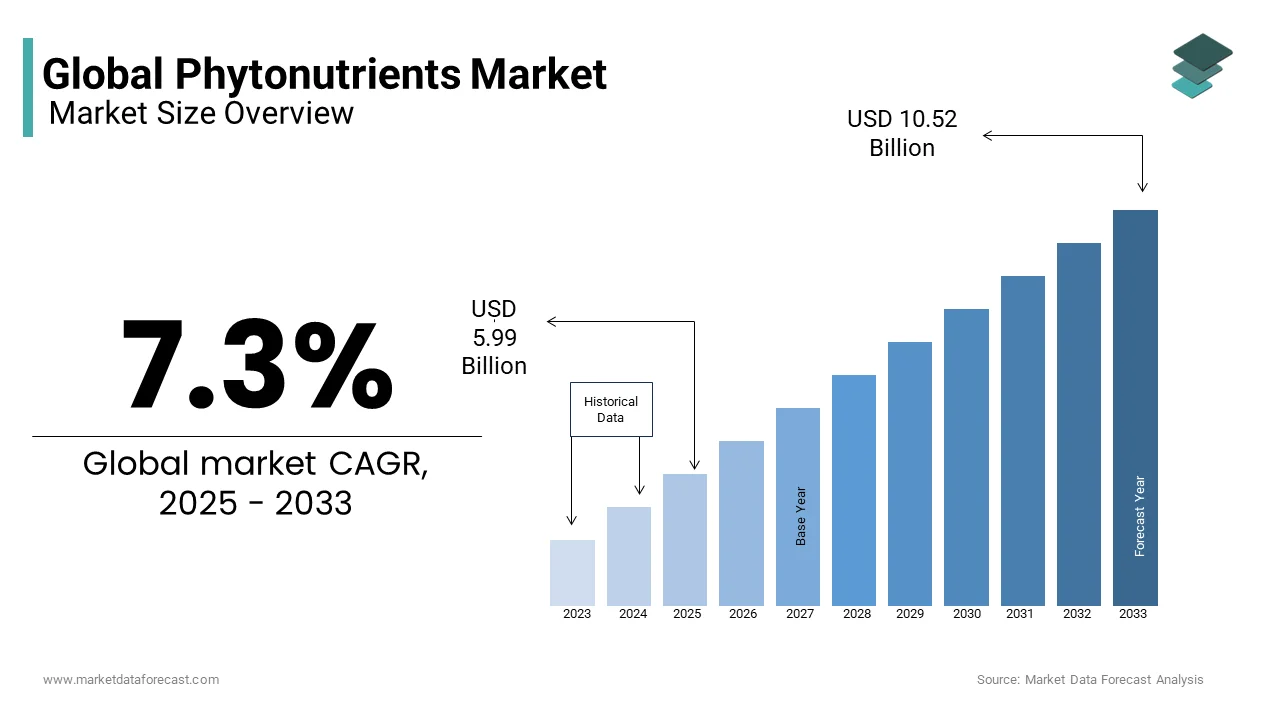
- Market Valuation: Valued at USD 5.99 billion in 2025, estimated at USD 6.43 billion in 2026, and projected to reach USD 11.29 billion by 2034, registering a healthy CAGR of ~7.3% to 7.33% from 2026 to 2034.
- Primary Growth Drivers: Heightened consumer awareness regarding preventive healthcare, rising demand for dietary supplements among an aging global population, and a decisive structural shift toward plant-based wellness solutions.
Key Global Phytonutrients Market Metrics (2026–2034)
| Market Category | Leading Segment Focus | Fastest-Growing / Key Segment Dynamics |
|---|---|---|
| By Application | Foods and Beverages (dominates market share due to consumer focus on functional foods, snacks, and daily wellness items) | Pharmaceuticals (projected to hit the dominant CAGR driven by therapeutic properties and preventive healthcare formulations) |
| By Source | Fruits and Vegetables (most dominant source providing rich profiles of flavonoids, carotenoids, and polyphenols) | Herbs and Trees (holding strong growth as traditional medicinal plants, essential oils, and bioactive extracts gain traction) |
| By Region | Europe (leading with a prominent market share anchored by natural/organic consumer preferences and stringent sustainability rules) | Asia Pacific (expected to register the strongest growth rate backed by rich agricultural diversity and traditional medicine systems like Ayurveda and TCM) |
Major Global Market Players & Industry Structure
Market Structure: A dynamic global ecosystem featuring major life science enterprises, agricultural ingredient giants, and specialized biotech extractors competing through R&D investments, advanced extraction technologies, and sustainable sourcing.
Key Companies: BASF SE, Cargill, Incorporated, Koninklijke DSM N.V., Archer Daniels Midland Company (ADM), DuPont Nutrition & Biosciences, Naturex (Givaudan), Kemin Industries, Inc., Syngenta Group, Sabinsa Corporation, and FutureCeuticals.
Global Phytonutrients Market Size
The global phytonutrients market size was valued at USD 5.99 billion in 2025 and is anticipated to reach USD 6.43 billion in 2026 to reach USD 11.29 billion by 2034, growing at a CAGR of 7.3% during the forecast period from 2026 to 2034.
MARKET DRIVERS
An increase in consumer awareness regarding the health benefits of phytonutrient-rich foods is driving the growth of the phytonutrient market. As individuals are becoming health-conscious, there is also a rising demand for proper dietary supplements which is filled with phytonutrients. This heightened awareness is a growing understanding of the positive impact these bioactive compounds, found in plants, can have on overall well-being. Consumers are actively seeking products that offer nutritional value and contribute to preventive healthcare. This market trend aligns with the broader shift towards wellness and better plant-based solutions. Hence, with an expanding market for phytonutrient-infused products, manufacturers are innovating to meet market demand, driving the industry's growth in the global health and nutrition landscape.
The rising aging global population has a transformative impact on Phytonutrients. With an increasing demand for nutrition and health factors among elderly consumers, phytonutrients have emerged as an important component in preventing age-related diseases. These natural compounds found in plants are gaining significant attention for their potential health benefits. As individuals approach this well-being, the demand for products rich in phytonutrients has risen. The aging demographic's growing awareness of the positive impact of phytonutrients on overall health has led to the development of innovative dietary supplements and functional foods. Manufacturers are responding to this market trend by incorporating diverse phytonutrient sources into products, contributing to the expansion and dynamism of the phytonutrient market in response to the unique health needs of the elderly population.
MARKET RESTRAINTS
The phytonutrient market faces a significant restraint in the form of high production costs, posing challenges to widespread consumer affordability. The intricate processes involved in cultivating and extracting high-quality phytonutrient-rich products contribute to elevated production expenses. This cost factor limits accessibility for a broader consumer base, impeding market growth. As the industry strives to overcome these cost-related hurdles, advancements in technology and efficient supply chain management are crucial elements for fostering a more cost-effective and consumer-friendly phytonutrients market.
The Phytonutrients market faces a critical restraint in limited extraction technologies, impacting both the cost and availability of these health-promoting compounds. Inefficient extraction processes hinder the industry's ability to meet growing demand and maintain cost-effectiveness. Overcoming this hurdle necessitates a strategic focus on developing and implementing advanced extraction technologies. Innovations in extraction methods can streamline production, enhance yield, and improve the overall quality of phytonutrient-rich products. Industry stakeholders must invest in research and development to discover more efficient and sustainable extraction techniques. By addressing these technological limitations, the phytonutrients market can unlock new growth opportunities, ensuring a more robust supply chain and making these essential compounds more accessible to a broader consumer base.
Impact Of COVID-19 On The Global Phytonutrients Market
The COVID-19 pandemic has posed both challenges and opportunities for the Phytonutrients market. On the downside, disruptions in the global supply chain, lockdown measures, and restrictions on movement have impacted the production and distribution of phytonutrient-rich products. These disruptions have led to increased costs, logistical challenges, and a slowdown in market growth. But, over time, the pandemic has heightened consumer awareness of the importance of health and nutrition, which is driving a greater interest in phytonutrient-rich foods and supplements. As individuals seek to improve their immune systems, there has also been an increased demand for products containing phytonutrients known for their potential health benefits. The pandemic has acted as a catalyst for the industry to adapt more innovatively and align with changing consumer priorities and growth in the phytonutrient market.
REPORT COVERAGE
| REPORT METRIC | DETAILS |
| Market Size Available | 2025 to 2034 |
| Base Year | 2025 |
| Forecast Period | 2026 to 2034 |
| CAGR | 7.33% |
| Segments Covered | By Application, Source, And Region |
| Various Analyses Covered | Global, Regional and Country Level Analysis; Segment-Level Analysis, DROC, PESTLE Analysis, Porter’s Five Forces Analysis, Competitive Landscape, Analyst Overview of Investment Opportunities |
| Regions Covered | North America, Europe, APAC, Latin America, Middle East & Africa |
| Market Leaders Profiled | BASF SE, Cargill, Incorporated, Koninklijke DSM N.V., Archer Daniels Midland Company (ADM), Dupont Nutrition & Biosciences, Naturex (Givaudan), Raisio PLC, Kemin Industries, Inc., Syngenta Group, Döhler Group, Amax NutraSource, Inc., Valensa International, Phytochem India, Sabinsa Corporation, Pharmachem, Laboratories, Inc., Fytexia, Cyanotech Corporation, PLT Health Solutions, FutureCeuticals |
SEGMENTAL ANALYSIS
By Application Insights
Foods and beverages are dominating the application of the phytonutrients market due to the increasing consumer focus on natural and plant-based products, as consumers are seeking functional foods and beverages that offer health benefits beyond basic nutrition. However, the demand for products has increased as people incorporate them into their daily diets for preventive health and well-being. Innovations in incorporating phytonutrients into a variety of food items, from snacks to beverages, have expanded their market presence.
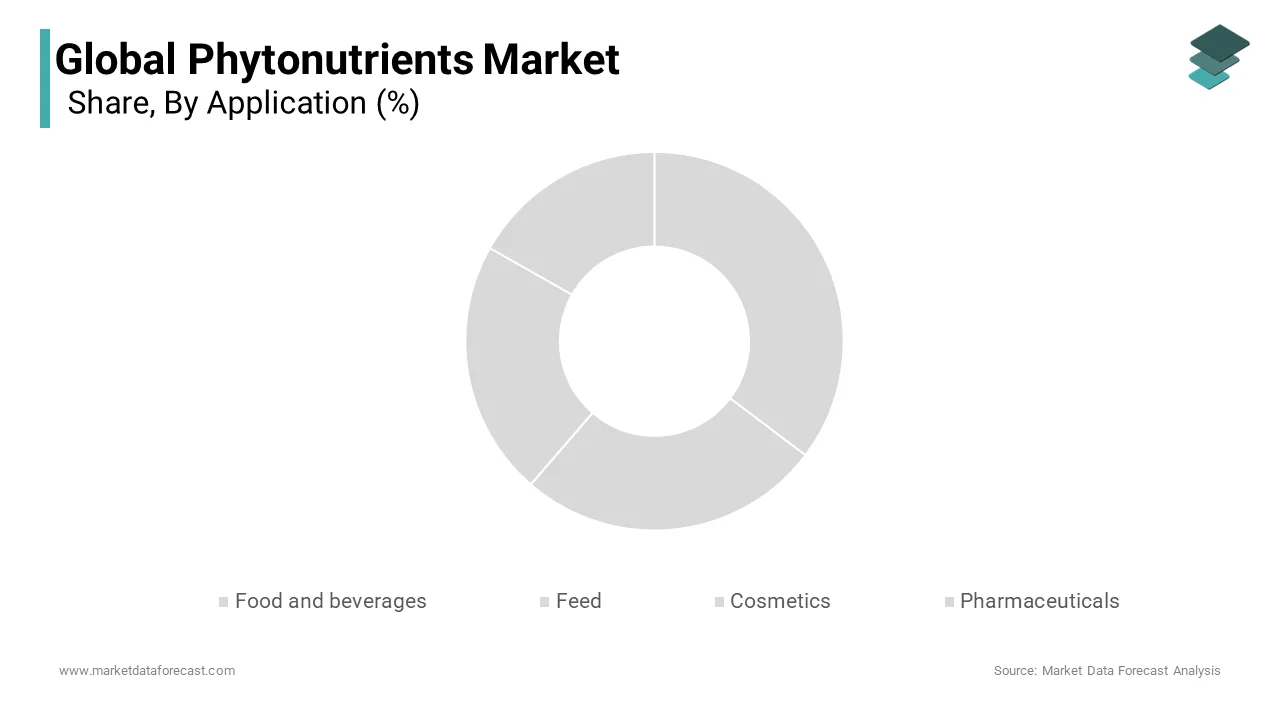
Pharmaceuticals are projected to hit the dominant CAGR during the forecast period. Phytonutrients are increasingly recognized for their potential therapeutic properties and preventive health benefits. They are utilized in the development of pharmaceutical formulations targeting various health conditions.
By Source Insights
Fruits and vegetables are the most dominant source and hold the largest share in the phytonutrients market, as they provide a diverse range of compounds such as flavonoids, carotenoids, and polyphenols. Also, they dominate the market due to their rich nutritional profiles, and an association has been established between fruit and vegetable consumption and various health benefits.
Herbs and trees hold the second-largest CAGR in the Phytonutrients market, offering a wide array of bioactive compounds, including essential oils, flavonoids, and terpenes. Herbs like turmeric and trees like neem have gained attention for their medicinal properties.
Cereals, including whole grains, contribute to the phytonutrient market share by providing compounds such as lignans and phytosterols. The emphasis on whole grain consumption for health has increased the visibility of cereals in the market. Consumer education about the phytonutrient content in cereals, especially whole grains, is crucial to further enhance their market presence.
REGIONAL ANALYSIS
Europe Market Analysis
Europe is leading with a prominent share of the phytonutrient market, characterized by a growing interest in natural and organic products. The region's stringent regulations and emphasis on sustainable practices align with consumer preferences for phytonutrient-rich foods. Increasing consumer awareness of the health benefits associated with phytonutrients, along with a preference for functional foods, contributes to Europe's importance in the market.

Asia Pacific Market Analysis
Asia Pacific's phytonutrient market is expected to have the strongest growth rate in the coming years as it has rich agricultural diversity, including a wide variety of fruits, herbs, and traditional medicinal plants, contributing to the availability of diverse phytonutrient sources. Traditional medicine practices, such as Ayurveda and Traditional Chinese Medicine, emphasize the use of plant-based remedies, influencing consumer preferences towards phytonutrient-rich products.
North America Market Analysis
North American phytonutrients market size is driven by a well-established health and wellness culture. Consumers in this region are increasingly motivated towards more plant-based diets, which has led to a rise in the demand for phytonutrient-rich products. The presence of a diverse range of fruits, vegetables, and herbs in the region also helps in hyping the market growth.
Latin America Market Analysis
Latin America, with its natural abundance of fruits and botanicals, holds considerable potential in the Phytonutrients market. The region's biodiversity contributes to a diverse array of phytonutrient sources. Economic considerations and the development of sustainable agricultural practices can impact the region's market growth.
Middle East and Africa Market Analysis
The Middle East and Africa are also witnessing a growing interest in health and nutrition by contributing to the expansion of the phytonutrient market. This adoption of healthier lifestyles and an increasing awareness of the benefits of plant-based nutrition are driving factors that are leading to market growth.
KEY MARKET PLAYERS
These are playing a dominant role in the global phytonutrients market.
- BASF SE
- Cargill
- Incorporated
- Koninklijke DSM N.V.
- Archer Daniels Midland Company (ADM)
- Dupont Nutrition & Biosciences
- Naturex (Givaudan)
- Raisio PLC
- Kemin Industries, Inc.
- Syngenta Group
- Döhler Group
- Amax NutraSource, Inc
- Valensa International
- Phytochem India
- Sabinsa Corporation
- Pharmachem
- Laboratories, Inc.
- Fytexia
- Cyanotech Corporation
- PLT Health Solutions,
- FutureCeuticals
RECENT MARKET NEWS
- In 2023, BASF continues to focus on research and development to enhance the extraction and formulation of phytonutrients. They may have worked on creating innovative solutions for the food and dietary supplement industries.
- In 2022, Cargillhase concentrated on sustainable sourcing and processing methods for phytonutrients. They could have worked on expanding their portfolio of plant-based extracts.
- In 2022, ADM developed new technologies for extracting and incorporating phytonutrients into various food and beverage products to meet consumer demand for health and wellness.
- In 2023, DuPont has continued to explore advanced methods for incorporating phytonutrients into functional foods and dietary supplements. Their focus could include improving bioavailability and stability.
MARKET SEGMENTATION
This research report on the global phytonutrients market has been segmented and sub-segmented based on the following categories.
By Application
- Food and beverages
- Feed
- Cosmetics
- Pharmaceuticals
By Source
- Fruits and vegetables
- Herbs and trees
- Cereals
- Pulses and oilseeds
- Other sources
By Region
- North America
- Europe
- Asia Pacific
- Latin America
- The Middle East and Africa