- Product Description Description
- Table of Contents TOC
- List of Table & Figure LOT
- Get Free Sample PDF Sample PDF
Market Size, 2025
$740.4 MnMarket Estimate, 2026
$801.1 MnMarket Forecast, 2034
$1505 MnCAGR, 2026–2034
8.2%Global Protein Hydrolysate Ingredient Market Size, Growth, Trends & Forecast (2026–2034)
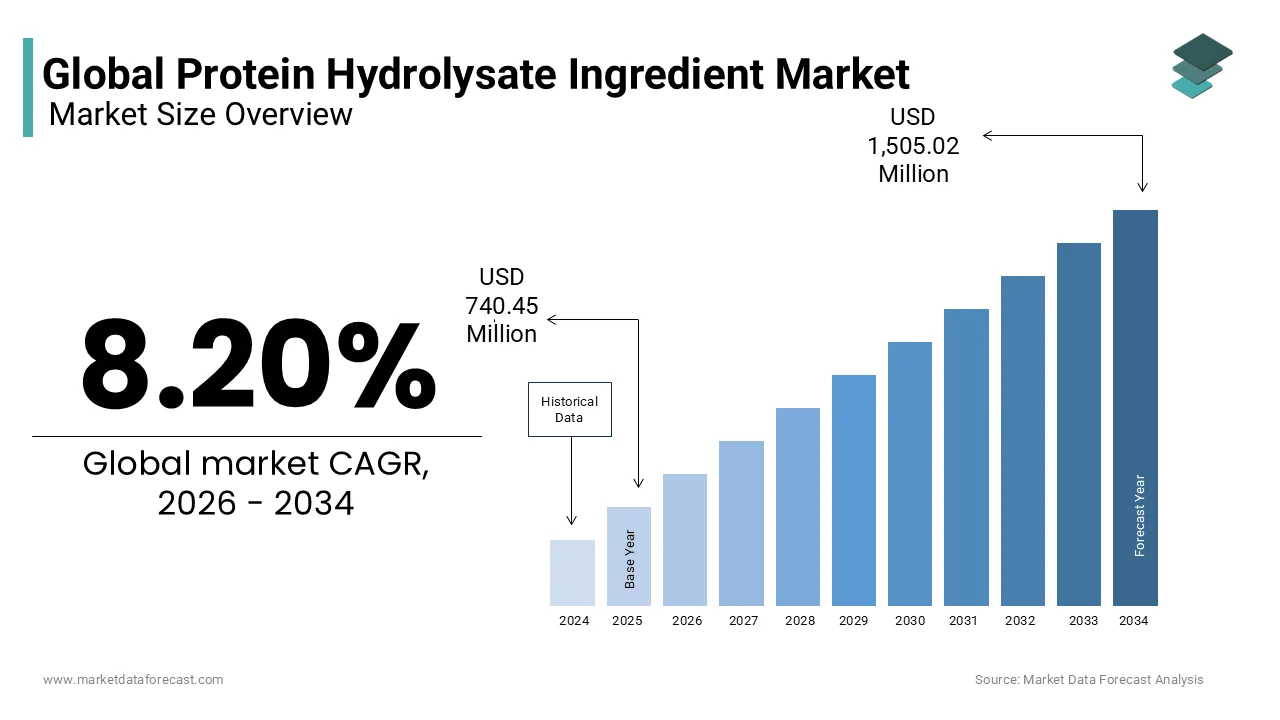
The global protein hydrolysate ingredient market size was valued at USD 740.45 million in 2025, is estimated at USD 801.17 million in 2026, and is projected to reach USD 1,505.02 million by 2034, registering a compound annual growth rate (CAGR) of 8.20% during the forecast period from 2026 to 2034. Driven by the rising prevalence of food allergies, booming sports nutrition trends, and growing clinical demand for specialized nutritional interventions, the industry continues to experience robust expansion worldwide.
Key Executive Metrics (At-a-Glance)
- 2025 Base Valuation: USD 740.45 Million
- 2026 Current Valuation: USD 801.17 Million
- 2034 Forecast Valuation: USD 1,505.02 Million
- Compound Annual Growth Rate (CAGR): 8.20% (2026–2034)
- Dominant Ingredient Type / Source: Milk-Derived Proteins (held 45.6% market share in 2025, led by whey and casein hydrolysates)
- Fastest-Growing Ingredient Type / Source: Plant-Based Protein Hydrolysates (projected at a fastest CAGR of 8.9% driven by vegan and allergen-free trends)
- Dominant Application Segment: Infant Formula (accounted for 40.2% market share in 2025, supported by the medical necessity of hypoallergenic nutrition)
- Fastest-Growing Application Segment: Sports Nutrition (expected to grow at a fastest CAGR of 9.5% fueled by fitness culture and rapid absorption demands)
- Dominant Region: North America (dominated globally with 35.4% market share in 2025, backed by high healthcare spending and advanced sports culture)
Core Market Drivers
- Food Allergies & Intolerances: Increasing global incidence of food allergies among infants and children driving the need for extensively hydrolyzed formulas.
- Sports Nutrition Boom: Rising consumer participation in fitness activities and demand for rapid muscle recovery and absorption formulations.
- Aging Demographics: Growing elderly population requiring specialized functional foods to combat sarcopenia and support muscle health.
Primary Market Restraints & Challenges
- Sensory Limitations & Bitterness: Inherent bitter taste resulting from low molecular weight peptides, limiting palatability in mainstream food and beverage applications.
- High Production Costs: Complex manufacturing processes, strict hygiene standards, and energy-intensive separation methods resulting in production costs 30% to 50% higher than standard protein concentrates.
Global Protein Hydrolysate Ingredient Market Segmentation Breakdown
| Segment Category | Leading Sub-Segment (2025 Base) | Fastest-Growing Sub-Segment (2026–2034) |
|---|---|---|
| By Source / Ingredient Type | Milk-Derived Proteins (held 45.6% market share due to superior amino acid profiles and clinical validation) | Plant-Based Hydrolysates (projected at a fastest CAGR of 8.9% due to vegan and allergen-free dietary shifts) |
| By Application | Infant Formula (accounted for 40.2% market share backed by hypoallergenic medical necessity) | Sports Nutrition (expected to grow at a fastest CAGR of 9.5% driven by rapid absorption and fitness culture) |
| By Product Form | Powder (dominated commercial supply chains due to extended shelf life and transport ease) | Gel / Liquid (expanding rapidly via ready-to-drink functional beverages and nutrition bars) |
| By Region | North America (dominated with 35.4% share backed by high healthcare spending and sports culture) | Asia-Pacific (projected for high growth due to rising disposable incomes, urbanization, and expanding middle-class populations) |
Major Industry Players Profiled
Key enterprises shaping the global protein hydrolysate ingredient market include Friesland Campina, Fonterra Co-Operative Group, Milk Specialties Group, Abbott Laboratories, Arla Foods Ingredients Group P/S, Agropur Inc., Danone S.A., Davisco Foods International, Inc., Kerry Group plc, Carbery Group, Glanbia PLC, Nestlé S.A., Tate & Lyle PLC, and Archer Daniels Midland Company (ADM).
 Download Free Sample Report
Global Protein Hydrolysate Ingredient Market Size
The global protein hydrolysate ingredient market size was valued at USD 740.45 million in 2025, and is projected to reach USD 1,505.02 million by 2034 from USD 801.17 million in 2026, growing at a CAGR of 8.20%.
Protein hydrolysate ingredients are specialized category of functional food components produced through the enzymatic or chemical breakdown of whole proteins into smaller peptides and free amino acids. According to the Food and Agriculture Organization of the United Nations, global protein consumption has risen by 20% over the past decade driven by population growth and shifting dietary preferences toward high quality animal and plant based sources. The peptide-based formulations improve nitrogen retention and muscle synthesis rates by up to 30% compared to intact proteins in elderly populations suffering from sarcopenia. As per data from the Centers for Disease Control and Prevention, approximately 15% of infants in developed nations rely on hypoallergenic formulas containing extensively hydrolyzed proteins due to cow milk allergy intolerance. The technical versatility of hydrolysates allows manufacturers to modify functional properties such as emulsification foaming and gelation which are critical for texture enhancement in processed foods. Regulatory bodies like the European Food Safety Authority have approved specific health claims for protein hydrolysates regarding blood pressure regulation and immune support further validating their therapeutic potential.
MARKET DRIVERS
Rising Prevalence of Food Allergies and Intolerances
The increasing global incidence of food allergies, particularly among infants and young children is driving the growth of the protein hydrolysate ingredient market. According to the World Allergy Organization, approximately 8% of children and 4% of adults suffer from food allergies with cow milk protein being the most common trigger in early childhood. Extensively hydrolyzed formulas break down casein and whey proteins into small peptides that are less likely to trigger an immune response providing a safe nutritional alternative for sensitive individuals. The American Academy of Pediatrics recommends the use of hydrolyzed formulas for infants at high risk of developing allergic diseases which has standardized their inclusion in pediatric care protocols globally. As per data from the National Institute of Allergy and Infectious Diseases, the prevalence of food allergies in children increased by 50% between 1997 and 2011 creating a sustained and growing patient pool requiring specialized nutritional interventions. Parents are increasingly aware of these conditions due to improved diagnostic capabilities and public health education leading to higher demand for clinically validated hypoallergenic products. Manufacturers respond by investing in advanced enzymatic technologies that ensure consistent reduction of allergenic epitopes while maintaining nutritional completeness. This medical necessity drives steady volume growth in the infant nutrition segment which remains the largest application area for protein hydrolysates.
Expansion of Sports Nutrition and Active Lifestyle Trends
The booming sports nutrition industry fueled by rising health consciousness and participation in fitness activities drives significant demand for rapidly absorbing protein hydrolysates is another attribute fuelling the growth of the protein hydrolysate ingredient market. The global gym membership reached 230 million in 2023, reflecting a widespread cultural shift toward physical wellness and muscle maintenance, as per the recent survey. Athletes and fitness enthusiasts prefer hydrolyzed proteins because they bypass extensive digestive processes allowing for faster absorption into the bloodstream, which accelerates muscle recovery and reduces post exercise soreness. As per data from the Consumer Brands Association, sales of sports nutrition products in North America exceeded 10 billion dollars in 2023 with protein supplements accounting for the largest share of this revenue. The trend toward personalized nutrition has led to the development of ready to drink shakes and bars fortified with specific peptide profiles targeting endurance strength or weight management. Major supplement brands are reformulating products to include hydrolysates as premium ingredients differentiating their offerings in a crowded marketplace. Social media influence and celebrity endorsements further amplify consumer awareness of the benefits of rapid absorption driving trial and repeat purchases.
MARKET RESTRAINTS
Bitterness and Sensory Limitations in Final Products
The inherent bitter taste associated with low molecular weight peptides with the widespread adoption of protein hydrolysates in consumer food and beverage applications. The hydrophobic amino acids exposed during the hydrolysis process interact with bitter taste receptors on the tongue creating an unpleasant flavor profile that limits palatability. This sensory defect is particularly pronounced in extensively hydrolyzed formulas required for medical and infant nutrition, where the degree of breakdown is highest. Consumers increasingly reject products with long ingredient lists containing artificial flavors or high sugar content forcing manufacturers to seek natural masking solutions that are often less effective or more expensive. The technical difficulty of balancing bitterness reduction with functional performance requires extensive research and development investment which smaller companies may lack. Furthermore, the variability in bitterness intensity across different protein sources such as pea, rice, or whey necessitates customized processing parameters for each raw material increasing operational complexity. This sensory barrier restricts the use of hydrolysates in mainstream food categories like beverages and snacks where taste is the primary purchase driver.
High Production Costs and Complex Manufacturing Processes
The substantial capital expenditure and operational costs associated with producing high quality protein hydrolysates create significant barriers to entry and limit price competitiveness against intact protein powders. The high production costs and complex manufacturing processes is additionally degrading the growth of the protein hydrolysate ingredients market. The enzymatic hydrolysis requires precise control of temperature pH and enzyme concentration followed by energy intensive separation and drying processes, such as ultrafiltration and spray drying. These steps consume significant amounts of water and electricity resulting in production costs that are 30 to 50% higher than those for standard protein concentrates. The need for stringent hygiene standards to prevent microbial contamination during the extended hydrolysis process further increases facility maintenance and quality control costs. Small and medium sized enterprises often struggle to achieve the economies of scale necessary to compete with large multinational ingredient suppliers who dominate the market. Fluctuations in raw material prices for source proteins such as whey casein or soy add another layer of financial uncertainty making long term pricing contracts difficult to maintain.
MARKET OPPORTUNITIES
Development of Plant Based Hydrolysates for Vegan Markets
The rapid growth of the vegan and vegetarian population to develop from plant sources, such as pea, rice, hemp, and fava bean. The global retail sales of plant based foods reached 8 billion dollars in 2023 with protein alternatives representing the fastest growing category within this segment. Plant based hydrolysates offer a sustainable and allergen friendly alternative to dairy derived ingredients appealing to consumers seeking ethical and environmentally responsible nutrition options. The European Commission’s Farm to Fork Strategy promotes the diversification of protein sources to reduce dependency on animal agriculture driving investment in plant processing technologies. Manufacturers are innovating with novel enzymatic cocktails to improve the solubility and flavor of plant hydrolysates which traditionally suffer from gritty textures and earthy tastes. The ability to claim non-GMO organic and sustainably sourced attributes enhance brand value and allows for premium pricing in health-conscious people. Collaborations between agricultural cooperatives and ingredient processors ensure stable supply chains for raw materials reducing volatility risks.
Integration into Functional Foods for Healthy Aging
The aging global population for incorporating protein hydrolysates into functional foods designed to combat sarcopenia and support cognitive health in older adults is also to level up the growth of protein hydrolysate ingredient market. According to the United Nations Department of Economic and Social Affairs, the number of people aged 65 and older is projected to double to 1.6 billion by 2050 increasing the demand for nutrients that support healthy aging. Protein hydrolysates rich in specific bioactive peptides have been shown to improve muscle protein synthesis and reduce inflammation which are critical for maintaining mobility and independence in seniors. The World Health Organization emphasizes the importance of adequate protein intake for preventing frailty and reducing healthcare costs associated with age related decline. The clinical trials indicate that daily supplementation with hydrolyzed collagen or whey peptides improves bone density and joint health in postmenopausal women. Food manufacturers are developing easy to consume formats such as fortified soups yogurts and beverages that cater to the dietary needs and swallowing difficulties of elderly consumers. The medicalization of food allows for higher price points and reimbursement possibilities in certain healthcare systems. Partnerships with geriatric care providers and nutritionists help validate product efficacy and build trust among caregivers.
MARKET CHALLENGES
Regulatory Heterogeneity and Labeling Compliance
The complex and fragmented regulations for protein hydrolysates for manufacturers seeking international expansion is a quite challenge for the growth of the protein hydrolysate ingredient market. The standards for protein hydrolysates vary significantly between regions with the European Union requiring rigorous clinical validation for health claims while the United States allows broader structure function claims under FDA guidelines. As per data from the European Food Safety Authority, obtaining approval for novel peptide health claims can take up to three years and cost millions of euros in scientific dossiers and legal fees. In Asia Pacific, countries such as China and Japan regulatory frameworks for imported protein ingredients are constantly evolving requiring continuous monitoring and adaptation to avoid shipment rejections. The lack of harmonized definitions for terms such as extensively hydrolyzed or partially hydrolyzed creates confusion among consumers and regulators alike potentially leading to misbranding issues. Intellectual property protection for specific enzymatic processes also varies leaving innovations vulnerable to imitation in jurisdictions with weaker enforcement mechanisms.
Supply Chain Volatility for Raw Protein Sources
The dependence on agricultural commodities for raw protein inputs exposes hydrolysate manufacturers to significant supply chain volatility and price fluctuations driven by climate change and geopolitical tensions. The supply chain volatility for raw protein sources is another factor to decline the growth of the protein hydrolysate ingredient market. Dairy proteins, such as whey and casein are subject to seasonal variations in milk production and export restrictions imposed by major producing countries like New Zealand and the European Union. This instability makes it difficult for manufacturers to maintain consistent pricing for downstream customers who demand long term supply contracts. Disruptions in logistics networks due to port congestion or fuel price spikes further exacerbate delivery delays and inventory shortages. The concentration of processing capacity in specific geographic regions creates single points of failure that can halt production entirely if local disruptions occur. Manufacturers are attempting to mitigate these risks through diversified sourcing strategies and vertical integration but these measures require substantial capital investment.
REPORT COVERAGE
| REPORT METRIC | DETAILS |
| Market Size Available | 2025 to 2034 |
| Base Year | 2025 |
| Forecast Period | 2026 to 2034 |
| CAGR | 8.20% |
| Segments Covered | By Ingredient Type, Product Form, Application, & region |
| Various Analyses Covered | Global, Regional and Country Level Analysis; Segment-Level Analysis; DROC; PESTLE Analysis; Porter’s Five Forces Analysis; Competitive Landscape; Analyst Overview of Investment Opportunities |
| Regions Covered | North America, Europe, APAC, Latin America, Middle East & Africa |
| Market Leaders Profiled | Friesland Campina, Fonterra Co-Operative Group, Milk Specialties Group, Abbott Laboratories, Arla Foods Ingredients Group P/S, Agropur Inc, Danone S.A, Davisco Foods International, Inc, Kerry Group plc, Carbery Group, Glanbia PLC, Nestlé S.A, Tate & Lyle PLC, Archer Daniels Midland Company. |
SEGMENTAL ANALYSIS
By Source Insights
The milk derived protein segment was accounted in holding 45.6% of the protein hydrolysate ingredient market share in 2025 due to their superior amino acid profile high digestibility and extensive clinical validation in infant nutrition. The irreplaceable role of whey and casein hydrolysates in hypoallergenic infant formulas, which are medically mandated for babies with cow milk protein allergy. Extensively hydrolyzed cow milk protein is the gold standard for dietary management of allergic infants ensuring consistent demand regardless of economic fluctuations. The United States Department of Agriculture reports that global dairy production exceeded 900 million tonnes in 2023 providing a vast and stable raw material base for hydrolysate manufacturers. The established infrastructure for dairy processing allows for efficient integration of hydrolysis steps into existing supply chains reducing capital expenditure compared to novel sources. Regulatory approvals for health claims related to milk peptides in blood pressure management further enhance their value proposition in functional foods. The familiarity of consumers and healthcare providers with dairy based ingredients reduces adoption barriers and supports premium pricing strategies.
The plant based protein hydrolysates is projected to register a fastest CAGR of 8.9% throughout the forecast period with the surging demand for vegan sustainable and allergen free nutritional solutions. The global shift toward plant based diets fueled by environmental concerns and ethical considerations among millennials and Gen Z consumers is also fuelling the growth of the segment. Pea, rice, and hemp hydrolysates are gaining traction as they offer complete amino acid profiles when blended and avoid common allergens such as dairy soy and gluten. As per research from Wageningen University enzymatic hydrolysis significantly improves the solubility and bitterness profile of pea protein making it suitable for clear beverages and sports nutrition products where texture is critical. The European Commission’s Farm to Fork Strategy promotes crop diversification and reduced reliance on animal agriculture providing policy support and funding for plant protein innovation. Manufacturers are investing in advanced fractionation technologies to isolate specific peptide fractions with enhanced bioactivity such as antioxidant and anti inflammatory properties.
By Application Insights
The infant formula segment was accounted in holding 40.2% of the protein hydrolysate market share in 2025 owing to the medical necessity of hypoallergenic nutrition for infants with allergies and digestive sensitivities. This leadership is sustained by strict regulatory guidelines and pediatric recommendations that mandate the use of extensively or partially hydrolyzed proteins for at risk populations. The American Academy of Pediatrics states that partially hydrolyzed formulas may help prevent eczema in high-risk infants driving preventive adoption by parents even before symptoms appear. The long term customer loyalty established during infancy often extends to other product lines as children grow creating lifetime value for brands.
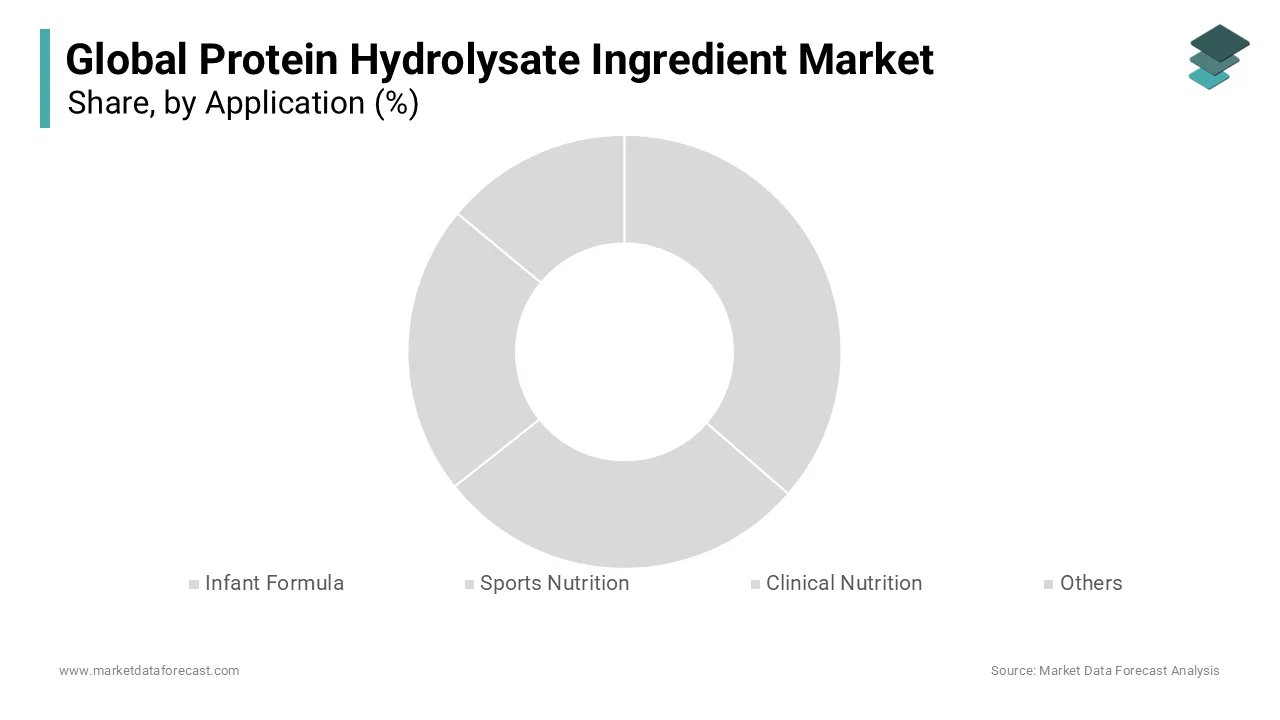
The sports nutrition segment is expected to grow at a fastest CAGR of 9.5% during the forecast period owing to the mainstreaming of fitness culture and the demand for rapid recovery solutions among active individuals. The superior absorption kinetics of hydrolyzed proteins, which deliver amino acids to muscles faster than intact proteins enhancing repair and reducing soreness after intense exercise. The protein supplements are gaining traction due to their mixability and lack of bloating effects. The trend toward ready to drink formats has accelerated adoption as hydrolysates remain stable in liquid solutions without settling or curdling. Social media influencers and professional athletes endorse hydrolyzed products amplifying awareness and driving trial among casual gym goers. Manufacturers are innovating with flavored hydrolysates that mask bitterness improving palatability and repeat purchase rates.
REGIONAL ANALYSIS
North America Protein Hydrolysate Ingredient Market Analysis
North America was the largest contributor of the global protein hydrolysate market by holding 35.4% of the share in 2025 owing to the high healthcare spending advanced sports nutrition culture and stringent food safety regulations. The United States protein hydrolysate ingredient market growth is likely to grow with the large infant formula industry and widespread adoption of dietary supplements. The National Institutes of Health funds extensive research into bioactive peptides supporting innovation and clinical validation of new hydrolysate applications. Canada contributes to regional growth through its strong dairy sector and government support for functional food research. The presence of major ingredient manufacturers, such as Glanbia and Kerry Group ensures robust supply chains and technologies. Regulatory clarity from the Food and Drug Administration regarding structure function claims facilitates product development and marketing.
Europe Protein Hydrolysate Ingredient Market Analysis
Europe protein hydrolysate ingredient market was positioned second by holding 30.3% of share in 2025 with the strict regulatory standards and a strong tradition of dairy processing. The European Union leads in the production of whey and casein hydrolysates due to its vast dairy industry and advanced biotechnology capabilities. The European Food Safety Authority enforces rigorous evaluation processes for health claims ensuring high product quality and consumer trust. Germany, France, and the Netherlands, are key countries due to their sophisticated food industries and high consumption of functional foods. The EU Green Deal promotes sustainable protein sources encouraging investment in plant based hydrolysates. Research institutions collaborate closely with industry to develop novel peptides with specific health benefits.
Asia Pacific Protein Hydrolysate Ingredient Market Analysis
Asia Pacific protein hydrolysate ingredient market growth is likely to grow with the rising disposable incomes, urbanization, and changing dietary habits in China, India, and Southeast Asia. The surge in demand for infant formula and sports nutrition products as middle class populations expand. China is the largest contributor for infant formula with parents increasingly preferring premium imported brands containing hydrolyzed proteins for perceived safety and quality. India’s growing fitness culture and lactose intolerance prevalence drive demand for plant based and hydrolyzed dairy alternatives. Japan and South Korea lead in elderly nutrition applications leveraging hydrolysates for sarcopenia prevention. Government initiatives to improve child nutrition and reduce malnutrition support market growth. Local manufacturers are investing in processing facilities to reduce dependency on imports.
Latin America Protein Hydrolysate Ingredient Market Analysis
Latin America protein hydrolysate ingredient market growth is driven by expanding dairy industries and increasing health awareness in Brazil, Mexico, and Argentina. The region benefits from favorable climatic conditions for livestock farming ensuring steady supply of raw milk for hydrolysate production. Brazil is the largest contributor due to its large population and growing sports nutrition sector influenced by global fitness trends. Mexico’s proximity to the United States facilitates technology transfer and trade in specialty ingredients. Economic volatility remains a challenge but demand for essential nutrition items like infant formula remains resilient. Local governments are implementing programs to combat childhood malnutrition, which may include fortified foods with hydrolyzed proteins.
The Middle East and Africa Protein Hydrolysate Ingredient Market Analysis
The Middle East and Africa protein hydrolysate ingredient market growth is growing steadily by rising healthcare expenditures and government initiatives to improve maternal and child health in Gulf Cooperation Council countries and South Africa. Saudi Arabia and the United Arab Emirates are leading consumers of premium infant formulas, including hydrolyzed variants due to high disposable incomes and awareness of allergy management. South Africa has a developing sports nutrition market influenced by international trends and local fitness communities. Limited local production capacity means the region relies heavily on imports from Europe and North America. Cultural preferences for dairy based products support the dominance of milk hydrolysates. Government regulations are becoming stricter regarding food safety and labeling encouraging compliance from international suppliers.
COMPETITIVE LANDSCAPE
The Protein Hydrolysate Ingredient Market exhibits a moderately consolidated competitive landscape characterized by large multinational corporations and specialized regional players. These entities compete primarily on product quality scientific validation and technical support services rather than price alone. Smaller niche players differentiate themselves through unique proprietary enzymatic processes and specialized plant-based offerings that cater to specific dietary trends. Intense competition drives continuous innovation in debittering technologies and sustainable sourcing practices to enhance consumer acceptance. Regulatory compliance serves as a significant barrier to entry ensuring that only manufacturers with robust quality control systems can participate in regulated markets.
KEY MARKET PLAYERS
Key players in global protein hydrolysate ingredient market are
- Friesland Campina
- Fonterra Co-Operative Group
- Milk Specialties Group
- Abbott Laboratories
- Arla Foods Ingredients Group P/S
- Agropur Inc.
- Danone S.A.
- Davisco Foods International, Inc.
- Kerry Group plc
- Carbery Group
- Glanbia PLC
- Nestlé S.A.
- Tate & Lyle PLC
- Archer Daniels Midland Company (ADM)
Top Players in the Market
- Kerry Group operates as a global leader in taste and nutrition providing specialized protein hydrolysates for infant formula sports nutrition and clinical applications. The company leverages its extensive enzymatic technology platform to produce high quality whey and casein hydrolysates with tailored functional properties. Kerry recently expanded its production capacity in Europe to meet growing demand for hypoallergenic ingredients ensuring consistent supply for major formula manufacturers. This strategic investment strengthens its position as a preferred partner for brands seeking clean label and clinically validated solutions. The firm invests heavily in research to develop novel plant-based hydrolysates from pea and rice aligning with sustainability trends. Kerry collaborates with healthcare professionals to validate health claims enhancing product credibility and market acceptance across diverse regulatory environments globally.
- Glanbia is a prominent global nutrition company specializing in dairy derived protein ingredients including advanced hydrolysates for performance and medical nutrition. The company utilizes proprietary hydrolysis technologies to create peptides with superior bioavailability and reduced allergenicity for sensitive populations. Glanbia recently launched new ready to mix hydrolyzed whey proteins designed for the sports nutrition sector focusing on rapid absorption and improved taste profiles. This innovation addresses consumer pain points regarding bitterness and solubility driving adoption among fitness enthusiasts and athletes. The organization maintains strong relationships with leading supplement brands through customized formulation services and technical support. Glanbia continues to invest in sustainable sourcing practices and carbon neutral production facilities reinforcing its commitment to environmental responsibility while maintaining product quality.
- Ingredion Incorporated is a major global ingredient supplier offering a diverse portfolio of protein hydrolysates from both animal and plant sources for various food and beverage applications. The company focuses on improving texture stability and nutritional value in processed foods through its advanced bioprocessing capabilities. Ingredion recently acquired a specialty enzyme manufacturer to enhance its ability to customize hydrolysis processes for specific client needs and improve efficiency. This acquisition allows the firm to offer more precise control over peptide size and functionality catering to niche market requirements. Ingredion actively promotes plant-based hydrolysates as sustainable alternatives supporting the transition toward eco-friendly ingredients.
Top Strategies Used by Key Market Participants
Key players in the Protein Hydrolysate Ingredient Market primarily focus on technological innovation and strategic partnerships to maintain competitive advantage. Companies invest heavily in advanced enzymatic hydrolysis techniques to improve flavor profiles and bioactivity of peptides. Expansion into plant-based sources, such as pea and rice addresses growing demand for vegan and allergen free options. Strategic acquisitions of specialty firms enhance capabilities in custom formulation and process optimization. Collaborations with research institutions validate health claims and support regulatory approvals for new applications. Manufacturers prioritize sustainability by adopting green processing methods and securing ethically sourced raw materials. Digital tools are used to optimize supply chain efficiency and predict market trends.
MARKET SEGMENTATION
This research report on the global protein hydrolysate has been segmented and sub-segmented based on Ingredient Type, Product Form, Application, & region.
By Ingredient Type
- Milk Protein Hydrolysate
- Meat Protein Hydrolysate
- Whey Protein Hydrolysate
- Casein Hydrolysate
- Others
By Product Form
- Powder
- Gel/ Liquid
- Bar
By Application
- Infant Formula
- Sports Nutrition
- Clinical Nutrition
- Others
By Region
- North America
- Europe
- The Asia Pacific
- Latin America
- The Middle East and Africa