- Product Description Description
- Table of Contents TOC
- List of Table & Figure LOT
- Get Free Sample PDF Sample PDF
Market Size, 2025
$69.86 BnMarket Estimate, 2026
$74.28 BnMarket Forecast, 2034
$121.28 BnCAGR, 2026–2034
6.32%Global Protein Ingredients Market Size, Growth, Trends & Forecast (2026–2034)
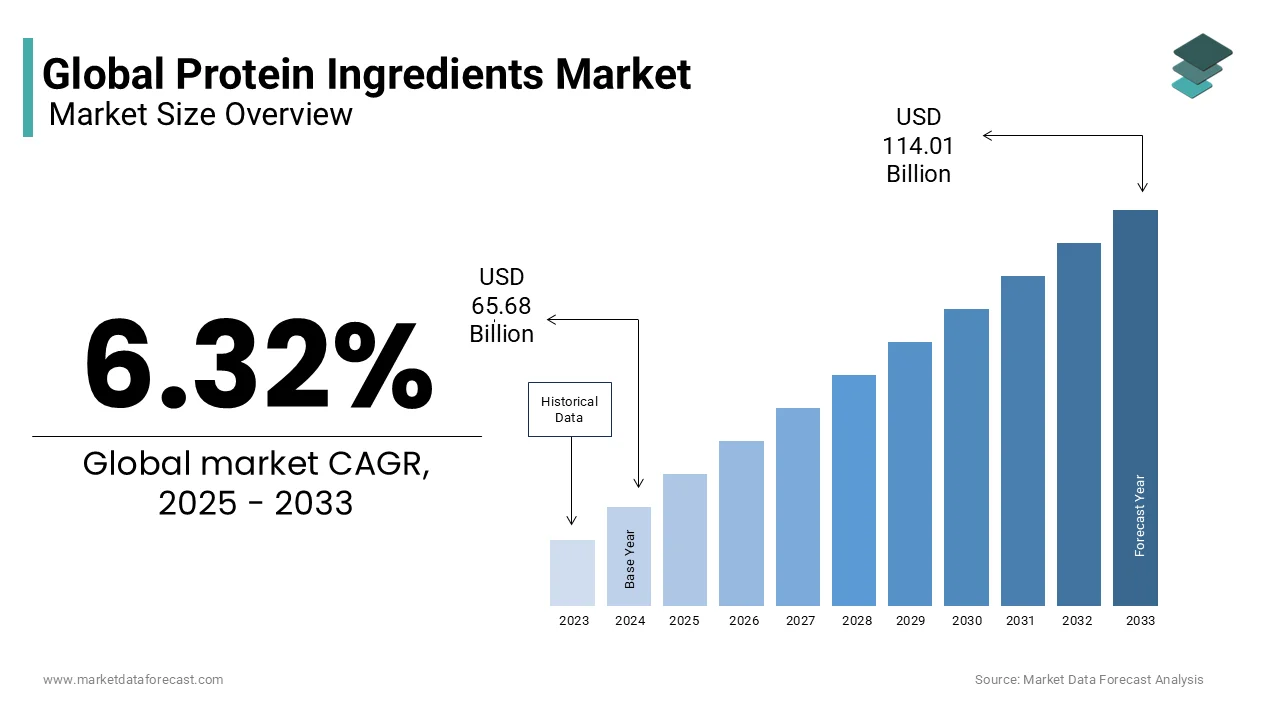
The global protein ingredients market size was valued at USD 69.86 billion in 2025, stands at USD 74.28 billion in 2026, and is projected to reach USD 121.28 billion by 2034, growing at a compound annual growth rate (CAGR) of 6.32% from 2026 to 2034. Driven by health-conscious consumer behavior, lifestyle-related chronic conditions, and expanding plant-based diets, the global market demonstrates robust structural expansion.
Key Executive Metrics (At-a-Glance)
- 2025 Base Valuation: USD 69.86 Billion
- 2026 Current Valuation: USD 74.28 Billion
- 2034 Forecast Valuation: USD 121.28 Billion
- Compound Annual Growth Rate (CAGR): 6.32% (2026–2034)
- Regional Highlights: North America commands the largest market share (32.1%), while Asia-Pacific is projected to register significant growth opportunities.
Core Market Drivers & Growth Triggers
- Rising Chronic Conditions: Increasing consumer focus on functional proteins for metabolic regulation, satiety, and lean muscle preservation amidst lifestyle-related diseases.
- Plant-Based Adoption: Environmental and ethical consumerism propelling the transition toward alternative plant and microbial protein sources.
Global Protein Ingredients Market Segmentation Breakdown
| Segment Category | Largest Segment | Fastest-Growing Segment |
|---|---|---|
| By Product | Soy Protein (Isolates/Concentrates) | Pea Protein / Whey Protein Hydrolysates |
| By Application | Food and Beverage | Infant Formulations |
| By Region | North America | Asia Pacific |
Major Industry Players Profiled
Key corporations steering the global protein ingredients market include Cargill (US), ADM (US), DowDuPont (US), Kerry Group (Ireland), Omega Protein Corporation (US), FrieslandCampina (Netherlands), Fonterra (New Zealand), Arla Foods (Denmark), Roquette (France), and Gelita AG (Germany).
Global Protein Ingredients Market Size
The global protein ingredients market size was valued at USD 69.86 billion in 2025 and is expected to reach USD 121.28 billion by 2034, from USD 74.28 billion in 2026. The market is growing at a CAGR of 6.32% during the forecast period.
The Protein ingredients encompass a diverse array of compounds derived from animal, plant, and microbial sources that serve functional and nutritional roles across food, beverage, pharmaceutical, and animal feed applications. These ingredients include whey, casein, soy, pea, rice, egg, collagen, and emerging alternatives such as algae and insect proteins. Their primary utility lies in enhancing protein content, improving texture, emulsification, and shelf stability, while also catering to evolving dietary preferences. The global shift toward health-conscious consumption has intensified interest in high-quality protein sources. Additionally, nearly 45% of consumers in developed economies consider protein content a decisive factor when selecting packaged foods. This behavioural shift underpins the structural transformation of food formulation strategies worldwide, which is positioning protein ingredients as pivotal components in modern nutritional science and product development.
MARKET DRIVERS
Rising Prevalence of Lifestyle-Related Chronic Conditions Fuels Demand for Functional Protein Ingredients
The escalating global burden of non-communicable diseases linked to sedentary lifestyles and poor dietary habits is greatly influencing the growth of the protein ingredients market. According to the World Health Organisation, over 41 million deaths annually are attributed to chronic conditions such as cardiovascular diseases, diabetes, and obesity, which collectively account for 74 % of all deaths worldwide. Many health-conscious consumers are increasingly incorporating protein-rich foods into their daily diets to support metabolic regulation, satiety, and lean muscle preservation. Adults with type 2 diabetes who consume at least 25 grams of high-quality protein per meal demonstrate improved glycemic control compared to those with lower intake, as per recent studies. This clinical insight has driven food manufacturers to reformulate products with protein isolates and concentrates that offer clean label appeal alongside functional benefits. Dairy-derived proteins such as whey and casein remain dominant due to their complete amino acid profiles, while plant-based alternatives like pea and fava bean proteins are gaining traction among individuals managing cholesterol or renal health.
Expansion of Plant-Based Diets Driven by Environmental and Ethical Consumerism
The environmental sustainability and animal welfare concerns have a structural shift toward plant-based protein consumption across North America, Europe, and parts of Asia, which is solely prompting the growth of the protein ingredients market. Increasing pressure to adopt lower impact protein sources from the European Union isin additiony increasing the adoption of these innovative plant-based diets, which are non-harmful. This transition is further supported by demographic shifts, with millennials and Generation Z demonstrating a 35% higher likelihood of choosing plant-based options compared to older cohorts. Consequently, food and beverage companies are investing heavily in novel plant protein extraction technologies to improve solubility, flavour neutrality, and digestibility. Ingredients such as lentil, chickpea, and mung bean proteins are emerging as viable alternatives to traditional soy and wheat derivatives in regions where allergen concerns limit formulation flexibility. The alignment of ethical consumerism with climate-conscious purchasing behaviour is thus redefining the competitive landscape of the protein ingredients market.
MARKET RESTRAINTS
Price Volatility and Supply Chain Fragility in Key Raw Material Sourcing Regions
The fluctuating raw material costs and geopolitical instability affecting major agricultural producing areas are restricting the growth of the protein ingredients market. As per the International Grains Council, droughts in Canada and Russia disrupted pea and canola harvests, leading to a reduction in pulse yields during the same period. These disruptions directly impact the cost structure of plant-based protein isolates, which rely heavily on consistent feedstock availability. On the animal protein side, outbreaks of avian influenza in Europe and North America during 2023 led to the culling of over 58 million poultry birds, as reported by the World Organisation for Animal Health, severely constraining egg white and collagen supply chains. Moreover, logistical bottlenecks at major ports and rising freight costs exacerbate procurement unpredictability.
Stringent Regulatory Scrutiny on Novel Protein Sources and Health Claims
The regulatory frameworks governing protein ingredients have grown increasingly complex, particularly concerning novel sources such as insect, algae, and precision fermentation-derived proteins. According to the European Food Safety Authority, only 14 out of 42 applications for novel food authorisation submitted between 2020 and 2023 received full approval, with the majority delayed due to insufficient toxicological or allergenicity data. In the United States, the Food and Drug Administration requires extensive pre-market consultation for proteins engineered through biotechnology, a process that can extend approval timelines by 18 to 24 months. Furthermore, consumer scepticism toward lab-grown or non-traditional proteins remains elevated, with a 2023 survey by the European Consumer Organisation revealing that 62% of respondents expressed reluctance to consume insect-based protein due to sensory and safety concerns. These regulatory and perceptual barriers hinder the commercial scalability of next-generation protein ingredients, compelling innovators to allocate significant resources toward safety validation, clinical substantiation, and consumer education before market entry.
MARKET OPPORTUNITIES
Advancements in Precision Fermentation Enable Scalable Production of Animal-Free Proteins
Precision fermentation is emerging as a new opportunity in the protein ingredients sector by enabling the production of bio-identical dairy and egg proteins without animal involvement. This factor is a new opportunity for the growth of the protein ingredients market. According to the Good Food Institute, global investment in fermentation-derived protein companies exceeded 1.7 billion US dollars in 2023. This technology utilises microbial hosts such as yeast or fungi to express specific proteins like whey or ovalbumen by offering functional parity with conventional animal proteins while reducing land and water use by over 90%. Companies such as Perfect Day and The EVERY Company have already secured regulatory approval in multiple markets and established pilot-scale production facilities capable of yielding metric tons of protein annually. Moreover, these proteins circumvent common allergens and ethical objections associated with industrial animal farming.
Growing Integration of Protein Ingredients in Personalised Nutrition Platforms
The integration of digital health technologies and nutrigenomics with customisation based on individual metabolic profiles, activity levels, and health objectives is additionally to further level up the growth of the protein ingredients market. According to the Personalised Nutrition Project funded by the European Union’s Horizon 2020 program, participants adhering to DNA and microbiome-informed protein recommendations achieved measurable improvements in body composition and recovery markers within 12 weeks. This data has spurred partnerships between ingredient suppliers and digital health firms to develop adaptive protein blends tailored to real-time biometric feedback. Startups such as Nutrino and Zoe leverage machine learning algorithms to recommend optimal protein types, whether hydrolysed collagen for joint health or slow-digesting casein for overnight muscle synthesis, based on user-specific inputs. This shift from mass market to individualised solutions is compelling ingredient manufacturers to invest in modular production systems capable of small batch, high variety output. The ability to align protein functionality with precise physiological needs not only enhances product efficacy but also strengthens consumer loyalty in an increasingly experience-driven marketplace.
MARKET CHALLENGES
Inconsistent Protein Quality Metrics Across Plant-Based Sources Impede Formulation Efficacy
The significant variability in amino acid profiles, digestibility, and anti-nutrient content undermines their functional and nutritional equivalence to animal-derived counterparts, which is a challenge for the growth of the protein ingredients market. According to the Food and Agriculture Organisation, the Protein Digestibility Corrected Amino Acid Score for pea protein averages 0.89, while that for wheat gluten drops to 0.25, highlighting substantial disparities in bioavailability. Additionally, the presence of phytates, tannins, and trypsin inhibitors in legumes and cereals can reduce mineral absorption and cause gastrointestinal discomfort in sensitive populations. Consequently, food technologists often resort to multi source blending, which introduces challenges in flavour masking, texture uniformity, and supply chain coordination.
Intensifying Competition from Whole Food Protein Sources Challenges the Value Proposition of Isolates
The rising consumer preference for minimally processed, whole food nutrition is exerting downward pressure on the perceived necessity of refined protein isolates and concentrates. This factor is expected to slow the growth of the protein ingredient market. According to the Hartman Group’s 2023 Health and Wellness Survey, 58 % of health-oriented consumers now prioritise whole food protein sources such as Greek yoghurt, lentils, eggs, and nuts over powders or fortified bars, citing concerns about ultra-processing and artificial additives. Social media influencers and nutrition professionals increasingly advocate for “food first” approaches, arguing that whole foods provide synergistic nutrients, such as fibre, polyphenols, and healthy fats that isolated proteins lack. Manufacturers of protein ingredients face mounting pressure to justify their inclusion beyond mere protein density in clean-label and organic segments, where ingredient lists are scrutinised intensely. While isolates remain indispensable in clinical, sports, and medical nutrition contexts, their relevance in everyday consumer products is being reevaluated.
REPORT COVERAGE
| REPORT METRIC | DETAILS |
| Market Size Available | 2025 to 2034 |
| Base Year | 2025 |
| Forecast Period | 2026 to 2034 |
| CAGR | 6.30% |
| Segments Covered | By Product, Application, And Region |
| Various Analyses Covered | Global, Regional and Country-Level Analysis; Segment-Level Analysis; DROC; PESTLE Analysis; Porter’s Five Forces Analysis; Competitive Landscape; Analyst Overview of Investment Opportunities |
| Regions Covered | North America, Europe, APAC, Latin America, Middle East & Africa |
| Market Leaders Profiled | Cargill (US), ADM (US), DowDuPont (US), Kerry Group (Ireland), Omega Protein Corporation (US), FrieslandCampina (Netherlands), Fonterra (New Zealand), Arla Foods (Denmark), Roquette (France), Gelita AG (Germany), Kewpie Corporation (Japan), AGRANA (Austria), AMCO Proteins (US), Hilmar Ingredients (US), Axiom Foods (US), Burcon Nutrascience (Canada; |
SEGMENTAL ANALYSIS
By Product Insights
The soy segment was the largest and held 38.2% of the protein ingredients market share in 2025 due to its high protein content, typically exceeding 90 % on a dry weight basis, and functional versatility in food systems. Soy protein isolates are extensively utilised in meat analogues, dairy alternatives, and nutritional bars due to their superior emulsification, water binding, and gelation properties. According to the American Oil Chemists Society, soy isolates exhibit a nitrogen solubility index above 85 % under neutral pH conditions, enabling consistent performance in beverage and extruded applications. Their neutral flavour profile further enhances compatibility with diverse formulations, unlike legume proteins that often require extensive deodorisation. Additionally, decades of established supply chains and cost efficiency, soy isolates average 4 to 6 US dollars per kilogram compared to 8 to 12 for pea isolates.
The soy protein isolates benefit from longstanding regulatory endorsement and scientific validation of health benefits, which additionally hinders the growth of otherotein ingredient markets. As per the United States Food and Drug Administration, foods containing at least 6.25 grams of soy protein per serving may carry a health claim linking soy consumption to reduced risk of coronary heart disease. Furthermore, the European Food Safety Authority recognises soy protein as a complete protein with a Protein Digestibility Corrected Amino Acid Score of 1.00, equivalent to animal proteins. According to the European Society for Clinical Nutrition and Metabolism, 42% of oral nutritional supplements in the EU incorporate soy isolates due to their hypoallergenic profile relative to dairy and egg proteins.
The pea protein segment is likely to grow with an estimated CAGR of 14.2% from 2026 to 2034, with its status as a non-allergenic, non-GMO, and gluten-free ingredient, which is positioning it as a preferred alternative in increasingly sensitive consumer markets. Soy is among the eight major food allergens responsible for 90 % of IgE-mediated reactions globally, whereas pea allergies are exceedingly rare and not classified as a priority allergen in any major jurisdiction. This safety advantage has prompted major brands such as Nestlé and Danone to reformulate plant-based beverages and infant formulas with pea protein to broaden consumer accessibility.
The whey protein concentrates segment accounted in holding 41.3% of the animal protein ingredients market share in 2025. Whey protein concentrates typically contain 34 to 80 % protein and retain beneficial milk components such as immunoglobulins and lactoferrin, which is making them ideal for mainstream nutritional products where ultra-high purity is unnecessary. Whey concentrates are priced 25 to 35 % lower than isolates, averaging 3.5 to 5 US dollars per kilogram, which enables their use in high-volume, low-margin categories such as bakery goods, cereals, and standard protein bars. Moreover, their natural solubility and creamy mouthfeel enhance sensory appeal without requiring extensive processing.
The whey protein hydrolysates segment is anticipated to witness the fastest CAGR of 12.8% throughout the forecast period. Hydrolysates are produced by enzymatically breaking down whey proteins into smaller peptides, which significantly accelerates digestion and absorption. Similarly, in infant formula, hydrolysates mimic the peptide profile of human breast milk, reducing allergy risk in sensitive infants. According to the World Health Organisation, extensively hydrolysed formulas are recommended for 5 to 7 % of infants with cow’s milk protein allergy.
By Application Insights
The food and beverage application segment was the largest and held 58.3% of the global protein ingredients market share in 2025. Food manufacturers are systematically enhancing the protein content of staples such as bread, pasta, yoghurts, and snacks to meet rising consumer demand for functional nutrition. According to a study, 63 % of global consumers actively seek added protein in conventional food items, not just supplements. The versatility of protein ingredients enables seamless integration without compromising texture or shelf life. The scalability of this trend is further supported by effective protein sources like wheat gluten and soy concentrates, which allow fortification at minimal margin impact.
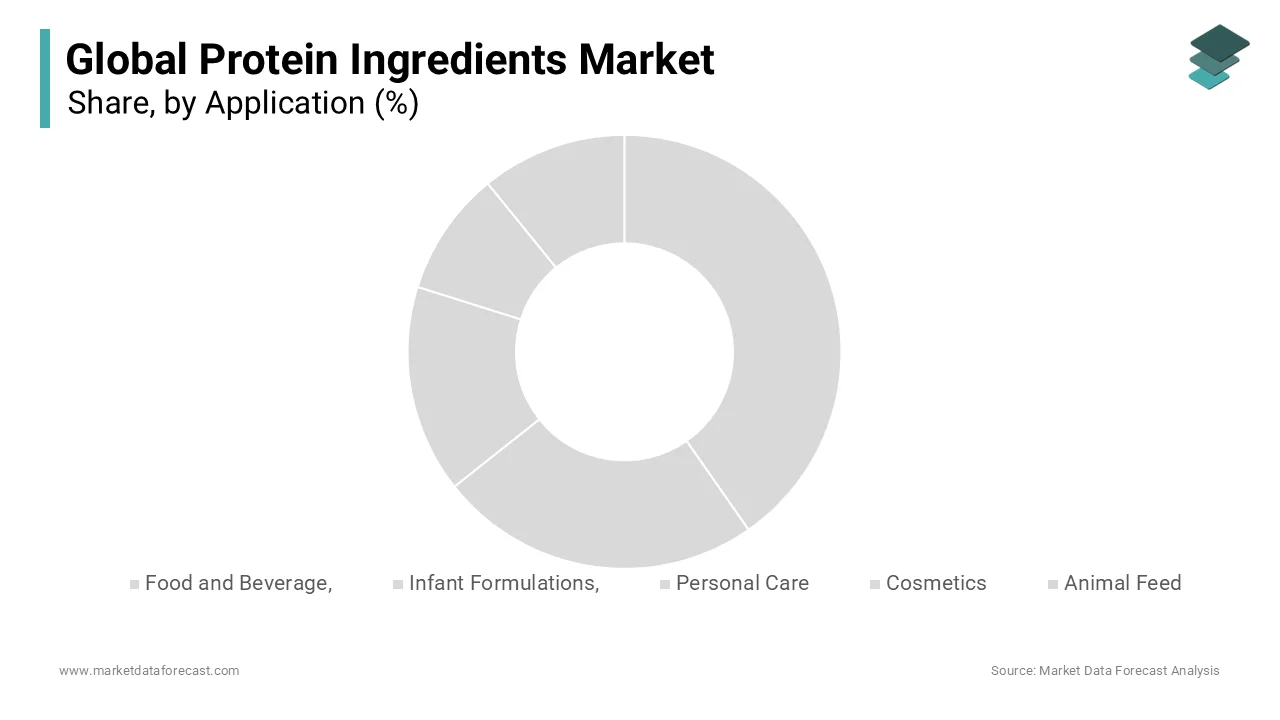
The infant formulations segment is projected to expand at a CAGR of 11.5% throughout the forecast period. Urbanisation, rising disposable incomes, and declining breastfeeding rates in emerging economies are driving demand for scientifically formulated infant nutrition. The exclusive breastfeeding rates in countries like China, Brazil, and Indonesia remain below 30%, which is creating reliance on commercial formulas. Infant formula is among the most stringently regulated food categories worldwide, mandating precise protein composition and safety. This necessitates the use of advanced protein fractions such as alpha-lactalbumin-enriched whey or enzymatically modified casein. Companies like Arla Foods Ingredients and FrieslandCampina Ingredients have invested heavily in dedicated infant-grade protein production lines by achieving premium pricing and long-term contracts with major formula manufacturers.
REGIONAL ANALYSIS
North America Market Analysis
North America accounted in holding 32.1% share of the global protein ingredients market in 2025. The United States was the largest contributor through a mature health and wellness culture, advanced food processing infrastructure, and strong sports nutrition adoption. As per the Council for Responsible Nutrition, most U.S. adults use dietary supplements regularly, with protein powders ranking among the top three categories. The presence of major ingredient innovators such as ADM, Cargill, and Glanbia enables the rapid commercialisation of new protein formats. Additionally, the U.S. Food and Drug Administration’s qualified health claims for soy and whey proteins facilitate marketing in functional food segments. Regulatory alignment under the USMCA further streamlines cross-border ingredient trade with North America’s position as the innovation and consumption epicentre of the protein ingredients market.
Europe Market Analysis
Europe was positioned second by holding 28.3% of the global protein ingredients market share in 2025, with stringent food safety standards, strong plant-based food adoption, and government-backed nutrition initiatives. According to the European Commission, European consumers identify as flexitarian, which is driving demand for plant proteins in meat analogues and dairy alternatives.
Asia Pacific Market Analysis
Asia Pacific protein ingredients market growth is expected to grow with significant growth opportunities throughout the forecast period, owing to the rising incomes, urbanisation, and fitness awareness. China dominates regional consumption, with the annual increase in protein supplement sales since 2020. India is emerging as a key production centre for plant proteins, particularly pea and rice, supported by government initiatives under the National Food Security Mission.
Latin America Market Analysis
Latin America protein ingredients market growth is likely to grow with significant growth opportunities throughout the forecast period, with Brazil and Mexico as the primary growth drivers. Brazil’s robust soy and beef industries provide abundant raw materials for both plant and animal protein extraction.
Middle East and Africa Market Analysis
The Middle East and Africa protein ingredients market growth is likely to have steady growth with the population growth and nutritional transitions. According to the United Nations Economic Commission for Africa, the continent’s population will reach 2.5 billion by 2050, which is creating unprecedented demand for affordable protein sources. South Africa and the United Arab Emirates lead in commercial adoption, with the UAE’s Ministry of Climate Change and Environment promoting alternative proteins through its National Food Security Strategy.
COMPETITIVE LANDSCAPE
KEY MARKET PLAYERS
Some of the notable key players in the global protein ingredients market are
- Cargill (US)
- ADM (US)
- DowDuPont (US)
- Kerry Group (Ireland)
- Omega Protein Corporation (US)
- FrieslandCampina (Netherlands)
- Fonterra (New Zealand)
- Arla Foods (Denmark)
- Roquette (France)
- Gelita AG (Germany)
- Kewpie Corporation (Japan)
- AGRANA (Austria)
- AMCO Proteins (US)
- Hilmar Ingredients (US)
- Axiom Foods (US)
- Burcon Nutrascience (Canada)
TOP STRATEGIES USED BY THE KEY MARKET PLAYERS
Key players in the protein ingredients market prioritise vertical integration to secure raw material supply and reduce cost volatility. They invest heavily in research and development to improve protein functionality, taste, and digestibility through enzymatic and fermentation technologies. Strategic partnerships with food and beverage brands accelerate the commercialisation of novel protein formats. Companies also expand production capacity in high-growth regions such as the Asia Pacific and Europe to meet localised demand.
COMPETITION OVERVIEW
The protein ingredients market features intense competition among multinational agribusinesses, specialised ingredient suppliers, and emerging biotechnology firms. Established players leverage scale, regulatory expertise, and global distribution to maintain dominance, while startups differentiate through novel protein sources such as algae, fungi, and insects. Competition centres on functional performance, clean label compliance, allergen status, and sustainability credentials rather than price alone. Companies continuously innovate in extraction, hydrolysis, and fermentation to enhance solubility, flavour, and bioavailability.
TOP PLAYERS IN THE MARKET
- Archer Daniels Midland Company is a global leader in agricultural processing and food ingredient solutions with extensive capabilities in both plant and animal protein production. The company leverages its vast network of grain origination and processing facilities to produce soy, pea, and wheat proteins at scale. In recent years, ADM has intensified its focus on alternative proteins by expanding its innovation lab in Decatur and forming strategic partnerships with plant-based food startups. It launched a new line of textured pea and fava bean proteins in 2023 to address clean-label and allergen-free demands. Additionally, ADM invested in fermentation-derived protein research to diversify its portfolio beyond traditional extraction methods and strengthen its position in the evolving protein ingredients market.
- Glanbia plc is a prominent player in the global protein ingredients market with deep expertise in dairy-derived proteins, including whey concentrates, isolates, and hydrolysates. Headquartered in Ireland, the company integrates its dairy farming cooperatives with advanced processing technologies to ensure traceability and quality. Glanbia has recently expanded its U.S. manufacturing capacity with a new facility in Idaho dedicated to high-purity whey protein for clinical and sports nutrition. It also launched a precision fermentation collaboration in 2023 to develop animal-free dairy proteins.
- Cargill Incorporated is a diversified global agribusiness with a significant footprint in protein ingredients, spanning plant-based soy and pea proteins as well as collagen and gelatin from animal sources. The company utilises its integrated supply chain—from farm to formulation—to deliver customised protein solutions to food, beverage, and pet food manufacturers. In 2023, Cargill inaugurated a new pea protein isolation plant in Germany to serve the growing European demand for non-soy plant proteins. It also enhanced its digital formulation platform to help customers optimise protein functionality in complex matrices. Cargill’s commitment to sustainability, including verified deforestation-free soy sourcing and water reduction in processing, further strengthens its reputation as a responsible and innovative partner in the global protein ingredients ecosystem.
MARKET SEGMENTATION
This research report on the global protein ingredients market has been segmented and sub-segmented based on product, application, and region.
By Product
- Plant Protein
- Wheat
- Soy Protein Concentrates
- Soy Protein Isolates
- Textured Soy Protein
- Pea
- Canola
- Others
- Animal Protein
- Egg Protein
- Milk Protein Concentrates/Isolates
- Whey Protein Concentrates
- Whey Protein Hydrolysates
- Whey Protein Isolates
- Gelatin and Casein/Caseinates
By Application
- Food and Beverage,
- Infant Formulations,
- Personal Care
- Cosmetics
- Animal Feed
By Region
- North America
- Europe
- Asia Pacific
- Latin America
- Middle East & Africa