Global PTA Balloon Catheter Market Size, Share, Trends & Growth Forecast Report By Product Type (Polyurethane, Nylon and Others), Application (Coronary Artery Disease and Peripheral Vascular Disease), End User (Hospitals or Clinics, Ambulatory Surgery Centers and Others) and Region (North America, Europe, Asia-Pacific, Latin America, Middle East and Africa) – Industry Analysis, 2026 to 2034
Market Size, 2025
$4.21 BnMarket Estimate, 2026
$4.65 BnMarket Forecast, 2034
$10.27 BnCAGR, 2026–2034
10.42%Global PTA Balloon Catheter Market Size
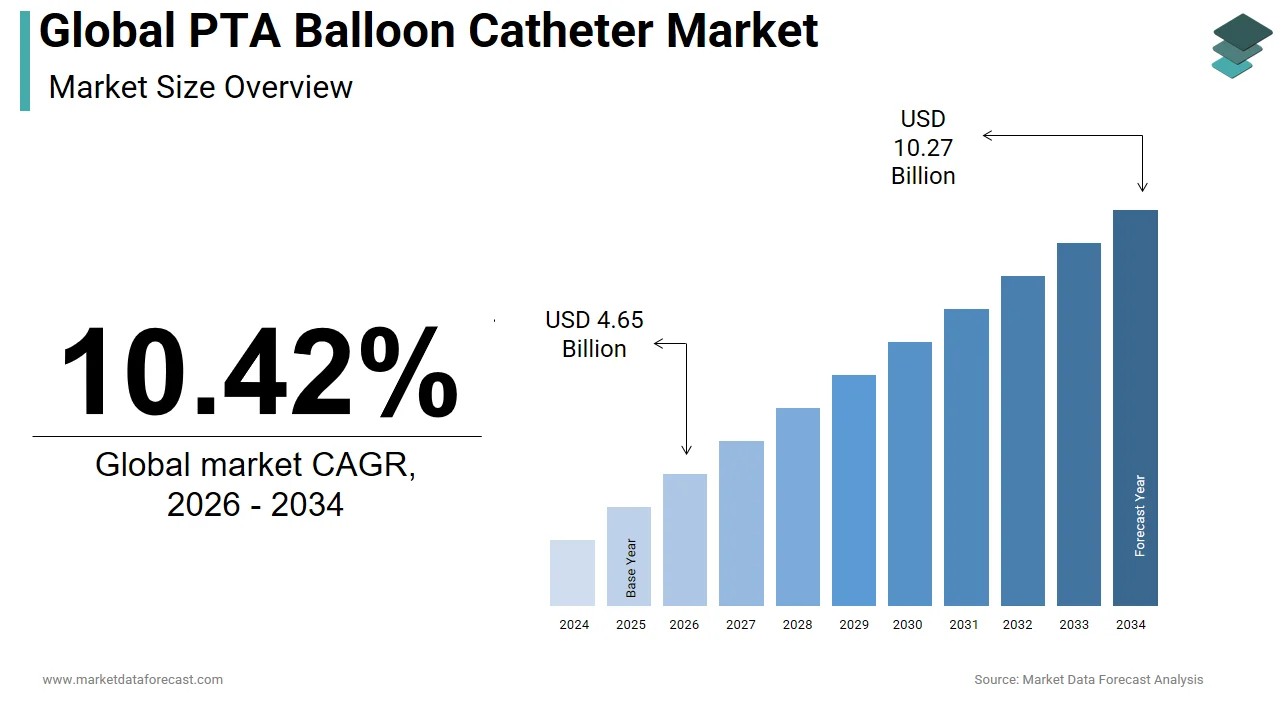
The global PTA balloon catheter market was valued at USD 4.21 billion in 2025, is estimated to reach USD 4.65 billion in 2026, and is projected to reach USD 10.27 billion by 2034, growing at a CAGR of 10.42% from 2026 to 2034.
Percutaneous transluminal angioplasty (PTA) is a medical procedure that involves the use of a catheter and a balloon to open a blocked blood artery. The catheter is a short, flexible plastic tube inserted into the artery. The balloon is located at the end of the catheter and is used to widen the artery. This technique is commonly used to treat arterial blockages and restore blood flow to the affected area. The procedure involves inserting a tube into the affected artery, followed by inflation of the tube to restore regular blood flow and widen the artery.
MARKET DRIVERS
The growing prevalence of cardiovascular disorders and peripheral artery disease, increasing geriatric population and rising number of minimally invasive surgeries primarily drive the growth of the PTA balloon catheter market. The incidence of cardiac disease has been on the rise globally, leading to adverse effects on individual’s physical and mental health. According to statistics from the WHO, cardiovascular diseases claim approximately 17.9 million lives per year worldwide and around 928,741 deaths in the year 2020 in the US alone. The growing geriatric population who are at risk of cardiac problems also supports the growth of the market. According to statistics, the world’s population above the age of 60 is expected to reach 2.1 bn by 2050. Additionally, the high costs of cardiac assistance and treatment lead to more demand for positive outcomes and the rising need for reducing mortality rates and improving treatments favors the growth of the market.
The increasing need for efficient and sophisticated diagnostic and therapeutic techniques has led to a surge in demand for PTA balloon catheters. The growing preference for minimally invasive techniques further fuels the market’s growth rate. This technique is minimally invasive and does not cause much damage to the blood vessel. These catheters are soft, with a laser bonding technique, and hydrophilic coating, with promising flexibility and push ability. They are easy to work with and provide promising results supporting the use of the device. Furthermore, there has been researching on the use of these catheters in hemodialysis access. Therefore, the use of the device in more medical applications aside from cardiac problems drives the market growth.
The shift toward outpatient care settings for various interventional procedures, including PTA balloon catheterization as it offers convenience and cost-effectiveness, rising awareness about the benefits of early detection and treatment of cardiovascular diseases, an increasing number of patient education programs and favorable reimbursement policies for PTA balloon catheter procedures, particularly in developed countries contribute to the market growth. The ongoing development of healthcare infrastructure, particularly in emerging economies, the growing collaborations between medical device manufacturers, healthcare providers, and research institutions, the cost-effectiveness of PTA balloon catheters, increasing healthcare expenditure and rapid adoption of PTA balloon catheters in emerging economies further boost the market’s growth rate.
MARKET RESTRAINTS
Complications and risks associated with PTA balloon catheter procedures such as arterial injury, vessel dissection, restenosis, thrombosis, and infection are one of the key factors hampering the market growth. The availability of alternative treatment options such as stents, atherectomy devices and bypass surgeries, the shortage of skilled healthcare professionals proficient in these techniques and Stringent regulatory requirements inhibit the market’s growth rate. Limited reimbursement policies and coverage for PTA balloon catheter procedures, high cost of PTA balloon catheter procedures, product recalls and safety concerns related to PTA balloon catheters and lack of awareness among patients and healthcare providers about the benefits and availability of PTA balloon catheter procedures further hinder the market growth.
REPORT COVERAGE
| REPORT METRIC | DETAILS |
| Market Size Available | 2025 to 2034 |
| Base Year | 2025 |
| Forecast Period | 2026 to 2034 |
| Segments Covered | By Product Type, Raw Material, Disease Indication, End User, and Region |
| Various Analyses Covered | Global, Regional & Country Level Analysis, Segment-Level Analysis, Drivers, Restraints, Opportunities, Challenges, PESTLE Analysis, Porter’s Five Forces Analysis, Competitive Landscape, Analyst Overview on Investment Opportunities |
| Regions Covered | North America, Europe, Asia Pacific, Latin America, Middle East, and Africa |
SEGMENT ANALYSIS
By Type Insights
Based on type, the nylon segment emerged as the dominant segment in the PTA balloon catheter market and accounted for the largest share of the global market in 2022. The widespread usage of Nylon-based balloon catheters as their high tensile strength and excellent push ability majorly drives segmental growth.
The polyurethane segment is anticipated to exhibit the highest CAGR during the forecast period. The advantages of polyurethane such as excellent flexibility, high burst strength and good push ability are one of the key factors propelling the segmental growth. The favorable characteristics and effectiveness of polyurethane balloon catheters in treating peripheral arterial disease and coronary artery disease further propel segmental growth.
By Application Insights
Based on application, the coronary artery disease segment is expected to dominate the market during the forecast period owing to the growing patient population of coronary artery disease. According to NCBI around 610,000 deaths annually (estimated 1 in 4 deaths) are the leading cause of mortality in the United States. And around 17.8 million deaths annually are caused by it.
The peripheral vascular disease segment is also expected to grow at a healthy CAGR during the forecast period owing to the rising prevalence. According to the CDC, approximately 6.5 million people aged 40 and older in the United States have PAD.
By End User Insights
Based on end-user, the hospitals or clinics segment is expected to dominate the market during the forecast period due to the high influx of patients in the end-user. Additionally, hospitals provide more advantages and options for better treatment services and equipment availability leading t segment growth. The high number of surgeries performed in hospital settings due to credibility and the availability of highly reputed surgeons also leads to segment growth.
The ambulatory surgery centers segment is also predicted to grow substantially during the forecast period due to the rising difficulty in acquiring an appointment and surgery dates for recovery at hospitals and the high cost of services along with long hospital stay periods. Therefore, the lower costs, fast discharges and appointments have led to more market for the segment.
REGIONAL ANALYSIS
North America emerged as the dominant region in the global market in 2024 and accounted for a significant share. The presence of well-established healthcare infrastructure, advanced medical technologies, and the growing prevalence of cardiovascular diseases in the North American region drive the North American market growth. The presence of key market players and ongoing technological advancements contribute to market growth in North America. Favorable reimbursement policies and rapid adoption of innovative medical devices drive the demand for PTA balloon catheters in the North American region and fuel the growth rate of the regional market. The U.S. had the major share of the North American market in 2022 and is expected to grow considerably during the forecast period owing to the rising incidence of coronary artery disease and the availability of funding for R&D and access to world-class medical equipment. As per the statistics published by the Centers for Disease Control and Prevention (CDC), an estimated 8.2 million adults in the United States have coronary artery disease. Canada is another noteworthy market for PTA balloon catheters in North America and is expected to grow at a healthy CAGR during the forecast period. The growing prevalence of peripheral arterial disease (PAD) drives the Canadian market growth. The Canadian Cardiovascular Society, the prevalence of PAD in Canada is 3.7%.
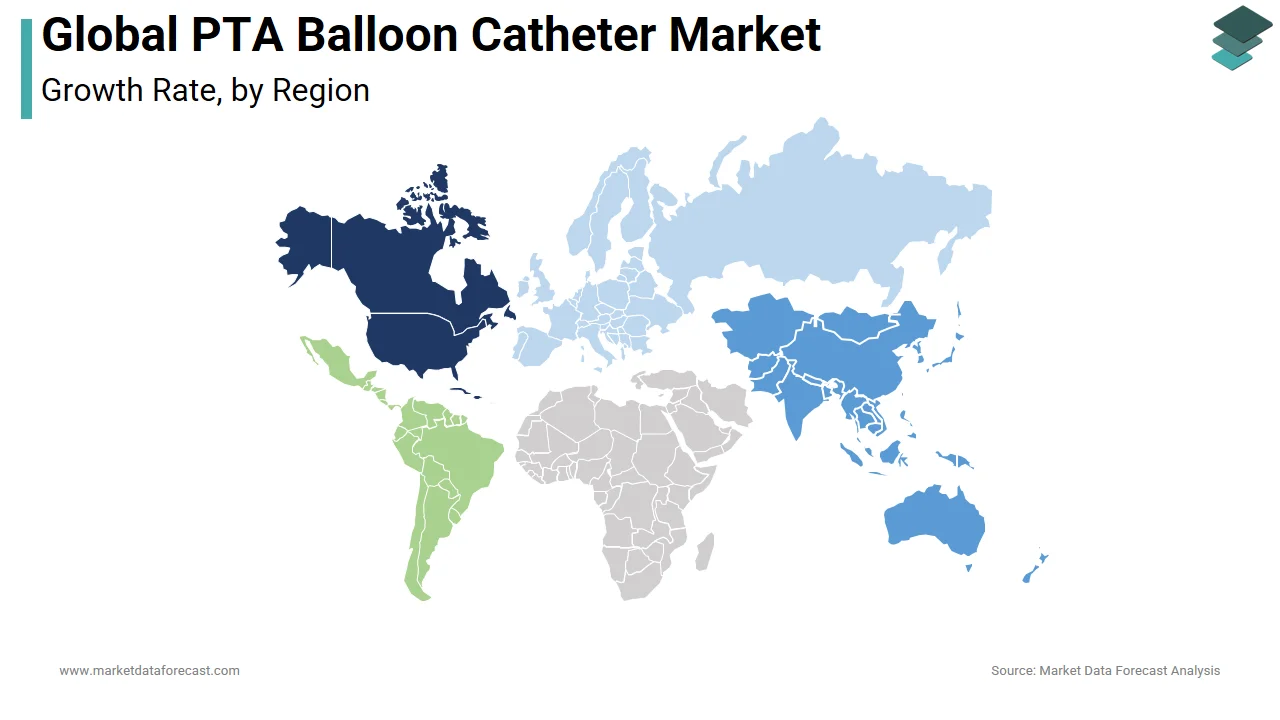
Europe is a prominent market for PTA balloon catheters and is anticipated to account for a substantial share of the global market during the forecast period. The growing prevalence of cardiovascular diseases, increasing geriatric population and a well-developed healthcare system in Europe primarily drive the European market growth. The growing adoption of minimally invasive procedures, favorable reimbursement policies and an increasing number of collaborations between research institutions, healthcare organizations and manufacturers further contribute to the European market growth. Germany held the leading share of the European market in 2022 and is expected to grow substantially during the forecast period owing to the increasing awareness among the patient population regarding the available treatment options for CVDs and the growing number of PCI procedures. As per the statistics published by the German Cardiac Society, an estimated 450,000 are being performed in Germany every year.
The Asia Pacific region is anticipated to exhibit the highest CAGR during the forecast period. Factors such as a large patient pool, rising healthcare expenditure, and improving healthcare infrastructure in countries like China and India primarily drive the APAC market growth. The presence of emerging economies, the rising focus on healthcare modernization, increasing awareness about advanced treatment options, and rising disposable income further boost the growth rate of the APAC market. China held the major share of the APAC market in 2022. India is predicted to register the fastest CAGR in the APAC market during the forecast period.
KEY MARKET PARTICIPANTS
Some of the companies that are playing a dominating role in the global PTA balloon catheter market include
- Medtronic
- Terumo Corporation
- Cardinal Health
- Boston Scientific Corporation
- Natec Medical
- Cook Medical
- BIOTRONIK
- Surmodics, Inc.
- Andratec
GLOBAL PTA BALLOON CATHETER MARKET NEWS
- BrosMed Medical obtained regulatory clearance from the Food and Drug Administration (FDA) for its Tiche 0.035 PTA Ballon Dilation Catheter in July 2022. The clearance was granted under the 510(k) premarket notification process, which requires manufacturers to demonstrate that their medical devices are safe and effective for their intended use. The Tiche 0.035 PTA Ballon Dilation Catheter is designed to dilate narrowed blood vessels in patients with peripheral artery disease, a condition that affects millions of people worldwide. This regulatory clearance is a significant milestone for BrosMed Medical, as it allows the company to market and sells its product in the United States.
- Medtronic introduced the NuVent Eustachian tube dilation balloon in March 2022. This medical device has received clearance from the United States Food and Drug Administration for the treatment of chronic obstructive Eustachian tube dysfunction. The condition is characterized by the occurrence of blockages in the Eustachian tube, which can lead to discomfort and hearing loss. The NuVent Eustachian tube dilation balloon is designed to alleviate these symptoms by dilating the Eustachian tube and restoring normal function. This development represents a significant advancement in the treatment of chronic obstructive Eustachian tube dysfunction and is expected to benefit patients suffering from this condition.
MARKET SEGMENTATION
This market research report on the global PTA balloon catheter market has been segmented and sub-segmented product type, disease indication, end-user and region.
By Type
- Polyurethane
- Nylon
- Others
By Application
- Coronary Artery Disease
- Peripheral Vascular Disease
By End User
- Hospitals or Clinics
- Ambulatory Surgery Centers
- Others
By Region
- North America
- Europe
- Asia Pacific
- Latin America
- Middle East and Africa
Frequently Asked Questions
What is the global PTA balloon catheter market?
The global PTA balloon catheter market provides minimally invasive devices for dilating narrowed peripheral arteries. These catheters restore blood flow treating conditions like peripheral artery disease through percutaneous transluminal angioplasty worldwide.
How does the global PTA balloon catheter market function?
In the global PTA balloon catheter market, deflated catheters navigate to stenotic lesions. Inflation compresses plaque against vessel walls improving patency via controlled pressure profiles effectively.
Why choose the global PTA balloon catheter market solutions?
The global PTA balloon catheter market offers reduced recovery times versus surgery. Its versatility across vessel sizes supports outpatient procedures minimizing complications globally.
Who uses the global PTA balloon catheter market?
Interventional cardiologists and vascular surgeons utilize the global PTA balloon catheter market. Hospitals treat patients with claudication, critical limb ischemia, and dialysis access issues.
What applications define the global PTA balloon catheter market?
Peripheral artery disease dominates the global PTA balloon catheter market alongside renal and iliac interventions. AV fistula maintenance and in-stent restenosis procedures drive usage.
How are types segmented in the global PTA balloon catheter market?
The global PTA balloon catheter market segments by compliant, semi-compliant, and non-compliant balloons. High-pressure variants handle calcified lesions while drug-coated options prevent restenosis.
What drives growth in the global PTA balloon catheter market?
Aging populations and rising diabetes prevalence fuel the global PTA balloon catheter market. Minimally invasive preferences accelerate adoption for limb salvage procedures worldwide.
How does regulation impact the global PTA balloon catheter market?
FDA and CE approvals govern the global PTA balloon catheter market ensuring material safety and performance. Standards cover burst pressure and trackability for clinical reliability.
What technology advances the global PTA balloon catheter market?
Drug-eluting coatings and scoring blades innovate the global PTA balloon catheter market. These enhance luminal gain tackling complex calcified and resistant lesions effectively.
What challenges face the global PTA balloon catheter market?
Restenosis risks and vessel dissection challenge the global PTA balloon catheter market. Solutions emphasize specialty balloons and adjunctive therapies for durable outcomes.
Related Reports
Access the study in MULTIPLE FORMATS
Purchase options starting from
$ 2500
Didn’t find what you’re looking for?
TALK TO OUR ANALYST TEAM
Need something within your budget?
NO WORRIES! WE GOT YOU COVERED!
Call us on: +1 888 702 9696 (U.S Toll Free)
Write to us: sales@marketdataforecast.com