- Product Description Description
- Table of Contents TOC
- List of Table & Figure LOT
- Get Free Sample PDF Sample PDF
Market Size, 2025
$67.9 BnMarket Estimate, 2026
$73.05 BnMarket Forecast, 2034
$130.4 BnCAGR, 2026–2034
7.5%Global Recycled Polyester Filament Yarn Market Report Summary
The global recycled polyester filament yarn market was valued at USD 67.95 billion in 2025, is estimated to reach USD 73.05 billion in 2026, and is projected to reach USD 130.38 billion by 2034, growing at a CAGR of 7.51% during the forecast period. Market growth is driven by increasing demand for sustainable textiles, rising environmental awareness, and growing adoption of recycled materials in the fashion and industrial sectors. Recycled polyester filament yarn is widely used as an eco friendly alternative to virgin polyester, helping reduce plastic waste and carbon footprint. The expansion of circular economy initiatives and sustainable manufacturing practices is further supporting strong market growth globally.
Key Market Trends
- Rising demand for sustainable and eco friendly textile materials is driving market growth.
- Increasing adoption of recycled polyester in fashion and apparel industries is boosting demand.
- Growing focus on reducing plastic waste and carbon emissions is supporting market expansion.
- Expansion of circular economy and recycling initiatives is enhancing market development.
- Technological advancements in recycling and yarn production are improving quality and efficiency.
Segmental Insights
- Based on type, the drawn textured yarn segment held 44.1% of the global recycled polyester filament yarn market share in 2025. This dominance is attributed to its superior texture, elasticity, and widespread use in textile applications.
- Based on raw material, the polyethylene terephthalate segment accounted for 81.8% of the global recycled polyester filament yarn market share in 2025, driven by its availability from recycled plastic bottles and established recycling processes.
- Based on application, the apparel segment dominated with 54.5% of the global recycled polyester filament yarn market share in 2025, supported by rising demand for sustainable clothing and fashion products.
Regional Insights
- The global recycled polyester filament yarn market is experiencing strong growth across regions, supported by sustainability trends and industrial demand.
- Asia Pacific was the largest contributor in 2025, driven by large scale textile manufacturing, strong recycling infrastructure, and increasing demand for sustainable materials.
Competitive Landscape
The global recycled polyester filament yarn market is highly competitive, with key players focusing on production capacity expansion, technological innovation, and sustainable product development to strengthen their market position. Companies are investing in advanced recycling technologies, supply chain integration, and eco friendly manufacturing practices. Prominent players in the global recycled polyester filament yarn market include Rongsheng Petro Chemical, Reliance Industries, Sinopec Yizheng Chemical Fibre, Indorama Ventures, Swicofil, Alpek S A B, Unifi Inc, Polygenta, Toray Industries, and Libolon.
Global Recycled Polyester Filament Yarn Market Size
The global recycled polyester filament yarn market size was valued at USD 67.95 billion in 2025 and is projected to reach USD 130.38 billion by 2034 from USD 73.05 billion in 2026, growing at a CAGR of 7.51%.
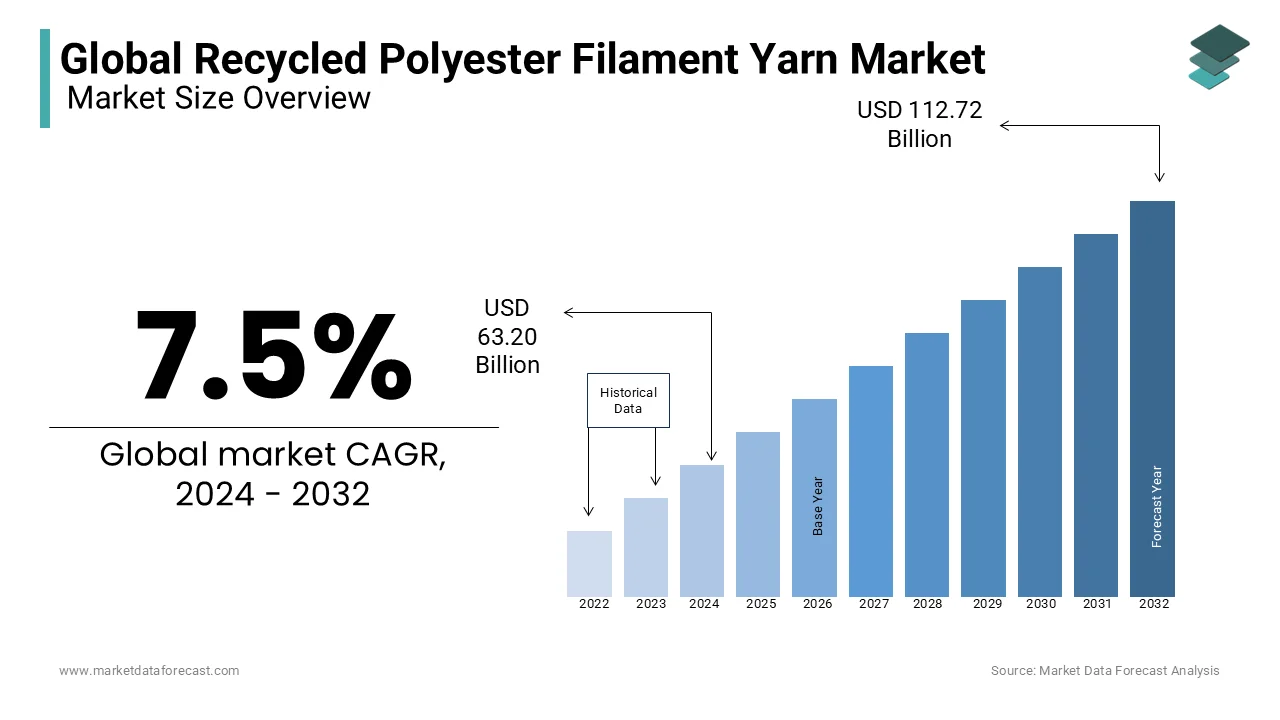
Recycled polyester filament yarn represents a transformative segment within the global textile industry, characterized by the production of continuous synthetic fibers derived from post-consumer or post-industrial polyethylene terephthalate waste. This material serves as a sustainable alternative to virgin polyester, offering comparable mechanical properties while significantly reducing environmental impact. The manufacturing process involves collecting plastic waste, such as beverage bottles, cleaning and shredding them into flakes, and then extruding these into high quality filaments suitable for weaving and knitting. According to the United Nations Environment Programme, approximately 431 million tons of plastic are produced annually, with a significant portion ending up in landfills or oceans, highlighting the urgent need for circular solutions. As per the Ellen MacArthur Foundation, less than 1% of material used to produce clothing is recycled into new clothing, indicating a massive opportunity for improvement in textile recycling infrastructure. The market is driven by stringent regulatory frameworks, such as the European Union Strategy for Sustainable and Circular Textiles, which mandates higher recycled content in garments. Consumer awareness regarding microplastic pollution and carbon footprints further accelerates adoption. Major fashion brands are committing to using 100% recycled materials by 2030, creating robust demand. The technological advancements in chemical recycling also enable the production of higher quality yarns that meet rigorous performance standards. This sector plays a pivotal role in decoupling textile production from finite fossil fuel resources, promoting a closed loop economy.
MARKET DRIVERS
Stringent Government Regulations and Corporate Sustainability Mandates Drive Adoption of Recycled Materials
The implementation of stringent government regulations and comprehensive corporate sustainability mandates is one of the major factors propelling the growth of the global recycled polyester filament yarn market, as industries face increasing pressure to reduce their environmental footprint. Governments across Europe and North America are introducing legislation that requires textiles to contain a minimum percentage of recycled content, thereby creating a guaranteed demand for recycled polyester filament yarn. According to the European Commission, the Strategy for Sustainable and Circular Textiles aims to ensure that, by 2030, all textile products placed on the EU market are durable, repairable, and recyclable, with a significant share made from recycled fibers. This regulatory push forces manufacturers to shift away from virgin polyester, which is derived from non-renewable petroleum resources. As per the Textile Exchange, over 150 global brands and retailers have committed to the 2025 Recycled Polyester Challenge, pledging to increase their use of recycled polyester to 25% by 2025. These commitments translate into substantial procurement orders for recycled filament yarn producers. Furthermore, extended producer responsibility schemes impose financial penalties on companies that do not adhere to waste reduction targets. This legal and ethical framework ensures that recycled polyester is not merely a niche product but a strategic necessity for compliance. The alignment of policy with corporate goals creates a stable and growing market environment for recycled yarn manufacturers, who can provide certified and traceable materials.
Growing Consumer Preference for Eco Friendly Fashion and Transparent Supply Chains Fuels Demand
Rising consumer awareness regarding environmental issues and a strong preference for eco-friendly fashion significantly propel the growth of the global recycled polyester filament yarn market. Modern shoppers, particularly millennials and Generation Z, are increasingly educated about the detrimental effects of fast fashion and plastic pollution, leading to a shift in purchasing behavior towards sustainable apparel. According to a NielsenIQ study, 78% of consumers state that a sustainable lifestyle is important to them, and they are willing to pay a premium for brands that demonstrate environmental responsibility. This sentiment drives demand for clothing made from recycled materials, which are perceived as having a lower carbon footprint and reduced water usage compared to virgin synthetics. As per the McKinsey State of Fashion report, only 18% of fashion executives cited sustainability as a top three risk for growth in 2025, which is down from 29% in 2024, while transparency in supply chains has become a key decision factor for consumers, who seek verification of sustainability claims through certifications, such as the Global Recycled Standard. Brands responding to this demand are prominently labeling products containing recycled polyester filament yarn to appeal to conscious buyers. Social media campaigns and educational initiatives further amplify the message, driving grassroots demand for circular fashion. The ability of recycled polyester to mimic the performance of virgin fiber while offering ethical benefits makes it an attractive choice for activewear and everyday clothing. This consumer led push complements regulatory efforts, creating a dual force that accelerates the adoption of recycled yarns in the global textile industry.
MARKET RESTRAINTS
High Production Costs and Limited Availability of High Quality Raw Materials Restrict Market Expansion
High production costs associated with the collection, sorting, and processing of post-consumer plastic waste is hampering the expansion of the global recycled polyester filament yarn market compared to the low cost of virgin polyester. The complex supply chain required to gather clean and consistent PET bottles or textile waste involves multiple intermediaries, increasing logistical expenses. According to the European Parliament, recycled materials often cost more than virgin materials, and in the case of plastics like PET, the recyclate can be significantly more expensive than its fossil-based counterpart. This price disparity makes it difficult for recycled yarn to compete in price sensitive market segments without subsidies or brand premiums. As per the Waste and Resources Action Programme, the volatility in the supply of high quality recyclable feedstock further exacerbates cost instability. Contamination in collected waste streams often leads to lower yields and increased rejection rates, requiring expensive purification processes. Additionally, the lack of standardized collection infrastructure in many developing countries limits the availability of suitable raw materials. Manufacturers struggle to secure consistent volumes of food grade or clear PET waste, which is essential for producing high quality filament yarn. Until economies of scale are achieved and collection systems are optimized, the higher cost structure will remain a barrier to widespread adoption. This economic constraint limits the market to premium segments and hinders mass market penetration despite environmental benefits.
Technical Limitations in Fiber Quality and Consistency Impact Performance and Application Range
Technical limitations regarding the quality and consistency of recycled polyester filament yarn is further hindering the global recycled polyester filament yarn market growth. The mechanical recycling process, which involves melting and extruding plastic waste, can lead polymer degradation, resulting in reduced intrinsic viscosity and weaker tensile strength. According to the Journal of Applied Polymer Science, tensile strength and modulus typically decrease when using recycled side-stream polymers as compared to reference materials, affecting the durability and elasticity of the final yarn. As per the American Association of Textile Chemists and Colorists, achieving color consistency in recycled yarn is challenging due to variations in the source material, leading to limitations in dyeing and finishing options. These technical constraints restrict the use of recycled filament yarn in applications requiring high strength uniformity, such as technical textiles and luxury fashion. Manufacturers often need to blend recycled polyester with virgin fibers to maintain performance standards, which dilutes the sustainability benefit. The lack of advanced sorting technologies to separate different types of plastics and colors further complicates the production of high purity recycled flakes. Consequently, the perceived inferior quality of some recycled yarns discourages designers and engineers from specifying them for critical applications. Until chemical recycling technologies become commercially viable at scale to restore polymer integrity, mechanical recycling limitations will constrain the market potential.
MARKET OPPORTUNITIES
Advancements in Chemical Recycling Technologies Offer Superior Quality and Circularity Opportunities
Advancements in chemical recycling technologies present a significant opportunity for the global recycled polyester filament yarn market, by enabling the production of high quality yarns that are indistinguishable from virgin polyester. Unlike mechanical recycling, chemical recycling breaks down plastic waste into its original monomers or oligomers, which can then be repolymerized into pristine polyester. According to the World Economic Forum, chemical recycling could enable the recycling of up to 50% of global plastic waste by 2030, including mixed and contaminated plastic waste streams that are currently non-recyclable through mechanical means. As per the Organisation for Economic Cooperation and Development, investments in chemical recycling facilities are increasing globally, with several pilot plants transitioning to commercial scale operations. This technology allows for the creation of closed loop systems where textile to textile recycling becomes feasible, addressing the issue of fabric waste. Brands are increasingly interested in chemically recycled polyester because it meets the highest quality standards for performance and aesthetics. The ability to recycle colored and blended fabrics without extensive preprocessing reduces energy consumption and waste. Government incentives and private sector funding are accelerating the development of these technologies. By adopting chemical recycling, manufacturers can overcome the quality limitations of mechanical recycling and expand their product offerings to premium markets. This innovation supports the transition towards a truly circular textile economy and enhances the value proposition of recycled filament yarn.
Expansion into Emerging Markets with Growing Textile Industries Provides New Growth Avenues
The expansion into emerging markets with rapidly growing textile industries offers a lucrative opportunity for the global recycled polyester filament yarn market, as these regions seek to modernize their manufacturing capabilities and meet international sustainability standards. Countries in Asia Pacific, such as Vietnam, India, and Bangladesh, are becoming major hubs for garment production and are increasingly adopting recycled materials to satisfy export requirements from Western brands. According to the Asian Development Bank, the textile and apparel sector in these countries is undergoing a green transformation, driven by buyer demands and regulatory pressures. As per the Bangladesh Garment Manufacturers and Exporters Association, numerous factories are obtaining leadership in energy and environmental design certifications, which encourage the use of sustainable inputs like recycled polyester. Local governments are implementing policies to improve waste management infrastructure, facilitating the collection of raw materials for recycling. International collaborations and technology transfers are helping local manufacturers adopt efficient recycling processes. The rising middle class in these regions is also becoming more environmentally conscious, creating domestic demand for sustainable fashion. By establishing production facilities or partnerships in these emerging markets, recycled yarn producers can tap into a vast and growing customer base. This geographic diversification reduces dependency on mature markets and leverages the cost advantages of local production. The integration of recycled yarn into the supply chains of major exporting nations ensures long term growth potential.
MARKET CHALLENGES
Complexity of Global Supply Chains and Traceability Issues Hinder Certification and Compliance
The complexity of global supply chains and the difficulty in ensuring traceability from waste source to final product is challenging the global recycled polyester filament yarn market growth. Maintaining a transparent and verifiable chain of custody is essential for obtaining certifications, such as the Global Recycled Standard, yet it remains logistically challenging. According to the Textile Exchange, many manufacturers struggle to track the origin of recycled materials due to the fragmented nature of waste collection and processing networks. As per the European Environmental Bureau, the share of recycled materials in the EU economy increased by only 1.5% between 2010 and 2024, leaving the region behind its circularity targets, while the lack of standardized digital tracking systems leads to risks of fraud and mislabeling where virgin polyester is falsely claimed as recycled. This undermines consumer trust and exposes brands to reputational damage and legal liabilities. The involvement of multiple suppliers across different countries complicates auditing and verification processes. Small scale recyclers often lack the resources to implement robust tracking systems, creating gaps in the supply chain. Additionally, varying regulatory definitions of what constitutes recycled content across different jurisdictions create confusion and compliance burdens. Companies must invest heavily in blockchain or other digital solutions to enhance transparency, which increases operational costs. Until a unified global framework for traceability is established, the industry will face ongoing challenges in proving the authenticity of recycled claims. This uncertainty hinders market confidence and slows down the adoption of recycled filament yarn.
Inadequate Waste Collection Infrastructure Limits the Volume of Available Recyclable Feedstock
Inadequate waste collection and sorting infrastructure is another significant challenge to the global recycled polyester filament yarn market, by limiting the volume and quality of available recyclable feedstock. Efficient recycling relies on the systematic collection of post consumer PET bottles and textile waste, which is lacking in many parts of the world. According to the World Bank, only 9% of plastic waste globally is successfully recycled, with the rest being landfilled, incinerated, or leaked into the environment. As per the United Nations Human Settlements Programme, rapid urbanization in developing countries has outpaced the development of waste management systems, leading to inefficient recovery rates. The absence of segregated collection at the source results in contaminated waste streams that are expensive and difficult to process. High levels of contamination reduce the yield of usable recycled polyester and increase production costs. Furthermore, the lack of investment in modern sorting facilities prevents the separation of different plastic types and colors, which is crucial for producing high quality filament yarn. Without reliable access to clean and consistent raw materials, manufacturers cannot operate at full capacity or guarantee product quality. Governments and private sectors must collaborate to improve infrastructure and educate consumers on proper waste disposal. Until these systemic issues are addressed, the supply constraint will remain a critical bottleneck for the growth of the recycled polyester industry.
REPORT COVERAGE
| REPORT METRIC | DETAILS |
| Market Size Available | 2025 to 2034 |
| Base Year | 2025 |
| Forecast Period | 2026 to 2034 |
| CAGR | 7.51% |
| Segments Covered | Raw Materials, Type, Application, and Region. |
| Various Analyses Covered | Global, Regional & Country Level Analysis, Segment-Level Analysis, DROC, PESTLE Analysis, Porter’s Five Forces Analysis, Competitive Landscape, Analyst Overview of Investment Opportunities |
| Regions Covered | North America, Europe, Asia Pacific, Latin America, Middle East & Africa. |
| Market Leaders Profiled | Rongsheng Petro Chemical, Reliance Industries, Sinopec Yizheng Chemical Fibre, Indorama Ventures, Swicofil, Alpek S.A.B., Unifi, Inc., Polygenta, Toray Industries, Libolon, and Others. |
SEGMENTAL ANALYSIS
By Type Insights
The drawn textured yarn segment accounted for the leading share of 44.1% of the global market in 2025. The dominance of drawn textured yarn segment in the global market is driven by its unique texture and bulk, which mimic natural fibers, making it highly desirable for the apparel industry. DTY is produced by texturizing partially oriented yarn, which adds stretch and softness essential for comfortable clothing. According to the Textile Exchange, the apparel sector accounts for the largest consumption of recycled polyester globally, with DTY being the preferred form for knitting and weaving fabrics used in sportswear and casual wear. As per the American Apparel and Footwear Association, over 60% of synthetic fibers used in clothing are textured to enhance comfort and aesthetic appeal. The ability of recycled DTY to retain these properties while offering sustainability benefits drives its widespread adoption. Major fashion brands prefer DTY for its ease of dyeing and printing, allowing for vibrant and diverse designs. The established infrastructure for processing DTY in major textile hubs ensures consistent supply and quality. Furthermore, the cost effectiveness of producing DTY from recycled PET flakes compared to other specialized yarns makes it accessible for mass market production. This combination of functional superiority, aesthetic versatility, and economic efficiency cements the leading position of DTY in the global market.
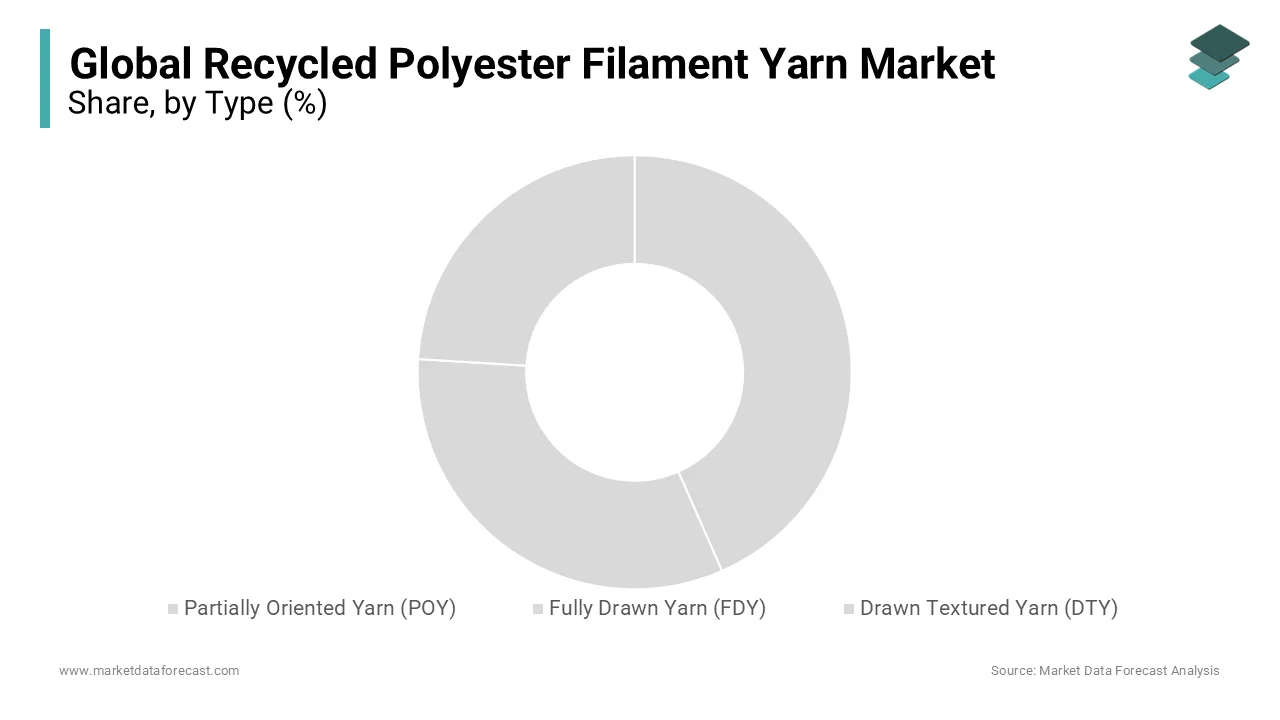
On the other hand, the fully drawn yarn segment represents the fastest growing segment and is estimated to record a CAGR of 10.4% over the forecast period owing to its superior tensile strength and smooth surface, which are critical for technical textiles and high performance apparel. FDY is fully oriented during the spinning process, resulting in a yarn that is strong, durable, and has excellent luster. According to the Industrial Fabrics Association International, the demand for technical textiles, including those used in automotive interiors and industrial applications, is growing rapidly due to their durability and lightweight properties. As per the Society of the Plastics Industry, recycled FDY is increasingly used in the production of tire cord and conveyor belts, where high strength is paramount. The automotive industry's shift towards lightweight materials to improve fuel efficiency further boosts demand for recycled FDY. Additionally, the home furnishing sector utilizes FDY for curtains and upholstery due to its resistance to wrinkling and fading. Advances in recycling technology have improved the quality of recycled FDY, making it comparable to virgin grades. Manufacturers are investing in capacity expansion to meet the rising demand from these diverse sectors. The versatility of FDY in both consumer and industrial applications positions it as the most dynamic growth driver in the type segment.
By Raw Materials Insights
The polyethylene terephthalate segment led the market by holding 81.8% of the global market share in 2025. The dominance of the polyethylene terephthalate segment in the global market is primarily due to the vast availability of post-consumer waste, such as beverage bottles, which serve as the primary feedstock for recycled polyester filament yarn. PET is the most widely recycled plastic globally, creating a robust supply chain for manufacturers. According to the National Association for PET Container Resources, over 2.9 billion pounds of PET bottles were collected for recycling in the United States in 2023, providing a steady source of raw material. As per the European Plastic Converters, around 13% of approximately 58 million tonnes of plastic produced in the EU is recycled into new plastics, ensuring a flow of flakes. The well-established collection and sorting systems for PET bottles reduce the cost and complexity of sourcing raw materials. Furthermore, the chemical structure of PET allows for efficient mechanical and chemical recycling processes that yield high quality filament yarn. The familiarity of manufacturers with PET processing technologies minimizes operational risks and capital expenditure. Government initiatives promoting PET recycling further support the availability of feedstock. This abundance and infrastructure maturity make PET the undisputed leader in raw materials for the recycled polyester filament yarn market.
On the other side, the poly-1, 4-cyclohexylene dimethylene segment is expected to record a promising CAGR of 8.2% over the forecast period in the global market owing to its exceptional resilience and elasticity, which are valued in specific high performance applications, such as upholstery and industrial fabrics. Although currently a smaller portion of the market, PCDT is gaining traction due to its superior resistance to abrasion and fatigue compared to standard PET. According to the Journal of Applied Polymer Science, PCDT fibers exhibit better recovery from deformation, which is making them ideal for furniture and automotive seating where long term durability is required. As per the Specialty Chemicals Magazine, the demand for high performance synthetic fibers in the automotive and aerospace industries is driving innovation in alternative polyester chemies. Manufacturers are exploring recycling pathways for PCDT containing waste to meet sustainability goals in these specialized sectors. The development of closed loop recycling systems for industrial textiles is facilitating the recovery of PCDT materials. While the volume is lower than PET, the high value associated with PCDT applications supports its growth. Research into blending PCDT with recycled PET to enhance performance characteristics is also expanding its utility. This focus on specialized performance and emerging recycling technologies positions PCDT as a rapidly evolving segment.
By Application Insights
The apparel segment captured the leading position in the global recycled polyester filament yarn market in 2025 with 54.5% of the global market share. The growth of apparel segment in the global market is driven by the intense focus of the fashion industry on sustainability and the widespread adoption of recycled materials by major brands. Consumers are increasingly demanding eco-friendly clothing options, prompting retailers to integrate recycled polyester into their collections. According to the Global Fashion Agenda, major industry players have made aggregate greenhouse gas emission reduction targets of 50% by 2030, including a significant increase in the use of recycled polyester. As per the McKinsey State of Fashion report, recycled polyester is one of the most commonly used sustainable materials in the industry due to its versatility and lower environmental impact compared to virgin synthetics. The use of recycled filament yarn in sportswear, activewear, and casual clothing has become mainstream, with prominent labels highlighting these credentials in marketing campaigns. The ability of recycled polyester to offer similar performance characteristics to virgin fiber ensures consumer acceptance. Regulatory pressures in key markets like the European Union are also mandating higher recycled content in textiles. This combination of consumer preference, corporate strategy, and regulatory compliance ensures that apparel remains the largest application segment for recycled polyester filament yarn.
However, the automotive segment is predicted to witness the fastest CAGR of 11.1% over the forecast period in the global market due to the lightweighting trends and interior sustainability mandates. The rapid expansion of the automotive segment is further likely to be fueled by the industry's drive to reduce vehicle weight to improve fuel efficiency and meet emissions standards, as well as increasing requirements for sustainable interior materials. Recycled polyester filament yarn is used in seat covers, carpets, headliners, and insulation panels due to its durability and lightweight nature. According to the International Organization of Motor Vehicle Manufacturers, global vehicle production is shifting towards electric vehicles, which prioritize weight reduction to extend battery range. As per the American Chemistry Council, a 10% reduction in vehicle weight can result in a 6% to 8% increase in that vehicle's fuel economy. The use of recycled polyester helps manufacturers achieve these targets while maintaining high quality and safety standards. The durability of recycled yarn ensures long lasting performance in harsh automotive environments. Government regulations promoting circular economy principles in the automotive sector further accelerate adoption. Partnerships between yarn producers and automotive suppliers are facilitating the development of specialized recycled materials. This strategic alignment with industry goals positions automotive as the most dynamic growth area for recycled polyester filament yarn.
REGIONAL ANALYSIS
Asia Pacific Recycled Polyester Filament Yarn Market Analysis
Asia Pacific dominated the recycled polyester filament yarn market globally in 2025 by accounting for the highest share of the global market. The dominance of Asia-pacific in the global market is driven by the dominant manufacturing capabilities and extensive textile exports. Asia Pacific maintains its leadership position due to the presence of major textile manufacturing hubs in China, India, and Vietnam, which produce a significant portion of the world's clothing and fabrics. The region benefits from established infrastructure for collecting and processing PET waste into recycled filament yarn. According to the Asian Development Bank, China produced approximately 60% of the world's chemical fibers and has significantly increased its domestic recycling capacity to meet global demand for sustainable textiles. As per the Textile Exchange, many international brands source their sustainable materials from Asian suppliers, who have invested heavily in recycling technologies. The growing middle class in the region is also increasing domestic consumption of sustainable fashion. Government policies in countries like India and Bangladesh are promoting the use of recycled materials to enhance competitiveness in global markets. The availability of low cost labor and raw materials supports efficient production. Additionally, regional trade agreements facilitate the movement of recycled yarn within the continent. This combination of production capacity, policy support, and market demand solidifies Asia Pacific's dominance in the global recycled polyester filament yarn landscape.
Europe Recycled Polyester Filament Yarn Market Analysis
Europe represents a significant regional segment in the global market and the European market is driven by stringent environmental regulations and high consumer awareness regarding sustainability. Europe holds a prominent position in the market due to its rigorous regulatory framework, which mandates the use of recycled materials in textiles and promotes circular economy practices. The European Union Strategy for Sustainable and Circular Textiles sets ambitious targets for recycled content, driving demand for recycled polyester filament yarn. According to Eurostat, 41% of plastic packaging waste was recycled in 2022, ensuring a steady supply of raw materials for the textile industry. As per the European Environmental Bureau, consumers in Europe are highly conscious of environmental issues and prefer brands that demonstrate sustainability. This demand prompts retailers to source recycled yarns for their private label and branded products. Investments in advanced recycling technologies, such as chemical recycling, are increasing in countries like Germany and France. The region's strong focus on reducing carbon footprints supports the adoption of recycled materials. Government incentives and grants facilitate the establishment of recycling facilities. These factors collectively position Europe as a key driver of innovation and demand in the recycled polyester filament yarn market.
North America Recycled Polyester Filament Yarn Market Analysis
North America is a mature market characterized by strong brand commitments and advanced recycling infrastructure. North America maintains a significant share in the market due to the aggressive sustainability goals set by major apparel and automotive companies in the United States and Canada. Brands are increasingly incorporating recycled polyester into their product lines to meet consumer expectations and regulatory requirements. According to the Environmental Protection Agency, the recycling rate for PET bottles and jars was 29.1% in recent years, providing a source of waste. As per the National Council for Textile Organizations, the demand for sustainable textiles is growing rapidly, with recycled polyester being a preferred choice. The region's strong focus on innovation leads to the development of high quality recycled yarns. Government initiatives, such as tax incentives for recycling operations, support market growth. The presence of leading technology providers facilitates the adoption of advanced recycling methods. Consumer awareness campaigns further drive demand for eco-friendly products. This robust ecosystem of supply, demand, and innovation ensures North America remains a key player in the global market.
Latin America Recycled Polyester Filament Yarn Market Analysis
Latin America is an emerging market with growing potential driven by increasing textile production and environmental awareness. Latin America is witnessing gradual growth in the recycled polyester filament yarn market, as countries like Brazil and Mexico expand their textile industries and adopt sustainable practices. The region is leveraging its agricultural and industrial waste streams to develop recycling capabilities. According to the Inter-American Development Bank, of the municipal solid waste produced in the region, only 4% is recovered, while 46% is disposed of in sanitary landfills. As per the Brazilian Textile Industry Association, local manufacturers are increasingly using recycled polyester to meet export standards and domestic demand. Government policies promoting environmental protection are encouraging the adoption of recycled materials. The rising middle class is becoming more conscious of sustainability, driving demand for eco-friendly products. International partnerships are facilitating technology transfer and capacity building. Although the market is smaller compared to other regions, the growth trajectory is positive. The focus on sustainable development goals supports long term expansion. These efforts position Latin America as a promising emerging market.
Middle East and Africa Recycled Polyester Filament Yarn Market Analysis
The Middle East and Africa represent a nascent market with potential for growth driven by urbanization and infrastructure development. The Middle East and Africa are beginning to explore the recycled polyester filament yarn market as part of broader efforts to improve waste management and promote sustainability. Countries in the Gulf Cooperation Council are investing in recycling infrastructure to handle increasing plastic waste. According to the United Nations Environment Programme, the African continent currently recycles only about 4% of its generated waste, though recent initiatives are targeting significant recovery improvements by 2030. As per the African Union, efforts to industrialize the textile sector are creating opportunities for recycled materials. The construction industry in the region is also starting to use recycled polyester for geotextiles and insulation.
COMPETITIVE LANDSCAPE
The competition in the Recycled Polyester Filament Yarn Market is intense and characterized by the presence of large integrated petrochemical companies and specialized recycling firms. Major players compete on the basis of product quality supply chain transparency and sustainability credentials to secure contracts with global brands. The market is moderately consolidated with leading companies holding significant influence over pricing and availability. Competitive advantage is often derived from vertical integration which allows control over waste collection and processing. Technological innovation in recycling methods serves as a key differentiator as companies strive to produce higher quality yarns. Regulatory compliance regarding environmental standards is critical for maintaining market access and reputation. New entrants face barriers due to high capital requirements and complex logistics involved in waste management. Strategic alliances and joint ventures are common as firms seek to expand their capabilities and geographic reach. Overall the market rewards companies that demonstrate consistent quality scalability and genuine commitment to circular economy principles.
Market Key Players
The major key players in the global recycled polyester filament yarn market are
- Rongsheng Petro Chemical
- Reliance Industries
- Sinopec Yizheng Chemical Fibre
- Indorama Ventures
- Swicofil
- Alpek S.A.B.
- Unifi, Inc.
- Polygenta
- Toray Industries
- Libolon
Top Players in the Market
- Indorama Ventures is a global leader in petrochemicals and integrated recycling with a significant presence in the recycled polyester filament yarn sector. The company contributes to the global market by operating extensive recycling facilities that convert post consumer PET waste into high quality rPET flakes and yarns. Indorama has recently expanded its recycling capacity in Europe and North America to meet growing demand from sustainable fashion brands. They have formed strategic partnerships with major retailers to secure long term supply agreements for recycled materials. The company invests heavily in advanced sorting and cleaning technologies to ensure product purity and consistency. By focusing on circular economy principles and vertical integration Indorama strengthens its market position. Their commitment to sustainability and innovation ensures they remain a key supplier in the evolving textile industry supporting the transition towards closed loop systems.
- Far Eastern New Century Corporation is a prominent player in the synthetic fiber industry known for its comprehensive recycling initiatives and sustainable product offerings. The company produces high performance recycled polyester filament yarn under its EcoSmart brand which is widely used in apparel and industrial applications. Far Eastern New Century contributes to the global market by implementing closed loop recycling systems that minimize waste and resource consumption. Recently the company has increased its investment in chemical recycling technologies to enhance the quality and scalability of its recycled products. They collaborate with global brands to develop innovative sustainable solutions that meet strict environmental standards. The company also focuses on reducing carbon emissions across its supply chain through energy efficient manufacturing processes. These efforts strengthen their reputation as a responsible and forward thinking leader in the recycled polyester market.
- Reliance Industries Limited is a major conglomerate with a dominant position in the textiles and petrochemical sectors including recycled polyester filament yarn production. The company contributes to the global market by leveraging its vast infrastructure to produce large volumes of high quality recycled yarns. Reliance has recently launched dedicated recycling units to process post industrial and post consumer waste into premium rPET products. They have established collaborations with international fashion houses to supply sustainable materials for exclusive collections. The company focuses on integrating digital technologies to improve traceability and transparency in its supply chain. Reliance also invests in research and development to create new grades of recycled polyester with enhanced properties. By combining scale innovation and sustainability Reliance strengthens its competitive edge and supports the global shift towards circular textile economies.
Top Strategies Used by the Key Market Participants
Key players in the Recycled Polyester Filament Yarn Market primarily focus on vertical integration to secure raw material supplies and control production costs. Companies invest heavily in expanding recycling infrastructure to increase capacity and meet rising demand from sustainable brands. Strategic partnerships with fashion retailers and automotive manufacturers ensure long term off take agreements and market stability. Innovation in chemical recycling technologies is pursued to improve yarn quality and enable textile to textile recycling. Sustainability certifications and transparent supply chains are emphasized to build trust with environmentally conscious consumers. Geographic expansion into emerging markets allows firms to diversify revenue streams and access new customer bases. Continuous research and development efforts drive product differentiation and performance enhancements. These strategies collectively enable participants to maintain leadership and adapt to regulatory and market dynamics effectively.
MARKET SEGMENTATION
This research report on the global recycled polyester filament yarn market has been segmented and sub-segmented based on type, raw material, application, and region.
By Type
- Partially Oriented Yarn (POY)
- Fully Drawn Yarn (FDY)
- Drawn Textured Yarn (DTY)
- Other
By Raw Materials
- Polyethylene Terephthalate
- Poly-1, 4-Cyclohexylene Dimethylene (PCDT)
- Other
By Application
- Apparel
- Automotive
- Construction
- Others
By Region
- Asia Pacific
- North America
- Europe
- South America
- Middle East & Africa