- Product Description Description
- Table of Contents TOC
- List of Table & Figure LOT
- Get Free Sample PDF Sample PDF
Market Size, 2025
$3.62 BnMarket Estimate, 2026
$3.83 BnMarket Forecast, 2034
$6.06 BnCAGR, 2026–2034
5.91%Executive Summary: Global Rig Based Well Access System Market
- Market Scope: Comprehensive global rig based well access system market analysis covering technology segments, regional leadership frameworks, key growth drivers, market trends, and strategic industry developments.
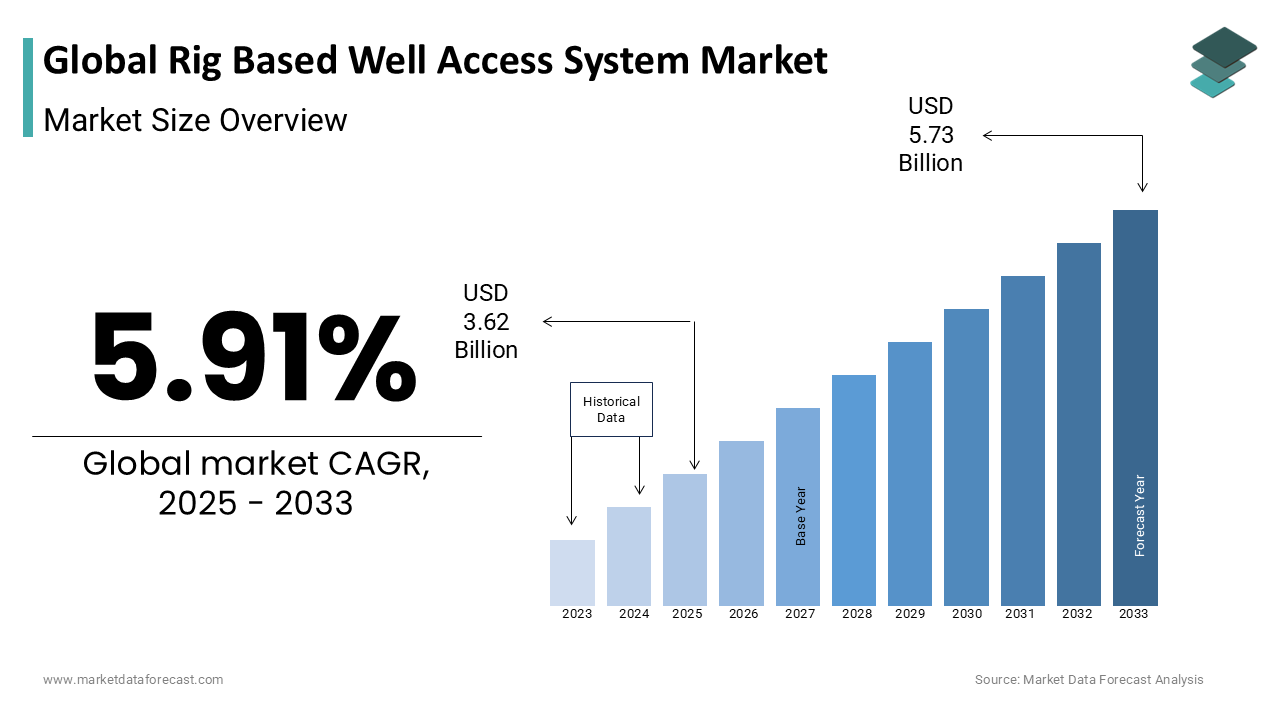
- Market Valuation: Valued at USD 3.62 billion (2025), estimated at USD 3.83 billion (2026), and projected to reach USD 6.06 billion by 2034, registering a robust CAGR of 5.91% (2026–2034).
- Primary Growth Drivers: Increasing complexity in deepwater drilling operations, stringent regulatory safety frameworks, and rising demand for efficient well intervention technologies. Notable trends include digital twin integration for predictive maintenance, decommissioning service expansion, and automated system adoption.
Key Market Segment Metrics (2026–2034)
| Category | Leading Segment (2025 Position) | Fastest-Growing Segment |
|---|---|---|
| By Technology / Product | Rig-based subsea technology (serves critical drilling and completion operations where platform access is unavailable) | Advanced automated well intervention and digital twin systems |
| By Region / Country | North America (accounted for the highest share of 34.9% of the global market in 2025, led by the United States and Canada) | Asia Pacific region (projected to witness robust expansion due to rising energy demand and deepwater investments) |
Major Market Players & Market Structure
Market Structure: Highly competitive oilfield services and subsea engineering landscape featuring major global enterprises competing through digital well construction platforms, lightweight composite risers, next-generation blowout preventers, and subsea intervention lift systems.
Key Companies: FMC Technologies, Aker Solutions, Tenaris, Weatherford Solutions, Schlumberger, Proserv, Cameron International, National Oilwell Varco, Halliburton, Baker Hughes, and Expro.
 Download Free Sample Report
Global Rig Based Well Access System Market Size
The global rig based well access system market was valued at USD 3.62 billion in 2025 and is anticipated to reach USD 6.06 billion by 2034 from USD 3.83 billion in 2026. witnessing a CAGR of 5.91% during the forecast period 2026 to 2034.
Rig-based well access system is the specialized engineering solution and mechanical interface designed to facilitate safe and efficient entry into oil and gas wells during drilling, completion, and intervention operations. These systems include pressure control equipment, riser systems, and subsea access modules that integrate directly with drilling rigs to maintain well integrity under high-pressure and temperature conditions. The industry is pivotal for both onshore and offshore exploration activities where precise wellbore access is critical for operational success and environmental safety. According to the International Energy Agency, global energy investment is projected to maintain strong momentum, with significant capital allocated to production infrastructure and enhanced well access technologies to support global supply. As per the United States Energy Information Administration, the number of active drilling rigs in the United States averaged approximately 600 units in early 2025, which is reflecting sustained activity levels that necessitate robust access systems. The Bureau of Safety and Environmental Enforcement mandates strict compliance with pressure containment standards, which drives the adoption of advanced rig-based access solutions. Furthermore, as per industry reports, approximately 60% of offshore projects now utilize automated well access systems to reduce human exposure to hazardous environments. These operational and regulatory dynamics underscore the essential role of these systems in modern hydrocarbon extraction, ensuring that well interventions are conducted with maximum safety and minimal downtime in increasingly complex geological settings.
MARKET DRIVERS
Increasing Complexity of Offshore Deepwater Drilling Operations Drives Demand
The escalating technical challenges associated with deepwater and ultra-deepwater drilling operations are driving the growth of the global rig-based well access system market. As easily accessible reserves deplete, operators are forced to explore depths exceeding 10,000 feet, where extreme pressures and temperatures require sophisticated pressure control and access mechanisms. According to industry data, over 40 new deepwater projects were sanctioned globally in 2024, with average water depths increasing by 15% compared to the previous decade. These environments necessitate high-specification riser systems and subsea blowout preventers that can withstand pressures exceeding 15,000 psi. As per the American Petroleum Institute, deepwater wells represent an increasingly dominant share of new offshore production capacity, requiring specialized access equipment to manage complex well architectures. Furthermore, the integration of dual-gradient drilling techniques demands precise well access interfaces to maintain mud weight balance and prevent formation damage. As per the Norwegian Offshore Directorate, investments in exploration and infrastructure on the Norwegian continental shelf remained robust in 2025, driven by the need for reliable well access in harsh weather conditions. Operators prioritize systems that offer rapid deployment and retrieval capabilities to minimize non-productive time, which is significantly more costly in deepwater settings. The ability to perform complex interventions, such as coiled tubing operations through rigid access systems, further enhances their value proposition. This technological imperative ensures sustained demand for high-performance well access solutions capable of meeting the rigorous demands of modern offshore exploration.
Stringent Regulatory Frameworks Mandate Enhanced Safety Protocols
Strict regulatory requirements imposed by governmental bodies and international safety organizations are further boosting the global rig-based well access system market expansion. Following historical incidents, regulators have implemented comprehensive standards for pressure containment and well control equipment to prevent catastrophic failures. According to the Bureau of Safety and Environmental Enforcement, all offshore drilling units operating in US waters must undergo annual certification of their well access and pressure control systems, ensuring adherence to updated safety protocols. The European Union Offshore Safety Directive mandates that operators demonstrate the reliability of their well access infrastructure through rigorous third-party audits and real-time monitoring capabilities. In the North Sea, national authorities require the installation of secondary barrier systems within well access assemblies to provide redundant protection against uncontrolled releases. According to industry trends, compliance with these regulations has led to a 25% increase in the replacement of legacy access systems with modern, certified equivalents since 2020. Additionally, the implementation of the Safety Case regime in countries like Australia and Canada forces operators to justify the suitability of their well access equipment for specific well conditions. Non-compliance results in severe penalties and operational shutdowns, creating a strong incentive for adopting state-of-the-art systems. These regulatory pressures drive continuous innovation and upgrades in well access technology, ensuring that safety remains the paramount consideration in drilling operations.
MARKET RESTRAINTS
High Capital Expenditure Limits Adoption in Marginal Fields
The substantial capital investment required for acquiring and installing advanced rig-based well access systems is hindering the global market growth, particularly for operators developing marginal or low-yield fields. High-specification subsea access modules and pressure control equipment can cost between 5 million and 15 million dollars per unit, depending on depth and pressure ratings. According to the Society of Petroleum Engineers, the upfront capital expenditure for deepwater well access infrastructure can account for up to 20% of total project costs, making it prohibitive for smaller independent operators. In regions with fluctuating oil prices, such as West Africa and Southeast Asia, companies often defer investments in new access systems, opting instead to extend the life of existing equipment despite higher maintenance risks. According to the World Bank, financing for upstream oil and gas projects has tightened, with interest rates affecting the economic viability of capital-intensive developments. Additionally, the specialized nature of these systems requires extensive training for personnel and dedicated maintenance facilities, further increasing operational overheads. According to the International Energy Agency, many brownfield projects are being delayed due to the high cost of upgrading well access infrastructure to meet current standards. This financial burden restricts the market potential to large integrated oil companies and national oil corporations with sufficient balance sheets, leaving a significant segment of the industry unable to adopt the latest technologies.
Volatility in Crude Oil Prices Impacts Exploration Budgets
The inherent volatility of global crude oil prices creates uncertainty in exploration and production budgets, thereby restraining consistent demand for rig-based well access systems. When oil prices decline, operators typically cut capital expenditure on new drilling programs and defer maintenance on existing wells, reducing the need for new access equipment. According to the Organization of the Petroleum Exporting Countries, oil price fluctuations can significantly alter global drilling activity within a single quarter. In recent years, when prices have dipped, several major operators have postponed planned well interventions, resulting in a 10% decrease in orders for well access modules. As per the United States Energy Information Administration, drilling rig counts are highly correlated with oil prices, meaning that prolonged periods of low prices lead to rig layups and reduced utilization of well access systems. Furthermore, price volatility affects the long-term planning of national oil companies, which may scale back ambitious offshore expansion plans. According to the International Monetary Fund, fiscal breakeven prices for many oil-producing nations remain a critical factor, limiting their ability to invest in new infrastructure during downturns. This cyclical nature of the industry makes it difficult for manufacturers of well access systems to forecast demand accurately, leading to inventory mismatches and production inefficiencies. Consequently, market participants face revenue instability tied directly to the unpredictable dynamics of the global energy commodity markets.
MARKET OPPORTUNITIES
Integration of Digital Twins and Predictive Maintenance Offers Growth Potential
The incorporation of digital twin technology and predictive maintenance capabilities into rig-based well access systems presents a substantial opportunity for the rig-based well access system market expansion. Digital twins create virtual replicas of physical well access equipment, allowing operators to simulate performance under various conditions and predict potential failures before they occur. According to the McKinsey Global Institute, the adoption of digital twins in the oil and gas sector can reduce maintenance costs by 10% and increase equipment uptime by 20%. Companies are increasingly embedding sensors and Internet of Things devices within well access modules to monitor pressure, temperature, and vibration in real time. According to industry research, predictive analytics can extend the service life of critical components, such as blowout preventers and risers, by identifying wear patterns early. In the North Sea, several operators have reported a 15% reduction in non-productive time after implementing digital monitoring systems for their well access infrastructure. Furthermore, regulatory bodies are encouraging the use of data-driven insights to enhance safety compliance and operational transparency. According to the Norwegian Offshore Directorate, initiatives that utilize digital models for safety case submissions are encouraged to accelerate approval processes for new wells. Manufacturers who offer integrated software platforms alongside hardware can command premium pricing and build long-term service contracts. This technological evolution transforms well access systems from static mechanical components into intelligent assets that contribute to overall field optimization and efficiency.
Expansion into Decommissioning and Well Abandonment Services
The growing focus on decommissioning and well abandonment activities provides a lucrative opportunity for the rig-based well access system market as aging infrastructure reaches the end of its productive life. Thousands of offshore wells globally require safe plugging and abandonment to meet environmental regulations, creating demand for specialized access equipment capable of handling complex closure procedures. According to the International Energy Agency, thousands of offshore wells in the North Sea and Gulf of Mexico are scheduled for decommissioning in the coming years, requiring robust well access solutions to ensure secure sealing. Decommissioning operations often involve high-pressure conditions and uncertain well integrity, necessitating advanced pressure control systems and rigid access modules to manage fluids and debris safely. According to the UK North Sea Transition Authority, the decommissioning market is expected to remain a multi-billion pound sector, driving investment in specialized intervention rigs and access technologies. Furthermore, the reuse of existing rig-based systems for abandonment tasks offers a cost-effective solution for operators looking to minimize waste. Manufacturers are developing modular access systems that can be rapidly configured for plugging operations, reducing mobilization time and costs. According to the American Petroleum Institute, reliable well access is essential in preventing post-abandonment leaks, which can result in significant liability. This emerging segment allows suppliers to diversify their revenue streams beyond traditional drilling and completion activities, tapping into a sustained and regulated market demand.
MARKET CHALLENGES
Technical Compatibility Issues with Legacy Infrastructure
The lack of standardization and technical compatibility between modern well access systems and legacy drilling infrastructure poses a significant challenge for market participants. Many existing rigs and wells were designed using outdated specifications that do not align with contemporary high-pressure, high-temperature equipment interfaces. According to the Society of Petroleum Engineers, approximately 40% of offshore platforms in operation today were installed before 2000, requiring extensive retrofitting to accommodate new well access technologies. This incompatibility leads to prolonged installation times and increased engineering costs, as custom adapters and modifications must be fabricated. As per the American Petroleum Institute, integration errors account for 15% of delays in well intervention projects due to mismatched flange connections and pressure ratings. Furthermore, older rigs may lack the structural capacity to support the weight and dynamic loads of modern subsea access modules, necessitating costly structural reinforcements. According to the International Association of Drilling Contractors, the absence of universal standards for well access interfaces complicates procurement and logistics for operators managing diverse fleets. Manufacturers struggle to design one-size-fits-all solutions, forcing them to maintain large inventories of specialized components. This fragmentation increases the complexity of supply chains and reduces the scalability of new product launches. Until industry-wide standardization efforts gain traction, operators will continue to face significant hurdles in upgrading their well access capabilities efficiently.
Shortage of Skilled Personnel for Complex System Operation
The scarcity of qualified engineers and technicians capable of operating and maintaining advanced rig-based well access systems restricts the efficient deployment of these technologies. Modern well access equipment incorporates sophisticated hydraulic, electronic, and software components that require specialized knowledge for safe and effective use. According to the International Association of Drilling Contractors, the oil and gas industry faces a significant workforce gap globally, with particular shortages in subsea engineering and pressure control expertise. In regions such as the Middle East and West Africa, local talent pools are limited, forcing companies to rely on expatriate staff, which increases operational costs and logistical complexities. As per the Society of Petroleum Engineers, training programs for well access system operators take between 6 and 12 months to complete, creating a bottleneck in workforce readiness. Furthermore, the retirement of experienced personnel from the baby boomer generation exacerbates the knowledge deficit, leading to potential operational errors and safety incidents. According to the Bureau of Safety and Environmental Enforcement, human error remains a leading cause of well control incidents, highlighting the critical need for competent personnel. Companies are investing in simulation-based training and remote assistance tools to mitigate this challenge, but the learning curve remains steep. This labor shortage limits the pace at which new technologies can be adopted and increases the risk of equipment misuse in critical drilling operations.
REPORT COVERAGE
| REPORT METRIC | DETAILS |
| Market Size Available | 2025 to 2034 |
| Base Year | 2025 |
| Forecast Period | 2026 to 2034 |
| CAGR | 5.91% |
| Segments Covered | By Technology and Region. |
| Various Analyses Covered | Global, Regional & Country Level Analysis, Segment-Level Analysis, DROC, PESTLE Analysis, Porter’s Five Forces Analysis, Competitive Landscape, Analyst Overview of Investment Opportunities |
| Regions Covered | North America, Europe, APAC, Latin America, Middle East & Africa |
| Market Leaders Profiled | FMC Technologies, Aker Solutions, Tenaris, Weatherford Solutions, Schlumberger, Proserv, Cameron International, and National Oilwell Varco, and Others. |
SEGMENTAL ANALYSIS
By Technology Insights
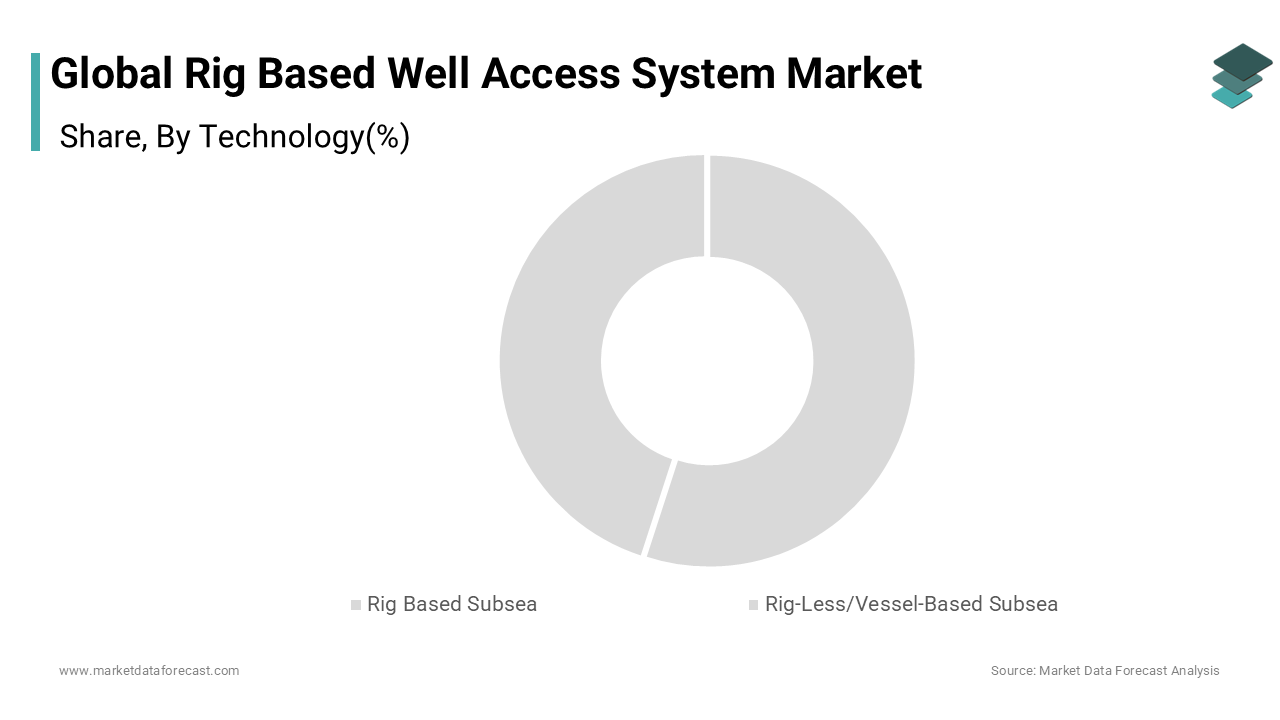
The rig-based subsea well access systems market is further segmented into two technologies: completion and workover elevators and landing rope technology. Rig-based access systems are employed primarily when the existing platform stops operating and the well has intervened again.
REGIONAL ANALYSIS
North America Rig Based Well Access System Market Analysis
North America accounted for the highest share of 34.9% of the global market in 2025 and is expected to maintain its market leadership for the next few years through continued investment in shale and offshore production. The United States is the primary contributor, with thousands of active land rigs utilizing rig-based access systems for unconventional oil and gas extraction. According to the United States Energy Information Administration, the Permian Basin alone accounts for a major portion of daily crude oil production, relying heavily on efficient well access technologies to maintain output. Canada also contributes significantly, with its oil sands and offshore projects in Newfoundland requiring specialized access solutions for harsh environments. The Bureau of Safety and Environmental Enforcement enforces strict regulations that drive the adoption of advanced safety features in well access equipment. The region benefits from a well-established supply chain and experienced workforce supporting continuous innovation. However, market growth is moderated by the maturity of many fields and fluctuating oil prices affecting investment decisions. Despite these challenges, the focus on enhancing recovery rates from existing wells sustains demand for modern access systems. Technological leadership and regulatory rigor consolidate North America’s position as the dominant regional market.
Europe Rig Based Well Access System Market Analysis
Europe is likely to see steady growth as operators prioritize efficiency in mature fields and decommissioning projects for the next few years. The North Sea remains a key hub for offshore drilling activities, with Norway and the United Kingdom leading in the adoption of advanced well access systems. According to the Norwegian Offshore Directorate, offshore production in Norway requires high-specification rig and vessel-based access equipment to operate in deep and harsh waters. The European Union Offshore Safety Directive mandates rigorous testing and certification of well access infrastructure, driving upgrades and replacements. The United Kingdom North Sea Transition Authority emphasizes the importance of reliable access systems for decommissioning activities, which are increasing as fields reach the end of their life. The region is also investing in carbon capture and storage projects, which utilize similar well access technologies for injection wells. Economic stability and strong regulatory frameworks support steady demand despite declining overall production volumes. The focus on safety and environmental sustainability shapes the market dynamics in Europe.
Asia Pacific Rig Based Well Access System Market Analysis
Asia Pacific is expected to demonstrate robust expansion as energy demand drives offshore development for the next few years. Countries such as China, India, Australia, and Malaysia are investing heavily in deepwater projects that require advanced vessel-based well access systems. According to the China National Offshore Oil Corporation, offshore drilling activity in the South China Sea has increased by 15% annually, requiring modern access technologies for high-pressure reservoirs. Australia is developing large liquefied natural gas projects that rely on efficient well access for timely completion. The Indian Ministry of Petroleum and Natural Gas is promoting domestic exploration through policy reforms, attracting international operators with advanced technical capabilities. The region faces challenges related to complex geology and varying regulatory standards, but offers significant growth potential. Rising energy consumption and government support for energy security drive investment in upstream infrastructure. The presence of major shipyards and manufacturing hubs also supports local production of well access components. These factors position Asia Pacific as a key growth engine for the global market.
Latin America Rig Based Well Access System Market Analysis
Latin America is poised for continued development of its offshore deepwater reserves for the next few years. Brazil is the dominant player, with Petrobras leading extensive deepwater drilling campaigns that require sophisticated vessel-based well access systems. According to the Brazilian National Agency of Petroleum, Natural Gas, and Biofuels, pre-salt production has reached record levels, driving demand for high-capacity drilling vessels and access equipment. Mexico is also revitalizing its offshore sector with new auctions, attracting international investment in well access technologies. The region benefits from abundant hydrocarbon resources but faces challenges related to financing and regulatory consistency. Political shifts and economic volatility can impact investment timelines, but long-term projects continue to proceed. Local content requirements encourage the development of domestic supply chains for well access components. The focus on maximizing recovery from complex reservoirs sustains demand for advanced technical solutions. These dynamics support steady market growth in Latin America.
Middle East and Africa Rig Based Well Access System Market Analysis
The Middle East and Africa are projected to focus on increasing production capacity and enhancing recovery through technological upgrades for the next few years. Saudi Arabia and the United Arab Emirates are investing in enhanced oil recovery techniques that require precise well access systems for complex well architectures. According to the Saudi Arabian Ministry of Energy, the kingdom aims to increase production capacity significantly, necessitating upgrades to existing well infrastructure. Africa is seeing renewed interest in offshore exploration, particularly in West Africa, where deepwater projects are being sanctioned. National regulatory commissions are implementing new laws to attract investment in well access technologies. The region faces challenges related to geopolitical instability and infrastructure deficits, but offers vast untapped potential. National oil companies are partnering with international firms to bring advanced technologies to the region. The focus on cost efficiency and local capacity building shapes the market landscape. These factors indicate gradual but steady growth in the Middle East and Africa.
COMPETITIVE LANDSCAPE
The competition in the Rig Based Well Access System Market is characterized by the presence of established multinational corporations and specialized engineering firms that compete on technology reliability and service quality. Major global players leverage their extensive experience and integrated service offerings to provide comprehensive well access solutions for complex drilling operations. These firms often engage in strategic collaborations with technology providers to incorporate digital tools and automation into their equipment. Meanwhile niche manufacturers compete by offering customized and cost effective solutions for specific regional or operational needs. The market sees intense rivalry in terms of product innovation safety standards and operational efficiency. Companies frequently launch new products with enhanced pressure ratings and material durability to differentiate themselves. Additionally the rise of digital twin technology has raised the bar for performance monitoring and maintenance services. This dynamic landscape drives continuous improvement in engineering excellence and customer support benefiting operators through safer and more efficient well access operations globally.
KEY MARKET PLAYERS
Some of the leading players that have a significant presence in the Rig based well access systems market are
- FMC Technologies
- Aker Solutions
- Tenaris
- Weatherford Solutions
- Schlumberger
- Proserv
- Cameron International
- National Oilwell Varco.
Top Players in the Global Rig Based Well Access System Market
Schlumberger Limited
Schlumberger Limited maintains a dominant position in the global rig based well access system market through its comprehensive portfolio of drilling and intervention technologies. The company provides advanced pressure control equipment and subsea access modules that integrate seamlessly with modern drilling rigs. Recently Schlumberger launched digital well construction platforms that utilize real time data analytics to optimize well access operations and enhance safety. The firm has expanded its service capabilities in deepwater regions by introducing automated riser management systems. These initiatives demonstrate its commitment to technological innovation and operational efficiency while strengthening relationships with major international oil companies seeking reliable and high performance well access solutions.
Halliburton Company
Halliburton Company contributes significantly to the market by offering robust well access systems designed for challenging onshore and offshore environments. The company emphasizes reliability and speed in its product designs catering to the needs of fast paced drilling operations. In recent developments Halliburton introduced new lightweight composite riser technologies that reduce load requirements for vessel based operations. It also partnered with technology firms to develop predictive maintenance tools for well access equipment. These strategic moves help the company address cost and efficiency concerns of operators while improving the durability and performance of its well access infrastructure across diverse geological conditions.
Baker Hughes Company
Baker Hughes Company plays a vital role in the rig based well access system market by delivering integrated solutions for well integrity and pressure management. The company focuses on sustainability and digital transformation offering eco friendly materials and smart monitoring systems for well access components. Recently Baker Hughes unveiled next generation blowout preventers with enhanced sealing capabilities for high pressure high temperature wells. It also invested in training programs for personnel to ensure safe operation of complex access systems. These efforts reflect its dedication to safety and environmental stewardship while providing customers with advanced tools to manage wellbore access effectively in critical drilling applications.
Top Strategies Used by Key Market Participants
Key players in the Rig Based Well Access System Market primarily focus on technological innovation and strategic partnerships to enhance their competitive advantage. Companies invest heavily in research and development to create automated and digitalized well access solutions that improve safety and efficiency. This approach addresses the growing demand for real time monitoring and predictive maintenance capabilities. Manufacturers also collaborate with oil and gas operators to customize systems for specific reservoir conditions and regulatory requirements. Additionally firms emphasize sustainability by developing eco friendly materials and energy efficient equipment. These comprehensive strategies enable companies to strengthen their brand presence and drive adoption of advanced well access technologies in the global energy sector.
RECENT MARKET HAPPENINGS
- The recently launched direct platform portal enhances the customer experience. When the project began to develop an easier way for customers to order pipe, few imagined that it would transform the way customers interact with Tenaris.
- Expro is launching two new well-access solutions. British oil services company Expro has added two new well access solutions to its subsea response capabilities; an intervention lift system and a postless intervention system. These two technologies are in addition to Expro's established subsea landing rope system technologies.
MARKET SEGMENTATION
This research report on the global rig based well access system market is segmented and sub-segmented into the following categories.
By Technology
- Rig Based Subsea
- Rig-Less/Vessel-Based Subsea
By Region
- North America
- Europe
- Asia Pacific
- Latin America
- Middle East & Africa