- Product Description Description
- Table of Contents TOC
- List of Table & Figure LOT
- Get Free Sample PDF Sample PDF
Market Size, 2025
$115.27 BnMarket Estimate, 2026
$122.65 BnMarket Forecast, 2034
$201.46 BnCAGR, 2026–2034
6.4%Executive Summary: Global Rural Tourism Market
- Market Scope: Comprehensive global rural tourism market analysis covering tourism types, traveler segments, accommodation categories, regional leadership frameworks, and sustainable travel trends.
- Market Valuation: Valued at USD 115.27 billion (2025), estimated at USD 122.65 billion (2026), and projected to reach USD 201.46 billion by 2034, expanding at a robust CAGR of 6.4% (2026–2034).
- Primary Growth Drivers: Rising consumer demand for authentic cultural experiences, increasing interest in sustainable travel, post-pandemic shift toward open and nature-based destinations, and improved digital connectivity allowing rural providers to access global audiences.
Key Market Segment Metrics (2026–2034)
| Category | Leading Segment Position | Fastest-Growing Segment |
|---|---|---|
| By Tourism Type | Eco-tourism segment (dominates due to environmental awareness and government support) | Expanding sustainable and experiential nature tourism categories |
| By Traveler Type & Accommodation | Adventure seekers (dominant traveler segment) & Farm stays (hold significant market share for authenticity) | Social media-driven adventure and immersive agricultural tourism offerings |
| By Region / Country | Europe (holds a dominant position due to cultural heritage and diverse landscapes, followed by North America) | Asia-Pacific region (expected to register the highest CAGR during the forecast period) |
Major Market Players & Market Structure
Market Structure: Highly competitive global travel and hospitality landscape characterized by platform adaptations for longer-term stays, flexible booking options, and targeted promotional campaigns driving domestic and rural travel through exclusive deals and safety protocols.
Key Companies: Airbnb, Booking.com, Expedia Group, TripAdvisor, Marriott International, Hilton, Agoda, Ctrip (Trip.com Group), AccorHotels, Wyndham Hotels & Resorts, InterContinental Hotels Group (IHG), Priceline Group, TUI Group, Thomas Cook Group, Hertz Global Holdings, and American Express Global Business Travel.
 Download Free Sample Report
Global Rural Tourism Market Size
The global rural tourism market size is expected to grow with a CAGR of 6.4% from 2026 to 2034. The market was valued at USD 115.27 billion in 2025 and is expected to reach USD 201.46 billion by 2034 from USD 122.65 billion in 2026.
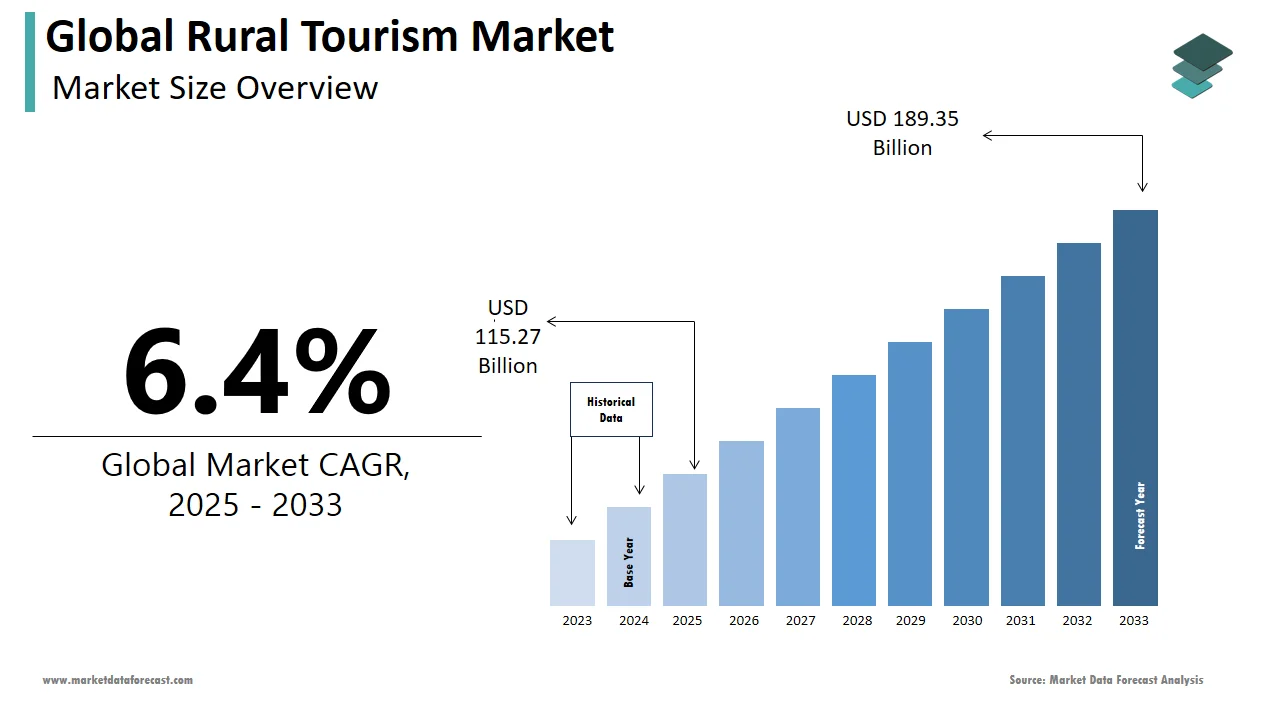
Rural tourism is when people visit quiet countryside places, farms, and small villages for relaxing holidays. They go there to enjoy nature, like beautiful landscapes and peaceful surroundings. People also want to learn about farming, like planting crops or taking care of animals on working farms. Rural tourism lets visitors meet local folks, taste local food, and join cultural celebrations. You can stay in cosy guesthouses or farmhouses. It's a chance to explore outdoor activities like hiking, riding horses, or camping. Rural tourism helps people escape city life, unwind, and understand how rural communities live. It's also suitable for the countryside by bringing in tourists and respecting nature.
MARKET DRIVERS
Rural tourism is a growing market because it offers travellers a chance to experience real local culture.
When people visit countryside areas, they get to meet the locals, take part in their traditions, and see how they live. This makes rural trips special and different from big-city vacations. It's like a window into the true heart of a place, and that is why so many people love it. This genuine cultural experience is a big reason why the rural tourism market is expanding, attracting more travellers and businesses catering to their needs.
The rural tourism market is all about people exploring the countryside for vacations. These places have stunning natural landscapes, like mountains, forests, and rivers, which attract tourists who are looking to escape crowded cities and experience nature's tranquillity. This trend is boosting rural economies and creating opportunities for local communities as more people choose to explore the charms of rural life. As a result, rural destinations are continually evolving to offer unique experiences that cater to the market demands of modern travellers, making rural tourism a dynamic and promising market.
MARKET RESTRAINTS
The rural tourism market faces challenges due to limited infrastructure because some of these areas don't have enough facilities like good roads, places to stay, or hospitals.
This can slow down the market growth of rural tourism. However, many rural places are working on improving these things to attract more tourists. As more people discover the beauty of rural areas, this market is expected to grow, creating opportunities for local communities and businesses while preserving the charm of the countryside.
MARKET OPPORTUNITIES
Rural tourism holds a promising market opportunity. With improved digital connectivity, rural areas can showcase their unique attractions and activities to a global audience online. This opens doors for efficient online booking services and broader marketing reach, which attracts more travellers. As a result, rural communities can tap into a growing tourism market, boosting their local economies and creating new job opportunities. So, investing in rural tourism and improving digital connectivity is a smart move for both travellers and rural communities.
IMPACT OF COVID-19 ON THE GLOBAL RURAL TOURISM MARKET
The COVID-19 pandemic had a significant impact on rural tourism market growth. Lockdowns and travel restrictions caused a sharp decline in visitors, which hurt small businesses that rely on tourists, and some even closed for good. Rural communities with limited healthcare were worried about the virus. However, as restrictions eased, rural tourism picked up as people sought safe, open spaces. This boosted nature-based and remote getaways. To thrive in the post-pandemic era, rural tourism businesses adapted by implementing safety measures, using digital marketing, and offering diverse experiences. This highlighted the importance of adaptability and resilience in this sector.
REPORT COVERAGE
| REPORT METRIC | DETAILS |
| Market Size Available | 2025 to 2034 |
| Base Year | 2025 |
| Forecast Period | 2026 to 2034 |
| CAGR | 6.4% |
| Segments Covered | By Tourism, Traveler, Accommodation, Age Group, and Region. |
|
Various Analyses Covered | Global, Regional & Country Level Analysis, Segment-Level Analysis, DROC, PESTLE Analysis, Porter’s Five Forces Analysis, Competitive Landscape, Analyst Overview of Investment Opportunities |
| Regions Covered | North America, Europe, APAC, Latin America, Middle East & Africa |
|
Market Leaders Profiled | Airbnb, Booking.com, Expedia Group, TripAdvisor, Marriott International, Hilton, Agoda, Ctrip (Trip.com Group), AccorHotels, Wyndham Hotels & Resorts, InterContinental Hotels Group (IHG), Airbnb, Priceline Group, TUI Group, Expedia Group, Thomas Cook Group, Hertz Global Holdings, American Express Global Business Travel, and Others. |
SEGMENTAL ANALYSIS
By Tourism Insights
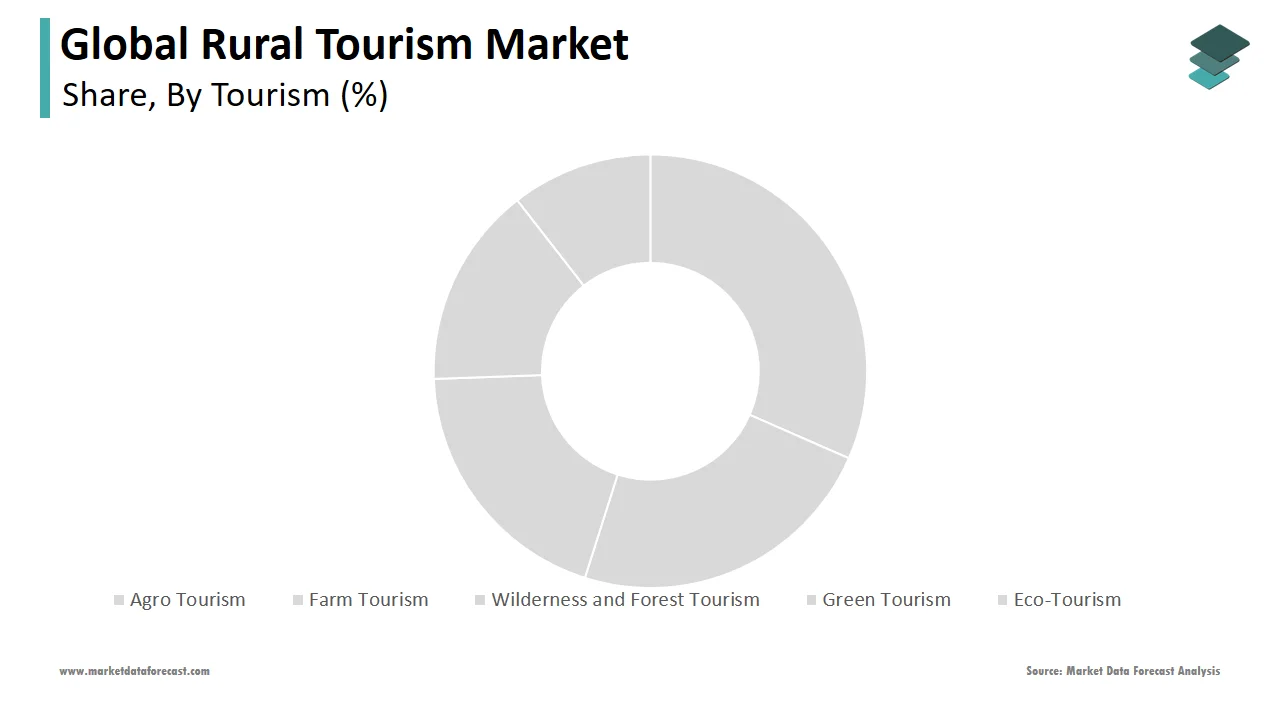
The eco-tourism segment dominates the rural tourism market shares due to growing environmental awareness, demand for authentic experiences, government support, appeal to diverse travellers, a positive brand image, and its focus on long-term sustainability.
By Traveler Insights
Adventure seekers dominate rural tourism due to the allure of thrilling activities like hiking, kayaking, and zip-lining, offering excitement and novelty. Social media's impact amplifies their influence, as adventurers share their rural escapades online, inspiring others to seek similar exciting experiences, making it a prominent traveller segment.
By Accommodation Insights
Farm stays hold significant rural tourism market shares due to their rural authenticity, offering guests a genuine agricultural experience and a respite from urban life. They provide educational, interactive activities, often set in scenic countryside locations, with farm-to-table dining options that align with sustainability values, making them a favoured choice among nature enthusiasts and eco-conscious travellers.
By Age Group Insights
Family travel is standard in this demographic, drawn to rural areas offering family-friendly activities and accommodations, making them a significant market segment for rural tourism.
REGIONAL ANALYSIS
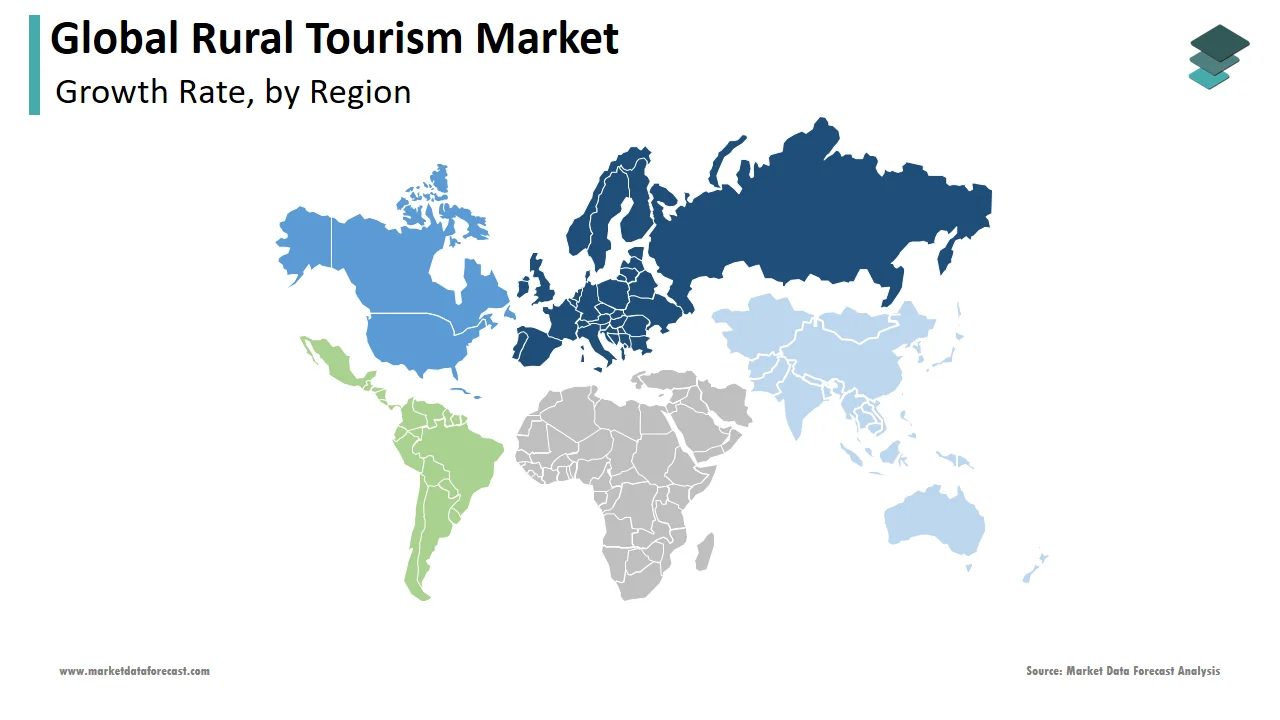
Europe holds a dominant position in the rural tourism market due to its rich cultural heritage, easy accessibility, and diverse landscapes. The continent attracts travellers seeking authentic historical experiences and offers well-preserved traditions and sites. Its robust transportation network facilitates exploration. North America is next in leading the dominant shares of the market with the presence of varied landscapes and strong road trip culture, naturally attracting those keen on rural exploration, outdoor activities, and cultural heritage. Asia Pacific is deemed to reach the highest CAGR in the coming years. The Asia-Pacific region is enticed with stunning natural beauty, cultural diversity, and adventure options, appealing to nature lovers and adventurers, often with budget-friendly options. The Middle East and Africa provide unique desert experiences, history exploration, and ecotourism, catering to adventurers, history buffs, and eco-conscious tourists who are setting up growth opportunities for the market.
KEY MARKET PLAYERS
Companies playing a prominent role in the global rural tourism market include Airbnb, Booking.com, Expedia Group, TripAdvisor, Marriott International, Hilton, Agoda, Ctrip (Trip.com Group), AccorHotels, Wyndham Hotels & Resorts, InterContinental Hotels Group (IHG), Airbnb, Priceline Group, TUI Group, Expedia Group, Thomas Cook Group, Hertz Global Holdings, American Express Global Business Travel, and Others.
RECENT MARKET HAPPENINGS
- In 2021, Airbnb adapted its platform to focus on longer-term stays and local getaways, catering to travelers seeking rural and suburban destinations. It introduced enhanced cleaning protocols to reassure guests and hosts about safety.
- In 2022, Booking.com introduced flexible booking options and cancellation policies to accommodate changing travel plans. It also highlighted rural and nature-based accommodations to align with the shift in travel preferences.
- In 2022, Expedia launched a campaign promoting domestic and rural travel, encouraging travelers to explore local destinations. It partnered with rural accommodations and attractions to provide exclusive deals.
MARKET SEGMENTATION
This global rural tourism market research report has been segmented and sub-segmented based on tourism, traveler, accommodation, age group, and region.
By Tourism
- Agro Tourism
- Farm Tourism
- Wilderness and Forest Tourism
- Green Tourism
- Eco-Tourism
By Traveler
- Adventure Seekers
- Cultural Enthusiasts
- Eco-Tourists
- Family and Group Travelers
- Solo Travelers
By Accommodation
- Farm Stays
- Cottage Rentals
- Eco-Lodges
- Homestays
By Age Group
- Below 15 years
- 16 to 25
- 26 to 35
- 36 to 45
- 46 to 55
- above 55
By Region
- North America
- Europe
- Asia Pacific
- Latin America
- Middle East & Africa