- Product Description Description
- Table of Contents TOC
- List of Table & Figure LOT
- Get Free Sample PDF Sample PDF
Market Size, 2025
$110.24 MnMarket Estimate, 2026
$115.23 MnMarket Forecast, 2034
$164.25 MnCAGR, 2026–2034
4.53%Global Sacha Inchi Oil Market Report Summary
The global sacha inchi oil market was valued at USD 110.24 million in 2025, is estimated to reach USD 115.23 million in 2026, and is projected to reach USD 164.25 million by 2034, growing at a CAGR of 4.53% during the forecast period from 2026 to 2034. The growth of the global sacha inchi oil market is driven by increasing consumer awareness regarding the health benefits of plant-based oils, rising demand for omega-3-rich nutritional products, and growing preference for natural and organic ingredients. The expanding use of sacha inchi oil in dietary supplements, cosmetics, personal care products, and functional foods is further supporting market growth. Additionally, the rising popularity of vegan and clean-label products is encouraging manufacturers to incorporate sacha inchi oil into a wider range of consumer applications.
Key Market Trends
-
Growing consumer preference for plant-based and nutrient-rich oils is driving demand for sacha inchi oil worldwide.
-
Rising awareness of omega-3 fatty acids and their health benefits is supporting the adoption of sacha inchi oil in dietary supplements.
-
Increasing demand for natural and organic ingredients in cosmetics and personal care products is expanding application opportunities.
-
Growing popularity of vegan, clean-label, and functional food products is boosting market growth.
-
Expanding research and product development activities are increasing the use of sacha inchi oil across health and wellness industries.
Segmental Insights
-
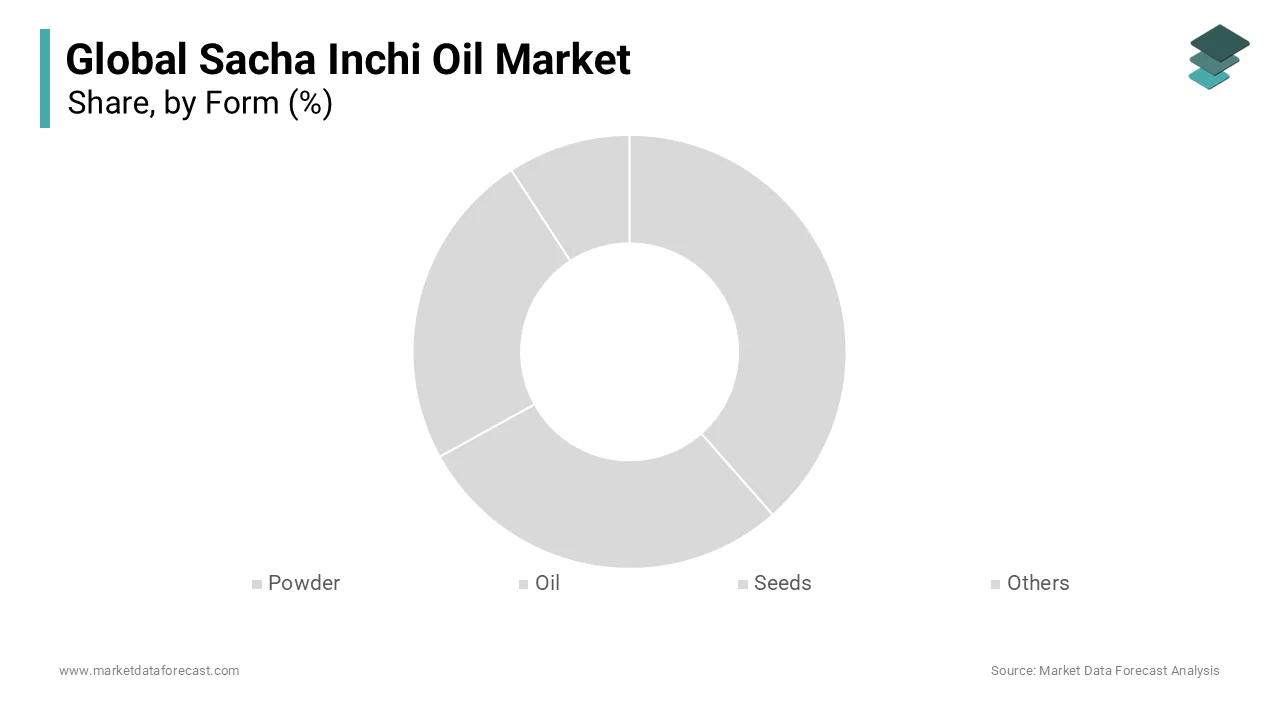
Based on form, the oil segment dominated the global sacha inchi oil market and accounted for 45.2% of the market share in 2025. The segment's leadership is attributed to its extensive use in dietary supplements, food products, and personal care formulations due to its high nutritional value and ease of application.
-
Based on type, the natural segment held the largest share of 60.5% of the global sacha inchi oil market in 2025. The segment's dominance is driven by growing consumer demand for minimally processed products, broad availability, and increasing preference for natural health and wellness solutions.
-
Based on application, the dietary supplement segment accounted for 35.7% of the global market share in 2025. The segment's growth is supported by rising demand for plant-based omega-3 supplements and increasing consumer focus on preventive healthcare and nutritional wellness.
Regional Insights
-
The global sacha inchi oil market is witnessing steady growth, supported by increasing health consciousness, growing demand for natural ingredients, and expanding applications across multiple industries.
-
North America dominated the global sacha inchi oil market by accounting for 31.9% of the market share in 2025. The region's leadership is driven by high consumer awareness of nutritional supplements, strong demand for plant-based products, and the presence of a well-established health and wellness industry.
-
Europe remains a significant market due to increasing adoption of organic products, rising demand for sustainable ingredients, and growing interest in functional foods.
-
Asia-Pacific is expected to witness strong growth, supported by rising disposable incomes, expanding health-conscious populations, and increasing demand for natural dietary supplements.
-
Latin America continues to play an important role in the market due to its status as a major production hub for sacha inchi and growing regional consumption.
Competitive Landscape
The global sacha inchi oil market is moderately competitive, with companies focusing on product quality, organic certifications, sustainable sourcing practices, and expansion into new application areas. Market participants are investing in product innovation, strategic partnerships, and distribution network expansion to strengthen their market presence and meet the growing demand for plant-based nutritional ingredients. Key players operating in the global sacha inchi oil market include MG Natura Peru S.A.C, Peruvian Nature, Arista Industries, Axiom Foods, Herbo Nutra, Paras Perfumers, Imlak'Esh Organics, Nature's Power Nutraceuticals, and Flora Health.
Global Sacha Inchi Oil Market Size
The global sacha inchi oil market size was valued at USD 110.24 million in 2025 and is expected to reach USD 164.25 million by 2034 from USD 115.23 million in 2026. The market is projected to grow at a CAGR of 4.53%.

Sacha Inchi Oil is a highly nutritious and plant-based oil cold-pressed from the seeds of the Plukenetia volubilis plant, a climbing vine native to the Amazon rainforest, often referred to as the "Inca peanut". It has gained popularity as a superfood and cosmetic ingredient. This botanical extract is highly prized for its exceptional nutritional composition, containing profound concentrations of essential fatty acids and potent antioxidants. According to official epidemiological data from the World Health Organization (WHO), cardiovascular diseases stand as the leading cause of global mortality, claiming an estimated 17.9 million lives each year. This global health burden continues to accelerate clinical and academic interest in functional, heart-healthy dietary fats and plant-derived oils rich in polyunsaturated fatty acids to lower chronic disease risks. Furthermore, the World Health Organization (WHO) reveals that the global burden of metabolic conditions has escalated, with over 2.5 billion adults worldwide currently classified as overweight or obese. This expanding metabolic crisis underscores an urgent, evidence-based necessity for systemic lifestyle interventions and the integration of nutritionally beneficial dietary profiles. Research highlights Plukenetia volubilis (Sacha Inchi) as an effective, highly resilient perennial crop for the Amazon basin. Integrating this native vine into polyculture systems offers a viable agroforestry framework that mitigates localized deforestation, restores degraded soils, and establishes stable economic opportunities for smallholder farming communities. The integration of this nutrient dense oil into functional foods, dietary capsules, and premium dermatological formulations represents a fundamental shift in how modern industries address chronic health conditions and aesthetic wellness. This foundational transition toward botanical lipid utilization ensures that the extraction and application of this specific Amazonian seed oil remain absolutely indispensable for advancing global nutritional science and sustainable agricultural economies.
MARKET DRIVERS
Surging Consumer Preference for Vegan Omega 3 Alternatives
The absolute necessity to secure sustainable and ethical sources of essential fatty acids is accelerating the commercial adoption of this specific Amazonian seed oil, which contributes to the growth of the Sacha Inchi oil market. Historically, consumers relied heavily on marine derived supplements to meet their daily requirements for alpha linolenic acid, but growing environmental concerns and dietary restrictions have severely disrupted this traditional supply chain. the Food and Agriculture Organization (FAO) shows that global wild capture fisheries consistently extract around 90 million tonnes of marine life annually. Managing these finite oceanic ecosystems highlights the strategic role of plant-based lipids to supplement global long-chain fatty acid requirements. Moreover, indicate rising public alignment with plant-forward diets due to varied environmental, ethical, and personal health motives. This shifting consumer demand expands commercial target avenues for alternative, unrefined plant-derived polyunsaturated fatty acid (PUFA) profiles. Sustainable perennial crop systems optimize regional land use by integrating productive agricultural layouts without expanding clear-cutting practices. This profound ethical and environmental awakening compels dietary supplement manufacturers to reformulate their products using this highly concentrated botanical oil, thereby driving massive and sustained procurement across the global nutritional wellness sector.
Escalating Incidence of Cognitive Decline and Neurological Disorders
The rapid expansion of aging demographics and the corresponding surge in neurological health concerns are key drivers of the Sacha inchi oil market. This propels the integration of this nutrient-dense oil into specialized medical and dietary applications. The human brain requires substantial amounts of essential fatty acids to maintain cellular membrane integrity and facilitate optimal neurotransmitter function, making lipid supplementation a primary preventive strategy against cognitive deterioration. The World Health Organization (WHO) estimates that the global population of individuals aged 60 and older will double to 2.1 billion by 2050. This systemic demographic shift intensifies public health and clinical research focus on preventative nutritional interventions to support healthy cognitive aging. Also, the World Health Organization (WHO) confirms that over 55 million people globally live with dementia. Addressing this widespread neurodegenerative burden involves exploring dietary patterns rich in antioxidants and essential polyunsaturated fatty acids to assist in comprehensive health management. This urgent medical imperative to protect brain health and enhance neurological longevity guarantees a robust and continuous demand for highly concentrated botanical lipid extracts across international healthcare and dietary supplement markets.
MARKET RESTRAINTS
High Cultivation Costs and Labor Intensive Harvesting Processes
The substantial financial expenditures required for agricultural development and the inherently manual nature of seed collection constrain the growth of the Sacha inchi oil market. These factors severely restrict the rapid scalability and commercial viability of this botanical oil across global markets. Unlike major commercial oilseed crops such as soybeans or canola, this specific Amazonian plant cannot be easily harvested using heavy mechanized equipment due to its delicate vine structure and continuous asynchronous fruiting cycle. Research shows that its climbing growth habit prevents standard automated combine harvesting, requiring consistent manual labor for collection and deshelling. This reliance on manual labor increases ongoing operational inputs for agricultural cooperatives operating within native growing corridors. Moreover, assessments show that establishing agroforestry configurations and primary seed-crushing infrastructure presents notable upfront capital constraints for rural smallholders. These initial financial barriers emphasize the importance of development microloans and collaborative processing networks to achieve commercial viability. Research indicates that a lack of modernized mechanical processing and standardized post-harvest infrastructure in remote tropical zones limits local oil extraction efficiency. Upgrading to uniform mechanical pressing technologies helps smallholder groups improve oil purity, prolong product shelf-life, and stabilize market value. This profound operational inefficiency and heavy reliance on manual labor prevent manufacturers from achieving the economies of scale necessary to compete with cheaper, mass produced vegetable oils, thereby acting as a major restraint on overall market expansion.
Limited Geographical Cultivation and Climate Sensitivity
Strict environmental requirements and a deep vulnerability to climatic fluctuations severely limit where this plant can be grown, which holds back the expansion of the Sacha inchi oil market. As a result, the global supply of this specialized botanical extract remains highly restricted. This specific crop thrives exclusively in tropical and subtropical ecosystems that provide consistent humidity, abundant rainfall, and specific soil acidity levels, restricting large scale commercial farming primarily to the Andean and Amazonian regions of South America. The Intergovernmental Panel on Climate Change (IPCC) detail that accelerating climate variability and altered precipitation regimes in tropical regions disrupt standard growing seasons. These environmental changes alter localized crop suitability profiles, demanding the adoption of resilient agroforestry practices to stabilize yield vulnerabilities. Apart from this, studies indicate that Plukenetia volubilis is sensitive to waterlogging and prolonged unseasonable temperature drops, both of which can negatively impact flowering cycles and seed development. This climate sensitivity causes fluctuating annual production levels for farms lacking managed irrigation infrastructure. This profound geographical limitation and high susceptibility to environmental stressors create severe supply chain bottlenecks, making it exceedingly difficult for global manufacturers to secure the consistent, large volume raw material contracts required for mass market product formulation.
MARKET OPPORTUNITIES
Integration into Premium Dermatological and Cosmetic Formulations
The booming global demand for clean beauty and advanced anti-aging skincare offers a massive commercial avenue for the Sacha inchi oil market. This highly emollient botanical oil is perfectly positioned for deployment in the personal care sector. The lipid profile of this specific seed extract is exceptionally rich in linoleic acid and tocopherols, which are scientifically proven to reinforce the skin barrier, retain moisture, and neutralize free radical damage caused by environmental pollutants. Epidemiological research highlights that chronic inflammatory skin conditions are a widespread dermatological concern globally. This ongoing public health focus drives formulation interest in cold-pressed botanical lipids rich in alpha-linolenic and linoleic acids, which are clinically recognized for their ability to support skin barrier repair and mitigate moisture loss. Furthermore, sources show a strong, upward valuation trend within global clean beauty and natural personal care sectors. Driven by conscious consumer choices, formulators are expanding their supply pipelines to include certified organic, ethically sourced specialty botanical oils. Position this nutrient-dense oil as a superior, multifunctional active ingredient. By doing so, manufacturers can capture significant market share in the lucrative, rapidly evolving sectors of luxury skincare and dermatology.
Expansion into Functional Foods and Fortified Beverages
Consumers are increasingly adopting proactive health management strategies, and functional food products are rapidly proliferating, which is likely to promote the growth of the Sacha inchi oil market. Consequently, this creates an unprecedented opportunity to incorporate specialized lipid extracts into everyday dietary items. Modern food scientists are increasingly utilizing microencapsulation technologies to mask the distinct earthy flavor of this oil, allowing it to be seamlessly fortified into plant based milks, nutritional smoothies, and baked goods without compromising sensory appeal. The Food and Agriculture Organization (FAO) indicates that millions of individuals suffer from micronutrient deficiencies and lack access to dietary diversity. This persistent nutritional gap prompts the food industry to explore nutrient-dense, plant-derived oilseeds to fortify everyday food matrices with essential fatty acids. In addition, research shows that a substantial majority of wellness-oriented consumers seek out foods and beverages that provide functional health benefits, with heart health and immune support remaining leading purchasing motivators. Businesses can establish a dominant presence in the rapidly expanding functional nutrition landscape by delivering this potent botanical extract in accessible formats. This is achieved by leveraging advanced processing techniques to create convenient and highly palatable products.
MARKET CHALLENGES
Complex Regulatory Approvals and Novel Food Classifications
The labyrinth of stringent international food safety regulations and the classification of this extract as a novel food in several major jurisdictions are serious operational challenges for distributors in the global Sacha inchi oil market. In many Western markets, regulatory authorities require exhaustive toxicological profiling, allergen testing, and long term stability studies before granting approval for the commercial sale of non traditional botanical oils. Furthermore, Commercializing specialized plant oil extracts in the United States typically involves filing a voluntary U.S. Food and Drug Administration (FDA) GRAS notice. This process requires companies to provide transparent scientific data demonstrating that the final oil product is safe for consumption and free from harmful processing impurities or solvent residues. The export of specialized botanical ingredients involves navigating varied regulatory frameworks across different international markets. Exporters must tailor their compliance strategies to satisfy individual country requirements, ranging from regional novel food laws to local labeling and safety standards. This profound administrative burden and the high risk of regulatory rejection severely delay product launches, restrict market entry for smaller enterprises, and stifle the rapid global commercialization of this highly beneficial nutritional oil.
Susceptibility to Post Harvest Degradation and Oxidation
The extracted lipid profile is extremely unstable and highly vulnerable to rapid oxidative degradation, which slows down the expansion of the Sacha inchi oil market. This creates a massive technical challenge for manufacturers trying to maintain product quality during storage and distribution. Due to its exceptionally high concentration of polyunsaturated fatty acids, this specific botanical oil is highly reactive when exposed to light, heat, and atmospheric oxygen, leading to the rapid formation of rancid compounds and the complete loss of its nutritional efficacy. Food science literature confirms that unrefined oils rich in polyunsaturated fatty acids, particularly alpha-linolenic acid, are highly sensitive to thermal degradation. Maintaining cooler ambient storage temperatures is a standard operational practice to prevent rancidity and preserve the sensory profile of the lipid. Furthermore, studies demonstrate that prolonged exposure to direct retail lighting can accelerate the breakdown of natural antioxidants, such as tocopherols, in unsaturated plant oils. To preserve nutritional integrity, producers often prioritize light-blocking storage strategies throughout the retail supply chain. This persistent struggle to maintain chemical stability and prevent spoilage severely limits the shelf life of the oil, complicating global logistics and threatening the brand reputation of manufacturers who fail to implement flawless preservation protocols.
REPORT COVERAGE
| REPORT METRIC | DETAILS |
| Market Size Available | 2025 to 2034 |
| Base Year | 2025 |
| Forecast Period | 2026 to 2034 |
| CAGR | 4.53% |
| Segments Covered | By Type, Form, Application, And Region. |
| Various Analyses Covered | Global, Regional and Country Level Analysis; Segment-Level Analysis; DROC; PESTLE Analysis; Porter’s Five Forces Analysis; Competitive Landscape; Analyst Overview of Investment Opportunities |
| Regions Covered | North America, Europe, APAC, Latin America, Middle East & Africa |
| Market Leaders Profiled | MG Natura Peru S.A.C, Peruvian Nature, Arista Industries, Axiom Foods, Herbo Nutra, Paras Perfumers, Imlak'Esh Organics, Nature's Power Nutraceuticals, Flora Health. |
SEGMENTAL ANALYSIS
By Form Insights
The oil segment was the largest in the global market and occupied a 45.2% share in 2025. This supremacy of the segment was supported by its exceptional concentration of essential fatty acids required for direct human consumption and culinary applications. Consumers and food manufacturers highly value this liquid form because it delivers a massive dose of omega 3 and omega 6 fatty acids in a highly bioavailable matrix. Epidemiological profiles managed by the World Health Organization (WHO) establish cardiovascular diseases as a leading driver of global healthcare burdens. To counter these systemic risks, clinical guidelines recommend replacing saturated fats with polyunsaturated fatty acids to maintain balanced blood lipid parameters. In addition, Food processing data highlights that unrefined botanical oils rich in alpha-linolenic acid (ALA) are best suited for cold applications, such as dressings or low-temperature additions. Because high heat accelerates lipid oxidation, keeping these sensitive oils away from thermal stress preserves their natural nutritional and chemical integrity. This profound nutritional density and versatility in culinary applications guarantee the continuous and overwhelming market leadership of the oil segment across global health food sectors.
Additionally, a primary cause keeping this segment ahead is its superior absorption rate and rapid physiological integration compared to solid or powdered alternatives. When consumed in liquid form, the lipid molecules bypass the need for extensive mechanical breakdown in the digestive tract, allowing for immediate emulsification and uptake in the small intestine. Studies in clinical nutrition show that the metabolic absorption of alpha-linolenic acid depends primarily on the chemical structure of the lipid (such as triglycerides vs. ethyl esters) and emulsification efficiency during digestion, rather than whether it is ingested directly as a liquid or inside a standard softgel capsule. Furthermore, the International Society for the Study of Fatty Acids and Lipids (ISSFAL) emphasize the long-term systemic importance of maintaining an appropriate dietary balance of omega-6 to omega-3 polyunsaturated fatty acids to support normal immune and inflammatory signaling pathways over time. This unmatched biological efficiency and rapid health benefit delivery ensure the sustained dominance of the oil format in the global market.
The powder segment is estimated to register the fastest CAGR of 8.5% from 2026 to 2034 mainly due to its seamless integration into functional foods and baked goods without altering texture. Modern food scientists require nutrient dense ingredients that can be easily mixed into dry formulations, such as protein bars, bread, and breakfast cereals, without introducing unwanted moisture or greasy residues. Studies confirm that using dehydrated or powdered botanical ingredients helps product developers enhance the nutritional profile of functional foods. Employing shelf-stable, powdered ingredients allows manufacturers to introduce plant-based proteins and fibers into dry food matrix designs without altering crisp textures. The Food and Agriculture Organization (FAO) prioritize the fortification of staple crops to treat widespread vitamin and mineral deficiencies. Separately, integrating sustainable, protein-dense seed flours into local food supplies helps address macro-level protein-energy malnutrition gaps in vulnerable regions. This exceptional versatility in dry food manufacturing propels the powder segment to the forefront of rapid market expansion.
The extended shelf life and significantly reduced oxidation risk associated with powdered formats further catalyze the explosive growth of this segment. Liquid botanical oils are highly susceptible to rancidity when exposed to light, heat, and oxygen, requiring expensive dark glass packaging and strict climate controlled storage. In contrast, converting the extract into a stabilized powder through microencapsulation or spray drying techniques dramatically protects the delicate fatty acids from environmental degradation. This profound improvement in supply chain efficiency and product longevity guarantees the rapid expansion of the powder segment.
By Type Insights
In 2025, the natural segment held a 60.5% majority share of the global Sacha Inchi Oil Market due to lower production costs and widespread accessibility to mass-market consumers. Cultivating and processing this seed without the stringent requirements of certified organic agriculture allows farmers and manufacturers to keep operational expenses significantly lower. Research shows that conventional farming methods generally reduce short-term overhead costs by allowing the use of synthetic fertilizers and pest controls. This cost difference allows conventional, uncertified botanical oils to be offered at more accessible price points than certified organic equivalents, which require strict adherence to synthetic-free production protocols. This compelling combination of economic accessibility and widespread retail distribution ensures that the natural segment maintains its undisputed leadership in the global market.
In addition, an important force helping this segment stay on top is its widespread availability in conventional retail channels and established global supply chains. Mainstream food and beverage manufacturers heavily rely on natural ingredients to formulate everyday consumable products, requiring massive and consistent volumes of raw materials that organic farming often struggles to supply. Supply chain management assessments show that sourcing raw materials from conventional agricultural pipelines offers product manufacturers a highly reliable and consistent ingredient supply. This stability allows large-scale food processors to secure high volumes of product and avoid the seasonal availability risks often tied to niche organic farming networks. This robust supply chain reliability and massive commercial availability guarantee the sustained market leadership of the natural segment across all industrial applications.
The organic segment is anticipated to witness the fastest CAGR of 9.2% during the forecast period, largely owing to the surging consumer demand for pesticide-free and chemical-free agricultural products. Modern buyers are increasingly aware of the detrimental health effects of synthetic agrochemicals and are actively shifting their purchasing habits toward ecologically pure alternatives. The Research Institute of Organic Agriculture (FiBL) confirms that global retail sales for certified organic foods and beverages have shown steady long-term growth, crossing €135 billion globally. This expanding market is driven by increasing global consumer interest in sustainably produced foods and clean-label agricultural supply chains. Surveys suggest that younger consumers, particularly Millennials and Generation Z, place a high value on environmental sustainability and product transparency. This consumer shift encourages wellness brands to seek out verifiable organic and eco-friendly certifications for their botanical ingredient lines. This relentless consumer push for absolute purity and environmental safety propels the organic segment to the forefront of rapid market expansion.
The premium pricing and significantly higher profit margins associated with certified ecological farming further accelerate the explosive growth of the organic segment. Farmers and producers are increasingly transitioning to organic cultivation methods because the financial returns vastly outweigh those of conventional agriculture, despite the higher initial labor costs. Research shows that certified organic specialty oils routinely command a retail price premium over conventional products. This higher price reflects the added costs of organic certification compliance, lower average yields, manual weed management, and identity-preserved processing requirements. This powerful economic incentive structure guarantees the rapid and sustained expansion of the organic segment.
By Application Insights
The dietary supplement segment led the global market and captured a 35.7% share in 2025. This leading position of the segment was attributed to the massive global shift toward preventive healthcare and proactive immune system support. Consumers are no longer waiting for illnesses to manifest before taking action; instead, they are heavily investing in daily nutritional regimens designed to optimize long term health and prevent chronic diseases. The World Health Organization (WHO) confirms that noncommunicable diseases account for 74% of all deaths worldwide. Addressing this global health burden involves prioritizing preventative strategies, including lifestyle modifications and balanced dietary patterns low in saturated fats. The profound societal transition toward daily preventive nutrition guarantees the continuous market leadership of the dietary supplement segment.
Also, a major factor supporting this segment's lead is the exceptionally high concentration of alpha linolenic acid required for specialized cardiovascular health capsules. Medical professionals and nutritionists heavily recommend this specific omega 3 fatty acid to patients seeking to lower triglyceride levels, reduce blood pressure, and prevent arterial plaque buildup. the American Heart Association (AHA) recommend replacing saturated fats with polyunsaturated and monounsaturated options to support cardiovascular health. Incorporating plant-based omega-3 sources, such as ALA, helps maintain healthy cholesterol profiles as part of a balanced diet. This critical medical endorsement and massive consumer reliance on cardiovascular protection ensure the sustained dominance of this application.
The cosmetics segment is likely to experience the fastest CAGR of 9.8% between 2026 and 2034. This swift expansion of the segment is propelled by the rising demand for natural emollients in anti aging and moisturizing skincare formulations. Modern consumers are aggressively rejecting synthetic silicones and mineral oils, seeking out botanical alternatives that provide deep hydration without clogging pores or causing environmental harm. Cosmetic science literature indicates that plant oils rich in alpha-linolenic and linoleic acids provide excellent topical emollient benefits. Applying these polyunsaturated fatty acids helps support skin barrier function, reduce trans-epidermal water loss, and improve skin smoothness. This massive shift toward clean beauty and dermatological safety propels the cosmetics segment to the forefront of rapid market expansion.
The high tocopherol content providing exceptional oxidative stability for topical formulations further catalyzes the explosive growth of the cosmetics application segment. Cosmetic chemists require raw ingredients that not only nourish the skin but also protect the final product from degrading on the retail shelf. This specific botanical extract is naturally packed with vitamin E, a potent antioxidant that neutralizes free radicals and prevents the oil from turning rancid when exposed to air and light. This unparalleled functional versatility guarantees the rapid expansion of the cosmetics segment.
REGIONAL ANALYSIS
North America Sacha Inchi Oil Market Analysis
North America dominated the global Sacha inchi oil market and accounted for a 31.9% share in 2025. This dominance of the North American market was driven by the massive consumer adoption of preventive health regimens and the widespread integration of botanical lipids into functional food products. It is the main hub for dietary supplement consumption and advanced nutritional research. The regional market is heavily anchored by the United States market. the Council for Responsible Nutrition (CRN) indicate that the comprehensive domestic impact of the dietary supplement sector exceeds $150 billion. Within this ecosystem, rising health consciousness and clean-label trends continue to drive consumer transitions toward functional, plant-derived lipid profiles and alternative polyunsaturated fatty acids. As per sources, the rapid expansion of the plant based food sector has created an immense demand for this oil as a primary ingredient in meat alternatives and dairy free beverages. This robust consumer awareness, strong regulatory support, and massive retail distribution network cement North America as the undisputed leader in the global market.
Europe Sacha Inchi Oil Market Analysis
The European market was positioned second globally and captured a 27.6% share in 2025. This growth of the regional market was fuelled by its world-renowned commitment to ecological farming and clean beauty standards. It is a highly progressive and strictly regulated territory within the global ecosystem, guiding the development of premium organic cosmetics and sustainable nutritional products. The core driving force behind this market strength is the aggressive implementation of the European Green Deal and strict cosmetic regulations that ban harmful synthetic chemicals, compelling manufacturers to adopt pure botanical alternatives. A study highlights consistent consumer interest in organic cosmetics and clean beauty formulations. This demand encourages cosmetic formulators to source natural, unrefined plant oils rich in alpha-linolenic acid to act as functional emollient agents for skin barrier protection. IFOAM Organics Europe emphasize a strong regulatory push toward strengthening fairness and transparency throughout food supply chains. This advocacy emphasizes protecting agricultural producers and implementing strict ecological metrics to combat greenwashing across international retail markets. This profound commitment to sustainability and product purity ensures Europe remains a critical and highly lucrative territory.
Asia Pacific Sacha Inchi Oil Market Analysis
Asia Pacific witnessed a rapid growth in the Sacha inchi oil market due to the explosive growth of the regional middle class and their increasing disposable income dedicated to premium health and beauty products. The region is the primary driver of rapid wellness adoption and traditional medicine integration. Regional demographic briefs tracking consumer shifts in Asia underscore a massive surge in purchasing power. This rapidly expanding middle-income demographic increasingly targets premium wellness categories, creating robust regional retail pipelines for clean-label, plant-based nutritional additives. In addition, Documentation on regional health models confirms that integrated medicine frameworks are foundational across nations like India and China. While the World Health Organization (WHO) supports safety and quality benchmarking for traditional botanicals, the market integration of alternative plant oils is driven by commercial consumer wellness preferences rather than formal medical prescriptions. This immense demographic scale and aggressive economic modernization guarantee that the Asia Pacific will dominate global market growth trajectories.
Latin America Sacha Inchi Oil Market Analysis
Latin America is moving ahead steadfastly in the global market owing to the massive agricultural output of Andean nations and the growing domestic focus on food security and nutritional sovereignty. The dominant factor for this region is its status as the primary global source of wild and cultivated seeds, supplying the vast majority of the raw material required by international processors. It is the native cultivation heartland and a highly strategic territory within the global landscape, with regional performance tied closely to raw material export and local agricultural development. The International Trade Centre (ITC) demonstrate that niche agricultural exports provide critical income to thousands of rural smallholder farming cooperatives in Peru and Colombia. These biodiversity-focused value chains are expanding based on international fair-trade demand for alternative proteins and specialty omega-rich fats. This unique position as both the primary global supplier and an emerging consumer market ensures steady and strategic growth for the region.
Middle East and Africa Sacha Inchi Oil Market Analysis
The Middle East and Africa region is likely to grow notably in the global market over the forecast period. These countries focus heavily on importing premium wellness products and developing localized, high-value agriculture. The regional market status is characterized by massive sovereign wealth investments in advanced healthcare and luxury cosmetics, particularly within the Gulf Cooperation Council nations. The primary driver of adoption is the aggressive execution of national economic diversification strategies that prioritize the importation of high end nutritional supplements and the development of controlled environment agriculture to reduce reliance on volatile international food supply chains. Agricultural development frameworks supported by the African Development Bank (AfDB) focus heavily on scaling climate-smart, drought-resilient crops to improve local food security. Because Sacha Inchi requires consistent tropical moisture, regional diversification initiatives select native or localized oilseeds better adapted to survive marginal, arid Sub-Saharan environments. Furthermore, the African Development Bank highlights that several Sub Saharan nations are initiating pilot programs to cultivate this drought resistant crop in marginal lands, aiming to boost local agricultural resilience and create new export revenue streams. This dual focus on luxury consumption and sustainable agricultural innovation ensures steady and targeted growth for the regional market.
COMPETITIVE LANDSCAPE
The competitive landscape of the market is characterized by intense rivalry among local agricultural cooperatives, specialized extraction firms, and multinational nutritional ingredient distributors. These organizations continuously strive to outpace rivals by securing exclusive organic certifications, implementing rigorous quality control protocols, and developing innovative delivery formats for their botanical extracts. The industry exhibits a highly fragmented structure at the cultivation tier, where thousands of small scale farmers in South America control the majority of raw material production, while the processing and distribution segments remain moderately consolidated among a few dominant global corporations. To maintain their competitive edge, industry leaders heavily prioritize supply chain transparency, ensuring their products meet the stringent ecological and ethical standards demanded by premium retail markets. Strategic joint ventures also play a pivotal role, allowing established processors to rapidly access new geographical markets and secure long term supply contracts with major cosmetic and pharmaceutical manufacturers. Furthermore, companies are increasingly focusing on developing proprietary extraction methods that maximize the yield of delicate polyunsaturated fatty acids without the use of harsh chemical solvents. This relentless pursuit of agricultural excellence and processing innovation ensures that the competitive environment remains highly dynamic, forcing all participants to continuously upgrade their operational capabilities to secure lucrative global contracts and maintain consumer trust.
KEY MARKET PLAYERS
Some of the Key players in the sacha inchi oil market are
- MG Natura Peru S.A.C
- Peruvian Nature
- Arista Industries
- Axiom Foods
- Herbo Nutra
- Paras Perfumers
- Imlak'Esh Organics
- Nature's Power Nutraceuticals
- Flora Health.
Top Players in the Market
- Biocorp Production operates as a vital contributor to the global agricultural landscape by providing cutting edge organic cultivation techniques and comprehensive extraction facilities. The company focuses heavily on leveraging sustainable agroforestry practices to produce premium certified botanical lipids for the European and North American markets. To strengthen its position, the enterprise recently expanded its primary processing facility to include advanced cold press technology, ensuring maximum retention of essential fatty acids and tocopherols. This strategic infrastructure advancement enables the organization to achieve unprecedented levels of product purity and operational efficiency. The firm establishes a highly innovative environment by integrating strict ecological standards with deep botanical expertise. Consequently, they develop next-generation nutritional solutions that protect environmental health and optimize global supply chains today.
- Sacha Inchi USA contributes extensively to the market through the engineering of specialized dietary supplement formats and advanced microencapsulation technologies designed to support cardiovascular health. The company focuses on bridging the gap between raw agricultural commodities and consumer ready wellness products to optimize nutritional delivery. To expand its footprint, the organization recently launched a highly advanced line of vegan softgel capsules that completely mask the natural earthy flavor of the seed extract. This product enhancement allows consumers to easily incorporate massive doses of omega 3 fatty acids into their daily routines without any sensory discomfort, significantly improving user compliance across diverse global markets and health sectors today.
- Amazonian Seeds Processing significantly impacts the market by merging its dominant regional farming expertise with highly specialized international export logistics and fair trade certification programs. The company works to transform local rural cooperatives into fully connected, transparent supply chains capable of providing end to end visibility from the initial planting phase to final global delivery. The enterprise has recently expanded its technological ecosystem by integrating blockchain tracking modules directly into its core distribution networks. These sophisticated pipelines assist international buyers in verifying the exact ecological origin and ethical harvesting practices of every single batch. This deep integration of digital traceability and operational transparency makes the firm a central coordinator for the future of sustainable and ethical global botanical supply chains today.
Top Strategies Used by the Key Market Participants
Key participants in the market primarily focus on strategic vertical integration and the acquisition of certified organic farmland to secure a consistent and high quality raw material supply chain. By controlling the entire process from seed cultivation to final extraction, these corporations significantly reduce production costs and ensure absolute product purity. Furthermore, industry leaders heavily invest in advanced cold press and microencapsulation technologies to enhance the bioavailability and shelf life of their final commercial offerings. Collaborative partnerships with international nutritional research institutes also form a crucial strategy, enabling companies to validate the clinical efficacy of their botanical extracts and secure favorable health claims from regulatory authorities. Finally, organizations are increasingly prioritizing the development of fair trade cooperatives to empower local farming communities, ensuring long term agricultural sustainability and building strong brand loyalty among ethically conscious global consumers.
MARKET SEGMENTATION
This research report on the global sacha inchi oil Market has been segmented and sub-segmented based on type, form, application, and region.
By Form
- Powder
- Oil
- Seeds
- Others
By Type
- Natural
- Organic
By Application
- Pharmaceuticals
- Cosmetics
- Food And Beverages
- Dietary Supplement
- Others
By Region
- North America
- Europe
- Asia-Pacific
- Latin America
- Middle East and Africa