- Product Description Description
- Table of Contents TOC
- List of Table & Figure LOT
- Get Free Sample PDF Sample PDF
Market Size, 2025
$55.5 BnMarket Estimate, 2026
$60.11 BnMarket Forecast, 2034
$113.75 BnCAGR, 2026–2034
8.3%Global Small Molecule Drug Discovery Market Size
The small molecule drug discovery market size was valued at USD 55.5 billion in 2025. The global market is further estimated to grow at a CAGR of 8.3% from 2026 to 2034 and be worth USD 113.75 billion by 2034 from USD 60.11 billion in 2026.
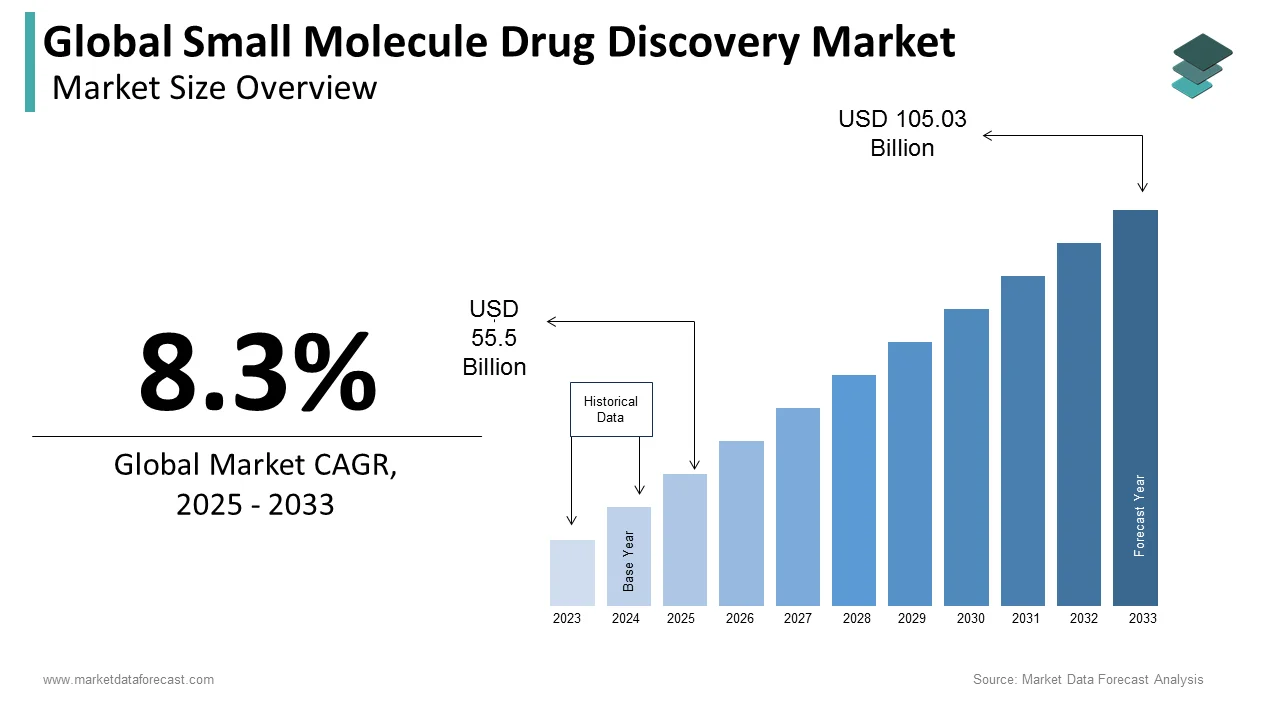
Small molecule drugs are any organic compounds with a lower molecular weight. These have been in use in the pharmaceutical industry for more than 100 years. Small molecules can penetrate cell membranes and are typically taken orally or through injections to reach intracellular targets. They can be designed to interact in different ways with biological targets. A target protein is first identified through processes like genomics and proteomics. After the identification of the protein, a small molecule compatible to interact with the specific protein is identified. Further, changes are being made in the structure of the small molecule to enhance its binding with the target protein. Preclinical and further clinical studies are being done on the small molecule before it is sent for approval by regulatory authorities.
During the COVID-19 pandemic, the small molecule drug discovery market experienced a lot of ups and downs. The pandemic caused delays in clinical trials at every phase involved, as it was difficult to get patient volunteers for the trials. These slowed down the process of small-molecule drug discovery. The COVID-19 pandemic disrupted the global supply chain from top to bottom, which caused the supply of many of the vital compounds required in the process of small molecule drug discovery to be unavailable to researchers and labs conducting the trials. During the COVID-19 outbreak, many pharmaceutical companies entered the development and production of similar drugs. This increased the competition, and the small molecule drug discovery market share for the companies declined suddenly. Along with these, the small molecule drug discovery market also experienced heavy investment during the COVID-19 outbreak. The investment in small molecule drug discovery increased by 10% and reached up to $30 billion. Along with this, advanced technologies have been developed in the small molecule drug discovery market during the pandemic. For instance, researchers have developed a system to screen and sort a large number of compounds to find compatible ones. Also, the overall small drug discovery market share has bounced back in the post-pandemic period, which further assures the growth in the market.
MARKET DRIVERS
Small molecule drugs are far less expensive than biologics. The main reason for the reduced prices is the heavy investment being poured into the Research & Development of drugs in the pharmaceutical industry. Thus, the technical advancements lead to decreasing prices in the small molecule drug discovery market. Availability of new technologies like computational drug design and high throughput screening. These technologies lead to accurate results with increased efficiency in drug development. Thus, the stages from drug development to the actual drug reaching the customers take less time. This further adds to the driving factors for the small molecule drug discovery market share. The longer shelf life of these small molecule drugs is also one of the biggest factors to be considered, as diseases like diabetes and chronic cardiovascular diseases have been rising rapidly in recent years.
Hence, lower prices of small molecule drugs, Availability of advanced technologies, and the longer shelf life of small molecule drugs are the major factors responsible for the growth of the small molecule drug discovery market share.
MARKET RESTRAINTS
High costs associated with drug discovery and research and development are the major factor that restricts the growth of small molecules. The permissions and certification required for small molecule drug discovery and further approval require hefty amounts of spending. As per reports, an average investment of $2.6 billion is required for any drug discovery. Due to this, many small companies resist entering into drug discovery and stick to manufacturing. The strict regulations set by the regulatory authorities require a lot of time as examining the drug at different stages takes a lot of time. The approval from the US FDA might sometimes take up to 10-12 years. Investing hefty amounts for such a long period without any returns can be a big burden on many investors and producers as well. Ever-increasing competition in the field of small molecule drug discovery is a major challenge for all companies as many new players are entering the small molecule drug discovery market. This makes it difficult for small companies to compete and withstand in the market. The rising trend for the use of personalized medicines that are developed per individual patients is making it more challenging to grow small molecule drug discovery market share as the drugs are generally designed to work on large populations. Hence, the high cost of the drug discovery procedure, the drug discovery and approval being a time-consuming process, increased competition in the field, and the rising trend for the use of personalized medicines are the major factors that limit the growth of small molecule drug discovery market share.
REPORT COVERAGE
| REPORT METRIC | DETAILS |
| Market Size Available | 2025 to 2034 |
| Base Year | 2025 |
| Forecast Period | 2026 to 2034 |
| Segments Covered | By Process Phase, Therapeutic Areas, and Region. |
| Various Analyses Covered | Global, Regional, and Country-Level Analysis, Segment-Level Analysis, Drivers, Restraints, Opportunities, Challenges; PESTLE Analysis; Porter’s Five Forces Analysis, Competitive Landscape, Analyst Overview of Investment Opportunities |
| Regions Covered | North America, Europe, Asia Pacific, Latin America, Middle East & Africa |
| Market Leaders Profiled | Novartis, Merck KGaA, GSK Plc, Johnson & Johnson, and AstraZeneca. |
SEGMENTAL ANALYSIS
By Process Phase Insights
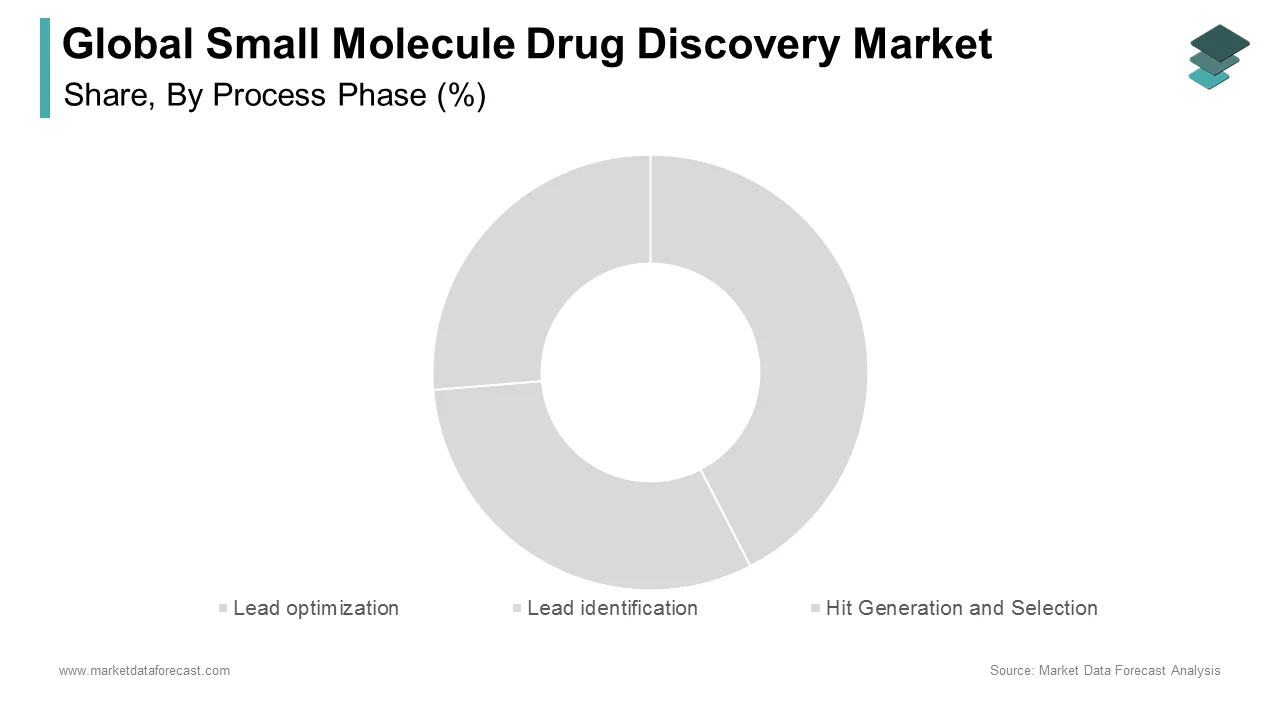
The lead optimization segment is leading the small drug discovery market with a market share of 35%. After the identification of the primary compound, a drug candidate is created using the lead optimization process. The optimization of lead series biological activity and characteristics takes place simultaneously. The lead optimization segment is growing at a growth rate of around 8% in the small molecule drug discovery market.
The lead identification segment stands second in the small molecule drug discovery market with a market share of 30%. The genetic and cellular components of the disease are identified first using this process. In vitro and in vivo tests are carried out. Lead identification is the first step conducted in designing a drug.
The hit generation and selection segment accounts for 25% of the small molecule drug discovery market share. Hit generation determines the speed and chance of success in identifying drug candidates. The selection involves the selection of a potential biological target.
By Therapeutic Areas Insights
The oncology segment is leading the small molecule drug discovery market with a market share of 35%. The rising number of cancer patients all over the world and increased demand for new treatment methods is the major reason for the growth of the oncology segment in the small molecule drug discovery market.
The cardiovascular segment holds the second spot in the small molecule drug discovery market with a market share of 30%. Cardiovascular diseases like stroke, coronary heart disease, and aortic diseases are on the rise, and countries like India and the US are the biggest markets for the cardiovascular segment.
The CNS segment holds 20% of the small molecule drug discovery market share. The high prevalence of neurological disorders is the major factor that drives the CNS segment in the market.
The respiratory segment holds the lowest share in the small molecule drug discovery market, with around 15% of the market share. The wide spread of diseases like asthma, TB, and bronchitis are the major factors that contribute to the development of the market share of this segment.
REGIONAL ANALYSIS
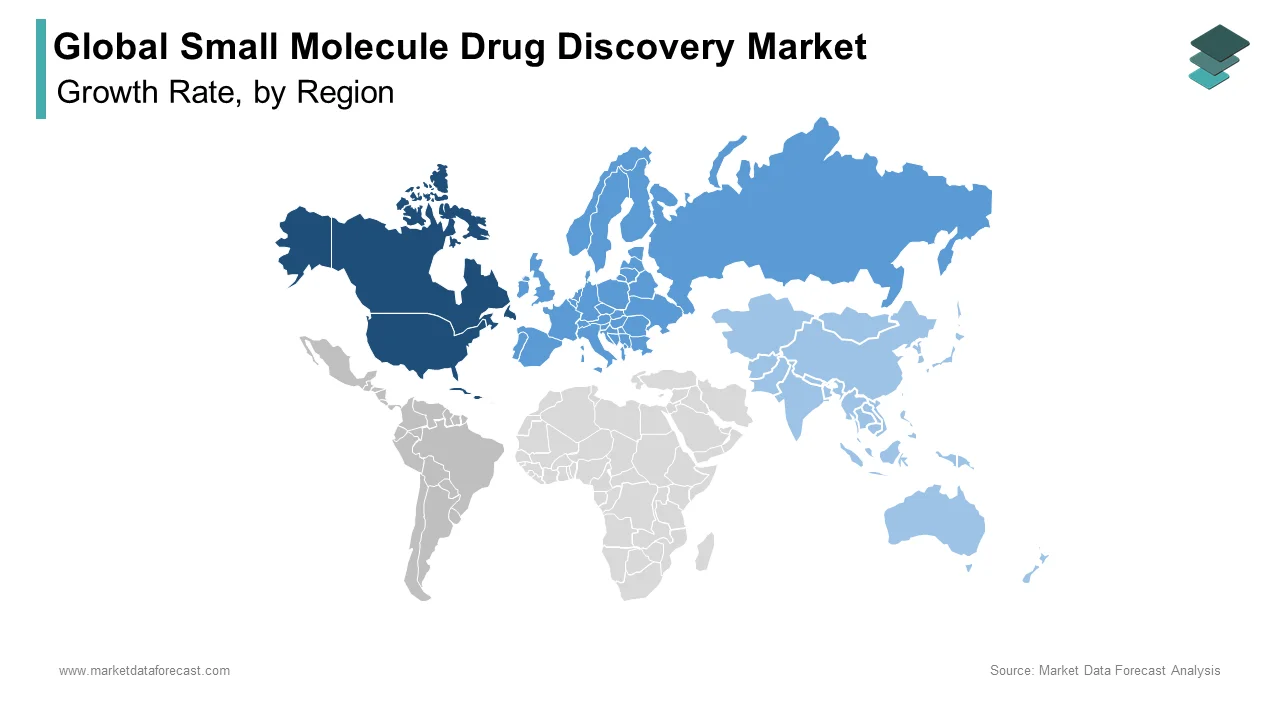
The region that is leading the small molecule drug discovery market is North America, with over 40% of the market share; the region is the hub for small molecule drug discovery. Due to the presence of R&D centers of global pharmaceutical leaders like Novartis and Pfizer, North America has been leading the small molecule drug discovery market for a long time. Europe holds the second spot in the small molecule drug discovery market,t with a market share of 25%. Due to heavy investments in the pharmaceutical sector in the region, the growth of the market has gotten a boost in recent times. In the European Union, the pharmaceutical and healthcare sectors are given more importance. Hence, investment has been on the rise in the private as well as public sectors. Asia Pacific accounts for around 20% of the small molecule drug discovery market share. Asian countries like Singapore and Malaysia are growing at a rapid pace in the small molecule drug discovery market. Global MNCs like Glaxo SmithKline have invested extensively in Malaysia for drug development. Latin America accounts for 10% of the small molecule drug discovery market share. Mexico and Brazil are the biggest markets for the small molecule drug discovery market in Latin America. Middle East & Africa holds the lowest market share in the small molecule drug discovery market, with only 5% of the total market share.
KEY MARKET PLAYERS
The prominent key players in the global small molecule drug discovery market are
- Novartis
- Merck KGaA
- GSK Plc
- Johnson & Johnson
- AstraZeneca
MARKET SEGMENTATION
This research report on the global small molecule drug discovery market has been segmented and sub-segmented into Process Phase, Therapeutic Areas, and Region.
By Process Phase
- Lead optimization
- Lead identification
- Hit Generation and Selection
By Therapeutic Areas
- Oncology
- CNS
- Respiratory
- Cardiovascular
By Region
- North America
- Europe
- Asia Pacific
- Latin America
- Middle East & Africa