- Product Description Description
- Table of Contents TOC
- List of Table & Figure LOT
- Get Free Sample PDF Sample PDF
Market Size, 2025
$8.03 BnMarket Estimate, 2026
$8.61 BnMarket Forecast, 2034
$15.01 BnCAGR, 2026–2034
7.2%Global Snow Melting System Market Report: Size, Share, Trends & Forecast (2026–2034)
- Market Scope: Comprehensive global snow melting system industry analysis covering product variations (electric resistance and hydronic systems), end-user applications, regional distribution dynamics, and winter safety infrastructure trends.
- Market Valuation: Valued at US$ 8.03 billion in 2025, estimated at US$ 8.61 billion in 2026, and projected to reach US$ 15.01 billion by 2034, registering a steady CAGR of 7.20% from 2026 to 2034.
- Primary Growth Drivers: High economic losses and traffic accidents caused by icy or snow-covered winter roads, rapid expansion of new residential and commercial construction in cold-climate regions (North America and Europe), and the need to minimize manual labor and chemical de-icing agents.
Key Snow Melting System Market Segment Metrics (2026–2034)
| Category | Leading Segment (2025 Position) | Fastest-Growing Segment |
|---|---|---|
| By Product | Electric Snow Melting Systems (held dominant market share due to minimal maintenance and high task efficiency) | Hydronic Systems (favored for large-scale commercial and municipal installations) |
| By End User | Residential Segment (holding leading share driven by rising disposable incomes and home automation) | Commercial Segment (predicted to achieve the fastest growth rate) |
| By Region | North America (leads the market due to early adoption of technological solutions and heavy snowfall) | Asia-Pacific & Europe (expanding steadily following North America) |
Major Snow Melting System Companies & Competitive Landscape
Market Structure: Highly competitive global heating and infrastructure solutions market featuring established piping, heating cable, and thermal management manufacturers competing on energy efficiency, installation ease, durability, and automated storm-sensing controllers.
Key Companies: Uponor, Watts Radiant, Warmquest, Rehau, Cerro Flow Types LLC, HeatTrak, Thermon, Warmup, Britech, Small Tube Types, Warmly Yours, and Wieland-Werke AG.
 Download Free Sample Report
Global Snow Melting System Market Size
The Global Snow Melting System Market was worth US$ 8.03 billion in 2025 and is anticipated to reach a valuation of US$ 15.01 billion by 2034 from US$ 8.61 billion in 2026, and it is predicted to register a CAGR of 7.2%. From 2026 to 2034.

The snow melting system market encompasses automated infrastructure solutions designed to remove snow and ice from surfaces using electric heating elements or hydronic fluid circulation. These systems ensure safety and accessibility for driveways, walkways, bridges, and airport runways during winter conditions. According to the Federal Highway Administration, more than 70% of the nation's roads are located in snowy regions that receive more than 5 inches of average annual snowfall, creating a persistent operational need for efficient removal technologies that minimize manual labor. This climatic reality directly fuels demand for reliable automated melting solutions in residential and commercial sectors. According to the Federal Highway Administration, 24% of weather-related vehicle crashes occur on snowy, slushy, or icy pavement, highlighting the critical importance of maintaining clear and safe transportation surfaces. This safety imperative drives municipal and private investment in proactive snow management infrastructure. The definition includes embedded electric mats, heated concrete systems, and glycol-based hydronic loops integrated into pavement structures. Controllers utilize sensors to activate heating only when precipitation and freezing temperatures are detected. Installation requires specialized engineering to ensure thermal efficiency and structural integrity. The market serves diverse applications ranging from luxury residences to critical public infrastructure. Technological advancements focus on energy efficiency and smart integration to reduce operational costs while enhancing reliability.
MARKET DRIVERS
Increasing Focus on Public Safety and Liability Reduction
The growing emphasis on pedestrian and vehicular safety is a key factor propelling the global snow melting system market growth by compelling property owners to eliminate slip and fall hazards proactively. Municipalities and commercial entities face significant legal liabilities when accidents occur due to neglected ice accumulation on premises. According to the National Safety Council, more than 8.8 million people were treated in emergency departments for fall-related injuries in the United States in 2023. The country-level incidence rate motivates businesses and local governments to invest in automated prevention systems rather than reactive clearing methods. These financial risks drive corporations to install snow-melting systems at entrances and parking areas to protect employees and visitors. Insurance providers may offer incentives for properties equipped with safety infrastructure, depending on the insurer and policy. The ability to maintain clear pathways without relying on manual labor ensures consistent compliance with safety regulations. Automated systems provide immediate response to freezing conditions, reducing the window of danger. This driver sustains market growth as legal standards for premises liability become stricter.
Rising Labor Shortages and Operational Efficiency Needs
The chronic shortage of skilled labor for manual snow removal further fuels the snow melting system market expansion by forcing organizations to seek automated alternatives for maintenance tasks. Traditional shoveling and plowing require significant manpower, which is increasingly difficult and expensive to secure during severe weather events. According to the Associated General Contractors of America, construction employers have continued to report difficulty filling open positions, reflecting persistent labor availability challenges across the construction industry. This trend compels facility managers to consider permanent infrastructure solutions that operate independently of human availability. These rising expenses can make the initial investment in snow-melting systems more financially attractive through long-term savings. Automated systems eliminate the need for scheduling and managing temporary staff during storms. They ensure consistent performance regardless of workforce availability or fatigue levels. Property owners value the predictability and reliability of automated operations. This driver accelerates adoption in commercial real estate and municipal projects where service continuity is critical. The shift is part of broader industry trends addressing labor constraints through technology.
MARKET RESTRAINTS
High Initial Installation and Infrastructure Costs
The substantial upfront capital required for installation is hampering the growth of the snow melting system market by limiting adoption among budget-conscious consumers and small businesses. Integrating heating elements into concrete or asphalt involves specialized materials and labor-intensive construction processes. This significant investment can discourage widespread implementation in residential and small commercial projects. Retrofitting existing surfaces adds further complexity and expense, requiring demolition and reconstruction. Many property owners opt for cheaper mechanical removal methods despite higher long-term operational burdens. Financing options for such infrastructure improvements may be limited compared to standard home upgrades. The high initial barrier prevents mass-market adoption even in regions with heavy snowfall. Manufacturers face pressure to reduce production costs without compromising system durability and performance. This restraint hinders market expansion beyond affluent demographics and large institutional projects.
Energy Consumption and Environmental Concerns
Concerns regarding high energy usage and carbon emissions are another significant restraint for the snow melting system market by conflicting with global sustainability goals and regulatory standards. Electric and hydronic systems consume energy to maintain surface temperatures above freezing during prolonged storms. According to the International Energy Agency, heating accounted for almost half of global final energy consumption in 2024, highlighting the importance of improving energy efficiency across heating applications. This scrutiny forces manufacturers to justify the environmental impact of continuous heating operations. According to the International Energy Agency, renewable energy sources met only 14% of global heat consumption in 2024, illustrating the continuing challenge of decarbonizing heating applications. Eco-conscious consumers and green building certifications like LEED may discourage projects with high energy demands. Operating costs fluctuate with energy prices, making budgeting difficult for users. Some municipalities may restrict energy-intensive heating systems to meet climate targets. The perception of waste associated with melting natural precipitation creates social resistance. Manufacturers face pressure to develop renewable energy-compatible solutions, which can increase development costs. This restraint limits market growth in environmentally regulated zones. Balancing functionality with sustainability remains a complex challenge for industry stakeholders.
MARKET OPPORTUNITIES
Integration with Renewable Energy Sources
The coupling of snow melting systems with solar and geothermal energy is a significant opportunity for the snow melting system market by addressing environmental concerns and reducing operational costs. Hybrid systems allow property owners to utilize clean energy for heating, thereby lowering carbon footprints and potentially reducing utility bills. According to the Solar Energy Industries Association, the United States installed 32.4 gigawatts of new solar capacity in 2023, demonstrating the growing availability of solar infrastructure that could complement electric snow melting systems. This synergy can enhance the economic viability of automated snow removal for eco-conscious consumers. Geothermal energy and ground source heat pumps can also provide thermal energy for hydronic snow melting systems, depending on system design and local conditions. This efficiency can make hydronic systems more attractive for large-scale commercial applications. Government incentives for renewable energy adoption may further reduce the total cost of ownership. Marketing campaigns emphasizing green credentials appeal to corporate sustainability mandates. Technological advancements in battery storage enable greater flexibility in energy management. This opportunity can transform snow melting systems from energy burdens into more sustainable infrastructure components. It aligns with global trends toward decarbonization and smart energy management. Early adopters may gain a competitive advantage in green building markets.
Expansion into Smart City Infrastructure Projects
The development of smart cities offers a substantial opportunity for the snow melting system market through integration with intelligent traffic and weather monitoring networks. Municipalities are investing in connected infrastructure to improve urban resilience and public service efficiency. According to the International Telecommunication Union, smart city development increasingly uses information and communication technologies to improve the efficiency, sustainability, and resilience of urban services, creating opportunities for connected winter maintenance solutions. This funding and infrastructure development can support the deployment of sensor-equipped snow-melting systems on critical bridges and highways. Smart sensors can optimize heating activation based on real-time weather data, potentially reducing unnecessary energy use. This technological integration enhances system efficiency and can lower municipal operating budgets. Integration with traffic management systems allows dynamic prioritization of high-volume routes. Data collected from these systems aids in urban planning and resource allocation. Governments prioritize projects that enhance safety and reduce congestion during winter storms. Partnerships between technology firms and construction companies facilitate implementation. This opportunity extends beyond residential uses into large-scale public works. It positions snow melting systems as potential components of modern urban infrastructure.
MARKET CHALLENGES
Technical Complexity and Maintenance Requirements
The intricate nature of embedded heating systems is a notable challenge for the snow melting system market, requiring specialized expertise for installation and repair. Unlike surface-level equipment, these systems are integrated into pavement structures, making access for maintenance difficult and costly. Repairing damaged heating elements within concrete slabs can require extensive demolition and reconstruction work. This complexity deters potential users who fear long-term maintenance burdens and disruptions. Qualified technicians are necessary for installing and troubleshooting electric snow melting systems, and limited availability can lead to longer wait times and higher service fees. This labor shortage complicates post-installation support and warranty fulfillment. System failures during critical weather events can leave surfaces hazardous until repairs are completed. Regular inspection of controllers and sensors is necessary to ensure proper operation. Property owners may lack the technical knowledge to diagnose issues accurately. The risk of accidental damage during routine pavement maintenance adds to operational anxiety. Manufacturers must provide comprehensive training and support to mitigate these challenges. This technical barrier limits widespread adoption among general contractors and homeowners. Ensuring long-term reliability remains a critical hurdle for industry growth.
Variable Weather Patterns and Climate Change Uncertainty
Unpredictable weather conditions due to climate change are further challenging the snow melting system market expansion by affecting the return on investment and usage frequency. Warmer winters in some regions reduce the number of days requiring active snow melting, making the system seem less valuable. According to NASA, Earth's average surface temperature has increased by approximately 1.1 degrees Celsius since the late 19th century, reflecting a long-term warming trend that can influence regional snow and ice conditions. This shift creates uncertainty for buyers calculating the payback period for expensive installations. Winter precipitation patterns vary by region and season, leading to inconsistent demand for snow removal services. Some years may see heavy snow while others remain mild, rendering the system underutilized. Buyers hesitate to invest in infrastructure that may not provide consistent annual benefits. Extreme weather events can also overwhelm system capacity, causing failures. Manufacturers face the challenge of designing systems that balance efficiency with robustness under varying conditions. Marketing messages must address climate adaptability to reassure potential customers. This challenge requires flexible financing models and modular designs. Long-term planning becomes difficult in an era of climatic instability.
REPORT COVERAGE
| REPORT METRIC | DETAILS |
| Market Size Available | 2025 to 2034 |
| Base Year | 2025 |
| Forecast Period | 2026 to 2034 |
| Segments Covered | By Product, By End Users, By Region |
| Various Analyses Covered | Global, Regional,l and Country-Level Analysis, Segment-Level Analysis, Drivers, Restraints, Opportunities, Challenges; PESTLE Analysis; Porter’s Five Forces Analysis, Competitive Landscape, Analyst Overview of Investment Opportunities |
| Countries Covered | North America, Europe, Asia Pacific, Latin America, The Middle East and Africa |
| Market Leaders Profiled |
|
SEGMENTAL ANALYSIS
By Product Insights
The hydronic systems segment dominated the market by capturing 60.6% of the global market share in 2025 due to their suitability for large-scale commercial and municipal applications. These systems utilize heated fluid circulated through tubing embedded in pavement, offering the potential for lower operational costs over time compared to electric alternatives when paired with efficient heat sources. Hydronic systems can reduce energy consumption when integrated with high-efficiency boilers or renewable heat sources, although savings depend on system design, operating conditions, and energy prices. District heating networks utilizing waste heat can also provide thermal energy for hydronic snow melting installations in suitable urban locations. The durability of properly installed polyethylene tubing can support long service life, subject to operating conditions and maintenance. Municipalities may prefer hydronic solutions for bridges and highways due to their ability to serve large surface areas. Although initial installation costs can be higher, the return on investment may be favorable for high-traffic zones. The technology allows for temperature control to prevent ice formation while managing heat usage. This segment benefits from its suitability for large-scale applications and integration with alternative heat sources. Professional installation expertise supports reliable operation across diverse climatic zones.
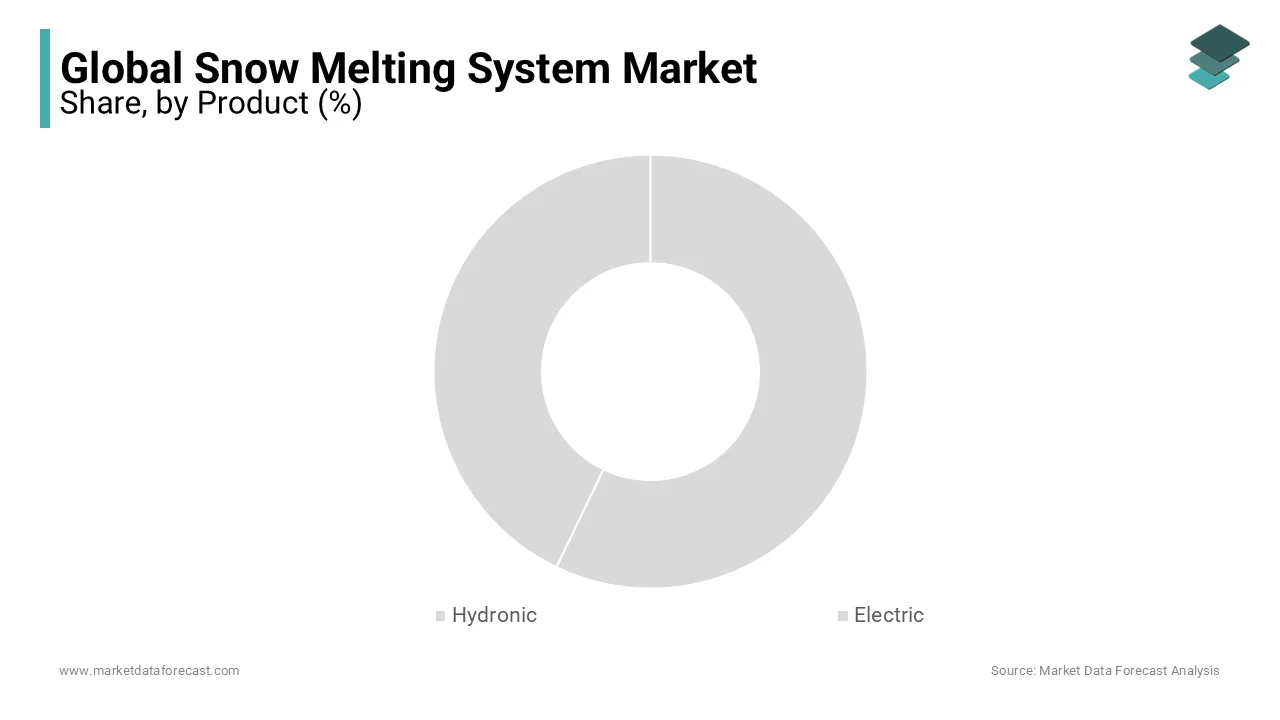
On the other end, the electric systems segment is expected to exhibit a CAGR of 8.06% during the forecast period in the global market owing to the ease of installation and compatibility with residential retrofits. These systems use heating cables or mats that can be simpler to install than hydronic tubing, making them suitable for smaller areas like driveways and walkways. Electric systems can be attractive to homeowners seeking straightforward and low-maintenance solutions. Smart home integration capabilities can support adoption by allowing remote control through compatible applications. This convenience appeals to consumers seeking automated winter management. Electric systems require no boilers or pumps, reducing mechanical complexity and potential failure points. They activate automatically when paired with suitable sensors and controls, providing a response to freezing conditions. Modular designs can allow for easier replacement of damaged sections, although repair requirements depend on installation type. Advances in energy-efficient heating elements can help address concerns about electricity usage. Solar panel compatibility may further enhance their appeal for eco-conscious buyers. The segment has growth potential as products become more accessible and reliability improves. Retail availability and straightforward installation guidance can support broader market penetration. This trend reflects demand for flexible snow melting solutions for individual properties.
By End User Insights
The commercial segment led the market with 65.6% of the global market share in 2025. The dominance of the commercial segment in the global market can be credited to the critical need for uninterrupted access and liability mitigation in business environments. Retail centers, hotels, and office complexes prioritize customer safety and convenience to maintain revenue streams during winter months. According to the National Safety Council, more than 8.8 million people were treated in emergency departments for fall-related injuries in the United States in 2023. This financial and safety risk motivates commercial entities to consider automated systems that help maintain clear entrances and walkways. Commercial properties often have larger budgets for infrastructure improvements compared to residential users. The aesthetic benefit of snow-free surfaces enhances brand image and customer experience. High foot traffic areas require consistent safety measures that manual clearing cannot always guarantee. Integration with building management systems allows for centralized control and monitoring. The segment benefits from commercial operators viewing snow melting as a potential long-term investment rather than a luxury. Accessibility requirements can further encourage property owners to maintain clear pathways for public accommodations. This driver supports demand across the commercial real estate sector.
On the other hand, the residential segment is predicted to expand at a prominent CAGR of 9.06% during the forecast period in the global market. Rising disposable incomes and awareness of automated home technologies can drive adoption in suburban and rural areas with heavy snowfall. Homeowners seeking to reduce the burden of manual snow removal may consider heated driveways and walkways. This trend reflects changing consumer expectations for modern living comforts. Homes with snow-melting systems may appeal to buyers in snowy regions because of the perceived convenience and reduced maintenance burden. Aging populations may also value safer walking surfaces to help prevent falls around their properties. Smart home compatibility allows residents to monitor and control systems remotely, enhancing ease of use. Consumer awareness and recommendations can support adoption. Financing options for home improvements may support larger investments. The segment has growth potential as product choices expand and installation methods improve. Marketing emphasizing peace of mind and time savings resonates with busy families. This growth indicates a shift toward greater interest in automated winter maintenance in harsh climate zones.
COUNTRY LEVEL ANALYSIS
North America Snow Melting System Market Analysis
North America accounted for the dominant share of 41.5% of the global market in 2025 and is likely to maintain a leading position in the snow melting system market over the next few years due to its extensive cold weather regions, established infrastructure, and demand for winter safety solutions. The United States and Canada experience significant snowfall in many areas, necessitating reliable removal solutions for public and private sectors. According to the Federal Highway Administration, more than 70% of US roads are located in regions receiving more than 5 inches of average annual snowfall, creating consistent demand for winter road maintenance technologies. This climatic reality supports demand for automated melting technologies. According to the Federal Highway Administration, 24% of weather-related vehicle crashes occur on snowy, slushy, or icy pavement, highlighting the importance of winter road safety. This public safety priority can support municipal adoption of hydronic and electric systems on bridges and highways. High labor costs in the region can make automated solutions economically attractive compared to manual clearing. Consumers prioritize convenience and safety, driving residential uptake in affluent suburbs. Established distribution networks facilitate access to products and professional services. Building codes and accessibility requirements in some jurisdictions encourage property owners to maintain safe entrances for commercial properties. The market benefits from technological adoption and consumer awareness. Innovation in energy-efficient systems aligns with regional sustainability goals. North America is positioned to remain an important market because of its established infrastructure and purchasing power.
Europe Snow Melting System Market Analysis
Europe is likely to experience continued demand for snow melting systems over the next few years owing to the winter weather conditions in northern and central countries, environmental regulations, and interest in sustainable heating solutions. Countries in Scandinavia and Central Europe have winter conditions that can support adoption of snow and ice management technologies. According to Eurostat, household expenditure patterns across the European Union reflect ongoing spending on housing, utilities, maintenance, and related services, although these figures do not directly measure snow-melting system installations. This spending can support investment in home infrastructure improvements. Energy efficiency policies can encourage the use of hydronic systems connected to district heating networks and renewable heat sources where technically suitable. This regulatory direction can favor lower-carbon technologies over systems with higher operational emissions. Urban planning initiatives prioritize pedestrian safety and accessibility, supporting municipal installations. High energy prices incentivize the use of efficient systems with smart controls to minimize waste. Consumers value durability and environmental impact when selecting products. Local manufacturers compete on innovation and compliance with EU standards. The market may see demand shaped by changing winter weather patterns. Cross-border trade facilitates technology transfer and best practice sharing. Europe remains an important market for premium and energy-efficient snow melting solutions.
Asia Pacific Snow Melting System Market Analysis
The Asia Pacific region is likely to experience growing opportunities in the snow melting system market over the next few years, driven by infrastructure development in cold climate zones and rising urbanization, while emerging as the fastest-growing regional market with an expected CAGR of 8.1%. Countries like Japan, South Korea, and parts of China experience heavy snowfall, requiring efficient management solutions. According to the Japan Meteorological Agency, heavy snowfall is a recurring winter hazard in northern Japan and along the Sea of Japan coast, sustaining the need for reliable snow management technologies. This climatic reality can support investment in permanent infrastructure. According to China's National Bureau of Statistics, the country's urbanization rate reached 67.00% at the end of 2024, illustrating the continued development of urban infrastructure and the potential relevance of winter maintenance technologies in colder regions. This investment can support municipal adoption of snow-melting systems for bridges and tunnels. Rising middle-class incomes may enable homeowners in affected areas to afford premium comfort features. Government initiatives promoting smart city development can integrate automated snow management into urban planning. Local manufacturing capabilities can help meet domestic demand and reduce import reliance. The market can benefit from technological advancements in energy efficiency suited to dense urban environments. Awareness of safety benefits is growing among property developers and managers. The region offers growth potential as infrastructure modernization continues. Adoption is expected to vary with local climate, economic conditions, and investment priorities.
Latin America Snow Melting System Market Analysis
Latin America is likely to remain a niche but potentially expanding market for snow melting systems over the next few years, particularly in high-altitude regions, ski destinations, and luxury developments. Countries like Chile and Argentina have ski resorts and mountain communities where snow management is essential for tourism and local access. According to the World Meteorological Organization, snow and ice conditions in mountain environments are affected by regional climate variability and long-term warming, making reliable winter infrastructure planning increasingly important. This climatic and economic context can support investment in snow management at resort facilities and access roads. Property owners in these areas may invest in automated systems to attract high-end tourists. Limited local manufacturing can mean reliance on imports from North America and Europe. High costs restrict adoption to commercial and affluent residential sectors. Awareness of technology can increase among architects and developers designing mountain properties. Government support for tourism development may indirectly boost market potential. The region faces challenges related to economic volatility and currency fluctuations affecting purchasing power. However, the specialized nature of the demand can sustain interest in reliable solutions. Growth is linked to the expansion of winter tourism and infrastructure modernization in remote areas.
Middle East And Africa Snow Melting System Market Analysis
The Middle East and Africa region is likely to offer limited but specialized opportunities in the snow melting system market over the next few years, mainly in high-altitude areas, mountain resorts, and specialized industrial applications. While most of the region experiences warm climates, mountainous areas in countries like Morocco and Lebanon receive snowfall. According to the World Meteorological Organization, mountain regions are particularly sensitive to changing temperatures and precipitation patterns, which can affect snow conditions and seasonal infrastructure requirements. This context can support the installation of snow-melting systems on selected routes and resort facilities. Industrial facilities in colder parts of South Africa may consider snow-melting solutions where ice creates operational or safety risks. The market is small compared to other regions but offers niche opportunities for specialized providers. Lack of widespread awareness and high import costs limit broader adoption. Government investment priorities often focus on essential infrastructure rather than premium comfort features. However, as luxury real estate develops in mountainous areas, demand may grow. The region relies heavily on international suppliers for specialized technology and expertise. Market expansion depends on economic stability and increased investment in tourism and high-altitude infrastructure.
TOP LEADING PLAYERS IN THE MARKET
- WarmlyYours operates as a prominent provider of electric snow melting solutions focusing on residential and light commercial applications. The company emphasizes user-friendly design and comprehensive customer support to simplify the purchasing process for homeowners. WarmlyYours recently enhanced its online design tools, allowing customers to create custom layouts for driveways and walkways easily. This digital innovation reduces installation errors and increases consumer confidence in DIY projects. The organization offers lifetime warranties on heating cables,s demonstrating commitment to product durability and reliability. Their marketing strategies highlight energy efficiency and smart control integration, appealing to tech-savvy users. WarmlyYours collaborates with electrical contractors to ensure professional installation standards are met globally. The brand actively educates consumers through detailed guides and video tutorials, reducing perceived complexity. Recent product launches include improved insulation materials that enhance thermal transfer efficiency. These efforts strengthen brand loyalty and drive repeat business through positive user experiences. WarmlyYours continues to expand its distribution network, reaching new markets in cold climate regions. The company maintains a strong reputation for quality and customer service excellence.
- Danfoss A/S contributes significantly to the Snow Melting System Market through its advanced hydronic and electric heating technologies. The Danish multinational leverages its expertise in energy efficiency to provide sustainable snow melting solutions for large infrastructure projects. Danfoss recently integrated its heating systems with a smart building management platform,s enabling remote monitoring and optimization. This technological advancement allows facility managers to reduce energy consumption while maintaining safety standards. The organization partners with engineering firms to design customized solutions for bridges, airports,rts and stadiums. Danfoss emphasizes sustainability by promoting systems compatible with renewable energy sources like geothermal heat. Their global presence ensures reliable supply chains and technical support across diverse regions. The company invests heavily in research and development to improve component longevity and performance. Recent initiatives include training programs for installers to ensure high-quality implementation. Danfoss focuses on total cost of ownership, helping clients justify initial investments through long-term savings. This strategic approach positions the brand as a leader in efficient and reliable winter maintenance infrastructure.
- Emerson Electric Co. strengthens its position in the Snow Melting System Market through its robust industrial heating and control solutions. The company provides durable heating cables and sophisticated controllers designed for harsh environmental conditions. Emerson recently launched advanced sensor technologies that detect precipitation and temperature changes with high precision. These sensors enable automated activation, reducing unnecessary energy usage and extending system lifespan. The organization serves critical infrastructure sectors,s including transportation and utilities, es requiring uninterrupted operation. Emerson leverages its extensive industrial network to offer comprehensive project support from design to commissioning. Its products meet rigorous international safety and performance standards, ensuring reliability in extreme weather. The company focuses on integrating Internet of Things capabilities for real-time data analytics and predictive maintenance. Recent collaborations with municipal governments facilitate large-scale deployments on highways and public walkways. Emerson emphasizes operational efficiency, helping clients minimize maintenance costs and downtime. This focus on industrial-grade reliability and smart automation drives adoption in demanding commercial and public sector applications.
TOP STRATEGIES USED BY KEY MARKET PARTICIPANTS
Key market participants employ several strategies to strengthen their positions. First, they prioritize research and development to enhance energy efficiency and smart control features. Second, they expand distribution networks through partnerships with contractors and engineering firms. Third, they integrate renewable energy compatibility to align with sustainability goals. Fourth, they offer comprehensive warranty and support services to build customer trust. Fifth, they utilize digital tools for custom design and installation planning.
GLOBAL SNOW MELTING SYSTEM MARKET NEWS
- Thermon, a business-to-business (B2B) manufacturer of reliable, safe, and innovative mission-critical industrial process heating solutions, has announced that they are transforming their customer relationships with Episerver.
- Wieland is acquiring all the outstanding shares of the GBC in an all-cash transaction where its shareholders receive $44 per share in cash with a premium of 27 percent to the company’s closing price and are subject to certain required regulatory approvals.
MARKET SEGMENTATION
This research report on the global snow melting system market has been segmented and sub-segmented based on product, end user, and region.
By Product
- Hydronic Systems
- Electric Systems
By End User
- Commercial
- Residential
By Region
- North America
- Europe
- Asia-Pacific
- Latin America
- Middle East and Africa