- Product Description Description
- Table of Contents TOC
- List of Table & Figure LOT
- Get Free Sample PDF Sample PDF
Market Size, 2025
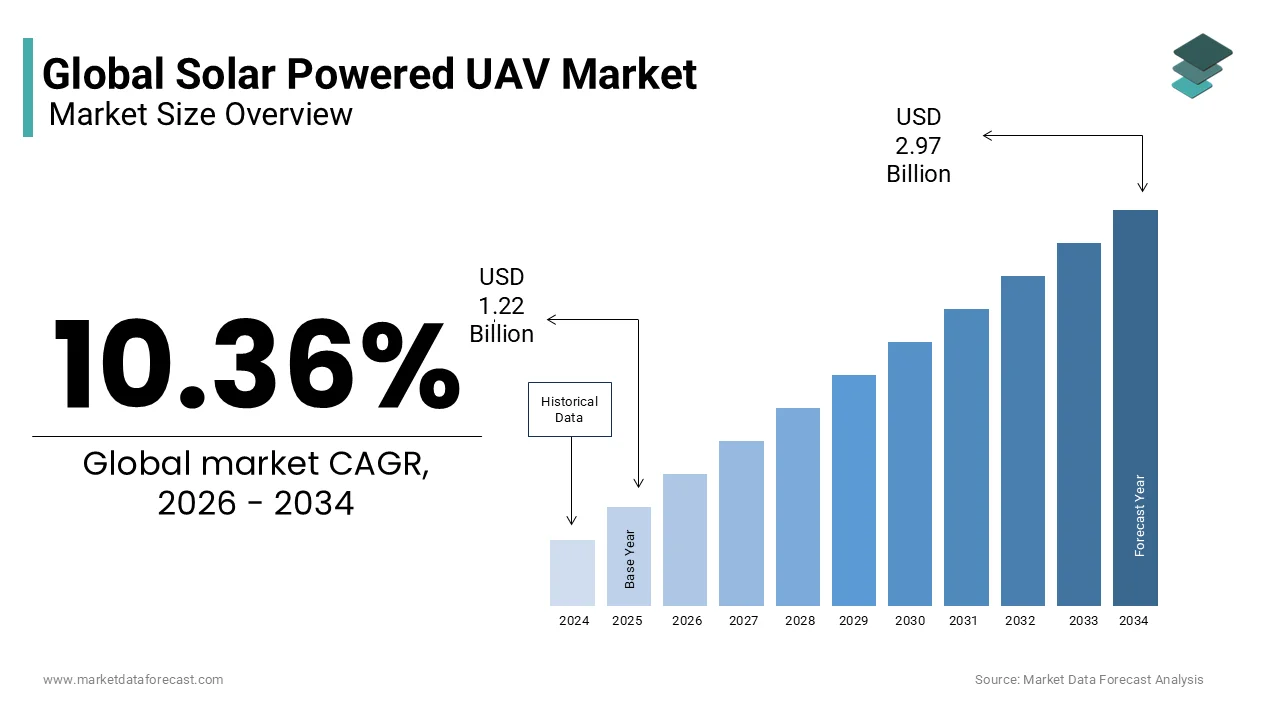
$1.22 BnMarket Estimate, 2026
$1.35 BnMarket Forecast, 2034
$2.97 BnCAGR, 2026–2034
10.36%Global Solar Powered UAV Market Report Summary
The global solar powered UAV market was valued at USD 1.22 billion in 2025, is estimated to reach USD 1.35 billion in 2026, and is projected to reach USD 2.97 billion by 2034, growing at a CAGR of 10.36% during the forecast period from 2026 to 2034. The growth of the global solar powered UAV market is driven by increasing demand for long-endurance unmanned aerial systems, rising investments in defense and surveillance technologies, and advancements in lightweight solar energy systems. Solar-powered UAVs offer extended flight durations, reduced operational costs, and environmentally sustainable operations, making them increasingly attractive for military, environmental monitoring, telecommunications, and disaster management applications. Continuous innovations in battery technology, photovoltaic efficiency, and autonomous flight capabilities are further accelerating market growth.
Key Market Trends
-
Rising demand for long-endurance unmanned aerial vehicles is driving the adoption of solar-powered UAV technologies.
-
Increasing defense spending and border surveillance requirements are expanding the deployment of solar-powered UAVs worldwide.
-
Advancements in lightweight photovoltaic panels and energy storage systems are improving flight endurance and operational efficiency.
-
Growing adoption of solar-powered UAVs for environmental monitoring, precision agriculture, and disaster response is broadening market applications.
-
Increasing investments in autonomous flight technologies and AI-enabled mission management are enhancing UAV capabilities.
Segmental Insights
-
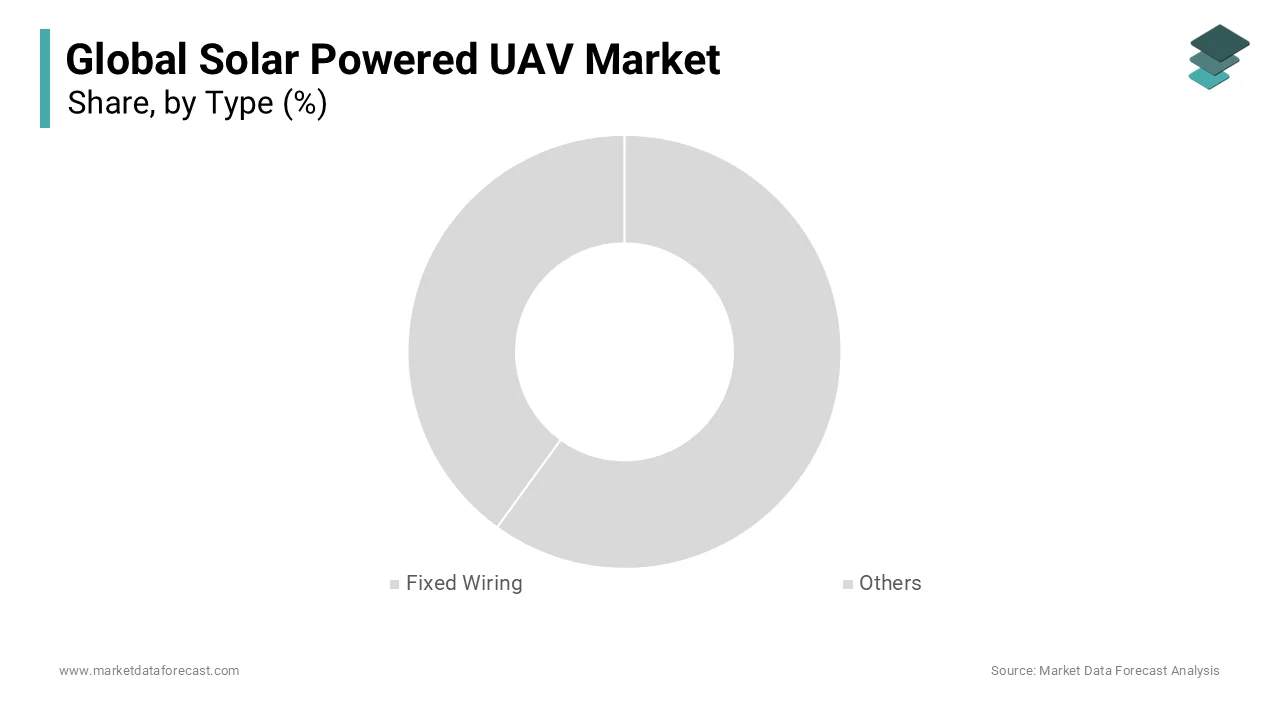
Based on type, the fixed-wing segment dominated the global solar powered UAV market in 2025. The segment's leadership is attributed to its superior flight endurance, greater operational range, and higher energy efficiency, making it well suited for long-duration surveillance and monitoring missions.
-
Based on application, the defense segment held the largest share of the global solar powered UAV market in 2025. The segment's dominance is driven by increasing demand for persistent intelligence, surveillance, reconnaissance (ISR), border security, and military communication missions.
-
Based on component, the payload segment accounted for 40.6% of the global solar powered UAV market share in 2025. The segment's growth is supported by the increasing integration of advanced sensors, high-resolution cameras, communication systems, and specialized mission equipment that enhance the operational capabilities of solar-powered UAVs.
Regional Insights
-
The global solar powered UAV market is witnessing rapid growth due to increasing investments in unmanned aerial technologies, renewable energy integration, and advanced surveillance systems.
-
North America dominated the global solar powered UAV market by accounting for 38.7% of the market share in 2025. The region's leadership is driven by substantial defense spending, strong aerospace research capabilities, widespread adoption of advanced UAV technologies, and the presence of leading drone manufacturers.
-
Europe remains a significant market due to increasing investments in defense modernization, environmental monitoring programs, and renewable-powered aerospace technologies.
Competitive Landscape
The global solar powered UAV market is highly competitive, with manufacturers focusing on lightweight aircraft design, advanced solar technologies, autonomous flight systems, and high-efficiency payload integration. Companies are investing in research and development, strategic collaborations, and next-generation energy storage solutions to enhance flight endurance, operational reliability, and mission capabilities. Key players operating in the global solar powered UAV market include AeroVironment Inc., Airbus SE, Atlantik Solar, Aurora Flight Sciences, Avy, BAE Systems, Chinese Academy of Aerospace Aerodynamics, DJI, Elektra, Eos Technologie, Kea Aerospace, Korea Aerospace Research Institute, QinetiQ, Silent Falcon UAS Technologies, Skydweller Aero, Sunbirds SAS, Uav-instruments, Thales Group, and Xsun.
 Download Free Sample Report
Global Solar Powered UAV Market Size
The global solar powered UAV market size was valued at USD 1.22 billion in 2025, and is expected to be worth USD 2.97 billion by 2034 from USD 1.35 billion by 2026. The market is growing at a CAGR of 10.36% during the forecast period.
A Solar-Powered UAV (Unmanned Aerial Vehicle) is a drone or aircraft that uses sunlight to partially or entirely operate its propulsion system and onboard electronics. These platforms operate primarily in the stratosphere at altitudes between 18000 and 25000 meters, where they can remain airborne for months or even years without refueling. The technology bridges the operational gap between traditional satellites and conventional drones by offering persistent coverage with lower deployment costs and greater flexibility. According to Airbus, its unmanned solar-powered aircraft, the Zephyr, has demonstrated continuous stratospheric flight durations exceeding 25 days without refueling, proving the viability of renewable energy for sustained aerial operations. As per the European Space Agency, global demand for Earth observation data has reached unprecedented levels, driven by critical climate monitoring and disaster response initiatives that increasingly require near-real-time data delivery. These unmanned systems carry payloads including high resolution cameras, communication relays, and environmental sensors that provide critical data for scientific research and commercial applications. The absence of fuel consumption eliminates logistical supply chains required for conventional aircraft, enabling operations in remote or hostile environments. Regulatory bodies are increasingly recognizing these platforms as pseudo satellites, creating new frameworks for airspace management above commercial flight levels. The integration of advanced battery storage systems allows operation during night cycles, ensuring uninterrupted service. This technological convergence offers a sustainable alternative for global connectivity and surveillance missions that traditionally relied on expensive satellite constellations or short endurance tactical drones.
MARKET DRIVERS
Persistent Surveillance Requirements Drive Military and Security Adoption
Defense organizations globally prioritize persistent intelligence, surveillance, and reconnaissance capabilities, which is one of the major factors driving the growth of the solar powered UAV market. These capabilities are uniquely provided by solar-powered UAVs, which offer indefinite loitering times without logistical support. Traditional manned aircraft require frequent refueling and crew rotations, limiting continuous coverage to approximately 12 to 24 hours before requiring relief. Solar powered platforms overcome this limitation by harvesting energy from sunlight during the day and storing it in high density batteries for night operations, enabling weeks of uninterrupted surveillance over specific areas of interest. The United States Department of Defense has identified persistent stare capability as a critical requirement for border security and counter terrorism operations, leading to increased funding for high altitude long endurance programs. Global defense entities are increasingly evaluating solar-powered unmanned aerial vehicles to fulfill multi-domain operational needs, enhancing maritime intelligence, surveillance, and reconnaissance (ISR) coverage across regions where radar coverage is sparse. The ability to maintain a constant visual and electronic presence allows for the detection of subtle changes in enemy behavior or infrastructure development that intermittent satellite passes might miss. Furthermore, the low acoustic signature and high operating altitude make these platforms difficult to detect and intercept, enhancing survivability in contested environments. Military strategists value the rapid deployability of these systems compared to launching satellites, which can take years for procurement and orbital insertion. The cost per hour of operation remains significantly lower than manned patrol aircraft, allowing defense budgets to stretch further while maintaining comprehensive situational awareness over critical theaters of operation.
Telecommunications Connectivity Gaps Create Demand for Atmospheric Platforms
The global digital divide persists as billions of people in rural and remote regions lack access to reliable broadband internet, a challenge that significantly propels the solar powered UAV market. These UAVs serve as atmospheric base stations. Traditional terrestrial infrastructure such as fiber optic cables and cell towers is economically unviable in sparsely populated areas due to high construction and maintenance costs relative to subscriber revenue. Satellite internet solutions offer coverage but suffer from high latency and limited bandwidth capacity that cannot support modern data intensive applications like video streaming or telemedicine. Solar powered drones positioned in the stratosphere act as flying cell towers, providing 4G and 5G connectivity over areas spanning hundreds of square kilometers with lower latency than geostationary satellites. Meta previously explored this concept with its Aquila project, demonstrating the technical feasibility of beaming internet signals from high altitude platforms to ground users. The International Telecommunication Union estimates that 2.6 billion people remained offline in 2023, representing a massive untapped market for connectivity providers seeking scalable solutions. Disaster recovery scenarios further highlight the value of these platforms, as they can be rapidly deployed to restore communications when terrestrial networks are destroyed by earthquakes or hurricanes. Telecom operators are increasingly partnering with aerospace firms to test commercial services, recognizing that solar powered drones offer a flexible and cost effective method to extend network coverage without the capital expenditure of building physical infrastructure in challenging terrains.
MARKET RESTRAINTS
Technical Limitations in Energy Storage Density Restrict Payload Capacity
Limited energy density of current battery technologies is impeding the growth of the solar powered UAV market. This restricts the weight available for mission critical payloads and reduces operational resilience during extended periods of low sunlight. Lithium ion batteries, the standard for most electric aircraft, have an energy density of approximately 250 watt hours per kilogram, which is insufficient to support heavy sensor suites or communication equipment alongside the power required for propulsion and thermal management. During winter months or at higher latitudes, reduced solar irradiance forces these aircraft to rely entirely on stored energy for longer durations, necessitating larger and heavier battery packs that further reduce payload capacity. The Airbus Zephyr program has faced challenges in balancing battery weight with structural integrity, as adding more storage increases the overall mass, requiring larger wings and stronger materials that add further weight. This compounding effect limits the practical altitude and speed of these platforms, making them vulnerable to strong stratospheric winds that can disrupt station keeping. Additionally, battery performance degrades over time due to charge discharge cycles and extreme temperature variations encountered at high altitudes, reducing the operational lifespan of the aircraft. Manufacturers struggle to develop lightweight batteries with sufficient capacity to support multi month missions without compromising safety or reliability. Payload limitations will constrain the types of missions solar-powered drones can effectively perform until breakthroughs in solid-state or lithium-sulfur battery technology occur. Consequently, this limits their appeal to customers requiring heavy sensor loads or high-bandwidth transmission equipment.
Stringent Airspace Regulations and Certification Hurdles Impede Deployment
Regulatory frameworks governing the operation of unmanned aerial vehicles in the stratosphere remain fragmented and underdeveloped, which limits the expansion of the solar powered UAV market. This creates significant barriers to commercial deployment and cross border operations for solar powered platforms. Most civil aviation authorities, including the Federal Aviation Administration in the United States and the European Union Aviation Safety Agency, lack specific certification standards for high altitude long endurance aircraft that operate above 60000 feet, a realm traditionally reserved for weather balloons and spy planes. Obtaining approval for beyond visual line of sight operations requires extensive safety cases demonstrating collision avoidance capabilities, fail safe mechanisms, and spectrum management protocols that are not yet standardized. The integration of these platforms into national airspace systems raises concerns about interference with commercial aviation routes, satellite communications, and other high altitude activities. The lack of harmonized regulations means that operators must navigate a complex web of national laws, each with different requirements for insurance, liability, and operational permissions. This regulatory uncertainty discourages investment from commercial entities seeking predictable returns, as the timeline for obtaining necessary approvals can extend for years. Furthermore, the classification of these aircraft as either aircraft or satellites affects which regulatory body has jurisdiction, leading to legal ambiguities that complicate international operations. The market will remain constrained to government-sponsored demonstrations and limited pilot projects. Widespread commercial adoption will not be possible until clear global standards are established.
MARKET OPPORTUNITIES
Expansion Into Climate Monitoring and Environmental Research Offers Growth Potential
Climate change research requires continuous and high resolution data collection from the upper atmosphere to improve weather prediction models and monitor greenhouse gas concentrations, which is a key growth area for the solar powered UAV market. Traditional weather balloons provide only snapshot data as they ascend and burst, while satellites offer broad coverage but lack the temporal resolution needed to track rapid atmospheric changes. Solar powered drones can loiter in specific atmospheric layers for months, collecting detailed measurements of temperature, humidity, wind patterns, and pollutant levels that enhance the accuracy of climate models. The World Meteorological Organization continues to highlight severe data gaps in global upper-air atmospheric observations, prompting environmental researchers to independently evaluate solar-powered stratospheric platforms as a viable means to improve climate projections. Research institutions and government agencies are increasingly funding projects that utilize these aircraft for studying ozone depletion, jet stream dynamics, and volcanic ash dispersion. The ability to position sensors precisely within storm systems or pollution plumes allows scientists to gather data that was previously inaccessible or too dangerous to obtain with manned aircraft. Furthermore, the low operational cost compared to research flights enables more frequent and extensive data collection campaigns, accelerating scientific discovery. As governments prioritize climate action and adhere to international agreements like the Paris Accord, the demand for accurate environmental monitoring tools will grow, driving adoption of solar powered drones in the scientific community. This sector offers a stable revenue stream for manufacturers who can tailor payloads to specific research needs, fostering long term partnerships with academic and governmental entities.
Integration With 6G Networks and Non Terrestrial Networks Creates New Revenue Streams
The upcoming transition to sixth generation wireless networks involves the integration of non-terrestrial networks, including high altitude platforms, to provide ubiquitous global connectivity and ultra-low latency services, which provides a lucrative opportunity for operators in the solar powered UAV market. Telecommunications standards bodies are actively defining architectures that incorporate aerial base stations as integral components of future mobile networks, enabling seamless handover between ground cells and atmospheric nodes. Solar powered drones offer the advantage of persistent presence compared to low earth orbit satellites that move rapidly across the sky, requiring complex tracking and handover mechanisms. By acting as stationary or slow moving nodes in the stratosphere, these platforms can serve as backhaul links for remote ground stations or direct access points for user devices in underserved areas. Major telecom equipment manufacturers are developing specialized antennas and modems optimized for high altitude platform connections, signaling industry confidence in this technology. The potential to support internet of things applications in agriculture, logistics, and smart cities further expands the market beyond consumer broadband. Operators can lease capacity on these platforms to multiple service providers, creating a shared infrastructure model that reduces costs and increases utilization. As 6G standards mature and deployment begins in the late 2020s, solar-powered drones will play a crucial role in extending network coverage to maritime, aerial, and remote terrestrial domains. Consequently, this widespread connectivity will unlock new business models for aerospace and telecommunications companies alike.
MARKET CHALLENGES
Extreme Weather Vulnerability Compromises Operational Reliability
These UAVs are highly susceptible to extreme weather conditions, such as strong stratospheric winds and turbulence, which slow down the growth of the solar powered UAV market. Consequently, these elements can disrupt flight paths, damage structural components, and force premature mission termination. The stratosphere, while generally stable, experiences seasonal wind patterns such as the polar vortex and jet stream fluctuations that can exceed 100 kilometers per hour, posing significant challenges for lightweight aircraft with large surface areas. High-altitude long-endurance flight tests remain highly susceptible to localized atmospheric turbulence during ascension and descension phases, where unexpected wind shear can exceed structural design limits and compromise airframe stability. These incidents highlight the fragility of current designs that prioritize weight reduction over structural robustness, making them vulnerable to atmospheric disturbances. Additionally, ice accumulation on wings and propellers during passage through cloud layers or temperature inversions can alter aerodynamic properties and increase drag, reducing lift and efficiency. The lack of redundant control systems in some cost constrained designs means that single point failures in actuators or sensors can lead to catastrophic crashes. Recovery of downed aircraft from remote or oceanic locations is often impossible, resulting in total loss of investment. Insurance premiums for these operations remain high due to the perceived risk of weather related accidents, further increasing operational costs. Manufacturers must invest in advanced weather forecasting integration and adaptive flight control algorithms to mitigate these risks, but the inherent unpredictability of atmospheric conditions remains a persistent challenge that limits the reliability and availability of solar powered drones for critical missions.
High Initial Development and Manufacturing Costs Limit Market Accessibility
The development and manufacturing of these UAVs involve substantial upfront costs, which obstruct the expansion of the solar powered UAV market. This is due to the need for specialized materials, custom engineered components, and extensive testing protocols, which limit market accessibility to well funded government agencies and large corporations. The use of carbon fiber composites, high efficiency photovoltaic cells, and lightweight battery packs drives up material costs, while the low volume production runs prevent economies of scale that typically reduce prices in mature industries. Custom aerodynamic designs require extensive computational fluid dynamics simulations and wind tunnel testing to optimize performance, adding millions of dollars to research and development budgets before a single prototype is built. Certification and flight testing programs are equally expensive, requiring specialized facilities and skilled personnel to ensure safety and compliance with regulatory standards. Small and medium sized enterprises struggle to compete in this environment, as the barrier to entry is prohibitively high without significant venture capital or government grants. The long development cycles, often spanning five to seven years from concept to operational deployment, tie up capital for extended periods with no guarantee of commercial success. Furthermore, the niche nature of the market means that component suppliers charge premium prices for low quantity orders, further inflating costs. The high cost structure will limit adoption to high-value applications where performance outweighs budget constraints, at least until production volumes increase and standardized platforms emerge. As a result, broader market penetration and innovation from diverse players will slow down.
REPORT COVERAGE
| REPORT METRIC | DETAILS |
| Market Size Available | 2025 to 2034 |
| Base Year | 2025 |
| Forecast Period | 2026 to 2034 |
| CAGR | 10.36% |
| Segments Covered | By Type, Application, Component, and Region. |
| Various Analyses Covered | Global, Regional & Country Level Analysis, Segment-Level Analysis, DROC, PESTLE Analysis, Porter’s Five Forces Analysis, Competitive Landscape, Analyst Overview of Investment Opportunities |
| Regions Covered | North America, Europe, APAC, Latin America, Middle East & Africa |
| Market Leaders Profiled | AeroVironment Inc., Airbus SE, Atlantik Solar, Aurora Flight Sciences, Avy, BAE Systems, Chinese Academy of Aerospace Aerodynamics, DJI, Elektra, Eos Technologie, Kea Aerospace, Korea Aerospace Research Institute, QinetiQ, Silent Falcon UAS Technologies, Skydweller Aero, Sunbirds SAS, Uav-instruments, Thales Group, and Xsun |
SEGMENTAL ANALYSIS
By Type Insights
The fixed wing segment was the largest in the solar powered UAV market and occupied a significant share in 2025. This supremacy of the segment was supported by its superior aerodynamic efficiency, which is critical for maximizing lift and minimizing energy consumption during long endurance flights. The design allows for larger surface areas to integrate photovoltaic cells while maintaining structural integrity at high altitudes.
The fundamental advantage of fixed wing configurations lies in their ability to generate lift through forward motion rather than vertical thrust, significantly reducing the power required to maintain altitude compared to rotary wing or hybrid designs. Utilizing high-aspect-ratio wing geometries common in advanced gliders, fixed-wing solar aircraft structurally achieve high lift-to-drag ratios exceeding 20 to 1, allowing them to remain airborne with minimal energy expenditure during daylight hours. This efficiency is paramount for stratospheric operations where air density is low and every watt of power must be utilized effectively. The Airbus Zephyr, a prominent fixed wing solar drone, has demonstrated flight durations of over 64 days, a feat impossible for other configurations due to higher energy demands. The large wingspan of fixed wing platforms provides ample real estate for high efficiency solar cells, often covering up to 90 percent of the upper wing surface. This extensive coverage maximizes energy harvesting potential, ensuring sufficient power generation to charge batteries for night time operation. Military and commercial operators prioritize this endurance capability for persistent surveillance and communication relay missions, where continuous presence is more valuable than maneuverability. The proven track record of fixed wing designs in achieving record breaking flight times establishes them as the preferred choice for high altitude long endurance applications, driving their dominance in the global market.
Fixed wing solar unmanned aerial vehicles feature fewer moving parts compared to multi rotor or tilt rotor systems, resulting in lower mechanical complexity and reduced maintenance requirements over their operational lifespan. The absence of complex transmission systems, gearboxes, and multiple motors simplifies the manufacturing process and enhances reliability in harsh stratospheric environments. The streamlined structure also reduces weight, allowing for greater payload capacity or larger battery packs without compromising performance. Materials such as carbon fiber reinforced polymers are used extensively in fixed wing frames to achieve high strength to weight ratios, ensuring durability against ultraviolet radiation and extreme temperature fluctuations. The simplicity of the design facilitates easier repair and component replacement in field conditions, which is crucial for deployments in remote locations. Additionally, the predictable flight dynamics of fixed wing aircraft make them easier to control autonomously, reducing the computational load on onboard guidance systems. These operational advantages make fixed wing solar drones economically viable for long term missions, encouraging widespread adoption among defense agencies and commercial entities seeking cost effective persistent aerial solutions.
The others segment is likely to experience the fastest CAGR of 18.5% between 2026 and 2034 due to advancements in vertical takeoff and landing capabilities that expand operational flexibility. This segment includes hybrid and rotary wing configurations.
Hybrid and rotary wing solar unmanned aerial vehicles offer the distinct advantage of vertical takeoff and landing, eliminating the need for runways or launch infrastructure and enabling operations in confined or rugged terrains. This capability is particularly valuable for tactical military missions and disaster response scenarios where rapid deployment is essential. The Defense Advanced Research Projects Agency has funded several projects focusing on hybrid solar drones that can transition from vertical lift to efficient forward flight, combining the best features of both configurations. The ability to operate from small clearings or ship decks expands the potential user base to include naval forces and emergency responders who lack access to traditional airfields. As battery technology improves, the energy penalty associated with vertical lift is decreasing, making hybrid designs more viable for longer missions. Commercial users in agriculture and infrastructure inspection are increasingly interested in these platforms for their ability to inspect vertical structures like towers and bridges without complex maneuvering. The versatility of vertical takeoff and landing systems addresses a critical gap in the market, driving rapid adoption and innovation in this segment.
Advancements in electric propulsion systems, including high efficiency motors and lightweight propellers, are enabling rotary and hybrid solar drones to overcome previous limitations in power density and endurance. New motor designs achieve efficiencies exceeding 95 percent, minimizing energy loss during conversion and extending flight times. Companies like Boeing and Aurora Flight Sciences are developing specialized propulsion units optimized for solar powered vertical flight, integrating them with advanced flight control algorithms that manage power distribution dynamically. The integration of distributed electric propulsion, where multiple small motors are placed along the wings or fuselage, improves redundancy and control authority, enhancing safety and performance. Recent prototypes have demonstrated the ability to harvest enough solar energy during hover to sustain indefinite loitering in optimal conditions, a breakthrough that opens new possibilities for stationary monitoring applications. The development of modular propulsion systems allows for easy customization based on mission requirements, further accelerating adoption. As these technologies mature and become more affordable, the barrier to entry for hybrid and rotary wing solar drones lowers, fueling rapid growth in this segment. The combination of improved propulsion efficiency and versatile flight capabilities positions these platforms as key contributors to the future of sustainable aerial operations.
By Application Insights
The defence segment dominated the solar powered UAV market and captured a significant share in 2025. This dominance of the segment was driven by the critical need for persistent intelligence, surveillance, and reconnaissance capabilities that enhance national security and operational awareness.
Military organizations globally prioritize persistent intelligence, surveillance, and reconnaissance capabilities that solar powered unmanned aerial vehicles uniquely provide through indefinite loitering times without logistical support. Solar powered platforms overcome this limitation by harvesting energy from sunlight during the day and storing it in high density batteries for night operations, enabling weeks of uninterrupted surveillance over specific areas of interest. The ability to maintain a constant visual and electronic presence allows for the detection of subtle changes in enemy behavior or infrastructure development that intermittent satellite passes might miss. Furthermore, the low acoustic signature and high operating altitude make these platforms difficult to detect and intercept, enhancing survivability in contested environments. Military strategists value the rapid deployability of these systems compared to launching satellites, which can take years for procurement and orbital insertion. The cost per hour of operation remains significantly lower than manned patrol aircraft, allowing defense budgets to stretch further while maintaining comprehensive situational awareness over critical theaters of operation.
Defence forces utilize solar powered unmanned aerial vehicles as strategic communication relays to extend network coverage in denied or degraded environments where terrestrial infrastructure is unavailable or compromised. These high altitude platforms act as airborne base stations, providing secure and resilient communication links for ground troops, naval vessels, and other assets over vast distances. The United States Space Development Agency has explored the use of high altitude platforms for mesh networking, enabling seamless data exchange between disparate military units. Solar powered drones can carry sophisticated communication payloads that support encrypted voice, video, and data transmission, ensuring command and control continuity during complex operations. In conflict zones, where jamming and interference are common, the high altitude position of these platforms offers a line of sight advantage that improves signal quality and resistance to disruption. The ability to rapidly reposition these relays allows military commanders to adapt to changing tactical situations, maintaining connectivity even as front lines shift. Additionally, the use of renewable energy eliminates the need for fuel convoys, reducing logistical vulnerabilities and operational risks. As modern warfare becomes increasingly network centric, the demand for reliable and flexible communication infrastructure drives the dominance of the defence segment in the solar powered UAV market.
The commercial segment is on the rise and is expected to be the fastest growing segment in the market by witnessing a CAGR of 21.2% during the forecast period owing to the expanding use of solar powered drones for telecommunications, environmental monitoring, and agricultural applications.
The global digital divide persists as billions of people in rural and remote regions lack access to reliable broadband internet, creating a substantial market for these UAVs by serving as atmospheric base stations. Traditional terrestrial infrastructure such as fiber optic cables and cell towers is economically unviable in sparsely populated areas due to high construction and maintenance costs relative to subscriber revenue. Satellite internet solutions offer coverage but suffer from high latency and limited bandwidth capacity that cannot support modern data intensive applications like video streaming or telemedicine. Solar powered drones positioned in the stratosphere act as flying cell towers, providing 4G and 5G connectivity over areas spanning hundreds of square kilometers with lower latency than geostationary satellites. Disaster recovery scenarios further highlight the value of these platforms, as they can be rapidly deployed to restore communications when terrestrial networks are destroyed by earthquakes or hurricanes. Telecom operators are increasingly partnering with aerospace firms to test commercial services, recognizing that solar powered drones offer a flexible and cost effective method to extend network coverage without the capital expenditure of building physical infrastructure in challenging terrains.
Climate change research requires continuous, high resolution data collection from the upper atmosphere to improve weather prediction models and monitor greenhouse gas concentrations, which is a significant opportunity for these UAVs. Traditional weather balloons provide only snapshot data as they ascend and burst, while satellites offer broad coverage but lack the temporal resolution needed to track rapid atmospheric changes. Solar powered drones can loiter in specific atmospheric layers for months, collecting detailed measurements of temperature, humidity, wind patterns, and pollutant levels that enhance the accuracy of climate models. Research institutions and government agencies are increasingly funding projects that utilize these aircraft for studying ozone depletion, jet stream dynamics, and volcanic ash dispersion. The ability to position sensors precisely within storm systems or pollution plumes allows scientists to gather data that was previously inaccessible or too dangerous to obtain with manned aircraft. Furthermore, the low operational cost compared to research flights enables more frequent and extensive data collection campaigns, accelerating scientific discovery.
By Component Insights
In 2025, the payload segment held a 40.6% majority share of the solar powered UAV market because it encompasses the specialized sensors, cameras, and communication equipment that define the mission utility and value proposition of these platforms.
The payload segment dominates the market because the specialized sensors, cameras, and communication equipment carried by solar powered unmanned aerial vehicles represent the highest value component in terms of technology complexity and cost. High resolution electro optical and infrared cameras, synthetic aperture radars, and hyperspectral imagers are essential for fulfilling diverse mission requirements ranging from surveillance to environmental monitoring. The demand for multi spectral imaging capabilities in agriculture and forestry has driven the development of lightweight yet powerful sensors that can operate efficiently in thin air. Defense applications require ruggedized communication relays and electronic intelligence suites that can withstand extreme temperatures and radiation, further increasing payload value. The customization of payloads for specific missions allows operators to maximize the utility of each flight, justifying the high initial investment. As sensor technology advances, the integration of artificial intelligence processors directly into payloads enables real time data analysis, reducing bandwidth requirements and enhancing decision making speed. This trend toward smarter, more capable payloads continues to drive the dominance of this segment, as operators seek to extract maximum intelligence from every mission.
Diverse application requirements necessitate highly customized payload configurations that vary significantly between defense, environmental monitoring, and commercial surveillance missions, complicating manufacturing processes and increasing per unit costs. Border surveillance payloads emphasize long range detection capabilities with radar optimized for ground moving target indication, while disaster response payloads prioritize wide area optical coverage and communication relay functions. Environmental monitoring payloads require specialized gas analyzers and particulate sensors calibrated to international standards, adding certification costs that commercial surveillance payloads avoid. Maritime surveillance payloads incorporate salt resistant housings and stabilization systems compensating for platform movement on ship mounted aerostats, increasing mechanical complexity and maintenance requirements. The integration of artificial intelligence processing within payloads enables edge computing capabilities that reduce bandwidth requirements but increase thermal management challenges and power consumption. Customers demand modular payload architectures allowing rapid reconfiguration between missions, requiring standardized electrical and mechanical interfaces that add design complexity without reducing unit costs. Small production volumes for specialized payloads prevent amortization of development costs across large quantities, maintaining high per unit prices that dominate overall system values.
The guidance navigation and control segment is expected to exhibit a noteworthy CAGR of 19.8% from 2026 to 2034. This swift expansion of the segment is propelled by the increasing complexity of autonomous operations and the need for precise station keeping in dynamic atmospheric conditions.
The increasing reliance on autonomous operations for solar powered unmanned aerial vehicles drives rapid growth in the guidance navigation and control segment, as these systems must manage complex flight dynamics without human intervention. Advanced algorithms are required to optimize energy usage by adjusting flight paths based on solar irradiance, wind patterns, and battery status in real time. The integration of machine learning enables these systems to predict weather changes and adjust trajectories proactively, enhancing safety and reliability. As missions become longer and more complex, the need for robust fault tolerance and self healing capabilities becomes critical, driving investment in redundant navigation systems. The ability to operate beyond visual line of sight requires precise positioning and collision avoidance technologies, further fueling demand for advanced guidance systems. The shift toward fully autonomous fleets necessitates scalable software solutions that can manage multiple aircraft simultaneously, creating new opportunities for developers in this segment.
Precise station keeping is essential for solar powered unmanned aerial vehicles used in communication relay and persistent surveillance roles, requiring advanced guidance systems that can maintain position within tight tolerances despite strong stratospheric winds. Modern control systems use differential GPS and inertial measurement units to achieve accuracy within meters, ensuring consistent coverage for ground users. The demand for high bandwidth communication links requires stable antenna pointing, which depends on precise attitude control provided by sophisticated navigation algorithms. Recent advancements in adaptive control theory have improved the ability of these systems to reject disturbances and maintain stability in turbulent conditions. The integration of sensor fusion techniques combines data from multiple sources to provide a comprehensive understanding of the aircraft state, enhancing control precision. As applications expand to include precision agriculture and infrastructure inspection, the need for accurate hovering and path following capabilities grows, driving further innovation in this segment. The convergence of artificial intelligence and control engineering is creating smarter systems that can learn from experience and optimize performance over time, accelerating growth in the guidance navigation and control market.
REGIONAL ANALYSIS
North America Solar Powered UAV Market Analysis
North America led the global solar powered UAV market and captured a 38.7% share in 2025. This leading position of the segment was attributed to substantial defense expenditures, advanced technological infrastructure, and supportive regulatory frameworks. The United States leads the region with significant investments from the Department of Defense and NASA in high altitude long endurance programs. The presence of major aerospace companies like Lockheed Martin and Boeing fosters innovation and rapid prototyping. Canada contributes to the market through research initiatives focused on Arctic surveillance and environmental monitoring, leveraging solar powered drones for remote area coverage. The Federal Aviation Administration is actively working on regulations for beyond visual line of sight operations, facilitating commercial deployment. Strong collaboration between government agencies, private sector firms, and academic institutions creates a robust ecosystem for technology development. The region benefits from a mature supply chain for advanced materials and electronics, reducing production costs and lead times. High demand for persistent surveillance along borders and coastal areas further drives adoption. The availability of venture capital and government grants supports startups entering the market, fostering competition and innovation. North America’s leadership in aerospace technology and strong defense budget ensure its continued dominance in the global solar powered UAV landscape.
Europe Solar Powered UAV Market Analysis
Europe followed closely behind in the global solar powered UAV market and occupied a 27.1% share in 2025. The region’s market is known for a strong emphasis on environmental sustainability, collaborative research programs, and growing interest in telecommunications applications. The European Union supports development through Horizon Europe funding, focusing on green aviation and climate monitoring technologies. Countries like Germany, France, and the United Kingdom are key players, with Airbus leading efforts in high altitude platform systems. The European Space Agency collaborates with industry partners to integrate solar powered drones into earth observation networks. Strict environmental regulations drive demand for zero emission aerial platforms, aligning with the European Green Deal objectives. The region faces challenges related to fragmented airspace regulations, but harmonization efforts are underway to facilitate cross border operations. Growing interest from telecom operators for rural connectivity solutions creates new commercial opportunities. Research institutions in Scandinavia focus on polar monitoring applications, utilizing solar drones for climate research. The presence of specialized component manufacturers supports local production capabilities. Europe’s commitment to sustainability and technological sovereignty ensures steady growth in the solar powered UAV market, positioning it as a key innovator in the global arena.
Asia Pacific Solar Powered UAV Market Analysis
Asia Pacific is quickly expanding in the global market due to rising defense budgets, expanding border security concerns, and increasing investment in telecommunications infrastructure. China leads the region with aggressive development of high altitude drones for military and civil applications, supported by state funded research programs. India is investing in solar powered UAVs for border surveillance along its northern frontiers, recognizing the strategic advantage of persistent monitoring. Japan focuses on disaster response and connectivity solutions, leveraging its advanced robotics and electronics industries. South Korea is exploring commercial applications in agriculture and smart city management. The region benefits from a strong manufacturing base for electronics and batteries, reducing production costs. Government initiatives to boost domestic aerospace industries accelerate technology adoption. Rising awareness of climate change drives demand for environmental monitoring tools. The vast geographical area and diverse terrain create ideal conditions for testing and deploying solar powered drones. Increasing collaboration between regional powers and international partners facilitates technology transfer and knowledge sharing. Asia Pacific’s rapid economic growth and strategic priorities position it as a major driver of future market expansion.
Latin America Solar Powered UAV Market Analysis
Latin America is moving ahead steadfastly in the global solar powered UAV market. It exhibits initial adoption in environmental monitoring and agricultural applications, supported by international partnerships and pilot projects. Brazil leads the region with efforts to monitor the Amazon rainforest for illegal logging and deforestation, utilizing solar powered drones for persistent surveillance. Chile explores applications in mining and coastal monitoring, leveraging its long coastline and remote industrial sites. Argentina is investigating agricultural uses for crop health monitoring and precision farming. Limited domestic manufacturing capabilities rely on imports, but local research institutions are beginning to develop indigenous technologies. Funding from international organizations supports pilot projects focused on conservation and disaster management. Regulatory frameworks are evolving to accommodate unmanned aerial systems, though challenges remain in standardization. The region’s vast natural resources and environmental challenges create unique opportunities for solar powered UAV applications. Economic constraints limit large scale deployments, but niche applications show promise. Growing awareness of technological benefits drives gradual adoption. Latin America’s potential for growth lies in leveraging solar powered drones for sustainable development and resource management.
Middle East and Africa Solar Powered UAV Market Analysis
The Middle East and Africa region is likely to grow significantly in the global market over the forecast period. Within this region, Gulf states drive procurement through smart city initiatives, while African nations explore applications in wildlife conservation and infrastructure monitoring. Saudi Arabia and the United Arab Emirates invest in high tech surveillance for urban security and critical infrastructure protection. South Africa utilizes solar powered drones for anti poaching efforts in national parks, benefiting from long endurance capabilities. Egypt explores applications for Nile River monitoring and agricultural assessment. Limited technical infrastructure and harsh environmental conditions pose challenges, but international collaborations help bridge technology gaps. Government visions for economic diversification drive interest in advanced technologies. The region’s high solar irradiance offers ideal conditions for solar powered operations. Security concerns and resource management needs create demand for persistent aerial monitoring. While market size remains small, strategic investments and pilot projects lay the foundation for future growth. The Middle East and Africa represent emerging opportunities for solar powered UAV providers seeking to expand their global footprint.
COMPETITIVE LANDSCAPE
The solar powered unmanned aerial vehicle market features intense competition among established aerospace giants and specialized startups vying for leadership in high altitude long endurance technologies. Major players leverage extensive resources for research and development to achieve breakthroughs in battery chemistry and solar cell efficiency that define operational capabilities. Differentiation occurs through proprietary autonomy software that optimizes energy management and flight path planning in dynamic atmospheric conditions. Startups often focus on niche applications such as agricultural monitoring or disaster response to establish footholds before expanding into broader markets. Strategic alliances between aircraft manufacturers and payload providers create integrated solutions that simplify procurement for end users. Regulatory compliance remains a critical competitive factor as companies navigate complex certification processes for stratospheric operations. Intellectual property protection drives innovation races in lightweight materials and power management systems. The market remains fragmented due to high entry barriers and long development cycles, favoring entities with sustained financial backing and government support. Success depends on demonstrating reliable performance in real world conditions while reducing total cost of ownership compared to satellite alternatives.
KEY MARKET PLAYERS
Some of the key players dominating the global solar powered UAV market are
- AeroVironment Inc.
- Airbus SE
- Atlantik Solar
- Aurora Flight Sciences
- Avy
- BAE Systems
- Chinese Academy of Aerospace Aerodynamics
- DJI
- Elektra
- Eos Technologie
- Kea Aerospace
- Korea Aerospace Research Institute
- QinetiQ
- Silent Falcon UAS Technologies
- Skydweller Aero
- Sunbirds SAS
- Uav-instruments
- Thales Group
- Xsun
Top Players in the Market
- Airbus Defence and Space leads development of high altitude platform systems through its Zephyr program which has set multiple world records for unmanned flight duration. The company focuses on integrating advanced solar cells and lightweight composite materials to maximize energy efficiency and payload capacity for stratospheric operations. Recent actions include successful multi week test flights demonstrating continuous day and night operation capabilities for persistent surveillance missions. Airbus collaborates with government agencies to refine operational protocols and certify these platforms for beyond visual line of sight activities. Their commitment to sustainable aviation drives innovation in renewable energy powered aircraft that reduce logistical burdens while enhancing mission endurance for defense and commercial applications globally.
- BAE Systems contributes significantly to the solar powered unmanned aerial vehicle market by developing robust high altitude long endurance platforms designed for intelligence surveillance and reconnaissance missions. The company leverages its expertise in autonomous systems and sensor integration to create versatile aircraft capable of operating in extreme stratospheric conditions. Recent initiatives involve partnering with technology firms to enhance battery storage density and improve solar cell efficiency for extended flight times. BAE Systems actively participates in joint military exercises to validate operational concepts and demonstrate the strategic value of persistent aerial presence. Their focus on reliability and security ensures these platforms meet stringent defense requirements for critical national security applications across diverse global theaters.
- Thales Group advances the solar powered unmanned aerial vehicle sector by providing sophisticated avionics and communication payloads that enable seamless integration of high altitude platforms into existing network architectures. The company specializes in developing secure data links and navigation systems essential for autonomous stratospheric operations. Recent efforts include collaborating with aerospace manufacturers to optimize payload weight and power consumption for maximum mission effectiveness. Thales Group supports regulatory frameworks by contributing technical expertise for certification processes and safety standards. Their comprehensive approach combines hardware innovation with software solutions to deliver end to end capabilities for telecommunications and environmental monitoring applications, strengthening their position as a key enabler of next generation aerial connectivity and surveillance solutions worldwide.
Top Strategies Used by Key Market Participants
Key players in the solar powered unmanned aerial vehicle market prioritize research and development to enhance energy storage density and photovoltaic efficiency for extended flight endurance. Strategic partnerships with government defense agencies secure funding for prototype development and facilitate regulatory approvals for beyond visual line of sight operations. Companies focus on modular payload designs to accommodate diverse mission requirements ranging from communications relay to environmental sensing. Collaboration with telecommunications providers enables testing of atmospheric base station capabilities for rural broadband expansion. Investment in lightweight composite materials reduces structural weight while maintaining durability against harsh stratospheric conditions. Standardization efforts with industry bodies aim to harmonize technical protocols and spectrum usage regulations. These strategies collectively address technical barriers and market entry challenges to accelerate commercial viability and operational deployment of solar powered aerial platforms globally.
Global Solar Powered UAV Market News
- In March 2024, Airbus Defence and Space completed a successful sixty four day continuous flight test of its Zephyr solar powered unmanned aerial vehicle to demonstrate stratospheric endurance. This milestone is anticipated to allow Airbus to validate long term operational reliability and strengthen the Solar powered uav markett presence
- In May 2024, BAE Systems partnered with a leading battery manufacturer to develop higher energy density storage units specifically designed for high altitude solar powered platforms. This collaboration is anticipated to allow BAE Systems to extend flight duration significantly and strengthen the Solar powered uav markett presence
- In July 2024, Thales Group launched a new compact communication payload optimized for low power consumption in stratospheric environments for use on solar powered unmanned aerial vehicles. This product launch is anticipated to allow Thales to offer more efficient connectivity solutions and strengthen the Solar powered uav markett presence
- In September 2024, Airbus Defence and Space signed a memorandum of understanding with a major telecommunications operator to explore commercial broadband services using high altitude solar drones. This agreement is anticipated to allow Airbus to open new revenue streams and strengthen the Solar powered uav markett presence
- In November 2024, BAE Systems received additional funding from the United Kingdom Ministry of Defence to advance the development of autonomous navigation systems for solar powered high altitude platforms. This investment is anticipated to allow BAE Systems to enhance operational autonomy capabilities and strengthen the Solar powered uav markett presence
MARKET SEGMENTATION
This research report on the global solar powered UAV market is segmented and sub-segmented into the following categories.
By Type
- Fixed Wiring
- Others
By Application
- Commercial Defence
- Commercial
By Component
- Airframe
- Payload
- Propulsion System
- Control System
- Guidance Navigation
By Region
- North America
- Europe
- Asia Pacific
- Latin America
- Middle East & Africa