- Product Description Description
- Table of Contents TOC
- List of Table & Figure LOT
- Get Free Sample PDF Sample PDF
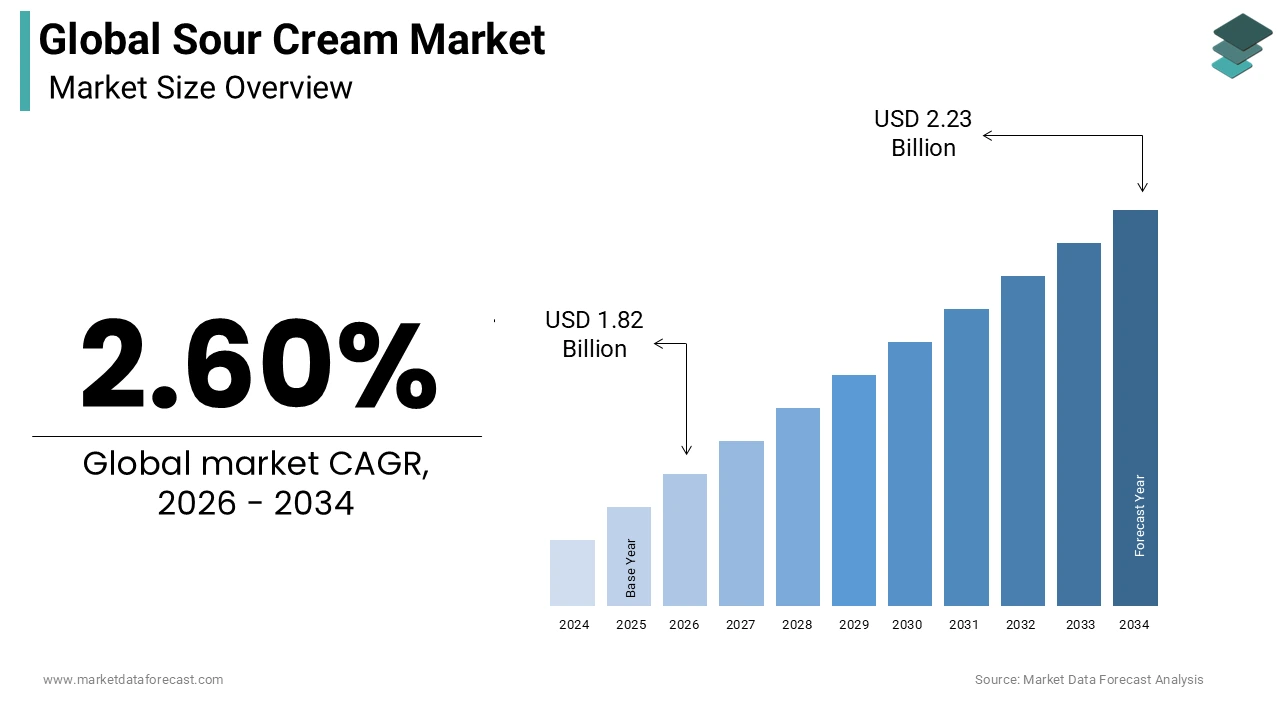
Market Size, 2025
$1.77 BnMarket Estimate, 2026
$1.82 BnMarket Forecast, 2034
$2.23 BnCAGR, 2026–2034
2.60%Global Sour Cream Market Size
The size of the global sour cream market was expected to be worth USD 1.77 billion in 2025 and is anticipated to be worth USD 2.23 billion by 2034, from USD 1.82 billion in 2026, growing at a CAGR of 2.60% during the forecast period.
The sour cream is fermented dairy product created by introducing lactic acid bacteria to cream. This process results in a thick tangy condiment widely utilized in culinary applications ranging from dips and sauces to baked goods and garnishes. The diverse fat content variations, including full fat low fat and non-fat options catering to distinct consumer dietary preferences. In Europe and North America, sour cream is a staple ingredient deeply embedded in cultural cuisines, such as Eastern European borscht or Mexican tacos. The European Commission states that the dairy sector remains one of the largest agricultural industries in the European Union accounting for nearly 15% of total agricultural output. Furthermore, according to Eurostat household consumption of fresh dairy products in the EU has remained stable with per capita consumption exceeding 100 kilograms annually. The versatility of sour cream allows it to function as both a standalone condiment and a key ingredient in processed food manufacturing. Its ability to enhance flavor profiles while adding creamy texture ensures its continued relevance in both home cooking and industrial food preparation.
MARKET DRIVERS
Rising Popularity of Ethnic Cuisines and Convenience Foods
The escalating global appreciation for ethnic cuisines, particularly Mexican Indian and Eastern European dishes is fuelling the growth of the sour cream market. These culinary traditions frequently utilize sour cream as an essential topping or ingredient to balance spices and add richness. This trend drives significant volume in both retail and food service sectors where sour cream is a standard accompaniment for tacos nachos and burritos. The International Food Information Council notes that 45% of consumers are actively seeking authentic international flavors at home leading to increased purchases of traditional condiments. Additionally, the growth of the ready to eat meal sector supports this driver as manufacturers incorporate sour cream into frozen dinners and snack kits to enhance palatability. The convenience factor is paramount as modern consumers seek quick meal solutions that do not compromise on taste. The availability of diverse global ingredients in mainstream supermarkets has normalized the use of specialized condiments. The integration of sour cream into mainstream dietary habits through ethnic food adoption ensures steady market expansion.
Increasing Demand for Versatile Dairy Based Condiments
The inherent versatility of sour cream as a culinary ingredient drives its sustained popularity across various meal occasions and preparation methods, which is additionally promoting the growth of the sour cream market. Consumers value sour cream for its ability to function as a dip spread baking ingredient and sauce base making it a pantry staple. The dairy products account for a significant portion of household grocery expenditures with condiments seeing consistent year over year growth. The tactile and flavor enhancing properties of sour cream make it indispensable in baking, where it adds moisture and tenderness to cakes and muffins. Furthermore, the rise of snacking culture has boosted the consumption of sour cream based dips for vegetables chips and crackers. The Centers for Disease Control and Prevention indicates that vegetable consumption is a public health priority encouraging the use of healthy dips to increase intake. Sour cream provides a convenient vehicle for consuming raw vegetables thereby aligning with nutritional goals. Its compatibility with both savory and sweet applications ensures broad usage across breakfast lunch and dinner. The product’s ability to blend seamlessly with herbs spices and other ingredients allows for endless customization appealing to creative home cooks.
MARKET RESTRAINTS
Health Consciousness and Lactose Intolerance Concerns
The growing health awareness regarding saturated fat intake and the prevalence of lactose intolerance is hampering the growth of the sour cream market. Traditional sour cream is high in saturated fats, which many consumers associate with cardiovascular risks and weight gain. The excessive intake of saturated fats is a major risk factor for heart disease prompting many individuals to reduce their consumption of full fat dairy products. The Centers for Disease Control and Prevention states that approximately 68% of the global population has some degree of lactose malabsorption limiting their ability to consume conventional dairy items. This physiological constraint forces a large segment of the population to avoid sour cream or seek alternatives which may not offer the same sensory experience. The European Food Safety Authority emphasizes the need for clear labeling of allergens and nutritional content which has made consumers more vigilant about their dietary choices. The shift towards plant based diets further exacerbates this restraint as individuals replace dairy with vegan substitutes. The National Institutes of Health reports that lactose free diets are becoming increasingly common driven by both medical necessity and lifestyle choices. Consequently, traditional sour cream faces declining uptake among health conscious demographics who prioritize low fat or non-dairy options. Manufacturers must reformulate products to address these concerns which can alter taste and texture potentially alienating traditional users.
Volatility in Raw Milk Prices and Supply Chain Disruptions
The instability of raw milk prices and disruptions in the dairy supply chain is limiting the growth of the sour cream market. Milk is the primary raw material for sour cream and its price is subject to fluctuations driven by feed costs weather conditions and geopolitical factors. The global dairy prices experienced significant volatility in recent years due to climate induced shortages and logistical bottlenecks. Extreme weather events, such as droughts and floods impact pasture quality and feed availability leading to reduced milk production. The European Commission reports that energy costs which are critical for dairy processing and refrigeration have risen sharply increasing operational expenses for manufacturers. These cost pressures are often passed on to consumers resulting in higher retail prices that can dampen demand. The United States Department of Agriculture notes that supply chain inefficiencies including labor shortages and transportation delays further complicate the distribution of perishable dairy products. Sour cream has a relatively short shelf life requiring efficient cold chain logistics to prevent spoilage.
MARKET OPPORTUNITIES
Expansion of Plant Based and Vegan Alternatives
The rising demand for plant-based diets for the development and expansion of vegan alternatives is solely to set up new opportunities for the growth of the sour cream market. Consumers seeking to reduce their animal product consumption without sacrificing flavor and texture are driving innovation in this segment. Manufacturers are utilizing bases, such as cashews, almonds, soy, and coconut, to create creamy tangy products that mimic traditional sour cream. The number of flexitarians individuals, who occasionally abstain from meat and dairy is increasing creating a broad customer base for hybrid and vegan products. Advances in fermentation technology allow producers to replicate the characteristic tang of sour cream using bacterial cultures on plant substrates. This technological progress enhances the sensory profile of vegan alternatives making them more appealing to mainstream consumers. The Clean Label Project emphasizes that transparency in ingredient sourcing is crucial for building trust in plant-based products.
Innovation in Functional and Probiotic Enriched Products
The integration of functional benefit, such as probiotics and enhanced nutritional profiles is additionally sour cream market. Consumers are increasingly seeking foods that provide health benefits beyond basic nutrition driving demand for functional dairy products. Incorporating specific probiotic strains into sour cream can support gut health and immune function appealing to health conscious consumers. The growing scientific evidence supporting the health benefits of probiotics encouraging manufacturers to innovate in this area. Fortifying sour cream with additional nutrients such as vitamin D calcium and protein that further enhances its value proposition. The National Dairy Council states that consumers are willing to pay a premium for dairy products that offer added health benefits. Clean label formulations that avoid artificial additives and preservatives also resonate with modern shoppers. The trend towards personalized nutrition allows for targeted product development catering to specific dietary needs. Manufacturers can leverage clinical studies to validate health claims building consumer confidence.
MARKET CHALLENGES
Strict Regulatory Standards and Labeling Requirements
Navigating complex regulatory frameworks and stringent labeling requirements is to impede the growth of the sour cream market. Different regions have varying definitions and standards for what constitutes sour cream, particularly regarding fat content and bacterial cultures. Compliance with these diverse standards increases operational complexity and costs for multinational companies. The Food and Drug Administration in the United States mandates strict guidelines for standardized identity of sour cream requiring specific minimum milkfat levels. Failure to comply can result in product recalls fines and reputational damage. The rigorous safety assessments for any novel ingredients or probiotic strains used in functional products. Obtaining approval for health claims is a lengthy and expensive process requiring substantial scientific evidence. The harmonization of dairy standards across borders remains elusive creating trade barriers. Manufacturers must maintain separate production lines and packaging for different markets increasing inefficiencies. Additionally, the rise of clean label trends pressures companies to remove preservatives which can shorten shelf life and complicate logistics. Balancing regulatory compliance with consumer expectations for natural and safe products requires continuous vigilance and investment.
Competition from Substitute Condiments and Spreads
The intense competition from a wide array of substitute condiments and spreads that offer similar culinary functions, which is to limit the growth of the sour cream market. Products, such as Greek, yogurt, cottage, cheese, crema, and plant based dips, provide consumers with alternative options that may be perceived as healthier or more versatile. The versatility of Greek yogurt allows it to be used in both sweet and savory dishes encroaching on sour cream’s traditional domain. The International Dairy Foods Association reports that the diversity of dairy and non-dairy spreads is expanding giving consumers more choices. Avocado based spreads and hummus also compete for shelf space and consumer attention, particularly among health-conscious demographics. Price competitiveness is another factor as some substitutes may be offered at lower price points. The ease of switching between condiments means brand loyalty for sour cream is relatively low. Manufacturers must continuously innovate and market their products to defend against these substitutes. The blurring lines between different types of spreads require sour cream brands to clearly articulate their unique value proposition.
REPORT COVERAGE
| REPORT METRIC | DETAILS |
| Market Size Available | 2025 to 2034 |
| Base Year | 2025 |
| Forecast Period | 2026 to 2034 |
| CAGR | 2.6% |
| Segments Covered | By Type, Application, Distribution Channel, and Region |
| Various Analyses Covered | Global, Regional & Country Level Analysis, Segment-Level Analysis, DROC, PESTLE Analysis, Porter’s Five Forces Analysis, Competitive Landscape, Analyst Overview of Investment Opportunities |
| Regions Covered | North America, Europe, APAC, Latin America, Middle East & Africa |
| Market Leaders Profiled | Dean Foods, Fonterra Co-operative Group Limited, Kraft Heinz Company, Green Valley Creamery, Danone SA and Others. |
SEGMENTAL ANALYSIS
By Types Insights
The conventional segment was accounted in holding 47.1% of the sour cream market share in 2025 due to its widespread availability affordability and established consumer preference for traditional dairy products. As per the United States Department of Agriculture, conventional dairy products account for over 90% of total milk sales in the United States reflecting the entrenched position of standard production methods. The lower production costs associated with conventional farming allow manufacturers to offer competitive pricing, which is essential for maintaining high volume sales in retail channels. The European Commission states that conventional dairy farming remains the backbone of the agricultural sector in Europe providing a stable and consistent supply of raw milk for processing. The familiarity of conventional sour cream in everyday cooking and dining ensures steady demand across households and food service establishments. Major retail chains prioritize conventional brands due to their higher turnover rates and broader consumer appeal. The International Dairy Federation notes that conventional dairy products benefit from established supply chains and distribution networks that ensure product freshness and availability. Furthermore, the lack of premium pricing makes conventional sour cream accessible to a wider demographic including budget conscious families. The extensive marketing support from large dairy cooperatives also reinforces brand loyalty for conventional products.
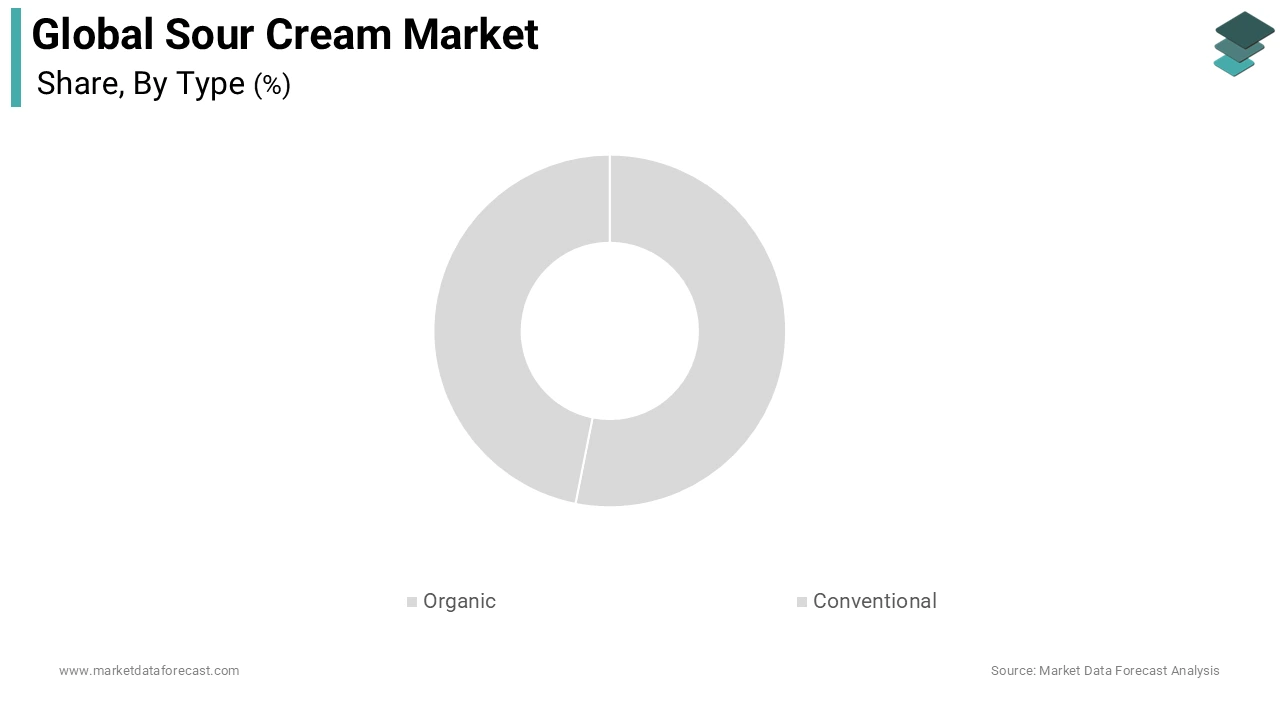
The organic sour cream segment is esteemed to grow at a fastest CAGR of 7.2% from 2026 to 2034 owing to the increasing consumer awareness regarding health sustainability and animal welfare which fuels demand for certified organic products. Consumers are increasingly willing to pay a premium for organic sour cream due to the perception that it is free from synthetic pesticides hormones and antibiotics. The Organic Trade Association reports that organic dairy sales in North America have grown consistently outpacing conventional dairy growth rates in recent years. Regulatory support for organic farming in regions like the European Union encourages producers to transition to organic methods ensuring a steady supply of organic milk. Retailers are expanding their organic shelves to meet this rising demand offering a wider variety of organic sour cream brands. The transparency of organic certification builds trust among consumers who prioritize clean label ingredients. Additionally, the environmental benefits of organic farming resonate with eco conscious shoppers driving repeat purchases. These factors collectively accelerate the adoption of organic sour cream in both retail and food service sectors.
By Applications Insights
The dips and snacks segment was the largest by holding 34.2% of the sour cream market share in 2025 due to the pervasive culture of snacking and the popularity of party foods that utilize sour cream as a base. Sour cream-based dips are staples at social gatherings sporting events and casual dining occasions driving consistent household purchases. As per the National Snack Association in the United States, over 90% of consumers snack at least once a day with savory dips being a preferred choice for vegetable and chip accompaniments. The versatility of sour cream allows it to be easily mixed with herbs spices and other ingredients to create diverse flavor profiles appealing to various tastes. The convenience and taste are the primary drivers for snack selection making ready to eat sour cream dips highly attractive. The rise of home entertainment and streaming services has further increased the frequency of snacking occasions boosting demand for dip ingredients. Retailers often promote sour cream alongside chips and crackers creating bundled shopping experiences that drive volume.
The bakery products segment is lucratively growing at a fastest CAGR of 6.8% throughout the forecast period with the ingredient’s functional properties in enhancing texture and moisture. Sour cream is increasingly used in cakes muffins scones and breads to create a tender crumb and rich flavor profile. The use of dairy ingredients in baked goods has risen as consumers seek indulgent and high quality treats. Sour cream acts as a natural tenderizer and leavening agent when combined with baking soda allowing for lighter and moister baked products. The trend towards home baking which surged in recent years has sustained demand for versatile ingredients like sour cream. The ability of sour cream to extend shelf life by retaining moisture is another critical factor driving its adoption in commercial baking. The consumers are increasingly interested in premium baked goods with authentic flavors which sour cream provides. The versatility of sour cream in both sweet and savory baked applications expands its utility. Furthermore, the perception of sour cream as a natural ingredient aligns with the clean label trend in baking.
By Distribution Channel Insights
The supermarkets and hypermarkets segment was the dominant in the Sour Cream Market by holding a prominent share in 2025 with their extensive reach one stop shopping convenience and dominant role in grocery retail. These stores offer a wide variety of sour cream brands and types allowing consumers to compare prices and select products that meet their preferences. The cold chain infrastructure in supermarkets ensures that perishable items like sour cream are stored at optimal temperatures maintaining quality and safety. Promotional activities, such as discounts and bundle offers in supermarkets drive impulse purchases and volume sales. The visibility of sour cream in dedicated dairy aisles enhances brand recognition and consumer engagement. The International Retail Federation notes that the consolidation of retail chains has increased the bargaining power of supermarkets influencing product placement and pricing. The convenience of purchasing sour cream alongside other meal ingredients supports its status as a staple item.
The online retail stores segment is likely to witness a fastest CAGR if 9.5% from 2026 to 2034 with the rapid adoption of e-grocery services and digital convenience. The shift towards online shopping for perishable goods has been accelerated by improvements in last mile delivery and cold chain logistics. The online grocery sales have grown significantly with many consumers adopting subscription models for regular household essentials, including dairy products. The convenience of home delivery appeals to busy consumers, who value time savings and contactless shopping experiences. Major retailers and specialized online grocers are investing in temperature-controlled packaging to ensure the quality of sour cream during transit. The penetration of online grocery shopping in Europe is increasing particularly among younger demographics. Digital platforms allow for easy comparison of products and access to niche or organic brands that may not be available in local stores. The integration of mobile apps and quick commerce services further facilitates instant purchases.
REGIONAL ANALYSIS
North America Sour Cream Market Analysis
North America was the top performer of the sour cream market by holding 32.1% of the share in 2025 due to the widespread integration of sour cream in Mexican and American cuisines. As per the United States Department of Agriculture, the United States produces millions of tons of milk annually providing a robust supply base for sour cream manufacturing. The prevalence of fast casual dining and home snacking cultures drives consistent demand for sour cream-based dips and toppings. Canada also contributes significantly with a strong dairy sector supported by supply management systems that ensure stable prices and quality. The innovation in product formulations, such as low fat and organic options catering to health-conscious consumers. The region benefits from advanced cold chain logistics and widespread retail penetration. The influence of multicultural demographics introduces diverse culinary uses for sour cream expanding its application scope. The presence of major dairy cooperatives and brands fosters competition and innovation.
Europe Sour Cream Market Analysis
Europe sour cream market ranked second by capturing 18.2% of share in 2025 with the diverse culinary traditions and stringent quality standards. Countries in Eastern Europe, such as Poland and Russia have deep rooted cultural practices involving sour cream in soups stews and desserts. As per the European Commission, the European Union is one of the largest dairy producers globally with strict regulations on hygiene and labeling. Western European countries are seeing growth in organic and premium sour cream segments driven by health and sustainability trends. The European Food Safety Authority oversees safety standards ensuring high quality products for consumers. The region’s focus on clean label and natural ingredients drives innovation in product development. The Common Agricultural Policy supports dairy farmers encouraging sustainable production practices. The diverse culinary landscape across Europe creates varied demand patterns with some regions preferring thicker consistency while others favor lighter textures. The rise of vegetarian and flexitarian diets supports the use of sour cream as a protein rich condiment.
Asia Pacific Sour Cream Market Analysis
The Asia Pacific sour cream market growth is likely to grow with the increasing westernization of diets and the expansion of international food service chains. While traditional dairy consumption is lower in some parts of Asia the popularity of global cuisines, such as Mexican and Indian is boosting demand. China and India are key countries, where the middle class is adopting diverse dietary habits including the use of dairy condiments. Local manufacturers are partnering with international brands to introduce sour cream products tailored to local tastes. The region faces challenges related to lactose intolerance but innovations in lactose free and plant-based alternatives are addressing this issue. The expansion of supermarkets and online retail channels improves accessibility for consumers. The influence of social media and culinary trends exposes younger demographics to new food experiences.
Latin America Sour Cream Market Analysis
Latin America sour cream growth is likely to grow with the strong cultural affinity for dairy products and Mexican cuisine influences. Mexico is a key contributor to the regional market where sour cream known as crema is a staple in traditional dishes. As per the Inter American Institute for Cooperation on Agriculture dairy production in Latin America is expanding to meet domestic and export demands. Brazil and Argentina are also significant markets with growing consumption of processed dairy products. The region benefits from a strong cattle industry providing ample raw materials for dairy processing. The Economic Commission for Latin America and the Caribbean notes that urbanization and rising disposable incomes are driving demand for convenient and value added food products. The popularity of street food and casual dining supports the use of sour cream as a topping and ingredient. Local manufacturers are innovating with different fat contents and flavors to cater to diverse consumer preferences. The expansion of modern retail channels improves product availability and visibility.
Middle East and Africa Sour Cream Market Analysis
The Middle East and Africa sour cream market growth is propelling with the high expatriate populations and tourism, which drive demand for diverse food options. The dairy consumption in the Middle East is supported by government initiatives to enhance food security and local production. The region faces challenges related to climate and infrastructure but investments in cold chain logistics are improving product availability. The Halal certification of dairy products ensures compliance with religious dietary laws expanding the consumer base. The African Union’s Agenda 2063 emphasizes agricultural development which includes dairy processing capabilities. The influence of global fast food chains introduces sour cream to new consumers. Local producers are collaborating with international firms to transfer technology and improve product quality.
COMPETITION OVERVIEW
The competition in the Sour Cream Market is characterized by a mix of large multinational dairy cooperatives and regional producers striving for dominance through quality and innovation. Major players leverage their extensive supply chains and brand recognition to offer consistent and high- quality products. The market sees intense rivalry in the organic and premium segments where companies differentiate themselves through sustainable sourcing and clean label formulations. Price competition remains significant in the conventional segment prompting manufacturers to optimize production costs. Strategic collaborations with retailers ensure prominent shelf placement and promotional visibility. Private label brands from major supermarket chains pose a threat to established brands by offering lower priced alternatives. Innovation in packaging such as resealable containers and single serve cups enhances convenience and appeals to busy consumers. Regulatory compliance and food safety standards act as barriers to entry for smaller firms. The continuous push for healthier and more sustainable options drives ongoing product development.
KEY MARKET PLAYERS
Major Key Players in the Global Sour Cream Market include
- Dean Foods
- Fonterra Co-operative Group Limited
- Kraft Heinz Company
- Green Valley Creamery
- Danone SA
Top Strategies Used by Key Market Participants
Key players in the Sour Cream Market primarily focus on product innovation and sustainability to maintain competitive advantage. Companies invest heavily in developing organic and low fat variants to address health-conscious consumer demands. Strategic expansions into emerging markets allow firms to capture growth opportunities in regions with rising dairy consumption. Partnerships with retail chains and food service providers enhance distribution networks and brand visibility. Emphasizing clean label ingredients and transparent sourcing builds consumer trust and loyalty. Digital marketing campaigns target younger demographics through social media platforms to boost engagement. Investing in advanced processing technologies improves product quality and shelf life.
Leading Players in the Global Sour Cream Market
- Dairy Farmers of America is a prominent cooperative that plays a vital role in the global sour cream market by supplying high quality dairy ingredients and finished products. The organization leverages its extensive network of farmer owners to ensure a consistent supply of fresh milk for sour cream production. Recently the company has focused on expanding its portfolio of value-added dairy products including specialized sour cream formulations for food service and retail sectors. Dairy Farmers of America invests in sustainable farming practices and advanced processing technologies to enhance product quality and efficiency. Their strategic partnerships with major food manufacturers strengthen their distribution channels and market reach. The organization also engages in community initiatives to support local dairy farmers ensuring long term supply chain stability. These efforts collectively reinforce their position as a key contributor to the global sour cream industry.
- Arla Foods amba is a leading international dairy cooperative that significantly contributes to the sour cream market through its diverse range of high quality dairy products. The company operates across multiple continents offering both conventional and organic sour cream options that cater to varying consumer preferences. Arla Foods recently launched new organic sour cream lines in key European markets to meet the growing demand for sustainable and healthy food choices. The company emphasizes transparency and traceability in its supply chain building trust with consumers and retailers alike. Arla Foods invests heavily in research and development to improve product texture and flavor profiles. Their commitment to reducing carbon emissions aligns with global sustainability goals enhancing brand reputation.
- Saputo Inc. is a major player in the global dairy industry with a strong presence in the sour cream market particularly in North America and Europe. The company produces a wide variety of sour cream products under well-known brands catering to retail and food service customers. Saputo recently expanded its production facilities in the United States to increase capacity and meet rising demand for dairy condiments. The company focuses on innovation by introducing new flavors and packaging formats that appeal to modern consumers. Saputo Inc. also prioritizes operational efficiency and cost management to maintain competitive pricing. Their strategic acquisitions of regional dairy companies have strengthened their market position and diversified their product offerings.
MARKET SEGMENTATION
This research report on the global sour cream market has been segmented and sub-segmented based on type, application, distribution channel and region.
By Type
- Organic
- Conventional
By Application
- Bakery Products
- Salad Dressing
- Dips
- Snacks
- Sauces
- Ice Cream
- Others
By Distribution Channel
- Supermarkets/Hypermarkets
- Convenience Stores
- Online Retail Stores
- Others
By Region
- North America
- Europe
- Asia Pacific
- Latin America
- Middle East & Africa