- Product Description Description
- Table of Contents TOC
- List of Table & Figure LOT
- Get Free Sample PDF Sample PDF
Market Size, 2025
$65.90 BnMarket Estimate, 2026
$70.65 BnMarket Forecast, 2034
$123.22 BnCAGR, 2026–2034
7.20%Global Soy Desserts Market Report Summary
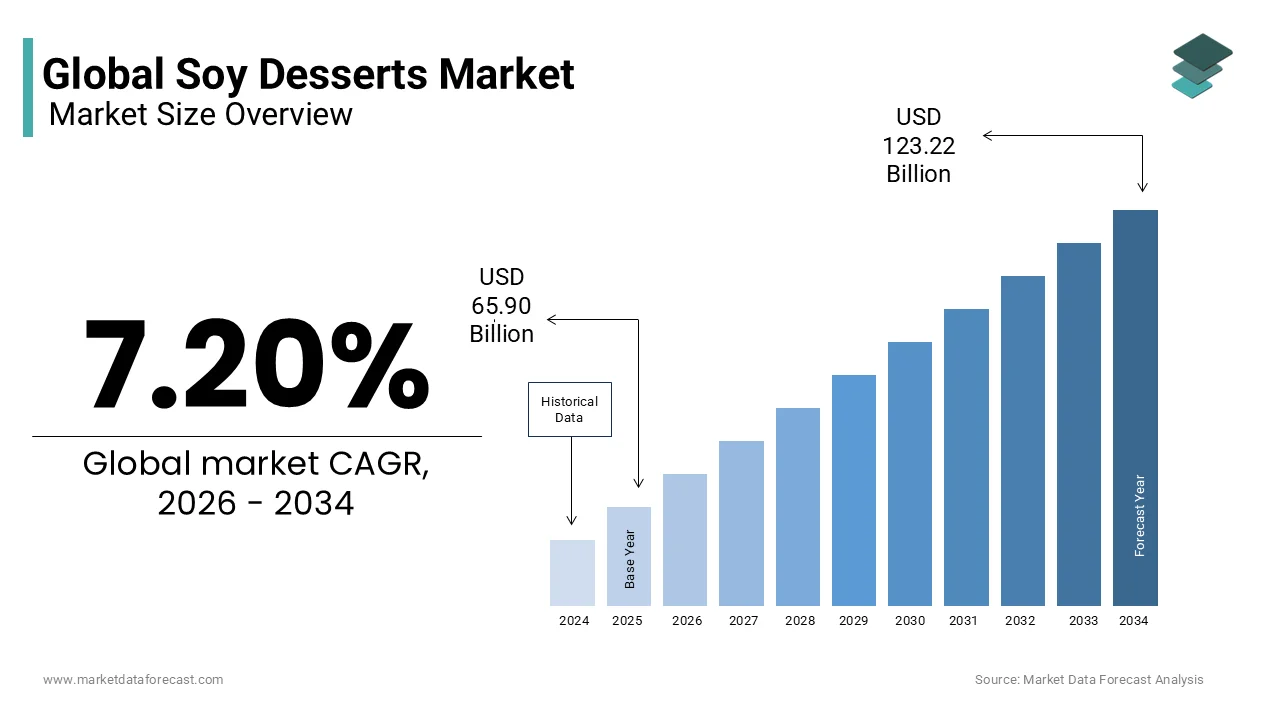
The global soy desserts market was valued at USD 65.90 billion in 2025, is estimated to reach USD 70.65 billion in 2026, and is projected to reach USD 123.22 billion by 2034, growing at a CAGR of 7.20% during the forecast period. The growth of the global soy desserts market is driven by increasing consumer demand for plant-based and dairy-free alternatives, rising prevalence of lactose intolerance, and growing adoption of vegan diets worldwide. Expanding awareness of the nutritional benefits of soy-based products, continuous product innovation, and the availability of soy desserts in diverse flavours and formats are further supporting market growth. Additionally, the expansion of modern retail channels and increasing consumer preference for healthy, sustainable food options are creating significant growth opportunities for market participants.
Key Market Trends
-
Rising consumer preference for plant-based and dairy-free desserts driven by growing vegan and flexitarian lifestyles.
-
Increasing demand for clean-label and high-protein soy desserts with natural ingredients and reduced sugar content.
-
Continuous product innovation with new flavours, textures, and functional ingredients to attract health-conscious consumers.
-
Expansion of hypermarkets, supermarkets, and online retail platforms, improving product accessibility worldwide.
-
Growing emphasis on sustainable food production and environmentally friendly plant-based alternatives to dairy desserts.
Segmental Insights
- Based on distribution channel, the hypermarkets and supermarkets segment dominated the soy desserts market in 2025. The segment's leadership is attributed to the wide availability of soy dessert products, extensive product assortments, attractive promotional offers, and the convenience of one-stop shopping, which continue to drive consumer purchases through organized retail outlets.
Regional Insights
- North America represents a significant market for soy desserts, supported by increasing consumer demand for dairy-free products, growing awareness of plant-based nutrition, and the expanding availability of vegan food options across retail channels.
- The United States dominated the North America soy desserts market in 2025. The country's leadership is driven by strong consumer adoption of plant-based diets, high demand for lactose-free desserts, continuous product innovation, and the presence of well-established food manufacturers and retail distribution networks.
Competitive Landscape
The global soy desserts market is highly competitive, with leading companies focusing on expanding their plant-based product portfolios, introducing innovative flavours and formulations, and strengthening their presence across retail and e-commerce channels. Manufacturers are investing in clean-label ingredients, sustainable production practices, and strategic partnerships to meet evolving consumer preferences for healthy and dairy-free desserts. Prominent players in the global soy desserts market include The Hershey Company, WhiteWave Services Inc., Danone Group, Dean Foods Co., So Delicious, and Turtle Mountain.
Global Soy Desserts Market Size
The global soy desserts market size was valued at USD 65.90 billion in 2025 and is expected to grow from USD 70.65 billion in 2026 to USD 123.22 billion in 2034, growing at a CAGR of 7.20%.
Soy desserts are sweet foods made using soybeans or soy-based ingredients like soy milk, silken tofu, or soy flour. These offerings serve as viable alternatives to traditional dairy-based desserts, catering to consumers seeking lactose-free, vegan, or allergen-friendly options. The region demonstrates a robust inclination toward sustainable food choices driven by heightened environmental consciousness and ethical consumption patterns. According to the United States Department of Agriculture, domestic harvested area for soybeans totaled 82.4 million acres in 2023, ensuring continuous supply lines for manufacturing downstream consumer products. As per the Plant-Based Foods Association, U.S. retail sales of plant-based foods grew 6.6% to reach 8 billion dollars in 2022, with plant-based milk remaining the largest contributor sustaining retail category health. According to the Plant Based Foods Association, roughly 42% of American households regularly purchase plant-based milk alternatives, expanding mainstream category penetration beyond niche dietary segments. This foundational acceptance facilitates the transition from beverage formats to more complex dessert applications. The market thrives on innovation in texture and flavor masking technologies that address historical consumer reservations about beany aftertastes. Regulatory frameworks in both the United States and Canada support clear labeling practices enabling transparent communication of nutritional benefits such as high protein content and low saturated fat levels, which appeal to health-conscious demographics across the continent.
MARKET DRIVERS
Rising Prevalence of Lactose Intolerance and Dairy Allergies Drives Demand
The escalating incidence of lactose intolerance and cow's milk allergy drives the growth of the North America soy desserts market. According to the National Institutes of Health, approximately 68% of the global population has lactose malabsorption, which limits the body's capacity to digest lactose and drives consumer demand toward dairy-free food formulations. The physiological constraint compels consumers to seek alternative dessert options that do not trigger gastrointestinal distress or allergic reactions. Soy-based desserts provide a complete protein source without the lactose molecule, making them an ideal substitute for traditional ice creams and custards. As per the American College of Allergy, Asthma, and Immunology, milk allergies affect roughly 2% to 3% of children under the age of three, accelerating corporate formulation of allergen-free plant alternative foods. Parents actively prioritize soy desserts due to their established safety profile and nutritional parity with dairy equivalents. Furthermore, the aging population contributes to this driver as lactase production naturally declines with age. According to the National Institute of Diabetes and Digestive and Kidney Diseases, small intestine lactase production naturally decreases after childhood in most individuals, causing localized culinary shifts toward non-dairy product options. This demographic shift ensures a consistent and growing consumer base that relies on soy desserts for indulgence without compromising digestive health. Manufacturers respond by fortifying these products with calcium and vitamin D to match the micronutrient density of dairy, thereby enhancing their appeal as functional food items rather than mere substitutes.
Expansion of Vegan and Flexitarian Lifestyles Fuels Market Growth
The widespread adoption of vegan and flexitarian dietary frameworks significantly propels the expansion of the North America soy desserts market. Ethical concerns regarding animal welfare and environmental sustainability motivate millions of consumers to exclude animal-derived ingredients from their diets. According to sources, approximately 4% of American adults identify as vegetarian and 1% identify as vegan, establishing a stable baseline market sector for commercial plant-based foods. The flexitarian trend, which involves reducing but not eliminating meat and dairy consumption, has gained even greater traction. As per the International Food Information Council, consumer food purchasing behaviors show an active mainstream expansion of plant-based eating patterns as domestic manufacturers diversify dairy-alternative formulations. Soy desserts align perfectly with these values by offering cruelty-free indulgence that minimizes ecological footprints. The production of soy requires significantly less water and land compared to dairy farming, which resonates with environmentally conscious buyers. According to the World Resources Institute, average greenhouse gas emissions per cup equal 330 grams for dairy milk compared to 122 grams for soy milk, reinforcing the carbon footprint advantages of plant-derived foods. Social media influence and celebrity endorsements further normalize vegan dessert consumption, transforming it from a niche preference into a mainstream culinary choice. Retailers respond by dedicating shelf space to premium soy dessert brands that emphasize clean labels and organic certification. This cultural shift is not transient but represents a fundamental restructuring of food preferences where soy desserts are viewed as contemporary, sophisticated choices rather than compromise products, thereby ensuring long-term demand stability and growth potential across the region.
MARKET RESTRAINTS
Consumer Perception of Genetically Modified Organisms Restricts Adoption
Persistent consumer skepticism regarding genetically modified organisms is a significant restraint to the North America soy desserts market. A substantial portion of soybeans cultivated in the United States and Canada are genetically modified to resist herbicides and pests. According to the United States Department of Agriculture, genetically engineered varieties accounted for 95% of all soybeans planted in the United States in 2023, ensuring robust pest and herbicide resistance across domestic agricultural operations. Despite regulatory approvals confirming the safety of these crops, many consumers remain wary of consuming GMO-derived ingredients due to perceived health risks and environmental concerns. As per sources, roughly 39% of American adults perceive genetically modified foods to be worse for their health compared to conventionally grown foods, dictating baseline consumer acceptance boundaries for agricultural biotech applications. This apprehension is particularly pronounced among health-conscious shoppers who meticulously scrutinize ingredient labels for non-GMO verification. The absence of clear mandatory labeling laws in certain jurisdictions exacerbates consumer confusion and distrust, leading some to avoid soy products altogether in favor of alternatives perceived as more natural, such as almond- or oat-based desserts. Brand loyalty suffers when companies fail to transparently disclose the genetic status of their soy sources, resulting in lost sales opportunities. Competitors capitalizing on the non-GMO trend gain market share by prominently displaying certification seals from organizations. According to the Non-GMO Project, the action threshold for high-risk inputs and ingredients stands at 0.9% to maintain the integrity of certified non-bioengineered supply chains. This dynamic forces soy dessert manufacturers to invest heavily in sourcing certified non-GMO soybeans, which often command higher procurement costs and limit supply chain flexibility. The resulting price premiums can deter price-sensitive consumers, thereby restricting mass-market penetration and slowing overall category growth despite the inherent nutritional benefits of soy.
Intense Competition from Alternative Plant-Based Proteins Limits Share
The proliferation of diverse plant-based protein sources creates intense competitive pressure that restrains the dominance of these desserts in the North American soy desserts market. Consumers today have access to a wide array of non-dairy alternatives, including almond, coconut, cashew, oat, and pea-based desserts, each offering unique sensory profiles and nutritional advantages. According to the Plant Based Foods Association, retail sales of plant-based eggs experienced a 14% expansion in dollar value in 2022, diversifying competitive choices within alternative food segments. As per PubMed Central, almond milk remains the dominant plant milk choice, accounting for 74.2% of total alternative milk unit volume sales in the United States. Coconut-based desserts appeal to those seeking rich tropical flavors and medium-chain triglycerides, while pea protein gains traction due to its hypoallergenic properties and sustainability credentials. This fragmentation dilutes the market share available to soy desserts as retailers allocate limited shelf space to multiple competing categories. Consumer experimentation leads to trial of various plant bases, preventing singular loyalty to soy. Additionally, marketing budgets from emerging brands focusing on novel ingredients like lupin or hemp further divert attention away from traditional soy offerings. The need for continuous innovation in flavor masking and texture enhancement becomes critical for soy manufacturers to differentiate their products from these alternatives. Failure to keep pace with the rapid product launches in adjacent plant-based categories results in stagnation as consumers perceive soy as a legacy option rather than a cutting-edge choice. This competitive landscape necessitates aggressive promotional strategies and higher spending on research and development, which squeezes profit margins and limits the ability of soy dessert producers to expand their market footprint effectively.
MARKET OPPORTUNITIES
Innovation in Clean Label and Organic Formulations Presents Opportunity
The growing consumer demand for clean-label and organic food products offers a substantial opportunity for expansion within the North American soy desserts market. Shoppers increasingly prioritize transparency simplicity and natural ingredients, avoiding artificial additives preservatives and synthetic flavors. According to the Organic Trade Association, domestic sales of organic food items reached a historic 61.9 billion dollars in 2022, accelerating the market penetration of certified sustainable agricultural goods. Soy dessert manufacturers can capitalize on this trend by reformulating their offerings to include only recognizable ingredients such as organic soy milk, cane sugar, and natural fruit purees. Obtaining USDA Organic certification validates these claims and builds trust with health-conscious consumers who associate organic labeling with higher quality and safety standards. As per a study, approximately 73% of consumers express a willingness to pay more for products that offer complete ingredient visibility, shifting brand loyalty patterns toward clear packaging standards. By eliminating emulsifiers, stabilizers, and artificial colorants, brands can position their soy desserts as wholesome indulgences suitable for families and individuals seeking minimally processed foods. This strategy also aligns with the broader wellness trend where food is viewed as medicine and ingredient purity is paramount. Companies that successfully communicate their commitment to clean formulations through packaging design and digital marketing can differentiate themselves in a crowded marketplace. Collaborations with organic soybean farmers ensure a secure supply of high-quality raw materials while supporting sustainable agricultural practices. This vertical integration enhances brand storytelling and appeals to ethically minded buyers. The opportunity extends to private label partnerships with major grocery chains seeking to expand their organic dessert portfolios, thereby providing scalable distribution channels for innovative soy-based products that meet stringent clean label criteria.
Integration of Functional Ingredients Enhances Nutritional Value
The incorporation of functional ingredients into these desserts paves the way to attract health-focused consumers seeking added physiological benefits beyond basic nutrition, which is predicted to boost the expansion of the North America soy desserts market. Modern buyers view desserts as potential vehicles for delivering probiotics fiber vitamins and minerals, transforming indulgent treats into functional food items. According to the Global Wellness Institute, the worldwide wellness economy reached a market valuation of 5.6 trillion dollars in 2022, expanding downstream investment avenues for health-oriented food and beverage processors. Soy desserts enriched with probiotics support gut health, a priority for millions of Americans with digestive issues, while added fiber aids in satiety and blood sugar regulation. The addition of adaptogens such as ashwagandha or turmeric appeals to consumers managing stress and inflammation, aligning with holistic health trends. As per the Council for Responsible Nutrition, roughly 77% of adults in the United States consume dietary supplements regularly, broadening consumer reliance on functional health products. Fortifying soy desserts with calcium and vitamin D addresses common nutrient gaps in plant-based diets, enhancing their appeal to vegans and lactose-intolerant individuals. Protein enrichment further positions these products as post-workout recovery snacks appealing to fitness enthusiasts. Manufacturers can collaborate with ingredient suppliers to develop stable formulations that maintain sensory quality while delivering effective doses of functional compounds. Clear communication of these benefits on packaging through claims such as "supports immune health" or "promotes digestive balance" educates consumers and justifies premium pricing. This strategy transforms soy desserts from occasional treats into daily wellness staples, increasing purchase frequency and brand loyalty. The opportunity lies in creating specialized product lines targeting specific health needs such as bone health heart health or cognitive function, thereby tapping into niche markets with high growth potential and reduced price sensitivity due to the perceived therapeutic value of the products.
MARKET CHALLENGES
Supply Chain Volatility and Raw Material Price Fluctuations Pose Challenges
Fluctuations in soybean prices and supply chain disruptions present significant challenges to the stability and profitability of the North America soy desserts market. Agricultural output is highly susceptible to weather conditions, pest infestations, and geopolitical tensions affecting global trade flows. According to the United States Department of Agriculture, compound extreme weather events like severe heat domes can sharply reduce regional soybean yield expectations, creating downward pressure on corporate processing margins. The volatility of commodity markets means that manufacturers face unpredictable input expenses, making it difficult to maintain consistent pricing strategies and profit margins. Trade policies and tariffs further complicate supply chains, as seen in past disputes between the United States and China, which disrupted soybean exports and created domestic surpluses followed by shortages. These disruptions force companies to seek alternative suppliers, often at higher costs or lower quality, impacting the final product consistency. Logistics challenges, including transportation bottlenecks and fuel price spikes, add another layer of complexity, increasing the cost of getting raw soybeans to processing facilities and finished desserts to retailers. The Just-In-Time inventory models adopted by many manufacturers leave little buffer for such disruptions, resulting in production delays and stockouts that damage brand reputation. Smaller players lack the financial resilience to absorb these shocks, leading to market consolidation where only large corporations with diversified supply chains survive. This environment discourages new entrants and limits innovation as resources are diverted to risk management rather than product development. Consumers may also react negatively to frequent price increases, reducing demand elasticity. Addressing this challenge requires long-term contracts with farmers, investment in local sourcing initiatives, and hedging strategies against commodity price swings, which are capital-intensive and operationally complex for many market participants.
Sensory Limitations and Texture Issues Hinder Consumer Acceptance
Overcoming inherent sensory limitations related to taste and texture remains a persistent inhibition for the North America soy desserts market. Despite advancements in food technology, many consumers still associate soy with a distinct beany or grassy aftertaste that detracts from the indulgent experience expected from desserts. Texture issues such as graininess, iciness, or lack of creaminess compared to dairy-based counterparts further hinder widespread acceptance. As per the United States Department of Agriculture, sensory attributes like flavor profiles and structural texture directly influence repeat purchasing behaviors as processing technologies work to eliminate the off-flavors typical of raw legumes. Achieving the smooth, rich consistency of traditional ice cream or pudding using soy requires sophisticated formulation techniques involving precise control of protein denaturation and fat emulation, which increases production complexity and cost. Flavor masking agents often introduce additional ingredients that conflict with clean label demands, creating a dilemma for manufacturers. Consumer education is also lacking, as many individuals have had negative early experiences with inferior soy products, leading to entrenched biases that are difficult to overcome. Competing plant-based alternatives like cashew or coconut naturally offer creamier textures and milder flavors, setting a high benchmark that soy struggles to match without extensive processing. This sensory gap limits the appeal of soy desserts to adventurous eaters rather than the mainstream mass market. Continuous research and development are required to refine processing methods such as enzymatic hydrolysis or fermentation that improve flavor profiles and textural attributes. However, these innovations take time to commercialize and require significant investment. Until soy desserts can consistently deliver a sensory experience indistinguishable from or superior to dairy and other plant-based options, they will face an uphill battle in capturing larger market shares and achieving mainstream ubiquity across North America.
REPORT COVERAGE
| REPORT METRIC | DETAILS |
| Market Size Available | 2025 to 2034 |
| Base Year | 2025 |
| Forecast Period | 2026 to 2034 |
| CAGR | 7.20% |
| Segments Covered | By Distribution Channel and Region |
| Various Analyses Covered | Global, Regional & Country Level Analysis, Segment-Level Analysis, DROC, PESTLE Analysis, Porter’s Five Forces Analysis, Competitive Landscape, Analyst Overview on Investment Opportunities |
| Regions Covered | North America, Europe, APAC, Latin America, Middle East & Africa |
| Market Leaders Profiled | Hershey Company, WhiteWave Services Inc., Silk, Danone Group, Nasoya, Dean Foods Co., So Delicious Dairy Free, So Delicious, and Turtle Mountain |
SEGMENTAL ANALYSIS
By Distribution Channel Insights
In 2025, the hypermarkets and supermarkets segment held the majority share of the North America soy desserts market because of its extensive reach and ability to offer a diverse product assortment under one roof. The dominance of this segment is primarily driven by the high foot traffic and established consumer trust in large retail formats where shoppers prefer to purchase multiple grocery items in a single trip. According to The Food Industry Association, traditional supermarkets and mass retailers draw level as primary food destinations, driving overall domestic industry sales to 1 trillion dollars while expanding consumer access to diverse grocery categories. The sheer shelf space availability allows retailers to stock various flavors and brands of soy desserts catering to different price points and dietary preferences, which enhances consumer choice and impulse purchases. Major retail chains such as Walmart, Kroger, and Safeway have dedicated natural and organic sections that prominently feature soy-based confectionery, aligning with the growing health consciousness among shoppers. These retailers also leverage their robust supply chain networks to ensure consistent product availability and competitive pricing, which attracts budget-conscious consumers. Promotional activities, including weekly discounts, bundle offers, and loyalty program rewards, further stimulate demand within these stores. The integration of digital tools such as online inventory checks and curbside pickup options offered by supermarkets enhances convenience, thereby retaining customer loyalty. Additionally, the ability of hypermarkets to conduct in-store sampling events helps overcome sensory barriers associated with soy products by allowing consumers to taste before they buy. This tactile experience significantly boosts conversion rates and encourages trial among first-time users. The strategic placement of soy desserts near dairy alternatives or in frozen food aisles maximizes exposure to target demographics who are already seeking non-dairy options. The comprehensive nature of supermarket shopping experiences combined with aggressive marketing support from manufacturers solidifies the leading position of this distribution channel in the regional market landscape.
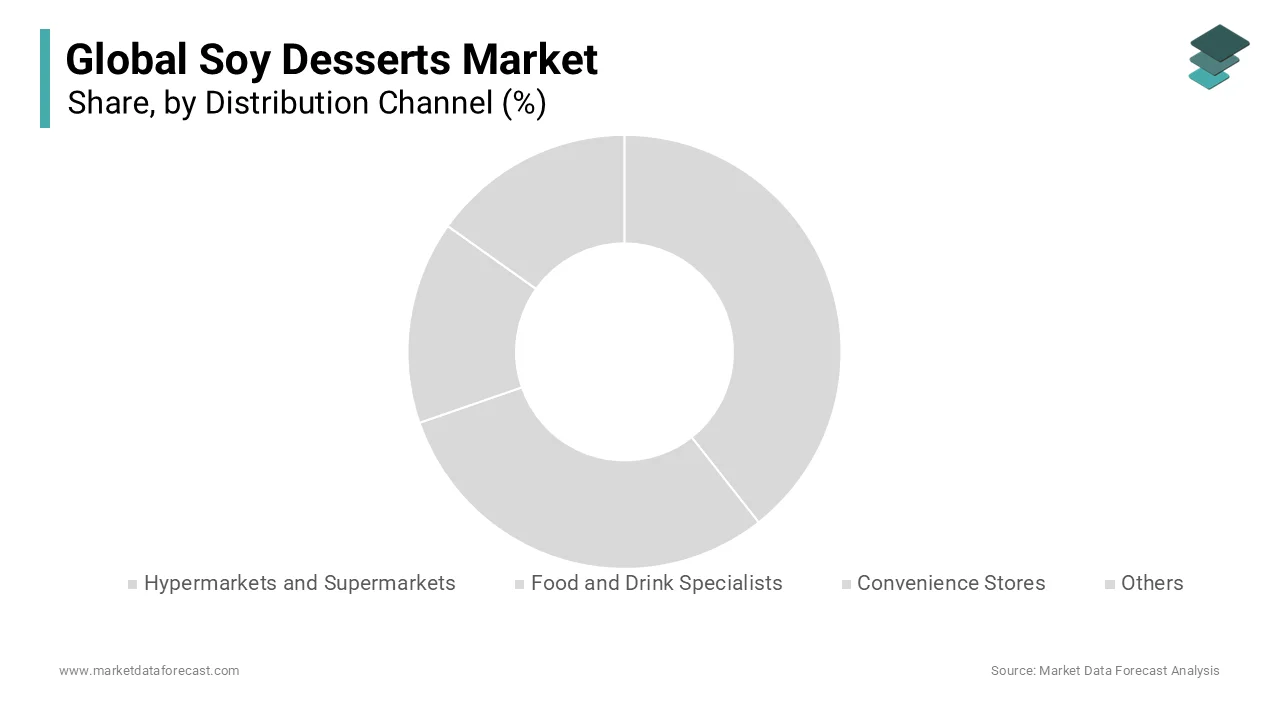
On the other hand, the food and drink specialists segment is swiftly expanding in the North America soy desserts market due to increasing consumer preference for curated and premium product selections. This segment includes specialty health food stores, organic markets, and dedicated vegan shops that cater to niche demographics seeking high-quality and ethically sourced items. The rapid expansion of this channel is fueled by the rising number of health-focused consumers who prioritize expertise and personalized service when purchasing dietary-specific products. According to the Specialty Food Association, total domestic retail and foodservice sales of specialty food items reached 175 billion dollars in 2021, boosting corporate expansion rates faster than conventional grocery segments. These specialized stores often provide detailed product information and staff recommendations, which help educate consumers about the benefits of soy desserts and address concerns regarding taste or ingredients. The exclusivity of certain premium soy dessert brands available only through specialty channels creates a sense of scarcity and desirability among affluent shoppers. Furthermore, these retailers frequently collaborate with local producers to offer fresh and minimally processed options that appeal to clean label advocates. The growth is also supported by the proliferation of boutique vegan bakeries and dessert cafes that serve as both retail outlets and experiential dining destinations. Social media influence plays a crucial role as influencers often highlight unique finds from specialty stores, driving foot traffic and online engagement. The ability of food and drink specialists to quickly adapt to emerging trends such as keto-friendly or protein-enriched soy desserts allows them to capture early adopters and trendsetters. This agility combined with a loyal customer base that values quality over price ensures sustained high growth rates for this distribution channel in the coming years.
COUNTRY LEVEL ANALYSIS
The United States dominated the North America soy desserts market and accounted for the largest share in 2025. This dominance of the US market was driven by its vast population size and advanced retail infrastructure. The market status in this country is characterized by high consumer awareness regarding plant-based diets and widespread availability of soy products across diverse retail channels. A primary driver of this growth is the significant prevalence of lactose intolerance and dairy allergies, which compels millions of Americans to seek alternative dessert options. According to the National Institutes of Health, approximately 30 million American adults develop some level of lactose intolerance by age 20, driving sustained domestic consumer demand for non-dairy culinary alternatives. The strong presence of major food manufacturers who invest heavily in research and development to improve the taste and texture of soy desserts further accelerates market growth. These companies leverage extensive distribution networks to ensure their products are accessible in every corner of the country from urban centers to rural areas. The cultural acceptance of soy as a staple ingredient in American diets facilitated by decades of marketing and educational campaigns has reduced stigma and increased adoption. Government initiatives promoting healthy eating habits and the inclusion of plant-based proteins in dietary guidelines also support market expansion. The vibrant food service sector, including restaurants and cafes that offer soy-based desserts on their menus, contributes significantly to overall consumption. High disposable income levels enable consumers to purchase premium-priced organic and fortified soy desserts, enhancing market value. The continuous influx of innovative products such as soy ice cream bars and frozen yogurts keeps the category fresh and appealing to younger demographics. Strategic partnerships between brands and fitness influencers help promote soy desserts as healthy post-workout snacks, broadening their appeal beyond traditional dessert occasions.
Canada is rapidly growing in the North America soy desserts market owing to a strong regulatory framework supporting health claims and sustainable food practices. The market status in this region is influenced by a highly educated consumer base that actively seeks transparent and ethically produced food items. A key factor of growth in Canada is the government's emphasis on environmental sustainability and reduction of greenhouse gas emissions, which aligns with the lower ecological footprint of soy production compared to dairy farming. As per Statistics Canada, domestic seeded area for soybeans increased 1.9% to reach 5.9 million acres in 2026, boosting downstream raw material supply capacities for agricultural food processors. Canadian consumers are increasingly adopting flexitarian diets driven by health consciousness and ethical considerations regarding animal welfare. The prevalence of private label soy desserts in major grocery chains such as Loblaws and Sobeys provides affordable options that broaden market accessibility. The cold climate in many parts of Canada fosters a culture of indoor dining and comfort food consumption where warm and frozen desserts play a central role. Retailers actively promote local and organic soy products, appealing to national pride and support for domestic farmers. The multicultural demographic composition of Canada introduces diverse culinary traditions that incorporate soy in various forms, facilitating easier acceptance of soy-based desserts. Health Canada’s strict labeling requirements ensure that consumers receive accurate nutritional information, building trust in plant-based products. Collaborative efforts between industry stakeholders and health organizations to educate the public about the benefits of soy protein further drive adoption. The growing trend of urbanization leads to busier lifestyles where convenient ready-to-eat soy desserts offer a quick and healthy indulgence option for working professionals and families alike.
COMPETITIVE LANDSCAPE
The competition in the North America soy desserts market is characterized by intense rivalry among established brands and emerging niche players striving for consumer attention. Large multinational corporations leverage their extensive distribution networks and marketing budgets to dominate shelf space in major retail outlets. Meanwhile smaller artisanal brands differentiate themselves through unique flavor profiles organic certifications and local sourcing initiatives. The entry of alternative plant based options such as almond oat and coconut desserts further fragments the market forcing soy manufacturers to continuously innovate. Price wars occasionally erupt during promotional periods impacting profit margins for all participants. Brand loyalty remains fluid as consumers frequently experiment with new products driven by curiosity and health trends. Regulatory compliance regarding labeling and health claims adds complexity to competitive strategies requiring careful navigation. Intellectual property protection for proprietary formulations becomes crucial for maintaining unique selling propositions. Supply chain efficiency determines the ability to meet demand fluctuations and manage costs effectively. Digital marketing prowess influences brand perception and engagement levels among younger demographics. The competitive landscape demands agility in responding to shifting consumer preferences and technological advancements. Companies must balance cost management with quality assurance to retain market relevance. Strategic alliances and mergers may occur as firms seek to consolidate resources and expand capabilities. This dynamic environment ensures constant evolution and improvement in product offerings benefiting consumers through greater choice and enhanced quality standards across the region.
KEY MARKET PLAYERS
Some of the key players in the global soy desserts market are
- Hershey Company
- Whitewave Services Inc
- Silk
- Danone Group
- Nasoya
- Dean Foods Co
- So Delicious Dairy Free
- So Delicious
- Turtle Mountain
Top Players in the Market
- Silk remains a pioneering force in the North America soy desserts market by leveraging its strong brand recognition and extensive distribution network. The company focuses on delivering high quality plant based frozen desserts that appeal to both vegan consumers and those seeking dairy alternatives. Silk recently expanded its product portfolio to include innovative flavors and formats such as ice cream bars and single serve cups. These launches aim to capture impulse buyers and enhance convenience for on the go consumption. The brand actively engages in marketing campaigns that highlight the environmental benefits of choosing soy over dairy. Silk also invests in sustainable packaging solutions to align with consumer preferences for eco friendly products. By maintaining consistent quality and taste profiles the company strengthens customer loyalty. Strategic partnerships with major retailers ensure wide availability across supermarkets and health food stores. Silk continues to innovate in texture enhancement technologies to address sensory concerns. This commitment to product excellence and sustainability solidifies its position as a key contributor to market growth and consumer acceptance of soy based indulgences in the region.
- So Delicious Dairy Free has established itself as a premium player by offering a diverse range of coconut and soy based frozen desserts that cater to discerning palates. The brand emphasizes clean label ingredients and organic certification which resonates with health conscious shoppers. So Delicious recently introduced new limited edition flavors to create buzz and encourage trial among existing and new customers. The company actively participates in community events and sponsorships to build brand affinity and trust. It focuses on transparent sourcing practices ensuring that soybeans are non genetically modified and sustainably grown. So Delicious leverages social media platforms to engage with consumers and share recipes using their products. The brand collaborates with influencers who advocate for plant based lifestyles to reach wider audiences. By prioritizing taste and texture the company addresses common barriers to adoption. Its presence in specialty stores and mainstream supermarkets enhances accessibility. So Delicious continues to refine its formulations to improve creaminess and reduce beany aftertastes. These efforts contribute significantly to the expansion of the soy dessert category by setting high standards for quality and ethical production in the North American market.
- Nasoya specializes in traditional and authentic soy based desserts including tofu puddings and frozen treats that appeal to consumers seeking familiar Asian flavors. The company leverages its expertise in soy processing to create products with superior texture and nutritional value. Nasoya recently expanded its distribution channels to include online platforms and ethnic grocery stores reaching niche demographics effectively. The brand focuses on educating consumers about the health benefits of soy through informative packaging and digital content. Nasoya introduces innovative flavor combinations that blend traditional ingredients with modern tastes attracting younger generations. The company maintains strict quality control measures to ensure consistency and safety in every batch. By targeting specific cultural communities Nasoya builds a loyal customer base that values authenticity. It also explores partnerships with restaurants and cafes to feature its desserts on menus. Nasoya invests in research to develop low sugar and high protein variants catering to dietary restrictions. This strategic focus on niche markets and product differentiation allows Nasoya to carve out a distinct position in the competitive landscape. Its contributions help diversify the soy dessert offerings available in North America and promote cultural culinary integration.
Top Strategies Used by the Key Market Participants
Key players in the North America soy desserts market primarily employ product innovation and flavor diversification to attract broader consumer bases. Companies invest heavily in research and development to improve texture and mask beany aftertastes ensuring sensory parity with dairy desserts. Strategic partnerships with retailers and food service providers enhance visibility and accessibility across multiple channels. Brands focus on clean label formulations and organic certifications to appeal to health conscious shoppers seeking transparency. Marketing campaigns emphasize environmental sustainability and ethical sourcing to resonate with eco friendly consumers. Expansion into e commerce platforms allows direct engagement with customers and personalized shopping experiences. Limited edition releases and seasonal flavors create urgency and drive trial purchases among curious buyers. Collaborations with influencers and nutritionists help educate the public about the benefits of soy protein. Companies also pursue vertical integration by securing reliable supplies of non genetically modified soybeans to ensure quality consistency. Pricing strategies include premium positioning for organic variants and competitive pricing for standard lines to capture different income segments. These multifaceted approaches enable market participants to strengthen their brand equity and maintain competitive advantage in a rapidly evolving landscape.
MARKET SEGMENTATION
This research report on the global soy desserts market has been segmented and sub-segmented based on distribution channel, and region
By Distribution Channel
- Hypermarkets and Supermarkets
- Food and Drink Specialists
- Convenience Stores
- Others
By Region
- North America
- Europe
- The Asia Pacific
- Latin America
- The Middle East and Africa