Global Sports Tourism Market Size, Share, Trends & Growth Forecast Report By Type (Domestic, International) By Product (Football/Soccer, Cricket, Motorsport, Tennis, Others) By Application (Passive Sports Tourism, Active Sports Tourism, Others) and and Region (North America, Europe, Asia-Pacific, Latin America, Middle East and Africa), Industry Analysis From 2026 to 2034.
Market Size, 2025
$2537 MnMarket Estimate, 2026
$2735 MnMarket Forecast, 2034
$4988 MnCAGR, 2026–2034
7.8%Sports Tourism Market Size
The size of the global sports tourism market was worth USD 2,537 million in 2025. The global market is anticipated to grow at a CAGR of 7.8% from 2026 to 2034 and be worth USD 4,988 million by 2034 from USD 2,735 million in 2026.

Sports tourism is the intersection of athletic participation and spectator engagement with travel, encompassing journeys undertaken to watch competitions or actively participate in recreational and professional sporting events. This market has evolved into a fundamental axis of the global travel economy, generating around 10% of the total world expenditure on tourism, as per UN Tourism. The sheer volume of movement within this niche is staggering, with spectator sports traveler volume reaching 109.7 million in 2024, according to sources. Furthermore, the economic footprint extends deeply into host communities, exemplified by the United States, where spectator sports tourism generated 47.1 billion dollars in direct spending during 2024, as per research. The integration of athletics into vacation planning is also highly prevalent among leisure travelers, with more than 30% of global tourists participating in some form of sporting activity during their trips in 2023, according to studies. The impact of marquee events further catalyzes destination visibility, as seen when Madrid generated 165 million euros from sports tourism in 2024, with flagship tournaments increasing local tourist spending by 35%, according to municipal economic assessments. This dynamic interplay between physical culture and geographic mobility establishes sports tourism not merely as a niche interest but as a primary engine for destination development, cultural exchange, and sustained economic vitality across international borders.
MARKET DRIVERS
Mega Sporting Events and Global Broadcast Reach
The escalating frequency and global broadcast reach of mega sporting events are key factors for surging international travel demand, which fuels the growth of the sports tourism market. Nations and cities increasingly leverage prestigious athletic competitions to reposition themselves on the global stage, transforming temporary spectacles into long-term tourism assets. The strategic bidding for tournaments like the Olympic Games or the FIFA World Cup creates an immediate surge in global interest, compelling fans to traverse continents to witness history. According to sources, mega sports events increase inbound tourism by 4% on average, demonstrating their undeniable pull factor for international visitors. This phenomenon extends beyond the event dates, as the enhanced infrastructure and improved global perception continue to attract leisure travelers for years. For instance, the strategic utilization of athletics as an engine for tourism allowed Qatar to record a record 4 million tourist arrivals in 2023, as per national tourism statistics. The emotional connection fans share with their favorite teams and athletes translates directly into ticket sales, hotel bookings, and ancillary spending. Consequently, destination marketing organizations heavily invest in securing these events, knowing that the concentrated media exposure and the physical presence of huge volumes of devoted supporters provide an unparalleled return on investment for the local hospitality and retail sectors, ultimately securing sustained economic growth.
Wellness and Fitness-Driven Travel
A global shift towards personal wellness and fitness has fundamentally altered vacation preferences, which further contributes to the expansion of the sports tourism market. This change drives vast numbers of people to seek active physical engagement during their travels. Modern travelers are increasingly rejecting sedentary holidays in favor of immersive physical experiences, ranging from amateur marathon running to alpine skiing and cycling tours. This behavioral shift is propelled by a growing societal emphasis on health, longevity, and mental well-being, prompting individuals to integrate their fitness routines directly into their leisure time. As per studies, more than 30% of global tourists participated in some form of sporting activity during their trips in 2023, illustrating the massive scale of this active travel movement. Destinations are rapidly adapting to this demand by developing specialized infrastructure, such as dedicated mountain biking trails, open water swimming venues, and extensive hiking networks, to attract this lucrative demographic. The appeal of combining physical achievement with scenic exploration creates a highly motivated traveler who often stays longer and spends more on specialized equipment, coaching, and premium nutritional services. Furthermore, the proliferation of social media encourages participants to share their athletic accomplishments globally, organically marketing the destination to a vast network of health-conscious peers. This organic promotion, combined with the high disposable income typically associated with active tourists, makes wellness and sports participation an incredibly powerful driver for continuous destination visitation and revenue generation.
MARKET RESTRAINTS
High Capital Expenditure and Facility Maintenance Costs
The immense capital expenditure required to construct and maintain world-class sporting facilities frequently outweighs the immediate financial returns for host municipalities, and thus impedes the growth of the sports tourism market. Developing the necessary infrastructure to host elite athletic competitions demands unprecedented levels of public and private investment, often straining municipal budgets to their breaking points. Cities must build or extensively renovate stadiums, upgrade transportation networks, and enhance security systems to meet the rigorous standards of international governing bodies. Urban development evaluations show that mega-sports venues can rapidly deteriorate into underutilized 'white elephants' if regional lodging, transport, and event pipelines fail to sustain massive crowds post-tournament. While premier professional venues frequently command upwards of $500 million in initial capital construction or expansion costs, the ongoing annual operating and maintenance overhead typically ranges between $20 million and $40 million per stadium, stressing municipal budgets if the venue sits vacant. Many host cities are left with underutilized venues, commonly referred to as white elephants, which incur massive ongoing maintenance costs without generating sufficient revenue to cover their upkeep. This financial burden diverts critical public funds away from essential community services such as education, healthcare, and general public welfare, sparking significant local opposition. The realization that the promised economic windfalls rarely materialize to the extent projected during the bidding phase has made many regional governments highly hesitant to pursue future athletic competitions. Consequently, this escalating financial risk acts as a severe restraint, limiting the geographical expansion of elite sports tourism to only the wealthiest and most financially resilient global destinations.
Seasonality and Fluctuating Visitor Numbers
The inherent concentration of athletic events within specific calendar windows creates drastic fluctuations in visitor numbers, which in turn holds back the expansion of the sports tourism market. This destabilizes local hospitality economies. Sports tourism is heavily plagued by extreme seasonality, as the vast majority of major competitions and outdoor recreational activities are confined to narrow seasonal windows. Ski resorts rely entirely on winter snow conditions, while coastal destinations depend on summer weather for water sports and beach activities. This intense concentration of demand forces local businesses to maximize their revenue during a limited number of peak months, leaving them to struggle with severe financial deficits during the prolonged off-season periods, with occupancy rates dropping by as much as 60% during these dormant months. The inability to predict exact attendance figures due to variables like team performance, weather disruptions, or sudden global health crises further exacerbates this instability. When a local team underperforms or adverse weather cancels outdoor events, the anticipated influx of traveling fans vanishes instantly, leaving local merchants with unsold inventory and empty rooms. This unpredictable revenue stream severely restrains long-term investment in the sector, as financial institutions and entrepreneurs remain wary of committing capital to a highly volatile industry that lacks consistent, predictable demand throughout the entire calendar year, making sustainable operational planning exceptionally difficult for local stakeholders.
MARKET OPPORTUNITIES
Immersive Digital Tools and Augmented Reality
The rapid adoption of immersive digital tools and augmented reality offers a massive avenue to enhance the spectator experience and attract tech-savvy demographics, which is likely to accelerate the growth of the sports tourism market. The modern sports tourist is deeply connected and constantly seeks enhanced, interactive ways to engage with their favorite events beyond the physical stadium seats. By integrating advanced digital technologies such as augmented reality, virtual reality, and ultra high definition mobile streaming, destinations can offer layered, immersive experiences that cater to a highly lucrative demographic of tech-savvy travelers. According to digital innovation studies, the implementation of smart stadium applications that provide real-time statistics, instant replays, and interactive navigation significantly increases attendee satisfaction, driving a 25% increase in ancillary spending per user. Furthermore, the rise of esports and virtual athletic competitions opens entirely new subsectors within the industry, drawing vast numbers of digital natives to physical locations hosting these futuristic tournaments. Destinations that invest in robust digital infrastructure can capture the attention of younger, affluent travelers who are willing to pay premium prices for exclusive digital access and enhanced connectivity. This technological integration not only modernizes the traditional spectator experience but also creates vast new revenue streams through digital ticketing, virtual merchandise, and targeted location-based advertising, ensuring that the destination remains highly competitive and relevant in an increasingly digital global travel landscape.
Eco-Friendly and Sustainable Sports Tourism Products
The growing global emphasis on environmental conservation creates profound opportunities for the sports tourism market. This shift allows for the development of eco-friendly sports tourism products that attract conscientious travelers. As environmental awareness reaches unprecedented levels, a significant segment of the traveling public actively seeks vacations that minimize their ecological footprint while still providing thrilling athletic experiences. Destinations have a massive opportunity to capitalize on this shift by developing sustainable sports tourism products, such as carbon-neutral marathons, zero-waste surfing camps, and cycling tours that utilize entirely renewable energy logistics. According to surveys, modern consumers are increasingly willing to pay a premium, with 65% of travelers actively seeking verified eco-friendly experiences that actively contribute to the preservation of local natural habitats. By aligning athletic events with rigorous environmental standards, destinations can differentiate themselves in a crowded market and attract highly loyal, environmentally conscious tourists who frequently advocate for these brands within their social circles. Furthermore, integrating local conservation efforts into the sporting experience, such as beach cleanup runs or trail maintenance cycling events, adds a meaningful layer of purpose to the vacation. This strategic alignment with global sustainability goals not only protects the natural assets that make the destination attractive initially but also ensures the long-term viability of the sports tourism sector by appealing to the rapidly expanding demographic of green consumers.
MARKET CHALLENGES
International Regulations, Visa Requirements, and Security Mandates
The intricate web of international regulations, visa requirements, and stringent security mandates hampers the growth of the sports tourism market. These mandates create significant operational friction for cross-border sports tourism. Organizing and participating in international sports tourism requires navigating a highly fragmented regulatory landscape that varies drastically from jurisdiction to jurisdiction. Traveling athletes, support staff, and huge volumes of passionate fans must comply with diverse visa regulations, customs restrictions for sporting equipment, and complex tax laws, which can severely deter spontaneous or independent travel. Furthermore, the elevated threat of terrorism and large crowd vulnerabilities necessitate incredibly stringent and expensive security protocols that can feel oppressive to attendees. The logistical nightmare of coordinating international law enforcement, managing stadium access controls, and ensuring the safe transport of huge volumes of individuals across city centers places an immense strain on local authorities. When security measures become too intrusive or visa processes become overly bureaucratic, the destination quickly loses its appeal to casual sports tourists who prioritize convenience and seamless travel experiences. Overcoming this challenge requires unprecedented levels of international cooperation and streamlined diplomatic agreements to ensure that safety does not come at the absolute cost of visitor accessibility and enjoyment.
Ecological Footprint and Community Opposition
The massive ecological footprint of large-scale athletic events and the disruption caused to local residents frequently trigger intense community opposition and environmental backlash, which slows down the expansion of the sports tourism market. The sheer scale of mega sporting events and the influx of huge volumes of rowdy spectators can cause severe environmental degradation and profound social disruption to host communities. The massive generation of waste, the excessive consumption of local water resources, and the carbon emissions from international flights associated with these events directly contradict global climate goals. According to environmental impact studies, the construction of new athletic facilities often leads to the destruction of natural habitats, generating over 100000 tons of carbon emissions per mega event and sparking intense resentment among residents. This phenomenon, commonly known as over tourism, results in congested streets, inflated local housing prices, and the degradation of neighborhood tranquility, prompting severe pushback from the very communities the industry relies upon. When local citizens feel that their quality of life is being sacrificed for the entertainment of transient visitors, political pressure mounts to restrict future events and limit visitor numbers. Destinations are therefore forced into a delicate balancing act, needing to implement strict carrying capacity limits and enforce rigorous community benefit mandates to prevent social alienation. Failing to effectively mitigate these adverse social and environmental impacts threatens the social license to operate, ultimately stifling the future expansion of sports tourism in highly populated or ecologically sensitive regions.
REPORT COVERAGE
| REPORT METRIC | DETAILS |
| Market Size Available | 2025 to 2034 |
| Base Year | 2025 |
| Forecast Period | 2026 to 2034 |
| Segments Covered | By Type, Product, Application, and Region. |
| Various Analyses Covered | Global, Regional, and Country-Level Analysis, Segment-Level Analysis, Drivers, Restraints, Opportunities, Challenges; PESTLE Analysis; Porter’s Five Forces Analysis, Competitive Landscape, Analyst Overview of Investment Opportunities |
| Regions Covered | North America, Europe, APAC, Latin America, Middle East & Africa |
| Market Leaders Profiled | TUI Group, Thomas Cook Group, Adidas Group, The Emirates Group, Expedia Group, Hilton Worldwide Holdings Inc., IMG, Marriott International, Inc., Live Nation Entertainment, DHL Express, American Express Global Business Travel, Accor, Cox & Kings Ltd., and Others. |
SEGMENT ANALYSIS
By Type Insights
In 2025, the domestic segment held the majority share of 65.2% of the sports tourism market because of its inherent accessibility and lower financial barriers. One of the major drivers for this dominance is the elimination of complex international travel requirements such as visas and lengthy transit times, which encourages frequent short-duration trips. According to sources, domestic sports travelers in major economies like the United States generated over 30 billion dollars in direct spending annually as they prioritize weekend getaways to nearby stadiums and regional tournaments. This segment thrives on strong local team loyalty and community engagement, where fans regularly travel within their own borders to support regional clubs. The ease of transportation infrastructure, including high-speed rail networks and extensive highway systems, further facilitates this movement, allowing families and groups to attend multiple events throughout the year without the logistical burdens associated with cross-border travel. Consequently, the domestic sector remains the foundational pillar of the industry, providing consistent revenue streams that are less susceptible to global geopolitical disruptions or currency fluctuations.
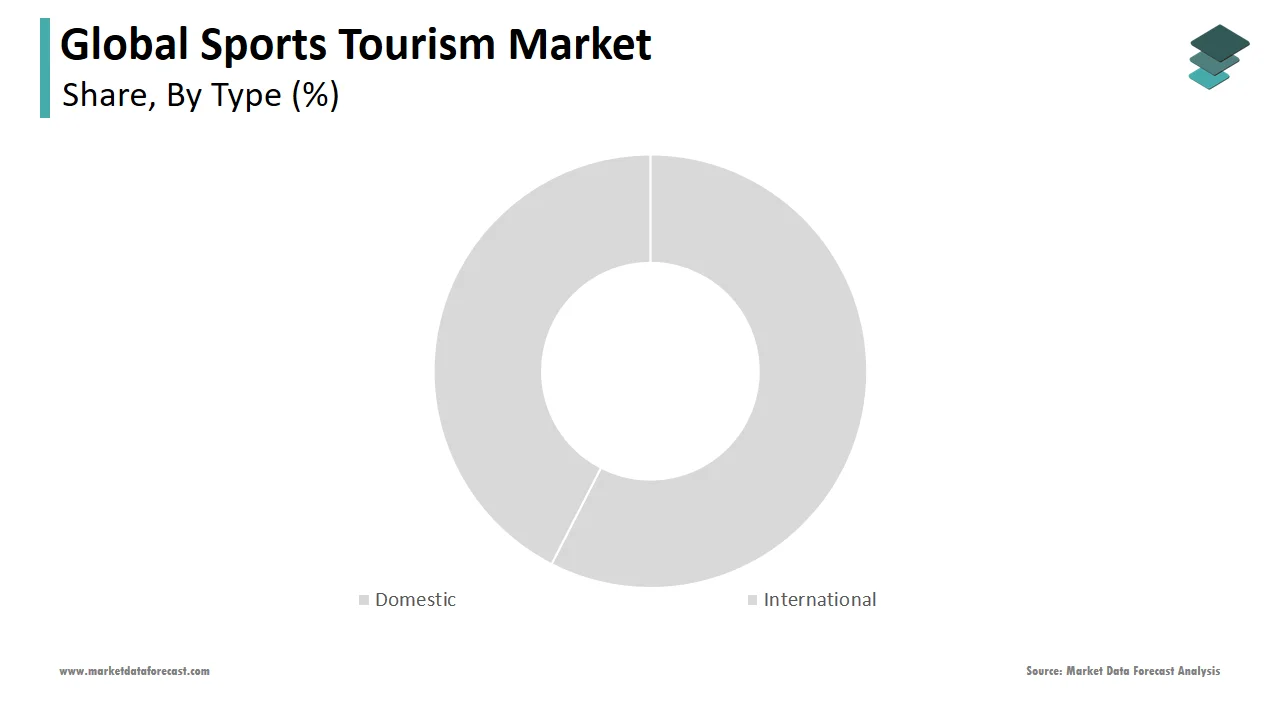
However, the international segment is anticipated to witness the fastest CAGR of 8.5% from 2026 to 2034 due to the increasing globalization of major sporting leagues and the rising disposable income in emerging markets. A key factor fueling this rapid expansion is the strategic marketing efforts by destination management organizations that bundle major athletic events with comprehensive cultural tourism packages. As per global mobility studies, international sports tourists spend nearly 40% more per trip than average leisure travelers because their journeys often involve longer stays and premium accommodation bookings. The proliferation of direct flight routes connecting major sporting hubs across continents has significantly reduced travel friction, enabling fans from Asia and the Middle East to easily access European football matches or North American basketball games. Furthermore, the emotional pull of witnessing iconic athletes compete in their home venues creates an irresistible draw for affluent global fans who view these trips as once-in-a-lifetime experiences, thereby sustaining robust year-on-year growth in cross-border athletic travel.
By Product Insights
The football soccer segment led the global sports tourism market and captured a 35.4% share in 2025. This leading position of the segment was attributed to its unparalleled global fan base and the sheer frequency of competitive matches worldwide. The top position of this segment is mainly supported by the massive commercial appeal of elite club competitions such as the UEFA Champions League and domestic leagues, which attract millions of traveling supporters annually. According to research, top-tier football matches consistently sell out stadiums with capacities exceeding 70000 seats, generating substantial ancillary revenue for host cities through hospitality and merchandise sales. The deep emotional connection fans maintain with their clubs transcends geographical boundaries, compelling them to undertake long-distance journeys to witness crucial derby matches and title deciders. Additionally, the widespread availability of affordable ticket options for lower division games ensures a steady flow of domestic and regional visitors throughout the season. This continuous cycle of high-profile international fixtures combined with regular local league play creates a resilient demand structure that sustains football as the most lucrative and widely participated product category within the sports tourism ecosystem.
On the other hand, the motorsport segment is likely to experience the fastest CAGR of 9.2% during the forecast period, owing to the recent surge in global popularity driven by media exposure and the expansion of race calendars into new territories. A significant growth enabler is the dramatic increase in viewership and fan engagement following the success of documentary series and digital content that demystifies the sport for younger audiences. As per sources, new race venues in regions such as the Middle East and North America have recorded attendance increases of over 50% in their inaugural seasons as fans flock to experience the high-octane atmosphere firsthand. The exclusive nature of motorsport events, which often combine high-speed racing with luxury hospitality experiences, attracts a wealthy demographic willing to pay premium prices for paddock access and VIP suites. Furthermore, the technological innovation showcased in these competitions appeals to engineering enthusiasts who travel specifically to observe cutting-edge automotive advancements. This blend of entertainment, luxury, and technical fascination propels motorsport tourism forward at a pace that outstrips many traditional athletic categories.
By Application Insights
The passive sports tourism segment was the largest in the global market and occupied a 60.8% share in 2025. In addition, the supremacy of this segment is fueled by the massive scale of modern stadium infrastructure, which allows hundreds of thousands of fans to congregate for single events, creating powerful economic clusters. It covers the vast majority of spectators who travel primarily to watch professional events rather than participate in them. According to event impact assessments, major sporting finals generate up to 100 million dollars in local economic activity within a single weekend as visiting spectators consume accommodation, dining, and retail services. The passive model benefits from the universal appeal of watching elite athletes perform at peak levels, which requires no physical preparation or skill from the traveler, making it accessible to all age groups and fitness levels. Additionally, the social aspect of attending live games with friends and family enhances the overall vacation experience, turning a simple match into a memorable communal celebration. This broad accessibility, combined with the high spending power of dedicated fans, ensures that passive observation remains the most voluminous and financially significant application within the sports tourism landscape.
On the contrary, the active sports tourism segment is on the rise and is expected to be the fastest-growing segment in the market by witnessing a CAGR of 7.8% between 2026 and 2034. This quick surge of the segment is propelled by the global wellness revolution and the increasing desire for immersive physical experiences during vacations. The main push behind this expansion is the rising prevalence of amateur endurance events such as marathons, triathlons, and cycling gran fondos, which encourage participants to travel to scenic destinations to challenge themselves physically. As per health and travel surveys, over 40% of active sports tourists choose their destination based on the availability of specific training facilities or natural terrains suitable for their preferred activity. This segment attracts highly motivated individuals who often extend their stays to explore local culture and engage in additional recreational activities, thereby increasing their overall expenditure. The personal achievement associated with completing a race in a foreign country creates a strong emotional bond with the destination, leading to high rates of repeat visitation. Furthermore, the integration of professional coaching camps and wellness retreats into active travel packages provides added value that appeals to health-conscious consumers seeking both physical improvement and leisure relaxation.
REGIONAL ANALYSIS
North America Sports Tourism Market Analysis
North America dominated the global sports tourism market and accounted for a 30.6% share in 2025. This dominance of the regional market was driven by its mature professional leagues and extensive domestic travel infrastructure. The region benefits from the immense popularity of major sports such as American football, basketball, and baseball, which command loyal fan bases willing to travel extensively for live games. According to data published by the Sports Events and Tourism Association (Sports ETA), spectator sports tourism in the United States generates over $47.1 billion in annual direct spending, driving a total economic footprint of more than $114 billion. This massive scale is consistently anchored by premier stadium infrastructures and extensive cross-country travel corridors. The presence of iconic venues and the tradition of college sports further amplify demand, drawing visitors from across the continent to witness historic rivalries and championship events. Additionally, the strong purchasing power of North American consumers enables higher per capita spending on premium seating and hospitality services. The region continues to invest heavily in upgrading athletic facilities and hosting international tournaments, ensuring its status as a premier destination for both domestic and inbound sports travelers seeking high-quality entertainment and seamless logistical experiences.

Europe Sports Tourism Market Analysis
Europe followed closely behind in the sports tourism market and captured a 28.2% share in 2025. This growth of the European market was supported by its rich sporting heritage and the global allure of its elite football clubs. The continent serves as a pilgrimage site for millions of fans who travel to witness matches in historic stadiums across England, Spain, Germany, and Italy. As per sources, major European cities see significant spikes in visitor numbers during key tournament periods, with fans contributing substantially to local hospitality revenues. The dense network of high-speed rail connections facilitates easy cross-border travel, allowing supporters to attend multiple matches in different countries during a single trip. Furthermore, the integration of sports with cultural tourism offers a compelling value proposition as visitors combine match attendance with museum visits and culinary experiences. The region also hosts numerous prestigious tennis, golf, and motorsport events that attract affluent international travelers. This diverse portfolio of sporting attractions, combined with efficient infrastructure, ensures Europe remains a critical hub for global sports tourism activity and sustained economic contribution.
Asia Pacific Sports Tourism Market Analysis
Asia Pacific is a rapidly growing region in the global market, owing to rising disposable incomes and increasing government investment in sporting infrastructure. Countries such as China, Japan, and Australia are actively bidding for and hosting major international events to boost their global profile and stimulate local economies. According to studies, the expansion of professional leagues in cricket, football, and basketball has created new domestic travel patterns as fans increasingly attend live matches in neighboring cities. The region also benefits from a growing middle class that prioritizes experiential travel, including active sports tourism such as skiing in Japan and marine sports in Southeast Asia. Government initiatives aimed at promoting healthy lifestyles and building world-class venues have further accelerated growth. Additionally, the successful hosting of recent Olympic Games and World Cups has demonstrated the region's capacity to manage large-scale events, attracting millions of international visitors. This momentum positions Asia Pacific as a key driver of future expansion in the global sports tourism sector.
Latin America Sports Tourism Market Analysis
Latin America grew steadily in the sports tourism market due to its passionate fan culture and dominance in football tourism. The region leverages its deep emotional connection to the sport to attract visitors from around the world who wish to experience the unique atmosphere of local derbies and international qualifiers. As per research, major tournaments in countries like Brazil and Argentina generate significant short-term economic boosts despite infrastructural challenges. The natural beauty of the region also supports active sports tourism, including hiking, surfing, and adventure racing, which appeal to niche international markets. Local governments are increasingly recognizing the potential of sports to drive regional development and are investing in improving venue safety and accessibility. While economic volatility can impact discretionary spending, the unwavering dedication of local fans ensures a baseline level of domestic travel activity. The region's unique cultural expression of sports, combined with its attractive natural landscapes, offers distinct opportunities for specialized tourism products that differentiate it from other global markets.
Middle East and Africa Sports Tourism Market Analysis
The Middle East and Africa region is witnessing transformative growth in the global market, owing to strategic state-led investments in mega sporting events. Nations in the Gulf region, particularly Qatar and Saudi Arabia, are aggressively positioning themselves as global sports hubs by hosting high-profile tournaments and acquiring international clubs. According to national vision documents, these investments aim to diversify economies beyond oil and create sustainable tourism industries anchored by athletics. The construction of state-of-the-art facilities and the introduction of visa reforms have significantly improved accessibility for international fans. In Africa, the passion for football and the emergence of new marathon events in countries like Kenya and South Africa contribute to steady regional growth. Although infrastructure gaps remain in some areas, the commitment to hosting world-class events is rapidly changing the perception of the region. This strategic focus on sports as a tool for soft power and economic diversification ensures that the Middle East and Africa will play an increasingly prominent role in the future of global sports tourism.
COMPETITIVE LANDSCAPE
The competition in the sports tourism market is intensely fragmented yet dominated by a few multinational entities that control critical infrastructure and intellectual property. Major players compete fiercely for exclusive broadcasting rights and hosting agreements, which serve as primary differentiators. The barrier to entry remains high due to the substantial capital required for venue development and event organization. However, niche operators are gaining traction by offering specialized active travel experiences that cater to specific athletic interests. Competitive advantage is increasingly derived from digital innovation and data analytics, which enable precise targeting of high-value travelers. Strategic alliances between hospitality providers and event organizers are becoming essential to deliver comprehensive packages. The market dynamics are further influenced by government policies and infrastructure investments, which can rapidly alter destination attractiveness. Overall, the landscape is characterized by continuous adaptation to changing consumer preferences and technological advancements, requiring constant innovation to maintain relevance and profitability in this evolving sector.
KEY MARKET PLAYERS
Companies playing a prominent role in the global sports tourism market include
- TUI Group
- Thomas Cook Group
- Adidas Group
- The Emirates Group
- Expedia Group
- Hilton Worldwide Holdings Inc.
- IMG
- Marriott International, Inc.
- Live Nation Entertainment
- DHL Express
- American Express Global Business Travel
- Accor
- Cox & Kings Ltd.
TOP PLAYERS IN THE MARKET
- IMG is a global leader in sports marketing and event management that significantly influences the sports tourism landscape by organizing prestigious tournaments and securing media rights. The company actively develops proprietary events that attract international participants and spectators, thereby driving travel to host destinations. Recent strategic initiatives include expanding its portfolio of endurance sports and lifestyle festivals, which cater to the growing demand for active travel experiences. By leveraging its extensive network of athletes and brands, IMG creates compelling narratives that encourage fan migration. Their involvement in venue consulting also helps cities optimize infrastructure for maximum tourist engagement. This holistic approach ensures that IMG remains a pivotal force in shaping how sports events are packaged and delivered to global audiences, fostering sustained interest and participation.
- Live Nation Entertainment dominates the live entertainment sector and plays a crucial role in sports tourism through its management of major arenas and promotion of large-scale sporting spectacles. The company integrates music and sports to create hybrid events that draw diverse crowds from across the globe. Recent expansions into international markets have allowed Live Nation to bring world-class production values to emerging destinations, enhancing their appeal to tourists. By controlling key venues and ticketing platforms, the company ensures seamless experiences for traveling fans. Their data-driven marketing strategies effectively target potential visitors based on past behavior and preferences. This capability enables Live Nation to maximize attendance and spending at every event, solidifying its position as a key enabler of high-volume sports tourism flows and destination visibility.
- Accor is a leading hospitality group that strategically aligns its hotel brands with major sporting events to capture the influx of traveling fans and athletes. The company partners with international federations to provide official accommodation solutions, ensuring high occupancy rates during peak tournament periods. Recent initiatives include launching specialized sports-themed packages and training facilities within their properties to attract active tourists. Accor leverages its global footprint to offer consistent service standards across different host cities which builds trust among international travelers. By integrating loyalty programs with event ticketing, the company encourages repeat visits and longer stays. This synergy between hospitality and sports allows Accor to monetize the tourism spike effectively while supporting the operational needs of large-scale athletic competitions worldwide.
TOP STRATEGIES USED BY KEY MARKET PARTICIPANTS
Key players in the sports tourism market predominantly employ strategic partnerships with international federations to secure exclusive rights and enhance brand visibility. They actively invest in digital platforms to streamline ticketing and improve the fan experience through personalized content. Companies frequently pursue mergers and acquisitions to expand their geographic reach and diversify their event portfolios. Developing integrated hospitality packages that combine accommodation, transport, and event access is another common tactic to increase per customer revenue. Additionally, firms are focusing on sustainability initiatives to align with global environmental standards and attract conscientious travelers. These strategies collectively aim to create seamless high-value experiences that drive loyalty and sustain long-term growth in a competitive global landscape.
MARKET SEGMENTATION
This research report on the global sports tourism market has been segmented and sub-segmented based on type, product, application and region.
By Type
- Domestic
- International
By Product
- Football/Soccer
- Cricket
- Motorsport
- Tennis
- Others
By Application:
- Passive Sports Tourism
- Active Sports Tourism
- Others
By Region
- North America
- Europe
- Asia Pacific
- Latin America
- Middle East & Africa
Frequently Asked Questions
What is the global sports tourism market?
The global sports tourism market is the worldwide sector combining travel with sporting activities including event attendance, active participation, and spectator experiences, accounting for significant tourism revenue and driving economic growth through international sporting events globally.
How does the global sports tourism market work?
In the global sports tourism market, travelers visit destinations for sporting events, participate in active sports activities, attend competitions as spectators, book travel packages through tourism operators, and destinations leverage sports infrastructure to attract international sports tourists.
What types exist in the global sports tourism market?
The global sports tourism market includes event-based sports tourism for mega-events like Olympics and World Cup, active sports tourism with participation in activities, passive sports tourism as spectators, training camps, adventure sports travel, and tournament tourism serving diverse sporting travel preferences.
Who uses the global sports tourism market?
The global sports tourism market serves sports fans traveling to events, active participants in sports activities, families seeking sporting experiences, international tourists attending competitions, athletes participating in tournaments, corporate groups for sports events, and destinations marketing sports infrastructure to visitors.
What drives the global sports tourism market?
The global sports tourism market grows due to international sporting events like Olympics and World Cup, rising fan engagement, improved travel infrastructure, supportive government policies, growing sports participation, economic development through tourism, and destinations leveraging sports for economic impact globally.
Who operates in the global sports tourism market?
Major players in the global sports tourism market include international event organizers, tourism operators, destination marketing organizations, sports federations, travel agencies, hotels near sporting venues, airlines offering sports travel packages, and local businesses supporting sports tourists at destinations worldwide.
Is the global sports tourism market regulated?
The global sports tourism market operates under tourism regulations, event management requirements, travel safety standards, visa and entry regulations, accommodation licensing, transportation compliance, and destination-specific policies ensuring safe organized sports tourism experiences for international visitors.
What technologies are used in the global sports tourism market?
Technologies in the global sports tourism market include digital booking platforms, event ticketing systems, travel management apps, sports streaming services, virtual reality experiences, social media marketing, mobile payment systems, and data analytics for destination planning serving sports tourists globally.
What are the benefits of the global sports tourism market?
The global sports tourism market offers benefits including economic growth for destinations, infrastructure development, cultural exchange through international events, community engagement, job creation in tourism sector, increased sports participation, revenue generation, and enhanced destination branding through sporting events globally.
What are the challenges of the global sports tourism market?
The global sports tourism market faces challenges including infrastructure investment requirements, event management complexity, sustainability concerns, security risks at major events, seasonal dependency, competition between destinations, accessibility for international travelers, and balancing tourism growth with local community needs.
Access the study in MULTIPLE FORMATS
Purchase options starting from
$ 2500
Didn’t find what you’re looking for?
TALK TO OUR ANALYST TEAM
Need something within your budget?
NO WORRIES! WE GOT YOU COVERED!
Call us on: +1 888 702 9696 (U.S Toll Free)
Write to us: sales@marketdataforecast.com