- Product Description Description
- Table of Contents TOC
- List of Table & Figure LOT
- Get Free Sample PDF Sample PDF
Market Size, 2025
$47.43 MnMarket Estimate, 2026
$49.27 MnMarket Forecast, 2034
$66.76 MnCAGR, 2026–2034
3.87%Global Sugarcane Wax Market Report Summary
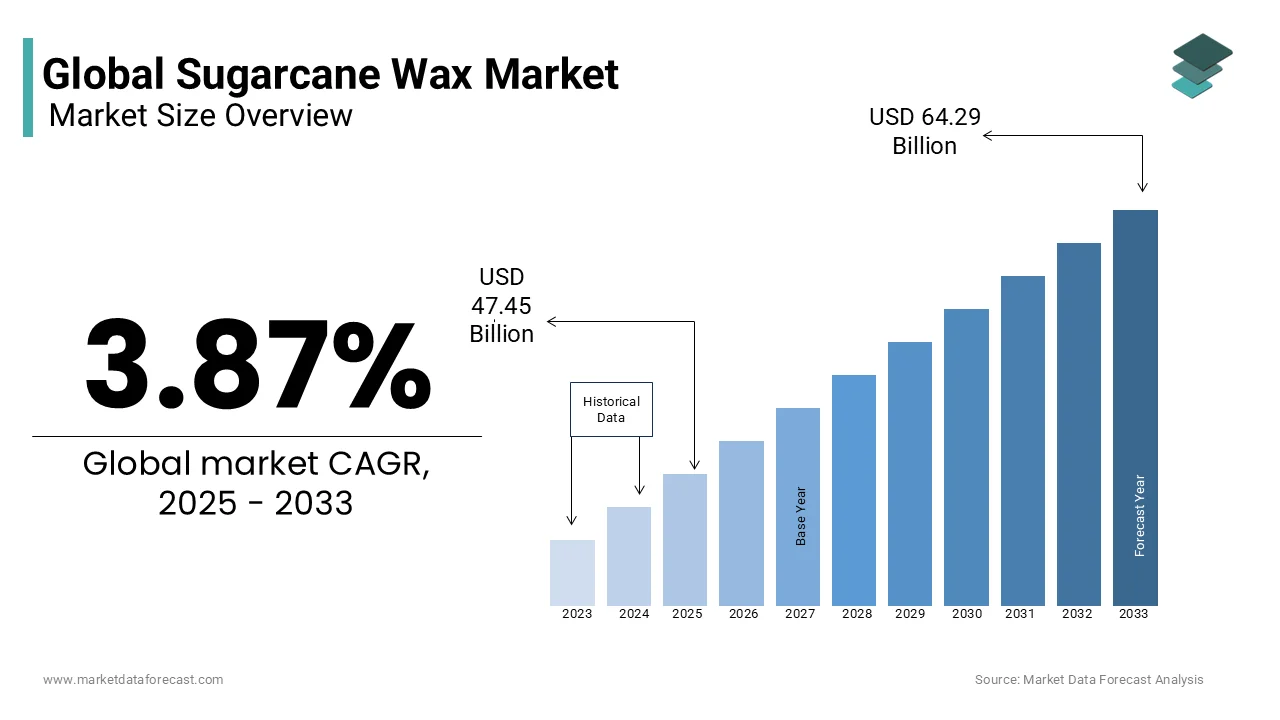
The global sugarcane wax market was valued at USD 47.43 million in 2025, is estimated to reach USD 49.27 million in 2026, and is projected to reach USD 66.76 million by 2034, growing at a CAGR of 3.87% during the forecast period. Market growth is driven by increasing demand for natural and bio based waxes, rising adoption in cosmetics and personal care products, and growing preference for sustainable ingredients. Sugarcane wax is widely valued for its emollient properties, biodegradability, and renewable origin. The expansion of clean label and eco friendly product trends is further supporting steady market growth globally.
Key Market Trends
- Rising demand for natural and sustainable wax products is driving market growth.
- Increasing use of bio based ingredients in cosmetics is boosting demand.
- Growing preference for eco friendly and biodegradable materials is supporting market expansion.
- Expansion of personal care and specialty applications is enhancing product adoption.
- Innovation in natural ingredient formulations is influencing market development.
Segmental Insights
- Based on application, the cosmetics segment accounted for 32.4% of the global sugarcane wax market share in 2025. This dominance is attributed to rising use of natural waxes in skincare, haircare, and beauty formulations.
Regional Insights
- The global sugarcane wax market is experiencing steady growth across regions, supported by increasing sugarcane production and demand for sustainable materials.
- Latin America was the leading contributor, accounting for 18.5% of the global sugarcane wax market share in 2025, driven by its strong sugarcane cultivation base and large scale agricultural production.
Competitive Landscape
The global sugarcane wax market is moderately competitive, with key players focusing on sustainable sourcing, product quality, and expansion of industrial applications to strengthen their market position. Companies are investing in natural ingredient development and specialty wax formulations. Prominent players in the global sugarcane wax market include Cerax, Origen Chemicals, Huzhou Shengtao Biotech LLC, and Godavari Biorefineries.
Global Sugarcane Wax Market Size
The global sugarcane wax market size was valued at USD 47.43 billion in 2025, and the market size is estimated to reach USD 49.27 million in 2026, and USD 66.76 million by the end of 2034. The market is growing at a CAGR of 3.87% during the forecast period from 2026 to 2034
Sugarcane wax is a natural, plant-based wax obtained as a byproduct of the sugar production industry. This byproduct is purified to yield a high melting point wax rich in long chain aliphatic compounds including esters fatty acids and alcohols. The material serves as a sustainable alternative to synthetic waxes and animal derived counterparts such as beeswax and carnauba wax in various industrial applications. As per the Food and Agriculture Organization of the United Nations global sugarcane production exceeded 1.9 billion tons in recent years providing a vast and renewable raw material base for wax extraction. The industry operates within the broader bio based chemicals sector emphasizing circular economy principles by valorizing agricultural waste. Regulatory frameworks in major economies encourage the use of biodegradable and non toxic ingredients in cosmetics food packaging and pharmaceuticals. The European Union regulations on single use plastics have accelerated the adoption of natural coatings for paper and cardboard. Sugarcane wax is valued for its excellent water resistance gloss enhancement and emulsifying properties. It is increasingly utilized in personal care products for its hypoallergenic nature and in polishes for its durability. The market is characterized by a shift towards green chemistry solutions driven by consumer awareness and corporate sustainability goals. Extraction technologies have improved to enhance yield and purity making sugarcane wax commercially viable for high performance applications. The integration of this wax into supply chains reflects a broader commitment to reducing environmental footprints.
MARKET DRIVERS
Stringent Regulations Against Synthetic And Animal Derived Waxes
The implementation of stringent regulatory frameworks prohibiting or restricting the use of synthetic and animal derived waxes is a primary driver for the sugarcane wax market. Governments worldwide are enforcing bans on microplastics and promoting bio based alternatives to reduce environmental pollution. As per the European Chemicals Agency the restriction of intentionally added microplastics under the REACH regulation has compelled manufacturers in the cosmetics and detergent industries to seek natural substitutes. Sugarcane wax offers a compliant solution due to its biodegradability and non toxic profile. Additionally the rise in veganism and ethical consumerism has reduced the demand for beeswax and lanolin which are animal derived. The Vegan Society reports a significant increase in certified vegan products globally prompting formulators to replace animal ingredients with plant based options. Sugarcane wax provides similar functional properties to beeswax such as emulsification and thickening without ethical concerns. Regulatory bodies in North America and Asia are also updating guidelines to favor renewable resources in packaging materials. The Food and Drug Administration in the United States recognizes sugarcane wax as safe for indirect food contact applications. These regulatory pressures create a mandatory shift towards sustainable waxes. Companies must adapt their formulations to meet compliance standards driving the adoption of sugarcane wax. The legal imperative combined with ethical considerations ensures sustained demand. This driver establishes sugarcane wax as a critical component in compliant product development.
Growing Demand for Bio Based Coatings In Packaging Industry
The escalating demand for bio-based coatings in the packaging industry greatly propels the growth of the sugarcane wax market. Consumers and retailers are increasingly rejecting plastic coated paper and cardboard in favor of recyclable and compostable alternatives. As per the Ellen MacArthur Foundation the global commitment to eliminate problematic plastic packaging has led major corporations to adopt fiber based solutions with natural barriers. Sugarcane wax is an ideal coating agent for paper and board due to its superior water vapor barrier properties and heat sealability. It enhances the grease resistance of packaging materials used for fast food and fresh produce. The ability of sugarcane wax to maintain the recyclability of paper fibers is a key advantage over polyethylene coatings. Major retail chains are setting ambitious sustainability targets requiring suppliers to use compostable packaging. The expansion of e commerce has further increased the need for durable yet eco friendly packaging materials. Sugarcane wax provides the necessary protection against moisture and abrasion during transit. Its application in corrugated boxes and shopping bags aligns with circular economy principles. The cost effectiveness of using a byproduct from the sugar industry makes it an attractive option for large scale packaging operations. This driver fosters innovation in coating technologies. The shift towards sustainable packaging ensures that sugarcane wax remains a preferred choice for manufacturers seeking to reduce their environmental impact.
MARKET RESTRAINTS
High Production Costs Compared To Petroleum Based Alternatives
The high production costs associated with sugarcane wax are a significant restraint on its widespread adoption compared to petroleum based alternatives, which negatively impacts the growth of the Sugarcane wax market. The extraction and purification process involves multiple steps including solvent extraction filtration and bleaching which require substantial energy and chemical inputs. As per the International Sugar Organization the cost of producing refined sugarcane wax is significantly higher than that of paraffin wax which is a byproduct of crude oil refining. Paraffin wax benefits from established infrastructure and economies of scale making it considerably cheaper for industrial applications. Manufacturers operating on thin margins often hesitate to switch to more expensive bio based options unless mandated by regulations or consumer preference. The volatility in sugar prices also impacts the cost structure of sugarcane wax production. Fluctuations in raw material availability can lead to price instability affecting long term contracts. Small and medium sized enterprises find it challenging to absorb the higher costs of bio based ingredients. The lack of standardized pricing mechanisms for sugarcane wax further complicates procurement decisions. While the environmental benefits are clear the economic disparity remains a barrier. Companies must justify the premium price through marketing and brand positioning. This financial constraint limits the penetration of sugarcane wax in price sensitive segments. Until production efficiencies improve or subsidies are introduced the cost disadvantage will persist. This restraint slows down the transition from conventional waxes.
Limited Awareness and Technical Expertise Among Formulators
Formulators have limited awareness and technical expertise regarding the specific properties and handling of sugarcane wax. Consequently, this restrains the sugarcane wax market growth. Many industrial chemists and product developers are accustomed to working with synthetic waxes and may lack knowledge about the unique characteristics of sugarcane wax. As per surveys a significant portion of formulators cite compatibility issues and processing difficulties as barriers to adopting new bio based ingredients. Sugarcane wax has a different melting point and viscosity profile compared to traditional waxes requiring adjustments in formulation parameters. The lack of comprehensive technical data and application guides hinders rapid adoption. Manufacturers often face trial and error phases when integrating sugarcane wax into existing processes leading to increased development time and costs. Educational gaps in the supply chain mean that potential buyers are unaware of the performance benefits such as improved gloss and stability. The absence of standardized testing protocols for bio based waxes creates uncertainty regarding quality consistency. Suppliers must invest heavily in technical support and customer education to overcome these hurdles. The slow pace of knowledge dissemination delays market penetration. Without adequate training and resources formulators prefer familiar and predictable ingredients. This knowledge gap restricts the expansion of sugarcane wax into new applications. Bridging this informational divide is essential for broader acceptance.
MARKET OPPORTUNITIES
Expansion In Personal Care and Cosmetics Sector
The expansion of sugarcane wax in the personal care and cosmetics sector provides a lucrative opportunity for the sugarcane wax market. This is driven by the clean beauty movement. Consumers are increasingly scrutinizing ingredient lists and demanding natural sustainably sourced components in skincare and makeup products. As per the Personal Care Products Council the demand for natural and organic personal care products has grown steadily with consumers willing to pay a premium for transparent sourcing. Sugarcane wax serves as an excellent emulsifier and stabilizer in lotions creams and lipsticks offering a vegan alternative to beeswax. Its hypoallergenic properties make it suitable for sensitive skin formulations. Brands are leveraging the story of upcycled agricultural waste to enhance their sustainability credentials. The versatility of sugarcane wax allows it to be used in hair care products for shine and hold. Innovations in micro encapsulation technology enable the incorporation of sugarcane wax into advanced delivery systems. Collaborations between wax producers and cosmetic manufacturers facilitate the development of customized grades for specific applications. The trend towards waterless beauty products also favors the use of solid waxes as base ingredients. Marketing campaigns highlighting the eco friendly nature of sugarcane wax resonate with environmentally conscious buyers. This opportunity allows producers to capture value in high margin segments. The alignment with beauty trends ensures long term growth potential.
Development Of Advanced Bio Composite Materials
The development of advanced bio composite materials incorporating sugarcane wax unlocks potential for innovation in industrial applications, which is anticipated to fuel the expansion of the sugarcane wax market. Researchers and manufacturers are exploring the use of natural waxes as compatibilizers and processing aids in bioplastics and wood plastic composites. As per the European Bioplastics Association the production capacity for bioplastics is expected to increase substantially driven by regulatory support and consumer demand. Sugarcane wax improves the flow properties and surface finish of bio based polymers reducing brittleness and enhancing durability. Its application in 3D printing filaments is gaining traction due to its ability to improve layer adhesion and surface quality. The automotive and construction industries are seeking lightweight and sustainable materials to reduce carbon footprints. Sugarcane wax contributes to the development of green composites that meet performance standards while being environmentally friendly. Partnerships with research institutions accelerate the discovery of new formulations and applications. The integration of sugarcane wax into industrial materials diversifies its market beyond traditional uses. This opportunity opens doors to high volume industrial sectors. The focus on material science innovation drives the creation of value added products. The potential for patentable technologies enhances competitive advantage.
MARKET CHALLENGES
Supply Chain Volatility and Seasonal Availability
Supply chain volatility and the seasonal availability of sugarcane are major challenges to the consistent supply of sugarcane wax. This impedes the growth of the sugarcane wax market. Sugarcane harvesting is dependent on climatic conditions and agricultural cycles leading to fluctuations in raw material availability. As per the International Sugar Organization weather events such as droughts floods and pests can significantly impact sugarcane yields in major producing regions like Brazil and India. These disruptions affect the volume of filter cake available for wax extraction causing supply shortages. The geographic concentration of sugarcane production exposes the market to regional risks including political instability and trade restrictions. Transportation logistics for moving bulk raw materials from mills to processing facilities add complexity and cost. Delays in shipping and port congestion can further exacerbate supply chain bottlenecks. Manufacturers relying on just in time inventory systems face risks of production stoppages. The lack of diversified sourcing options limits the ability to mitigate these risks. Price volatility in the sugar market also influences the economic viability of wax extraction. Ensuring a stable and reliable supply requires strategic stockpiling and long term contracts. However these measures increase working capital requirements. The inherent unpredictability of agricultural supply chains challenges operational planning. This vulnerability necessitates robust risk management strategies.
Competition From Other Vegetable Waxes
Intense competition from established vegetable waxes like carnauba and candelilla challenges the expansion of the sugarcane wax market. This competition creates significant pressure in the industry. Carnauba wax known as the queen of waxes has a long history of use in various industries due to its exceptional hardness and gloss. As per research, carnauba wax dominates the high end market segment particularly in automotive polishes and confectionery glazing. Candelilla wax is another strong competitor offering similar properties at competitive prices. These alternatives have well established supply chains and customer relationships making it difficult for sugarcane wax to gain market share. Switching costs for manufacturers who have optimized their formulations for carnauba or candelilla wax are high. The performance consistency of these traditional waxes is well documented and trusted by formulators. Sugarcane wax must prove its superiority or cost effectiveness to displace incumbent materials. Marketing efforts to differentiate sugarcane wax often face skepticism from conservative buyers. The limited production capacity of sugarcane wax compared to carnauba also restricts its ability to meet large scale demand. Price wars with other vegetable waxes can erode profit margins. Overcoming this entrenched competition requires sustained investment in performance validation and customer education. The battle for shelf space and formulation slots is intense.
REPORT COVERAGE
| REPORT METRIC | DETAILS |
| Market Size Available | 2025 to 2034 |
| Base Year | 2025 |
| Forecast Period | 2026 to 2034 |
| CAGR | 3.87% |
| Segments Covered | By Application and Region. |
|
Various Analyses Covered | Global, Regional & Country Level Analysis, Segment-Level Analysis, DROC, PESTLE Analysis, Porter’s Five Forces Analysis, Competitive Landscape, Analyst Overview of Investment Opportunities |
| Regions Covered | North America, Europe, Asia Pacific, Latin America, Middle East & Africa. |
| Market Leaders Profiled | Deurex AG (Germany), Cerax (South Africa), Origen Chemicals (South Africa), Huzhou Shengtao Biotech LLC (China), Godavari Biorefineries (India), and Others |
SEGMENTAL ANALYSIS
By Application Insights
The cosmetics segment led the sugarcane wax market and captured a 32.4% share in 2025. This leading position of the segment is attributed to the extensive use of natural waxes in personal care formulations. Sugarcane wax is valued for its emulsifying thickening and stabilizing properties in products such as lipsticks creams lotions and hair care items. The cosmetics segment leads the market, propelled by consumer preference for ethical and clean beauty, specifically those free from animal-derived ingredients. Traditional waxes like beeswax are being replaced by plant based alternatives to align with ethical and dietary choices. As per The Vegan Society the number of registered vegan products globally has increased significantly with Europe and North America leading this trend. Sugarcane wax offers a cruelty free alternative with similar functional properties to beeswax making it ideal for formulators seeking to update their ingredient lists. The clean beauty movement emphasizes transparency and safety prompting brands to remove synthetic additives and potential allergens. Sugarcane wax is perceived as a safe and natural ingredient that enhances product texture and stability without compromising on ethics. Major cosmetic brands are reformulating their portfolios to meet these demands driving substantial volume growth for plant based waxes. The ability of sugarcane wax to provide gloss and structure in lip products makes it a preferred choice for premium makeup lines. Marketing campaigns highlighting the sustainable and ethical sourcing of sugarcane wax resonate with conscious consumers. This shift in consumer values ensures that the cosmetics sector remains the largest consumer of sugarcane wax. The alignment with broader lifestyle trends supports sustained demand and market leadership. Sugarcane wax dominates the cosmetics segment due to its superior functional properties which enhance the performance and stability of personal care formulations. It acts as an effective emulsifier and thickener providing desirable texture and consistency to creams and lotions. As per industry technical data sugarcane wax has a high melting point and excellent water resistance which improves the longevity and durability of cosmetic products. In lipsticks it provides structure and shine while preventing syneresis or sweating of the product. Its compatibility with various oils and active ingredients allows for versatile formulation options. Formulators appreciate the ability of sugarcane wax to stabilize emulsions and prevent separation during storage. The hypoallergenic nature of sugarcane wax makes it suitable for sensitive skin applications reducing the risk of irritation. These technical advantages enable manufacturers to create high quality products that meet consumer expectations for performance and safety. The versatility of sugarcane wax extends to hair care products where it adds shine and manageability. Its natural origin appeals to brands marketing organic and natural lines. The combination of functional efficacy and natural appeal cements its position in the cosmetics industry. Continuous innovation in extraction methods further enhances purity and performance. This technical superiority ensures that sugarcane wax remains indispensable in cosmetic manufacturing.
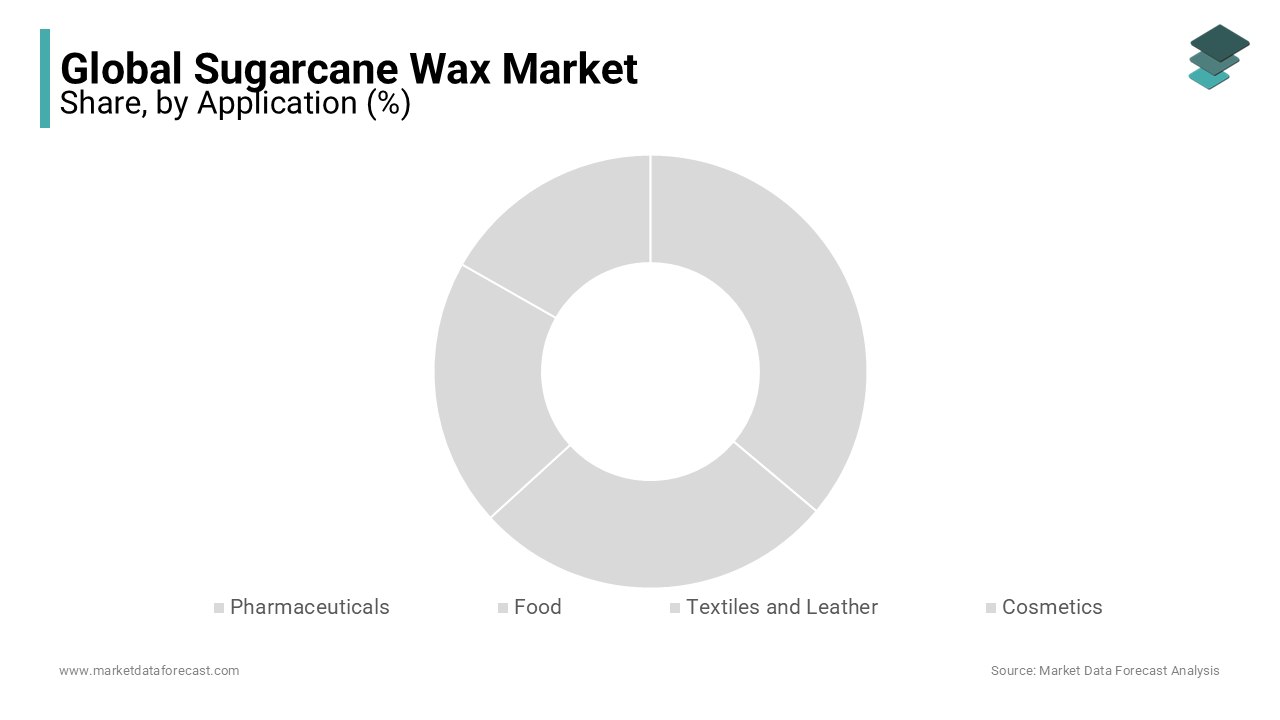
The food segment is anticipated to witness the fastest CAGR of 4.4% over the forecast period due to its application as a coating agent and glazing agent for fruits confectionery and baked goods. The compound annual growth rate for this segment is projected to be robust as regulatory approvals expand and consumer demand for natural additives rises. Rising regulatory approvals for sugarcane wax as a safe food additive are driving rapid growth in the food segment. Regulatory bodies recognize sugarcane wax as a natural and non toxic substance suitable for direct and indirect food contact. As per the Food and Drug Administration in the United States sugarcane wax is approved for use as a component of coatings for fresh fruits and vegetables. Similarly the European Food Safety Authority has evaluated its safety for use in food applications. These approvals provide manufacturers with the confidence to incorporate sugarcane wax into their formulations. The designation as a natural alternative to synthetic glazing agents such as shellac or petroleum based waxes appeals to health conscious consumers. Parents and caregivers prefer natural coatings for fruits and candies given to children. The clean label trend drives food manufacturers to replace artificial additives with recognizable natural ingredients. Sugarcane wax provides a glossy finish and protective barrier that extends shelf life by reducing moisture loss. The expansion of regulatory acceptance in Asia and Latin America further opens new markets. This legal validation removes barriers to entry and encourages widespread adoption. The perception of safety and naturalness drives demand in the food industry. The alignment with global food safety standards ensures sustained growth. The expansion of sugarcane wax in confectionery and fruit coating applications is a key driver of its fast growth in the food segment. Manufacturers are increasingly using sugarcane wax to provide a shiny and attractive appearance to chocolates candies and fresh produce. Sugarcane wax prevents sticking and improves the handling characteristics of soft candies and chocolates. In fresh produce it reduces water loss and respiration rates extending shelf life and maintaining freshness. The ability of sugarcane wax to form a thin and uniform coating makes it ideal for high speed processing lines. Retailers benefit from reduced spoilage and improved visual appeal of fruits such as apples citrus and cucumbers. The use of sugarcane wax aligns with sustainability goals as it is biodegradable and derived from renewable resources. Consumers appreciate the reduction in plastic packaging when fruits are coated with natural waxes. The versatility of sugarcane wax in various food applications drives its adoption across different categories. Innovation in application technologies enhances efficiency and coverage. This broad utility ensures that the food segment continues to grow at a rapid pace. The focus on quality and preservation supports long term market expansion.
REGIONAL ANALYSIS
Latin America Sugarcane Wax Market Analysis
Latin America dominated the global sugarcane wax market by accounting for a 18.5% share in 2025 because of its position as the world's leading producer of sugarcane. The region benefits from abundant raw material availability and established sugar processing infrastructure. The region's, superior sugarcane output sustains its, stronghold on the global sugarcane wax market. Brazil alone accounts for a significant portion of the world's sugarcane output providing a vast supply of filter cake for wax extraction. As per the International Sugar Organization Brazil produces over 600 million tons of sugarcane annually ensuring a consistent and cost effective source of raw materials. The presence of numerous sugar mills and refineries in the region facilitates efficient collection and processing of byproducts. Local manufacturers have developed expertise in extracting and refining sugarcane wax leveraging economies of scale. The proximity to raw materials reduces transportation costs and environmental impact. Government initiatives supporting the bio economy and circular agriculture further boost the industry. The region serves as a major export hub for sugarcane wax supplying global markets in North America and Europe. The integration of wax production into existing sugar operations enhances profitability and sustainability. Investments in technology improve yield and purity making Latin American wax competitive internationally. The strong agricultural base ensures long term supply security. This structural advantage cements Latin America's status as the primary producer. The focus on value addition from agricultural waste drives economic growth. The region's leadership in production supports its dominant market share.
Asia Pacific Sugarcane Wax Market Analysis
Asia Pacific is a swiftly expanding region in the sugarcane wax market due to increasing industrialization and demand for natural ingredients in cosmetics and food. Countries like India and Thailand are key contributors. The region is experiencing robust growth in the sugarcane wax market due to expanding industrial demand and a booming cosmetics sector. The region is home to a large and growing middle class with increasing disposable income for personal care products. As per Statista the Asia Pacific cosmetics market is one of the fastest growing globally driving demand for natural ingredients like sugarcane wax. India and Thailand are major sugarcane producers providing local raw materials for wax extraction. The rise of local cosmetic brands focusing on natural and Ayurvedic formulations boosts domestic consumption. Regulatory support for bio based materials in countries like China and Japan encourages adoption. The food industry in the region is also shifting towards natural additives for confectionery and fruit coatings. Increasing awareness of sustainability and environmental protection drives manufacturers to seek eco friendly alternatives. The presence of low cost labor and manufacturing facilities attracts international companies to source from the region. Infrastructure improvements facilitate better distribution and export capabilities. The combination of local production and rising demand creates a dynamic market environment. Innovation in extraction technologies enhances product quality and competitiveness. This growth trajectory positions Asia Pacific as a key player in the global market. The focus on natural and sustainable products ensures continued expansion.
North America Sugarcane Wax Market Analysis
North America holds a substantial share of the sugarcane wax market owing to high demand for premium natural ingredients in cosmetics and pharmaceuticals. The region is a major importer of sugarcane wax due to limited domestic sugarcane production. It maintains a strong position in the sugarcane wax market driven by high consumer demand for premium natural and organic ingredients. The United States and Canada have stringent regulations and high consumer awareness regarding product safety and sustainability. As per the Personal Care Products Council the demand for natural personal care products in North America continues to rise with consumers prioritizing clean labels. Sugarcane wax is widely used in high end cosmetics pharmaceuticals and food coatings due to its superior quality and ethical profile. The region lacks significant domestic sugarcane production making it reliant on imports from Latin America and Asia. However the strong purchasing power and willingness to pay for sustainable products support market growth. Regulatory approvals from the FDA facilitate the use of sugarcane wax in various applications. Major cosmetic and food companies in North America are incorporating sugarcane wax into their formulations to meet sustainability goals. The focus on innovation and product differentiation drives demand for high purity grades. Distribution networks are well established ensuring wide availability. The emphasis on corporate social responsibility encourages sourcing from sustainable suppliers. This demand for quality and ethics sustains the market presence of sugarcane wax. The region's influence on global trends shapes product development.
Europe Sugarcane Wax Market Analysis
Europe is another key market for sugarcane wax due to strict environmental laws and a strong preference for sustainable and vegan products. The region is a key destination for exports from producing countries. Europe holds a significant share of the sugarcane wax market due to its strict environmental regulations and strong focus on sustainability. The European Union has implemented comprehensive policies to reduce plastic waste and promote bio based materials. As per the European Commission the EU Green Deal and Circular Economy Action Plan drive the adoption of sustainable alternatives in packaging and cosmetics. Sugarcane wax is favored for its biodegradability and renewable origin aligning with these regulatory goals. The region has a high concentration of vegan and organic cosmetic brands that require plant based waxes. Consumer awareness of environmental issues is high leading to preferential purchasing of eco friendly products. The REACH regulation ensures that only safe and compliant ingredients are used in manufacturing. Sugarcane wax meets these stringent requirements making it a preferred choice for European manufacturers. The presence of advanced research institutions supports innovation in application technologies. Trade agreements facilitate the import of sugarcane wax from producing regions. The focus on sustainability and compliance ensures steady demand. The region's leadership in green chemistry influences global standards. This regulatory and consumer driven demand sustains the market.
Middle East and Africa Sugarcane Wax Market Analysis
The Middle East and Africa region is an emerging market for sugarcane wax, with potential for growth driven by agricultural development and increasing industrialization. Egypt and South Africa are notable producers. The MEA region is an emerging player in the sugarcane wax market with growing potential driven by agricultural development and industrialization. Egypt and South Africa are significant sugarcane producers providing local raw materials for wax extraction. As per the Food and Agriculture Organization sugarcane production in Africa has been increasing supported by government initiatives to boost agricultural output. The region is witnessing a rise in local manufacturing of cosmetics and food products creating domestic demand for natural ingredients. Limited awareness and infrastructure currently restrict market size but opportunities exist for expansion. Increasing urbanization and rising incomes are driving consumption of personal care and packaged foods. International companies are exploring partnerships with local producers to secure supply chains. The focus on economic diversification in Gulf countries encourages investment in bio based industries. The potential for exporting to nearby European and Asian markets adds to the appeal. Challenges include limited processing technology and logistical constraints. However investments in infrastructure and technology are expected to unlock growth. The region's strategic location offers access to multiple markets. This emerging status presents opportunities for early movers. The focus on agricultural value addition supports long term development.
COMPETITIVE LANDSCAPE
The competitive landscape of the sugarcane wax market is characterized by a mix of specialized wax manufacturers and large agro industrial companies. Major players compete on product quality purity and sustainability credentials to capture demand from the cosmetics and food sectors. The market is fragmented with numerous small scale producers in sugarcane growing regions competing on price. Established companies differentiate themselves through technical support customization and reliable supply chains. Innovation in extraction and refining technologies provides a competitive edge for firms seeking to offer superior performance. Regulatory compliance and certifications such as organic and vegan labels are critical for market access. The threat of substitution from other vegetable waxes like carnauba and candelilla remains high. Companies must continuously demonstrate the value proposition of sugarcane wax in terms of cost and functionality. Consolidation activities are limited but strategic partnerships are common to secure raw materials. Market dynamics require agility in responding to changing consumer preferences and regulatory standards. Brand reputation and transparency in sourcing influence purchasing decisions significantly. This environment fosters continuous improvement in product quality and service. Maintaining relevance requires a focus on sustainability and innovation. The balance between cost efficiency and premium positioning defines the current competitive structure.
KEY MARKET PLAYERS
The major key players in the global sugarcane wax market are
- Cerax (South Africa)
- Origen Chemicals (South Africa)
- Huzhou Shengtao Biotech LLC (China)
- Godavari Biorefineries (India)
Top Players in the Market
- Koster Keunen LLC is a prominent global supplier of natural waxes with a strong presence in the sugarcane wax market. The company specializes in refining and blending vegetable waxes for the cosmetics and personal care industries. Recent actions include expanding its portfolio of sustainable ingredients to meet the growing demand for vegan alternatives. Koster Keunen has invested in advanced purification technologies to enhance the quality and consistency of its sugarcane wax offerings. The company actively collaborates with formulators to develop customized solutions for various applications. Its commitment to sustainability and ethical sourcing strengthens its reputation among eco conscious brands. Koster Keunen leverages its extensive distribution network to ensure reliable supply to European and North American markets. These efforts reinforce its position as a trusted partner for high performance natural waxes. The focus on innovation and customer support drives continuous growth. This strategic approach ensures long term competitiveness in the evolving bio based materials sector.
- Strahl and Pitsch Inc is a leading manufacturer and distributor of specialty waxes including sugarcane wax for industrial and cosmetic applications. The company serves diverse sectors such as coatings adhesives and personal care with high quality products. Recent initiatives involve enhancing its supply chain efficiency to ensure consistent availability of raw materials. Strahl and Pitsch has introduced new grades of sugarcane wax tailored for specific technical requirements in formulations. The company emphasizes regulatory compliance and safety standards to meet global market demands. Investments in research and development enable the creation of innovative wax blends with improved performance. Strategic partnerships with suppliers secure sustainable sourcing practices. The company provides technical support to customers helping them optimize their formulations. These actions strengthen its market position by delivering value added solutions. The focus on quality and reliability builds trust with international clients. This comprehensive strategy supports sustained expansion in the competitive wax industry.
- Vedants Group is a key player in the global sugarcane wax market known for its expertise in exporting natural waxes from India. The company supplies high purity sugarcane wax to international markets including Europe and North America. Recent actions include upgrading processing facilities to improve extraction efficiency and product quality. Vedants Group has obtained various international certifications to validate the sustainability and safety of its products. The company focuses on building long term relationships with buyers through transparent business practices. Investments in logistics infrastructure ensure timely delivery and reduced lead times. Vedants Group actively participates in trade shows to showcase its capabilities and expand its customer base. The emphasis on ethical sourcing and environmental responsibility appeals to global brands. These efforts enhance its reputation as a reliable supplier of bio based ingredients. The focus on operational excellence and customer satisfaction drives market growth. This strategic positioning ensures continued relevance in the global supply chain.
Top Strategies Used by Key Market Participants
Key players in the sugarcane wax market employ diverse strategies to maintain competitiveness and drive growth. Product innovation is central as companies develop specialized grades for specific applications in cosmetics and food. Sustainability initiatives focus on ethical sourcing and eco friendly processing to appeal to environmentally conscious buyers. Strategic partnerships with sugar mills ensure stable raw material supply and cost efficiency. Expansion into emerging markets allows companies to tap into new demand sources. Digital marketing campaigns highlight the benefits of natural waxes to build brand awareness. Companies prioritize regulatory compliance and certification to build trust and facilitate global trade. These combined approaches help operators navigate market dynamics while ensuring long term profitability in a niche industry landscape.
MARKET SEGMENTATION
This research report on the global sugarcane wax market has been segmented and sub-segmented based on application and region.
By Application
- Pharmaceuticals
- Food
- Textiles and Leather
- Cosmetics
- Others
By Region
- North America
- Latin America
- Europe
- Asia Pacific
- Middle East & Africa