- Product Description Description
- Table of Contents TOC
- List of Table & Figure LOT
- Get Free Sample PDF Sample PDF
Market Size, 2025
$2.11 BnMarket Estimate, 2026
$2.29 BnMarket Forecast, 2034
$4.60 BnCAGR, 2026–2034
8.4%Global Thermometer Market Report Summary
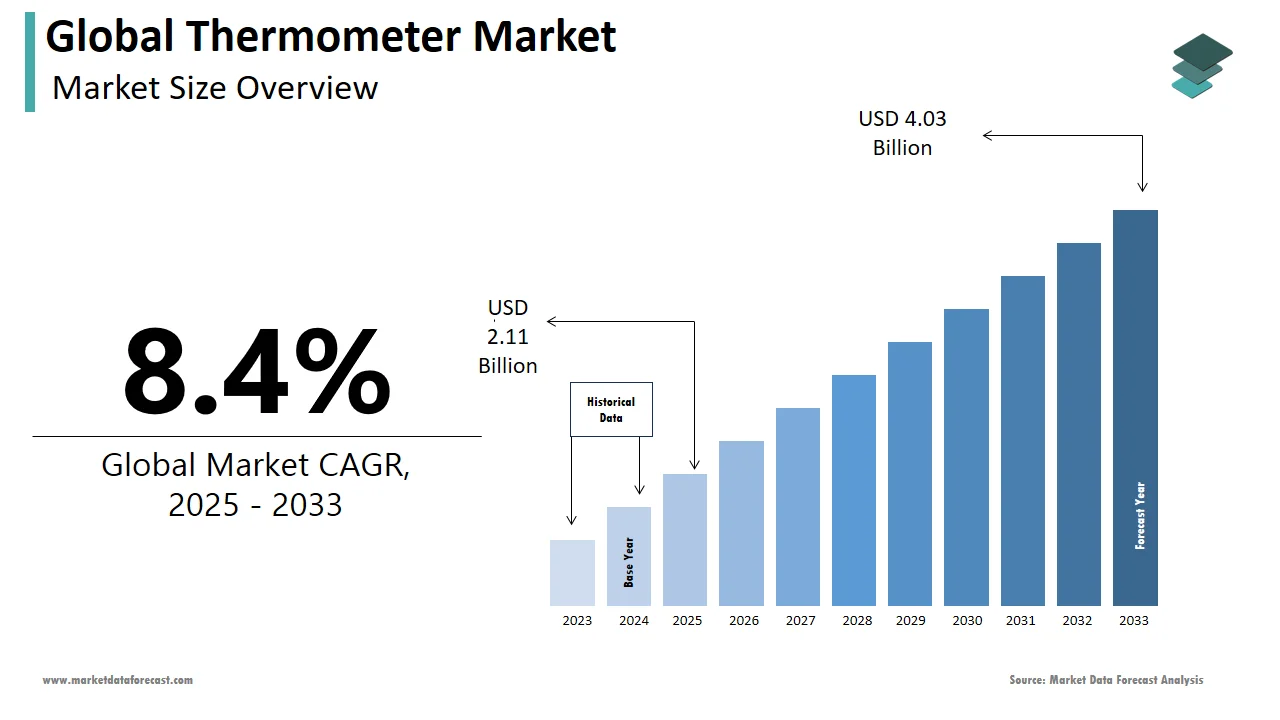
The global thermometer market was valued at USD 2.11 billion in 2025 and is projected to grow from USD 2.29 billion in 2026 to USD 4.60 billion by 2034, registering a CAGR of 8.4% from 2026 to 2034. Market growth is driven by increasing demand for accurate temperature monitoring, rising prevalence of infectious diseases, and growing adoption of digital healthcare technologies. Thermometers remain essential diagnostic tools across healthcare facilities, households, laboratories, and industrial settings. The growing preference for non-contact and digital thermometers, coupled with advancements in sensor technologies and connected healthcare devices, is further supporting market expansion worldwide.
Key Market Trends
- Rising adoption of digital and non-contact thermometers for rapid temperature monitoring.
- Increasing emphasis on infection control and patient safety in healthcare settings.
- Growing integration of smart sensors and connected health technologies.
- Expanding demand for thermometers in home healthcare and remote patient monitoring.
- Continuous shift from traditional mercury-based devices to environmentally safe mercury-free alternatives.
Segmental Insights
- Based on product, the mercury-free thermometers segment dominated the global thermometer market in 2025 by accounting for 86.8% market share, driven by increasing regulatory restrictions on mercury usage, improved safety profiles, and widespread adoption of digital and infrared thermometers.
- Based on application, the medical segment led the market by capturing 54.6% share in 2025, supported by growing demand for temperature monitoring in hospitals, clinics, diagnostic centers, and home healthcare environments.
Regional Insights
The global thermometer market is witnessing steady growth across major regions, supported by healthcare modernization, increasing disease surveillance efforts, and technological advancements in medical devices.
- North America dominated the global market in 2025 with 32.3% share, driven by advanced healthcare infrastructure, widespread adoption of digital health technologies, and strong demand for innovative temperature monitoring solutions.
- Europe remained a significant regional market, supported by increasing healthcare digitalization, strong regulatory standards, and growing adoption of advanced diagnostic equipment across healthcare facilities.
- Asia-Pacific is projected to register the fastest growth during the forecast period, driven by rising healthcare expenditure, expanding access to medical services, growing population awareness, and ongoing public health modernization initiatives.
Competitive Landscape
The global thermometer market is characterized by the presence of established medical device manufacturers and healthcare technology providers competing through product innovation, accuracy improvements, and digital integration capabilities. Market participants are focusing on the development of non-contact thermometers, smart temperature monitoring solutions, and user-friendly healthcare devices to strengthen market positioning. Strategic partnerships, technological advancements, and investments in connected healthcare ecosystems continue to shape competitive dynamics across the market.
Prominent companies operating in the global thermometer market include 3M (Nexcare), Medline Industries, Inc., Terumo Corporation, Omron Corporation, Microlife Corporation, Briggs Healthcare, Exergen Corporation, Helen of Troy Limited, Beurer GmbH, Innovo Medical, Fitgo, Radiant Innovation Inc., Medtronic, Welch Allyn, American Diagnostic Corporation, RG Medical Diagnostics, Actherm Inc., and Fairhaven Health.
 Download Free Sample Report
Global Thermometer Market Size
The global thermometer market was worth US$ 2.11 billion in 2025 and is anticipated to reach a valuation of US$ 4.6 billion by 2034 from US$ 2.29 billion in 2026, and it is predicted to register a CAGR of 8.4% during the forecast period 2026 to 2034.
Thermometers are a diverse array of temperature measurement devices ranging from traditional mercury-in-glass instruments to advanced digital, infrared, and smart thermometers utilized across clinical, industrial, and consumer domains. These devices serve as fundamental diagnostic and monitoring tools, with accuracy and response time being critical performance parameters in healthcare settings. According to the World Health Organization, fever remains one of the most common presenting symptoms in primary care globally, accounting for approximately 30% of all pediatric outpatient visits in low- and middle-income countries, thereby underscoring the indispensable role of reliable thermometry in early disease detection. As per guidance from the Centers for Disease Control and Prevention, the shift toward non-contact infrared thermometers has been particularly pronounced in post-pandemic healthcare protocols, which recommend touchless temperature screening in high-traffic clinical environments to minimize cross-contamination risks. Furthermore, the integration of Bluetooth-enabled smart thermometers into home health ecosystems reflects broader trends in remote patient monitoring. As per data from the U.S. Food and Drug Administration, the agency has cleared over 50 connected thermometer devices since 2020 to support telehealth initiatives. Industrial applications also demand precision. As per mandates from the International Organization for Standardization, strict calibration standards are required for thermometers used in pharmaceutical manufacturing and food safety, where even minor deviations can compromise product integrity and regulatory compliance. This multifaceted utility positions thermometers as essential instruments spanning public health surveillance, clinical diagnostics, and quality assurance across multiple sectors.
MARKET DRIVERS
Rising Prevalence of Infectious Diseases Necessitates Routine Temperature Screening
The persistent global burden of infectious diseases is one of the major factors propelling the growth of the global thermometer market, particularly for rapid and accurate fever detection tools. Fever is often the earliest and most reliable indicator of viral and bacterial infections, making temperature monitoring a critical first step in clinical triage and home care. According to the World Health Organization, lower respiratory infections remain among the top causes of death globally, with millions of cases reported annually, necessitating widespread use of thermometers for early diagnosis and monitoring. The recent global health crises have further entrenched temperature screening as a standard protocol in public spaces, schools, and workplaces. As per data from the Centers for Disease Control and Prevention, over 80% of healthcare facilities in the United States implemented mandatory temperature checks during peak infection periods, creating a lasting infrastructure for routine thermometry. According to the World Health Organization, the high incidence of seasonal influenza, which affects up to 1 billion people globally each year, ensures recurring consumer demand for home-use digital and infrared thermometers. This consistent need for immediate, non-invasive temperature assessment drives manufacturers to innovate in speed and accuracy, ensuring that both clinical and consumer segments maintain robust purchasing patterns to manage ongoing public health challenges effectively.
Growing Geriatric Population Increases Demand for Home Health Monitoring Devices
The demographic shift toward an aging global population significantly propels the adoption of advanced thermometers, particularly those designed for ease of use and remote monitoring, which is further boosting the global market expansion. Older adults are more susceptible to infections and chronic conditions where temperature fluctuations can signal serious health deteriorations, requiring frequent and precise monitoring. According to the United Nations Department of Economic and Social Affairs, the number of people aged 65 years or older is projected to double from 727 million in 2020 to 1.5 billion by 2050, creating a vast user base for home healthcare devices. This demographic trend aligns with the rising preference for aging in place, where individuals manage their health at home rather than in institutional settings. As per data from the National Institute on Aging, chronic diseases, such as pneumonia and urinary tract infections, are common in the elderly and often present with fever, necessitating reliable home diagnostic tools. Furthermore, the integration of smart thermometers with mobile applications allows caregivers to track temperature trends remotely, enhancing patient safety and reducing hospital readmissions. According to guidelines from the American Geriatrics Society, the organization emphasizes the importance of accessible monitoring technologies in managing complex care needs, driving demand for user-friendly, connected thermometric solutions that support independent living and proactive health management for the growing senior population.
MARKET RESTRAINTS
Stringent Regulatory Standards and Calibration Requirements Increase Compliance Costs
The rigorous regulatory frameworks that mandate precise calibration and validation, particularly for clinical-grade devices is primarily hindering the growth of the thermometer market. Medical thermometers are classified as medical devices in most jurisdictions, requiring adherence to strict standards set by bodies such as the U.S. Food and Drug Administration and the European Medicines Agency. According to the International Organization for Standardization, specifically ISO 80601-2-56, clinical thermometers must maintain an accuracy within ±0.1°C to ±0.2°C, a threshold that demands sophisticated manufacturing processes and quality control measures. As per data from the National Institute of Standards and Technology, achieving and maintaining such precision requires regular recalibration, which adds to the operational burden for healthcare facilities and manufacturers. The complexity of compliance is further exacerbated by varying regional regulations; for instance, the European Union’s Medical Device Regulation imposes stricter clinical evaluation requirements than previous directives, increasing time-to-market and development costs. Small and medium-sized enterprises often struggle to meet these financial and technical demands, leading to market consolidation. According to observations from the World Health Organization, inconsistent regulatory enforcement in low-income countries can lead to the proliferation of substandard devices, undermining trust in legitimate products. These regulatory hurdles not only inflate production costs but also limit the entry of innovative players, thereby restraining overall market growth and accessibility in regions with less robust regulatory infrastructure.
Accuracy Variability in Non-Contact Infrared Thermometers Limits Clinical Reliability
A major restraint affecting the broader adoption of infrared thermometers is the inherent variability in accuracy caused by environmental factors and improper usage techniques. Unlike contact thermometers, infrared devices measure surface temperature, which can be significantly influenced by ambient conditions, sweat, or distance from the forehead. According to a study published in the Journal of Clinical Nursing, non-contact infrared thermometers demonstrated a discrepancy of up to 0.5°C compared to core body temperature measurements under typical clinical conditions, raising concerns about their reliability for critical diagnoses. According to statements from the Centers for Disease Control and Prevention, the agency acknowledges that while useful for screening, infrared thermometers are not recommended for definitive diagnostic purposes without confirmation via more accurate methods. This limitation restricts their utility in high-stakes medical environments, where precise temperature data is crucial for treatment decisions. As per findings from the American Academy of Pediatrics, user error contributes significantly to inaccurate readings, and improper positioning or failure to account for external heat sources can lead to false negatives or positives. Such inconsistencies erode clinician confidence and hinder widespread replacement of traditional contact methods. Consequently, despite their convenience and hygiene benefits, the perceived lack of precision remains a barrier to full market penetration, particularly in settings where diagnostic certainty is paramount for patient safety and effective care management.
MARKET OPPORTUNITIES
Integration with Internet of Things Ecosystems Enhances Remote Patient Monitoring
The convergence of thermometer technology with the Internet of Things is a significant opportunity for the thermometer market. Smart thermometers equipped with Bluetooth or Wi-Fi connectivity allow for real-time data transmission to healthcare providers and caregivers, facilitating proactive intervention before conditions worsen. According to the World Health Organization, the global population aged 60 years and older is expected to reach 2 billion by 2050, creating a substantial demand for home-based health management solutions that reduce hospital visits. As per data from the American Telemedicine Association, remote monitoring technologies have been shown to reduce hospital readmission rates by up to 38% for chronic disease patients, highlighting the clinical value of continuous temperature tracking. Furthermore, the proliferation of smart home devices creates an ecosystem where temperature data can be correlated with other vital signs, offering a holistic view of patient health. According to reports from the Federal Communications Commission, broadband access in rural areas has improved significantly, enabling more households to utilize connected health devices effectively. This technological synergy not only improves patient outcomes but also lowers healthcare costs by preventing emergency complications. Manufacturers who prioritize interoperability with electronic health records and mobile health applications are well-positioned to capture this growing segment, as clinicians increasingly rely on longitudinal data for personalized care plans and early detection of infectious outbreaks in vulnerable populations.
Expansion into Industrial and Food Safety Applications Diversifies Revenue Streams
Beyond healthcare, the thermometer market finds robust growth opportunities in industrial processing and food safety sectors, where precise temperature control is critical for regulatory compliance and product quality. The food industry, in particular, relies heavily on accurate thermometry to prevent spoilage and ensure adherence to safety standards. According to the Centers for Disease Control and Prevention, one in six Americans gets sick from foodborne illnesses each year, underscoring the importance of rigorous temperature monitoring throughout the supply chain. As per guidelines from the Food and Drug Administration, hazardous foods must be kept at specific temperatures to inhibit bacterial growth, driving demand for specialized industrial thermometers and data loggers. Additionally, the pharmaceutical manufacturing sector requires strict thermal validation for storage and transport of vaccines and biologics. According to estimates from the World Health Organization, up to 50% of vaccines are wasted globally due to breaks in the cold chain, prompting increased investment in advanced monitoring solutions. As per mandates from international standards, such as ISO 9001, regular calibration and documentation of temperature controls are required in manufacturing processes, ensuring consistent demand for high-precision industrial instruments. By catering to these non-clinical sectors, thermometer manufacturers can mitigate risks associated with healthcare reimbursement fluctuations and tap into stable, regulation-driven markets that prioritize accuracy and reliability for operational efficiency and public safety.
MARKET CHALLENGES
Proliferation of Counterfeit and Substandard Devices Undermines Market Integrity
The widespread availability of counterfeit and substandard thermometers poses a severe challenge to market integrity and patient safety, particularly in emerging economies with less stringent regulatory oversight. These inferior devices often fail to meet accuracy standards, leading to misdiagnosis and inappropriate treatment decisions. According to the World Health Organization, approximately 10% of medical products in low- and middle-income countries are substandard or falsified, with diagnostic devices being a significant category. As per data from the U.S. Food and Drug Administration, thousands of unauthorized thermometer listings are removed from online marketplaces annually, yet the sheer volume of e-commerce platforms makes complete eradication difficult. The presence of these cheap alternatives distorts pricing structures, forcing legitimate manufacturers to compete on cost rather than quality, which can compromise research and development budgets. Furthermore, the lack of consumer awareness regarding certification marks leads to inadvertent purchases of unreliable products. According to notes from the International Medical Device Regulators Forum, harmonizing global regulatory standards remains a complex task, leaving gaps that counterfeiters easily exploit. This issue not only erodes trust in established brands but also complicates public health efforts, as inaccurate temperature readings can mask fever symptoms during infectious disease outbreaks. Consequently, the industry faces increased costs related to brand protection, legal enforcement, and consumer education campaigns to mitigate the risks associated with fraudulent products.
Environmental Regulations Phasing Out Mercury Thermometers Increase Transition Costs
Strict environmental regulations aimed at eliminating mercury from healthcare settings are further challenging the expansion of the thermometer market. Mercury is a toxic heavy metal, and its release into the environment poses serious health risks, prompting global bans on mercury-containing devices. According to the Minamata Convention on Mercury, an international treaty designed to protect human health and the environment from anthropogenic emissions and releases of mercury, over 130 countries have committed to phasing out mercury thermometers by specific deadlines. As per data from the United Nations Environment Programme, healthcare facilities must invest substantially in replacing existing inventory and training staff on new digital technologies, creating financial strain, especially for smaller clinics. The disposal of legacy mercury thermometers requires specialized hazardous waste handling, adding to operational costs. According to estimates from the World Health Organization, millions of mercury thermometers remain in use globally, particularly in resource-limited settings where digital replacements are perceived as too expensive or fragile. This transition period creates market fragmentation, with some regions still relying on older technologies while others adopt advanced digital solutions. Manufacturers must navigate these disparate regulatory timelines and manage supply chains for both legacy and modern products, complicating production planning and increasing compliance burdens across different geographical markets.
REPORT COVERAGE
| REPORT METRIC | DETAILS |
| Market Size Available | 2025 to 2034 |
| Base Year | 2025 |
| Forecast Period | 2026 to 2034 |
| Segments Covered | By Product, Application, and Region. |
| Various Analyses Covered | Global, Regional, and Country-Level Analysis, Segment-Level Analysis, Drivers, Restraints, Opportunities, Challenges; PESTLE Analysis; Porter’s Five Forces Analysis, Competitive Landscape, Analyst Overview of Investment Opportunities |
| Regions Covered | North America, Europe, Asia Pacific, Latin America, Middle East & Africa |
| Market Leaders Profiled | 3M (Nexcare), Medline Industries, Inc., Terumo Corporation, \Microlife Corporation, Briggs Healthcare, Exergen Corporation, Innovo Medical, Fitgo, Radiant Innovation Inc., Medtronic, Welch Allyn, American Diagnostics Corporation, RG Medical Diagnostics, Actherm Inc., and Fairhaven Health., and Others. |
SEGMENTAL ANALYSIS
By Product Insights
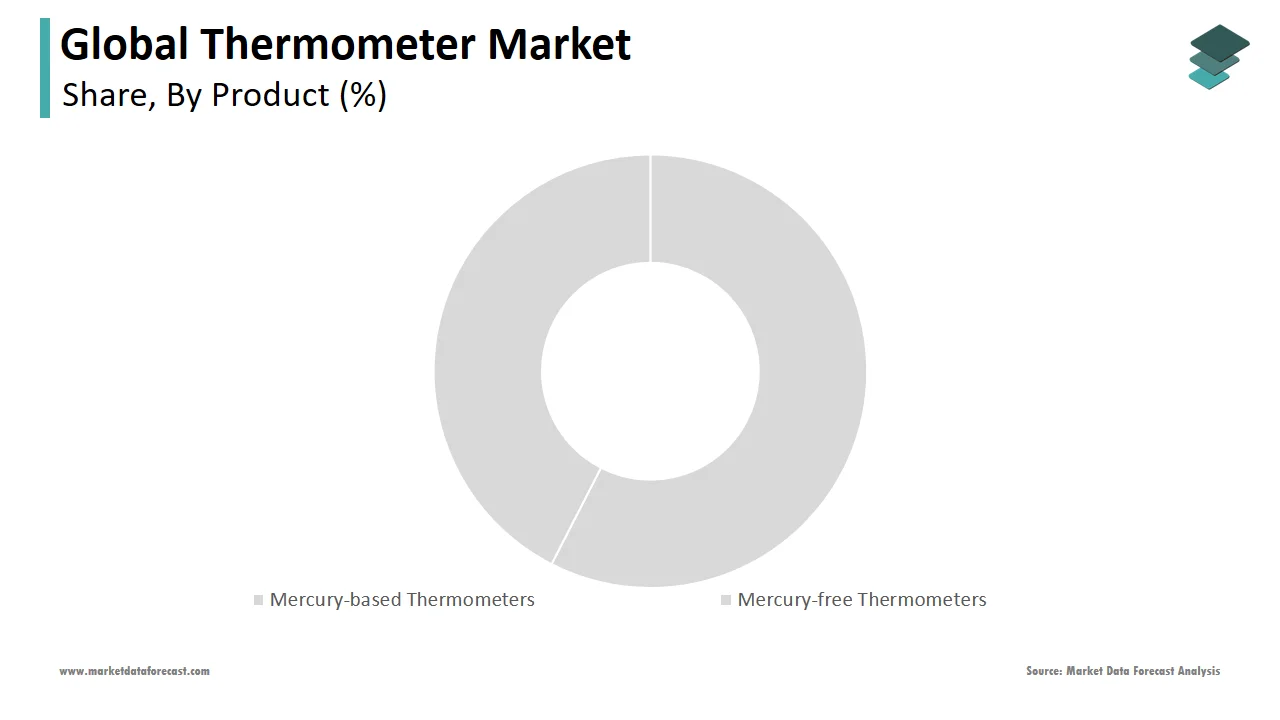
The mercury-free thermometers segment commanded for 86.8% of the global market share in 2025. The dominance of mercury-free segment in the global market is majorly driven by stringent international regulations and increased awareness of mercury toxicity. According to the Minamata Convention on Mercury, over 130 signatory countries have committed to phasing out mercury thermometers, effectively mandating the adoption of safer alternatives in healthcare settings. As per data from the World Health Organization, mercury is classified as one of the top ten chemicals of major public health concern, prompting hospitals and clinics worldwide to replace legacy inventory with digital and infrared options. Furthermore, consumer preference has shifted decisively toward safety, particularly in households with children. According to strong advocacy from the American Academy of Pediatrics, the organization pushes for mercury-free thermometers due to the risk of breakage and subsequent exposure to toxic vapors. This regulatory and social pressure ensures that mercury-free devices remain the standard for both clinical and home use. Additionally, technological advancements have significantly improved the accuracy and speed of digital sensors, eliminating the performance gap that previously favored mercury glass. As per directives from the European Union, the Restriction of Hazardous Substances Directive further reinforces this trend by prohibiting the sale of mercury-based measuring instruments, solidifying the mercury-free segment’s overwhelming market leadership through legal compliance and enhanced user safety profiles.
On the other side, the infrared radiation thermometers segment is projected to register a promising CAGR of 8.4% during the forecast period due to the critical need for non-contact, hygienic, and rapid temperature screening solutions and the widespread adoption of touchless diagnostics in high-traffic environments to prevent cross-contamination. According to the Centers for Disease Control and Prevention, non-contact infrared thermometers are recommended for initial fever screening in healthcare facilities, airports, and schools, as they minimize physical interaction between users and devices. This protocol became entrenched during recent global health crises and has persisted as a standard hygiene practice. As per findings from the International Air Transport Association, thousands of airports globally implemented infrared thermal scanning systems, creating sustained demand for industrial and commercial-grade infrared units. Furthermore, technological improvements have enhanced the accuracy of forehead and ear infrared sensors, making them viable for precise clinical assessments. According to notes from the World Health Organization, rapid diagnosis is crucial in managing infectious outbreaks, and infrared devices provide results in under two seconds, facilitating efficient patient flow. Additionally, the integration of artificial intelligence for facial recognition and temperature mapping in smart infrared cameras is expanding their utility in security and public health surveillance. This combination of speed, hygiene, and technological sophistication positions infrared thermometry as the fastest-growing product category in the market.
By Application Insights
The medical segment led the market by holding 54.6% of the global market share in 2025. The growth of the medical segment in the global market can be credited to the fundamental role of temperature measurement in clinical diagnosis and patient monitoring. The universal prevalence of fever as a key symptom across a vast array of medical conditions, from common infections to chronic inflammatory diseases, is further boosting the expansion of the medical segment by application in the global market. According to the World Health Organization, acute respiratory infections remain a leading cause of morbidity globally, necessitating routine temperature checks in both hospital and primary care settings. As per data from the Centers for Disease Control and Prevention, millions of outpatient visits annually involve fever assessment, ensuring consistent demand for reliable medical thermometers. Furthermore, stringent regulatory standards mandate the use of certified devices in healthcare facilities to ensure patient safety and diagnostic accuracy. As per classifications from the U.S. Food and Drug Administration, clinical thermometers are treated as Class II medical devices requiring rigorous validation, which limits market entry to high-quality manufacturers, thereby consolidating revenue within established medical-grade product lines. According to projections from the United Nations Department of Economic and Social Affairs, the number of people aged 65 or older will double by 2050, creating a sustained need for home and clinical thermometry. This demographic shift, combined with the expansion of healthcare infrastructure in developing nations, ensures that the medical segment remains the cornerstone of the thermometer market, supported by robust reimbursement policies and essential health service protocols.
On the other side, the food segment is anticipated to witness the fastest growth and is predicted to record a CAGR of 9.5% during the forecast period owing to the stringent food safety regulations and the increasing complexity of global supply chains. According to the World Health Organization, an estimated 600 million people, almost one in ten people in the world, fall ill after eating contaminated food every year, highlighting the urgent necessity for rigorous thermal monitoring. As per guidelines from the Food and Drug Administration, the Hazard Analysis and Critical Control Points system mandates specific temperature thresholds for potentially hazardous foods, driving widespread adoption of industrial and handheld thermometers in commercial kitchens and manufacturing plants. Furthermore, the rise in consumer awareness regarding food quality and safety has pressured retailers and restaurants to implement transparent monitoring practices. According to reports from the National Restaurant Association, over 90% of consumers consider food safety a top priority when dining out, encouraging establishments to invest in advanced digital thermometry solutions. As per notes from the International Air Transport Association, the organization emphasizes the role of data-logging thermometers in maintaining product integrity across borders, which is critical since the globalization of food trade requires continuous cold chain monitoring. These regulatory and consumer-driven factors collectively fuel rapid market expansion in the food sector.
REGIONAL ANALYSIS
North America Thermometer Market Analysis
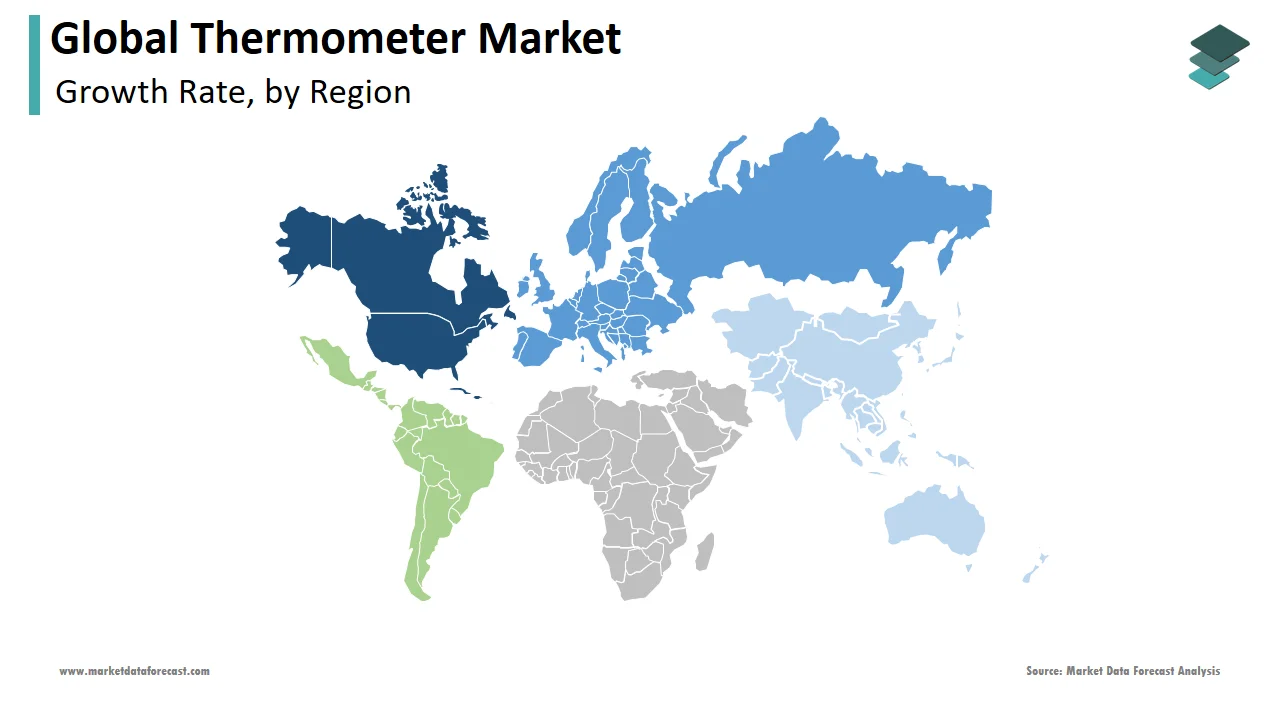
North America occupied 32.3% of the global market share in 2025 and is poised to drive the global marketplace with superior tech-integrations and a highly responsive healthcare model over the next few years. The United States serves as the primary engine of this growth, characterized by widespread adoption of smart and connected thermometric devices. According to the Centers for Disease Control and Prevention, the prevalence of chronic diseases, such as diabetes and cardiovascular conditions, necessitates regular home health monitoring, including temperature checks for early infection detection. The region benefits from robust reimbursement policies for medical devices, facilitating the procurement of advanced digital and infrared thermometers by hospitals and clinics. As per data from the National Institutes of Health, significant federal funding supports research into non-invasive diagnostic technologies, fostering innovation among key manufacturers based in the region. According to projections from the U.S. Census Bureau, all baby boomers will be older than 65 by 2030, expanding the user base for home healthcare products. The presence of major industry players who continuously introduce technologically superior products ensures that North America remains at the forefront of market development. Strict regulatory standards enforced by the Food and Drug Administration also guarantee high product quality, reinforcing consumer trust and maintaining steady sales volumes across both clinical and consumer segments.
Europe Thermometer Market Analysis
Europe is anticipated to display consistent demand profiles and progressive digitalization parameters within clinical structures over the next few years. The implementation of the Medical Device Regulation by the European Union has standardized safety and performance requirements, ensuring high-quality thermometry products across member states. According to Eurostat, over 20% of the EU population is aged 65 or older, a segment that requires frequent health monitoring and is more susceptible to infections requiring temperature assessment. Germany, France, and the United Kingdom are key contributors, boasting well-established public healthcare systems that prioritize preventive care and diagnostic accuracy. According to the World Health Organization, Europe faces a significant burden of seasonal influenza and respiratory infections, driving consistent demand for reliable thermometers in both hospital and home settings. The region’s strong emphasis on environmental sustainability has also accelerated the phase-out of mercury-based devices, aligning with the Minamata Convention commitments. Additionally, the growing trend of telemedicine, supported by high broadband penetration, encourages the use of connected thermometers that integrate with digital health platforms. This combination of regulatory rigor, demographic pressure, and technological adoption sustains Europe’s prominent position, fostering a market characterized by high-value, precision-oriented diagnostic instruments.
Asia Pacific Thermometer Market Analysis
The Asia Pacific theater will function as a vital growth engine through volume-driven demands and public health modernizations over the next few years. Countries like China, India, and Japan are leading this expansion through significant government investments in public health facilities and private sector participation. According to the World Bank, health expenditure in East Asia and the Pacific has grown at an average annual rate of 8% over the past decade, reflecting improved access to diagnostic tools. The large population base, combined with a high incidence of infectious diseases, such as dengue and tuberculosis, drives substantial demand for affordable and accurate thermometers. As per data from the Ministry of Health in India, the government’s Ayushman Bharat initiative aims to provide comprehensive health coverage to millions, increasing the utilization of basic diagnostic devices, including thermometers. Japan’s aging society further contributes to market growth, with high demand for advanced, user-friendly home monitoring devices. According to notes from the Asian Development Bank, urbanization and lifestyle changes are leading to a higher prevalence of chronic conditions, necessitating regular health checks. This convergence of economic growth, demographic shifts, and policy support positions Asia Pacific as a critical growth engine, with manufacturers increasingly focusing on localized production to meet cost-sensitive yet volume-driven demand.
Latin America Thermometer Market Analysis
Latin America will follow a trajectory of structured health improvements and steady baseline growth across municipal health systems over the next few years. Brazil and Mexico are the primary markets, driven by expanding middle-class populations and greater private insurance penetration. According to the Pan American Health Organization, healthcare spending in the region has increased steadily, although disparities between urban and rural areas remain significant. The rising burden of infectious diseases, including Zika and dengue fever, necessitates robust temperature screening capabilities, prompting governments and private providers to invest in diagnostic equipment. As per data from the Brazilian Ministry of Health, public health campaigns often include the distribution of basic health monitoring tools, boosting market visibility and accessibility. Additionally, the growing awareness of preventive healthcare among urban consumers is driving demand for digital home thermometers. According to highlights from the Inter-American Development Bank, digital health initiatives are improving diagnostic reach in remote areas, although infrastructure gaps persist. Economic volatility occasionally hampers large-scale equipment procurement, yet the long-term trend toward better healthcare outcomes supports steady market growth. Collaborative efforts with international health agencies also facilitate technology transfer and training, enhancing the region’s diagnostic proficiency and creating opportunities for both local and international thermometer manufacturers to expand their footprint.
Middle East and Africa Thermometer Market Analysis
The Middle East and Africa region will likely manifest diverse infrastructural advancements and targeted diagnostic rollouts over the next few years. Gulf Cooperation Council countries, particularly Saudi Arabia and the United Arab Emirates, are leading adopters of advanced diagnostic technologies due to high healthcare budgets and medical tourism initiatives. According to the World Health Organization, the African region bears a disproportionate burden of infectious diseases, such as malaria, HIV, and tuberculosis, necessitating extensive temperature monitoring for diagnosis and management. As per data from the African Union, initiatives like the Africa Centres for Disease Control and Prevention are strengthening laboratory networks to improve diagnostic accuracy and response times. In the Middle East, the rising prevalence of lifestyle-related conditions and genetic disorders is increasing demand for comprehensive home health monitoring solutions. The Saudi Vision 2030 healthcare transformation program emphasizes privatization and digital health, fostering a conducive environment for diagnostic market expansion. However, limited skilled personnel and supply chain challenges in sub-Saharan Africa remain barriers. Despite these hurdles, international partnerships and increased local manufacturing capabilities are gradually enhancing access to reliable thermometry solutions, supporting steady market development across diverse economic landscapes within the region.
COMPETITIVE LANDSCAPE
The competition in the thermometer market is characterized by a mix of established multinational corporations and numerous regional manufacturers, creating a fragmented yet dynamic landscape. Major players differentiate themselves through technological innovation, such as smart connectivity and enhanced accuracy in non-contact devices, while competing on brand reputation and distribution reach. The market sees intense rivalry in the consumer segment, where price sensitivity and product design play crucial roles in purchasing decisions. Conversely, the clinical segment is driven by regulatory compliance and precision, favoring companies with robust quality assurance systems. Emerging brands from Asia Pacific are gaining traction by offering cost-effective alternatives, challenging traditional leaders. Strategic partnerships with healthcare providers and retailers are essential for maintaining visibility and accessibility. Additionally, the shift toward digital health integration forces competitors to continuously upgrade their software capabilities. This environment encourages constant innovation, with companies striving to balance affordability with advanced features to capture diverse consumer segments globally.
KEY MARKET PARTICIPANTS
A few of the prominent companies operating in the global thermometer market covered in this report are
- 3M (Nexcare)
- Medline Industries, Inc.
- Terumo Corporation
- Omron Corporation
- Microlife Corporation
- Briggs Healthcare
- Exergen Corporation
- Helen of Troy Limited
- Beurer GmbH
- Innovo Medical
- Fitgo
- Radiant Innovation Inc.
- Medtronic
- Welch Allyn
- American Diagnostics Corporation
- RG Medical Diagnostics
- Actherm Inc.
- Fairhaven Health
TOP PLAYERS IN THE MARKET
- Omron Corporation maintains a strong foothold in the Asia Pacific thermometer market by leveraging its reputation for precision healthcare devices. The company actively expands its distribution networks across China, India, and Southeast Asia, ensuring widespread availability of its digital and infrared thermometers. Omron recently launched smart connectivity features in its latest models, allowing users to track temperature trends via mobile applications, which aligns with the region’s growing telehealth adoption. Strategic partnerships with local e-commerce platforms have enhanced direct-to-consumer reach, while collaborations with hospital chains facilitate bulk procurement for clinical use. By focusing on user-friendly designs and rigorous quality control, Omron strengthens brand loyalty among health-conscious consumers. Their commitment to innovation and localized marketing campaigns ensures they remain a preferred choice for both home monitoring and professional medical settings throughout the dynamic Asia Pacific landscape.
- Beurer GmbH contributes significantly to the Asia Pacific thermometer market through its diverse portfolio of high-quality health and wellness products. The company has strengthened its position by establishing regional offices in key markets like Singapore and Australia, enabling better customer support and faster logistics. Beurer recently introduced advanced infrared ear and forehead thermometers with enhanced accuracy, catering to the rising demand for non-contact diagnostics in post-pandemic healthcare protocols. Collaborations with local distributors have expanded its retail presence in pharmacies and electronics stores across Japan and South Korea. Additionally, Beurer emphasizes sustainable manufacturing practices, appealing to environmentally conscious consumers in the region. By combining German engineering excellence with adaptive marketing strategies, Beurer effectively addresses the specific needs of Asian households, reinforcing its status as a trusted provider of reliable and innovative temperature measurement solutions.
- Helen of Troy Limited, through its Braun brand, plays a pivotal role in the Asia Pacific thermometer market by offering premium diagnostic tools known for their speed and reliability. The company has intensified its focus on digital marketing and influencer partnerships to boost brand visibility among young parents and health enthusiasts in urban centers. Recent product launches include smart thermometers with Bluetooth connectivity, integrating seamlessly with popular health apps used widely in the region. Helen of Troy has also expanded its manufacturing capabilities in Asia to reduce costs and improve supply chain efficiency. Strategic alliances with major retail chains and online marketplaces ensure broad product accessibility. By prioritizing technological innovation and consumer education, the company effectively competes in the high-end segment, delivering precise and convenient temperature monitoring solutions that meet the evolving expectations of the Asia Pacific healthcare consumer base.
TOP STRATEGIES USED BY KEY MARKET PARTICIPANTS
Key players in the thermometer market primarily employ strategies focused on product innovation, strategic partnerships, and geographic expansion. Companies invest heavily in research and development to create smart, connected devices that integrate with digital health ecosystems, enhancing user convenience and data accuracy. Collaborations with e-commerce platforms and local distributors facilitate broader market penetration, particularly in emerging economies. Manufacturers also prioritize regulatory compliance and quality certifications to build trust and differentiate their products in competitive landscapes. Additionally, aggressive marketing campaigns emphasizing hygiene and speed drive consumer adoption of non-contact infrared models. Mergers and acquisitions allow firms to acquire niche technologies or expand their product portfolios rapidly. These multifaceted approaches enable companies to address diverse consumer needs, maintain competitive advantages, and capitalize on the growing global emphasis on preventive healthcare and remote patient monitoring.
MARKET SEGMENTATION
This research report on the global thermometer market has been segmented and sub-segmented based on the product, application, and region.
By Product
- Mercury-based Thermometers
- Mercury-free Thermometers
- Digital Thermometers
- Infrared Radiation Thermometers
- Others
By Application
- Medical
- Industrial
- Food
- Laboratory
- Others
By Region
- North America
- Europe
- Asia-Pacific
- Latin America
- The Middle East and Africa