- Product Description Description
- Table of Contents TOC
- List of Table & Figure LOT
- Get Free Sample PDF Sample PDF
Market Size, 2025
$5,785.12 MnMarket Estimate, 2026
$6,283 MnMarket Forecast, 2034
$12,156 MnCAGR, 2026–2034
8.6%Executive Summary: Global Tourism Security Market
- Market Scope: Comprehensive global tourism security market analysis covering safety solutions, technological infrastructures, end-user applications, and regional leadership frameworks for travel security worldwide.
- Market Valuation: Valued at USD 5,785.12 million (2025), estimated at USD 6,283 million (2026), and projected to reach USD 12,156 million by 2034, expanding at a solid CAGR of 8.60% (2026–2034).
- Primary Growth Drivers: Increasing global volume of international travel, rising concerns over terrorism and crime, and critical needs for health security protocols following recent pandemics. Key trends include rapid adoption of AI-powered video surveillance and biometrics, cybersecurity data protection, and comprehensive health screening deployment.
Key Market Segment Metrics (2026–2034)
| Category | Leading Segment (2025 Position) | Fastest-Growing Segment |
|---|---|---|
| By Solution & Focus Area | Health security segment (dominated due to post-pandemic regulations, sanitization, and contactless services) | Physical security, AI threat analytics, and integrated cybersecurity protocols |
| By Technology & Infrastructure | Video surveillance segment (led the market with real-time analytics and monitoring solutions) | IoT and smart sensors, biometric access control, and automated health screening tech |
| By End-User & Transit Hub | Airports end-user segment (held largest share due to high passenger volumes and strict aviation safety standards) | Hotels, railway terminals, cruise ports, and popular cultural tourist attractions |
| By Region / Country | North America (dominated supported by advanced infrastructure and high tourism traffic, followed by Europe) | Asia-Pacific region (identified as the fastest-growing market due to rising disposable incomes and government investments) |
Major Market Players & Market Structure
Market Structure: Highly competitive global security and technology landscape driven by health safety innovations (such as Johnson Controls’ temperature screening solutions) and AI analytics advancements (Axis Communications’ real-time threat detection tools).
Key Companies: Verint Systems, Axis Communications, NEC Corporation, Smiths Detection, Genetec, Palo Alto Networks, Johnson Controls, Honeywell International, G4S, and IBM.
Global Tourism Security Market Size
The global tourism security market was valued at USD 5,785.12 million in 2025, is estimated to reach USD 6,283 million in 2026, and is projected to reach USD 12,156 million by 2034, growing at a CAGR of 8.60% from 2026 to 2034.
Tourism security ensures tourists' safety during travelling. It is all about preventing accidents, crimes, and health issues that could affect travellers. This includes having police and safety rules in place, making sure transportation is safe, and keeping their personal information secure online. Overall, tourism security is like a plan to keep tourists safe and help them have a good and worry-free time during their trips.
MARKET DRIVERS
The tourism security market is driven by global tourism growth. As more people explore new destinations, there's a bigger need to keep them safe.
The demand for safety and protection has led to the market growth. The growing prevalence of security services and technologies in the tourism industry is escalating the growth rate of the market. Businesses and governments are investing in things like better surveillance, secure transportation, and trained personnel to ensure that tourists have a safe and enjoyable experience. A growing number of people travelling across the world is elevating the market growth rate.
The tourism security market is increasingly prioritizing health protection measures. Events like pandemics have highlighted the importance of keeping travellers safe from health risks. This has prompted investments in health security protocols and technologies, such as health screenings, sanitation measures, and contactless services. As tourists seek reassurance about their well-being, the tourism security services respond by developing and implementing comprehensive health security strategies. This shift not only enhances safety but also restores confidence in travel, ensuring a resilient and secure tourism industry. Therefore, there is a rising demand for the tourism security market in this workplace.
MARKET RESTRAINTS
The tourism security market faces a challenge due to tourism seasonality.
This means that the number of tourists visiting a place can vary a lot throughout the year. Sometimes, there are many tourists and other times, there are only a few. This makes it hard always to have the right amount of security staff and resources. When there are lots of tourists, you need more security services. But during slower times, it's not easy to maintain the same level of security services. As a result, tourism seasonality is the restraining factor of tourism security market growth.
MARKET OPPORTUNITIES
The tourism security market has a significant opportunity due to ongoing technological advancement. Things like smart cameras that use artificial intelligence, biometrics (which is like using fingerprints or your face for security), and data analysis can improve security. This not only keeps tourists safe but also makes their whole experience more enjoyable. So, travel agencies are adopting these new technologies that can make tourism safer and more fun, which is a great opportunity for the growth of the tourism security market.
REPORT COVERAGE
| REPORT METRIC | DETAILS |
| Market Size Available | 2025 – 2034 |
| Base Year | 2025 |
| Forecast Period | 2026 - 2034 |
| CAGR | 8.6% |
| Segments Covered | By Security, End-User, Technology, and Region. |
|
Various Analyses Covered | Global, Regional, and country Level Analysis, Segment-Level Analysis, DROC, PESTLE Analysis, Porter’s Five Forces Analysis, Competitive Landscape, Analyst Overview of Investment Opportunities |
| Regions Covered | North America, Europe, APAC, Latin America, Middle East & Africa |
|
Market Leaders Profiled | Verint Systems, Axis Communications, NEC Corporation, Smiths Detection, Genetec, Palo Alto Networks, Johnson Controls, Honeywell International, G4S, IBM, and Others. |
SEGMENTAL ANALYSIS
By Security Insights
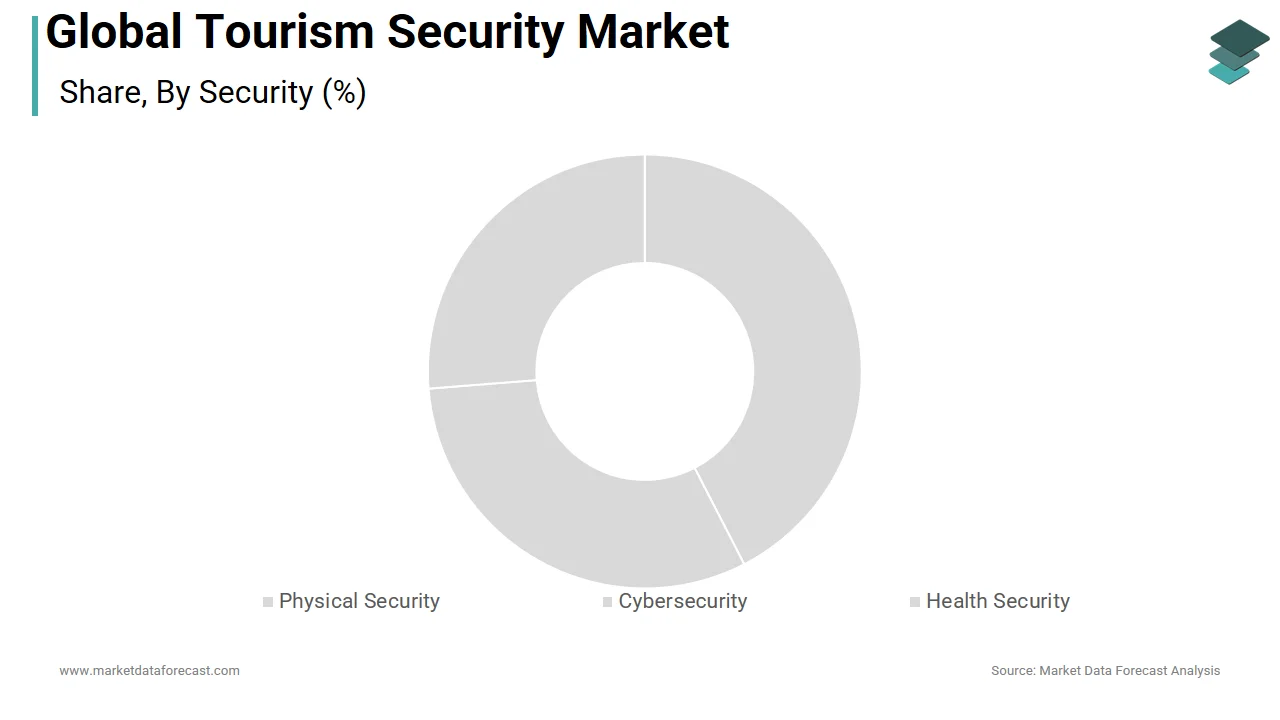
The health security segment dominated the market due to the COVID-19 pandemic, a global crisis. Governments enforced stringent health rules, including screenings and sanitation, making it a priority for tourism businesses to ensure traveller safety and regulatory compliance, reshaping the tourism security landscape.
By End-User Insights
Airports dominate the tourism security market due to high passenger volumes, strict global regulations, complex security challenges, and their role in global connectivity. They're critical infrastructure, demanding cutting-edge technology adoption and comprehensive security measures for both passenger safety and national security.
By Technology Insights
Video surveillance technology dominates tourism security due to its ability to provide extensive real-time monitoring, deter criminal activity with visible cameras, and serve as crucial evidence in case of incidents. Its comprehensive coverage is essential for ensuring traveller safety and detecting security threats effectively.
REGIONAL ANALYSIS
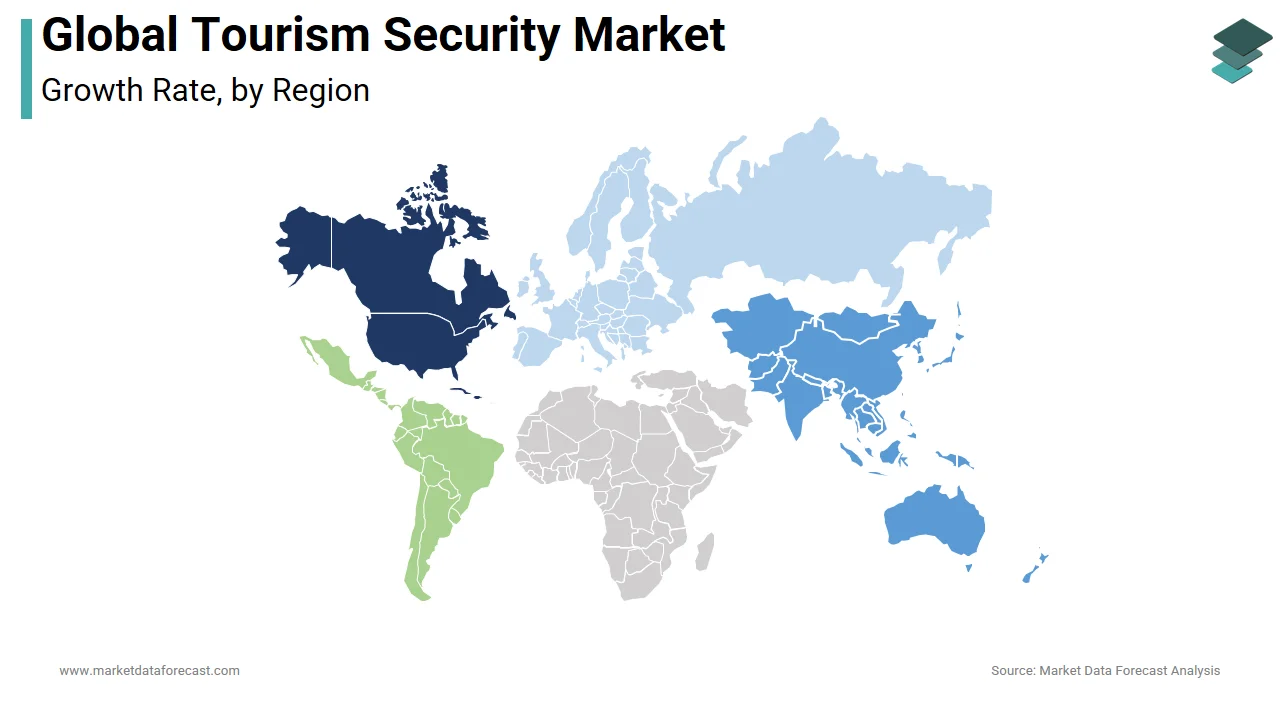
North America dominates the market demand due to the increasing number of tourists, strict safety rules, and advanced technology. They needed top-notch security because they had busy airports, famous tourist spots, and hosted global events. Following North America, Europe is next in ruling the market shares owing to the presence of many different tourist places, from historic cities to beautiful coastlines. Growing prominence for safety norms is enhancing the growth rate of the market in Europe. European countries also worked together to keep tourists safe. Asia-Pacific is likely to experience a rapid growth rate during the forecast period. Especially in China and Japan, a burgeoning middle class, increased disposable income, and government investments in tourism infrastructure contribute to its dominance. The region's focus on cutting-edge security technologies also attracts attention. Middle East & Africa attracted travellers with unique experiences but faced distinct security challenges. Latin America boasts cultural richness and natural beauty, attracting travellers to countries like Mexico, Brazil, and Argentina. The region's tourism security is influenced by a mix of factors, including safety concerns, infrastructure development, and economic stability.
KEY MARKET PLAYERS
Verint Systems, Axis Communications, NEC Corporation, Smiths Detection, Genetec, Palo Alto Networks, Johnson Controls, Honeywell International, G4S, IBM, and Others.
RECENT MARKET DEVELOPMENTS
- In 2021, Verint has been focusing on AI-driven video analytics and intelligence solutions to enhance real-time surveillance capabilities in tourist areas. They are also integrating data analytics for predictive security measures and offering cloud-based security platforms.
- In 2021, Axis Communications introduced smart IP cameras with thermal imaging and analytics for crowd monitoring, ensuring compliance with health and safety regulations. Their solutions emphasize remote monitoring and video analytics for efficient security management.
- In 2021, NEC will advance biometric technologies for touchless authentication and identification, contributing to streamlined airport and hotel security processes. They have also developed facial recognition and temperature screening systems for health safety in travel environments.
MARKET SEGMENTATION
This global tourism security market research report is segmented and sub-segmented into the following categories.
By Security
- Physical Security
- Cybersecurity
- Health Security
By End-User
- Airports
- Hotels and Accommodations
- Tourist Attractions
- Transportation
By Technology
- Video Surveillance
- Access Control
- Biometrics
- IoT and Sensors
- Cybersecurity Software
By Region
- North America
- Europe
- Asia Pacific
- Latin America
- Middle East & Africa