- Product Description Description
- Table of Contents TOC
- List of Table & Figure LOT
- Get Free Sample PDF Sample PDF
Market Size, 2025
$424 MnMarket Estimate, 2026
$480 MnMarket Forecast, 2034
$1,295 MnCAGR, 2026–2034
5.28%Global Tow Prepreg Market Report Summary
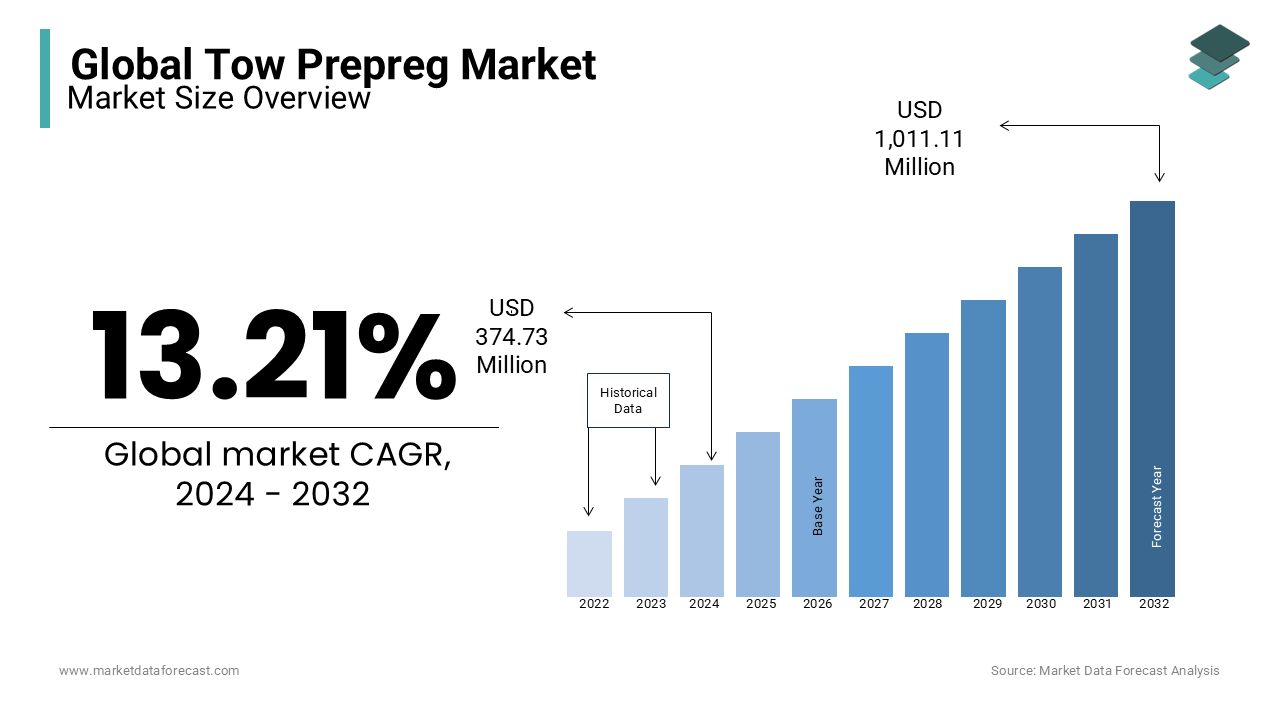
The global tow prepreg market was valued at USD 424.25 million in 2025, is estimated to reach USD 480.29 million in 2026, and is projected to reach USD 1,295.93 million by 2034, growing at a CAGR of 5.28% during the forecast period. Market growth is driven by increasing demand for lightweight and high strength composite materials, rising applications in aerospace and defense, and expanding use in pressure vessels and industrial sectors. Tow prepregs are widely used due to their superior mechanical properties, consistency, and efficiency in automated manufacturing processes. The growth of advanced composite technologies and performance driven industries is further supporting steady market expansion globally.
Key Market Trends
- Rising demand for lightweight and high strength composite materials is driving market growth.
- Increasing applications in aerospace and defense industries are boosting demand.
- Growing use in pressure vessels and industrial applications is supporting market expansion.
- Expansion of automated composite manufacturing processes is enhancing efficiency.
- Technological advancements in resin and fiber systems are improving product performance.
Segmental Insights
- Based on resin type, the epoxy resins segment held 44.6% of the global tow prepreg market share in 2025. This dominance is attributed to excellent mechanical properties, adhesion, and thermal resistance.
- Based on fiber type, the carbon fiber segment dominated the global tow prepreg market in 2025, driven by its high strength to weight ratio and increasing adoption in advanced applications.
- Based on application, the pressure vessels segment accounted for 42.3% of the global tow prepreg market share in 2025, supported by rising demand for high pressure storage solutions.
- Based on end user, the aerospace and defense segment held a dominant share of the global tow prepreg market in 2025, driven by extensive use of composite materials in aircraft and military equipment.
Regional Insights
- The global tow prepreg market is experiencing steady growth across regions, supported by industrial demand and technological advancements.
- North America was the largest contributor, accounting for 35.5% of the global tow prepreg market share in 2025, driven by strong aerospace industry presence, advanced manufacturing capabilities, and high investment in composite technologies.
Competitive Landscape
The global tow prepreg market is moderately competitive, with key players focusing on product innovation, capacity expansion, and strategic collaborations to strengthen their market position. Companies are investing in advanced composite materials, automated production technologies, and supply chain optimization. Prominent players in the global tow prepreg market include TCR Composites, SGL Carbon SE, JXTG Holdings Inc, Teijin Limited, Mitsubishi Chemical Holdings Corporation, Hexcel Corporation, Porches Industries Designs, Red Composites Limited, Vitech Composites, and Arisawa Mfg Limited.
Global Tow Prepreg Market Size
The global tow prepreg market size was valued at USD 424.25 million in 2025 and is projected to reach USD 1,295.93 million by 2034 from USD 480.29 million in 2026, growing at a CAGR of 5.28%.
Tow prepreg is an advanced composite material format, wherein continuous fiber bundles known as tows are impregnated with a resin matrix and partially cured to facilitate automated manufacturing processes. This specific configuration enables high speed placement of fibers with precise orientation control, which is essential for constructing complex structural components in aerospace and automotive industries. The material serves as a foundational element for automated fiber placement technologies that reduce production time while maintaining superior mechanical properties. As per the research, the adoption of automated manufacturing techniques has increased by 18% annually due to the demand for lightweight structures in next generation aircraft. Tow prepreg minimizes material waste during fabrication compared to traditional broadgoods thereby supporting sustainability initiatives within industrial sectors. The ability of tow prepreg to conform to intricate geometries allows engineers to optimize structural integrity without adding unnecessary mass. Tow prepreg aligns with this trend by enabling precise material deposition that limits scrap generation. The integration of thermoplastic resins into tow prepreg systems that further enhances recyclability potential addressing end of life concerns for composite structures.
MARKET DRIVERS
Expansion of Automated Fiber Placement Technologies Drives Material Adoption
The proliferation of automated fiber placement machinery by enabling high volume production of complex composite structures is escalating the growth of two prepreg market. These robotic systems utilize narrow tow prepreg tapes to build large components, such as fuselage sections and wing skins with exceptional precision and repeatability. As per Boeing, the implementation of automated fiber placement in the production of the 787 Dreamliner has reduced assembly time by 30% compared to manual layup methods. This efficiency gain is for meeting the increasing demand for commercial aircraft globally. The International Air Transport Association projects that air passenger traffic will double over the next 20 years necessitating higher production rates from aerospace manufacturers. Tow prepreg facilitates this scalability by allowing continuous operation of placement machines with minimal human intervention. The consistency of fiber alignment achieved through automation ensures uniform mechanical properties, which is vital for safety critical applications. As per Lockheed Martin the use of automated composite manufacturing has decreased part count by 50% in certain airframe structures leading to significant weight savings. This reduction in parts also simplifies supply chain management and lowers overall production costs. The aerospace industry’s shift toward single aisle aircraft programs further amplifies the need for rapid and reliable composite manufacturing solutions. Tow prepreg provides the necessary throughput and quality control to support these high rate production environments.
Automotive Industry Shift Toward Electric Vehicles Accelerates Demand
The transition of the automotive sector toward electric vehicles creates substantial demand for tow prepreg materials as manufacturers seek to offset the weight of battery packs. The automotive industry shift toward electric vehicles is escalating the growth of tow prepreg market. Electric vehicles require extended driving ranges, which can be achieved by reducing the overall vehicle mass through lightweight composite structures. The rapid growth drives the need for cost effective and scalable composite solutions. Tow prepreg enables the production of structural components, such as battery enclosures chassis elements and body panels with high strength to weight ratios. The European Automobile Manufacturers Association indicates that average vehicle weight has increased by 20% over the past decade primarily due to electrification and safety features. Counteracting this trend requires advanced materials that offer superior specific stiffness. Tow prepreg facilitates high volume manufacturing through automated processes which aligns with the production rates of the automotive industry. This proof of concept validates the technical feasibility of composites in mass market applications. Regulatory pressures in Europe mandate stricter emission standards for all vehicles including electric ones where energy efficiency remains paramount. The ability of tow prepreg to integrate multiple functions into single components reduces assembly complexity and further contributes to weight savings. Manufacturers view this material as a key enabler for next generation platform architectures.
MARKET RESTRAINTS
High Raw Material Costs Limit Market Penetration in Price Sensitive Segments
The elevated cost of carbon fiber and specialized resin systems to the widespread adoption of tow prepreg in cost sensitive industries is limiting the growth of tow prepreg market. Carbon fiber production involves energy intensive processes including precursor stabilization and carbonization which drive up base material prices. This price point limits the application of tow prepreg to high value sectors such as aerospace and luxury automotive where performance justifies the expense. The volatility of raw material prices further complicates long term planning for manufacturers. Crude oil fluctuations impact the cost of epoxy and other polymer resins used in prepreg formulations. financial pressures force manufacturers to seek alternative materials or redesign components to reduce composite usage. The automotive industry in particular operates on thin margins which makes the adoption of expensive composites challenging for mainstream vehicle models. While tow prepreg offers processing advantages the initial material investment remains prohibitive for high volume applications. As per Ford Motor Company the cost premium for carbon fiber components remains a key obstacle to broader implementation in mass market vehicles. Manufacturers must balance performance gains against total vehicle cost targets which often favor established materials like steel and aluminum. The lack of economies of scale in carbon fiber production compared to metals perpetuates this cost disparity.
Complex Recycling Processes Hinder Sustainable End of Life Solutions
The difficulty in recycling thermoset composite materials amid growing environmental regulations is restricting the growth of the tow prepreg market. Most tow prepreg systems utilize epoxy resins, which form irreversible cross links during curing making them resistant to conventional recycling methods. The majority of end of life composite parts end up in landfills or incineration facilities which contradicts circular economy principles. Regulatory frameworks, such as the End of Life Vehicles Directive in Europe impose stricter recovery targets for automotive materials which composite manufacturers struggle to meet. The separation of fibers from the resin matrix requires energy intensive processes such as pyrolysis or solvolysis which degrade fiber quality and increase costs. This economic disincentive discourages investment in recycling infrastructure. Aerospace manufacturers face additional scrutiny regarding the environmental footprint of their materials throughout the lifecycle. The inability to easily reclaim and reuse fibers from tow prepreg parts limits their appeal in sustainability focused projects. The gap between regulatory expectations and technological capabilities creates uncertainty for market participants. Companies must navigate evolving waste management laws while dealing with limited recycling options.
MARKET OPPORTUNITIES
Development of Thermoplastic Tow Prepreg Enhances Recyclability and Processing Speed
The emergence of thermoplastic tow prepreg for expansion by addressing sustainability concerns and improving processing efficiency is certainly to create new opportunities for the growth of two prepreg market. Thermoplastic resins, such as polyether ether ketone and polyphenylene sulfide can be melted and reshaped which facilitates closed loop recycling. Thermoplastic tow prepreg eliminates the need for autoclave curing, which reduces energy consumption and production time significantly. The automotive industry views this development as a key enabler for broader composite adoption in structural parts. This speed advantage addresses one of the primary limitations of thermoset composites in mass production. Thermoplastic tow prepreg also offers improved impact resistance and damage tolerance, which enhances safety in crash scenarios. The ability to weld thermoplastic components together removes the need for adhesives and fasteners further reducing weight and assembly complexity. The environmental profile of thermoplastic tow prepreg aligns with corporate sustainability goals and regulatory mandates. Manufacturers can reclaim scrap material and reintroduce it into the production process minimizing waste.
Integration of Artificial Intelligence in Manufacturing Optimizes Production Efficiency
The integration of artificial intelligence and machine learning into automated fiber placement systems for optimizing tow prepreg utilization and quality control is gearing up the growth of tow prepreg market. AI algorithms can analyze real time data from sensors to adjust placement parameters and detect defects immediately during the manufacturing process. The reduction in waste lowers production costs and improves overall material efficiency. The ability to predict maintenance needs for placement machines also minimizes downtime and ensures consistent output. This predictive capability enhances process reliability and reduces the risk of costly errors. The optimization of fiber paths using AI enables the creation of structures with variable stiffness which maximizes performance while minimizing material usage. This level of optimization was previously unattainable with traditional design methods. The convergence of digital technologies and material science creates a fertile ground for innovation in tow prepreg applications. Manufacturers who adopt these technologies gain a competitive advantage in producing high performance composite structures efficiently.
MARKET CHALLENGES
Supply Chain Volatility for Precursor Materials Disrupts Production Stability
The reliance on polyacrylonitrile precursor for carbon fiber production exposes the significant supply chain risks, which is to impede the growth of the tow prepreg market. Polyacrylonitrile availability fluctuates due to geopolitical tensions and trade restrictions affecting key producing regions. Any disruption in precursor supply cascades through the value chain affecting prepreg manufacturers and end users. The lead times for carbon fiber have extended to 6 months or more in periods of high demand causing production delays. This instability forces manufacturers to hold larger inventories which ties up capital and increases storage costs. The lack of diversified sourcing options limits the ability of companies to mitigate these risks. Trade policies, such as tariffs and export controls further complicate international procurement strategies. The energy intensity of precursor production also makes it vulnerable to energy price spikes which affect operational costs. Manufacturers must navigate these complexities while maintaining consistent quality and delivery schedules. The vertical integration of some major players provides a buffer but smaller suppliers remain exposed. The strategic importance of carbon fiber has led to government interventions in supply chains, which adds another layer of complexity. Companies must develop robust risk management frameworks to handle these uncertainties.
Stringent Certification Requirements Delay Product Commercialization
The rigorous certification processes for aerospace and automotive applications impose lengthy timelines and high costs on tow prepreg manufacturers. The stringent certification requirements delay product commercialization is also to restrict the growth of tow prepreg market. Qualifying a new material system for flight critical structures requires extensive testing and validation that can take several years. The exhaustive process ensures safety but slows down the introduction of innovative products to the market. Manufacturers must invest heavily in testing infrastructure and personnel to meet these requirements. The financial burden discourages smaller companies from entering the market and limits competition. The automotive sector also imposes strict safety standards for structural components, which require crash testing and durability assessments. As per General Motors the validation of composite battery enclosures involves multiple iterations of design and testing to meet federal safety regulations. The dynamic nature of regulatory standards means that manufacturers must continuously update their qualifications. Changes in material formulation or processing parameters may trigger re certification requirements which further delay commercialization. The lack of harmonized global standards complicates international market entry for tow prepreg suppliers. Companies must navigate different regulatory frameworks in Europe North America and Asia which increases administrative overhead.
REPORT COVERAGE
| REPORT METRIC | DETAILS |
| Market Size Available | 2025 to 2034 |
| Base Year | 2025 |
| Forecast Period | 2026 to 2034 |
| CAGR | 13.21% |
| Segments Covered | By Fiber, Resin, Application, End-User, and Region. |
| Various Analyses Covered | Global, Regional & Country Level Analysis, Segment-Level Analysis, DROC, PESTLE Analysis, Porter’s Five Forces Analysis, Competitive Landscape, Analyst Overview of Investment Opportunities |
| Regions Covered | North America, Europe, APAC, Latin America, Middle East & Africa |
| Market Leaders Profiled | TCR Composites, SGL Carbon SE, JXTG Holdings, Inc, Teijin Limited, Mitsubishi Chemical Holdings Corporation, Hexcel Corporation, Porches Industries Designs, Red Composites Limited, Vitech Composites, and Arisawa Mfg Limited |
SEGMENTAL ANALYSIS
By Resin Type Insights
The epoxy resins segment was the largest by holding 44.6% of the global tow prepreg market share in 2025 due to their exceptional mechanical properties and versatility in aerospace applications. The first major driver is the superior adhesion and high strength to weight ratio that epoxy matrices provide when combined with carbon fibers. The extensive qualification history of epoxy systems in critical aircraft components, which reduces certification risks for manufacturers. The compatibility of epoxy resins with automated fiber placement technologies, which require precise viscosity control and tack levels is propelling the growth of segment. The mature supply chain for epoxy precursors ensures consistent quality and availability which is crucial for high volume production. As per the Society of the Plastics Industry global epoxy production capacity exceeds 3 million tonnes annually providing a stable base for composite manufacturing. The ability of epoxy to cure at various temperatures allows for flexibility in processing methods ranging from out of autoclave to traditional curing cycles. This adaptability supports diverse manufacturing needs across different industrial sectors. The continuous innovation in epoxy chemistry further enhances performance characteristics such as thermal stability and moisture resistance.
The Polyetheretherketone Polyamide and Polypropylene segment is esteemed is projected to register a fastest CAGR of 8.5% in the coming years with the increasing demand for recyclable and high performance materials in automotive and aerospace industries. The inherent recyclability of thermoplastic matrices, which aligns with stringent environmental regulations and circular economy goals. Thermoplastic tow prepregs can be remelted and reshaped allowing for closed loop recycling processes that are not possible with thermoset epoxies. The second driver is the faster processing cycles enabled by thermoplastic resins which do not require lengthy curing times. According to Victrex thermoplastic composite processing can reduce cycle times by up to 50% compared to traditional thermoset systems significantly boosting production efficiency. This speed advantage is particularly valuable in the automotive sector where high volume manufacturing is essential. The improved impact resistance and damage tolerance of thermoplastic tow prepregs also enhance safety and durability in structural applications. The development of new impregnation techniques has improved the quality and consistency of thermoplastic tow prepregs making them more competitive.
By Fiber Type Insights
The carbon fiber segment was the largest by holding a dominant share of the tow prepreg market in 2025 due to its unmatched specific strength and stiffness, which are for lightweight structural applications. The widespread adoption of carbon fiber reinforced polymers in the aerospace industry, where weight reduction directly translates to fuel efficiency and lower emissions. As per Boeing the 787 Dreamliner utilizes approximately 50% carbon fiber composites by weight demonstrating the scale of integration in modern aviation. This high demand sustains the dominance of carbon fiber tow prepregs in the market. The second driver is the increasing use of carbon fiber in high performance automotive applications particularly in electric vehicles where battery weight compensation is necessary. According to the International Energy Agency, the production of electric vehicles reached 14 million units in 2023 creating a substantial market for lightweight materials. Carbon fiber tow prepregs enable the construction of complex chassis and body components with minimal mass. The continuous improvement in carbon fiber manufacturing processes has also reduced costs making it more accessible for broader applications. The superior fatigue resistance of carbon fiber ensures long term durability in dynamic loading conditions which is essential for aerospace and automotive structures. The established infrastructure for carbon fiber processing and the availability of skilled labor further reinforce its leading position.
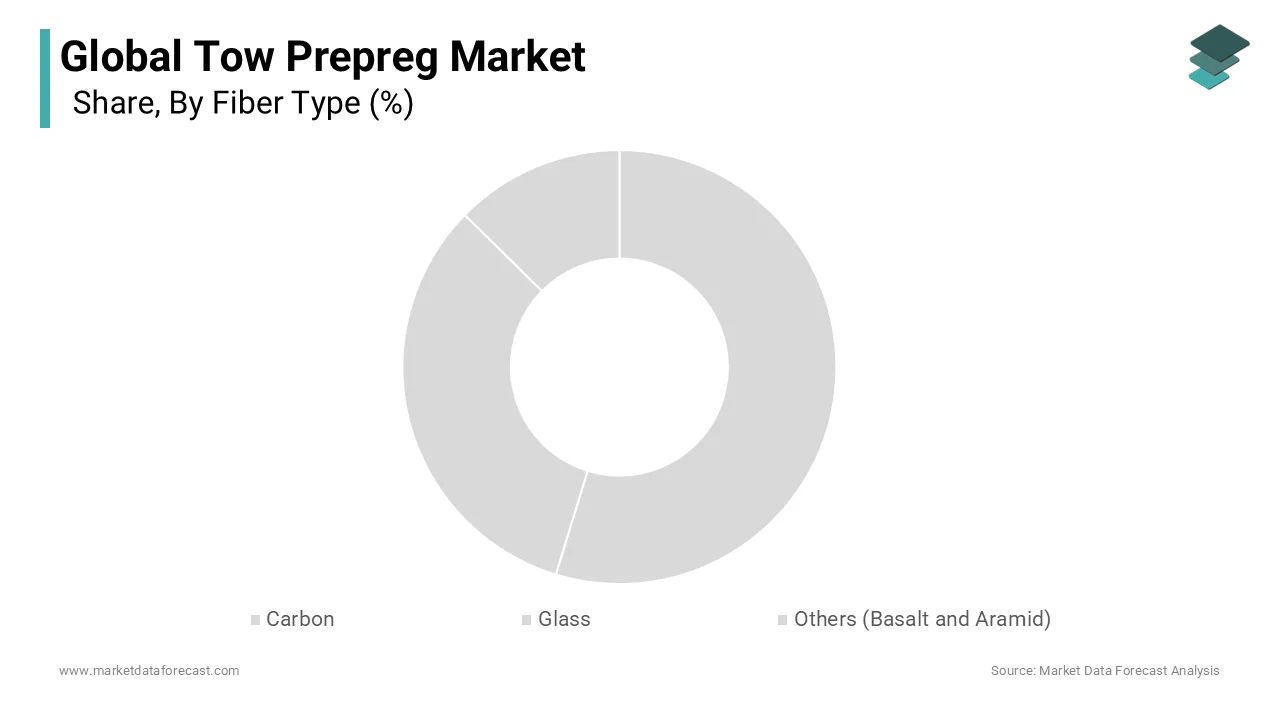
The glass fiber segment is likely to witness a fastest CAGR of 6.2% from 2026 to 2034 with the cost effectiveness and versatility in industrial applications. The significantly lower cost of glass fiber compared to carbon fiber, which makes it an attractive option for cost sensitive sectors, such as wind energy and marine. As per the Global Wind Energy Council the installation of new wind turbines reached 93 gigawatts in 2023 requiring large volumes of affordable composite materials for blade construction. Glass fiber tow prepregs offer a balanced combination of strength and affordability that suits these large-scale applications. The electrical insulation properties of glass fiber, which are essential for applications in electronics and electrical infrastructure. Glass fiber tow prepregs provide the necessary dielectric strength while maintaining structural integrity. The improvement in glass fiber sizing technologies has enhanced the bond strength with various resin matrices improving overall composite performance. As per Owens Corning the development of high modulus glass fibers has expanded the application range of glass fiber prepregs into semi structural automotive parts.
By Application Insights
The pressure vessels segment was the largest by occupying 42.3% of the tow prepreg market share in 2025 due to the critical need for high strength and lightweight containment solutions in gas storage and transport. The expanding hydrogen economy, which requires efficient and safe storage systems for compressed hydrogen gas. As per the International Energy Agency, the global demand for hydrogen is expected to increase by 20% by 2030 driving investments in type IV pressure vessels made from carbon fiber tow prepregs. These vessels offer superior strength to weight ratios compared to metal alternatives enabling higher storage pressures and longer ranges for fuel cell vehicles. The stringent safety regulations governing pressure vessel design and manufacturing, which favor the consistent quality provided by automated fiber placement using tow prepregs. The ability of tow prepregs to create seamless and uniform layers reduces the risk of weak points and failures under high pressure. The growing adoption of natural gas vehicles also contributes to demand as these vehicles utilize similar composite tanks for fuel storage. As per NGV America the number of natural gas vehicles in operation has grown by 10% annually supporting the market for composite pressure vessels. The scalability of tow prepreg manufacturing allows for cost effective production of large diameter vessels.
The oxygen cylinders segment is likely to witness a fastest CAGR of 7.8% from 2026 to 2034, driven by the increasing demand for portable medical oxygen and aerospace life support systems. The rising prevalence of respiratory diseases and the aging global population, which increases the need for home healthcare solutions including portable oxygen concentrators and cylinders. As per the World Health Organization, chronic respiratory diseases affect over 500 million people worldwide creating a sustained demand for lightweight and durable oxygen storage devices. Carbon fiber tow prepregs enable the production of compact and lightweight cylinders that are easy for patients to carry. The second driver is the expansion of commercial space tourism and aviation which requires reliable and lightweight life support systems for passengers and crew. The high strength to weight ratio of tow prepreg based cylinders allows for greater payload capacity and fuel efficiency in aircraft and spacecraft. The regulatory emphasis on safety and reliability in medical and aerospace applications favors the use of high quality composite materials.
By End User Insights
The aerospace and defense sector was the largest by holding a dominant share of the tow prepreg market due to the extensive use of composite materials in modern aircraft and military vehicles. The relentless pursuit of weight reduction to improve fuel efficiency and operational range in commercial and military aviation. As per Airbus, the A350 XWB utilizes over 50% composite materials in its structure relying heavily on carbon fiber tow prepregs for primary components. This high level of integration drives significant demand for high performance prepreg products. The second driver is the increasing defense spending globally which fuels the development of advanced military aircraft drones and missiles that require lightweight and strong materials. Tow prepregs enable the construction of complex aerodynamic shapes with high precision and consistency, which is for defense applications. The stringent certification requirements in aerospace also favor established suppliers of tow prepregs who have proven track records of quality and reliability.
The automotive and transportation sector is lucratively growing at an anticipated CAGR of 9.2% during the forecast period with the electrification of vehicles and strict emission regulations. The need to offset the heavy weight of battery packs in electric vehicles to maintain competitive driving ranges. As per the International Council on Clean Transportation, electric vehicles require a 10 to 15% reduction in body weight to achieve optimal efficiency which drives the adoption of carbon fiber components. Tow prepregs facilitate the automated production of lightweight chassis and body panels at scale. The second driver is the implementation of stricter fuel economy and emission standards worldwide which compel automakers to lighten vehicle structures. According to the European Commission CO2 emission standards for new cars have been tightened by 15% since 2021 pushing manufacturers toward lightweight materials. The development of high volume manufacturing processes such as compression molding with tow prepregs has reduced cycle times making composites more viable for mass production.
REGIONAL ANALYSIS
North America Tow Prepreg Market Analysis
North America was the top performer in the global tow prepreg market by accounting for 35.5% of the share in 2025 with a robust aerospace industry and advanced manufacturing capabilities. The region is home to major aircraft manufacturers, such as Boeing and Lockheed Martin, which extensively use carbon fiber tow prepregs in their commercial and defense programs. The significant investment in research and development for next generation aircraft and space exploration vehicles. NASA and private space companies like SpaceX are increasingly utilizing tow prepregs for lightweight structures. The growing automotive sector’s adoption of lightweight materials for electric vehicles is bolstering the growth of the segment. The US government’s incentives for electric vehicle production have accelerated this trend.
Europe Tow Prepreg Market Analysis
Europe tow prepreg market was positioned second by holding 28.2% of share in 2025 with a strong aerospace sector and stringent environmental regulations. The region is home to Airbus and numerous tier one suppliers who drive demand for high performance composite materials. As per the European Composites Industry Association the aerospace sector accounts for over 40% of composite consumption in Europe. This regulatory framework encourages the adoption of lightweight materials to improve fuel efficiency. According to the European Environment Agency, transport emissions must decrease by 90% by 2050 to meet climate goals. The strong presence of automotive manufacturers in Germany, France, and Italy who are transitioning to electric vehicles. These companies are investing in automated composite manufacturing to reduce vehicle weight. As per the European Automobile Manufacturers Association electric vehicle production in Europe increased by 35% in 2023. The region’s emphasis on sustainability also drives the development of recyclable thermoplastic tow prepregs.
Asia Pacific Tow Prepreg Market Analysis
Asia Pacific tow prepreg market growth is likely to have steady growth opportunities in coming years with rapid industrialization and expanding aerospace and automotive sectors. Countries such as China, Japan, and South Korea, are investing heavily in advanced manufacturing capabilities. The booming commercial aviation sector in China and India, which requires new aircraft and infrastructure. COMAC the Chinese aircraft manufacturer is increasing production of its C919 jet which uses significant amounts of composite materials. According to the Civil Aviation Administration of China air passenger traffic is projected to double by 2035. The second driver is the rapid adoption of electric vehicles in China which is the largest EV market globally. Government subsidies and consumer demand are accelerating this transition. The availability of raw materials and lower production costs in the region also attract global composite manufacturers.
Latin America Tow Prepreg Market Analysis
Latin America tow prepreg market growth is likely to grow with the developments in the aerospace and oil and gas sectors. Brazil and Mexico are the key contributors in the region with emerging manufacturing capabilities. The presence of Embraer in Brazil, which is a major producer of regional jets and business aircraft. Embraer utilizes composite materials extensively in its newer aircraft models driving local demand for tow prepregs. The oil and gas industry, which uses composite pipes and pressure vessels for offshore operations. The growing awareness of lightweight materials in the automotive sector also contributes to market growth.
Middle East and Africa Tow Prepreg Market Analysis
The Middle East and Africa tow prepreg market growth is likely to grow with the investments in aerospace infrastructure and oil and gas applications. The expansion of the aviation industry in the Middle East with airlines, such as Emirates and Etihad ordering new aircraft. These airlines operate large fleets of modern aircraft that utilize composite materials. The oil and gas sector, which uses composite materials for pipelines and storage tanks to resist corrosion in harsh environments. The region’s focus on maintaining its position as a global energy supplier supports this demand. The emerging interest in renewable energy projects, such as solar and wind also creates opportunities for composite materials.
COMPETITIVE LANDSCAPE
The Tow Prepreg Market features intense competition among established chemical giants and specialized composite manufacturers who vie for dominance through technological innovation and service excellence. Major players compete on the basis of material performance processing efficiency and sustainability credentials rather than price alone. The high barriers to entry due to stringent certification requirements in aerospace and automotive sectors limit new entrants but encourage existing firms to continuously innovate. Companies differentiate themselves by offering integrated solutions that include material supply technical support and recycling services. The shift toward thermoplastic resins and automated manufacturing processes has intensified rivalry as firms race to develop faster curing and more recyclable products. Collaborative relationships with end users are critical for securing long term contracts and influencing design specifications. Geographic expansion into Asia Pacific where demand is growing rapidly is a key strategic focus for global leaders. The market is characterized by a mix of broad portfolio providers and niche specialists who cater to specific industrial needs. Intellectual property protection and proprietary resin formulations serve as significant competitive advantages. Supply chain resilience and raw material security have become crucial differentiators following recent global disruptions.
Key Market Players
The major key players in the global tow prepreg market are
- TCR Composites
- SGL Carbon SE
- JXTG Holdings, Inc
- Teijin Limited
- Mitsubishi Chemical Holdings Corporation
- Hexcel Corporation
- Porches Industries Designs
- Red Composites Limited
- Vitech Composites
- Arisawa Mfg Limited
Top Players in the Market
- Toray Industries Inc stands as a global leader in advanced composite materials with extensive capabilities in carbon fiber and prepreg manufacturing. The company supplies high performance tow prepregs to major aerospace and automotive manufacturers worldwide ensuring consistent quality and innovation. Recently, Toray expanded its production capacity for intermediate modulus carbon fibers to meet growing demand from next generation aircraft programs. The company also invested in research facilities to develop thermoplastic prepreg technologies that offer improved recyclability and faster processing cycles. These strategic initiatives strengthen its position by addressing sustainability concerns and enhancing operational efficiency for customers. Toray collaborates closely with original equipment manufacturers to co-develop customized material solutions that optimize structural performance. Its vertical integration from precursor to finished prepreg allows for tight quality control and supply chain stability.
- Hexcel Corporation is a prominent supplier of lightweight composite materials specializing in carbon fiber reinforcements and engineered prepreg systems. The company serves diverse sectors including commercial aerospace defense and space exploration with tailored material solutions. Hexcel recently launched new toughened epoxy resin systems designed for out of autoclave processing which reduces manufacturing costs and energy consumption. The company also expanded its facility in Salt Lake City to increase output of high modulus carbon fibers used in satellite and launch vehicle structures. These actions enhance its ability to support high rate production programs while maintaining strict quality standards. Hexcel focuses on digitalization by implementing advanced tracking systems that provide real time visibility into material lifecycle and performance. This technological integration improves customer confidence and supply chain reliability.
- Solvay S.A. is a key player in the specialty chemicals sector offering a wide range of high performance prepreg materials for industrial applications. The company provides innovative resin formulations including thermoplastic and thermoset options that cater to aerospace automotive and energy sectors. Solvay recently introduced a new line of bio based epoxy resins for prepregs which significantly reduces the carbon footprint of composite parts. The company also partnered with leading automotive manufacturers to develop rapid cure prepregs suitable for high volume electric vehicle production. These developments align with global sustainability goals and regulatory requirements for lower emissions. Solvay invests heavily in recycling technologies to enable closed loop systems for composite waste management. Its focus on circular economy principles strengthens its market position by offering environmentally responsible solutions.
Top Strategies Used by Key Market Participants
Key players in the Tow Prepreg Market primarily focus on vertical integration to secure raw material supply and control quality standards. Companies invest heavily in research and development to create novel resin systems such as thermoplastics and bio based epoxies that meet sustainability mandates. Strategic partnerships with original equipment manufacturers allow for co development of customized materials tailored to specific application needs. Expansion of production facilities in emerging markets helps companies capture growing demand in Asia Pacific and other regions. Adoption of digital technologies like artificial intelligence and Internet of Things enhances manufacturing efficiency and product traceability. Firms also pursue acquisitions of specialized technology providers to broaden their product portfolios and technical expertise. Sustainability initiatives including recycling programs and carbon neutral production processes are central to corporate strategies.
MARKET SEGMENTATION
This research report on the global tow prepreg market has been segmented and sub-segmented based on resin type, fiber type, application, end user, and region.
By Resin Type
- Epoxy
- Phenolic
- Others (Bismaleimide, Polyamide, Polypropylene, and Polyetheretherketone)
By Fiber Type
- Carbon
- Glass
- Others (Basalt and Aramid)
By Application
- Pressure Vessel
- Scuba Tanks
- Oxygen Cylinders
- Others
By End User
- Aerospace & Defense
- Automotive & Transportation
- Sports & Recreational
- Oil & Gas
- Medical
- Marine
- Industrial
- Wind Energy
By Region
- North America
- Europe
- Asia Pacific
- Latin America
- Middle East and Africa