- Product Description Description
- Table of Contents TOC
- List of Table & Figure LOT
- Get Free Sample PDF Sample PDF
Market Size, 2025
$0.15 BnMarket Estimate, 2026
$0.16 BnMarket Forecast, 2034
$0.33 BnCAGR, 2026–2034
9.26%Global Transient Ischemic Attack (TIA) Market Summary
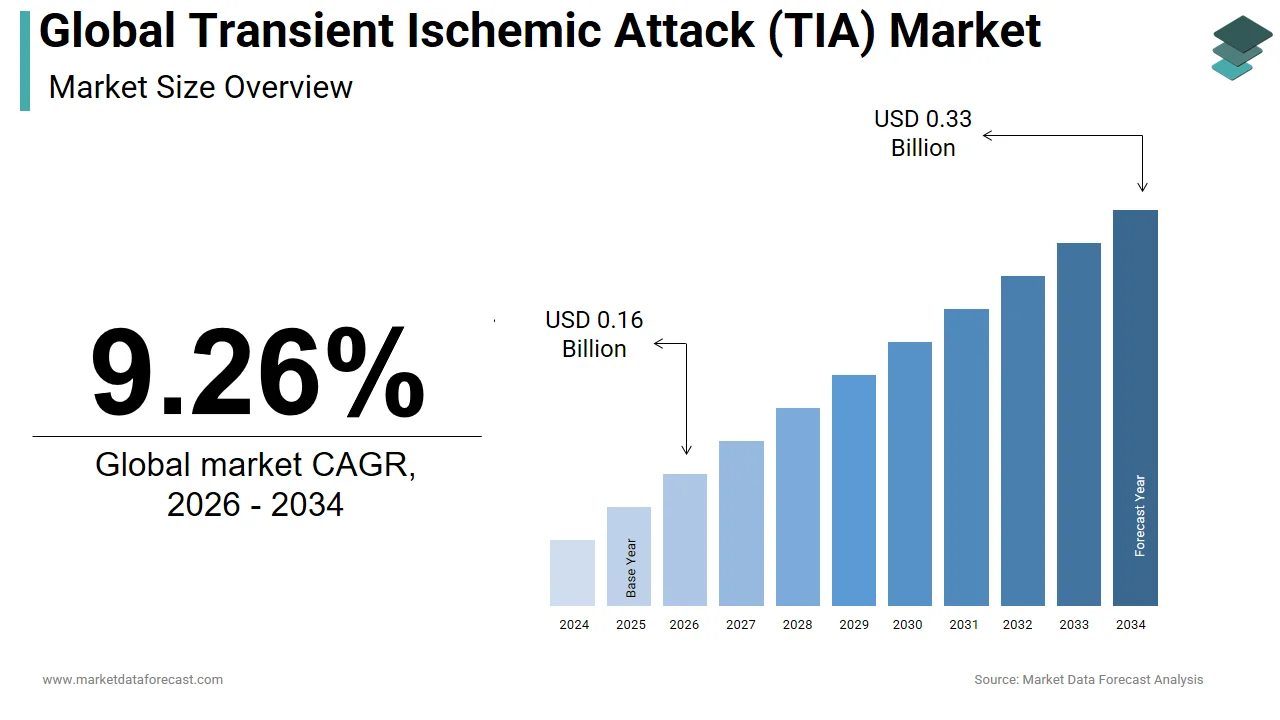
The global transient ischemic attack (TIA) market was valued at USD 0.15 billion in 2025, is projected to reach USD 0.16 billion in 2026, and further expand to USD 0.33 billion by 2034, registering a CAGR of 9.26% from 2026 to 2034. The growth of the global transient ischemic attack (TIA) market is driven by increasing prevalence of cardiovascular diseases, rising risk of stroke in aging populations, and advancements in neuroimaging and diagnostic technologies. The rising awareness of TIA as a stroke warning sign and the growing adoption of preventive pharmacological treatments are also boosting market expansion.
Key Market Trends
- Rising adoption of advanced imaging technologies, such as MRI, for early and accurate diagnosis.
- Growing demand for pharmacological interventions, including antiplatelet and anticoagulant therapies.
- Increased focus on preventive healthcare and awareness campaigns to reduce stroke risk.
- Expansion of AI-enabled diagnostic platforms for faster identification of TIAs.
- Higher demand for minimally invasive and non-invasive treatment approaches.
Segmental Insights
- Based on diagnosis, the magnetic resonance imaging (MRI) segment accounted for the largest share at 42.3% in 2024, driven by superior imaging accuracy in detecting ischemic changes.
- Based on treatment, the pharmacological interventions segment dominated the market in 2024, supported by widespread use of blood thinners and cholesterol-lowering drugs for prevention.
- Based on age group, individuals aged 50 and above held the leading share in 2024 due to higher susceptibility to cardiovascular risk factors.
Regional Insights
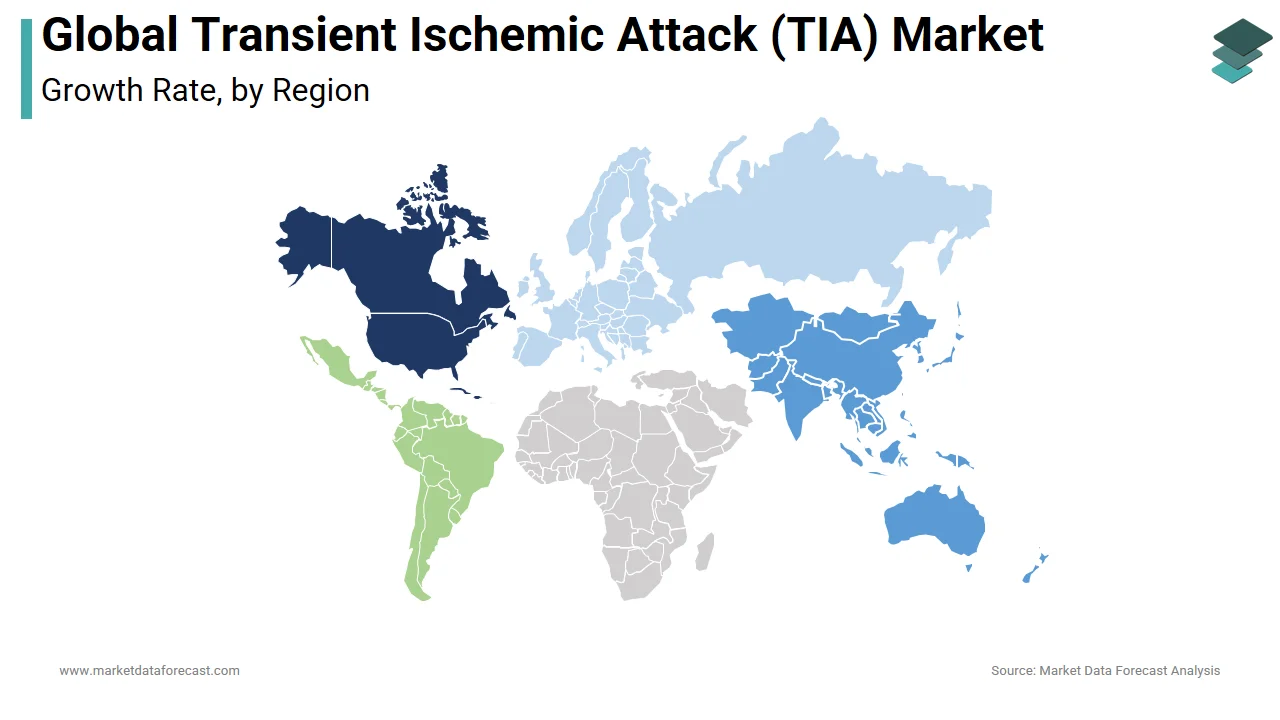
- North America was the leading region in the global transient ischemic attack (TIA) market in 2024, driven by advanced healthcare infrastructure, higher awareness levels, and the strong presence of key pharmaceutical and medical device companies.
- Europe followed with significant growth, supported by government-funded healthcare initiatives and the adoption of preventive care.
- Asia-Pacific is expected to witness the fastest growth due to a rising aging population, growing stroke burden, and increasing investments in healthcare infrastructure.
- Latin America and the Middle East & Africa are emerging markets with gradual improvements in diagnostic access and stroke awareness.
Competitive Landscape
Key players in the global transient ischemic attack (TIA) market include Koninklijke Philips NV, Stryker Corporation, Johnson & Johnson Services Inc., Boston Scientific Corporation, Sanofi, Bayer AG, Pfizer Inc., Siemens AG, F. Hoffmann-La Roche AG, GE Healthcare, Penumbra Inc., Medtronic PLC, Abbott Laboratories, Merck & Co., Inc., and Boehringer Ingelheim GmbH. These companies are focusing on diagnostic innovations, treatment pipeline expansion, and strategic partnerships to strengthen their global footprint.
Global Transient Ischemic Attack (TIA) Market Size
The global transient ischemic attack (TIA) market was valued at USD 0.15 billion in 2025, is estimated to reach USD 0.16 billion in 2026, and is projected to reach USD 0.33 billion by 2034, growing at a CAGR of 9.26% from 2026 to 2034.
A transient ischemic attack (TIA), often termed a "mini-stroke," is a brief episode of neurological dysfunction caused by temporary blockage of cerebral blood flow, typically resolving within 24 hours without permanent infarction. As per the American Heart Association, over 500,000 individuals in the United States experience a TIA annually, though a significant proportion remain undiagnosed due to symptom misinterpretation. The global clinical emphasis has shifted toward rapid assessment and intervention, with guidelines from the National Institute for Health and Care Excellence (NICE) advocating evaluation within 24 hours of symptom onset. This evolving clinical urgency underpins the structural foundation of the TIA management ecosystem, influencing diagnostic protocols, therapeutic strategies, and healthcare resource allocation across acute neurology settings.
MARKET DRIVERS
Rising Prevalence of Atherosclerosis and Hypertension
The escalating global burden of underlying vascular pathologies, such as atherosclerosis and hypertension, significantly amplifies the growth of the transient ischemic attack market. Hypertension is the leading modifiable risk factor for cerebrovascular events that affects nearly 1.3 billion adults worldwide, as reported by the World Health Organization in 2023. Atherosclerotic plaque formation in the carotid arteries directly predisposes individuals to embolic occlusions in the cerebral vasculature, triggering TIA episodes. The synergy between aging populations and sedentary lifestyles further intensifies arterial degeneration, increasing TIA susceptibility. This growing patient pool exerts sustained pressure on healthcare systems to enhance early detection mechanisms, directly fueling demand for rapid neuroimaging, carotid Doppler screenings, and antithrombotic therapies within the TIA care continuum.
Expansion of Rapid Access TIA Clinics and Stroke Prevention Units
The institutionalization of specialized TIA clinics is also boosting the growth of the transient ischemic attack market. These clinics, designed to provide same-day or next-day assessment, have demonstrated an 80% reduction in early stroke risk when patients are evaluated within 24 hours of symptom onset, as documented in a multicenter study published in The Lancet Neurology in 2022. These centers integrate neuroimaging, cardiac monitoring, and immediate anticoagulation protocols, drastically curtailing progression to major stroke. Their proliferation reflects a systemic shift toward preventive neurology, increasing demand for point-of-care diagnostics, tele-neurology platforms, and multidisciplinary coordination tools.
MARKET RESTRAINTS
Underdiagnosis and Symptom Misattribution
The high rate of underdiagnosis due to the transient and often subtle nature of symptoms is hindering the growth of the transient ischemic attack market. The average symptom duration is less than 30 minutes, which is leading many patients to dismiss episodes without seeking medical attention. Furthermore, primary care providers often lack immediate access to diffusion-weighted MRI, the gold standard for confirming ischemic origin, resulting in diagnostic uncertainty.
Inequitable Access to Advanced Neuroimaging in Low- and Middle-Income Countries
Disparities in healthcare infrastructure severely constrain TIA diagnosis and management in resource-limited settings, which is also inhibiting the growth of the transient ischemic attack market. In India, despite a high stroke burden, only 22% of district-level hospitals have 24/7 neuroimaging access, according to the Indian Council of Medical Research.
MARKET OPPORTUNITIES
Integration of Artificial Intelligence in Early Risk Stratification
The advent of AI-powered clinical decision support systems, TIA management by enhancing early risk prediction and triage accuracy, is expected to bolster the growth of the transient ischemic attack market. Machine learning models trained on large-scale electronic health records can identify high-risk patients before symptom onset by analyzing patterns in blood pressure variability, lipid profiles, and ECG anomalies. Similarly, the University of Oxford’s VISION-TIA model, deployed across five UK hospitals, reduced time-to-referral by 40% by automating ABCD2 score calculations and flagging high-risk cases in real time.
Growth of Wearable Cardiovascular Monitoring Devices
The proliferation of consumer-grade and medical-grade wearable devices capable of continuous cardiac rhythm monitoring is escalating the growth of the transient ischemic attack market. As per a 2022 study published in Circulation, prolonged ECG monitoring via wearable patches increased AF detection rates by 3.5-fold compared to standard 24-hour Holter monitoring in post-TIA patients. Companies like AliveCor and Bardy Diagnostics have reported a 60% year-on-year increase in prescription-based wearable monitor usage in neurology clinics across North America.
MARKET CHALLENGES
Variability in Clinical Guidelines and Treatment Protocols Across Regions
The lack of global standardization in diagnostic criteria and therapeutic approaches, is quite challenging for the growth of the transient ischemic attack market. The California risk score and the ABCD3-I model are adopted in specific jurisdictions, which creates fragmentation in clinical decision-making. Harmonizing evidence-based protocols remains a formidable task, which requires multinational consensus and continuous evaluation of real-world effectiveness across diverse healthcare systems.
High Recurrence Risk Despite Preventive Therapies
TIA patients experience recurrent ischemic events with the efficacy of current preventive strategies, which also hampers the growth of the transient ischemic attack market. As per the EXPRESS study follow-up data published in The New England Journal of Medicine, approximately 10% of patients treated with early dual antiplatelet therapy and risk factor control still suffer a stroke within 90 days. This residual risk is attributed to factors such as medication non-adherence, undetected paroxysmal AF, and progressive atherosclerosis. Furthermore, asymptomatic intracranial stenosis, present in nearly 15% of TIA cases as per the St. George’s Hospital Neurovascular Unit, often escapes routine screening and remains a silent contributor to recurrence.
REPORT COVERAGE
| REPORT METRIC | DETAILS |
| Market Size Available | 2025 to 2034 |
| Base Year | 2025 |
| Forecast Period | 2026 to 2034 |
| Segments Covered | By Diagnosis, Treatment, Age Groups, and Region. |
| Various Analyses Covered | Global, Regional and Country-Level Analysis, Segment-Level Analysis, Drivers, Restraints, Opportunities, Challenges; PESTLE Analysis; Porter’s Five Forces Analysis, Competitive Landscape, Analyst Overview of Investment Opportunities |
| Regions Covered | North America, Europe, Asia-Pacific, Latin America, Middle East and Africa |
| Market Leaders Profiled | Koninklijke Philips NV (Netherlands), Stryker Corporation (U.S.), Johnson & Johnson Services Inc. (U.S.), Boston Scientific Corporation (U.S.), Sanofi (France), Bayer AG (Germany), Pfizer Inc. (U.S.), Siemens AG (U.S.), F. Hoffmann-La Roche AG (Switzerland), GE Healthcare (U.K.), Penumbra Inc. (U.S.), Medtronic PLC (Ireland), Abbott Laboratories (U.S.), Merck & Co., Inc. (U.S.), Boehringer Ingelheim GmbH (Germany) |
SEGMENTAL ANALYSIS
By Diagnosis Insights
The magnetic resonance imaging (MRI) segment accounted in holding 42.3% of the global transient ischemic attack market in 2024. DWI-MRI identifies restricted water diffusion in ischemic brain tissue within minutes of onset, offering a detection rate of over 90% for clinically relevant ischemia, according to a multicenter study published in Stroke by the American Heart Association. Unlike CT scans, which often appear normal in early TIA, MRI provides definitive evidence of microvascular injury, guiding urgent therapeutic decisions. The integration of MRI into rapid-access TIA clinics across developed nations has further solidified its position.
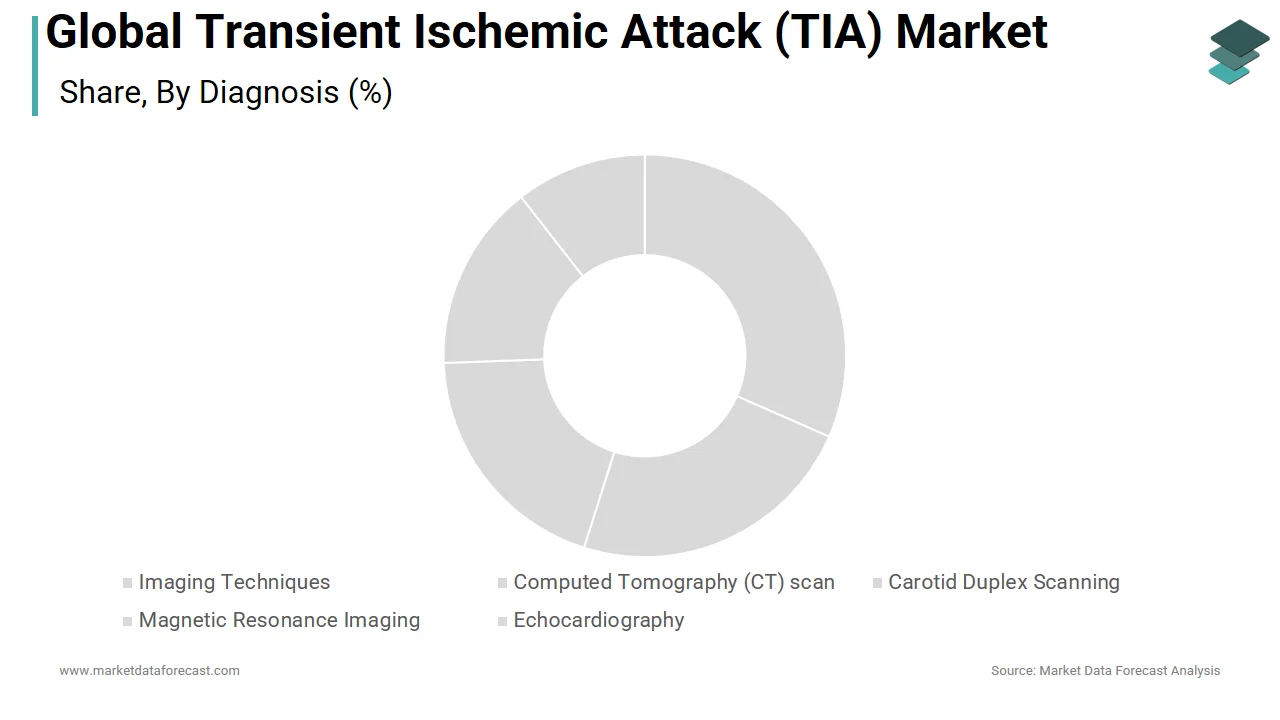
The Computed Tomography Angiography (CTA) segment is likely to grow with an expected CAGR of 11.6% during the forecast period, with its rapid acquisition time and widespread availability in emergency departments, which is making it ideal for time-sensitive evaluations. As per data from the American College of Emergency Physicians, over 85% of Level I trauma centers in the U.S. now employ CTA as part of their acute stroke protocol by enabling diagnosis within 15 minutes of patient arrival. Additionally, advancements in dual-energy CT and automated plaque characterization software have enhanced diagnostic precision.
By Treatment Insights
The pharmacological interventions segment accounted for a prominent share of the transient ischemic attack market in 2025, with the immediate, scalable, and non-invasive nature of drug-based stroke prevention. Antiplatelet agents, particularly aspirin and clopidogrel, are administered in over 90% of confirmed TIA cases within the first 24 hours, as per the American Academy of Neurology’s 2022 treatment guidelines. The POINT trial follow-up data revealed that dual antiplatelet therapy reduces the risk of subsequent stroke by 25% within 90 days post-TIA.
The surgical treatments segment is likely to grow with an expected CAGR of 9.8% throughout the forecast period, with the increasing recognition of symptomatic carotid stenosis as a high-risk TIA etiology. As per data from the Society for Vascular Surgery, over 120,000 CEAs are performed annually in the U.S., with a 30-day stroke/death rate below 2% with improved surgical safety. Technological advances such as embolic protection devices during CAS and intraoperative neuromonitoring have expanded eligibility to high-risk patients.
By Age Groups Insights
The Individuals aged 50 and above segment was the largest and held a significant share ofthe transient ischemic attack market in 2025, with the exponential rise in cerebrovascular risk factors with advancing age. Similarly, type 2 diabetes, affecting over 200 million individuals in this age group according to the International Diabetes Federation, accelerates endothelial dysfunction and microvascular damage.
The 35–49 age group segment is likely to grow with an expected CAGR of 7.3% during the forecast period. According to the National Health and Nutrition Examination Survey (NHANES), 45% of adults in this bracket exhibit at least one major stroke risk facto:r hypertension, obesity, or dyslipidemia. A 2023 study in JAMA Neurology found that ischemic stroke and TIA hospitalizations in this cohort increased by 42% between 2011 and 2021, particularly among socioeconomically disadvantaged groups. Heightened awareness, improved diagnostic access, and greater emergency department utilization for transient symptoms further amplify detection rates.
REGIONAL ANALYSIS
North America Transient Ischemic Attack Market Insights
North America was the top performer of the transient ischemic attack market with a significant share in 2024. As per the American Heart Association, over 90% of metropolitan hospitals now operate certified stroke centers, with 65% offering 24/7 neurointerventional services. The CDC estimates that nearly 600,000 Americans experience a TIA annually, though only 40% seek immediate care, highlighting both the scale of unmet need and the effectiveness of public awareness campaigns like “Act F.A.S.T.” Reimbursement policies under Medicare Advantage have expanded coverage for dual antiplatelet therapy and carotid imaging, driving treatment adherence.
Europe Transient Ischemic Attack Market Insights
Europe transient ischemic attack market growth is ascribed to grow with the underpinned by robust public healthcare systems and standardized stroke prevention frameworks. According to the European Stroke Organisation, 18 of the 27 EU member states have implemented national TIA rapid-access clinic networks, ensuring 80% of urban patients receive specialist evaluation within 24 hours. Germany and the United Kingdom lead in diagnostic penetration, with over 70% of TIA cases undergoing MRI within 48 hours of symptom onset, as per Eurostat health data. The European Society of Cardiology’s 2023 guidelines have harmonized antithrombotic use, increasing dual therapy adoption to 60% across major hospitals.
Asia Pacific Transient Ischemic Attack Market Insights
The Asia Pacific transient ischemic attack market is likely to grow with significant growth opportunities during the forecast period. Rapid urbanization and dietary shifts have led to a 35% increase in hypertension prevalence among adults under 50 in Southeast Asia over the past decade, according to the World Health Organization Western Pacific Region. The Japanese Ministry of Health reports that over 150,000 carotid ultrasounds are performed annually in asymptomatic high-risk patients.
Latin America Transient Ischemic Attack Market Insights
Latin America transient ischemic attack market growth is likely to grow steadily throughout the forecast period. Brazil and Mexico account for over 60% of regional TIA-related hospitalizations, with the Brazilian Ministry of Health recording a 22% increase in emergency department visits for transient neurological symptoms between 2018 and 2023.
COMPETITIVE LANDSCAPE
The competitive landscape of the transient ischemic attack market is characterized by an integration of pharmaceutical, diagnostic, and medical device firms vying to influence early stroke prevention. While no single entity dominates across all segments, established players distinguish themselves through vertical integration of therapies, diagnostics, and digital tools. Competition is intensifying as companies shift from reactive treatment models to proactive risk mitigation, driven by advances in imaging, wearable monitoring, and AI analytics. Strategic differentiation is achieved through clinical collaborations, regulatory agility, and regional customization of care pathways. Emerging biotech firms are challenging incumbents with novel biomarkers and targeted therapies, fostering innovation.
KEY MARKET PLAYERS
Some of the companies that are playing a dominating role in the global transient ischemic attack (TIA) market include
- Koninklijke Philips NV (Netherlands)
- Stryker Corporation (US)
- Johnson & Johnson Services Inc (US)
- Boston Scientific Corporation (US)
- Sanofi (France)
- Bayer AG (Germany)
- Pfizer Inc (US)
- Siemens AG (US)
- F. Hoffmann-La Roche AG (Switzerland)
- GE Healthcare (UK)
- Penumbra Inc (California)
- Medtronic PLC (Ireland)
- Abbott Laboratories (US)
- Merck & Co., Inc. (US)
- Boehringer Ingelheim GmbH (Germany)
Top Strategies Used by the Key Market Participants
Key players in the transient ischemic attack market are deploying multifaceted strategies to consolidate their positions. Major companies are prioritizing strategic partnerships with academic medical centers to validate novel diagnostics and therapeutic protocols. Product innovation remains central, with firms investing heavily in AI-powered risk prediction tools and next-generation antithrombotics. Geographic expansion into high-burden emerging markets in the Asia Pacific and Latin America is being accelerated through localized clinical trials and regulatory submissions. Companies are also enhancing digital health integration by launching patient monitoring platforms that improve adherence to preventive therapies.
Top Players in the Transient Ischemic Attack Market
Pfizer Inc.
Pfizer Inc. plays a pivotal role in the transient ischemic attack (TIA) market through its leadership in antiplatelet and anticoagulant therapies. In the Asia Pacific region, the company has intensified its engagement with national stroke councils in Japan, Australia, and South Korea to promote early intervention protocols. Pfizer’s dual antiplatelet regimen, combining aspirin and clopidogrel, is widely integrated into TIA management guidelines across major hospitals in India and China. In 2023, the company launched an AI-driven patient adherence platform in collaboration with a Singapore-based digital health firm to improve long-term medication compliance post-TIA.
F. Hoffmann-La Roche Ltd.
Roche has established a strong presence in the TIA landscape through its advanced diagnostics and biomarker-driven solutions. In the Asia Pacific region, the company has deployed its cobas® 6800/8800 systems in major stroke centers across Australia, South Korea, and Thailand by enabling rapid detection of coagulation markers and inflammatory profiles linked to ischemic events. Roche’s partnership with the National Neuroscience Institute in Singapore focuses on validating blood-based biomarkers for early cerebral ischemia, aiming to reduce reliance on neuroimaging in resource-constrained settings. In 2024, Roche launched a digital decision-support tool integrated with its diagnostic platforms, used in over 200 hospitals in Japan and India.
Medtronic plc
Medtronic is a leading contributor to the surgical and interventional management of TIA in addressing carotid artery disease. Across the Asia Pacific, the company has expanded access to its embolic protection devices and carotid stenting systems in India, China, and Malaysia, supporting minimally invasive revascularization procedures. Medtronic has collaborated with stroke academies in Thailand and the Philippines to train vascular surgeons in best practices for carotid interventions post-TIA. In 2023, it introduced the self-expanding Precise Pro™ RX Carotid Stent in Japan, gaining regulatory approval under the country’s fast-track innovation pathway. The company also launched a mobile stroke intervention unit pilot in urban India, equipped with real-time imaging and tele-neurology connectivity.
Global Transient Ischemic Attack Market News
- In March 2023, Roche partnered with the Australian Stroke Foundation to fund a multicenter study evaluating the role of blood-based biomarkers in predicting early stroke risk after a transient ischemic attack.
- In August 2023, Medtronic introduced the Precise Pro™ RX Carotid Stent in Japan, gaining PMDA approval for use in symptomatic patients with carotid stenosis following a TIA.
- In November 2023, Abbott initiated a pilot program in Thailand, deploying its ID NOW™ platform for point-of-care coagulation testing in rapid-access TIA clinics.
- In April 2024, Johnson & Johnson expanded its stroke prevention portfolio by launching a real-world evidence study in South Korea assessing the effectiveness of its antiplatelet regimen in Asian TIA patients.
MARKET SEGMENTATION
This research report on the global transient ischemic attack (TIA) market has been segmented and sub-segmented into the following categories.
By Diagnosis
- Imaging Techniques
- Computed Tomography (CT) scan
- Carotid Duplex Scanning
- Magnetic Resonance Imaging
- Echocardiography
By Treatment
-
- Surgery
- Drugs
- Antithrombotic agents
- Antiplatelets
- Clopidogrel
- Aspirin
- Heparins
- ENOXAPARIN
- DALTEPARIN
- Fibrinolytics
- Tenecteplase
By Age Groups
-
- 0–18 years
- 19–40 years (Millennial)
- 41–60 years
- 60+ years
By End-User
-
- Hospitals & Clinics
- Diagnostic Centers
- Research Laboratories
By Region
- North America
- Europe
- Asia Pacific
- Latin America
- The Middle East and Africa