- Product Description Description
- Table of Contents TOC
- List of Table & Figure LOT
- Get Free Sample PDF Sample PDF
Market Size, 2025
$7.51 BnMarket Estimate, 2026
$7.98 BnMarket Forecast, 2034
$12.95 BnCAGR, 2026–2034
6.24%Executive Summary: Global Trauma Fixation Devices Market
- Market Scope: Comprehensive global trauma fixation devices market analysis covering internal and external product types, end-user settings, regional landscapes, and critical treatment solutions for bone fractures and tissue degeneration.
- Market Valuation: Valued at USD 7.51 billion in 2025, estimated at USD 7.98 billion in 2026, and projected to reach USD 12.95 billion by 2034, registering a compound annual growth rate (CAGR) of 6.24% from 2026 to 2034.
- Primary Growth Drivers: Rapidly growing global geriatric population susceptible to osteoporosis, high incidence of road traffic accidents and sports-related injuries, continuous technological advancements in minimally invasive implants, and rising healthcare expenditures. Key market restraints include device compatibility complications (such as infections and allergies), high device costs in developing regions, and a scarcity of skilled surgical workforces.
Key Market Segment Metrics (2026–2034)
| Category | Leading Segment (2025 Position) | Fastest-Growing Segment |
|---|---|---|
| By Type | Internal Trauma Fixation Devices (holds ~85% market share, featuring screws, plates, rods, wires, and intramedullary nails for indefinite bone stabilization) | External Trauma Fixation Devices & Low-Profile Systems (expanding via unilateral, circular, and hybrid systems designed for complex open fractures) |
| By End User | Hospitals (dominated as the primary core settings for emergency trauma care and complex orthopedic surgeries) | Point of Care Testing & Specialized Care Centers (growing steadily backed by advancements in outpatient and specialized surgical recovery pathways) |
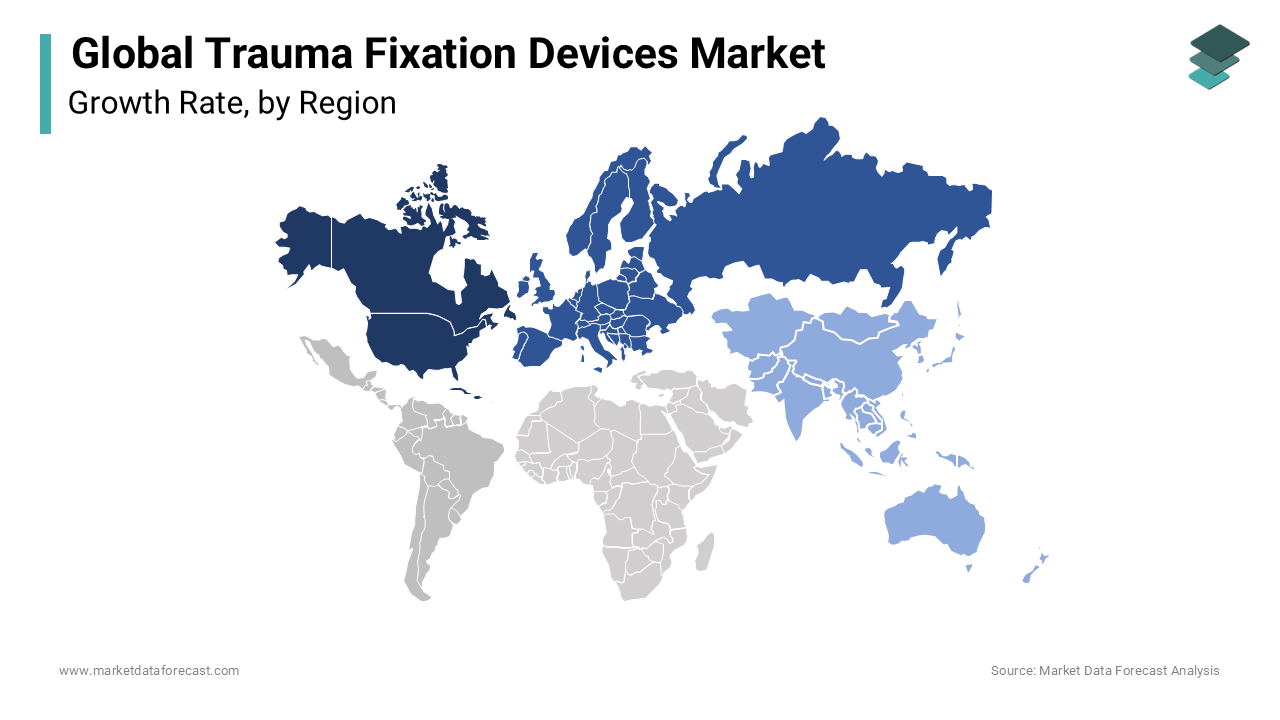
| By Region / Country | North America (captured the largest regional market share in 2025 driven by advanced healthcare infrastructure and supportive reimbursement policies) | Asia-Pacific (projected to record the fastest CAGR worldwide backed by large population demographics, rising disposable incomes, and expanding healthcare access) |
Major Market Players & Market Structure
Market Structure: Highly competitive orthopedic medical device market characterized by heavy investments in anatomical product design, strategic product launches, and technological developments in minimally invasive fixation systems.
Key Companies: DePuy Synthes, Smith & Nephew, Stryker Corporation, Zimmer Biomet, Integra LifeSciences Corporation, Arthrex, Medtronic, Inc., Conmed, and Bioretec, Inc.
Global Trauma Fixation Devices Market Size
As per the report, the global trauma fixation devices market size was valued at USD 7.51 billion in 2025. The trauma fixation devices market size is predicted to reach USD 12.95 billion by 2034 from USD 7.98 billion in 2026, growing at a CAGR of 6.24% during the forecast period.
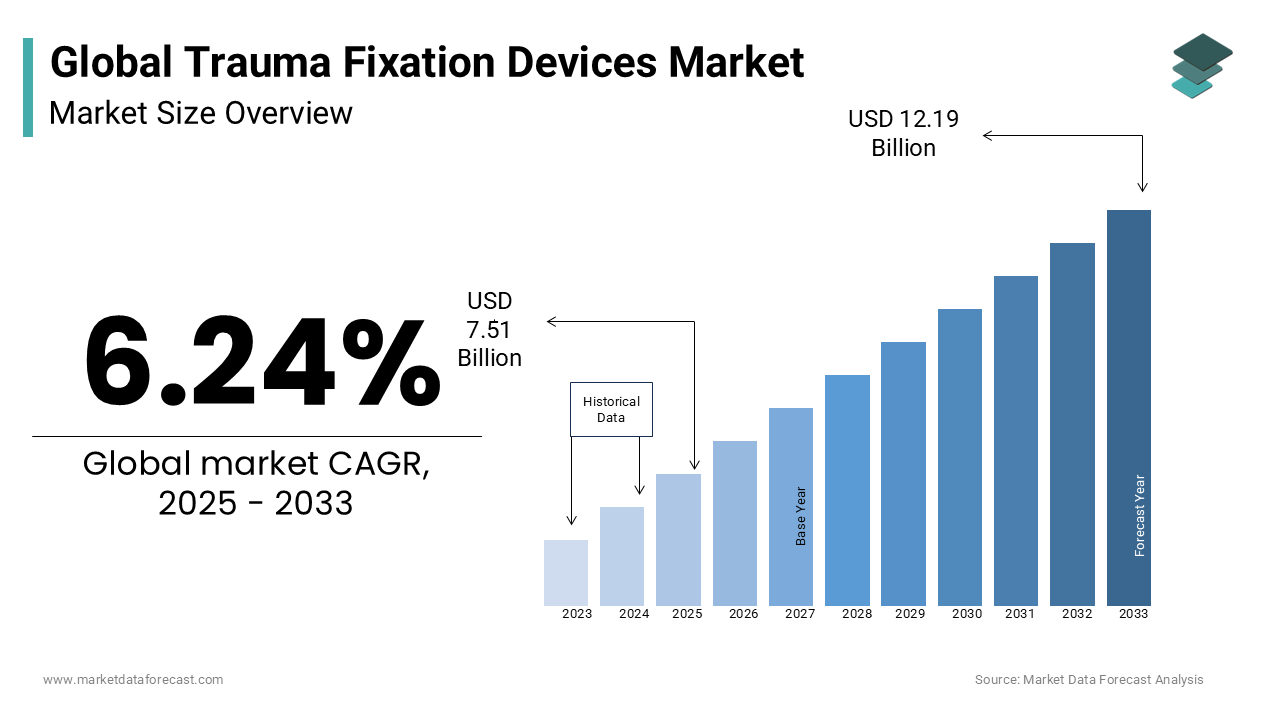
The trauma fixation devices are dedicated to implants and instruments used to stabilize fractured bones and repair soft tissue injuries resulting from acute trauma. According to the World Health Organization, road traffic injuries result in approximately 1.35 million deaths annually with millions more suffering non-fatal injuries requiring surgical intervention and fixation. The increasing incidence of high energy accidents sports related injuries and age related bone fragility is elevating the growth of the market. Regulatory bodies such as the Food and Drug Administration ensure strict safety and efficacy standards for these critical medical devices. Technological advancements in biomaterials and minimally invasive techniques are reshaping product portfolios.
MARKET DRIVERS
Rising Incidence of Road Traffic Accidents and Sports Injuries
The escalating frequency of road traffic accidents and sports related injuries is driving the growth of the trauma fixation devices market. The younger demographic involved in high impact sports and motor vehicle accidents typically requires robust fixation solutions to ensure rapid return to activity. Emergency departments and trauma centers are increasingly equipped with advanced fixation kits to handle this surge in cases. The high volume of accident related injuries ensures a consistent and growing demand for trauma fixation products as healthcare systems strive to manage the physical consequences of modern mobility and recreational activities.
Growing Geriatric Population and Age Related Bone Fragility
The rapidly expanding geriatric population combined with the prevalence of osteoporosis due to increased susceptibility to fractures is elevating the growth of the trauma fixation devices market. According to the United Nations Department of Economic and Social Affairs, the number of people aged 60 years and older is expected to reach 2.1 billion by 2050, creating a large cohort at risk for fall related injuries. These fragile fractures often require surgical intervention using specialized fixation devices such as proximal femoral nails or locking plates to ensure stable healing in compromised bone stock. The complexity of treating elderly patients with comorbidities drives the adoption of minimally invasive fixation techniques that reduce surgical trauma and recovery time. Hospitals are prioritizing the procurement of geriatric specific trauma implants that offer enhanced stability in osteoporotic bone.
MARKET RESTRAINTS
High Cost of Advanced Implant Systems and Procedures
The substantial financial burden associated with advanced trauma fixation implants and the corresponding surgical procedures, particularly in developing countries is restricting the growth of the trauma fixation devices market. The average cost of hospitalization for a fracture requiring internal fixation in the United States exceeds 30000 dollars, including implant costs surgeon fees and post operative care. Public healthcare systems with budget constraints may restrict the use of premium locking plates or bioabsorbable screws in favor of cheaper traditional options. The economic barrier limits the adoption of innovative technologies that offer better clinical outcomes but come at a higher price point.
Stringent Regulatory Approval Processes and Compliance Burdens
The rigorous regulatory requirements for the approval and monitoring is additionally degrading the growth of the trauma fixation devices market. According to the study, the implementation of the Medical Device Regulation has increased the clinical evidence requirements for Class III implants such as trauma plates and screws leading to longer approval timelines and higher development costs. These regulatory hurdles directly affect market dynamics by delaying the launch of novel fixation technologies and increasing the financial risk for manufacturers. Small and medium sized enterprises often lack the resources to navigate complex regulatory pathways forcing them to rely on legacy products or exit the market. Post market surveillance requirements further add to the operational burden requiring continuous monitoring of adverse events.
MARKET OPPORTUNITIES
Adoption of Bioabsorbable and Smart Implant Technologies
The emergence of bioabsorbable materials and smart implants with integrated sensors for enhancing patient outcomes and reducing long term complications is to impact positively on the growth of the trauma fixation devices market. As per statistics from the National Institutes of Health, smart implants embedded with micro sensors can monitor strain and healing progress in real time allowing clinicians to adjust rehabilitation protocols dynamically. This technological evolution directly benefits the market by offering value added solutions that address limitations of traditional metal fixtures such as stress shielding and corrosion. Patients prefer implants that do not require additional surgical intervention for removal improving satisfaction and compliance. Manufacturers investing in these advanced materials can differentiate their portfolios and command premium pricing.
Expansion into Emerging Markets with Improving Healthcare Infrastructure
The rapid development of healthcare infrastructure in emerging countries is additional factor to escalate the growth of the trauma fixation devices market. The government has launched initiatives to upgrade district hospitals with trauma care centers equipped with basic orthopedic surgical capabilities driving demand for affordable fixation kits. This infrastructure expansion directly drives market growth as previously underserved populations gain access to essential surgical services. Local manufacturing partnerships and tiered pricing strategies allow multinational companies to penetrate these price sensitive areas effectively. The rising middle class in these regions also increases the ability to pay for private healthcare services including advanced trauma care.
MARKET CHALLENGES
Risk of Implant Failure and Post Surgical Infections
The inherent risk of implant failure and post-surgical infections is a major challenge for the growth of the trauma fixation devices market. According to the Centers for Disease Control and Prevention, surgical site infections occur in approximately 2% of orthopedic procedures but can lead to severe complications including osteomyelitis and implant loosening requiring revision surgery. These adverse outcomes directly impact negatively by increasing liability risks for manufacturers and healthcare providers leading to stricter scrutiny of product quality. High revision rates erode trust in specific brands or material types prompting surgeons to stick with proven but potentially older technologies. The cost of treating infections and failures places an additional burden on healthcare systems. Manufacturers face pressure to innovate in surface coatings and antimicrobial technologies while maintaining mechanical integrity balancing the dual challenge of preventing infection and ensuring long term stability in diverse physiological environments.
Shortage of Skilled Orthopedic Surgeons in Rural Areas
A shortage of trained orthopedic surgeons, particularly in rural and remote areas is also to limit the growth of the trauma fixation devices market. According to the World Health Organization, there is a global deficit of nearly 4.3 million health workers with orthopedic specialists being disproportionately concentrated in urban centers. This workforce gap directly impacts market dynamics because complex fixation procedures require specialized skills that general practitioners may not possess. Without skilled surgeons advanced implants remain unused or are applied incorrectly leading to poor outcomes. Training programs are lengthy and expensive limiting the rapid expansion of the specialist workforce. Telemedicine and robotic assistance offer partial solutions but cannot fully replace hands on surgical expertise. Consequently, the lack of qualified personnel limits the geographic reach of the trauma fixation market preventing equitable access to life saving surgical interventions and restricting volume growth in vast rural populations.
REPORT COVERAGE
| REPORT METRIC | DETAILS |
| Market Size Available | 2025 to 2034 |
| Base Year | 2025 |
| Forecast Period | 2026 to 2034 |
| CAGR | 6.24% |
| Segments Covered | By Product Type, End-User, and Region |
| Various Analyses Covered | Global, Regional & Country Level Analysis, Segment-Level Analysis; DROC, PESTLE Analysis; Porter’s Five Forces Analysis, Competitive Landscape, Analyst Overview of Investment Opportunities |
| Regions Covered | North America, Europe, APAC, Latin America, Middle East & Africa |
| Market Leaders Profiled | DePuy Synthesis, Smith & Nephew, Stryker Corporation, Zimmer, Biomet, Integra Lifesciences Corporation, Arthrex, Medtronic, Inc., Conmed, and Bioretec, Inc. |
SEGMENTAL ANALYSIS
By Type Insights
The internal segment was the largest by accounting for a significant share of the trauma fixation devices market in 2025 due to their ability to provide rigid stability that allows for early patient mobilization and reduced hospital stays. According to the Journal of Orthopaedic Trauma, internal fixation using locking plates and intramedullary nails reduces the time to weight bearing by approximately 40% compared to conservative management or external fixation in long bone fractures. This clinical advantage directly drives market leadership as hospitals prioritize treatments that improve throughput and patient satisfaction. The development of minimally invasive plate osteosynthesis techniques has further expanded the application of internal devices to complex fractures with less soft tissue damage. Surgeons prefer internal implants for their predictability and lower risk of pin site infections associated with external frames.
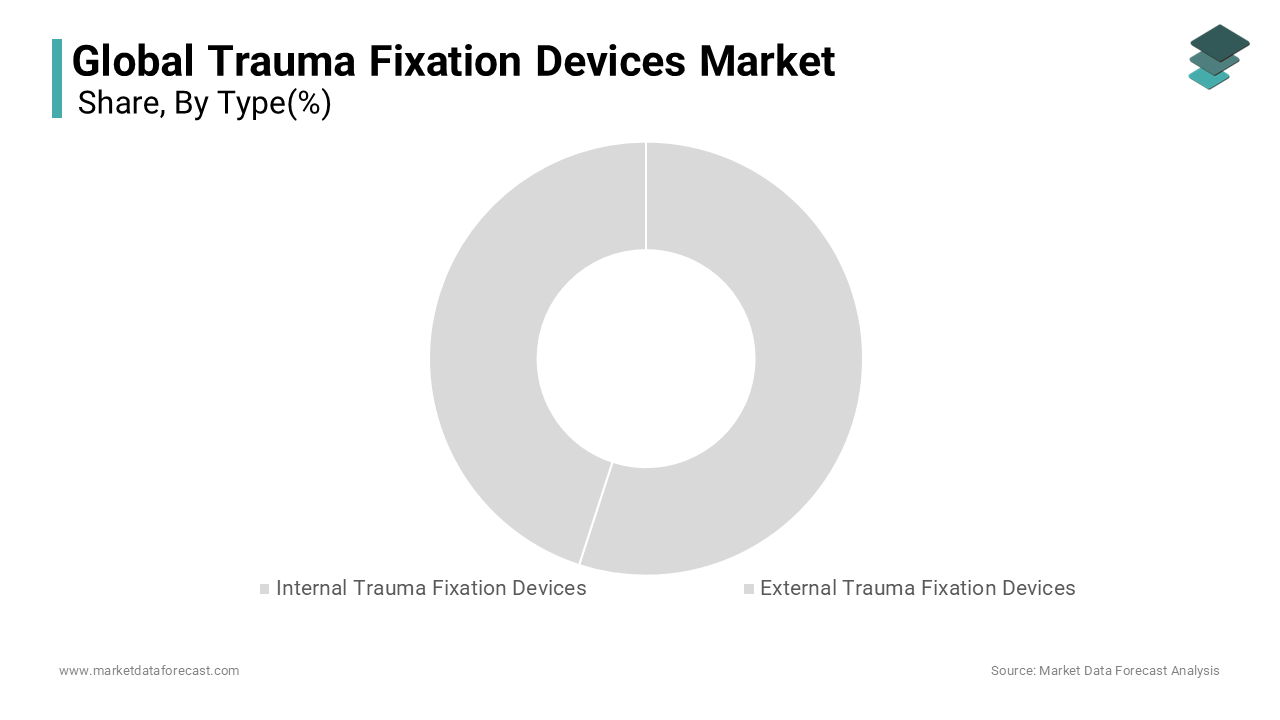
The circular segment is likely to grow at an anticipated CAGR of 7.8% during the forecast period due to their efficacy in managing severe open fractures and infected non unions where internal fixation is contraindicated. According to the Journal of Bone and Joint Surgery, circular frames such as the Ilizarov apparatus allow for gradual correction of deformities and bone transport with a success rate, exceeding 90% in complex limb salvage cases. This clinical necessity directly drives market expansion as surgeons rely on circular frames to stabilize limbs, while allowing access to wound care sites. The ability to adjust alignment post operatively without additional surgery makes these devices indispensable for polytrauma patients.
By End Users Insights
The hospitals segment was accounted in holding 36.7% of the trauma fixation devices market share in 2025 due to their role as primary centers for emergency care and surgical intervention for acute injuries. According to the World Health Organization, hospital based emergency departments handle over 80% of all severe trauma cases globally requiring immediate surgical stabilization and fixation. As per data from the Centers for Disease Control and Prevention in the United States alone, there are over 30 million emergency department visits for injuries annually with a significant proportion requiring orthopedic surgical procedures involving fixation devices. This high volume directly drives market dominance as hospitals maintain large inventories of various fixation implants to cater to diverse fracture patterns. The presence of specialized trauma surgeons and operating theaters equipped with fluoroscopy and robotic assistance ensures that complex fixation procedures are performed efficiently. Government funding and insurance reimbursements for emergency surgeries support the procurement of high quality internal and external fixation systems.
The ambulatory surgical centers and specialized clinics segment is expected to grow at a fastest CAGR of 6.5% during the forecast period with the shift toward outpatient management of minor fractures and elective fixation procedures. According to the Medicare Payment Advisory Commission over 40% of orthopedic procedures including simple fracture repairs and hardware removals are now performed in ambulatory settings due to lower costs and improved patient convenience. This trend directly drives market growth as these facilities procure specialized minimally invasive fixation kits suitable for shorter procedures. The focus on rapid recovery and discharge aligns with the use of advanced internal fixation methods that allow immediate mobility. Private equity investment in ASC networks further accelerates expansion and equipment upgrades.
REGIONAL ANALYSIS
North America Trauma Fixation Devices Market Analysis
North America was the largest contributor of the Trauma Fixation Devices Market by occupying46.2% of the share in 2025 with its advanced healthcare infrastructure high prevalence of sports injuries and aging population. As per the study, hip fracture rates among seniors remain high necessitating robust internal fixation solutions. The presence of major market players and favorable reimbursement policies support the adoption of premium devices. High healthcare spending enables access to advanced technologies such as robotic assisted fixation. Strict regulatory standards ensure product safety and efficacy.
Europe Trauma Fixation Devices Market Analysis
Europe trauma fixation devices market was ranked second by holding 22.3% of share in 2025 with the universal healthcare systems and stringent regulatory framework under the Medical Device Regulation. According to Eurostat, road traffic accidents and falls account for over 1 million hospital admissions annually across the EU driving consistent demand for trauma care. Government initiatives to standardize trauma care pathways promote the use of evidence based fixation techniques. The aging demographic in countries like Germany and Italy further amplifies demand. Reimbursement constraints encourage cost effective solutions but quality remains a priority.
Asia Pacific Trauma Fixation Devices Market Analysis
Asia Pacific trauma fixation devices market growth is likely to grow in next coming years with the rapid urbanization, increasing vehicle ownership, and improving healthcare access. Rising disposable incomes enable patients to afford advanced fixation devices. Local manufacturing is reducing costs and improving availability. Government investments in trauma centers are enhancing surgical capabilities. Asia Pacific offers immense growth potential as healthcare infrastructure matures and awareness of modern trauma care increases.
Latin America Trauma Fixation Devices Market Analysis
Latin America trauma fixation devices market growth is likely to grow with the young population and high incidence of violence related trauma. According to the Pan American Health Organization, interpersonal violence and traffic accidents are leading causes of injury in countries like Brazil and Mexico. As per data, ministries public hospitals are upgrading trauma units to handle high patient volumes. Economic fluctuations impact purchasing power but essential trauma care remains a priority. International aid and partnerships support infrastructure development. The demand for cost effective fixation solutions is high.
Middle East & Africa Trauma Fixation Devices Market Analysis
The Middle East and Africa trauma fixation devices market growth is driven by infrastructure development and increasing healthcare investment. The road traffic injuries are a leading cause of disability prompting governments to improve emergency response systems. In Sub Saharan, Africa donor funded programs aim to improve surgical capacity. Challenges include supply chain logistics but growth is evident.
COMPETITIVE LANDSCAPE
The competition in the Trauma Fixation Devices Market is characterized by intense rivalry among global medical device giants and specialized regional manufacturers who strive to differentiate through technological innovation and clinical efficacy. Major competitors focus on developing integrated surgical ecosystems that combine hardware software and data analytics to provide comprehensive solutions for trauma care. Product differentiation is achieved through advancements in bioabsorbable materials patient specific implants and smart sensors that offer superior precision and monitoring capabilities. Price competition is moderate in the premium segment where clinical outcomes and brand reputation drive purchasing decisions but remains significant for standard commodity implants. Regulatory compliance with strict safety standards serves as a barrier to entry favoring established players with robust quality management systems. Strategic collaborations with surgeons and key opinion leaders help build trust and influence adoption rates in hospitals. The market sees frequent launches of next generation instruments that reduce procedure times and improve healing. Customer service and technical support including maintenance and training are key differentiators that impact long term contracts
KEY MARKET PLAYERS
Some notable companies dominating the global trauma fixation devices market profiled in this report are
- DePuy Synthes
- Smith & Nephew
- Stryker Corporation
- Zimmer Biomet
- Integra LifeSciences Corporation
- Arthrex
- Medtronic, Inc.
- Conmed
- Bioretec, Inc.
Top Players in the Trauma Fixation Devices Market
Zimmer Biomet Holdings Inc.
Zimmer Biomet Holdings Inc. is a global leader in musculoskeletal healthcare providing a comprehensive portfolio of trauma fixation devices, including plates screws and intramedullary nails. The company leverages its extensive distribution network to supply advanced surgical solutions to hospitals and trauma centers worldwide. Recent actions include the expansion of its digital surgery ecosystem which integrates preoperative planning software with precision instrumentation to enhance surgical accuracy. Zimmer Biomet actively invests in research and development to create patient specific implants using 3D printing technology for complex fracture cases. Their strategic focus on surgeon education and training programs strengthens customer loyalty and ensures proper utilization of their products.
Stryker Corporation
Stryker Corporation contributes significantly to the market through its robust trauma and extremities division offering high quality internal and external fixation systems. The company focuses on developing minimally invasive solutions that reduce soft tissue damage and accelerate patient recovery times. Recent initiatives involve the launch of next generation locking plate systems with improved biomechanical stability for osteoporotic bone. Stryker actively collaborates with academic institutions to validate new techniques and instruments ensuring high clinical standards. They have also expanded their manufacturing capabilities to mitigate supply chain risks and ensure consistent product availability.
Johnson & Johnson (DePuy Synthes)
Johnson & Johnson through its DePuy Synthes brand plays a pivotal role in the trauma fixation market by providing a wide range of implants and instruments for fracture management. The company specializes in advanced biomaterials and smart technologies such as sensor enabled screws that monitor healing progress. Recent actions include the introduction of bioabsorbable fixation devices that eliminate the need for secondary removal surgeries enhancing patient comfort. DePuy Synthes actively partners with trauma associations to establish best practice guidelines and promote standardized care protocols. They invest heavily in digital tools that assist surgeons in preoperative planning and intraoperative navigation.
Top Strategies Used by Key Market Participants
Key players in the Trauma Fixation Devices Market primarily employ product innovation strategies by integrating digital technologies and advanced biomaterials into fixation systems to improve surgical precision and patient outcomes. Companies focus on strategic partnerships with hospitals and academic centers to conduct clinical trials and validate new devices ensuring regulatory compliance and market acceptance. Expansion of surgeon training and education programs helps medical professionals master complex fixation techniques fostering brand loyalty and proper device utilization. Manufacturers invest in localizing production facilities to mitigate supply chain disruptions and meet regional regulatory requirements efficiently. Mergers and acquisitions are utilized to acquire specialized technologies and broaden product portfolios in niche trauma segments.
RECENT MARKET HAPPENINGS
- In December 2020, DePuy Syntheses introduced a radial head replacement system of implants. The system is designed for patients with destabilized radial head fractures.
- In September 2020, Stryker Corporation launched the T2 ICF Intramedullary nailing system, which provides a solution for patients suffering from severe foot conditions like Charcot foot. This is seen in patients with diabetes resulting in poor bone quality.
- In October 2017, Zimmer Biomet announced Vitality+ and Vital spinal fixation systems in the U.S. The Vitality + Spinal Fixation Systems includes Vitality + POWER for easy and controlled pedicle preparation.
- In September 2019, Smith + Nephew introduced the INTERTAN Product Assurance (IPA) program at the Orthopedic Trauma Association.
MARKET SEGMENTATION
In this research report, the global trauma fixation devices market has been segmented and sub-segmented based on the type, end-user, and region.
By Type
- Internal Fixation Devices
- Circular Fixation Devices
By End Users
- Hospitals
- Point of Care testing
- Others
By Region
- North America
- Europe
- Asia-Pacific
- Latin America
- Middle East and Africa