- Product Description Description
- Table of Contents TOC
- List of Table & Figure LOT
- Get Free Sample PDF Sample PDF
Market Size, 2025
$21.22 BnMarket Estimate, 2026
$22.58 BnMarket Forecast, 2034
$37.09 BnCAGR, 2026–2034
6.40%UK Athletic Footwear Market Report Summary
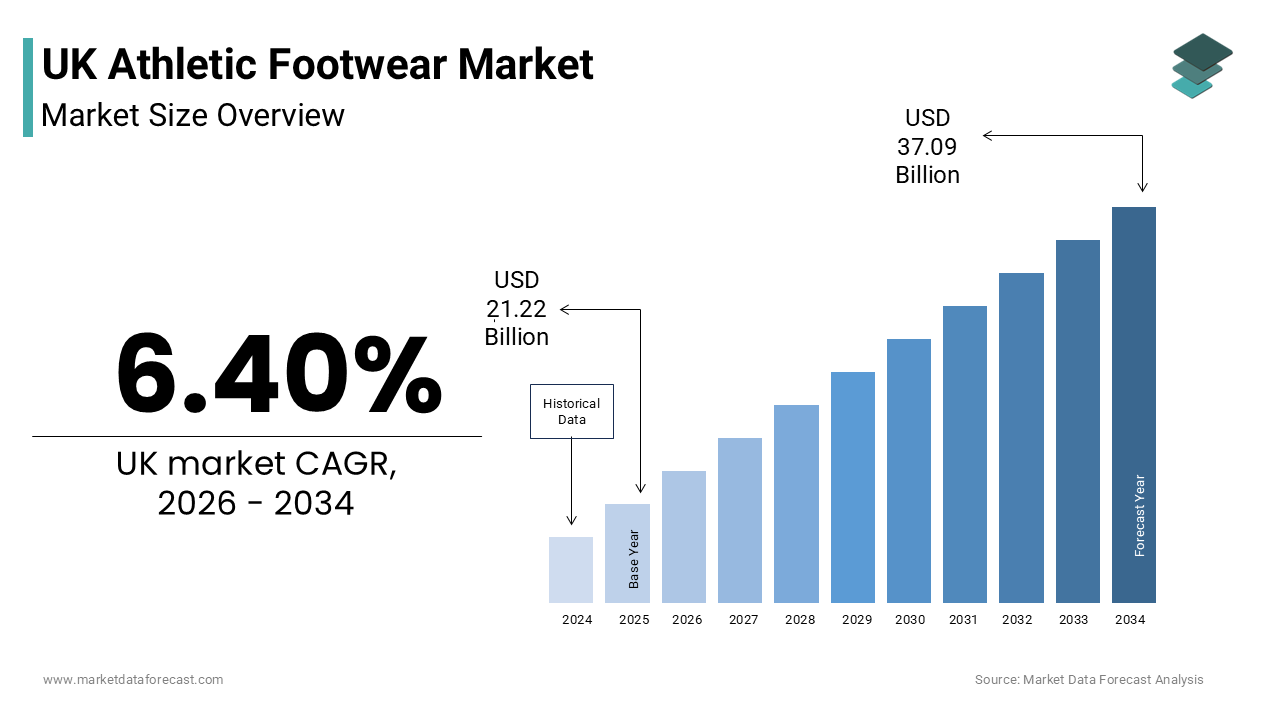
The UK athletic footwear market was valued at USD 21.22 billion in 2025 and is anticipated to reach USD 22.58 billion in 2026 from USD 37.09 billion by 2034, growing at a CAGR of 6.40% during the forecast period from 2026 to 2034. The growth of the UK athletic footwear market is driven by increasing health consciousness, rising participation in fitness and sports activities, and growing consumer preference for comfortable and performance-oriented footwear. Expanding adoption of active lifestyles, increasing integration of athletic footwear into mainstream fashion, and growing demand for technologically advanced footwear solutions are further accelerating market growth. Moreover, advancements in cushioning technologies, expansion of sustainable footwear innovations, and increasing adoption of direct-to-consumer retail models are supporting the expansion of the UK athletic footwear market.
Key Market Trends
-
Rising participation in running, gym workouts, and outdoor recreational activities.
-
Increasing adoption of athleisure fashion and lifestyle-oriented athletic footwear.
-
Growing demand for sustainable and environmentally friendly footwear materials.
-
Rising popularity of direct-to-consumer sales channels and digital customization platforms.
-
Increasing incorporation of advanced cushioning, stability, and performance technologies in footwear products.
Segmental Insights
- Based on activity, the running shoes segment dominated the UK athletic footwear market and held the largest share in 2025. The dominance of the segment is attributed to the widespread popularity of running as an accessible fitness activity, increasing participation in marathons and community running events, and growing consumer awareness regarding injury prevention and foot health. Continuous advancements in running shoe technologies and strong demand for performance-enhancing footwear further support segment growth.
- The sports shoes segment is projected to witness the fastest CAGR during the forecast period owing to increasing participation in football, rugby, tennis, gym-based training activities, and other organized sports. Growing investments in sports infrastructure and rising consumer demand for sport-specific footwear are further contributing to the expansion of this segment.
- Based on product type, the shoes segment accounted for the leading share of the UK athletic footwear market in 2025. The dominance of the segment is driven by its versatility, comfort, lightweight design, and suitability for both athletic and casual applications. The growing influence of athleisure trends and increasing demand for lifestyle sneakers continue to strengthen the segment’s position in the market.
- The boots segment is anticipated to register the fastest CAGR during the forecast period due to increasing participation in hiking, trail running, camping, and outdoor adventure activities. Growing consumer preference for durable, weather-resistant footwear and the rising popularity of outdoor lifestyle trends are further accelerating growth in this segment.
- Based on end user, the men’s segment held the largest share of the UK athletic footwear market in 2025. The dominance of the segment is attributed to strong participation in sports and fitness activities, higher spending on premium athletic footwear, and increasing demand for technologically advanced performance products.
- The women’s segment is expected to witness the fastest growth during the forecast period owing to increasing female participation in fitness programs, running events, gym memberships, and organized sports. Rising demand for women-specific footwear designs and growing adoption of athleisure fashion are further supporting segment growth.
- Based on distribution channel, the sports and athletic goods stores segment accounted for the leading share of the UK athletic footwear market in 2025. The growth of the segment is driven by specialized product offerings, expert fitting services, personalized customer support, and strong consumer preference for physically evaluating footwear before purchase.
- The online retail stores segment is projected to witness the fastest CAGR during the forecast period due to increasing e-commerce adoption, wider product availability, competitive pricing, virtual fitting technologies, and growing consumer preference for convenient shopping experiences.
Regional Insights
England dominated the UK athletic footwear market in 2025 owing to its large population base, strong sports culture, extensive retail infrastructure, and high participation in fitness and recreational activities. The presence of major metropolitan areas, strong consumer spending power, and increasing adoption of athletic fashion trends continue to support market growth across the region.
Scotland held a significant share of the market due to strong participation in outdoor recreational activities, growing demand for hiking and trail footwear, and increasing consumer preference for sustainable and premium athletic footwear products.
Wales is witnessing steady growth supported by increasing outdoor tourism activities, rising consumer awareness regarding health and fitness, and growing demand for locally inspired and environmentally conscious footwear products.
Northern Ireland is expected to experience notable growth during the forecast period owing to expanding retail infrastructure, increasing adoption of online shopping channels, rising sports participation, and growing consumer interest in performance-oriented athletic footwear. Together, these regions continue to drive the expansion of the UK athletic footwear market.
Competitive Landscape
The UK athletic footwear market is highly competitive and characterized by the presence of global athletic footwear manufacturers, sportswear brands, specialty retailers, and emerging direct-to-consumer companies competing through product innovation, technological advancements, sustainability initiatives, and brand positioning strategies. Leading companies are focusing on developing advanced performance technologies, expanding sustainable product portfolios, strengthening digital commerce capabilities, and enhancing customer engagement through personalized experiences. Strategic collaborations with athletes, sports organizations, fashion designers, and social media influencers are further strengthening market positioning across the UK athletic footwear ecosystem. The key players operating in the UK athletic footwear market include Nike Inc., Adidas AG, Puma SE, ASICS Corporation, JD Sports Fashion plc, New Balance Athletics Inc., Skechers U.S.A. Inc., Under Armour Inc., Deckers Brands (HOKA), Brooks Sports Inc., and On Holding AG.
 Download Free Sample Report
UK Athletic Footwear Market Size
The UK athletic footwear market size was valued at USD 21.22 billion in 2025 and is anticipated to reach USD 22.58 billion in 2026 from USD 37.09 billion by 2034, growing at a CAGR of 6.40% during the forecast period from 2026 to 2034.
Athletic footwear is specialized footwear engineered specifically for physical activities, sports, and exercise. This market covers running shoes, training sneakers, basketball footwear, and walking shoes designed for both professional athletes and casual consumers. The cultural shift toward health consciousness and active lifestyles has elevated athletic footwear from niche sporting equipment to essential everyday apparel. Sport England’s Active Lives Survey demonstrates that adult physical activity rates in England have stabilized at a record high of over 63% meeting weekly guidelines, reflecting a consistently active baseline population. The UK consumer increasingly views athletic shoes as versatile items suitable for gym sessions, commuting, and social occasions. Sport England indicate that adult activity patterns are increasingly moving toward highly flexible, accessible local running and individual fitness activities over structured, institutional sports leagues. The regulatory landscape emphasizes product safety and labeling accuracy, ensuring consumer protection against misleading performance claims. Retail channels have evolved significantly, with direct to consumer models gaining prominence alongside traditional sporting goods stores. Seasonal trends influence purchasing behavior, with peak sales occurring during New Year resolution periods and summer fitness seasons. The market is also shaped by technological advancements in cushioning, stability, and sustainable materials. Consumer awareness regarding foot health and injury prevention drives preference for branded products with proven ergonomic benefits. This ecosystem reflects a mature market where innovation, brand heritage, and lifestyle alignment converge to dictate purchasing decisions.
MARKET DRIVERS
Surge In Health Consciousness And Participation In Fitness Activities
The surge in health consciousness and increased participation in fitness activities is a key driver for the United Kingdom athletic footwear market. This growth stems from individuals increasingly prioritizing their physical well-being and preventive healthcare. Modern consumers are actively engaging in running, cycling, gym workouts, and team sports, necessitating specialized footwear to enhance performance and prevent injuries. According to Sport England, the number of adults participating in at least 150 minutes of moderate activity per week has remained robust, with running being one of the most popular individual activities. This behavioral shift creates consistent demand for high quality running and training shoes that offer superior support and durability. Data from ukactive indicates that gym memberships have recovered to pre pandemic levels, with over 10 million members utilizing facilities that require appropriate athletic footwear. The psychological benefit of exercise, particularly stress relief and mental clarity, further motivates regular participation. Social media platforms amplify this trend by showcasing fitness journeys and recommending specific shoe models for different activities. Retailers respond by expanding their ranges of activity specific footwear, such as cross training shoes and marathon ready runners. The rise of corporate wellness programs also encourages employees to adopt active lifestyles, boosting workplace demand for comfortable athletic shoes. This driver is reinforced by public health campaigns promoting movement as a key component of healthy aging. Consumers are willing to invest in premium footwear that promises enhanced comfort and injury prevention, viewing it as an essential tool for maintaining long term health.
Integration Of Athletic Footwear Into Mainstream Fashion And Lifestyle
The integration of athletic footwear into mainstream fashion and lifestyle further boosts the expansion of the United Kingdom athletic footwear market. This blurs the lines between performance gear and style statements. The athleisure trend has transformed sneakers into coveted fashion accessories, worn with everything from formal suits to evening wear. Celebrity endorsements and collaborations with high profile designers have elevated the status of sneakers, making them symbols of cultural capital and identity. Social media influencers play a pivotal role in setting trends, with limited edition releases generating hype and immediate sell outs. Brands leverage scarcity marketing and drop culture to maintain exclusivity and desire. The versatility of modern sneaker designs allows them to complement diverse wardrobes, encouraging multiple purchases for different outfits. Retailers dedicate prominent shelf space to lifestyle collections, often separating them from technical sports sections. This driver is strengthened by the comfort factor, as consumers seek stylish alternatives to traditional formal shoes that do not compromise on ease of wear. The convergence of fashion and function ensures that athletic footwear remains relevant across various social contexts, sustaining demand beyond seasonal sports cycles.
MARKET RESTRAINTS
Economic Volatility And Reduced Disposable Income Limiting Spending
Economic volatility and reduced disposable income are hampering the growth of the United Kingdom athletic footwear market. This forces consumers to prioritize essential expenditures over discretionary purchases. High inflation rates and rising living costs have squeezed household budgets, leading to cautious spending behavior regarding non essential items like premium sneakers. According to the Office for National Statistics, consumer price inflation has significantly impacted real wages, reducing the purchasing power of average households. Data from the British Retail Consortium indicates that volume sales in the footwear sector have declined as shoppers delay replacements or opt for cheaper alternatives. The high price point of branded athletic footwear, often exceeding 100 pounds for premium models, makes them vulnerable to budget cuts. Consumers are increasingly trading down to private label or discount brands that offer similar aesthetics at lower prices. Promotional dependency has increased, with shoppers waiting for sales events to make purchases, thereby eroding brand margins. The uncertainty surrounding economic stability discourages impulse buying and encourages longer product lifecycles through repair and maintenance. Small and medium sized retailers struggle to compete with large chains that can absorb cost pressures and offer deeper discounts. This restraint affects both performance and lifestyle segments, although entry level products show greater resilience. The shift toward second hand markets offers a cost effective alternative, further diverting spend from new retail channels. Retailers must navigate this challenging environment by emphasizing value durability and flexible payment options to retain customers.
Supply Chain Disruptions And Raw Material Cost Increases
Supply chain disruptions and raw material cost increases are serious barriers to the United Kingdom athletic footwear market. This impacts production efficiency and profit margins. The market relies on complex global supply chains for sourcing materials such as rubber, leather, foam, and textiles, which are subject to geopolitical tensions and logistical bottlenecks. According to the Confederation of British Industry, businesses report ongoing challenges with freight availability and rising shipping costs, which delay deliveries and increase operational expenses. Dependence on Asian manufacturing hubs exposes brands to risks associated with labor shortages and regulatory changes in producing countries. Data from the Office for National Statistics indicates that input prices for footwear manufacturing have risen sharply, forcing companies to either absorb costs or pass them on to consumers. Brexit related complexities continue to add administrative burdens and customs delays for goods entering the UK from European distribution centers. Environmental regulations regarding chemical usage and waste management further complicate sourcing and production processes. Retailers face difficulties in maintaining optimal inventory levels due to unpredictable lead times, resulting in stockouts or excess inventory. Smaller brands lack the bargaining power to secure favorable terms with suppliers, making them more vulnerable to price fluctuations. This restraint necessitates strategic diversification of sourcing locations and investment in nearshoring capabilities, but such transitions require substantial capital and time. The cumulative effect creates an unstable operating environment that hinders long term planning and growth potential.
MARKET OPPORTUNITIES
Expansion Of Sustainable And Eco Friendly Footwear Solutions
The expansion of sustainable and eco friendly footwear solutions offers a substantial opportunity for the United Kingdom athletic footwear market. This aligns with growing consumer demand for ethical and environmentally responsible products. Shoppers are increasingly concerned about the carbon footprint and waste generated by traditional shoe manufacturing, driving interest in recycled and bio based materials. According to Wrap, the waste and resources action programme, the fashion industry is under pressure to reduce textile waste, with footwear being a significant contributor. Brands are investing in technologies such as recycled polyester uppers, algae based foams, and biodegradable soles to minimize environmental impact. Collaborations with environmental organizations enhance credibility and attract eco conscious buyers. Retailers are launching take back schemes and recycling programs to extend product lifecycles and reduce landfill waste. Marketing initiatives emphasizing transparency and circular economy principles resonate with younger demographics who prioritize values aligned consumption. Government incentives for sustainable business practices further support this transition. The opportunity extends to rental and resale platforms for high end athletic shoes, catering to budget conscious and environmentally aware shoppers. By adopting sustainable practices, companies can differentiate themselves, build brand loyalty, and mitigate regulatory risks. This shift fosters a positive brand image and appeals to a growing segment of conscientious consumers.
Growth Of Digital Customization And Direct To Consumer Engagement
The growth of digital customization and direct to consumer engagement provides a promising prospect for the United Kingdom athletic footwear market. This enables brands to offer personalized experiences and strengthen customer relationships. Advances in digital technology allow consumers to design their own shoes by selecting colors, materials, and features through online platforms. A study suggests that direct to consumer channels provide higher margins and valuable data insights compared to wholesale partnerships. Brands are leveraging augmented reality tools for virtual try ons, reducing return rates and enhancing shopping confidence. Social media integration facilitates direct interaction with consumers, allowing for real time feedback and community building. Subscription models for running shoes or regular replacement programs ensure recurring revenue and customer retention. Localized manufacturing hubs enable faster delivery of customized orders, reducing wait times and carbon emissions. This opportunity appeals to consumers seeking exclusivity and perfect fit, particularly in performance categories where precision matters. Marketing campaigns highlighting craftsmanship and individuality strengthen brand differentiation. The model supports a shift away from mass production toward value driven consumption. Athletic footwear companies should embrace digital customization. Doing so enhances customer satisfaction, reduces inventory waste, and creates loyal brand advocates.
MARKET CHALLENGES
Intense Competition From Counterfeit And Replica Products
Intense competition from counterfeit and replica products is negatively impacting the United Kingdom athletic footwear market. This undermines brand integrity and revenue streams. The popularity of high end sneakers has fueled a lucrative black market for fake goods that mimic established brands at fraction of the cost. According to the Intellectual Property Office, counterfeit goods cost the UK economy billions annually, with footwear being one of the most affected categories. Research indicates that online marketplaces and social media platforms are common channels for selling replicas, making detection and enforcement difficult. Consumers may unknowingly purchase inferior quality products that fail to deliver promised performance, damaging brand reputation. The prevalence of counterfeits discourages innovation as brands hesitate to invest in new designs that can be easily copied. Legal actions against infringers are costly and time consuming, with limited effectiveness in stopping global networks. Retailers face challenges in verifying authenticity of third party sellers, complicating marketplace operations. This challenge forces legitimate brands to invest heavily in anti counterfeit technologies such as blockchain verification and unique serial numbers. Consumer education regarding the risks of fake products is essential but often insufficient. The presence of cheap alternatives distorts pricing expectations and devalues genuine products. Navigating this landscape requires coordinated efforts between brands, regulators, and platforms to protect intellectual property and consumer trust.
Rapid Technological Obsolescence And Innovation Pressure
Rapid technological obsolescence and innovation pressure are ongoing obstacles for the United Kingdom athletic footwear market. This requires continuous investment in research and development. Consumers expect constant improvements in cushioning, energy return, and weight reduction, driving brands to release new models frequently. According to sources, the lifecycle of innovative footwear technologies has shortened, with features becoming standard within months of introduction. Data from patent offices shows a surge in footwear related filings, indicating intense competition for technological superiority. Brands must balance innovation with cost management, as advanced materials and manufacturing processes are expensive. Failure to keep pace with competitors can result in loss of market share and brand relevance. The pressure to innovate often leads to incremental changes that may not offer significant performance benefits, causing consumer skepticism. Marketing claims regarding technology must be substantiated to avoid regulatory scrutiny and consumer backlash. Small and medium sized brands struggle to compete with the R and D budgets of global giants, limiting their ability to introduce breakthrough products. This challenge necessitates agile development processes and close collaboration with material scientists and athletes. Companies must also manage inventory of older models as new releases arrive, risking markdowns and waste. The relentless pace of innovation requires strategic foresight and substantial financial commitment to maintain competitive edge.
REPORT COVERAGE
| REPORT METRIC | DETAILS |
| Market Size Available | 2025 to 2034 |
| Base Year | 2025 |
| Forecast Period | 2026 to 2034 |
| CAGR | 6.40% |
| Segments Covered | By Activity, Product Type, Distribution Channel and Region. |
| Various Analyses Covered | Global, Regional & Country Level Analysis, Segment-Level Analysis, DROC, PESTLE Analysis, Porter’s Five Forces Analysis, Competitive Landscape, Analyst Overview of Investment Opportunities |
| Market Leaders Profiled | Nike Inc., Adidas AG, Puma SE, ASICS Corporation, New Balance Athletics Inc., Skechers U.S.A. Inc., Under Armour Inc., Deckers Brands (HOKA), Brooks Sports Inc., and On Holding AG. |
SEGMENTAL ANALYSIS
By Activity Insights
The running shoes segment dominated the United Kingdom athletic footwear market and accounted for a 32.5% share in 2025. Factors such as the widespread popularity of running as an accessible and low cost form of exercise drive the dominance of this segment. This activity requires minimal equipment and can be performed almost anywhere, making it a preferred choice for fitness enthusiasts across all age groups. According to Sport England, running remains one of the most popular individual sports in the UK, with millions of adults participating regularly. The segment benefits from a strong culture of community running clubs and organized events such as marathons and parkruns, which encourage consistent participation and gear upgrades. Data from Parkrun indicates that weekly attendance at free timed runs has surpassed pre pandemic levels, highlighting sustained interest. Retailers offer extensive ranges of running shoes categorized by cushioning, stability, and terrain, catering to diverse needs from casual joggers to elite athletes. Technological advancements in foam materials and carbon plates have created a performance driven upgrade cycle, motivating consumers to purchase new models frequently. Marketing campaigns often feature professional runners and health influencers, reinforcing the importance of proper footwear for injury prevention. The versatility of modern running shoes also allows them to be worn for walking and daily commutes, expanding their usage occasions. This dominance is reinforced by the perception of running as a holistic health activity that improves cardiovascular fitness and mental well being. The continuous innovation in shoe design ensures that the segment remains dynamic and appealing to tech savvy consumers.
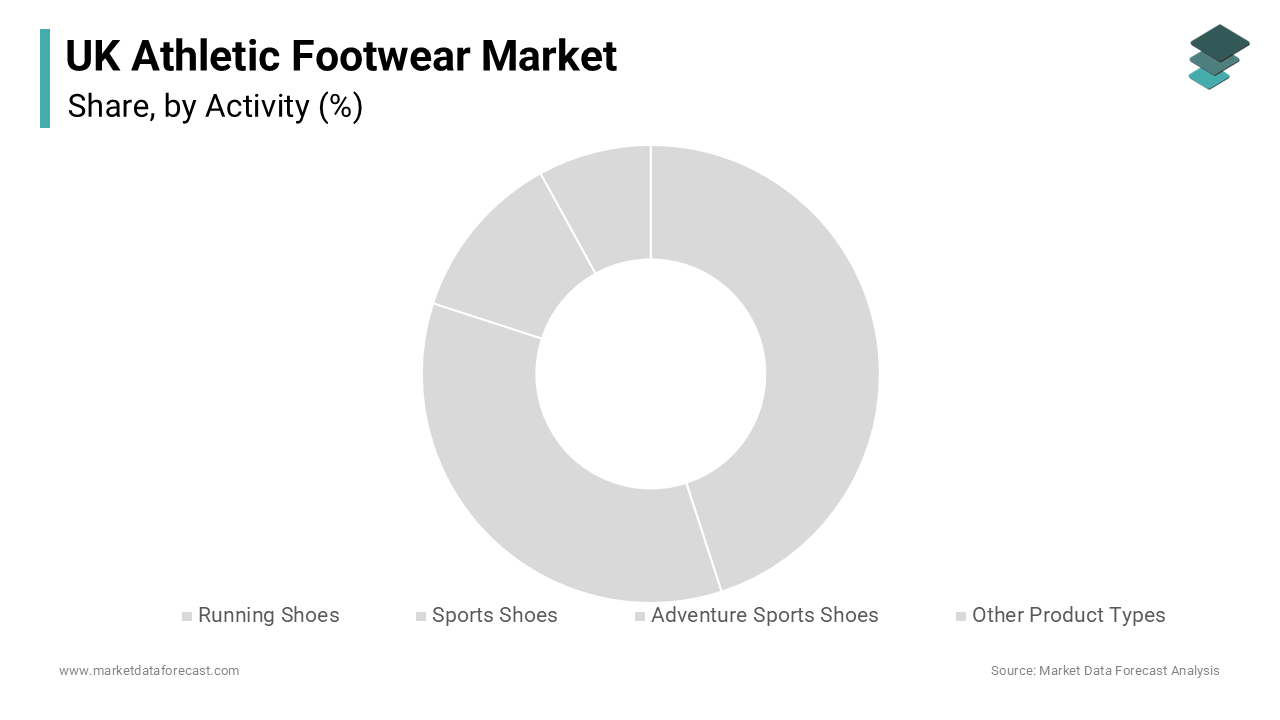
The sports shoes segment is on the rise and is expected to be the fastest growing segment in the market by witnessing a CAGR of 5.8% over the forecast period. This accelerated growth is propelled by the rising participation in team sports such as football, rugby, and tennis, as well as the increasing popularity of gym based activities like cross training and weightlifting. According to ukactive, membership in fitness facilities offering diverse sports programs has increased, driving demand for specialized footwear designed for lateral movement and stability. The segment benefits from the professionalization of amateur sports, where players invest in high quality gear to enhance performance and reduce injury risk. Data from the Football Association shows that grassroots participation remains robust, with thousands of local leagues requiring appropriate footwear. Brands are responding with innovative designs that offer superior grip, support, and durability for specific sports surfaces. The influence of professional athletes and major sporting events like the Olympics and World Cup inspires fans to emulate their idols through purchasing decisions. Social media platforms amplify this trend by showcasing training routines and gear reviews. Retailers are expanding their sports specific sections, providing expert advice and fitting services. This driver is strengthened by the integration of sports into school curricula and community programs, ensuring a steady pipeline of young consumers. The versatility of multi sport shoes also appeals to casual users who engage in various activities, further fueling growth.
By Product Type Insights
The shoes segment maintained the lead by capturing a substantial share of the United Kingdom athletic footwear market in 2025. Its versatility, comfort, and suitability for a wide range of activities have contributed to the leading position of this segment. This category includes sneakers, trainers, and running shoes that cater to both performance and lifestyle needs. The segment benefits from the athleisure trend, where athletic shoes are worn as fashion statements in non sporting contexts. Consumers appreciate the ease of wear and lightweight nature of shoes compared to boots, making them ideal for urban environments and daily commutes. Retailers offer extensive collections ranging from budget friendly options to premium designer collaborations, ensuring broad appeal. The rapid pace of fashion trends drives frequent replacements and additions to wardrobes. Online shopping platforms facilitate easy comparison and access to global brands, enhancing convenience. The segment also benefits from technological innovations in breathability and cushioning that improve user experience. Marketing efforts emphasize lifestyle integration, positioning shoes as key components of modern identity. This dominance is sustained by the universal acceptance of athletic shoes across demographics and social settings.
However, the boots segment is expected to exhibit a noteworthy CAGR of 4.5% from 2026 to 2034 due to the increasing popularity of outdoor activities and rugged fashion trends. Hiking, trail running, and camping have gained significant traction among UK consumers seeking connection with nature and adventure. According to the Outdoor Industries Association, participation in outdoor pursuits has risen steadily, creating demand for durable and protective footwear. The segment benefits from advancements in waterproof technologies and lightweight materials that enhance comfort without compromising performance. A study shows that sales of hiking and trail boots have outpaced other categories, particularly during autumn and winter seasons. The gorpcore fashion trend, which incorporates functional outdoor gear into everyday style, has further boosted the appeal of athletic boots among younger demographics. Brands are launching stylish versions of traditional hiking boots that appeal to urban consumers. Retailers are expanding their outdoor sections and offering specialized fitting services. This driver is reinforced by government initiatives promoting access to national parks and green spaces. The perceived durability and value for money of boots also attract budget conscious shoppers looking for long lasting footwear. The convergence of function and fashion ensures continued growth in this niche but expanding segment.
By End User Insights
In 2025, the men’s athletic footwear segment held the majority share of 52.5% of the United Kingdom market because of higher average spending per unit and strong engagement in sports and fitness activities. Men tend to prioritize technical features and brand reputation when purchasing athletic shoes, often investing in premium models for running, training, and sports. The segment benefits from the widespread participation of men in team sports and gym workouts, which require specialized footwear. Retailers cater to this demographic with extensive ranges of technical shoes and limited edition releases that generate hype. The culture of sneaker collecting is predominantly male dominated, driving demand for rare and exclusive models. Marketing campaigns often focus on performance metrics and durability, resonating with male consumers. The segment also benefits from corporate wellness programs that encourage male employees to adopt active lifestyles. This dominance is sustained by the consistent release of new technologies and collaborations with male sports stars. The emotional connection to brands and teams fosters long term loyalty and repeat purchases.
But the women’s athletic footwear segment is predicted to witness the highest CAGR of 6.2% during the forecast period owing to increasing female participation in fitness and the rise of female focused design. Women are increasingly engaging in running, yoga, and strength training, creating demand for shoes that offer both performance and aesthetic appeal. Strategic programs by Sport England continue to heavily target the persistent national gender gap in sports, aiming to reduce the long-term emotional and logistical barriers that keep adult female activity levels below those of males. The segment benefits from brands launching specific lines designed for female foot anatomy and style preferences. Retailers are expanding their women’s sections with diverse options ranging from pastel hues to bold patterns. The athleisure trend has empowered women to wear athletic shoes in various social settings, increasing consumption frequency. Marketing campaigns featuring female athletes and body positivity messages resonate strongly with this demographic. The segment also sees growth in niche categories like dance fitness and pilates footwear. This driver is strengthened by the increasing visibility of women’s sports and greater investment in female specific research and development. The combination of functionality and fashion ensures rapid expansion in this dynamic segment.
By Distribution Channel Insights
The sports and athletics goods stores segment remained the largest in the United Kingdom athletic footwear market and occupied a 54.6% share in 2025. This supremacy of the segment was supported by its specialized expertise, extensive product ranges, and ability to provide personalized fitting services. These retailers, including dedicated chains and independent shops, offer a curated selection of brands and models that cater to specific athletic needs. High-performance footwear distribution patterns reveal that specialized technical running and sport retailers maintain a strong market position because of their ability to provide custom gait analysis and targeted performance fitting. The segment benefits from trained staff who can analyze gait and recommend suitable shoes, reducing the risk of injury and enhancing customer satisfaction. Surveys indicates that shoppers value the tactile experience of trying on shoes and testing them in store before purchasing. Retailers often host community events such as run clubs and fitting workshops, building strong local connections and brand loyalty. The availability of exclusive models and limited editions attracts enthusiasts willing to pay premium prices. Physical stores also serve as showrooms for online channels, allowing customers to view products in person before buying digitally. This dominance is reinforced by the trust consumers place in specialist retailers for authentic and high quality products. The ability to handle returns and exchanges easily adds to the convenience factor. Despite the rise of e commerce, the experiential aspect of specialty retail ensures its continued leadership.
On the contrary, the online stores segment is estimated to register the fastest CAGR of 7.5% between 2026 and 2034. This swift expansion is fuelled by convenience, wider selection, and competitive pricing. Consumers increasingly prefer the ease of browsing and purchasing from home, aided by advanced digital tools and reliable delivery services. According to the Office for National Statistics, online retail sales continue to grow, with fashion and footwear being key contributors. The segment benefits from the ability to compare prices and read reviews from other buyers, enhancing decision making confidence. Retailers leverage augmented reality and virtual try on technologies to mitigate fit concerns and reduce return rates. Direct to consumer brands bypass traditional intermediaries, offering lower prices and exclusive designs. Subscription services and loyalty programs encourage repeat purchases and customer retention. Social media integration allows seamless discovery and purchasing through shoppable posts. This driver is strengthened by improved logistics networks that enable fast and free delivery. The flexibility of online shopping appeals to busy consumers who value time efficiency. The continuous improvement of user experience and personalization ensures sustained growth in this digital channel.
REGIONAL ANALYSIS
England Athletic Footwear Market Analysis
England outperformed other regions in the United Kingdom athletic footwear market and accounted for an 83.1% share in 2025. The demand for footwear in England was driven by its large population and dense urban centers. The region hosts major sporting events and fitness hubs that drive demand for high quality footwear. According to UK national accounts data, sports apparel and footwear form one of the largest segments of sports-related consumer spending in the region, driven by strong athletic retail markets in major English urban hubs. London serves as a global fashion capital, influencing trends and hosting flagship stores for major brands. Data from Sport England indicates that participation rates in running and gym activities are highest in southern counties, driving consistent sales. The presence of major retail headquarters facilitates rapid distribution and marketing campaigns. Consumer preferences in England are diverse, ranging from performance oriented gear in rural areas to lifestyle sneakers in cities. The region benefits from advanced logistics infrastructure that supports efficient e commerce operations. Cultural diversity introduces global influences, expanding style preferences and brand choices. Economic activity levels support discretionary spending on premium products. Government initiatives promoting active travel and cycling also boost demand for versatile athletic footwear. This central role ensures that England sets the pace for retail innovation and consumer behavior across the UK.
Scotland Athletic Footwear Market Analysis
Scotland was the next prominent region in the United Kingdom athletic footwear market due to its strong heritage in outdoor activities and growing interest in sustainable brands. Although smaller in population, Scotland contributes significantly to the premium and niche segments of the market. According to Scottish Enterprise, the outdoor recreation sector is a key part of the economy, with hiking and trail running being popular pursuits. Edinburgh and Glasgow serve as primary consumption hubs, with robust retail sectors supporting athletic footwear sales. Data from VisitScotland indicates that tourism plays a vital role, with visitors purchasing high quality outdoor gear for their trips. The region benefits from a reputation for durability and weather resistance, aligning with local climate conditions. Consumer preferences lean toward functional and eco friendly products, reflecting broader environmental values. Retail channels emphasize local provenance and ethical sourcing, with independent shops featuring regional brands prominently. The Scottish government supports industry growth through grants and promotional initiatives aimed at boosting exports. Cultural events and festivals provide platforms for brand exposure and community engagement. While overall volume remains lower than England, the value per unit is higher due to premium positioning. This niche approach fosters loyalty and distinguishes Scottish retail offerings in the competitive landscape.
Wales Athletic Footwear Market Analysis
Wales is an emerging player in the United Kingdom athletic footwear market by leveraging its natural landscapes and cultural identity to develop a unique retail sector. Growth is fueled by a rising pride in Welsh-made products and outdoor tourism. The Welsh Government actively funds the creative and leisure sectors to boost regional growth. Cardiff and Swansea act as primary consumption centers, where urban consumers demonstrate openness to contemporary and functional styles. Business Wales toolkits emphasize that outdoor tourism in national parks provides major economic windfalls for local service and retail businesses, primarily through walkers and hikers utilizing regional infrastructure. The region benefits from supportive policies encouraging rural economic development through local manufacturing. Consumer awareness of local brands has grown through community focused marketing and participation in regional festivals. Retailers in Wales increasingly stock domestic products alongside international labels, providing choice and supporting local economies. The compact size of the market allows for close relationships between producers and consumers, fostering brand loyalty. Challenges include limited distribution networks outside major towns, but e commerce helps bridge this gap. Welsh retailers emphasize sustainability and heritage, differentiating themselves in a crowded market. This strategic focus on quality and origin positions Wales as an emerging player with unique value propositions.
Northern Ireland Athletic Footwear Market Analysis
Northern Ireland shows steady expansion in the United Kingdom athletic footwear market owing to gradual growth and increasing sophistication in consumer preferences. Belfast serves as the primary hub for both sales and design. Invest Northern Ireland strategically drives investment into high-value manufacturing, creative digital sectors, and agri-food innovation, though private retailers continue to navigate evolving regional consumer trends independently. Consumer behavior reflects a blend of traditional habits and modern trends, with younger demographics driving demand for trendy and affordable athletic shoes. Northern Ireland economic data shows a steady, long-term post-pandemic rise in e-commerce and digital marketplace integration, mirroring wider UK retail transformations. The region benefits from cross border trade with the Republic of Ireland, exposing consumers to diverse product ranges and brands. Local retailers emphasize community connections and heritage, resonating with patriotic sentiments. Retail infrastructure continues to improve, with major shopping centers expanding their sports and leisure selections. Government initiatives support small businesses through funding and export assistance. Cultural events and local competitions provide visibility for emerging brands and designers. While market size remains modest, growth rates outpace some larger regions due to low base effects. Consumer education efforts by retailers enhance appreciation for quality and performance. This upward trajectory suggests increasing importance within the broader United Kingdom landscape as local capabilities mature.
COMPETITIVE LANDSCAPE
The United Kingdom athletic footwear market exhibits intense competition characterized by the presence of global giants and specialized retailers vying for consumer attention. Established brands leverage their extensive resources to dominate advertising spaces and secure prime retail locations while emerging players differentiate through niche offerings and digital agility. The market is fragmented with numerous private label options from major supermarkets exerting pressure on branded products through lower prices. Premium segments see less price sensitivity but higher expectations for technological innovation and sustainability credentials. Marketing spend varies significantly with larger companies investing millions in celebrity endorsements whereas smaller brands rely on community engagement and social media influence. Distribution channels play a critical role as accessibility through online platforms and physical stores determines visibility and sales volume. Consumer loyalty is increasingly fluid with shoppers willing to switch brands based on style trends comfort or ethical considerations. Regulatory constraints regarding labor practices and environmental impact add complexity requiring strict compliance. The competitive landscape demands continuous innovation agility and strategic positioning to capture and retain market share amidst evolving consumer preferences and economic pressures affecting discretionary spending habits.
KEY MARKET PLAYERS
Some of the promising companies that are playing a dominating role in the UK athletic footwear market include
- Nike Inc.
- Adidas AG
- Puma SE
- ASICS Corporation
- JD Sports Fashion plc
- New Balance Athletics Inc.
- Skechers U.S.A. Inc.
- Under Armour Inc.
- Deckers Brands (HOKA)
- Brooks Sports Inc.
- On Holding AG
Top Key Players in the UK Athletic Footwear Market
Nike Inc
Nike Inc maintains a dominant presence in the United Kingdom athletic footwear market through its iconic branding and continuous product innovation. The company engages consumers via high profile sponsorships with premier football clubs and elite athletes which reinforces its status as a performance leader. Recent actions include the expansion of its direct to consumer digital platforms offering personalized shopping experiences and exclusive member access. Nike has invested heavily in sustainable manufacturing processes using recycled materials to align with environmental values of British shoppers. The brand leverages data analytics to optimize inventory and predict trending styles ensuring availability during peak demand periods. Strategic collaborations with fashion designers keep the brand culturally relevant beyond sports. These initiatives strengthen customer loyalty and drive consistent sales growth across retail and online channels in the competitive UK landscape.
Adidas AG
Adidas AG holds a significant position in the United Kingdom athletic footwear market by blending sports performance with streetwear culture. The company is renowned for its classic silhouettes and innovative boost technology which appeals to both athletes and fashion conscious consumers. Recent strategies involve strengthening partnerships with music artists and influencers to enhance brand visibility among younger demographics. Adidas has launched extensive sustainability initiatives such as shoes made from ocean plastic demonstrating commitment to ecological responsibility. The firm has optimized its supply chain to improve delivery speeds and reduce carbon emissions. Digital engagement through mobile apps provides tailored training content and product recommendations. These efforts enhance brand affinity and ensure Adidas remains a top choice for versatile athletic footwear in the UK market.
JD Sports Fashion plc
JD Sports Fashion plc operates as a leading multi brand retailer in the United Kingdom athletic footwear market known for its curated selection of premium brands. The company serves as a critical distribution channel for major manufacturers while also developing its own private label products. Recent actions include aggressive acquisition of smaller retail chains to expand physical footprint and market reach across the country. JD Sports has enhanced its e commerce capabilities with improved website functionality and faster delivery options to meet online shopping demands. The retailer focuses on experiential store designs that engage customers through interactive displays and exclusive launches. Strategic alliances with global brands secure early access to limited edition releases. These moves solidify its position as a preferred destination for athletic footwear enthusiasts seeking variety and exclusivity in the UK.
Major Strategies Used by Key Market Participants
Key players in the United Kingdom athletic footwear market employ diverse strategies to maintain competitive advantage and drive growth. Product innovation remains central as companies introduce advanced cushioning technologies and sustainable materials to attract distinct consumer segments. Brands invest heavily in digital marketing campaigns that emphasize performance benefits and lifestyle alignment to build emotional connections. Partnerships with professional athletes and sports teams enhance brand credibility and visibility among target audiences. Companies focus on expanding direct to consumer channels through robust e commerce platforms that offer convenience and personalized experiences. Sustainability initiatives such as recycling programs and eco friendly packaging align with growing environmental consciousness among buyers. Strategic pricing strategies balance affordability with premium positioning to cater to different income levels. Collaborations with fashion designers and celebrities amplify brand reach and appeal to broader demographics. These multifaceted approaches ensure sustained relevance and competitiveness in a dynamic market environment.
MARKET SEGMENTATION
This research report on the UK athletic footwear market has been segmented based on the following categories.
By Activity
- Running Shoes
- Sports Shoes
- Adventure Sports Shoes
- Other Product Types
By Product Type
- Shoes
- Boots
By End User
- Men
- Women
- Kids/Children
By Category
- Premium
- Mass
By Distribution Channel
- Sports and Athletic Goods Stores
- Supermarkets/Hypermarkets
- Online Retail Stores
- Other Distribution Channels
By Country
- U.K