- Product Description Description
- Table of Contents TOC
- List of Table & Figure LOT
- Get Free Sample PDF Sample PDF
Market Size, 2025
$22.65 BnMarket Estimate, 2026
$24.68 BnMarket Forecast, 2034
$48.99 BnCAGR, 2026–2034
8.95%UK Biodiesel Market Size, Growth, Trends & Forecast (2026–2034)
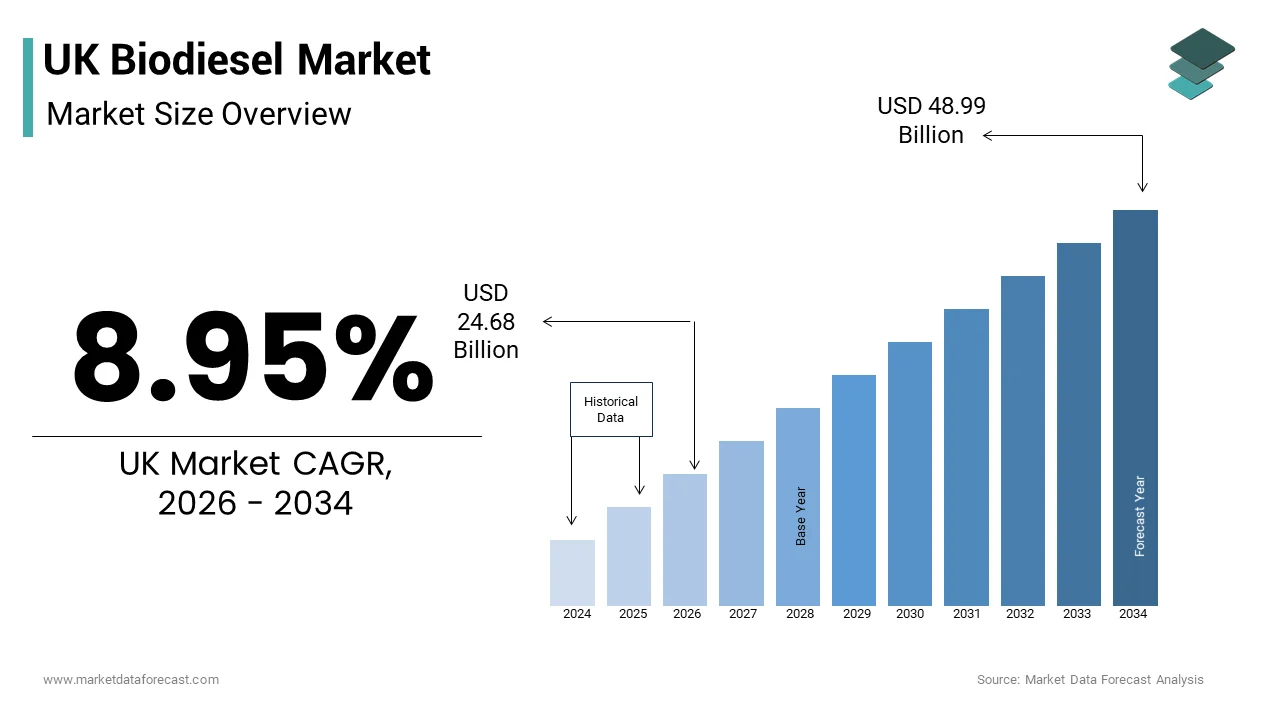
The UK biodiesel market size was valued at USD 22.65 billion in 2025, reached USD 24.68 billion in 2026, and is projected to scale up to USD 48.99 billion by 2034, registering a compound annual growth rate (CAGR) of 8.95% during the forecast period from 2026 to 2034. Driven by stringent government regulations, Renewable Transport Fuel Obligations (RTFO), corporate sustainability commitments, and rising demand for low-carbon logistics, the market is expanding rapidly across the United Kingdom.
Key Executive Metrics (At-a-Glance)
- 2025 Base Valuation: USD 22.65 Billion
- 2026 Current Valuation: USD 24.68 Billion
- 2034 Forecast Valuation: USD 48.99 Billion
- Compound Annual Growth Rate (CAGR): 8.95% (2026–2034)
- Dominant Feedstock Segment: Used Cooking Oil (UCO)
- Fastest-Growing Feedstock Segment: Animal Fats & Tallow (6.5% CAGR)
- Dominant Biodiesel Blend: B7 Blend (55.9% share in 2025)
- Fastest-Growing Biodiesel Blend: Higher Blends (8.2% CAGR)
- Geographic Leader: England (83.4% market share in 2025)
Core Market Drivers
- Stringent Government Mandates: Progressive scaling of the Renewable Transport Fuel Obligation (RTFO) toward a 14.6% target by 2032.
- Corporate Sustainability Goals: Increasing corporate demand for verified carbon-saving logistics and low-carbon fleet operations.
Primary Market Restraints & Challenges
- Supply Chain Volatility: Feedstock availability constraints and heavy reliance on imported raw materials like palm oil and used cooking grease.
- Cost Disparities: Higher production costs relative to conventional fossil diesel and complex regulatory compliance obligations.
UK Biodiesel Market Segmentation Highlights
| Segment Category | Leading / Dominant Sub-Segment | Fastest-Growing Sub-Segment |
|---|---|---|
| By Feedstock | Used Cooking Oil (UCO) | Animal Fats & Tallow (6.5% CAGR) |
| By Biodiesel Blends | B7 Blend (55.9% share) | Higher Blends (8.2% CAGR) |
| By Region | England (83.4% share) | Scotland & Wales (Specialized Decarbonization) |
Major Industry Players Profiled
Key energy companies and market leaders driving the UK sector include Neste Oyj, TotalEnergies SE, Eni S.p.A., Preem AB, Cepsa, Repsol S.A., Greenergy International Ltd., Verbio AG, Argent Energy, ADM, Cargill, Shell plc, BP plc, Bunge Limited, Louis Dreyfus Company, Envien Group, Abengoa Bioenergía, German Biofuels GmbH, BDI-BioEnergy, and Verbund BioPower.
 Download Free Sample Report
UK Biodiesel Market Size
The UK biodiesel market size was valued at USD 22.65 billion in 2025 and is anticipated to reach USD 24.68 billion in 2026 to reach USD 48.99 billion by 2034, growing at a CAGR of 8.95% during the forecast period from 2026 to 2034.
Current Market Overview And Definition
Biodiesel, typically produced from vegetable oils, animal fats, or recycled cooking grease, is blended with petroleum diesel to reduce greenhouse gas emissions without requiring significant modifications to existing diesel engines. This market operates within a robust regulatory framework designed to meet international climate commitments and domestic environmental targets. According to the Department for Energy Security and Net Zero, the domestic transport sector remains the largest emitting sector in the UK, accounting for approximately 30% of total territorial greenhouse gas emissions. As per data from the Renewable Transport Fuel Obligation statistics, suppliers are mandated to ensure that a specific percentage of fuel sold comes from renewable sources, driving consistent demand for biodiesel blends. The industry is characterized by a mix of domestic production facilities and substantial imports to meet volume requirements. Consumer awareness regarding air quality and climate change has increased public support for cleaner fuel alternatives. The market dynamics are influenced by agricultural policies, waste management practices, and technological advancements in conversion processes. Seasonal variations in feedstock availability and global commodity prices also play pivotal roles in shaping supply chain stability. This ecosystem reflects a mature yet evolving sector where policy compliance and sustainability credentials dictate operational success and market participation.
MARKET DRIVERS
Stringent Government Regulations And Renewable Transport Fuel Obligations
Stringent government regulations and the Renewable Transport Fuel Obligation are primary drivers for the United Kingdom biodiesel market. This creates a mandatory demand structure that ensures consistent consumption. The RTFO requires fuel suppliers to prove that a certain percentage of the fuel they supply comes from renewable and sustainable sources, with penalties for non compliance acting as a strong enforcement mechanism. According to the Department for Transport, renewable transport fuel obligation levels are being progressively scaled up toward a 14.6% target by 2032 to match UK net-zero pathways, legally forcing suppliers to blend larger volumes of biofuels into standard commercial mixes. Official government publications indicates that the share of renewable fuel in road transport has risen steadily, driven largely by these legislative requirements. The introduction of development fuel caps further incentivizes the use of advanced biofuels, including those derived from waste materials, which offer greater carbon savings. This regulatory certainty provides investors with the confidence needed to fund production facilities and supply chain infrastructure. Suppliers actively seek biodiesel to meet their obligations rather than paying buy out fees, ensuring a baseline market volume regardless of fluctuating oil prices. The legal framework also includes sustainability criteria that prevent deforestation and protect biodiversity, enhancing the environmental credibility of the sector. This driver is reinforced by international agreements such as the Paris Accord, which pressure the UK to demonstrate tangible progress in reducing transport emissions. The alignment of legal mandates with environmental goals creates a powerful momentum that sustains market growth and encourages innovation in feedstock sourcing.
Corporate Sustainability Goals And Demand For Low Carbon Logistics
Corporate sustainability goals and the demand for low-carbon logistics propel the United Kingdom biodiesel market forward. This growth occurs as businesses strive to shrink their carbon footprints and meet strict environmental, social, and governance criteria. Large logistics companies, retail chains, and public transport operators are under growing pressure from shareholders and consumers to demonstrate tangible action against climate change. According to the Carbon Trust, many UK corporations have committed to science based targets that require significant reductions in scope three emissions, including those from transportation and distribution. Surveys reveals that a majority of large enterprises now prioritize suppliers who use renewable fuels, creating a premium market for certified biodiesel. Fleet operators are increasingly adopting biodiesel blends to lower their reported emissions without the high capital expenditure required for electric vehicle transitions. This driver is supported by voluntary certification schemes that allow companies to claim verified carbon savings in their sustainability reports. Public sector contracts often include green procurement clauses that favor low carbon fuel options, further stimulating demand. The reputation benefit associated with using renewable fuels enhances brand value and customer loyalty. Businesses view biodiesel as an immediate and scalable solution to decarbonize heavy goods vehicles and machinery that are difficult to electrify. This market segment is driven by the need for credible and measurable environmental impact, making certified biodiesel an attractive option for corporate sustainability strategies.
MARKET RESTRAINTS
Feedstock Availability Constraints And Supply Chain Volatility
Feedstock availability constraints and supply chain volatility are major restraints for the United Kingdom biodiesel market. This limits production capacity and causes price instability. The market relies heavily on imported raw materials such as palm oil, soybean oil, and used cooking oil, making it vulnerable to global agricultural fluctuations and trade disruptions. According to the Department for Environment Food and Rural Affairs, domestic production of oilseed crops like rapeseed is insufficient to meet the total demand for biodiesel feedstocks, necessitating significant imports. Data from the Agriculture and Horticulture Development Board indicates that weather conditions and geopolitical tensions can severely impact crop yields and export restrictions in key producing countries. The competition for used cooking oil from other industries such as animal feed and cosmetics further tightens supply and drives up costs. Brexit related complexities have introduced additional administrative burdens and customs delays for importing feedstocks, exacerbating supply chain inefficiencies. The limited storage infrastructure for bulk liquids in the UK also restricts the ability to buffer against short term shortages. These factors create an unpredictable operating environment where producers struggle to secure consistent and affordable raw materials. Small and medium sized producers lack the bargaining power to negotiate favorable long term contracts, making them more susceptible to market shocks. This restraint hinders the scalability of domestic production and increases reliance on foreign suppliers, compromising energy security and price stability for end users.
Higher Production Costs Compared To Fossil Diesel
Higher production costs compared to fossil diesel hinder the expansion of the United Kingdom biodiesel market. This affects its economic competitiveness and adoption rates. The process of converting biomass into fuel involves complex chemical reactions and purification steps that are more expensive than traditional petroleum refining. According to the Office for National Statistics, energy and labor costs in the UK have risen sharply, further inflating operational expenses for biodiesel manufacturers. A study shows that without government subsidies or obligations, biodiesel would often be priced significantly higher than conventional diesel, making it less attractive to price sensitive consumers. The cost of sustainable certification and compliance with environmental standards adds another layer of financial burden for producers. Fluctuating crude oil prices can sometimes make fossil diesel cheaper, reducing the economic incentive for voluntary uptake of biodiesel. Investors may hesitate to fund new projects due to uncertain return on investment margins in a competitive energy market. The need for specialized equipment and skilled personnel also contributes to higher capital expenditure requirements. These cost disparities force producers to rely heavily on regulatory mechanisms rather than market forces to drive sales. The financial strain limits the ability of companies to invest in research and development for more efficient production methods. This restraint necessitates continuous policy support and technological innovation to bridge the cost gap and ensure long term viability in the energy sector.
MARKET OPPORTUNITIES
Advancements In Second Generation And Waste Based Feedstocks
Advancements in second generation and waste based feedstocks offer a substantial opportunity for the United Kingdom biodiesel market. This allows the industry to overcome sustainability concerns and resource limitations. Second generation biofuels are produced from non food biomass such as agricultural residues, forestry waste, and municipal solid waste, offering higher carbon savings and avoiding competition with food supplies. According to the Renewable Energy Association, the UK has significant potential to utilize domestic waste streams for energy production, reducing reliance on imported vegetable oils. Data from government waste statistics indicates that millions of tons of organic waste are generated annually, providing a vast and underutilized resource for biodiesel production. Technologies such as hydroprocessed esters and fatty acids enable the conversion of these diverse feedstocks into high quality drop in fuels. This opportunity aligns with circular economy principles, turning waste management challenges into energy solutions. Investors are increasingly interested in projects that demonstrate strong environmental credentials and resource efficiency. Government incentives for advanced biofuels provide additional financial support for developing these technologies. Collaborations between waste management companies and fuel producers can create integrated supply chains that enhance profitability and sustainability. The shift toward waste based feedstocks also improves public perception of the industry by addressing food versus fuel debates. This transition positions the UK as a leader in innovative biofuel technologies and supports broader waste reduction goals.
Expansion Into Heavy Duty Transport And Marine Sectors
Expansion into heavy duty transport and marine sectors is a key growth area for the United Kingdom biodiesel market. This addresses hard to abate segments where electrification is currently limited. Heavy goods vehicles, buses, and maritime vessels require high energy density fuels that batteries cannot yet provide efficiently for long haul operations. According to the Department for Transport, the freight and shipping industries are exploring low carbon liquid fuels as a transitional solution to meet emission reduction targets. Research suggests that biodiesel blends can be used in existing diesel engines with minimal modifications, offering an immediate path to decarbonization. The maritime sector is particularly interested in sustainable biofuels to comply with international sulfur and carbon regulations. Ports and logistics hubs are beginning to establish bunkering infrastructure for renewable fuels, facilitating wider adoption. This opportunity allows biodiesel producers to diversify their customer base beyond road transport. Partnerships with shipping lines and freight companies can secure long term supply contracts and stabilize demand. Government grants for green shipping initiatives further support this expansion. The ability to deliver significant carbon reductions in these high emitting sectors enhances the strategic importance of biodiesel. This growth avenue leverages existing infrastructure while supporting the transition to cleaner energy systems in critical economic sectors.
MARKET CHALLENGES
Public Perception And Food Versus Fuel Debate
Public perception and the food versus fuel debate are significant challenges for the United Kingdom biodiesel market. These influence policy decisions and consumer acceptance. Critics argue that using agricultural crops for fuel production can drive up food prices and contribute to land use changes that harm biodiversity. According to environmental advocacy groups, the indirect land use change associated with some first generation biofuels undermines their climate benefits. Data from academic studies highlights concerns that expanding crop cultivation for fuel may displace food production or lead to deforestation in other regions. This narrative affects political willingness to support certain types of biodiesel and can lead to stricter sustainability criteria. Consumers may hesitate to support biofuels if they perceive them as contributing to global hunger or environmental degradation. The industry faces the challenge of communicating the benefits of waste based and advanced biofuels to distinguish them from controversial crop based options. Media coverage often focuses on negative aspects, making it difficult to build positive public sentiment. Regulatory bodies must balance energy security needs with ethical considerations, leading to complex and evolving policy frameworks. This challenge requires transparent reporting and rigorous certification to prove sustainability claims. Failure to address these concerns can result in reduced policy support and market resistance. Building trust through evidence based communication is essential for the long term social license to operate.
Technical Compatibility And Infrastructure Limitations
Technical compatibility and infrastructure limitations impede the expansion of the United Kingdom biodiesel market. This restricts widespread adoption and operational efficiency. While biodiesel can be blended with conventional diesel, higher concentrations may cause issues with older engines and fuel system components such as seals and hoses. According to the Society of Motor Manufacturers and Traders, vehicle manufacturers often warrant only specific blend levels, limiting the flexibility of users to adopt higher bio content. Data from industry technical guidelines indicates that biodiesel has different cold flow properties and oxidation stability compared to fossil diesel, requiring careful handling and storage. The existing fuel distribution infrastructure is primarily designed for petroleum products, and retrofitting terminals and pipelines for pure biodiesel involves significant capital investment. Contamination risks during transport and storage can degrade fuel quality and cause engine damage. Lack of standardized testing and quality control measures across different suppliers creates uncertainty for end users. These technical barriers discourage fleet operators from switching to higher blend ratios despite environmental benefits. The industry must invest in education and training for mechanics and fuel handlers to manage these differences effectively. Developing additives and improved formulations can mitigate some technical issues but adds to production costs. Overcoming these hurdles requires collaboration between fuel producers, engine manufacturers, and infrastructure operators to ensure seamless integration and reliability.
REPORT COVERAGE
| REPORT METRIC | DETAILS |
| Market Size Available | 2025 to 2034 |
| Base Year | 2025 |
| Forecast Period | 2026 to 2034 |
| CAGR | 8.95% |
| Segments Covered | By Feedstock, Biodiesel Blends, Country |
| Various Analyses Covered | Global, Regional, and Country Level Analysis, Segment-Level Analysis; DROC, PESTLE Analysis; Porter’s Five Forces Analysis; Competitive Landscape; Analyst Overview of Investment Opportunities. |
| Regions Covered | London, South East, North West, East of England, South West, Scotland, West Midlands, Yorkshire and The Humber, East Midlands, Others |
| Market Leaders Profiled | Neste Oyj, TotalEnergies SE, Eni S.p.A., Preem AB, Cepsa, Repsol S.A., Greenergy International Ltd., Verbio AG, Argent Energy, ADM, Cargill, Shell plc, BP plc, Bunge Limited, Louis Dreyfus Company, Envien Group, Abengoa Bioenergía, German Biofuels GmbH, BDI-BioEnergy, Verbund BioPower |
SEGMENTAL ANALYSIS
By Feedstock Insights
The used cooking oil segment dominated the United Kingdom biodiesel market and accounted for a substantial share in 2025. This dominance of the segment was driven by its classification as a waste-based feedstock, which offers superior greenhouse gas savings and aligns with circular economy principles. The segment further dominates because it avoids the food versus fuel debate associated with crop based oils and benefits from strong regulatory support under the Renewable Transport Fuel Obligation. Under Department for Transport regulations, used cooking oil derived biodiesel qualifies for elevated carbon reduction scores and double-counting certificates, making it highly lucrative for fuel suppliers trying to meet statutory sustainability targets. Current data from the Department for Transport confirms that used cooking oil constitutes the single largest feedstock source for UK-consumed biodiesel, though the majority of this waste oil material is imported internationally rather than sourced domestically. The availability of domestic waste streams reduces reliance on imported raw materials and enhances energy security. Retailers and food service providers have established efficient collection networks, ensuring a steady supply of this low cost resource. Government incentives specifically favor waste based fuels through double counting mechanisms in obligation certificates, further boosting demand. The environmental credibility of using recycled materials resonates with corporate sustainability goals and consumer preferences. This dominance is sustained by continuous improvements in purification technologies that ensure high quality fuel output. The economic advantage of lower feedstock costs combined with regulatory premiums ensures that used cooking oil remains the preferred choice for major biodiesel producers in the UK.
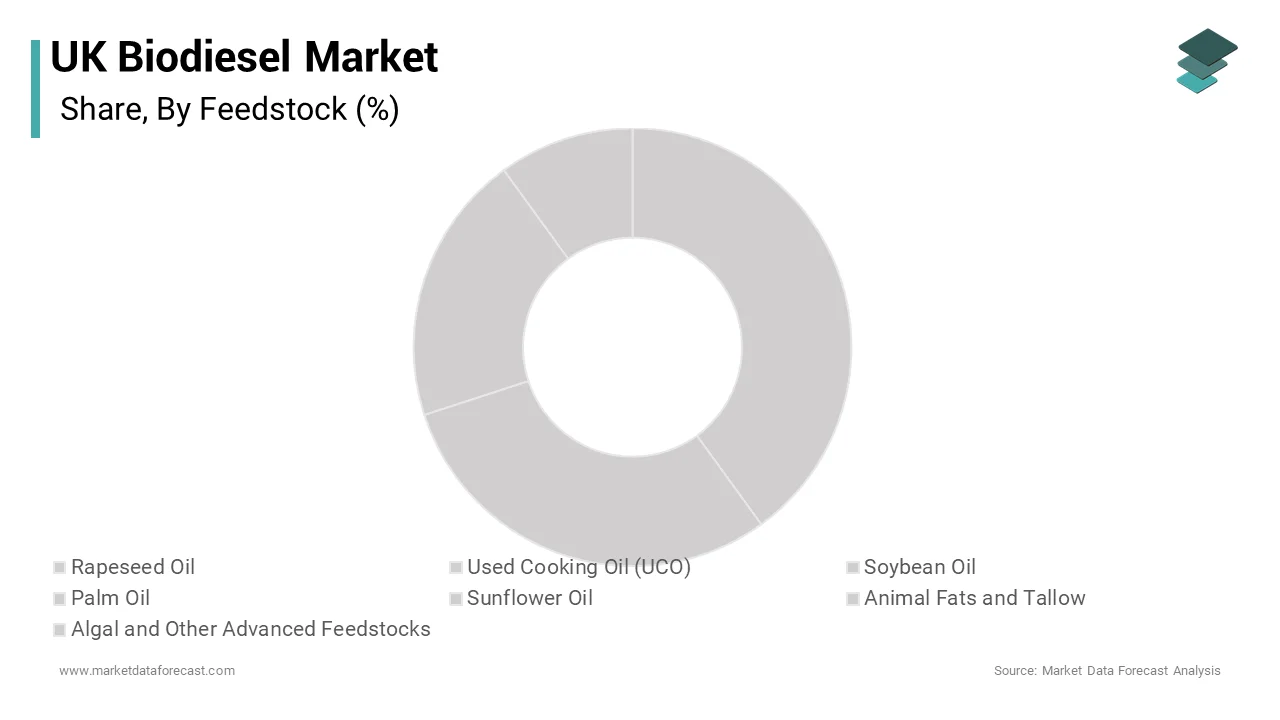
The animal fats and tallow segment is predicted to witness the highest CAGR of 6.5% over the forecast period. This accelerated growth is propelled by the increasing utilization of slaughterhouse byproducts and rendering industry outputs as viable renewable energy sources. According to the British Renderers Association, the UK produces substantial volumes of animal fats annually, much of which is now being diverted from traditional uses to biofuel production due to favorable policy frameworks. A study shows that tallow based biodiesel offers competitive carbon savings and is increasingly accepted in heavy duty transport applications. The segment benefits from the classification of animal fats as waste or residue feedstocks under certain regulatory interpretations, allowing them to qualify for higher incentive levels. Advances in pre treatment technologies have improved the quality and consistency of tallow derived fuel, addressing previous concerns about cold flow properties. Partnerships between rendering plants and biodiesel refineries have streamlined supply chains, reducing logistics costs and enhancing efficiency. The growing demand for sustainable aviation fuel also drives interest in hydrotreated animal fats as a precursor. This driver is reinforced by the need to diversify feedstock sources beyond vegetable oils to ensure supply stability. The economic viability of converting low value byproducts into high value energy supports rapid expansion. As regulatory clarity improves, more producers are investing in capabilities to process animal fats, fueling significant market growth.
By Biodiesel Blends Insights
The B7 blend segment led the United Kingdom biodiesel market and captured a 55.9% share in 2025. Its widespread compatibility with existing diesel engines and established distribution infrastructure have contributed to the leading position of this segment. This blend consists of 7 percent biodiesel and 93 percent conventional diesel, offering a balanced approach to emission reduction without requiring vehicle modifications. According to the Society of Motor Manufacturers and Traders, most modern diesel vehicles in the UK are approved for use with up to B7 blends, ensuring broad consumer acceptance and minimizing technical risks. Data from the Department for Transport indicates that B7 is the standard specification for road diesel sold at forecourts across the country, mandated by fuel quality regulations. The segment benefits from seamless integration into the existing supply chain, as retailers do not need separate storage tanks or dispensing equipment. Consumer awareness of B7 as a standard fuel reduces hesitation and encourages voluntary uptake. The blend provides immediate greenhouse gas savings compared to pure fossil diesel, helping suppliers meet initial compliance obligations. Regulatory stability regarding the B7 standard provides confidence for long term investment in distribution networks. The economic feasibility of producing and distributing B7 is well established, with mature refining processes ensuring consistent quality. This dominance is sustained by the sheer volume of diesel consumption in the transport sector, where even a small percentage blend translates to significant renewable fuel usage. The universal applicability of B7 ensures it remains the backbone of the UK biodiesel market.
The higher blends segment is estimated to register the fastest CAGR of 8.2% from 2026 to 2034 owing to the decarbonization needs of captive fleets and industrial machinery. These higher concentration blends offer substantially greater carbon reductions and are increasingly adopted by bus operators, municipal services, and agricultural enterprises. According to the Confederation of Passenger Transport, many local authorities are transitioning their bus fleets to higher biodiesel blends to meet strict urban air quality standards and net zero commitments. Research shows that purpose built or modified engines can efficiently run on B20 or B100, delivering performance comparable to fossil diesel while significantly lowering particulate matter emissions. The segment benefits from targeted government grants and low emission zone exemptions that incentivize the use of cleaner fuels. Dedicated refueling infrastructure is being developed at depot levels, overcoming the limitations of public forecourt availability. Corporate sustainability reporting drives demand for verifiable high impact solutions, making higher blends attractive for large fleet operators. Technological advancements in engine durability and fuel stability have addressed historical concerns about long term use. This driver is reinforced by the desire to maximize renewable content in sectors where electrification is not yet feasible. As awareness of the benefits grows, more commercial entities are piloting and adopting higher blends, fueling rapid market expansion.
REGIONAL MARKET ANALYSIS
England Biodiesel Market Analysis
England was the top performer in the United Kingdom biodiesel market and occupied an 83.4% share in 2025. The demand for biodiesel in the region was propelled by its dense population and extensive transport networks. The region hosts the majority of fuel distribution terminals and large scale logistics operations, driving significant demand for renewable diesel blends. According to Transport for London, the expansion of the Ultra Low Emission Zone (ULEZ) across Greater London has forced a rapid shift toward cleaner, emission-compliant vehicles to avoid daily penalty charges. Data from the UK Department for Transport indicates that the highest absolute volume of renewable fuel obligations is fulfilled across fuel infrastructure in England, which serves as the UK's primary fuel consumption hub. Major ports such as Felixstowe and Southampton facilitate the import of feedstocks and finished biodiesel, supporting robust supply chain activities. The presence of numerous rendering plants and waste management facilities in industrial regions provides ample local feedstock resources. Urban centers drive demand through public transport initiatives that prioritize sustainable fuels for bus fleets. Commercial freight movements across the country concentrate in English hubs, necessitating reliable access to compliant fuels. Regulatory enforcement and monitoring are most intensive in this region, ensuring high compliance rates among suppliers. The concentration of corporate headquarters also means that sustainability decisions made in England often dictate national procurement strategies. This central role ensures that England sets the pace for biodiesel adoption and infrastructure development across the UK.
Scotland Biodiesel Market Analysis
Scotland was positioned second in the United Kingdom biodiesel market due to its ambitious climate targets and focus on rural and marine applications. Although smaller in volume compared to England, Scotland contributes significantly to the innovation and specialized use of biodiesel in remote areas. According to the Scottish Government, the nation has set legally binding targets to reduce greenhouse gas emissions, with transport being a key focus area for intervention. Transport Scotland's strategy to decarbonise island and rural ferry networks primarily targets the adoption of electric and battery-hybrid propulsion systems alongside port infrastructure upgrades. The region benefits from a strong agricultural sector that produces rapeseed oil, providing a local source of first generation feedstock. Community owned renewable energy projects often explore biodiesel for backup generators and local transport needs. The maritime sector in Scotland is particularly active in testing biofuels to comply with international shipping regulations. Government support for green innovation fosters pilot projects and research collaborations with universities. Consumer awareness of environmental issues is high, encouraging voluntary uptake of greener fuel options. The rugged terrain and dispersed population make electrification challenging in some areas, keeping biodiesel relevant for heavy duty and off road vehicles. This niche approach allows Scotland to lead in specific applications while contributing to the overall national renewable fuel mix.
Wales Biodiesel Market Analysis
Wales plays a key role in the United Kingdom biodiesel market by leveraging its agricultural resources and commitment to sustainable transport policies. Its growth is driven by local government initiatives and rural transport needs. According to the Welsh Government, the Well being of Future Generations Act mandates public bodies to act sustainably, influencing procurement decisions for fuel and transport services. Data from Natural Resources Wales highlights the importance of protecting air quality in valley communities, prompting local authorities to explore cleaner fuel alternatives for buses and maintenance vehicles. The agricultural sector in Wales produces rapeseed and other oilseeds, offering potential for local feedstock sourcing and community scale production. Rural logistics and farming operations rely heavily on diesel, making biodiesel blends an accessible way to reduce carbon footprints. Partnerships between local farmers and fuel suppliers are emerging to create short supply chains. The compact geography facilitates easier distribution and monitoring of fuel quality. Public transport operators in Wales are increasingly incorporating sustainability criteria into their contracts, favoring suppliers who offer renewable options. Tourism related transport also seeks green credentials to appeal to eco conscious visitors. This strategic focus on local sustainability and community benefit positions Wales as a proactive participant in the national biodiesel landscape.
Northern Ireland Biodiesel Market Analysis
Northern Ireland is a developing player in the United Kingdom biodiesel market due to cross border dynamics and growing awareness of renewable energy options. The region accounts for roughly 3 percent of national consumption, with Belfast serving as the primary hub for distribution and commercial usage. According to the Department for Infrastructure, Northern Ireland is aligning its climate policies with broader UK goals, leading to increased interest in low carbon transport solutions. Data from the Northern Ireland Statistics and Research Agency indicates that road transport remains a significant source of emissions, creating pressure to adopt alternative fuels. The proximity to the Republic of Ireland facilitates knowledge exchange and potential supply chain integration for biofuels. Local agricultural producers generate waste oils and animal fats that can be utilized for biodiesel production, supporting rural economies. Bus operators and municipal fleets are beginning to trial higher biodiesel blends to improve air quality in urban centers. Government consultations on renewable transport fuels are shaping future regulatory frameworks specific to the region. The smaller market size allows for agile implementation of pilot projects and community initiatives. Consumer education campaigns are raising awareness about the benefits of biodiesel. While infrastructure is less developed than in Great Britain, ongoing investments in energy security and sustainability are driving gradual but steady market growth.
COMPETITIVE LANDSCAPE
The United Kingdom biodiesel market exhibits moderate competition characterized by a mix of specialized domestic producers and large international energy companies. Established players leverage their extensive distribution networks and refining capabilities to dominate supply chains while smaller firms focus on niche feedstock sources or regional markets. Regulatory compliance drives much of the competitive dynamics as suppliers vie to meet renewable transport fuel obligations cost effectively. Price sensitivity remains high due to fluctuations in crude oil and feedstock costs forcing participants to optimize operational efficiency. Innovation in feedstock diversification serves as a key differentiator with companies seeking unique waste streams to gain advantage. Strategic alliances with waste collectors and transport operators create barriers to entry for new competitors. The market is influenced by government policy changes which can rapidly alter demand patterns and profitability. International imports pose additional pressure requiring domestic producers to maintain high quality and competitive pricing. Brand reputation for sustainability and reliability becomes increasingly important as corporate buyers prioritize verified carbon savings. This landscape demands agility strategic sourcing and continuous technological improvement to sustain market position.
KEY MARKET PLAYERS
A few of the dominating market players that are in the UK biodiesel market are
- Neste Oyj
- TotalEnergies SE
- Eni S.p.A.
- Preem AB
- Cepsa
- Repsol S.A.
- Greenergy International Ltd.
- Verbio AG
- Argent Energy
- ADM
- Cargill
- Shell plc
- BP plc
- Bunge Limited
- Louis Dreyfus Company
- Envien Group
- Abengoa Bioenergía
- German Biofuels GmbH
- BDI-BioEnergy
- Verbund BioPower
Top Players In The Market
- Neste UK Limited operates as a leading producer of renewable diesel and sustainable aviation fuel with a significant presence in the United Kingdom market. The company specializes in converting waste fats and vegetable oils into high quality low carbon fuels that meet strict environmental standards. Recent actions include expanding its supply agreements with major UK logistics firms to provide hydrotreated vegetable oil for heavy duty transport fleets. Neste invests heavily in research and development to improve feedstock flexibility and production efficiency at its global refineries. The firm actively engages with policymakers to shape favorable regulatory frameworks for advanced biofuels. Strategic partnerships with local waste collectors ensure a steady supply of raw materials while supporting circular economy initiatives. These efforts strengthen its reputation as a reliable provider of sustainable energy solutions.
- Argent Energy Ltd stands as a prominent domestic producer of biodiesel in the United Kingdom focusing on the conversion of tallow and used cooking oil. The company plays a crucial role in managing waste streams from the food and agriculture sectors by transforming them into valuable renewable fuel. Recent initiatives involve upgrading processing facilities to increase capacity and enhance the quality of output for diverse automotive applications. Argent Energy collaborates closely with rendering plants and hospitality businesses to secure consistent feedstock supplies across the nation. The firm emphasizes sustainability credentials and carbon savings in its marketing to attract environmentally conscious commercial clients. Investment in storage infrastructure ensures reliable distribution to key transport hubs. This operational excellence supports the UK government’s renewable transport targets and reduces reliance on imported fuels.
- Greenergy Fuels Ltd is a major supplier of low carbon fuels in the United Kingdom with extensive expertise in biodiesel blending and distribution. The company leverages its widespread terminal network to deliver compliant fuel blends to retailers and commercial customers nationwide. Recent actions include investing in advanced blending technologies to handle higher concentrations of renewable components efficiently. Greenergy partners with international producers to source sustainable feedstocks while developing local supply chains for used cooking oil. The firm provides comprehensive compliance services to help fuel suppliers meet renewable transport fuel obligation requirements. Strategic acquisitions of storage assets enhance logistical capabilities and market reach. Continuous innovation in fuel formulation ensures product quality and engine compatibility. These strategies reinforce its position as a key enabler of the transition to cleaner transport energy in the UK.
Major Strategies Used By Key Market Participants
Key players in the United Kingdom biodiesel market employ diverse strategies to maintain competitive advantage and drive sustainable growth. Securing long term feedstock supply contracts remains central as companies partner with waste management firms and agricultural producers to ensure raw material availability. Investment in advanced processing technologies enables the conversion of lower grade residues into high quality fuel improving margins. Brands focus on regulatory compliance and certification to access premium markets and meet government obligations effectively. Partnerships with logistics and transport companies facilitate direct sales channels and stable demand volumes. Digital tools are used to track carbon intensity and provide transparent reporting for corporate clients. Expansion of storage and blending infrastructure enhances distribution efficiency and reliability. Sustainability messaging highlights environmental benefits to attract eco conscious stakeholders and investors. These multifaceted approaches ensure resilience against price volatility and support long term viability in the evolving energy landscape.
RECENT MARKET NEWS
- In March 2024, Neste UK Limited signed a long term supply agreement with a major British logistics company for renewable diesel. This agreement is anticipated to secure steady demand and strengthen the Uk biodiesel market presence
- In May 2024, Argent Energy Ltd completed an expansion of its tallow processing facility in Lincolnshire to boost production capacity. This expansion is anticipated to increase output volume and strengthen the Uk biodiesel market presence
- In January 2025, Greenergy Fuels Ltd invested in new blending technology at its Thames terminal to handle advanced biofuels. This investment is anticipated to improve operational efficiency and strengthen the Uk biodiesel market presence
- In September 2024, a leading UK waste management firm partnered with a biodiesel producer to streamline used cooking oil collection. This partnership is anticipated to enhance feedstock security and strengthen the Uk biodiesel market presence
- In November 2024, an international energy supplier launched a certified sustainable biodiesel brand specifically for the UK commercial transport sector. This launch is anticipated to attract corporate clients and strengthen the Uk biodiesel market presence
MARKET SEGMENTATION
This research report on the UK biodiesel market is segmented and sub-segmented into the following categories.
By Feedstock
- Rapeseed Oil
- Used Cooking Oil (UCO)
- Soybean Oil
- Palm Oil
- Sunflower Oil
- Animal Fats and Tallow
- Algal and Other Advanced Feedstocks
By Biodiesel Blends
- B5
- B7
- B10
- Higher Blends (B20, B30, B100)