- Product Description Description
- Table of Contents TOC
- List of Table & Figure LOT
- Get Free Sample PDF Sample PDF
Market Size, 2025
$6.70 MnMarket Estimate, 2026
$7.32 MnMarket Forecast, 2034
$14.77 MnCAGR, 2026–2034
9.18%UK Board Games Market Report Summary
The UK board games market was valued at USD 6.70 million in 2025, is estimated to reach USD 7.32 million in 2026, and is projected to reach USD 14.77 million by 2034, growing at a CAGR of 9.18% during the forecast period. Market growth is driven by increasing consumer interest in social and family entertainment, rising popularity of tabletop gaming communities, growing demand for educational games, and the expansion of hobby gaming culture. The market is further supported by the emergence of gaming cafés, independent game publishers, and innovative board game designs that appeal to a broad range of age groups.
Key Market Trends
- Growing popularity of tabletop gaming and social entertainment is driving market growth.
- Increasing demand for family oriented and educational board games is boosting market expansion.
- Rising participation in hobby gaming communities and gaming events is supporting industry development.
- Expansion of specialty game stores and gaming cafés is enhancing market opportunities.
- Growing innovation in game design, themes, and interactive gameplay experiences is influencing market advancement.
Segmental Insights
- Based on product type, the tabletop games segment accounted for the largest share of the UK board games market in 2025. This dominance is attributed to strong consumer engagement, diverse game formats, and growing popularity among families, friends, and hobby gamers.
- Based on distribution channel, the offline segment held the leading share of the UK board games market in 2025, driven by the tangible nature of board games, in store demonstrations, and the immediate satisfaction associated with physical purchases.
Regional Insights
- The United Kingdom accounted for a significant share of the European board games market in 2025 and is expected to maintain strong growth momentum during the forecast period. The country benefits from a well established tabletop gaming culture, active gaming communities, and a growing network of specialty gaming stores and gaming venues.
Competitive Landscape
The UK board games market is highly competitive, with companies focusing on innovative game development, strategic partnerships, product diversification, and community engagement to strengthen their market position. Market participants continue to invest in new game concepts, licensed content, and educational gaming products.
Major players operating in the UK board games market include Hasbro, Inc., Mattel, Inc., Ravensburger AG, Asmodee Group, Spin Master Corp., Goliath Games, University Games, Gibsons Games, Big Potato Games, Coiledspring Games, Cartamundi Group, Winning Moves UK, The Green Board Game Co., Cheatwell Games, and Orchard Toys Ltd.
 Download Free Sample Report
UK Board Games Market Size
The UK board games market size was valued at USD 6.70 million in 2025, and is projected to reach USD 14.77 million by 2034 from USD 7.32 million in 2026, growing at a CAGR of 9.18%.
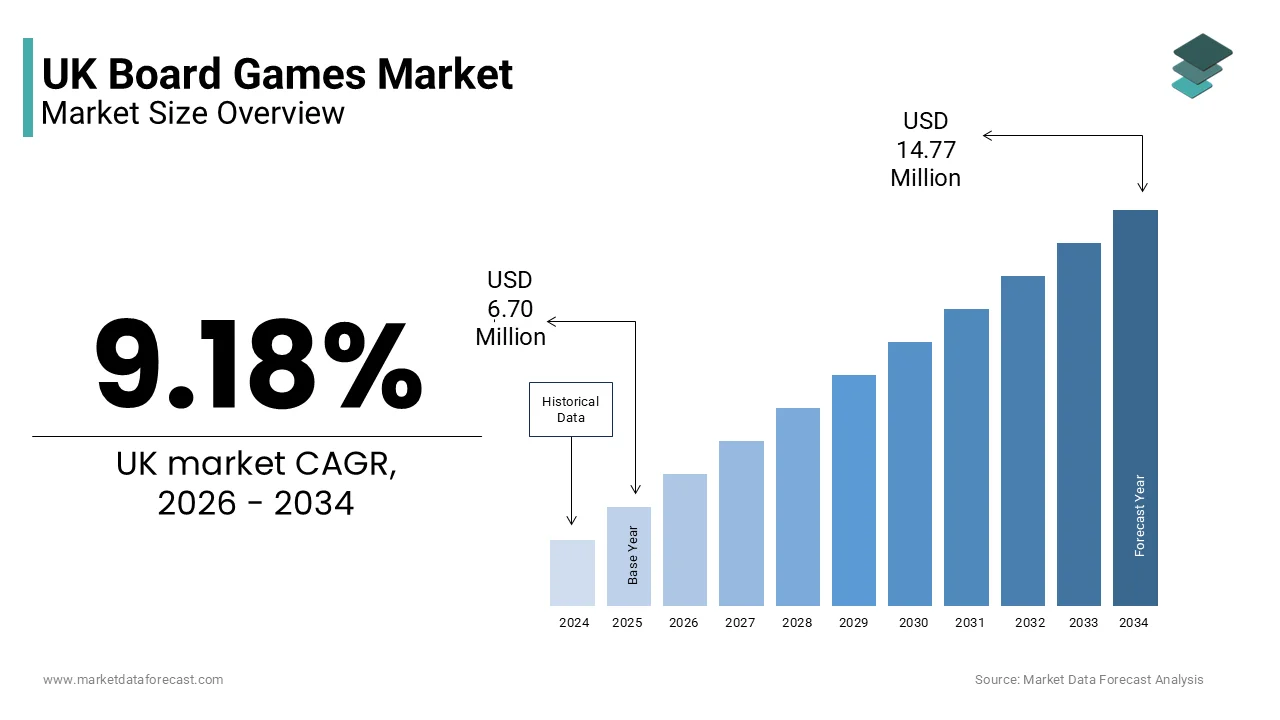
As per the Office for National Statistics, adults in the UK spent an average of 3 hours and 39 minutes each day on entertainment, socialising, and other free time activities, with a growing proportion allocated to interactive and social pastimes. According to Mintel, approximately 25% of UK adults reported playing board or card games at least once a month, indicating strong habitual engagement. The rise of dedicated gaming cafes and community events has further normalized board gaming as a mainstream social activity beyond the domestic sphere. Retailers have responded by expanding shelf space for hobbyist titles and introducing specialized sections for strategy and indie games. The influence of online content creators and streaming platforms has also played a pivotal role in educating consumers about new releases and mechanics. This dynamic landscape requires publishers to balance innovation with accessibility while navigating supply chain complexities and shifting consumer expectations regarding component quality and thematic diversity.
MARKET DRIVERS
Resurgence of Social Interaction and Community Building Drives Demand
The profound human need for face to face social connection is fuelling the expansion of the UK board games market as individuals seek meaningful interactions away from digital distractions. In an era where remote work and virtual communication have become prevalent, board games offer a structured and engaging medium for physical gathering and shared experiences. According to the Campaign to End Loneliness, over 9 million people in the UK often or always feel lonely and this indicates a societal demand for activities that foster genuine community bonds. Board game cafes and local gaming groups have proliferated across major cities, providing safe and welcoming spaces for enthusiasts to meet and play. As per Eventbrite, data indicates that ticket sales for board game nights and tabletop conventions have increased by 35% in recent years, reflecting heightened interest in communal gaming events. Families are also prioritizing screen free time together, with parents viewing board games as educational tools that enhance communication and problem solving skills among children. The tactile nature of physical components and the immediate feedback loop of gameplay create memorable moments that digital alternatives often lack. This desire for authentic connection drives consistent demand for multiplayer titles that encourage cooperation, competition, and conversation. As mental health awareness grows, the therapeutic benefits of social play are increasingly recognized, further cementing the role of board games in promoting well-being and social cohesion within communities.
Influence of Digital Media and Crowdfunding Platforms Expands Awareness
The pervasive influence of digital media and crowdfunding platforms is further boosting the board games market expansion in the UK by democratizing access to information and enabling direct consumer publisher relationships. Online video reviews, live streams, and podcasts have created a robust ecosystem of content that educates potential buyers about complex mechanics and thematic depth. According to Kickstarter, the tabletop games category consistently ranks among the most funded projects globally, with UK backers contributing millions of pounds annually to independent campaigns. This direct funding model allows niche designers to bring innovative concepts to market without traditional publishing gatekeepers, fostering a culture of creativity and experimentation. As per YouTube, data shows that board game related channels have amassed billions of views, demonstrating the massive reach of digital advocacy. Social media platforms like Instagram and TikTok facilitate viral trends where visually appealing components and unique themes capture widespread attention. Consumers are more informed and discerning, relying on peer recommendations and detailed analyses before making purchases. This transparency forces publishers to maintain high standards of quality and originality. The ability to pre order exclusive editions through crowdfunding creates a sense of ownership and anticipation among fans. As digital discovery tools become more sophisticated, they lower the barrier to entry for new players while sustaining enthusiasm among veteran hobbyists, ensuring a steady influx of fresh talent and ideas into the market.
MARKET RESTRAINTS
High Production Costs and Supply Chain Volatility Restrain Profitability
The substantial production costs associated with high quality components and persistent supply chain volatility are impeding the expansion of the UK board games market, which is impacting pricing and availability. Modern board games often feature intricate miniatures, custom dice, and premium card stock which require specialized manufacturing processes primarily located in Asia. According to the British Toy and Hobby Association, shipping costs and lead times have fluctuated dramatically due to global logistical disruptions, affecting inventory management and cash flow for publishers. The reliance on overseas production exposes companies to currency exchange risks and tariff uncertainties which can erode profit margins. As per the Office for National Statistics, data indicates that import prices for recreational goods have risen significantly, prompting retailers to increase retail prices, potentially dampening consumer demand. Small independent publishers are particularly vulnerable as they lack the economies of scale to negotiate favorable terms with manufacturers. Delays in production can miss critical holiday sales windows, resulting in lost revenue and damaged reputations. Additionally, the environmental impact of plastic components is facing scrutiny, leading to pressure for sustainable alternatives that may be more expensive to produce. These financial pressures force publishers to carefully balance component quality with affordability, often limiting the scope of ambitious projects. Without stable supply chains and predictable cost structures, the industry faces challenges in maintaining consistent growth and meeting consumer expectations for value.
Limited Shelf Space and Retail Consolidation Impact Visibility
The constraint of limited physical shelf space and ongoing retail consolidation is another significant restraint for the UK board games market, particularly for independent and niche publishers. Major high street retailers prioritize mass market titles with broad appeal, leaving little room for specialized or complex games that cater to hobbyist audiences. According to the Centre for Retail Research, the number of independent bookshops and toy stores in the UK has declined over the past decade, reducing the diverse retail outlets available for board game distribution. Large chains often demand high margin contributions and promotional support which smaller publishers cannot afford, effectively barring them from mainstream visibility. As per Nielsen, data shows that a small percentage of top selling titles dominate retail sales, creating a winner takes all dynamic that stifles diversity. Online marketplaces offer an alternative but lack the tactile experience and immediate gratification of physical browsing, which is crucial for impulse purchases. The dominance of algorithm driven recommendations on digital platforms can also obscure lesser known titles, making discovery difficult for casual shoppers. This concentration of retail power limits the exposure of innovative games and reinforces the status quo. Publishers must therefore invest heavily in direct to consumer marketing and community building to bypass traditional retail bottlenecks. However, this approach requires significant resources and expertise that not all companies possess, limiting market entry and growth potential for new entrants.
MARKET OPPORTUNITIES
Expansion into Educational and Therapeutic Applications Presents Opportunities
The integration of board games into educational curricula and therapeutic practices presents a substantial opportunity for the UK board games market to expand beyond traditional entertainment boundaries. Educators are increasingly recognizing the value of gamified learning in developing critical thinking, mathematical reasoning, and social emotional skills among students. According to the Department for Education, schools in the UK are seeking engaging resources to support post pandemic recovery in student engagement and attendance. Board games offer interactive methods for teaching subjects such as history, science, and language arts, making abstract concepts tangible and enjoyable. As per the National Literacy Trust, data suggests that playful learning approaches can improve literacy outcomes by fostering motivation and participation. In the healthcare sector, therapists utilize board games to assist patients with cognitive rehabilitation, anxiety management, and social skills training. The structured rules and safe environment of gameplay provide a controlled setting for practicing interpersonal interactions and coping strategies. Publishers can capitalize on this trend by designing titles specifically aligned with educational standards and therapeutic goals. Collaborations with educational institutions and healthcare providers can open new distribution channels and revenue streams. As awareness of the cognitive and social benefits of board gaming grows, institutional adoption is likely to increase, driving demand for purpose built products that combine fun with functional outcomes.
Growth of Hybrid and Digital Companion Experiences Enhances Engagement
The emergence of hybrid board games that integrate physical components with digital companion apps offers a significant opportunity for the UK board games market to attract tech savvy consumers and enhance gameplay depth. These hybrid experiences leverage smartphones and tablets to manage complex rules, track scores, and generate dynamic narrative elements, thereby lowering the barrier to entry for complicated strategy games. According to App Annie, downloads of board game companion apps have surged, indicating strong consumer acceptance of digital augmentation. This fusion appeals to younger demographics who are accustomed to digital interfaces while retaining the tactile satisfaction of physical play. As per Steam, data shows that digital adaptations of popular board games often drive interest back to the physical versions, creating a synergistic effect. Publishers can use apps to provide tutorial modes, automated setup, and solo play options which address common pain points for new players. The ability to update content digitally allows for continuous expansion and community engagement without the need for physical reprints. This flexibility enables publishers to experiment with narrative driven campaigns and legacy mechanics that evolve over time. By embracing technology, board game companies can modernize their offerings and reach broader audiences who might otherwise be intimidated by traditional rulebooks. This innovation pathway supports long term retention and opens new avenues for monetization through digital expansions and subscriptions.
MARKET CHALLENGES
Intellectual Property Protection and Counterfeiting Threats
The prevalence of counterfeit products and inadequate intellectual property protection is a significant challenge to the UK board games market, which is undermining revenue and brand integrity for legitimate publishers. Popular titles are frequently replicated by unauthorized manufacturers who sell inferior copies at lower prices on international e commerce platforms. According to the Intellectual Property Office, copyright infringement in the creative industries remains a persistent issue, with tabletop games being increasingly targeted due to their high perceived value. These counterfeit versions often use substandard materials and incorrect rules, damaging the consumer experience and tarnishing the reputation of original creators. As per Amazon, data indicates that thousands of listings for fake board games circulate on its platform, making it difficult for rights holders to enforce takedowns effectively. The global nature of online marketplaces complicates legal recourse as infringers often operate from jurisdictions with weak enforcement mechanisms. Small independent designers are particularly vulnerable as they lack the resources for extensive legal battles. The loss of sales to counterfeits directly impacts the financial viability of future projects and discourages innovation. Consumers may unknowingly purchase fake products, leading to dissatisfaction and reduced trust in the market. Strengthening anti-counterfeiting measures and raising consumer awareness about authentic purchasing channels are critical but resource intensive tasks. Until effective global solutions are implemented, piracy will remain a drain on the industry’s creative and economic potential.
Market Saturation and Consumer Choice Overload
The sheer volume of new board game releases contributes to market saturation and consumer choice overload, which is further challenging the UK board games market growth. Thousands of new titles are launched annually, making it increasingly difficult for individual games to stand out and capture consumer attention. According to BoardGameGeek, over 10000 new board games were added to its database in a single year, illustrating the intense competition for shelf space and mindshare. This abundance can paralyze decision making for casual buyers who may feel overwhelmed by the variety of options and complex mechanics. Retailers struggle to curate selections that balance novelty with proven sellers, leading to conservative buying practices that favor established franchises. As per retail surveys, data suggests that return rates for unsold inventory have increased as shops grapple with predicting trends in a fragmented market. Publishers face pressure to constantly innovate while managing higher marketing costs to differentiate their products. The short lifecycle of many titles means that games may become obsolete quickly as newer releases capture public interest. This rapid turnover creates instability for businesses relying on long tail sales. Consumers may also experience fatigue from frequent purchases, leading to more selective spending habits. Navigating this crowded landscape requires strategic positioning and strong brand loyalty, which are difficult to build and maintain in such a dynamic environment.
REPORT COVERAGE
| REPORT METRIC | DETAILS |
| Market Size Available | 2025 to 2034 |
| Base Year | 2025 |
| Forecast Period | 2026 to 2034 |
| CAGR | 9.18% |
| Segments Covered | By Product Type, Distribution Channel, and Region. |
| Various Analyses Covered | Global, Regional and Country-Level Analysis, Segment-Level Analysis, Drivers, Restraints, Opportunities, Challenges; PESTLE Analysis; Porter’s Five Forces Analysis, Competitive Landscape, Analyst Overview of Investment Opportunities |
| Market Leaders Profiled | Hasbro, Inc., Mattel, Inc., Ravensburger AG, Asmodee Group, Spin Master Corp., Goliath Games, University Games, Gibsons Games, Big Potato Games, Coiledspring Games, Cartamundi Group, Winning Moves UK, The Green Board Game Co., Cheatwell Games, and Orchard Toys Ltd. |
SEGMENTAL ANALYSIS
By Product Type Insights
The tabletop games segment dominated the market by holding the highest share of the UK market in 2025 due to their ability to offer deep strategic engagement and immersive social experiences that appeal to a broad demographic. This category includes eurogames, worker placement games, and area control titles which have gained immense popularity for their complex mechanics and high replayability. According to BoardGameGeek, the UK consistently ranks among the top five countries globally for board game ownership and active participation, indicating a mature and enthusiastic consumer base. The dominance of this segment is underpinned by the cultural shift towards hobbyist gaming, where players seek intellectual stimulation and meaningful interaction beyond simple luck based mechanics. As per Mintel, data reveals that 45% of UK adults who play board games prefer strategy based titles that require planning and negotiation, fostering stronger social bonds during gameplay. The rise of local gaming communities and dedicated cafes has further normalized the consumption of complex tabletop games, providing spaces for enthusiasts to learn and play together. Publishers continuously innovate with high quality components and engaging themes, ranging from historical simulations to fantasy adventures, ensuring sustained interest. The tactile nature of these games offers a sensory experience that digital alternatives cannot replicate, making them a preferred choice for family gatherings and friend groups. As consumers increasingly value experiences over material goods, tabletop games provide lasting entertainment value through repeated play sessions, driving consistent sales volume and market leadership.
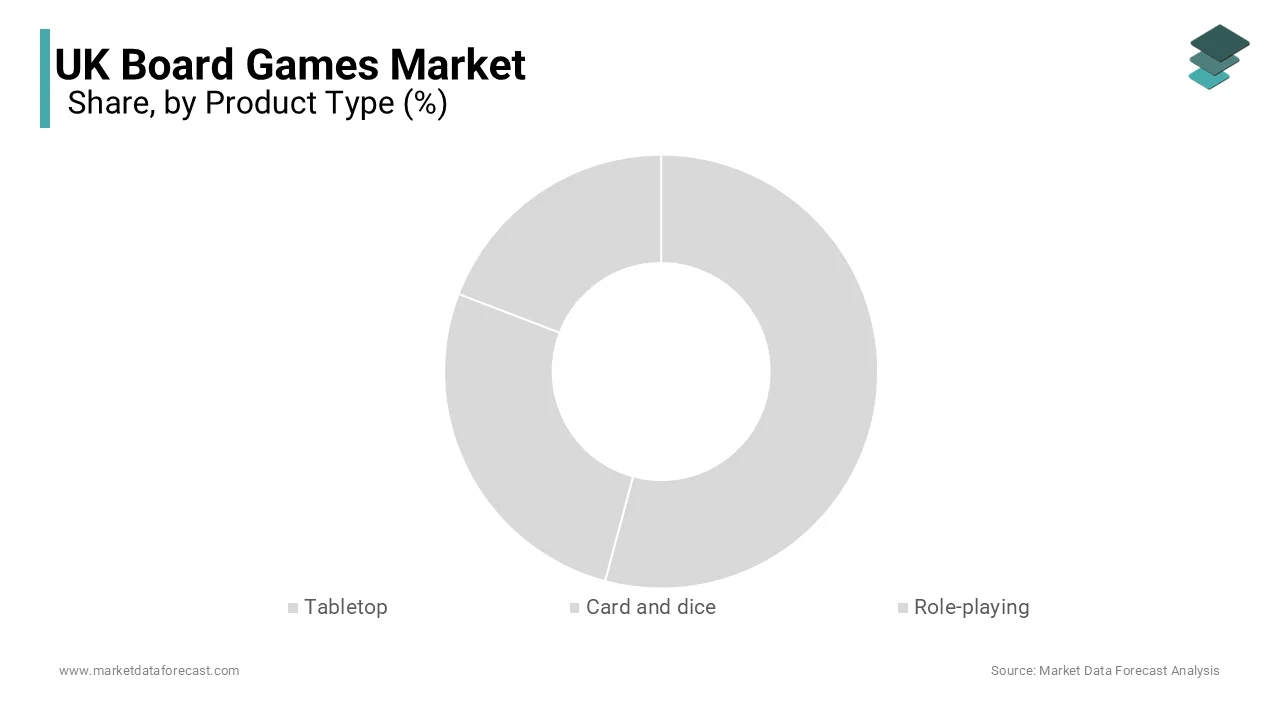
On the other end, the role playing games segment is the fastest growing segment in the UK board games market and is predicted to record a CAGR of 10.4% during the forecast period owing to the desire for immersive storytelling and creative expression. This category encompasses tabletop role playing systems such as Dungeons and Dragons, Pathfinder, and indie narrative games that allow players to assume character roles in collaborative fictional worlds. According to Wizards of the Coast, sales of Dungeons and Dragons related products have doubled in recent years, reflecting a surge in popularity among both new and returning players. The influence of actual play podcasts and streaming series has played a pivotal role in demystifying the genre and showcasing its potential for humor, drama, and camaraderie. As per YouGov, data indicates that interest in role playing games has increased significantly among millennials and Gen Z consumers who value customization and narrative agency. The flexibility of these systems allows for endless storytelling possibilities, appealing to creative individuals seeking escape from routine. Local game stores host regular sessions, lowering the barrier to entry for beginners who may feel intimidated by complex rules. Additionally, the integration of digital tools for character management and map visualization has modernized the experience, making it more accessible. As social isolation concerns persist, role playing games offer a unique form of connection through shared imagination, driving rapid adoption and expansion within the broader board gaming community.
By Distribution Channel Insights
The offline segment led the market by accounting for the highest share of the UK market in 2025 due to the tangible nature of the product and the immediate satisfaction of purchase. Consumers often prefer to physically inspect box art, component quality, and rulebooks before buying, particularly for higher priced hobbyist titles. According to the British Toy and Hobby Association, independent toy and game stores remain vital hubs for community engagement, offering expert advice and demo copies that online platforms cannot provide. The social aspect of visiting a store and participating in in store events fosters loyalty and repeat business. As per the Office for National Statistics, data shows that despite the rise of e commerce, a significant portion of leisure product purchases still occur in physical stores, especially during holiday seasons when gift buying is prevalent. Major retailers like Waterstones and HMV have expanded their board game sections, recognizing the category's growth potential and drawing foot traffic. The ability to take home a game immediately without waiting for delivery appeals to impulse buyers and last minute shoppers. Furthermore, local stores often serve as community centers, hosting game nights and tournaments which drive sales of featured titles. This experiential retail model creates an emotional connection between consumers and brands, ensuring that offline channels remain the primary source of revenue and discovery for the board games industry.
However, the online retail segment is the fastest growing distribution channel for the UK board games market and is projected to witness a CAGR of 12.2% during the forecast period owing to the unparalleled convenience, extensive variety, and competitive pricing available on digital platforms. E-commerce allows consumers to access niche titles, international imports, and out of print games that are rarely stocked in physical stores. According to Statista, online sales of hobbies and leisure products in the UK have surged as consumers become more comfortable purchasing bulky items online with reliable delivery services. Platforms like Amazon and specialized retailers such as Board Game Bling offer vast catalogs, user reviews, and comparison tools that aid informed decision making. As per PayPal, data indicates that contactless and digital payment preferences have accelerated online shopping habits across all age groups. Crowdfunding platforms like Kickstarter have also normalized direct to consumer purchasing, allowing backers to secure exclusive editions and support independent creators directly. The ability to browse extensive databases and read detailed critiques from global communities enhances the shopping experience for knowledgeable hobbyists. Subscription services and bundle deals further incentivize online purchases by offering value propositions that physical retailers struggle to match. As logistics improve and return policies become more consumer friendly, the trust in online transactions grows, ensuring this channel continues to capture an increasing share of the market.
COUNTRY LEVEL ANALYSIS
The UK accounted for the major share of the European board games market in 2025 and is expected to experience steady, high-value consumer demand and continued growth across its dense network of tabletop gaming spaces over the next few years. As a mature market, the UK serves as a hub for English language publishing and distribution, influencing trends across the continent. According to the UK Games Expo, one of the largest tabletop gaming conventions in Europe attracts tens of thousands of visitors annually, demonstrating the scale of consumer interest and industry activity. The country benefits from a high concentration of dedicated board game cafes and clubs in major cities like London, Manchester, and Edinburgh, which foster local communities and drive regular sales. As per the Department for Digital, Culture, Media and Sport, data highlights the UK’s strong creative industries sector which supports innovative game design and publishing talent. The presence of major international publishers’ UK offices facilitates efficient distribution and marketing campaigns tailored to local preferences. Regulatory stability and strong intellectual property protections encourage investment in original content. Additionally, the UK’s high internet penetration and digital literacy support robust online retail and crowdfunding participation. The cultural acceptance of board gaming as a mainstream leisure activity ensures broad demographic appeal. As a trendsetter, the UK often adopts new mechanics and themes early, influencing wider European markets. This combination of infrastructure, community, and economic strength ensures the UK remains a pivotal player in the global board games landscape.
COMPETITIVE LANDSCAPE
The competition in the UK board games market is intense and characterized by a mix of large multinational publishers agile independent studios and specialized distributors vying for consumer attention. Major players leverage their extensive portfolios and distribution networks to dominate shelf space in retail stores while smaller niche brands focus on innovative mechanics and unique artistic styles. The market sees frequent new releases as companies strive to differentiate themselves through thematic depth component quality and gameplay complexity. Price competition is significant particularly in the family and party game segments forcing companies to balance production costs with affordability. Consumer loyalty is increasingly driven by community engagement brand reputation and positive word of mouth rather than just marketing spend. Digital platforms and crowdfunding have lowered barriers to entry allowing independent creators to challenge established firms. Retailers play a crucial role in curating selections and promoting titles through in store events. The rise of hybrid gaming experiences adds another layer of competition as companies integrate apps and online features. Success depends on ability to build strong communities deliver consistent quality and adapt to evolving player preferences in a dynamic and creative industry landscape.
KEY MARKET PLAYERS
Some of the companies that are playing a dominating role in the UK board games market are
- Hasbro, Inc.
- Mattel, Inc.
- Ravensburger AG
- Asmodee Group
- Spin Master Corp.
- Goliath Games
- University Games
- Gibsons Games
- Big Potato Games
- Coiledspring Games
- Cartamundi Group
- Winning Moves UK
- The Green Board Game Co.
- Cheatwell Games
- Orchard Toys Ltd.
Top Players in the Market
- Asmodee UK serves as a dominant force in the UK board games sector managing a vast portfolio of popular titles and distributing major international brands. The company has significantly strengthened its market position by acquiring independent studios and expanding its local publishing capabilities to cater to British tastes. Recently Asmodee has invested heavily in digital adaptations of its flagship games allowing players to engage with their favorite titles online. Its strategic focus on community engagement includes sponsoring major conventions and supporting local game stores through dedicated programs. By leveraging its extensive distribution network Asmodee ensures wide availability of products across retail channels. The company continues to innovate with new releases that blend classic mechanics with modern themes maintaining its leadership status while fostering a vibrant gaming culture throughout the nation.
- Games Workshop stands as a premier player in the UK market specializing in miniature wargaming and hobbyist tabletop experiences. The company is renowned for its Warhammer franchises which have cultivated a dedicated global following and strong brand loyalty. Recently Games Workshop has expanded its reach by launching new entry level sets designed to attract younger audiences and novice players. The organization actively supports its community through organized play events painting competitions and local store networks. Its investment in high quality manufacturing and detailed sculpting ensures premium product standards that justify premium pricing. Games Workshop also leverages digital media and animation projects to enhance brand visibility and narrative depth. By focusing on the holistic hobby experience including modeling and painting the company maintains a unique position that transcends traditional board gaming boundaries.
- Big Potato Games has emerged as a significant contributor to the UK board games market by focusing on accessible party games and family friendly entertainment. The company distinguishes itself through creative branding and humorous themes that appeal to casual gamers and social groups. Recently Big Potato has strengthened its presence by expanding into international markets while maintaining strong roots in the UK retail sector. The brand actively collaborates with influencers and content creators to drive awareness and demonstrate gameplay simplicity. Its commitment to producing high quality components at affordable price points makes its products attractive for gift giving and impulse purchases. Big Potato Games also prioritizes sustainability by exploring eco friendly packaging options. By consistently delivering engaging and easy to learn experiences the company captures a broad demographic and reinforces the social aspect of tabletop gaming.
Top Strategies Used By Key Market Participants
Key players in the UK board games market employ several strategic approaches to maintain competitiveness and drive growth. Product innovation remains central as companies introduce new mechanics diverse themes and inclusive designs to meet changing consumer demands. Community building is increasingly prioritized with brands sponsoring events supporting local stores and engaging directly with fans through social media. Strategic partnerships with digital platforms enable hybrid experiences that bridge physical and virtual gaming. Expansion into educational and therapeutic sectors opens new revenue streams beyond traditional entertainment. Sustainability initiatives such as using recycled materials and reducing plastic waste appeal to environmentally conscious shoppers. Direct to consumer sales channels allow publishers to capture higher margins and gather valuable customer data. Focus on evergreen titles ensures long term revenue stability while limited editions create urgency and exclusivity for collectors.
MARKET SEGMENTATION
This research report on the UK board games market is segmented and sub-segmented into the following categories.
By Product
- Tabletop
- Card and dice
- Role-playing
By Distribution channel
- Online
- Offline
By Age group
- Children (2-12 years)
- Teenagers (12-25 years)
- Adults (25 and above years)