UK Car Leasing Market Size, Share, Trends & Growth Forecast Report Segmented By End User (Commercial, Non-commercial), Type, Vehicle Type and Country – Industry Analysis From 2026 to 2034
Market Size, 2025
$10.30 BnMarket Estimate, 2026
$11.17 BnMarket Forecast, 2034
$21.31 BnCAGR, 2026–2034
8.41%UK Car Leasing Market Report Summary
The United Kingdom car leasing market was valued at USD 10.30 billion in 2025 and is anticipated to reach USD 11.17 billion in 2026 from USD 21.31 billion by 2034, growing at a CAGR of 8.41% during the forecast period from 2026 to 2034. The growth of the United Kingdom car leasing market is driven by increasing consumer preference for vehicle access over ownership, rising adoption of electric vehicles, and growing demand for predictable mobility costs. Expanding corporate fleet electrification initiatives, increasing utilization of salary sacrifice schemes, and growing preference for flexible mobility solutions are further accelerating market growth. Moreover, advancements in digital leasing platforms, expansion of subscription-based mobility models, and increasing adoption of sustainable transportation solutions are supporting the expansion of the United Kingdom car leasing market.
Key Market Trends
-
Rising adoption of electric vehicle leasing supported by favorable taxation policies and sustainability initiatives.
-
Increasing deployment of digital platforms that simplify vehicle selection, financing, and fleet management processes.
-
Growing popularity of salary sacrifice schemes among employers and employees seeking tax-efficient mobility solutions.
-
Strong focus on subscription-based mobility models offering greater flexibility than traditional leasing contracts.
-
Expansion of used vehicle leasing programs supporting affordability and circular economy objectives.
Segmental Insights
- Based on end-user, the commercial segment dominated the United Kingdom car leasing market and held the largest share in 2025. The segment’s dominance is attributed to corporate fleet management requirements, tax benefits associated with leased vehicles, growing adoption of electric company cars, and the need for predictable transportation expenses.
- The non-commercial segment is projected to witness the fastest CAGR during the forecast period owing to increasing consumer preference for hassle-free vehicle access, rising demand for fixed monthly mobility costs, growing adoption of personal contract hire agreements, and expanding availability of online leasing platforms.
- Based on type, the close-ended lease segment accounted for the leading share of the United Kingdom car leasing market in 2025. The dominance of this segment is driven by predictable monthly payments, reduced residual value risk, simplified contract structures, and strong appeal among both private and corporate customers.
- The open-ended lease segment is anticipated to register the fastest CAGR during the forecast period due to increasing demand for flexible vehicle financing arrangements, rising adoption among businesses with variable mileage requirements, and greater control over vehicle asset management.
- Based on vehicle type, the passenger cars segment held the major share of the United Kingdom car leasing market in 2025 owing to high consumer demand for personal mobility, widespread corporate car programs, favorable taxation for electric passenger vehicles, and continuous introduction of technologically advanced models.
- The commercial vehicles segment is expected to witness rapid growth during the forecast period because of increasing e-commerce activities, growing last-mile delivery requirements, rising demand for fleet expansion, and accelerating adoption of electric vans and light commercial vehicles.
Regional Insights
The United Kingdom represents one of the most developed vehicle leasing markets in Europe, supported by strong automotive financing infrastructure, favorable taxation policies, and increasing demand for flexible mobility solutions. The market benefits from rapid electrification of corporate fleets, widespread adoption of digital leasing services, and growing consumer preference for subscription-based vehicle access models. Rising sustainability goals, supportive government policies, and increasing integration of connected vehicle technologies continue to strengthen market growth across the United Kingdom.
Competitive Landscape
The United Kingdom car leasing market is highly competitive and characterized by the presence of multinational leasing companies, fleet management providers, automotive finance firms, and digital mobility platforms competing through service innovation, electrification strategies, and customer experience enhancements. Leading companies are focusing on expanding electric vehicle leasing portfolios, strengthening digital fleet management capabilities, investing in data analytics platforms, and developing flexible mobility solutions. Strategic partnerships with automotive manufacturers, charging infrastructure providers, and technology companies are further strengthening market positioning across the vehicle leasing ecosystem.Prominent players in the United Kingdom car leasing market include Lex Autolease, Arval UK, Ayvens UK, Alphabet GB, Novuna Vehicle Solutions, Volkswagen Financial Services UK, Zenith, Santander Consumer Finance, Motability Operations, Select Car Leasing, Leasing.com, Nationwide Vehicle Contracts, Vanarama, Leasing Options, Tusker, Enterprise Flex-E-Rent, CBVC Vehicle Management, Ogilvie Fleet, Rivervale Leasing, and UK Carline.
UK Car Leasing Market Size
The UK Car Leasing Market size was valued at USD 10.30 billion in 2025 and is anticipated to reach USD 11.17 billion in 2026 from USD 21.31 billion by 2034, growing at a CAGR of 8.41% during the forecast period from 2026 to 2034.
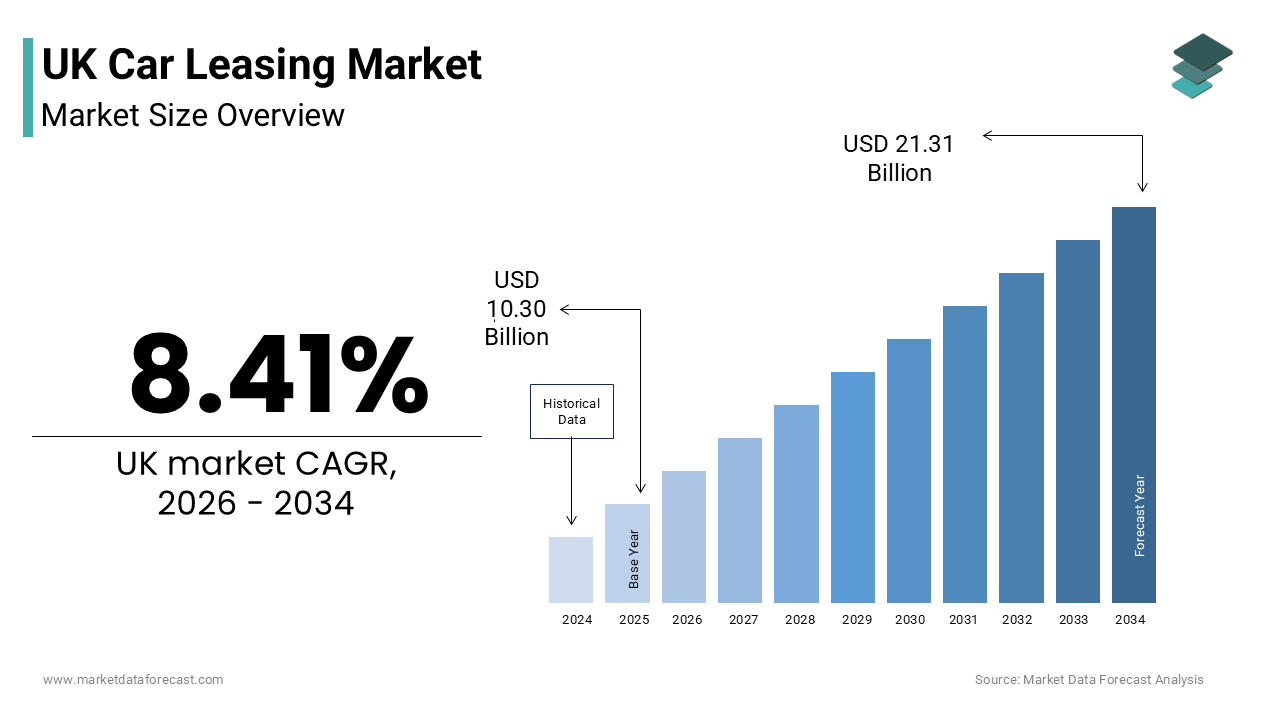
The car leasing is individuals and businesses pay for the use of vehicles over a fixed period rather than purchasing them outright. The changing consumer preferences toward access over ownership and the increasing complexity of vehicle technology. As per data from the Society of Motor Manufacturers and Traders, the average age of cars on UK roads has reached 8.5 years indicating that consumers are holding onto vehicles longer, yet still seeking newer models through leasing to avoid maintenance issues. The shift toward electrification is another defining characteristic with the government banning the sale of new petrol and diesel cars by 2035. Leasing allows users to upgrade to the latest electric models every few years ensuring they benefit from improved range and charging speeds without the burden of residual value uncertainty. The regulatory environment including Benefit in Kind tax rates for company cars further incentivizes leasing low emission vehicles.
MARKET DRIVERS
Corporate Fleet Electrification and Tax Incentives
The aggressive push toward corporate fleet electrification by favorable tax incentives is driving the growth of the United Kingdom car leasing market. Businesses are increasingly transitioning their fleets to electric vehicles to reduce carbon footprints and capitalize on significant tax savings. This fiscal advantage encourages employers to offer electric vehicles, as part of salary sacrifice schemes which have seen exponential growth in participation. Leasing provides corporations with a hassle free solution to manage these assets, including maintenance and insurance bundling, which simplifies administration. The predictability of monthly payments helps businesses budget effectively while avoiding the volatility of residual values associated with owning electric assets. Furthermore, corporate sustainability mandates require companies to report on emissions making leased electric fleets an attractive option for meeting environmental social and governance targets.
Consumer Preference for Predictable Costs and Convenience
The consumer preference for predictable costs and convenience by addressing the financial uncertainties associated with vehicle ownership is promoting the growth of the United Kingdom car leasing market. Leasing offers fixed monthly payments that cover depreciation allowing drivers to budget accurately without worrying about unexpected repair bills or sudden drops in resale value. The personal contract hire agreements provide peace of mind through inclusive maintenance packages and warranty coverage throughout the term. This all inclusive approach is particularly appealing to younger demographics, who prioritize access to modern technology and safety features over long term asset accumulation. The hassle of selling a used car and negotiating trade in values is a significant deterrent to ownership making leasing an attractive alternative. The ability to drive a new vehicle with the latest connectivity and driver assistance systems every three to four years aligns with the desire for constant upgrades. Additionally, the rise of online leasing platforms has streamlined the application process making it faster and more accessible than traditional financing.
MARKET RESTRAINTS
Economic Volatility and Rising Interest Rates
The economic volatility and rising interest rates is increasing the cost of capital for leasing companies and subsequently raising monthly payments for customers, which is limiting the growth of the United Kingdom car leasing market. Leasing firms rely heavily on borrowing to fund their vehicle inventories and when base rates rise the cost of this funding increases directly impacting profitability. The less affordable monthly payments, which can price out marginal customers and reduce overall demand. New consumer hire volumes have faced pressure as households tighten budgets in response to the cost of living crisis. The uncertainty surrounding future economic conditions, also makes it difficult for leasing companies to accurately predict residual values, which are crucial for pricing contracts. If residual values fall more than expected due to economic downturns leasing firms face losses that may be passed on to consumers through stricter credit criteria or higher deposits. This financial strain limits the ability of providers to offer competitive deals and restricts market growth.
Supply Chain Disruptions and Vehicle Availability
The supply chain disruptions and limited vehicle availability is also declining the growth of the Unted Kingdom car leasing market. The global semiconductor shortage and logistical hurdles have severely impacted the production of new vehicles leading to extended lead times for many popular models. The delivery times for certain vehicles have stretched to several months forcing leasing companies to manage customer expectations carefully. This scarcity limits the ability of brokers and direct providers to fulfill orders, promptly resulting in cancelled contracts and lost revenue. The lack of inventory also reduces the bargaining power of leasing firms with manufacturers preventing them from securing favorable bulk purchase discounts. The shortage of specific components has led to simplified vehicle specifications, which may be less attractive to discerning lessees. The unpredictability of supply chains makes it difficult for leasing companies to plan their fleet compositions and manage residual value risks effectively. Customers frustrated by long waits may turn to the used car or retain their existing vehicles longer, thereby reducing the flow of new leasing business.
MARKET OPPORTUNITIES
Integration of Subscription Based Mobility Models
The integration of subscription-based mobility models by offering greater flexibility and appealing to changing lifestyle needs is certainly to bolster new opportunities for the growth of the United Kingdom car leasing market. This model appeals to urban dwellers and gig economy workers, who value agility over long term commitment. Leasing companies can leverage their existing infrastructure and vendor relationships to launch these flexible products capturing a new segment of customers, who find traditional leases too rigid. The ability to bundle insurance maintenance and road tax into a single monthly fee enhances convenience and simplifies budgeting for users. The demand for short term access to premium or electric vehicles is growing as consumers test technologies before committing to long term ownership. Subscription models also provide leasing firms with valuable data on usage patterns and preferences enabling them to optimize fleet management and residual value strategies. This innovation aligns with the broader shift toward service oriented consumption and positions leasing providers as comprehensive mobility partners rather than just financiers.
Expansion of Used Car Leasing and Circular Economy Initiatives
The expansion of used car leasing and circular economy initiatives by tapping into the demand for affordable and sustainable mobility solutions is also to escalate the growth of the United Kingdom car leasing market. As new car prices remain high, there is a growing market for leasing nearly new or certified pre owned vehicles, which offer lower monthly payments and reduced depreciation risk. The used car leasing segment is gaining traction among cost conscious consumers and small businesses. Leasing companies can extend the lifecycle of off lease vehicles by refurbishing and remarketing them through secondary leasing channels creating a circular flow of assets. This approach supports sustainability goals by maximizing the utility of each vehicle and reducing waste. The introduction of electric vehicles into the used leasing market also addresses range anxiety by allowing users to access proven battery technology at a lower entry point. According to industry experts the residual value stability of certain used segments makes them attractive for leasing products with predictable returns. Partnerships with remarketing specialists and digital platforms can streamline the process of sourcing and delivering used lease vehicles.
MARKET CHALLENGES
Residual Value Uncertainty and Asset Risk Management
The residual value uncertainty and asset risk management by threatening the profitability and stability of leasing providers is to pose as a major challenge for the growth of the United Kingdom car leasing market. Leasing companies must accurately predict the future value of vehicles at the end of the contract term to set competitive monthly payments. However, rapid technological advancements particularly in electric vehicles and autonomous driving features make it difficult to forecast how quickly current models will become obsolete. The volatile nature of battery technology and charging infrastructure development creates significant ambiguity regarding the long term worth of electric cars. If residual values drop sharper than anticipated leasing firms face substantial losses when selling off returned vehicles. This risk is exacerbated by fluctuations in fuel prices and government policies such as changes to congestion charges or low emission zones, which can affect demand for specific vehicle types. According to industry reports inaccurate residual value forecasting can lead to either overpricing leases which reduces competitiveness or underpricing which erodes margins. The need for sophisticated data analytics and real time market monitoring adds complexity and cost to operations. Failure to manage this risk effectively can jeopardize the financial health of leasing companies and limit their ability to offer attractive terms.
Regulatory Compliance and Data Privacy Concerns
The regulatory compliance and data privacy concerns are to inhibit the expansion of the United Kingdom car leasing market. Modern leased cars generate vast amounts of data regarding location driving behavior and vehicle health, which raises questions about ownership and privacy rights. Failure to adhere to these regulations can result in severe fines and reputational damage. The complexity of managing consent and data security across multiple stakeholders, including manufacturers insurers and maintenance providers adds operational burden. The ambiguity surrounding who owns the data generated by connected vehicles creates potential liabilities for leasing firms. Additionally, evolving environmental regulations such as stricter emissions testing and disposal requirements for electric vehicle batteries impose additional compliance costs. Leasing companies must stay abreast of changing legislation to avoid penalties and ensure their contracts remain valid and enforceable. The need for transparent communication with customers about data usage builds trust but requires significant investment in legal and technical resources. Balancing innovation with compliance is a delicate task that demands continuous vigilance and adaptation.
REPORT COVERAGE
| REPORT METRIC | DETAILS |
| Market Size Available | 2025 to 2034 |
| Base Year | 2025 |
| Forecast Period | 2026 to 2034 |
| CAGR | 8.41% |
| Segments Covered | By End User, Type, Vehicle Type and Region. |
| Various Analyses Covered | Global, Regional & Country Level Analysis, Segment-Level Analysis, DROC, PESTLE Analysis, Porter’s Five Forces Analysis, Competitive Landscape, Analyst Overview of Investment Opportunities |
| Market Leaders Profiled | Lex Autolease, Arval UK, Ayvens UK, Alphabet GB, Novuna Vehicle Solutions, Volkswagen Financial Services UK, Zenith, Santander Consumer Finance, Motability Operations, Select Car Leasing, Leasing.com, Nationwide Vehicle Contracts, Vanarama, Leasing Options, Tusker, Enterprise Flex-E-Rent, CBVC Vehicle Management, Ogilvie Fleet, Rivervale Leasing, and UK Carline |
SEGMENTAL ANALYSIS
By End User Insights
The commercial segment was accounted in holding a dominant share of the United Kingdom car leasing market in 2025 with the significant tax advantages and operational efficiencies it offers to businesses. Companies utilize business contract hire to manage their fleets effectively, while benefiting from value added tax recovery on lease payments and maintenance costs. This fiscal benefit makes leasing a financially superior option compared to purchasing vehicles outright which ties up capital and exposes companies to depreciation risks. Leasing allows organizations to predict monthly expenses accurately facilitating better budgeting and cash flow management. The inclusion of maintenance packages in many commercial leases reduces administrative burdens and unexpected repair costs. Furthermore, the ability to regularly refresh the fleet ensures that employees drive safe reliable and fuel efficient vehicles which enhances corporate image and productivity. The shift toward electric vehicles in corporate fleets is also accelerated by leasing due to favorable Benefit in Kind tax rates.
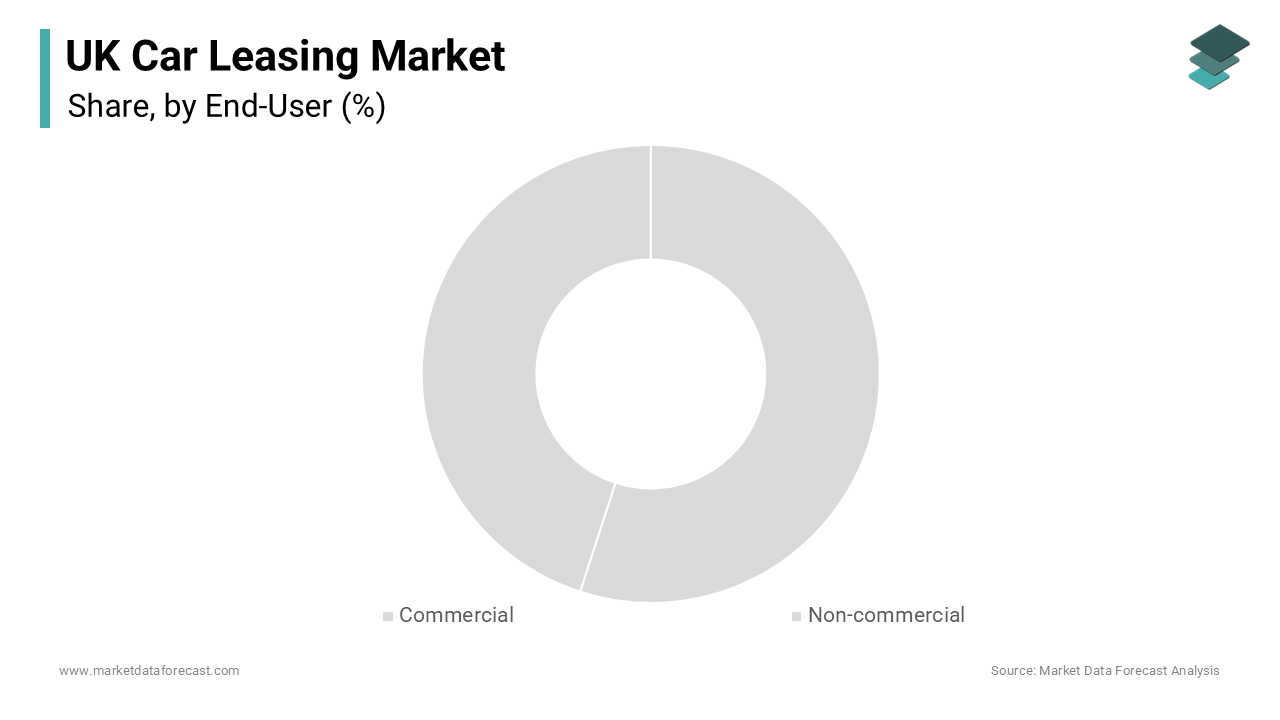
The non-commercial segment is likely to grow at a fastest CAGR of 5.8% during the forecast period with the cultural shift toward access over ownership among private consumers. Individuals are increasingly attracted to the convenience of driving new vehicles without the long-term commitment and hassles associated with buying and selling cars. Personal contract hire offers fixed monthly payments that cover depreciation allowing drivers to budget effectively in an uncertain economic climate. The personal leasing volumes have risen steadily as consumers seek to avoid the volatility of used car prices and the burden of maintenance responsibilities. The appeal of upgrading to the latest models every few years with advanced safety features and technology resonates strongly with younger demographics who prioritize experiences over assets. Online leasing platforms have simplified the process making it more accessible and transparent for individual buyers. According to consumer surveys the desire for hassle free mobility including bundled insurance and servicing options is a key motivator for choosing personal leases.
By Type Insights
The close ended leases segment held 32.1% of the United Kingdom car leasing market share in 2025. In these agreements, the lessee pays for the depreciation of the vehicle over the term and returns it at the end without any obligation to purchase or worry about its market value. This structure appeals to both businesses and individuals who prefer predictable monthly costs and want to avoid the uncertainty of selling a used car. Customers benefit from knowing exactly what their monthly expenditure will be which aids in personal and corporate budgeting. Additionally, close ended leases often include maintenance packages that cover servicing and repairs further stabilizing costs. The simplicity of returning the vehicle at the end of the term without complex negotiations makes it an attractive option for those who view cars as utility items rather than investments.
The open ended leases segment is likely to grow at a fastest CAGR of 4.2% during the forecast period with the need for flexibility among users with unpredictable mileage or specific customization requirements. This model is particularly appealing to businesses with high mileage operations or those who wish to modify vehicles for specialized purposes. Managers open ended finance leases provide greater control over the asset allowing companies to sell the vehicle at the end of the term and potentially profit if the value exceeds expectations. The ability to tailor the lease term and mileage limits without strict penalties offers operational agility. The rise of gig economy operators and small businesses with variable workloads has increased demand for this flexible financing structure. These users benefit from the potential equity buildup in the vehicle which can be reinvested into their business.
By Vehicle Type Insights
The passenger cars segment was accounted in holding 51.2% of the United Kingdom car leasing market share in 2025 due to their essential role in personal mobility and corporate commuting. The vast majority of leased vehicles are standard passenger cars used by employees for daily travel and by individuals for family and leisure purposes. The widespread availability of diverse models ranging from compact city cars to luxury sedans ensures that leasing meets the needs of various demographic groups. Corporate salary sacrifice schemes heavily favor passenger cars particularly electric models due to their low Benefit in Kind tax rates which incentivizes employees to choose these vehicles. The volume of passenger car leases far exceeds that of commercial vehicles driven by the sheer number of individual drivers and company car users. The continuous introduction of new technologies and safety features in passenger cars encourages frequent upgrades through leasing. This consistent demand for personal transport solutions ensures that passenger cars remain the backbone of the UK leasing industry supporting high transaction volumes and steady revenue streams for providers.
The commercial vehicles segment is esteemed to have a significant CAGR of 6.5% from 2026 to 2034 with the boom in e-commerce and the resulting demand for last mile delivery services. The surge in online shopping has necessitated a larger fleet of vans and light commercial vehicles to handle the increased volume of parcels and goods. The number of licensed light goods vehicles in the UK has grown significantly in recent years to support logistics operations. Leasing offers delivery companies and independent couriers a cost-effective way to expand their fleets without large upfront capital expenditures. The ability to include maintenance and breakdown cover in lease agreements minimizes downtime which is critical for time sensitive deliveries. According to industry reports the transition to electric vans is also accelerating leasing growth as businesses seek to comply with clean air zone regulations and reduce operating costs. Government grants for zero emission commercial vehicles further encourage leasing of these newer models. The scalability of leasing allows logistics firms to adjust their fleet size based on seasonal demand fluctuations.
COMPETITIVE LANDSCAPE
The competition in the UK car leasing market is intense and characterized by a mix of large multinational corporations specialized fleet managers and emerging digital disruptors. Major players compete on the basis of service quality technological innovation and sustainability credentials rather than price alone. The urgent need to transition to electric vehicles, which requires significant investment in infrastructure and expertise. Companies differentiate themselves through advanced digital platforms that offer real time visibility and control over fleet assets. Customer retention is critical leading to a focus on personalized service and flexible contract terms. The entry of tech savvy startups offering subscription-based models add pressure on traditional lessors to innovate and improve agility. Regulatory compliance regarding emissions and data privacy acts as a baseline requirement raising operational standards for all participants.
KEY MARKET PLAYERS
Some of the promising companies that are playing a dominating role in the UK car leasing market include
- Lex Autolease
- Arval UK
- Ayvens UK
- Alphabet GB
- Novuna Vehicle Solutions
- Volkswagen Financial Services UK
- Zenith
- Santander Consumer Finance
- Motability Operations
- Select Car Leasing
- Leasing.com
- Nationwide Vehicle Contracts
- Vanarama
- Leasing Options
- Tusker
- Enterprise Flex-E-Rent
- CBVC Vehicle Management
- Ogilvie Fleet
- Rivervale Leasing
- UK Carline
Top Players in the UK Car Leasing Market
Arval UK Limited
Arval UK Limited operates as a leading full-service fleet management and car leasing provider serving a diverse range of corporate clients across the United Kingdom. The company specializes in optimizing fleet operations through data driven insights and sustainable mobility solutions. Arval has strengthened its market position by expanding its electric vehicle offerings and enhancing digital platforms for real time fleet monitoring. The firm actively supports businesses in transitioning to zero emission transport by providing comprehensive charging infrastructure advice and tailored financing packages. Their commitment to sustainability and operational excellence propels their reputation as a trusted partner in the evolving automotive sector.
LeasePlan UK Limited
LeasePlan UK Limited is a prominent player in the car leasing sector known for its extensive network and flexible mobility solutions for both business and private customers. The company leverages global expertise to deliver localized services that address specific UK market needs including salary sacrifice schemes and personal contract hire. LeasePlan has invested heavily in digital transformation launching user friendly apps that simplify vehicle ordering maintenance scheduling and end of lease processes. The organization prioritizes electrification by offering a wide selection of electric vehicles and supporting infrastructure development. Through strategic partnerships and a focus on customer experience LeasePlan enhances accessibility and convenience. Their proactive approach to regulatory changes and environmental goals ensures that they remain competitive and relevant in a rapidly changing industry.
ALD Automotive UK
ALD Automotive UK provides comprehensive fleet management and leasing services with a strong emphasis on sustainability and innovation. The company serves thousands of corporate clients by offering tailored solutions that reduce total cost of ownership and carbon footprints. Recently ALD Automotive has strengthened its presence by integrating advanced telematics and analytics tools to help clients optimize fleet performance and driver behavior. The firm has also expanded its portfolio of green vehicles and introduced flexible leasing options to accommodate changing business needs. Their dedication to environmental responsibility and technological advancement positions them as a key enabler of sustainable corporate mobility in the United Kingdom.
Top Strategies Used by Key Market Participants
Key players in the UK car leasing market primarily focus on electrification strategies to align with government mandates and corporate sustainability goals. Companies invest heavily in digital platforms to enhance customer experience through seamless online ordering tracking and management tools. Strategic partnerships with charging infrastructure providers facilitate the adoption of electric vehicles by addressing range anxiety concerns. Data analytics are utilized to optimize fleet performance predict residual values and offer personalized recommendations to clients. Emphasis on total cost of ownership transparency helps build trust and long-term relationships with corporate customers. Continuous innovation in service offerings such as maintenance bundling and insurance integration creates additional revenue streams. These strategies enable participants to adapt to regulatory changes meet evolving consumer preferences and maintain competitiveness in a dynamic and environmentally conscious market.
MARKET SEGMENTATION
This research report on the UK car leasing market has been segmented based on the following categories.
By End-user
- Commercial
- Non-commercial
By Type
- Open-ended
- Close ended
By Vehicle type
- Passenger cars
- Commercial vehicles
By Country
- U.K
Access the study in MULTIPLE FORMATS
Purchase options starting from
$ 1200
Didn’t find what you’re looking for?
TALK TO OUR ANALYST TEAM
Need something within your budget?
NO WORRIES! WE GOT YOU COVERED!
Call us on: +1 888 702 9696 (U.S Toll Free)
Write to us: sales@marketdataforecast.com