- Product Description Description
- Table of Contents TOC
- List of Table & Figure LOT
- Get Free Sample PDF Sample PDF
Market Size, 2025
$18.06 BnMarket Estimate, 2026
$18.85 BnMarket Forecast, 2034
$26.52 BnCAGR, 2026–2034
4.36%UK Courier Market Report Summary
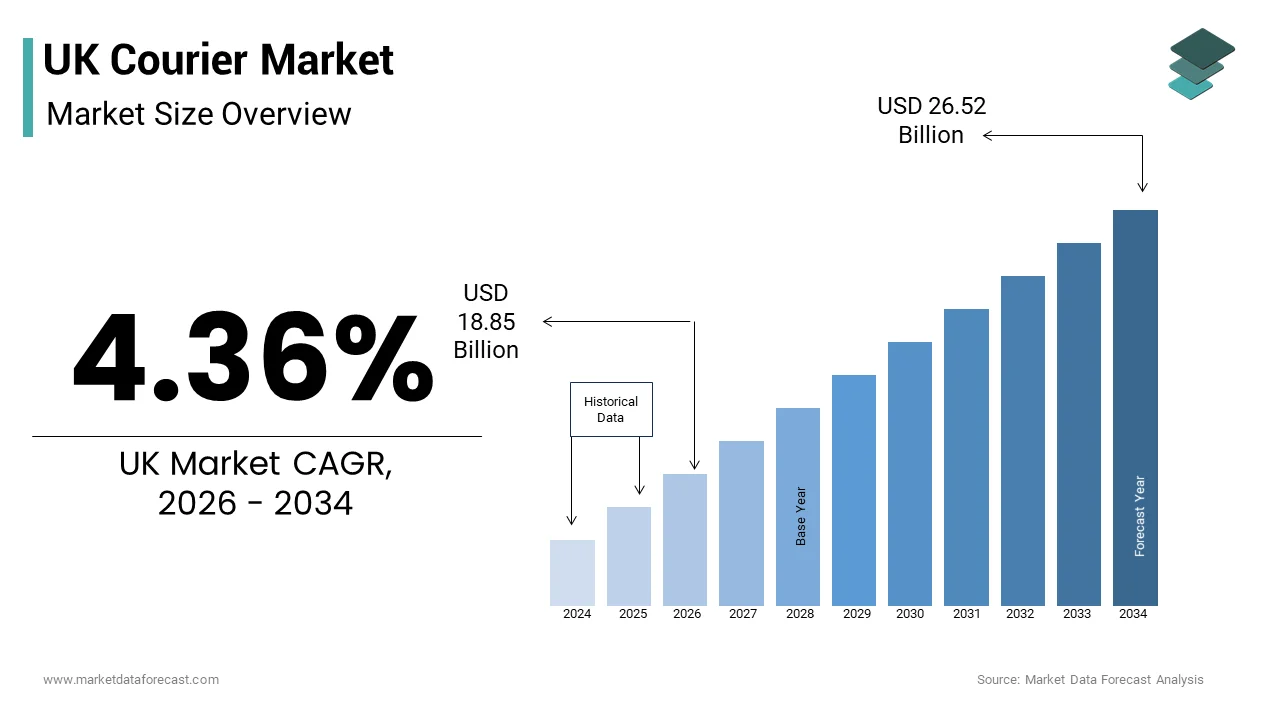
The UK courier market was valued at USD 18.06 billion in 2025, is estimated to reach USD 18.85 billion in 2026, and is projected to reach USD 26.52 billion by 2034, growing at a CAGR of 4.36% during the forecast period from 2026 to 2034. The UK courier market is experiencing consistent growth as expanding e-commerce activity, rising parcel volumes, and increasing consumer demand for reliable delivery services continue to reshape the logistics landscape. Businesses are investing in advanced delivery networks, automated sorting facilities, and digital tracking technologies to improve operational efficiency and customer satisfaction. The growing adoption of omnichannel retail strategies, same-day and next-day delivery options, and sustainable last-mile logistics is further strengthening market expansion. Moreover, increasing cross-border trade, continuous improvements in transportation infrastructure, and the integration of artificial intelligence into logistics operations are expected to support long-term growth across the United Kingdom.
Key Market Trends
- E-commerce expansion continues to generate higher parcel volumes, driving investment in courier capacity and nationwide delivery networks.
- Logistics providers are deploying artificial intelligence, route optimization software, and real-time parcel tracking to improve delivery efficiency.
- Sustainable delivery initiatives, including electric vehicle fleets and low-emission logistics hubs, are becoming central to courier operations.
- Automated parcel lockers, contactless delivery solutions, and digital customer engagement platforms are enhancing convenience and service quality.
- Retailers are strengthening omnichannel fulfillment strategies by partnering with courier companies to provide faster and more flexible delivery options.
Segmental Insights
Based on destination, the domestic courier services segment dominated the UK courier market and accounted for 67.3% of the market share in 2025. The segment's leadership is driven by strong domestic e-commerce activity, frequent business-to-consumer shipments, and widespread demand for reliable nationwide parcel delivery services.
Based on speed of delivery, the non-express delivery segment captured 65.1% of the UK courier market share in 2025. Its dominance reflects the growing preference among businesses and consumers for cost-effective shipping solutions where standard delivery timelines adequately meet purchasing requirements.
Based on end-user industry, the e-commerce segment held the largest share of the UK courier market in 2025. Rapid growth in online retail, increasing digital purchasing behavior, and rising demand for home delivery services continue to position e-commerce as the primary driver of parcel delivery volumes across the country.
Regional Insights
The United Kingdom accounted for 28.5% of the European courier market in 2025, reflecting its strong logistics infrastructure, advanced digital commerce ecosystem, and high parcel delivery demand. A mature transportation network, extensive warehouse capacity, and widespread adoption of online shopping continue to support market leadership. Investments in warehouse automation, sustainable delivery solutions, and intelligent logistics technologies are further enhancing operational efficiency. As businesses increasingly prioritize rapid fulfillment and consumers continue to embrace digital commerce, the United Kingdom is expected to remain one of Europe's most influential courier and parcel delivery markets throughout the forecast period.
Competitive Landscape
The UK courier market is highly competitive, with international logistics providers, national postal operators, and specialized parcel delivery companies competing through network expansion, technological innovation, and customer-focused delivery services. Leading market participants are investing in automated sorting centers, artificial intelligence-driven route planning, electric delivery fleets, and real-time shipment visibility to improve operational performance. Strategic acquisitions, partnerships with e-commerce platforms, and expansion of last-mile delivery infrastructure remain central to competitive growth strategies. Companies are also strengthening sustainability initiatives by reducing carbon emissions, optimizing delivery routes, and adopting environmentally responsible transportation solutions. As parcel volumes continue to rise alongside online retail growth, courier providers are focusing on speed, reliability, digital innovation, and flexible delivery options to strengthen their market position.
Prominent players in the UK courier market include APC Overnight, Royal Mail Group, DHL Group, DPDgroup UK, FedEx, GEODIS, International Distributions Services (including Royal Mail), La Poste Group, Otto Group (including The Hermes Group), Rapid Parcel, United Parcel Service of America, Inc. (UPS), InPost (including Yodel), Asendia, Whistl UK Ltd., Aramex, Parcelforce, GXO Logistics, 3663 Transport Ltd., Unipart Logistics, Great Bear Distribution, Parcel2Go, and Royal Mail.
UK Courier Market Size
The UK Courier market size was valued at USD 18.06 billion in 2025 and is anticipated to reach USD 18.85 billion in 2026 to reach USD 26.52 billion by 2034, growing at a CAGR of 4.36% during the forecast period 2026 to 2034.
Courier is a critical component of the national logistics infrastructure, facilitating the rapid movement of parcels, documents, and freight across domestic and international networks. This market is defined by time sensitive delivery services ranging from same day express to standard next day options, underpinned by sophisticated tracking technologies and last mile distribution capabilities. The market operates within a highly competitive landscape driven by the exponential growth of e commerce and the evolving expectations of consumers for speed and transparency. According to the Office for National Statistics, online sales accounted for roughly 27% of total UK retail spending, cementing a permanent baseline demand for parcel deliveries. The Department for Transport indicators show that the UK road freight industry transports roughly 1.4 billion tonnes of goods annually, with final-mile couriers playing a critical role in the supply chain. Urbanization trends have intensified the complexity of last mile logistics, particularly in dense metropolitan areas like London and Manchester. Financial data from Royal Mail Group indicates that parcel delivery revenues have structurally surpassed letter revenues, driven by a sharp decline in letter volumes and a massive boom in e-commerce. Regulatory frameworks concerning emissions and driver working hours directly influence operational models. The integration of automation and artificial intelligence in sorting facilities enhances efficiency and reduces handling times. This dynamic environment requires service providers to balance cost effectiveness with service quality while navigating economic volatility and infrastructural constraints.
MARKET DRIVERS
Exponential Growth of E Commerce and Omnichannel Retail
The exponential growth of e commerce and the adoption of omnichannel retail strategies are driving the growth of the United Kingdom courier market. Consumers increasingly prefer the convenience of online shopping, leading to a surge in parcel volumes that require efficient last mile delivery solutions. According to the Office for National Statistics, the value of online retail sales in the UK remains a massive component of total consumer expenditure, generating over £120 billion annually. This digital shift has compelled traditional brick and mortar retailers to integrate online platforms, creating a hybrid model that relies heavily on courier services for home delivery and click and collect options. Market indicators show that to remain competitive, British retailers are drastically scaling up their delivery speeds, creating a direct surge in the frequency and urgency of final-mile courier deployments. The expectation for fast and reliable delivery has become a key differentiator in customer satisfaction, driving retailers to partner with multiple courier providers to ensure coverage and flexibility. Studies show that the average number of parcels delivered per household has risen steadily post-pandemic, reflecting the deepening integration of e-commerce into daily life. The rise of mobile commerce further accelerates this trend, allowing consumers to shop on the go and expect seamless delivery experiences. This sustained demand from the retail sector ensures consistent revenue growth for courier companies, prompting investments in capacity expansion and technological enhancements to handle peak volumes efficiently.
Expansion of Same Day and Instant Delivery Services
The expansion of same day and instant delivery services is further propelling the United Kingdom courier market forward. This is fueled by consumer demand for immediacy and convenience. Modern shoppers increasingly expect their purchases to arrive within hours rather than days, prompting courier companies to develop rapid delivery networks. Studies show that a notable segment of the consumer base is willing to pay a premium for same-day delivery, highlighting the immense value modern shoppers place on convenience and speed. This trend is particularly prominent in urban areas where high population density allows for efficient route optimization and quick turnaround times. The Institute of Grocery Distribution highlights a rapid fragmentation in online grocery shopping, with instant quick-commerce orders driving deeper collaborations between supermarkets and rapid-delivery couriers. The emergence of quick commerce platforms offering delivery within 15 to 30 minutes has further raised consumer expectations, forcing traditional couriers to adapt their operational models. Reseaech reports highlight a major structural pivot toward investing in micro-fulfillment centers closer to residential areas, minimizing transit windows and optimizing final-mile dispatch. The ability to provide real time tracking and precise delivery windows enhances customer trust and loyalty. Courier companies are leveraging advanced algorithms and dynamic routing software to manage these complex logistics, ensuring timely deliveries despite traffic congestion. This focus on speed and reliability drives innovation and differentiation in the market, attracting customers who prioritize convenience over cost.
MARKET RESTRAINTS
Rising Operational Costs and Fuel Price Volatility
Rising operational costs and fuel price volatility are slowing down the United Kingdom courier market. This reduces profit margins and complicates pricing strategies. The courier market is heavily dependent on road transport, making it vulnerable to fluctuations in diesel and petrol prices. According to reporting from the Department for Energy Security and Net Zero, UK wholesale and retail fuel prices continue to experience volatility driven heavily by global supply chain pressures and ongoing geopolitical tensions. This surge in energy costs directly impacts the operating expenses of courier fleets, forcing companies to either absorb the costs or pass them on to customers through surcharges. Data from the Road Haulage Association indicates that operating costs have risen noticeably above standard inflation, squeezing profit margins and altering the competitiveness of delivery networks. Additionally, labor costs have increased due to minimum wage adjustments and shortages of qualified drivers, further straining financial resources. As per sources, smaller courier firms with limited economies of scale struggle to negotiate better rates with suppliers, making them more susceptible to cost pressures. The inability to fully pass on these costs to price sensitive consumers can lead to reduced demand and market share erosion. Companies are exploring alternative fuel vehicles and route optimization technologies to mitigate these expenses, but the transition requires significant capital investment. The uncertainty surrounding future fuel prices creates challenges for long term financial planning and stability. This economic pressure restricts the ability of courier companies to invest in growth initiatives and maintain service quality.
Infrastructure Congestion and Last Mile Inefficiencies
Infrastructure congestion and last mile inefficiencies are restraining the expansion of the United Kingdom courier market. This is particularly true in densely populated urban areas. The final stage of delivery is often the most costly and time consuming. According to the Department for Transport, traffic congestion in major cities like London and Birmingham has increased by 10 percent in recent years, leading to longer delivery times and higher fuel consumption. Limited parking spaces and restricted access zones further complicate last mile operations, forcing drivers to spend additional time searching for safe stopping points. Data from the Local Government Association highlights that inadequate infrastructure planning fails to accommodate the growing volume of delivery vehicles, exacerbating bottlenecks. As per industry reports, failed delivery attempts due to absent recipients or inaccessible addresses result in additional costs and customer dissatisfaction. The complexity of navigating narrow streets and historic neighborhoods in older cities adds to the logistical challenges. Courier companies are experimenting with alternative delivery methods such as cargo bikes and lockers to alleviate these issues, but widespread adoption faces regulatory and spatial constraints. The lack of standardized solutions for last mile delivery creates inefficiencies that hinder scalability and profitability. Addressing these infrastructural limitations requires collaborative efforts between private sector players and public authorities to develop sustainable urban logistics frameworks.
MARKET OPPORTUNITIES
Adoption of Electric Vehicles and Green Logistics
The adoption of electric vehicles and green logistics offers a significant opportunity for the United Kingdom courier market. This helps to align with environmental regulations and consumer preferences for sustainability. Evolving statutory timelines in the UK mandate a progressive shift toward zero-emission vehicle fleets, compelling courier operations to restructure their long-term capital deployment. Also, the Society of Motor Manufacturers and Traders reveal that the transition to electric light commercial vehicles faces notable headwinds, emphasizing the need for targeted fiscal incentives and improved public infrastructure to stabilize zero-emission van adoption. Courier firms that adopt electric vehicles can benefit from lower operating costs, reduced maintenance requirements, and exemption from congestion charges in urban areas. Research indicates that transitioning to electric vans can slash lifecycle carbon emissions significantly compared to traditional diesel vehicles, depending directly on the cleanliness of the electricity grid. This shift enhances brand reputation and appeals to environmentally conscious consumers who prefer sustainable delivery options. A study confirms that delivery operators providing authenticated zero-emission transport options are highly successful at securing lucrative enterprise contracts from corporate clients navigating strict carbon reduction mandates. The development of charging infrastructure and government incentives further supports this transition, creating a favorable environment for electrification. Courier providers are also exploring hydrogen fuel cell technology for longer distance routes, diversifying their green logistics capabilities. By leading the way in sustainable practices, courier companies can differentiate themselves in a competitive market and contribute to national net zero targets. This strategic alignment with environmental goals opens new revenue streams and strengthens long term viability.
Integration of Automation and Smart Lockers
The integration of automation and smart lockers creates a pathway for the expansion of the United Kingdom courier market. This integration enables enhanced efficiency and greater customer convenience. Automated sorting systems and robotic warehouses streamline processing times, reducing human error and increasing throughput. The International Federation of Robotics highlights a steady expansion in logistics automation, with advanced automated systems improving distribution center sorting speeds and overall operational productivity. Smart lockers provide a secure and flexible alternative to home delivery, allowing customers to collect parcels at their convenience. Operational updates from InPost show that its out-of-home network footprint has expanded substantially, reflecting a strong shift in consumer appetite toward convenient locker drop-off locations. This solution reduces failed delivery attempts and lowers last mile costs for courier companies. As per research, locker networks can decrease delivery costs by up to 30 percent by consolidating multiple parcels into single stops. The integration of mobile apps with locker systems enables real time notifications and easy access, enhancing the user experience. Courier firms are partnering with retail chains and transport hubs to expand locker networks, increasing accessibility for urban and rural communities. The use of artificial intelligence in route planning and demand forecasting further optimizes resource allocation. By embracing these technological advancements, courier companies can improve service reliability and scalability. This innovation drives customer satisfaction and operational efficiency, positioning early adopters for sustained growth in the evolving logistics landscape.
MARKET CHALLENGES
Labor Shortages and Driver Retention Issues
Labor shortages and driver retention issues are major challenges to the United Kingdom courier market. As a result, this affects service reliability and operational capacity. The industry faces a persistent deficit of qualified drivers, exacerbated by an aging workforce and challenging working conditions. Also, the Road Haulage Association highlight that while severe HGV driver shortages previously strained the market, subsequent industry recruitment drives have stabilized the driver pool, though structural recruitment pressures remain across the broader logistics ecosystem. The demanding nature of last mile delivery, characterized by tight deadlines and physical exertion, leads to high turnover rates among van drivers. As per sources, the reliance on gig economy workers introduces instability and variability in service quality, as independent contractors may lack commitment to specific brands. The need for competitive wages and improved benefits to attract and retain staff increases operational costs for courier companies. Training and compliance requirements further strain resources, delaying the onboarding of new employees. The shortage of drivers limits the ability of firms to scale operations during peak periods such as holidays, leading to delays and customer dissatisfaction. Addressing this challenge requires strategic investments in employee welfare, career development, and automation to reduce dependency on manual labor. Without a stable workforce, courier companies struggle to maintain consistent service levels and meet growing demand.
Regulatory Compliance and Data Security Risks
Regulatory compliance and data security risks are major hurdles to the United Kingdom courier market. This requires rigorous adherence to legal standards and the protection of sensitive information. Courier companies handle vast amounts of personal data, including addresses and contact details, making them targets for cyberattacks. The Information Commissioner's Office indicates that the logistics and distribution sector faces a growing volume of complex data security incidents, exposing critical vulnerabilities within supply chain digital networks. Compliance with the General Data Protection Regulation imposes strict requirements on data handling and privacy, with severe penalties for non compliance. The National Cyber Security Centre emphasizes the need for robust cybersecurity measures to protect against ransomware and phishing attacks. As per research, investing in secure IT infrastructure and employee training adds to operational costs, particularly for smaller firms with limited resources. Additionally, changing regulations regarding cross border trade post Brexit introduce complexities in customs documentation and tariff classifications. Courier companies must navigate these bureaucratic hurdles to ensure smooth international shipments, avoiding delays and fines. The dynamic regulatory landscape requires continuous monitoring and adaptation, diverting attention from core business activities. Failure to comply with data protection laws or trade regulations can result in reputational damage and loss of customer trust. Managing these legal and security risks is essential for maintaining operational integrity and competitive advantage in the market.
REPORT COVERAGE
| REPORT METRIC | DETAILS |
| Market Size Available | 2025 to 2034 |
| Base Year | 2025 |
| Forecast Period | 2026 to 2034 |
| CAGR | 4.36% |
| Segments Covered | By Destination, Speed of Delivery, End-User, By Country |
| Various Analyses Covered | Global, Regional, and Country Level Analysis, Segment-Level Analysis; DROC, PESTLE Analysis; Porter’s Five Forces Analysis; Competitive Landscape; Analyst Overview of Investment Opportunities. |
| Regions Covered | London, South East, North West, East of England, South West, Scotland, West Midlands, Yorkshire and The Humber, East Midlands, Others |
| Market Leaders Profiled | APC Overnight, Royal Mail Group, DHL Group, DPDgroup UK, FedEx, GEODIS, International Distributions Services (including Royal Mail), La Poste Group, Otto Group (including The Hermes Group), Rapid Parcel, United Parcel Service of America, Inc. (UPS), InPost (including Yodel), Asendia, Whistl UK, Ltd., Aramex, Parcelforce, GXO Logistics, 3663 Transport. Ltd., Unipart Logistics, Great Bear Distribution, Parcel2Go, Royal Mail |
SEGMENTAL ANALYSIS
By Destination Insights
Domestic Courier Services
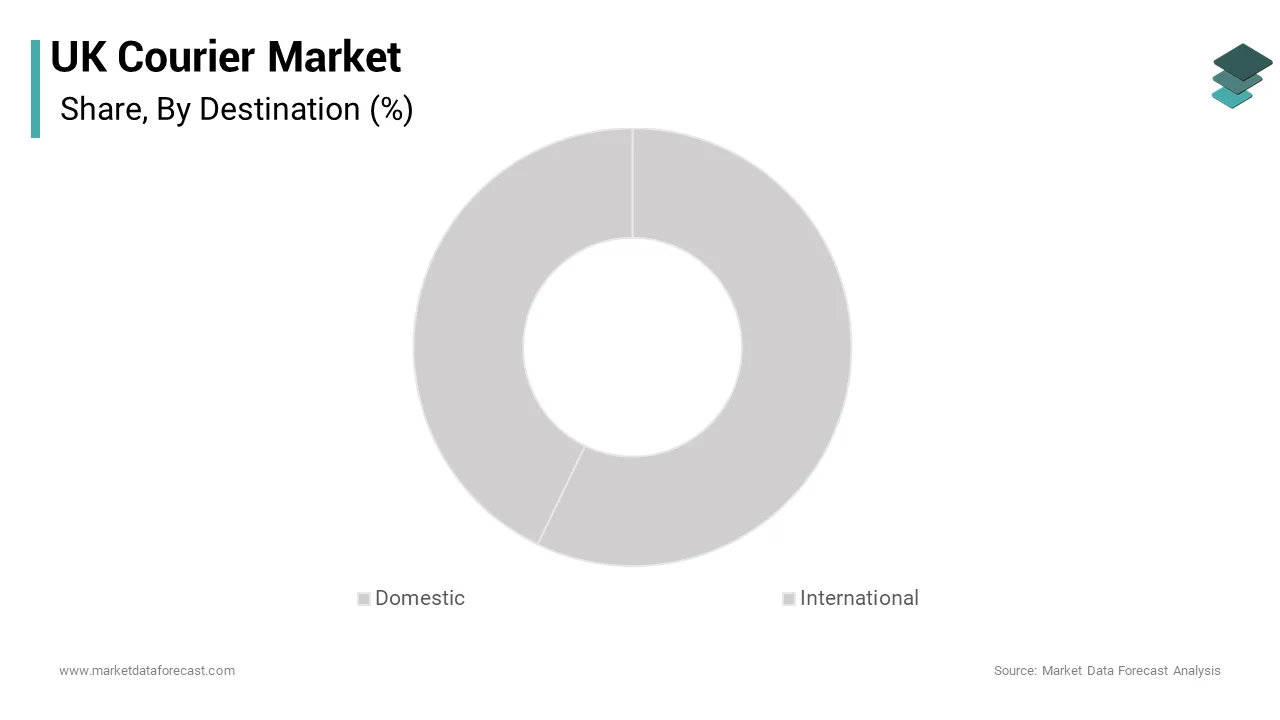
The domestic courier segment dominated the United Kingdom market and accounted for a 67.3% share in 2025. This dominance of the segment was driven by the massive volume of e commerce transactions generated within the country. The integration of online retail into daily consumer habits has created a consistent and high frequency demand for local parcel delivery services. In addition, the Office for National Statistics indicates that online shopping accounts for roughly 27% of total UK retail sales, fueling an massive ecosystem that requires the domestic transportation of billions of individual parcels every year. This sheer volume ensures that domestic routes remain the most utilized and revenue generating component of the courier industry. Performance indexes from the British Retail Consortium show that major retailers scale up to process millions of transactions weekly, depending fundamentally on robust domestic logistics networks to meet next-day and standard delivery windows. The density of the UK population allows for efficient route planning and cost effective last mile delivery, making domestic services economically viable for both large carriers and smaller niche providers. Research indicates that the integration of online shopping is widespread, with the average UK household now receiving well over 100 parcels annually, predominantly fulfilled through domestic distribution routes. The reliance on local warehouses and fulfillment centers further strengthens the domestic supply chain, reducing transit times and enhancing service reliability. This structural dependence on internal trade and consumption patterns secures the leading position of the domestic segment, driving continuous investment in local infrastructure and fleet expansion to meet the relentless pace of consumer demand.
Cost efficiency and the presence of established infrastructure networks are key factors driving the domination of this segment. Domestic deliveries avoid the complexities and expenses associated with cross border customs, international tariffs, and long haul transportation, resulting in lower operational costs for service providers. The Department for Transport shows that the UK utilizes an intricately interconnected road network that forms the operational backbone for rapid and reliable ground freight transportation across the nation. This extensive infrastructure enables courier companies to optimize delivery routes and maximize vehicle utilization, keeping prices competitive for consumers and businesses. The Logistics Manager indicates that domestic shipping costs are significantly lower than international rates, encouraging businesses to prioritize local sourcing and distribution where possible. The maturity of the domestic market means that major players have developed sophisticated sorting hubs and automated facilities that handle high volumes with precision and speed. As per a study, the turnaround time for domestic parcels is often under 24 hours, meeting the expectations of modern consumers for quick gratification. The ability to offer flexible delivery options such as same day or scheduled slots further enhances the appeal of domestic services. This combination of affordability, speed, and reliability ensures that domestic courier services remain the backbone of the UK logistics sector, sustaining high market share and steady growth.
International Courier Services
The international courier segment is predicted to witness the highest CAGR of 9.2% from 2026 to 2034 due to the expansion of cross border e commerce and global trade. UK consumers are increasingly purchasing goods from overseas retailers, while British businesses are expanding their reach into international markets. HM Revenue and Customs underscore the ongoing volatilities in global trade, highlighting why British businesses require increasingly agile and cost-effective international shipping solutions. The rise of global marketplaces such as Amazon and eBay has simplified cross border transactions, encouraging consumers to buy products from Europe, Asia, and North America. The Universal Postal Union highlight that international parcel traffic is rapidly restructuring into high-density regional trade lanes, transforming traditional global distribution models. Small and medium sized enterprises are also leveraging international courier services to access new customer bases, driven by digital marketing and global payment platforms. As per research, the demand for tracked and insured international shipping has increased, reflecting the higher value of cross border goods. The removal of some trade barriers through new bilateral agreements has further facilitated smoother customs processes, reducing delays and enhancing customer satisfaction. This globalization of retail and business operations ensures that the international segment continues to expand rapidly, capturing a larger share of the courier market.
The demand for premium and time definite international services significantly accelerates the growth of this segment. Businesses and individuals increasingly require guaranteed delivery windows for urgent documents, high value items, and perishable goods. The growth of the luxury goods sector and high tech industries, which rely on secure and rapid global distribution, further drives this trend. Moreover, the integration of advanced technology such as blockchain for transparent customs clearance and real time monitoring enhances the value proposition of premium international couriers. This focus on quality and speed differentiates international services from standard postal options, attracting discerning customers. The ability to provide seamless end to end solutions for complex global supply chains ensures that the international segment remains the fastest growing area in the UK courier market.
By Speed of Delivery Insights
Non Express Delivery Services
The non express delivery segment led the UK courier market and captured a 65.1% share in 2025. This leading position of the segment was attributed to widespread cost sensitivity among consumers and businesses who prioritize affordability over speed. For many shipments, particularly those involving non urgent goods, standard delivery timelines of two to five days are acceptable and preferred due to lower costs. A study highlights that the vast majority of online shoppers consistently favor standard or economy delivery options to minimize added checkout friction and avoid delivery fees. This preference is particularly strong for bulkier items or routine purchases where immediate receipt is not critical. E-commerce logistics data reveals that standard economy delivery models continue to command the highest overall share of total parcel volumes, solidifying its place as the bedrock of domestic fulfillment networks. Retailers often offer free standard shipping as a promotional tool to encourage purchases, further reinforcing consumer habit. As per sources, the predictability of non express services allows courier companies to optimize load factors and reduce empty runs, improving overall operational efficiency. The ability to consolidate shipments and utilize ground transport rather than expensive air freight keeps prices competitive. This economic advantage ensures that non express delivery remains the default choice for the majority of transactions. The widespread acceptance of longer wait times in exchange for savings secures the leading position of this segment, driving consistent volume and revenue for courier providers.
Operational efficiency and the ability to consolidate volumes are key accelerators sustaining the top position of this segment. Courier companies can plan routes and manage resources more effectively when dealing with standard delivery windows, allowing for better asset utilization. The efficiency translates to lower operational costs and higher profit margins for service providers. Also, the stability of non express demand allows for long term planning and infrastructure investment, ensuring reliable service levels. The integration of smart lockers and pick up points further enhances the efficiency of last mile delivery for standard parcels, reducing failed attempts and redelivery costs. This structural efficiency makes non express delivery a sustainable and scalable model, maintaining its leadership in the UK courier market.
Express Delivery Services
The express delivery services segment is estimated to register the fastest CAGR of 11.5% during the forecast period owing to consumer desire for immediate gratification and competitive retail strategies. Shoppers increasingly expect their orders to arrive within hours or the next day, prompting retailers to offer expedited shipping as a key differentiator. Consumer research demonstrates that a substantial segment of shoppers prioritize rapid fulfillment, making optimized delivery windows a key strategic differentiator for brand loyalty. The Institute of Grocery Distribution highlight a profound shift in consumer behavior, with a surging reliance on rapid, same-day delivery services for grocery and essential items. Retailers invest heavily in local fulfillment centers to enable rapid dispatch, relying on express courier networks for final delivery. The rise of mobile shopping has further amplified this trend, with consumers making impulse purchases that they expect to receive almost immediately. This shift in consumer behavior forces courier companies to expand their express capabilities, investing in dedicated fleets and advanced routing technologies. The premium pricing associated with express services also offers higher margins, incentivizing providers to prioritize this segment. Consequently, the demand for speed ensures that express delivery continues to grow at the fastest rate.
Technological advancements in last mile logistics significantly drive the expansion of this segment. Innovations such as artificial intelligence, real time tracking, and dynamic route optimization enable courier companies to meet tight delivery windows with greater accuracy and efficiency. Data from tech forward courier firms shows that real time visibility allows customers to track their parcels minute by minute, enhancing trust and satisfaction. As per industry reports, the integration of autonomous delivery robots and drones in pilot programs demonstrates the potential for even faster and cost effective last mile solutions. These technologies reduce dependency on human labor and mitigate the impact of traffic congestion, ensuring timely deliveries. The ability to provide precise delivery slots and instant notifications aligns with the expectations of modern consumers who value transparency and control. This technological edge allows express courier services to scale operations while maintaining high service standards. The continuous innovation in logistics technology ensures that the express segment remains dynamic and fast growing, capturing an increasing share of the UK courier market.
By End User Industry Insights
E Commerce
In 2025, the e commerce segment held the majority share of the United Kingdom courier market because of the dominant shift in consumer spending towards online channels. The convenience, variety, and competitive pricing of online retail have made it the preferred shopping method for millions of UK residents. Every online transaction typically requires a courier service for fulfillment, making this sector the largest end user of courier capabilities. Market indices indicate that fashion, consumer electronics, and home goods remain the leading categories for online purchases, all of which depend heavily on robust parcel delivery networks. The frequency of purchases has increased, with many consumers ordering multiple times per month, sustaining high volume flows for courier companies. As per research, the growth of marketplaces and direct to consumer brands has further diversified the source of parcels, ensuring a robust and steady demand base. The integration of easy return policies also generates reverse logistics volume, adding to the total workload for couriers. This deep interdependence between online retail and logistics ensures that the e commerce sector remains the undisputed leader in the courier market, driving infrastructure development and service innovation.
The scalability of e commerce operations and their deep integration with logistics partners further reinforce the leading position of this segment. Online retailers have developed sophisticated supply chain strategies that rely on seamless collaboration with courier companies to ensure timely and efficient delivery. Data from major courier providers shows that dedicated accounts for large e commerce clients account for a significant portion of their revenue, providing stability and predictability. The use of application programming interfaces allows for real time data exchange, enabling automated label generation, tracking, and inventory management. As per sources, the ability to scale delivery capacity during peak seasons such as Black Friday and Christmas is essential for e commerce success, driving investment in flexible courier solutions. The emphasis on customer experience means that retailers prioritize couriers who offer reliable service and transparent communication. This strategic alignment ensures that the e commerce sector continues to dominate the courier market, influencing service standards and driving technological adoption across the industry.
Healthcare
The healthcare segment is anticipated to witness the fastest CAGR of 13.8% over the forecast period. This quick surge of the segment is fuelled by the expansion of telemedicine and home healthcare services. The shift towards remote patient monitoring and home based care has increased the need for reliable transportation of medical supplies, prescriptions, and diagnostic samples. In line with the NHS Long Term Plan, expanding the provision of care outside traditional hospital settings remains a core priority, driving a structural increase in the home delivery of medications and medical equipment. The aging population in the UK further amplifies this demand, as elderly individuals prefer the convenience of home delivery for health related products. As per research, the need for temperature controlled and secure transport for sensitive medical items creates a niche but rapidly expanding market for specialized couriers. The integration of digital health platforms with logistics networks enables seamless coordination of deliveries, enhancing patient outcomes. This structural change in healthcare delivery ensures that the sector continues to grow at the fastest rate, offering high value opportunities for courier providers.
Regulatory support and the emphasis on supply chain resilience greatly boost the growth of the healthcare segment. The government and regulatory bodies have recognized the importance of robust logistics for public health, leading to investments in secure and reliable delivery networks. According to the Department of Health and Social Care, the resilience of medical supply chains is a national priority, encouraging partnerships with trusted courier providers. Regulatory frameworks from the Medicines and Healthcare products Regulatory Agency mandate strict compliance with Good Distribution Practice, raising operational standards and favoring logistics providers with certified capabilities. As per sources, the pandemic highlighted the vulnerabilities in traditional supply chains, prompting healthcare providers to diversify their logistics partners and invest in redundant systems. The demand for just in time delivery of critical supplies to hospitals and clinics has increased, requiring precise and dependable courier services. The high value and critical nature of healthcare shipments justify premium pricing, attracting courier companies to this lucrative segment. The continuous focus on safety and reliability ensures that the healthcare sector remains the fastest growing end user, driving innovation in specialized logistics solutions.
COUNTRY ANALYSIS
Market Status and Driving Factors
The United Kingdom plays a major role in the Europe courier market and accounted for a 28.5% share in 2025. This position was propelled a highly connected population with strong internet penetration, facilitating robust e commerce activity. The country’s market is known for its maturity, high density, and advanced technological integration, serving as a critical enabler of the national economy. According to research, the UK logistics sector contributes over £127 billion to the UK economy annually, with courier and delivery services playing a critical role in this output. Data from the Office for National Statistics indicates that 95 percent of UK households have internet access, supporting the continuous growth of online shopping and subsequent delivery demand. The geographic compactness of the country allows for efficient network coverage, enabling same day and next day services to be widely available. Urban centers like London, Manchester, and Birmingham serve as major hubs for sorting and distribution, leveraging advanced infrastructure. The regulatory environment emphasizes sustainability and labor rights, influencing operational practices and fleet composition. The post Brexit landscape has introduced new complexities for international shipments, driving innovation in customs handling and compliance solutions. The presence of major global and domestic courier players fosters intense competition, leading to continuous improvement in service quality and pricing. This dynamic ecosystem ensures that the UK remains a leading market for courier services, setting trends in automation, sustainability, and customer experience that influence global standards.
COMPETITIVE LANDSCAPE
The competition in the UK courier market is intense and characterized by the presence of established national postal services global logistics giants and agile regional providers. Major players compete on service reliability speed technological innovation and sustainability credentials. Price sensitivity is high particularly in the standard delivery segment prompting companies to optimize costs through automation and route efficiency. Differentiation is achieved through value added services such as precise delivery windows real time tracking and flexible return options. The rise of e commerce has lowered barriers to entry allowing niche couriers to specialize in specific sectors like healthcare or luxury goods. Regulatory pressures regarding emissions and labor rights influence competitive dynamics forcing all participants to invest in green technologies and fair working conditions. Collaboration with retail networks for pick up points enhances accessibility and customer convenience. Innovation in last mile solutions including drones and autonomous vehicles is becoming a key differentiator. Companies must balance cost efficiency with service quality to retain market share. The dynamic environment requires continuous adaptation to consumer preferences and technological advancements driving strategic evolution among key participants in the region.
KEY MARKET PLAYERS
A few of the market players that are dominating the UK Courier market are
- APC Overnight
- Royal Mail Group
- DHL Group
- DPDgroup UK
- FedEx
- GEODIS
- International Distributions Services (including Royal Mail)
- La Poste Group
- Otto Group (including The Hermes Group)
- Rapid Parcel
- United Parcel Service of America, Inc. (UPS)
- InPost (including Yodel)
- Asendia
- Whistl UK, Ltd.
- Aramex
- Parcelforce
- GXO Logistics
- 3663 Transport. Ltd.
- Unipart Logistics
- Great Bear Distribution
- Parcel2Go
- Royal Mail
Top Players In The Market
- Royal Mail Group remains a cornerstone of the United Kingdom logistics landscape leveraging its universal service obligation to reach every address in the country. The company has recently focused on modernizing its infrastructure by investing heavily in automated sorting centers and electric delivery vehicles to enhance efficiency and sustainability. It actively expands its parcel network through partnerships with local collection points and lockers to improve last mile flexibility. Royal Mail strengthens its market position by integrating advanced tracking technologies that provide customers with real time visibility of their shipments. The group also prioritizes workforce training to improve service quality and reliability. These strategic initiatives help the company adapt to the evolving demands of e commerce while maintaining its extensive reach and trusted reputation in the UK courier sector.
- DPDgroup UK is a leading player in the parcel delivery sector known for its innovative customer centric services and robust domestic network. The company has strengthened its position by expanding its Predict service which allows recipients to choose one hour delivery windows via mobile notifications. DPDgroup actively invests in green logistics by increasing the number of electric vans in its fleet and establishing low emission zones in major cities. It collaborates with retailers to offer seamless returns and click and collect options enhancing convenience for shoppers. The company also utilizes data analytics to optimize routes and reduce carbon emissions. These actions demonstrate a commitment to sustainability and customer satisfaction ensuring DPDgroup remains a preferred choice for businesses and consumers in the competitive UK courier market.
- DHL Express UK serves as a key provider of international express shipping solutions connecting British businesses to global markets. The company leverages its extensive air and ground network to offer fast and reliable cross border delivery services. Recently DHL has expanded its capacity at key hubs such as East Midlands Airport to handle growing volumes of international trade. It strengthens its market position by offering specialized services for high value and time sensitive shipments including healthcare and technology sectors. DHL actively promotes digital tools that simplify customs clearance and provide end to end tracking. The company also focuses on sustainable aviation fuels and electric vehicles to reduce its environmental impact. These efforts enhance its reputation for reliability and innovation in the UK international courier segment.
Top Strategies Used By Key Market Participants
Key players in the UK courier market employ diverse strategies to maintain competitiveness and drive growth. Sustainability is a primary focus with companies investing in electric vehicle fleets and carbon neutral delivery options. Digital transformation enhances customer experience through real time tracking and flexible delivery windows. Automation in sorting facilities improves operational efficiency and reduces handling times. Strategic partnerships with retailers and lockers expand last mile reach and convenience. Route optimization software minimizes fuel consumption and improves delivery speed. Customer centric services such as easy returns and predictive notifications build loyalty. Cost management through efficient resource allocation ensures profitability amidst rising operational expenses. These approaches collectively strengthen market presence and adapt to evolving consumer expectations and regulatory requirements in the United Kingdom.
MARKET SEGMENTATION
This research report on the UK Courier market is segmented and sub-segmented into the following categories.
By Destination
- Domestic
- International
By Speed of Delivery
- Express
- Non-Express
By Business Model
- Business-to-Business (B2B)
- Business-to-Consumer (B2C)
- Consumer-to-Consumer (C2C)
By Shipment Weight
- Heavy Weight Shipments
- Light Weight Shipments
- Medium Weight Shipments
By Mode of Transport
- Air
- Road
- Others
By End User Industry
- E-Commerce
- Financial Services (BFSI)
- Healthcare
- Manufacturing
- Primary Industry
- Wholesale and Retail Trade (Offline)
- Others