- Product Description Description
- Table of Contents TOC
- List of Table & Figure LOT
- Get Free Sample PDF Sample PDF
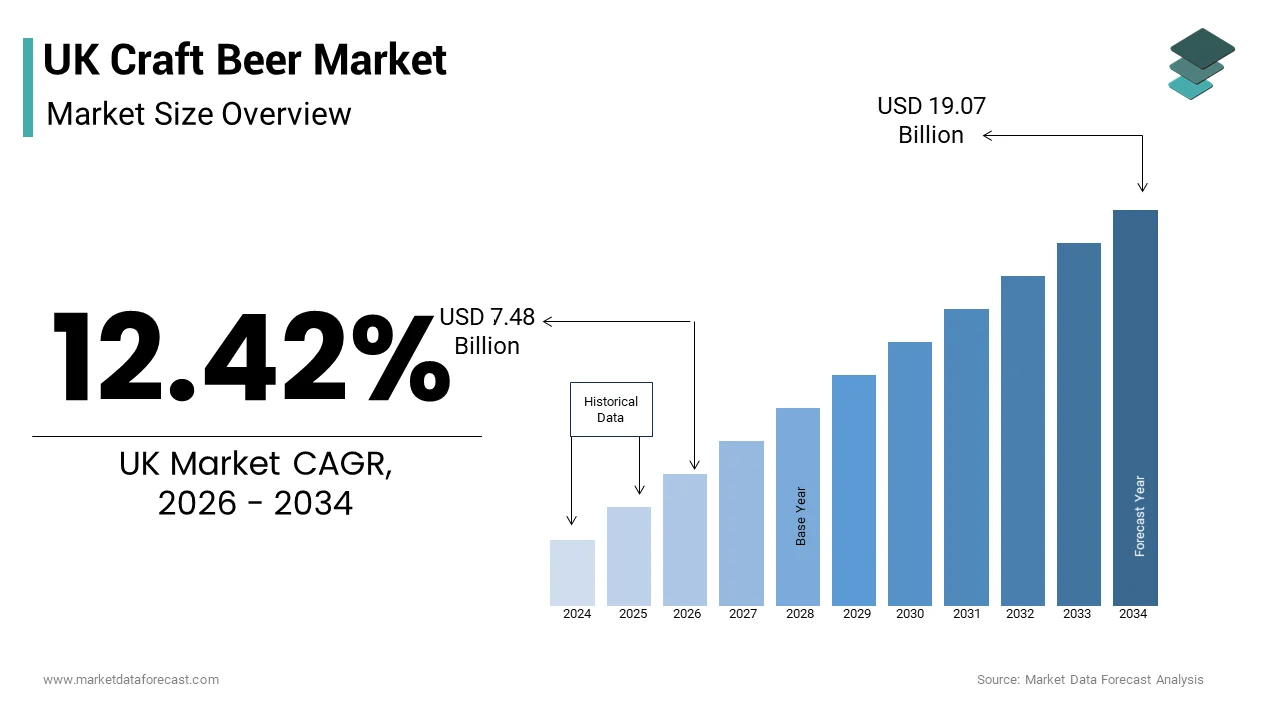
Market Size, 2025
$6.65 BnMarket Estimate, 2026
$7.48 BnMarket Forecast, 2034
$19.07 BnCAGR, 2026–2034
12.42%UK Craft Beer Market Size
The UK craft beet market size was valued at USD 6.65 billion in 2025 and is anticipated to reach USD 7.48 billion in 2026 to reach USD 19.07 billion by 2034, growing at a CAGR of 12.42% during the forecast period from 2026 to 2034.
Craft beer is a high-quality, flavorful beer brewed in small batches by independent, artisanal breweries. This market is defined by its emphasis on flavor diversity, artisanal brewing techniques, and local community engagement, distinguishing it from mass produced lager brands. The UK has witnessed a significant proliferation of microbreweries, driven by a cultural shift towards premiumization and experiential consumption. Consumer behavior is increasingly influenced by a desire for authenticity and sustainability, with shoppers prioritizing products with transparent supply chains. Regulatory frameworks such as the Small Breweries Relief scheme provide tax incentives that support the viability of smaller producers. The rise of craft beer festivals and taprooms has further embedded the category into social leisure activities. This evolving landscape requires stakeholders to navigate changing consumer preferences and economic pressures while maintaining product integrity and brand distinctiveness.
MARKET DRIVERS
Consumer Preference for Premiumization and Flavor Diversity
The growing consumer preference for premiumization and flavor diversity is a key reason for the expansion of the United Kingdom craft beer market. Modern drinkers are increasingly seeking unique and complex taste experiences that mass market beers cannot provide, leading to a surge in demand for varied styles such as IPAs, stouts, and sour ales. This trend is fueled by a more educated consumer base that values ingredient provenance and brewing craftsmanship. The proliferation of craft beer bars and bottle shops has enhanced accessibility, allowing consumers to explore a wide range of options. As per research, the introduction of limited edition and seasonal brews creates a sense of urgency and exclusivity, driving repeat purchases. Social media platforms play a crucial role in showcasing new releases and brewing stories, influencing consumer choices and fostering brand loyalty. This desire for novelty and superior quality ensures that craft beer continues to gain traction, attracting both dedicated enthusiasts and casual drinkers looking to elevate their drinking experience.
Support for Local Businesses and Community Identity
The strong support for local businesses and community identity significantly fuels the growth of the United Kingdom craft beer market. Consumers are increasingly prioritizing locally produced goods to support regional economies and reduce environmental impact associated with long distance transportation. According to retail consumer data from Deloitte Digital UK, about 61% of shoppers prefer to buy from independent or local businesses to help support their community. Craft breweries often serve as social hubs, hosting events and collaborating with local food producers, which strengthens their connection to the neighborhood. The concept of terroir in beer, where local ingredients like water and hops influence flavor, appeals to consumers seeking authentic regional products. This emotional connection and sense of pride in local craftsmanship foster brand loyalty and encourage word of mouth promotion. The alignment of craft beer with the buy local movement ensures sustained demand, as consumers view their purchases as an investment in their community’s vitality and cultural identity.
MARKET RESTRAINTS
Rising Production Costs and Supply Chain Volatility
Rising production costs and supply chain volatility are major limitations to the UK craft beer market. This squeezes profit margins for independent brewers. The cost of key ingredients such as malt, hops, and yeast has increased due to global commodity price fluctuations and climate related crop failures. Energy costs, which are critical for the heating and cooling processes in brewing, have also surged, adding significant financial pressure. Data from the Office for National Statistics (ONS) indicates that producer price indices for beverages rose at a more modest, single-digit pace, though breweries still faced tough choices regarding passing costs on to consumers. Packaging materials, including aluminum cans and glass bottles, have faced supply shortages and price hikes due to logistical bottlenecks. As studies, smaller breweries with limited capital reserves struggle to negotiate favorable terms with suppliers, making them more vulnerable to cost inflation. The inability to fully pass these costs onto price sensitive consumers can lead to reduced sales volumes. This economic strain limits the ability of craft brewers to invest in expansion, marketing, and innovation. The unpredictability of input costs creates challenges for long term financial planning and stability, restricting growth potential for many independent operators in the sector.
Regulatory Burdens and Taxation Pressures
Regulatory burdens and taxation pressures are significant restraints to the United States craft beer market. This affects operational flexibility and profitability. While the Small Breweries Relief scheme provides some tax relief, the overall regulatory environment remains complex and costly for small producers. According to HM Revenue and Customs, compliance with alcohol duty regulations requires detailed reporting and administrative resources, which can be burdensome for small teams. The introduction of new labeling requirements regarding ingredients and nutritional information adds further compliance costs. Changes in alcohol duty structures, such as the recent reforms based on alcohol by volume, can create uncertainty and require adjustments in pricing strategies. As per sources, the cost of licensing and health and safety compliance also contributes to overhead expenses. The lack of streamlined processes for small producers means that valuable time and resources are diverted from core brewing activities to administrative tasks. This regulatory friction can discourage new entrants and limit the scalability of existing breweries. The cumulative effect of taxes and compliance requirements reduces the financial viability of craft beer production, particularly for those operating on thin margins. Addressing these regulatory challenges is essential for fostering a supportive environment for independent brewers.
MARKET OPPORTUNITIES
Expansion into Non-Alcoholic and Low Alcohol Segments
The expansion into non-alcoholic and low-alcohol craft beer segments offers a strong opening for the United Kingdom market. This caters to the growing number of health-conscious consumers. The trend towards mindful drinking has led to increased demand for high quality alternatives that do not compromise on flavor. According to data from market observers and the Portman Group's consumer surveys, over half of UK adults have tried no and low alcohol products, reflecting a growing consumer trend toward mindful drinking and moderation. Craft breweries are leveraging their expertise to create sophisticated non alcoholic beers using advanced brewing techniques such as vacuum distillation and reverse osmosis. The availability of non alcoholic craft beers in pubs and restaurants has improved, enhancing visibility and trial. As per research, major retailers are expanding their shelves to include a wider variety of no and low alcohol options, recognizing the commercial potential. The ability to offer inclusive drinking options allows craft breweries to attract a broader demographic, including designated drivers and health focused individuals. This diversification enables breweries to mitigate risks associated with declining alcohol consumption trends. Craft brewers can innovate in this space to capture new revenue streams. Doing so helps them enhance brand relevance in a changing market landscape.
Direct to Consumer Sales and Digital Engagement
Direct to consumer sales and digital engagement provide substantial opportunities for the United Kingdom craft beer market. This allows breweries to build stronger relationships with customers and increase margins. The adoption of e commerce platforms enables breweries to sell directly to households, bypassing traditional retail intermediaries. According to studies, online alcohol sales have stabilized into a steadier growth pattern following the massive spikes seen during the pandemic era. Craft breweries are utilizing subscription models and membership clubs to ensure recurring revenue and customer loyalty. Research shows that direct to consumer channels offer higher profit margins compared to wholesale distribution, providing financial stability for small producers. Social media and digital marketing tools allow breweries to engage with consumers through storytelling, virtual tastings, and interactive content. As per consumer surveys, 50 percent of craft beer enthusiasts appreciate the ability to purchase exclusive releases online, enhancing the sense of community and exclusivity. The integration of data analytics helps breweries understand consumer preferences and tailor offerings accordingly. This digital transformation enables craft brewers to reach niche markets and expand their geographic reach beyond local areas. Breweries can enhance brand loyalty and drive sustainable growth in the competitive market. They can achieve this by leveraging direct sales and digital engagement.
MARKET CHALLENGES
Intense Competition and Market Saturation
Intense competition and market saturation are major challenges to the United Kingdom craft beer market. This makes it difficult for new and existing breweries to stand out. The rapid growth in the number of independent breweries has led to a crowded marketplace, with thousands of brands competing for shelf space and consumer attention. Data from the British Beer and Pub Association indicates that many pubs and bars have limited tap handles, forcing breweries to compete fiercely for placement. The abundance of choices can lead to consumer fatigue, making it harder for individual brands to build lasting loyalty. As per research, marketing costs have increased as breweries strive to differentiate themselves through packaging and branding. The pressure to continuously innovate and release new products strains resources and can lead to quality inconsistencies. Smaller breweries often lack the marketing budgets of larger competitors, limiting their visibility. This saturated environment requires breweries to find unique niches and build strong community connections to survive. The risk of market consolidation increases as weaker players struggle to maintain profitability. Navigating this competitive landscape requires strategic differentiation and efficient operational management to ensure long term viability.
Distribution Bottlenecks and Retail Access
Distribution hurdles and limited retail access are significant barriers to the United Kingdom craft beer market. This hinders the ability of small breweries to reach wider audiences. Established large brewers dominate relationships with major supermarket chains and pub groups, making it difficult for independent producers to secure listings. According to the Competition and Markets Authority, the concentration of power among a few large retailers creates barriers to entry for smaller suppliers. Dependence on third party distributors can result in higher costs and reduced control over brand presentation. As per sources, logistics issues such as delayed deliveries and damaged goods further complicate the supply chain. The lack of dedicated cold chain infrastructure for craft beer can affect product quality during transit. Small breweries often face unfavorable payment terms and listing fees, straining their cash flow. The difficulty in accessing consistent and reliable distribution channels restricts market penetration and brand visibility. Overcoming these barriers requires strategic partnerships and investment in own distribution networks, which can be capital intensive. The inability to efficiently reach consumers limits the scalability of craft beer businesses in the UK market.
REPORT COVERAGE
| REPORT METRIC | DETAILS |
| Market Size Available | 2025 to 2034 |
| Base Year | 2025 |
| Forecast Period | 2026 to 2034 |
| CAGR | 12.42% |
| Segments Covered | By Type, Ingredient, Distribution Channel, By Country |
| Various Analyses Covered | Global, Regional, and Country Level Analysis, Segment-Level Analysis; DROC, PESTLE Analysis; Porter’s Five Forces Analysis; Competitive Landscape; Analyst Overview of Investment Opportunities. |
| Regions Covered | London, South East, North West, East of England, South West, Scotland, West Midlands, Yorkshire and The Humber, East Midlands, Others |
| Market Leaders Profiled | Anheuser-Busch InBev (BE), Molson Coors Beverage Company (US), BrewDog plc, Heineken N.V. (NL), Diageo plc (GB), Boston Beer Company (US), Camden Town Brewery Ltd, Beavertown Brewery Ltd, Sierra Nevada Brewing Co. (US), Stone Brewing (US), Lagunitas Brewing Company (US), New Belgium Brewing Company (US) |
SEGMENTAL ANALYSIS
By Type Insights
Ale
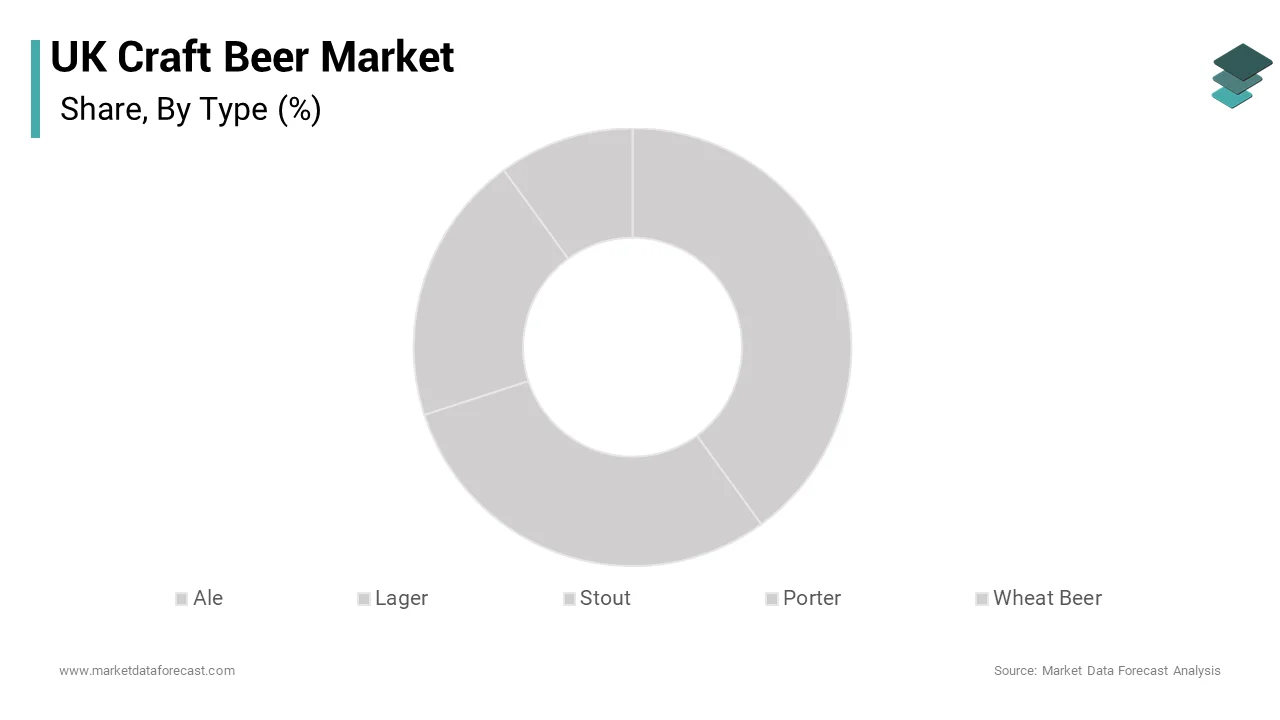
The ale segment led the United Kingdom craft beer market and accounted for a 49.4% share in 2025. This leading position of the segment was attributed to its deep rooted cultural heritage and strong consumer preference for traditional brewing styles. The UK has a long history of ale production, with varieties such as Pale Ale, India Pale Ale (IPA), and Bitter forming the backbone of the national drinking culture. This segment benefits from a loyal customer base that values the complex flavor profiles and aromatic characteristics inherent to top fermented beers. The versatility of ale allows for experimentation with hops and malt, catering to diverse palates ranging from citrusy IPAs to malty bitters. The perception of ale as an authentic and artisanal product aligns with the values of modern consumers who seek quality and tradition. This cultural significance and widespread availability ensure that ale remains the dominant type in the UK craft beer market, driving consistent demand and sustaining the growth of independent breweries. The versatility of ale in brewing and its capacity for flavor innovation significantly reinforce its leading position in the UK craft beer market. Brewers can manipulate hop varieties, malt types, and yeast strains to create a vast array of flavors, aromas, and textures, appealing to a broad spectrum of consumers. This flexibility allows breweries to respond quickly to trending flavors such as tropical fruit, herbal notes, or spicy undertones. The ability to produce seasonal and limited edition ales creates a sense of urgency and exclusivity, encouraging repeat purchases and brand loyalty. The integration of local ingredients such as regional hops and fruits further enhances the appeal of craft ales, connecting products to specific terroirs. This continuous innovation keeps the category dynamic and engaging, attracting both traditionalists and adventurous drinkers. The structural advantage of ale in terms of creative potential ensures its sustained dominance in the UK craft beer landscape.
Lager
The lager segment is expected to exhibit a noteworthy CAGR of 8.5% from 2026 to 2034 owing to the rise of craft lager and premiumization trends. Historically dominated by mass produced brands, the lager category is experiencing a renaissance as independent breweries apply craft techniques to this bottom fermented style. This growth is fueled by a desire for refreshing beverages that are suitable for various occasions, including warm weather and food pairing. The development of premium craft lagers using high quality ingredients such as Pilsner malt and noble hops has elevated the perception of the style. The ability of lager to appeal to a wider demographic, including those who find ales too intense, expands the market reach for craft breweries. This shift towards premium lager ensures rapid growth, capturing share from both traditional macro lagers and other craft styles. The accessibility and broad consumer appeal of lager significantly accelerate its growth in the UK craft beer market. Lager is often perceived as more approachable and less intimidating than complex ales, making it an ideal entry point for new craft beer enthusiasts. This widespread acceptance allows craft breweries to attract customers who may be hesitant to try bold or bitter ales. The versatility of lager in food pairing, from casual snacks to fine dining, enhances its utility in hospitality settings. Craft breweries are responding by producing a range of lager styles, from Helles to Dunkel, offering variety within the category. The marketing of craft lager as a premium yet accessible option bridges the gap between mass market and niche products. This broad appeal and ease of consumption ensure that lager continues to grow rapidly, becoming a key driver of expansion in the UK craft beer sector.
By Ingredients Insights
Malt
In 2025, the malt segment held the majority share of the United Kingdom craft beer market because of its fundamental role as the primary source of fermentable sugars in beer production. Every beer requires malt as its base, making it the most consumed ingredient by volume and value. The extensive usage ensures that malt remains the dominant ingredient segment, underpinning the entire brewing process. Also, the variety of malt types, including pale, crystal, and roasted malts, allows brewers to create diverse beer styles and color profiles. The reliance on malt for body, flavor, and alcohol content makes it indispensable to craft beer production. This foundational status ensures that malt maintains its leading position, driving demand for high quality and specialized malt varieties. The continuous innovation in malting techniques further enhances its appeal, supporting the creation of unique and complex craft beers. The emphasis on local sourcing and sustainability initiatives further reinforces the dominance of malt in the regional market. Craft breweries are increasingly prioritizing locally grown barley to reduce carbon footprints and support regional agriculture. The availability of heritage barley varieties offers unique flavor profiles that differentiate craft beers from mass market alternatives. In addition, the narrative of farm to glass resonates with environmentally conscious consumers who value transparency and ethical sourcing. This focus on locality and sustainability enhances the perceived value of malt, driving its continued prominence in the ingredient segment. The integration of sustainable practices in malting and brewing ensures that malt remains central to the identity and growth of the UK craft beer market.
Hops
The hops segment is predicted to witness the highest CAGR of 9.2% over the forecast period due to the demand for hop forward styles and aroma diversity. The popularity of India Pale Ales (IPAs) and New England IPAs has surged, requiring substantial quantities of aromatic and bittering hops. This growth is fueled by consumer preference for intense floral, citrus, and tropical fruit flavors derived from modern hop varieties. The introduction of new hop varieties with unique profiles encourages experimentation and innovation among brewers. The visual and sensory appeal of hoppy beers drives social media engagement and brand visibility. This sustained demand for diverse and high quality hops ensures rapid growth in this segment, making it a key driver of innovation in the UK craft beer market. The expansion of domestic hop cultivation significantly accelerates the growth of the hops segment in the UK market. Brewers are increasingly sourcing hops from UK farms to ensure freshness and reduce reliance on imports. The ability to provide fresh wet hops during harvest season offers a distinct advantage for local breweries, creating seasonal specialties that drive consumer interest. The development of new disease resistant and high yield hop varieties further supports sustainable cultivation practices. This focus on local production and quality ensures that the hops segment continues to grow rapidly, contributing to the vibrancy and distinctiveness of the UK craft beer industry.
By Distribution Channel Insights
Store Based Retail
The store based retail segment dominated the United Kingdom craft beer market and captured a 64.2% share in 2025. This dominance of the segment was driven by its established infrastructure and the convenience it offers to consumers. Supermarkets, off licenses, and specialty beer shops provide easy access to a wide range of craft beers, allowing customers to purchase products for home consumption. The presence of craft beer sections in major supermarkets has increased visibility and accessibility for mainstream shoppers. The convenience of one stop shopping and the availability of multi pack deals encourage bulk purchases. The stability of store based retail provides a reliable revenue stream for breweries, enabling them to plan production and distribution effectively. This widespread availability and consumer habit ensure that store based retail remains the primary channel for craft beer sales in the UK. Promotional activities and enhanced visibility in retail stores further reinforce the leading position of the store based channel in the regional market. Retailers frequently run promotions such as discounts, buy one get one free offers, and seasonal displays to drive sales and attract customers. Breweries collaborate with retailers to create branded displays and tasting events, enhancing product awareness and trial. The integration of loyalty programs and digital coupons in stores further incentivizes repeat purchases. This strategic use of promotions and visibility ensures that store based retail continues to dominate the distribution landscape, providing a vital platform for craft beer brands to reach a broad audience.
Non-Store Retail
The non-store retail segment is estimated to register the fastest CAGR of 12.5% between 2026 and 2034. This rapid expansion of the segment is fuelled by the growth of e commerce and direct to consumer models. Consumers are increasingly purchasing craft beer online for home delivery, attracted by the convenience and wider selection available compared to physical stores. This trend is fueled by the ability of breweries to sell directly to customers through their websites, bypassing traditional retail intermediaries. The rise of subscription services and beer clubs provides recurring revenue and fosters customer loyalty. The integration of secure age verification and efficient logistics has improved the reliability of online alcohol sales. This shift towards digital channels ensures that non-store retail continues to grow rapidly, offering new opportunities for craft beer brands to connect with consumers. Digital engagement and personalized experiences significantly accelerate the growth of the non-store retail segment. Breweries utilize social media, email marketing, and data analytics to engage with customers and tailor offerings to their preferences. The ability to collect customer data allows breweries to refine their marketing strategies and product development. The integration of mobile apps and seamless checkout processes further enhances user experience. This focus on digital engagement and personalization ensures that non-store retail remains the fastest growing channel, capturing the attention of tech savvy consumers and expanding the market reach for craft beer producers.
COUNTRY ANALYSIS
The United Kingdom was the top performer in the European market and accounted for a 18.5% share in 2025. This growth of the UK market was supported by its maturity, innovation, and strong cultural heritage, serving as a global leader in the industry. According to the Society of Independent Brewers (SIBA), the number of active independent breweries has fallen to approximately 1,641 (as of early 2025), reflecting a challenging market where closures currently outpace openings. While the UK reached a peak of nearly 2,600 total brewing companies in 2022, this figure has since declined due to rising costs and market pressures. The market is driven by a sophisticated consumer base that values quality, diversity, and authenticity in beer production. The presence of renowned brewing regions such as Kent, Yorkshire, and Scotland enhances the reputation of UK craft beer domestically and internationally. Regulatory support through schemes like Small Breweries Relief encourages the growth of independent producers. The trend towards premiumization and local sourcing aligns with broader consumer preferences for sustainable and high quality products. The integration of digital technologies in sales and marketing further drives market expansion. This dynamic environment ensures that the UK remains a pivotal market for craft beer, setting trends and standards that influence the global industry. The continuous innovation and strong community support sustain the growth and vitality of the sector.
COMPETITIVE LANDSCAPE
The competition in the UK craft beer market is intense and characterized by a high number of independent breweries vying for consumer attention and shelf space. Large established brands compete with agile microbreweries that offer niche and innovative products. Price sensitivity varies across segments with premium craft beers commanding higher margins due to perceived quality and uniqueness. The market is fragmented with no single dominant player allowing for diverse regional strengths and specializations. Retailers and pubs play a crucial role in shaping competitive dynamics by curating selections that reflect local tastes and trends. Innovation in brewing techniques and flavor profiles is essential for differentiation in a crowded marketplace. Sustainability and ethical sourcing have become key competitive advantages as consumers prioritize responsible brands. Digital marketing and direct sales channels enable smaller breweries to reach wider audiences without relying solely on traditional distribution. Regulatory changes and economic pressures influence operational costs and pricing strategies. Companies must balance creativity with commercial viability to sustain growth. The continuous entry of new breweries keeps the market dynamic and challenging for existing participants. Adaptability and strong brand identity are critical for long term success in this vibrant and evolving industry landscape.
KEY MARKET PLAYERS
A few of the market players that are in the UK craft beer market are
- Anheuser-Busch InBev (BE)
- Molson Coors Beverage Company (US)
- BrewDog plc
- Heineken N.V. (NL)
- Diageo plc (GB)
- Boston Beer Company (US)
- Camden Town Brewery Ltd
- Beavertown Brewery Ltd
- Sierra Nevada Brewing Co. (US)
- Stone Brewing (US)
- Lagunitas Brewing Company (US)
- New Belgium Brewing Company (US)
Top Players In The Market
- BrewDog plc is a prominent independent craft beer brewery based in Scotland with a significant presence across the United Kingdom. The company is renowned for its disruptive marketing strategies and strong commitment to sustainability and ethical business practices. Recently BrewDog has expanded its network of bars and hotels known as Doghouses which serve as experiential hubs for brand engagement. The firm actively invests in renewable energy initiatives at its Ellon brewery to reduce carbon emissions. BrewDog strengthens its market position by launching innovative beer styles and collaborating with international artists for limited edition releases. Its direct to consumer subscription model enhances customer loyalty and provides stable revenue streams. These actions reinforce its reputation as a leader in the craft beer sector while promoting environmental responsibility and community involvement throughout the UK.
- Camden Town Brewery Ltd is a leading craft beer producer located in London known for its high quality lagers and ales. The brewery focuses on creating accessible and refreshing beers that appeal to a broad audience within the urban market. Recently Camden Town has invested in expanding its production capacity to meet growing demand from pubs and retailers across the country. The company strengthens its market position by partnering with local businesses and sponsoring cultural events in London. It emphasizes sustainable brewing practices including water conservation and waste reduction initiatives. Camden Town also engages consumers through interactive taproom experiences and educational tours. These efforts enhance brand visibility and foster a strong connection with the local community. The brewery continues to grow its influence in the competitive UK craft beer landscape. It achieves this by maintaining consistent quality and focusing on operational efficiency.
- Beavertown Brewery Ltd is an influential craft beer brand based in London recognized for its bold flavors and distinctive branding. The company specializes in producing hop forward ales and stouts that resonate with enthusiastic craft beer drinkers. Recently Beavertown has focused on expanding its distribution network to reach more independent pubs and specialty bottle shops nationwide. The brewery strengthens its market position by releasing seasonal and experimental brews that generate excitement and media attention. It actively participates in major beer festivals and collaborates with other breweries to create unique joint ventures. Beavertown also prioritizes digital engagement through social media campaigns that highlight its creative process and brand personality. These strategies help maintain its relevance and appeal among younger demographics. Beavertown combines artistic expression with quality brewing. By doing so, the company continues to solidify its status as a key player in the UK craft beer market.
Top Strategies Used By Key Market Participants
Key players in the UK craft beer market employ diverse strategies to maintain competitiveness and drive growth. Product innovation through unique flavors and seasonal releases attracts discerning consumers. Sustainability initiatives such as carbon neutral brewing and eco friendly packaging enhance brand reputation. Direct to consumer sales via subscriptions and online stores improve margins and loyalty. Experiential marketing through taprooms and festivals builds strong community connections. Strategic partnerships with hospitality venues expand distribution reach and visibility. Digital engagement using social media and data analytics targets specific demographics effectively. Cost management through efficient production and local sourcing ensures profitability. These approaches collectively strengthen market presence and adapt to evolving consumer preferences in the dynamic United Kingdom craft beer sector.
MARKET SEGMENTATION
This research report on the UK craft beer market is segmented and sub-segmented into the following categories.
By Type
- Ale
- Lager
- Stout
- Porter
- Wheat Beer
By Packaging
- Bottles
- Cans
- Kegs
By Alcohol Content
- Low Alcohol
- Standard Alcohol
- High Alcohol
By Distribution Channel
- On-trade
- Off-trade
- E-commerce