- Product Description Description
- Table of Contents TOC
- List of Table & Figure LOT
- Get Free Sample PDF Sample PDF
Market Size, 2025
$1.04 BnMarket Estimate, 2026
$1.16 BnMarket Forecast, 2034
$2.84 BnCAGR, 2026–2034
11.86%UK Cruise Market Report Summary
The United Kingdom cruise market was valued at USD 1.04 billion in 2025 and is projected to reach USD 2.84 billion by 2034, growing from USD 1.16 billion in 2026 at a CAGR of 11.86% during the forecast period. Market growth is driven by rising demand for leisure travel, increasing consumer spending on premium vacation experiences, and the growing popularity of all-inclusive cruise packages. The expansion of luxury cruise offerings, themed voyages, and sustainable cruise operations is further supporting the growth of the UK cruise market.
Key Market Trends
- Rising demand for luxury and experiential cruise vacations
- Increasing popularity of themed and destination-focused cruises
- Growth in sustainable and environmentally friendly cruise operations
- Expansion of digital booking platforms and personalized travel services
- Increasing demand for premium onboard entertainment and wellness experiences
Segmental Insights
- Based on Type, the ocean cruises segment dominated the UK cruise market in 2025 by accounting for 45.3% of the market share, driven by a wide range of international itineraries, premium onboard amenities, and strong consumer preference for ocean voyages.
- Based on Duration, the 6 to 10 days segment held the leading share of 42.3% of the market in 2025 due to its balance of affordability, convenience, and diverse travel experiences.
- Based on Age Group, the travelers aged above 60 years segment accounted for 55.4% of the market share in 2025, supported by higher disposable income, greater leisure time, and increasing demand for premium travel experiences among retirees.
Regional Insights
- The United Kingdom remains one of the leading cruise tourism markets in Europe, supported by strong outbound travel demand, well-developed port infrastructure, and increasing consumer preference for international cruise vacations. Continued investments in cruise terminals and sustainable maritime tourism are expected to support robust market growth during the forecast period.
Competitive Landscape
- The UK cruise market is highly competitive, with operators focusing on fleet modernization, luxury experiences, sustainable operations, and digital customer engagement. Companies are investing in new itineraries, eco-friendly vessels, and personalized onboard services to strengthen their market positions.
- Key players operating in the UK cruise market include Carnival Corporation & plc, Royal Caribbean Group, Norwegian Cruise Line Holdings, MSC Cruises, Virgin Voyages, Ambassador Cruise Line, Fred. Olsen Cruise Lines, P&O Cruises, Cunard Line, Marella Cruises, Saga Cruises, Disney Cruise Line, Hurtigruten, Viking Cruises, and Celebrity Cruises.
UK Cruise Market Size
The UK Cruise market size was valued at USD 1.04 billion in 2025, and is projected to reach USD 2.84 billion by 2034 from USD 1.16 billion in 2026, growing at a CAGR of 11.86%.
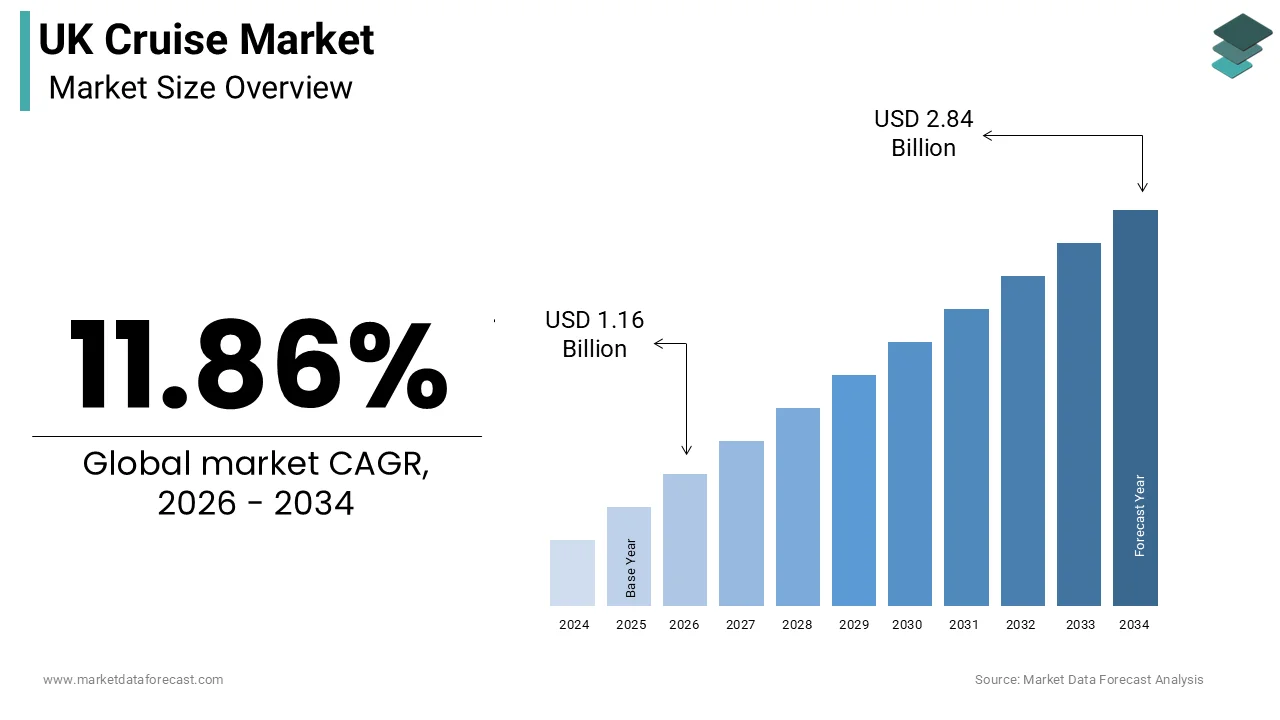
The cruise is a global maritime tourism with high-value itineraries and premium passenger experiences. This sector encompasses both domestic departures from British ports and international voyages undertaken by UK residents. As per the Cruise Lines International Association, approximately 2 million passengers embarked on cruises from UK ports in 2023, marking a substantial rebound toward pre-pandemic levels. The demographic profile of cruise travelers in Britain skews toward older adults with individuals aged 50 and above constituting nearly 60% of all cruisers, according to industry surveys. Environmental consciousness among British travelers is rising, with potential cruisers stating that sustainability practices influence their booking decisions, according to recent travel preference studies. The integration of digital technologies for seamless boarding and personalized service delivery has become standard across major operators.
MARKET DRIVERS
Rising Disposable Income Among Affluent Demographics Drives Premium Cruise Bookings
The expansion of disposable income among middle and upper-class households is majorly fuelling the growth of the United Kingdom cruise market. Economic data indicate that households in the top 20% of income distribution increased their leisure spending between 2022 and 2024, according to the Office for National Statistics. This financial buoyancy enables consumers to prioritize high-value experiential travel over traditional holidays. Cruise vacations offer an all-inclusive model that appeals to budget-conscious yet affluent travelers who seek predictability in costs while enjoying luxury amenities. The average cost of a seven-day Mediterranean cruise from a UK port ranges from 800 to 2500 pounds per person, depending on cabin category and inclusions. The proliferation of ultra luxury cruise lines targeting the British market has further stimulated demand, with suites priced above 5000 pounds per week seeing occupancy rates exceeding 90% during peak seasons. This trend is reinforced by pension funds performing well, which provides retirees with stable income streams to fund extended voyages. The psychological appeal of stress-free travel, where meals, entertainment, and accommodation are bundled, resonates strongly with this demographic segment seeking relaxation and social engagement without logistical burdens.
Growing Preference for Experiential and Themed Travel Itineraries
The British travelers increasingly favor cruise vacations that offer unique thematic experiences and immersive cultural engagement rather than standard sightseeing tours, which is additionally fuelling the growth of the United Kingdom cruise market. This shift reflects a broader consumer desire for meaningful travel memories and skill acquisition during holidays. Cruise operators have responded by partnering with renowned chefs, historians and naturalists to create curated onboard programs and exclusive shore excursions. For instance, voyages focusing on Northern Lights viewing in Norway or wine tasting in Bordeaux have seen booking increases year on year, according to operator performance data. Social media influence plays a pivotal role in this trend, with visually striking destinations and unique onboard activities driving viral interest and subsequent bookings. Travel influencers showcasing bespoke cruise experiences have contributed to an increase in inquiries for themed voyages among millennials and Generation X travelers. Furthermore, the integration of local cultural performances and artisan workshops during port calls enhances the authenticity of the experience. This demand for differentiation compels cruise lines to continuously innovate their offerings ensuring that each voyage provides distinct educational and recreational value.
MARKET RESTRAINTS
Stringent Environmental Regulations Increase Operational Costs
The implementation of rigorous environmental standards by international maritime organizations is hindering the growth of the United Kingdom cruise market. The International Maritime Organization mandates a reduction in sulfur emissions to 0.5% globally, which requires ships to either use low-sulfur fuel or install exhaust gas cleaning systems known as scrubbers. The installation of scrubbers on a single vessel costs between 2 million and 5 million pounds, creating substantial capital expenditure requirements. Additionally, the UK government has introduced stricter carbon reporting requirements for vessels docking at British ports, compelling operators to invest in advanced monitoring technologies and cleaner fuel alternatives. The transition to liquefied natural gas-powered ships, while environmentally beneficial, requires infrastructure investments at ports that are not yet fully developed across all UK departure points. Southampton and Dover have initiated upgrades, but smaller ports lag behind, limiting operational flexibility. Environmental groups continue to pressure regulators for even tighter controls, including potential bans on heavy fuel oil in sensitive marine areas, which could further restrict routing options. The reputational risk associated with environmental non-compliance also drives voluntary investments in sustainability initiatives that may not yield immediate financial returns. Operators must balance these regulatory obligations with profitability targets, creating a complex operational landscape. The uncertainty surrounding future legislation, particularly regarding carbon taxation, adds another layer of financial risk that discourages aggressive fleet expansion and may slow market growth trajectories in the short to medium term.
Geopolitical Instability Disrupts Traditional Itinerary Planning
The ongoing geopolitical tensions in key regions traditionally favored by UK cruise tourists create substantial uncertainties that disrupt itinerary planning and dampen consumer confidence, which is additionally hampering the growth of the United Kingdom cruise market. Conflicts in Eastern Europe and instability in parts of the Middle East have forced cruise lines to cancel or reroute voyages that previously included ports in these areas. The Black Sea region once a popular destination for cultural and historical cruises has seen a decline in bookings of over 40% since 2022, as per travel agency records. This displacement of demand puts pressure on alternative destinations such as the Mediterranean and Northern Europe leading to overcrowding and inflated prices in these areas. Port congestion in popular locations like Barcelona and Venice has resulted in delays and reduced quality of shore experiences which negatively impacts passenger satisfaction scores. The Foreign Commonwealth and Development Office regularly updates travel advisories for British citizens which directly influences booking decisions with warnings against non essential travel to certain regions causing immediate drops in demand. Insurance premiums for cruise operators have risen by 20% in affected zones according to marine insurance providers further increasing operational costs. The unpredictability of geopolitical events makes long term itinerary planning challenging forcing companies to maintain flexible booking policies that can lead to revenue volatility.
MARKET OPPORTUNITIES
Expansion into Expedition and Adventure Cruising Segments
The untapped potential of expedition and adventure cruising by attracting younger and more active travelers, who seek unconventional experiences is set to create new opportunities for the growth of the United Kingdom cruise market. UK based operators are increasingly investing in smaller purpose built vessels capable of navigating polar regions Arctic archipelagos and lesser known island chains. These ships offer intimate experiences with passenger capacities ranging from 100 to 300 allowing access to ports that larger vessels cannot reach. The average age of expedition cruisers is 45 years which is notably lower than the traditional cruise demographic opening up a new customer base for the industry. Partnerships with scientific organizations and conservation groups enhance the credibility and appeal of these trips offering passengers opportunities to participate in citizen science projects. The visual allure of untouched landscapes shared extensively on social media platforms drives organic marketing and brand awareness among environmentally conscious travelers. Infrastructure development in remote ports is gradually improving facilitating smoother operations and better shore excursion options. The diversity of activities including kayaking hiking and wildlife photography caters to active lifestyles differentiating these cruises from passive leisure options. Operators who successfully position themselves in this segment can command premium pricing and foster strong brand loyalty. The limited competition in specific expedition routes allows early movers to establish dominant market positions.
Integration of Advanced Digital Technologies for Personalized Experiences
The adoption of artificial intelligence and Internet of Things technologies to deliver highly personalized services that enhance customer satisfaction and operational efficiency will additionally to elevate the growth of the United Kingdom cruise market. Smart ship initiatives enable real-time data collection on passenger preferences, allowing for customized dining recommendatio,ns activity suggestions, and cabin environment adjustments. According to technology implementation studies, cruise lines utilizing AI-driven personalization engines have reported a 22% increase in onboard spending per passenger due to targeted offers and seamless service delivery. Wearable devices provided to guests facilitate cashless transactions, location tracking and instant communication reducing friction points during the voyage. Mobile applications serve as central hubs for itinerary management dining reservations and entertainment bookings improving convenience and reducing wait times. Data analytics enable predictive maintenance of ship systems minimizing downtime and ensuring smooth operations, which directly impacts passenger perceptions of quality. The use of biometric identification for boarding and security checks accelerates embarkation processes reducing queue times to port efficiency audits. These technological enhancements appeal to tech savvy travelers who expect digital convenience comparable to land based hospitality experiences. Furthermore, digital platforms facilitate post cruise engagement enabling operators to maintain relationships and encourage repeat bookings through personalized marketing campaigns. The competitive advantage gained through superior digital experiences can differentiate brands in a crowded marketplace. Investment in cybersecurity measures to protect passenger data is equally critical to maintaining trust and compliance with data protection regulations.
MARKET CHALLENGES
Workforce Shortages Impact Service Quality and Operational Capacity
The cruise industry faces acute shortages of skilled maritime personnel and hospitality staff, which threaten service quality and limit operational capacity, which is one of the major challenges for the growth of the United Kingdom cruise market. Post pandemic labor shifts have led to a 15% decline in available seafarers with relevant certifications, according to maritime recruitment agencies. The demanding nature of shipboard work combined with extended periods away from home deters new entrants particularly among younger generations who prioritize work life balance. Training pipelines for specialized roles such as marine engineers and hotel directors have not kept pace with fleet expansion resulting in bottlenecks that delay vessel deployments. Wage inflation in the hospitality sector on land has made cruise employment less attractive financially requiring operators to increase salaries by 10 to 12% to remain competitive as per human resources benchmarks. Staff turnover rates onboard exceed 25% annually leading to inconsistencies in service delivery and increased training costs. The reliance on international crew members introduces complexities related to visa regulations and travel logistics which were exacerbated by Brexit related administrative changes. UK based crew members face additional bureaucratic hurdles when working on vessels registered under foreign flags complicating recruitment efforts. Service quality metrics have shown slight declines in passenger satisfaction scores related to staff responsiveness and attentiveness according to recent guest feedback analyses. The inability to fully staff vessels forces some operators to reduce sailing frequencies or limit onboard amenities which diminishes the overall value proposition. Addressing this challenge requires long term investments in training programs improved working conditions and career development pathways.
Volatility in Fuel Prices Affects Profit Margins and Pricing Stability
Fluctuations in global energy create significant financial uncertainty for cruise operators impacting profit margins and the ability to maintain stable pricing for consumers, which is another factor to decline the growth of the United Kingdom cruise market. Marine fuel costs constitute approximately 25 to 30% of total operating expenses for cruise lines making them highly vulnerable to price swings according to financial disclosures from major companies. Geopolitical conflicts supply chain disruptions and changes in production quotas by oil producing nations contribute to unpredictable fuel price movements. During periods of sharp increases operators face difficult choices between absorbing costs which erodes profitability or passing them to consumers through fare surcharges which may suppress demand. Hedging strategies provide some protection but cannot fully eliminate exposure to long term price trends. The transition to alternative fuels such as liquefied natural gas and methanol requires substantial upfront investments in new vessels and bunkering infrastructure which strains capital resources. Port authorities in the UK are beginning to mandate shore power connections to reduce emissions while docked but the availability and cost of electricity vary significantly across locations. This environment complicates financial forecasting and budgeting for cruise companies limiting their ability to plan long term expansions. Consumers are sensitive to price changes with even minor increases leading to booking deferrals or cancellations as per elasticity studies. The lack of pricing transparency regarding fuel surcharges can also damage consumer trust and brand loyalty.
REPORT COVERAGE
| REPORT METRIC | DETAILS |
| Market Size Available | 2025 to 2034 |
| Base Year | 2025 |
| Forecast Period | 2026 to 2034 |
| CAGR | 11.86% |
| Segments Covered | By Type, Duration, Age Group and Region. |
| Various Analyses Covered | Global, Regional and Country-Level Analysis, Segment-Level Analysis, Drivers, Restraints, Opportunities, Challenges; PESTLE Analysis; Porter’s Five Forces Analysis, Competitive Landscape, Analyst Overview of Investment Opportunities |
| Market Leaders Profiled | Carnival Corporation & plc, Royal Caribbean Group, Norwegian Cruise Line Holdings Ltd., MSC Cruises, Virgin Voyages, Ambassador Cruise Line, Fred. Olsen Cruise Lines, P&O Cruises, Cunard Line, Marella Cruises, Saga Cruises, Disney Cruise Line, Hurtigruten, Viking Cruises, Celebrity Cruises |
SEGMENTAL ANALYSIS
By Type Insights
The ocean cruises segment was accounted in holding 45.3% of the United Kingdom cruise market share in 2025 owing to the extensive infrastructure and variety of itineraries available from major UK ports such as Southampton Dover and Liverpool. The scale of ocean liners allows for a diverse range of onboard amenities including multiple dining venues theaters and recreational facilities, which appeal to a broad demographic spectrum. The ability to visit multiple international destinations in a single voyage without the hassle of repacking or changing hotels provides significant convenience value that resonates with British travelers. Major cruise lines have invested heavily in home porting operations in the UK reducing flight costs and environmental impact for passengers, which further stimulates demand. The average occupancy rate for ocean cruises departing from the UK stands at 92% during peak seasons as per industry operational reports. The economies of scale achieved by large vessels enable competitive pricing strategies making ocean cruising accessible to middle income households, while still offering luxury options for affluent travelers. The familiarity of the ocean cruise product among British consumers who have been engaging in this form of travel for decades creates a strong base of repeat customers. Marketing campaigns emphasizing the all inclusive nature of the experience where food entertainment and accommodation are bundled reinforce the perceived value proposition. The continuous introduction of mega ships with innovative features such as skydiving simulators and robotic bartenders keeps the product fresh and attracts new customer segments.
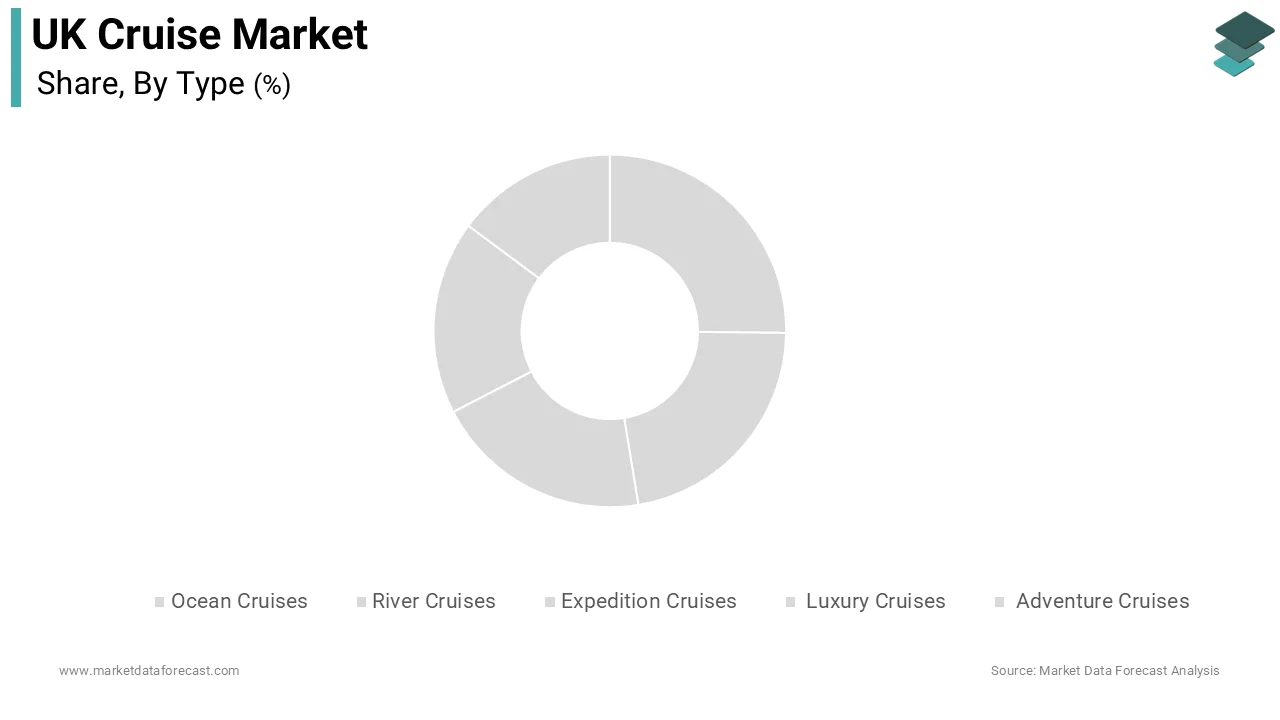
The expedition cruises segment is likely to grow at an anticipated CAGR of 9.4% from 2026 to 2034. The growth of the segment is fuelling with the shifting consumer preference toward authentic immersive experiences and sustainable travel practices among affluent British tourists. The average expenditure per passenger on expedition cruises is significantly higher often exceeding 6000 pounds per person due to the specialized nature of the vessels and expert led educational programs onboard. The rise of eco-consciousness has driven demand for small ship cruising, which has a lower environmental footprint and supports local communities in visited regions. Operators are responding by investing in hybrid electric vessels and partnering with conservation organizations to enhance credibility and appeal. Social media influence plays an important role with stunning imagery of wildlife and landscapes driving aspiration and booking intent among millennials and Generation X travelers. The limited capacity of expedition ships creates a sense of exclusivity and urgency that encourages early bookings and premium pricing power. Furthermore, the integration of citizen science projects allows passengers to contribute to research enhancing the meaningfulness of the travel experience.
By Duration Insights
The cruises with a duration of between 6 and 10 days segment was the largest by holding 42.3% of the United Kingdom cruise market with the optimal balance between vacation time and cost that this duration offers to working professionals and families with school age children. The typical British annual leave allowance allows for a one week holiday without exhausting entire entitlements making this duration highly practical for domestic travelers. Popular itineraries within this timeframe include Mediterranean Western European and Norwegian fjord routes which offer diverse cultural and scenic experiences without excessive time at sea. The average price point for a 7 day cruise ranges from 600 to 1200 pounds per person, which fits comfortably within the discretionary spending budgets of middle class households. Travel agents report that this duration has the highest conversion rate as it minimizes the perceived commitment and risk for first time cruisers. The frequency of departures for 7 day cruises is highest ensuring flexibility in scheduling and availability during peak summer months. Onboard revenue generation is also optimized in this segment as passengers have sufficient time to engage with paid amenities such as specialty dining and shore excursions without experiencing fatigue. The psychological appeal of a complete disconnect from daily routines for a week aligns with stress relief goals of modern consumers.
The cruises lasting above 14 days segment is likely to grow at an anticipated CAGR of 7.8% during the forecast period owing to the increasing number of retirees and empty nesters who have both the time and financial resources to undertake extended voyages. The post pandemic desire for meaningful and immersive travel experiences has encouraged older demographics to choose longer itineraries that allow for deeper exploration of distant regions such as Asia South America and transatlantic crossings. The average age of passengers on cruises longer than 14 days is 62 years reflecting the demographic shift toward older affluent travelers. These longer voyages often include more sea days which provide ample opportunity for relaxation and engagement with onboard wellness programs and educational lectures. The cost per day for longer cruises is typically lower than shorter voyages offering better value for money which appeals to budget conscious seniors living on fixed incomes. Cruise lines are catering to this trend by designing itineraries with fewer port stops and more thematic content such as history or photography workshops. The social aspect of long cruises fosters strong community bonds among passengers leading to high satisfaction rates and word of mouth referrals. Additionally, the availability of single supplement waivers and solo traveler cabins has removed barriers for individuals wishing to embark on extended journeys.
By Age Group Insights
The travelers aged above 60 years segment was the largest by accounting for 55.4% of the United Kingdom cruise market owing to the substantial disposable income and free time available to retirees who view cruising as an ideal mode of travel due to its convenience and safety. The all inclusive nature of cruise vacations eliminates the logistical challenges of planning multi destination trips which appeals to older adults who prefer structured and hassle-free holidays. Health and mobility considerations are well addressed by modern cruise ships, which offer accessible cabins medical facilities and gentle shore excursion options tailored to varying fitness levels. The social environment onboard provides opportunities for interaction and community building which combats loneliness and enhances mental well-being among seniors. The ability to visit multiple countries without the physical strain of frequent travel arrangements is a key value proposition for this age group. Pension stability and property wealth provide the financial foundation for regular cruising with many individuals taking two or three voyages per year. The presence of onboard medical staff and emergency protocols provides peace of mind for both passengers and their families.
The age group between 20 and 40 years segment is likely to grow at a fastest CAGR of 8.2% from 2026 to 2034. Cruise lines have responded by introducing innovative onboard features, such as high tech entertainment zones craft breweries and fitness classes that appeal to younger tastes. The rise of social media has played a pivotal role with visually appealing ship designs and exotic destinations driving aspiration and peer influence among younger travelers. Shorter cruise durations and themed parties attract young professionals seeking quick getaways and networking opportunities in a relaxed setting. Solo travel trends have also contributed to growth with cruise lines offering dedicated solo cabins and social events to facilitate connections. The perception of cruising as a value for money option compared to land based holidays in expensive cities appeals to budget conscious young adults. Flexible booking policies and last minute deals facilitated by mobile apps lower the barrier to entry for spontaneous travelers. Furthermore, the integration of sustainable practices and ethical tourism initiatives aligns with the values of younger generations who prioritize responsible travel.
COMPETITION OVERVIEW
The competition in the United Kingdom cruise market is intense and characterized by the presence of global giants and specialized niche operators. Major corporations leverage their extensive fleets and brand recognition to dominate the mass market segment while smaller players focus on luxury and expedition niches. Differentiation is achieved through unique onboard experiences itinerary exclusivity and service quality rather than price alone. Competitive pressure drives investment in sustainability technologies as environmental concerns become central to consumer decision making. Operators compete for prime docking slots at popular UK ports and sought after international destinations. The entry of new players and the expansion of existing ones into regional ports intensify rivalry. Collaboration with local tourism boards helps companies create compelling packages that integrate cruise travel with land-based experiences.
KEY MARKET PLAYERS
A few major players of the UK Cruise Market include
- Carnival Corporation & plc
- Royal Caribbean Group
- Norwegian Cruise Line Holdings Ltd
- MSC Cruises
- Virgin Voyages
- Ambassador Cruise Line
- Fred. Olsen Cruise Lines
- P&O Cruises
- Cunard Line
- Marella Cruises
- Saga Cruises
- Disney Cruise Line
- Hurtigruten
- Viking Cruises
- Celebrity Cruises
Major Strategies Used by Key Market Participants
Key players in the United Kingdom cruise market employ diverse strategies to maintain competitiveness and drive growth. Fleet modernization is a primary strategy where companies invest in new vessels equipped with advanced technologies and sustainable features to attract environmentally conscious travelers. Digital transformation is another critical approach with operators enhancing mobile applications and online platforms to provide seamless booking and personalized onboard experiences. Strategic partnerships with travel agencies and tour operators expand distribution networks and increase visibility among potential customers. Sustainability initiatives including the adoption of cleaner fuels and waste reduction programs help companies comply with regulations and improve brand reputation.
Leading Players in the United Kingdom Cruise Market
- Carnival Corporation operates several prominent brands serving the United Kingdom market including P and O Cruises and Cunard Line. The company maintains a strong presence through its dedicated UK headquarters in Southampton, which manages operations for these heritage brands. Recent actions to strengthen its position include the introduction of new vessels specifically designed for British tastes, such as Arvia and Iona. These ships feature enhanced dining options and entertainment tailored to local preferences. Carnival has also invested heavily in sustainable technologies across its fleet operating in UK waters to meet environmental regulations. The company focuses on digital innovation by upgrading its booking platforms and onboard connectivity to improve customer experience. Strategic partnerships with UK travel agents ensure widespread distribution and accessibility for consumers.
- Royal Caribbean Group serves the UK market primarily through its Royal Caribbean International and Celebrity Cruises brands. The company has strengthened its position by deploying larger and more innovative ships from UK ports such as Southampton and Liverpool. Recent initiatives include the launch of Icon class vessels which offer unprecedented onboard amenities attracting younger demographics. Royal Caribbean has focused on enhancing its digital ecosystem with mobile apps that streamline boarding and onboard services. The group has also committed to sustainability by investing in shore power infrastructure at UK ports to reduce emissions while docked. Marketing campaigns emphasize adventure and active lifestyles appealing to modern travelers. Partnerships with UK based tour operators facilitate seamless land sea vacation packages.
- Norwegian Cruise Line Holdings competes in the UK market through its Norwegian Cruise Line brand offering freestyle cruising experiences. The company has increased its footprint by scheduling regular departures from Southampton and other key UK ports during peak seasons. Recent actions include refurbishing existing vessels to incorporate modern design elements and diverse dining concepts that appeal to British passengers. Norwegian has focused on flexible booking policies to address consumer uncertainty and encourage early reservations. The company invests in training programs for staff to ensure high service standards aligned with UK expectations. Strategic marketing efforts highlight the freedom and flexibility of their cruising style differentiating them from traditional operators. Norwegian also collaborates with local suppliers for shore excursions to support regional economies and enhance guest experiences.
MARKET SEGMENTATION
This research report on the UK cruise market is segmented and sub-segmented into the following categories.
By Type
- Ocean Cruises
- River Cruises
- Expedition Cruises
- Luxury Cruises
- Adventure Cruises
By Duration
- 1–3 Days
- 4–7 Days
- 8–14 Days
- More than 14 Days
By Age Group
- Below 18 Years
- 18–34 Years
- 35–54 Years
- 55–64 Years
- 65 Years and Above