- Product Description Description
- Table of Contents TOC
- List of Table & Figure LOT
- Get Free Sample PDF Sample PDF
Market Size, 2025
$1.75 BnMarket Estimate, 2026
$2.00 BnMarket Forecast, 2034
$5.79 BnCAGR, 2026–2034
14.21%United Kingdom Cyber Insurance Market Report Summary
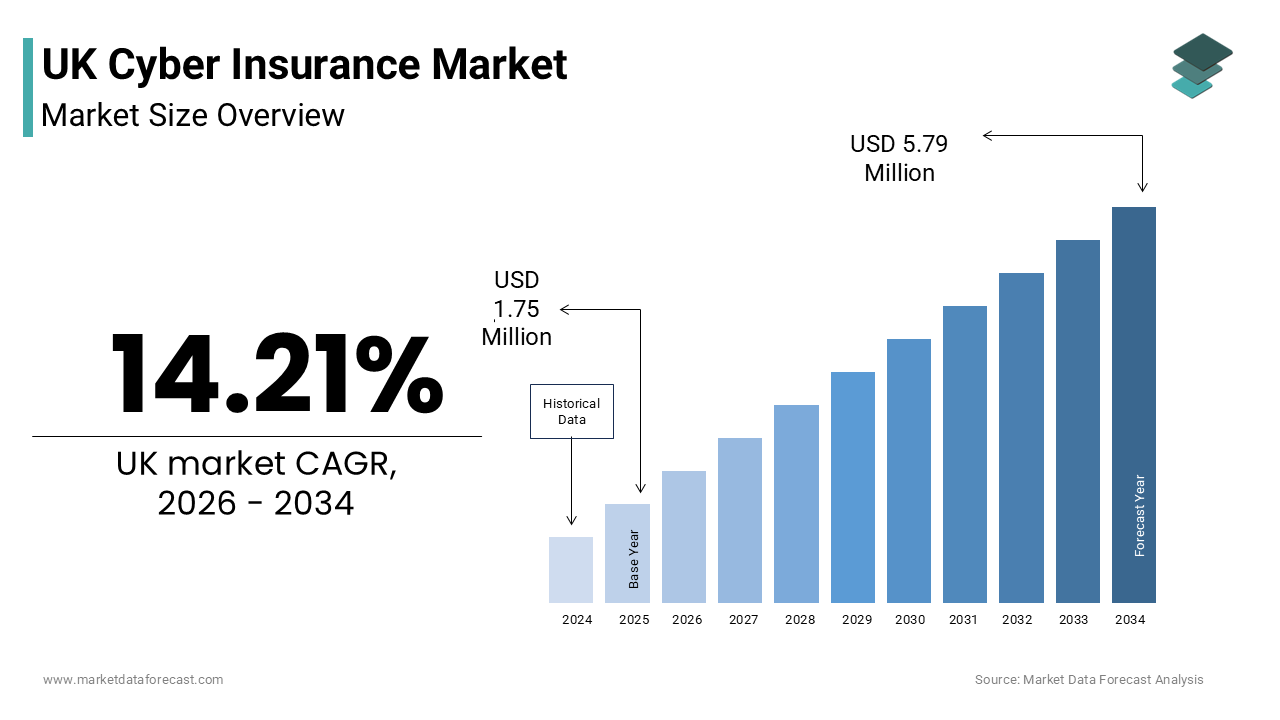
The United Kingdom cyber insurance market was valued at USD 1.75 billion in 2025 and is anticipated to reach USD 2.00 billion in 2026 from USD 5.79 billion by 2034, growing at a CAGR of 14.21% during the forecast period from 2026 to 2034. The growth of the United Kingdom cyber insurance market is driven by the increasing frequency of cyberattacks, rising ransomware incidents, and growing awareness of cyber risk management among businesses. Expanding regulatory requirements related to data protection, increasing digital transformation initiatives across industries, and growing demand for financial protection against cyber threats are further accelerating market growth. Moreover, advancements in cyber risk assessment technologies, expansion of proactive cybersecurity services, and increasing demand for comprehensive incident response solutions are supporting the expansion of the United Kingdom cyber insurance market.
Key Market Trends
- Rising adoption of cyber insurance policies to protect against ransomware attacks, business interruption, and data breaches.
- Increasing integration of proactive cybersecurity services such as vulnerability assessments and threat monitoring within insurance offerings.
- Growing demand for supply chain and third-party liability cyber coverage.
- Strong focus on artificial intelligence and analytics-based risk assessment models for underwriting accuracy.
- Expansion of cyber insurance solutions tailored for small and medium-sized enterprises.
Segmental Insights
- Based on product type, the standalone cyber insurance segment dominated the United Kingdom cyber insurance market and held the largest share in 2025. The segment’s dominance is attributed to comprehensive coverage options, higher policy limits, access to specialized incident response services, and growing adoption among medium and large enterprises with complex cyber risk profiles.
- The packaged cyber insurance segment is projected to witness the fastest CAGR during the forecast period owing to its affordability, simplified purchasing process, lower entry barriers for small businesses, and increasing inclusion within broader commercial insurance policies.
- Based on enterprise size, the large enterprises segment accounted for the leading share of the United Kingdom cyber insurance market in 2025. The dominance of this segment is driven by extensive digital infrastructures, higher cyber risk exposure, strict regulatory obligations, and increasing investments in cyber resilience strategies.
- The small and micro enterprises segment is anticipated to register the fastest CAGR during the forecast period due to increasing awareness of cyber threats, growing ransomware targeting of small businesses, rising availability of affordable insurance products, and government-led cybersecurity awareness initiatives.
- Based on industry vertical, the BFSI segment held the major share of the United Kingdom cyber insurance market in 2025 owing to the high value of financial data, stringent regulatory compliance requirements, increasing cyberattack frequency, and significant investments in cybersecurity and risk management frameworks.
- The healthcare and life sciences segment is expected to witness rapid growth during the forecast period because of increasing digitization of patient records, rising adoption of connected medical devices, growing cyber risks targeting healthcare systems, and increasing compliance requirements related to patient data protection.
Regional Insights
The United Kingdom represents one of the largest cyber insurance markets in Europe, supported by high levels of digital adoption, strong regulatory frameworks, and increasing awareness of cybersecurity risks. The country benefits from a mature insurance industry, advanced cybersecurity infrastructure, and active government initiatives aimed at strengthening cyber resilience across public and private sectors. Growing investments in digital transformation and rising cyber threat sophistication continue to create strong demand for cyber insurance solutions throughout the United Kingdom.
Competitive Landscape
The United Kingdom cyber insurance market is highly competitive and characterized by the presence of global insurers, specialty cyber insurance providers, reinsurers, and emerging insurtech companies competing through product innovation, risk management services, and advanced underwriting capabilities. Leading companies are focusing on expanding proactive cybersecurity offerings, enhancing cyber risk analytics platforms, investing in artificial intelligence-driven underwriting tools, and strengthening incident response capabilities. Strategic partnerships with cybersecurity firms, legal experts, and technology providers are further strengthening market positioning across the cyber insurance ecosystem. Prominent players in the United Kingdom cyber insurance market include AIG, Beazley, Hiscox, Chubb, CFC, Coalition, Allianz, Aviva, Zurich Insurance Group, Markel, Travelers, AXA XL, QBE Insurance Group, Lloyd's of London, Cowbell, Brit Insurance, Pen Underwriting, Tokio Marine HCC, CNA Financial Corporation, Munich Re, Swiss Re, Arch Insurance, Sompo International, Liberty Mutual Insurance, RSA Insurance Group, and Bupa Global.
UK Cyber Insurance Market Size
The UK Cyber Insurance Market size was valued at USD 1.75 million in 2025 and is anticipated to reach USD 2.00 million in 2026 from USD 5.79 million by 2034, growing at a CAGR of 14.21% during the forecast period from 2026 to 2034.
The cyber insurance is national risk management sector used to protect organizations from the financial and operational impacts of digital threats. As the UK economy becomes increasingly digitized, the reliance on interconnected systems has expanded the attack surface for malicious actors. The National Cyber Security Centre reports that ransomware remains the most significant cyber threat to UK organizations, with small and medium sized enterprises being, particularly vulnerable due to limited resources. The Information Commissioner’s Office has issued substantial fines in recent years with the financial risks associated with non-compliance. Businesses are turning to cyber insurance not only for financial protection but also for access to incident response services and legal expertise.
MARKET DRIVERS
Escalating Frequency and Severity of Ransomware Attacks
The escalating frequency and severity of ransomware attacks is creating an urgent need for financial protection against extortion and operational downtime, which is escalating the growth of the United Kingdom cyber insurance market. Cybercriminals have shifted tactics from simple data theft to double extortion schemes, where they encrypt data and threaten to publish it unless a ransom is paid. The ransomware incidents reported in the United Kingdom have increased significantly with average ransom demands rising to exceed 1 million pounds in high profile cases. This trend forces organizations to seek insurance policies that cover ransom payments negotiation services and forensic investigations. The cost of business interruption during a ransomware event can far exceed the ransom itself making coverage essential for survival. The complexity of these attacks requires specialized expertise for recovery, which insurers provide through partnered incident response teams. This value-added service enhances the appeal of cyber insurance beyond mere financial indemnity. The growing sophistication of attack vectors, including supply chain compromises further amplifies the risk exposure for companies of all sizes.
Stringent Regulatory Compliance and Data Protection Laws
The stringent regulatory compliance requirements and robust data protection laws by imposing significant financial liabilities on organizations that fail to secure personal data is additionally escalating the growth of the United Kingdom cyber insurance market. The companies implement appropriate technical and organizational measures to protect customer information with severe penalties for non-compliance. The fines for data breaches have reached millions of pounds affecting sectors ranging from healthcare to retail. These regulatory pressures compel businesses to invest in cyber insurance to mitigate the risk of hefty fines and legal costs associated with data subject claims. The requirement to report breaches within 72 hours adds operational pressure, necessitating rapid response capabilities that insurers often facilitate. The cost of defending against regulatory investigations and class action lawsuits can be prohibitive for small and medium enterprises without insurance support. The introduction of the Product Security and Telecommunications Infrastructure Act further extends liability to manufacturers of connected devices, which is increasing the scope of potential claims. Organizations are increasingly viewing cyber insurance as a tool for demonstrating due diligence to regulators and stakeholders. This regulatory driven demand ensures that cyber insurance becomes a standard component of corporate governance frameworks.
MARKET RESTRAINTS
Ambiguity in Policy Coverage and Exclusions
The ambiguity in policy coverage and extensive exclusions, which is creating uncertainty for policyholders regarding the extent of their protection. This factor is limiting the growth of the United Kingdom cyber insurance market. Many cyber insurance policies contain complex language and specific exclusions for acts of war state sponsored attacks or pre-existing vulnerabilities, which can lead to claim denials. The disputes over policy interpretation have increased as insurers seek to limit their exposure to systemic cyber events. The lack of standardized policy wording, across the industry makes it difficult for businesses to compare products and understand their true risk transfer. The exclusion of social engineering fraud in some basic policies leaves companies vulnerable to sophisticated phishing attacks, which are among the most common entry points for breaches. This lack of clarity discourages some organizations from purchasing coverage or leads to underinsurance where gaps in protection remain unaddressed. The evolving nature of cyber threats means that policy terms must constantly adapt creating a lag between emerging risks and coverage availability. Insurers’ tendency to tighten terms in response to loss experiences further exacerbates this issue.
High Premium Costs and Affordability Issues for SMEs
The high premium costs and affordability issues, particularly for small and medium sized enterprises that operate on tight margins is another factor declining the growth of the United Kingdom cyber insurance market. As cyber risks have grown insurers have responded by increasing premiums and raising deductibles to maintain profitability resulting in significantly higher costs for policyholders. For many small businesses, these increased costs make cyber insurance prohibitively expensive leading them to self insure or forego coverage entirely. The requirement for rigorous security assessments before quoting also adds administrative burdens and costs that smaller firms may struggle to meet. The lack of economies of scale for smaller entities means they pay higher rates per unit of coverage compared to large corporations. This pricing dynamic creates a protection gap where the most vulnerable segments of the economy remain uninsured. The affordability crisis limits market penetration and prevents the widespread distribution of risk which is essential for a healthy insurance ecosystem.
MARKET OPPORTUNITIES
Integration of Proactive Risk Management Services
The integration of proactive risk management services is transforming insurers from passive payers into active partners in cyber defense, which is substantially to promote new opportunities for the growth of the United Kingdom cyber insurance market. Insurers are increasingly offering value added services, such as vulnerability scanning, employee training, and continuous monitoring, to help policyholders prevent attacks before they occur. The companies utilize these preventive tools experience fewer incidents and lower claim frequencies, which benefits both the insurer and the insured. This shift toward prevention aligns with the interests of businesses seeking to improve their overall security posture rather than just transferring risk. The use of artificial intelligence and machine learning in these services allows for real time threat detection and automated responses enhancing the effectiveness of defense mechanisms. The data collected from these tools also enables more accurate underwriting and personalized pricing models.
Expansion into Supply Chain and Third Party Liability Coverage
The expansion into supply chain and third-party liability coverage by addressing the interconnected nature of modern business operations is another factor bolstering the growth of the United Kingdom cyber insurance market. Companies are increasingly held liable for cyber incidents originating from their vendors or partners making supply chain risk a critical concern. Insurers can capitalize on this trend by developing specialized products that cover contingent business interruption and third party data breaches. The complexity of supply chain relationships requires nuanced coverage that extends beyond the immediate organization to include key suppliers and service providers. This expansion allows insurers to tap into a new revenue stream, while helping businesses manage systemic risks. The ability to assess and monitor the cyber hygiene of supply chain partners through insurance platforms adds significant value.
MARKET CHALLENGES
Difficulty in Quantifying Cyber Risk and Pricing Models
The difficulty in quantifying cyber risk and developing accurate pricing models poses due to the dynamic and intangible nature of digital threats, which is to act as a major barrier for the growth of the United Kingdom cyber insurance market. Unlike traditional risks, such as fire or theft cyber risks lack historical data and predictable patterns by making actuarial modeling complex. The rapid evolution of attack techniques and technology renders past loss data less relevant for future predictions. The lack of standardized metrics for measuring cyber security maturity that further complicates underwriting decisions. Many insurers rely on qualitative assessments, which can be subjective and inconsistent leading to pricing inefficiencies. The potential for systemic cyber events that could affect multiple policyholders simultaneously adds another layer of complexity to risk aggregation. This accumulation risk threatens the solvency of insurers if not properly managed through reinsurance or capital reserves. The inability to accurately price risk may lead to market instability with insurers either overcharging to compensate for uncertainty or underpricing and facing unexpected losses.
Talent Shortage and Expertise Gap in Underwriting
The talent shortage and expertise gap in underwriting by limiting the capacity of insurers to assess and manage complex cyber risks effectively is additionally to slow down the growth of the United Kingdom cyber insurance market. There is a significant shortfall of skilled cyber security professionals in the United Kingdom affecting the insurance sector’s ability to recruit qualified underwriters. This shortage leads to bottlenecks in policy issuance and inconsistent risk assessment quality. The reliance on external consultants for underwriting support increases costs and slows down processes. The rapid pace of technological change means that even experienced underwriters must continuously update their skills to stay relevant. This ongoing training requirement places additional strain on resources and operational efficiency. The competition for talent with the broader tech and security sectors drives up wages and increases turnover rates.
REPORT COVERAGE
| REPORT METRIC | DETAILS |
| Market Size Available | 2025 to 2034 |
| Base Year | 2025 |
| Forecast Period | 2026 to 2034 |
| CAGR | 14.21% |
| Segments Covered | By Product, Enterprise Size, Industry Vertical and Region. |
| Various Analyses Covered | Global, Regional & Country Level Analysis, Segment-Level Analysis, DROC, PESTLE Analysis, Porter’s Five Forces Analysis, Competitive Landscape, Analyst Overview of Investment Opportunities |
| Market Leaders Profiled | AIG, Beazley, Hiscox, Chubb, CFC, Coalition, Allianz, Aviva, Zurich Insurance Group, Markel, Travelers, AXA XL, QBE Insurance Group, Lloyd's of London, Cowbell, Brit Insurance, Pen Underwriting, Tokio Marine HCC, CNA Financial Corporation, Munich Re, Swiss Re, Arch Insurance, Sompo International, Liberty Mutual Insurance, RSA Insurance Group, and Bupa Global. |
SEGMENTAL ANALYSIS
By Product Type Insights
The standalone cyber insurance policies segment was the largest by holding 53.2% of the United Kingdom cyber insurance market share in 2025 due to their ability to provide comprehensive coverage tailored to the specific risk profiles of organizations. The standalone policies account for the majority of premium volume among mid to large sized enterprises because they address complex exposures that bundled products cannot adequately cover. The flexibility to add endorsements for specific threats like ransomware or social engineering fraud makes these policies highly attractive to risk managers. The average sum insured for standalone policies is significantly higher than packaged alternatives reflecting the greater depth of protection offered. Organizations with significant digital assets prefer standalone solutions because they often include access to specialized incident response teams and forensic experts which are critical during a breach. The clarity of terms in standalone contracts reduces ambiguity during claims processing ensuring faster payouts and recovery.
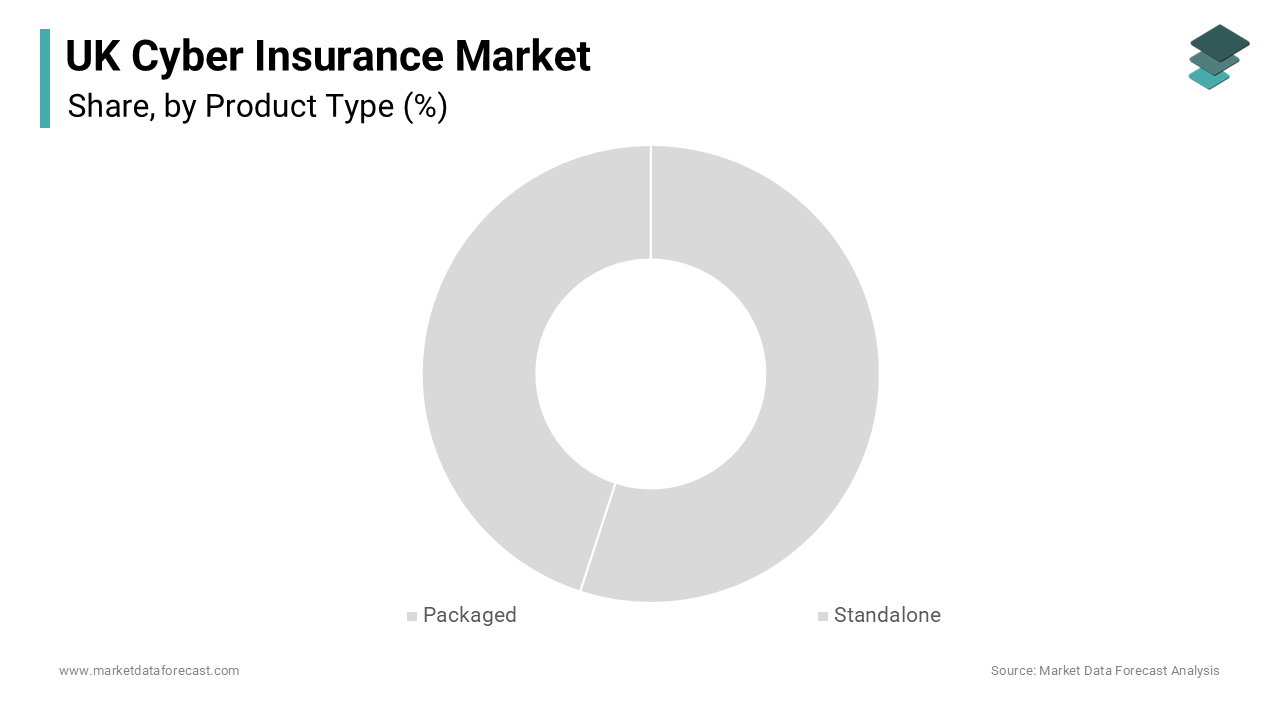
The packaged segment is lucratively to grow at a fastest CAGR of 12.5% from 2026 to 2034 with their affordability and accessibility for small and micro enterprises. These policies are often bundled with general liability or property insurance by making them easier and cheaper for small business owners to purchase without navigating complex standalone underwriting processes. Packaged policies typically require minimal application forms and offer instant quotes which appeals to time poor entrepreneurs who need quick protection. The lower entry cost of packaged policies encourages wider adoption among startups and sole traders who previously considered cyber insurance unaffordable. While coverage limits are lower the inclusion of basic crisis management services provides a safety net for minor incidents.
By Enterprise Size Insights
The large enterprises segment was the largest by holding 45.3% of the United Kingdom cyber insurance market share in 2025 due to their complex risk profiles extensive digital footprints and high value assets that require substantial protection. These organizations operate vast networks store massive amounts of sensitive data and face sophisticated targeted attacks from state sponsored actors and organized crime groups. The potential financial impact of a breach for a large enterprise including business interruption reputational damage and regulatory fines can run into tens of millions of pounds necessitating high limit insurance coverage. The large corporations often mandate cyber insurance, as part of their vendor risk management programs requiring suppliers to carry adequate coverage. The complexity of their operations requires bespoke standalone policies with broad coverage extensions and access to global incident response teams. Large enterprises also have the budget and risk management infrastructure to negotiate favorable terms and invest in comprehensive coverage. Their strategic focus on resilience and continuity ensures consistent demand for premium cyber insurance products.
The small and micro enterprises segment is expected to witness a fastest CAGR of 14.2% from 2026 to 2034 with the increasing targeting of these businesses by cybercriminals who view them as soft targets. Attackers recognize that smaller organizations often lack robust security defenses and incident response capabilities, making them vulnerable to ransomware and phishing attacks. The small businesses are frequently used as entry points to attack larger supply chain partners amplifying the risk. The financial impact of even a minor breach can be devastating for a small business potentially leading to insolvency. This existential threat is driving a shift in perception where cyber insurance is no longer seen as optional but as a critical survival tool. The availability of affordable packaged policies has lowered the barrier to entry enabling more small businesses to obtain coverage. Awareness campaigns by government bodies and industry associations have also educated small business owners about the prevalence of cyber threats.
By Industry Vertical Insigths
The Banking Financial Services and Insurance (BFSI) sector was accounted in holding 21.3% of the United Kingdom cyber insurance market share in 2025 due to the high value of the data it holds and the strict regulatory obligations it faces. Financial institutions manage vast amounts of sensitive personal and financial information by making them prime targets for cybercriminals seeking monetary gain. The financial sector experiences the highest frequency of reported cyber incidents among all industries in the UK. The potential for systemic risk and significant financial loss necessitates comprehensive insurance coverage with high limits. Regulations, such as the Operational Resilience requirements mandate that financial firms demonstrate their ability to withstand severe cyber disruptions. Cyber insurance plays a crucial role in meeting these regulatory expectations by providing financial resources for recovery and business continuity. BFSI firms spend more on cyber security and insurance than any other sector reflecting the nature of their operations. The complexity of their IT environments and the severity of potential breaches drive demand for specialized policies that cover unique risks such as fund transfer fraud and trading disruption. The reputation of financial institutions relies heavily on trust making rapid recovery from cyber incidents essential.
The Healthcare and Life Sciences sector is eseemed to witness a fastest CAGR of 15.8% during the forecast period with the rapid digitization of patient records and the proliferation of connected medical devices. The adoption of Electronic Health Records and Internet of Medical Things devices has expanded the attack surface for healthcare providers by making them vulnerable to data breaches and operational disruptions. The sensitivity of health data makes it highly valuable on the black market leading to aggressive targeting by criminals. The cost of recovering from a healthcare cyber incident is rising due to the need for specialized forensic services and patient notification processes. Cyber insurance provides essential coverage for these costs as well as business interruption losses resulting from system downtime.
COMPETITIVE LANDSCAPE
The competition in the UK cyber insurance market is intense and characterized by a mix of global specialty insurers traditional carriers and emerging insurtech companies vying for market share. Major players compete on the basis of coverage breadth claims handling efficiency and value added risk management services rather than price alone. The market is driven by the urgent need for organizations to protect against sophisticated cyber threats which requires insurers to continuously innovate their products. Differentiation is achieved through proprietary technology platforms that offer real time risk monitoring and rapid incident response capabilities. Customer retention is critical leading to a focus on building long term partnerships through consultative approaches and educational initiatives. The entry of digital native insurers adds pressure on traditional providers to streamline processes and improve user experience. Regulatory compliance and data privacy standards act as baseline requirements raising operational barriers for new entrants. Brand reputation and financial stability are key factors influencing procurement decisions especially among large enterprises.
KEY MARKET PLAYERS
Some of the promising companies that are playing a dominating role in the UK cyber insurance market include
- AIG
- Beazley
- Hiscox
- Chubb
- CFC
- Coalition
- Allianz
- Aviva
- Zurich Insurance Group
- Markel
- Travelers
- AXA XL
- QBE Insurance Group
- Lloyd's of London
- Cowbell
- Brit Insurance
- Pen Underwriting
- Tokio Marine HCC
- CNA Financial Corporation
- Munich Re
- Swiss Re
- Arch Insurance
- Sompo International
- Liberty Mutual Insurance
- RSA Insurance Group
- Bupa Global
Top Players in the UK Cyber Insurance Market
AXA XL
AXA XL operates as a global leader in specialty insurance with a strong presence in the UK cyber insurance market serving large corporations and mid-sized enterprises. The company provides comprehensive coverage solutions that address complex digital risks including data breaches ransomware and business interruption. Recently, AXA XL has strengthened its position by enhancing its incident response capabilities through strategic partnerships with leading cyber security firms. This integration allows policyholders to access immediate expert support during crises minimizing damage and recovery time. The insurer also invests heavily in proprietary risk assessment tools that help clients identify vulnerabilities before attacks occur. Their commitment to innovation and customer centric services ensures they remain a preferred partner for organizations seeking robust protection against evolving cyber threats in the United Kingdom.
Beazley plc
Beazley plc is a prominent specialist insurer known for its dedicated cyber insurance division which offers tailored policies for businesses of all sizes across the United Kingdom. The company distinguishes itself through deep technical expertise and a responsive claims handling process that supports clients throughout the lifecycle of a cyber incident. Recently, Beazley has expanded its product offerings to include coverage for emerging risks, such as supply chain attacks and cloud service failures. The insurer has also launched digital platforms that simplify the purchasing and management of cyber policies for small and medium enterprises. Their focus on education and awareness campaigns further strengthens client relationships and promotes best practices.
Chubb Limited
Chubb Limited maintains a significant footprint in the UK cyber insurance market by delivering high limit coverage and world class risk engineering services to multinational corporations and financial institutions. The company is recognized for its financial strength and ability to handle complex large scale cyber claims efficiently. Recently, Chubb has enhanced its market position by integrating advanced threat intelligence into its underwriting process enabling more accurate risk pricing and selection. The insurer also offers comprehensive pre breach services including vulnerability scanning and employee training programs that help prevent incidents. Chubb collaborates closely with legal and forensic experts to provide holistic support during post breach investigations. Their global network ensures consistent coverage standards for clients operating across multiple jurisdictions.
Top Strategies Used by Key Market Participants
Key players in the UK cyber insurance market primarily focus on integrating proactive risk management services to help policyholders prevent attacks rather than just covering losses. Companies invest heavily in partnerships with cyber security firms to offer real time monitoring vulnerability assessments and incident response support. Developing specialized products for emerging threats such as ransomware and supply chain vulnerabilities allows insurers to address evolving customer needs. Digital transformation of underwriting processes using artificial intelligence and data analytics enables faster quoting and more accurate risk pricing. Educating customers through workshops and online resources builds trust and reduces claim frequency. Expanding coverage to include business interruption and reputational damage provides comprehensive protection that appeals to large enterprises. Collaborating with regulatory bodies ensures compliance with changing laws and enhances industry standards. These strategies enable participants to differentiate themselves in a competitive market while promoting greater cyber resilience among UK businesses.
MARKET SEGMENTATION
This research report on the UK cyber insurance market has been segmented based on the following categories.
By Product Type
- Packaged
- Standalone
By Enterprise Size
- Large Enterprises
- Medium Enterprises
- Small and Micro Enterprises
By Industry Vertical
- BFSI
- IT & Telecom
- Retail & E-commerce
- Healthcare & Life Sciences
- Manufacturing
- Government & Public Sector
- Education
By Country
- U.K